REVIEW · POMPEI CAMPANIA
Pompeii: Skip-the-line-Ticket and Guided Tour
Book on GetYourGuide →Operated by TOURISTATION · Bookable on GetYourGuide
Pompeii is history you can walk through. This guided, skip-the-line visit turns the ruins into a story, starting at Porta Marina Superiore and moving through the Forum and major public spaces, with time to see preserved artwork up close. I like that you get a reserved entrance with skip-the-line entry, so you lose less time standing around. I also really like the focus on daily life—how people ate, bathed, worked, prayed, and entertained—so the site feels human instead of random stones. The one caution: the tour is only 2 hours, so you’ll cover the highlights rather than everything, and the meeting point can be a little tricky to spot.
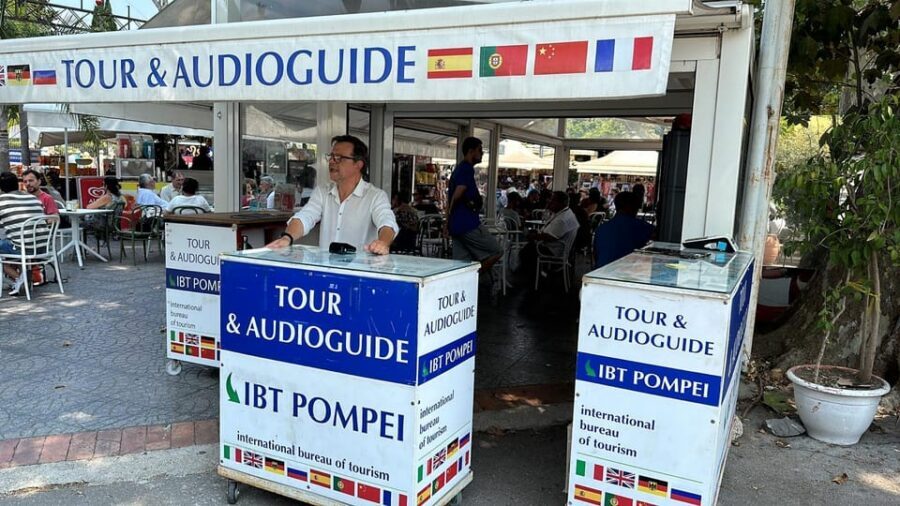
You’ll meet at the Office IBT Center/Touristation next to Chalet Donna Lucia (in the Piazza Esedra area), then head straight into the Pompeii Archaeological Site with a live guide plus a headset for clearer audio. This is also one of those experiences where small details matter: no big bags, no umbrellas, and you’ll need an ID. If you want a smaller-group feel, there’s a semiprivate option with a maximum of 12 people.
In This Review
- Key things I’d notice right away
- Why skip-the-line matters at Pompeii
- Meeting point near Chalet Donna Lucia: don’t overthink it
- The 2-hour route: what you actually get to see
- 1) Porta Marina Superiore and the city’s main rhythm
- 2) The Forum as the social center
- 3) Mount Vesuvius views that make the story click
- 4) Baths and temples: the city’s routine in public form
- 5) A bakery, the theatre, and the brothel: life beyond the monuments
- Frescoes and mosaics up close: why guidance helps
- How the guide keeps you moving without losing the plot
- Semiprivate option: when smaller groups feel better
- Price and value: is $64 for 2 hours fair?
- Practical rules that affect comfort
- What’s not included: the Villa dei Misteri
- A good add-on habit: where to eat after
- Who this Pompeii tour suits best
- Should you book this tour?
- FAQ
- How long is the Pompeii skip-the-line guided tour?
- What’s included in the price?
- Where do I meet for the tour?
- Does this tour include skip-the-line entry to Pompeii?
- Are there restrictions on bags, umbrellas, or pets?
- Is the tour suitable for wheelchair users?
Key things I’d notice right away
- Skip-the-line ticket saves time before you even start walking the ruins
- Archaeologist-style guidance connects buildings to real routines and social life
- Frescoes and mosaics are presented up close with context for what you’re seeing
- Mount Vesuvius views add meaning to the disaster story and the city’s layout
- Headsets included make it easier to hear the guide in a busy archaeological site
Why skip-the-line matters at Pompeii
Pompeii can feel like a choose-your-own-adventure—except the waiting line is the main plot twist. With this tour, you’re not trying to win a queue battle first. You arrive with the ticket handled and you move into the site as part of a guided entry flow.
That matters because the ruins reward attention, not endurance. If you arrive already tired from waiting, you’ll scan and rush. If you arrive ready, you can slow down enough to notice how the city is organized: gates feeding into main streets, public spaces pulling you toward the Forum, and neighborhoods tied together by everyday services.
The tour’s format is built for that. You don’t just get a “see everything” checklist. You get a 2-hour route with a guide who points out what to look for—artwork, street-level details, and the social purpose behind the buildings.
You can also read our reviews of more tours and experiences in Pompei Campania
Meeting point near Chalet Donna Lucia: don’t overthink it
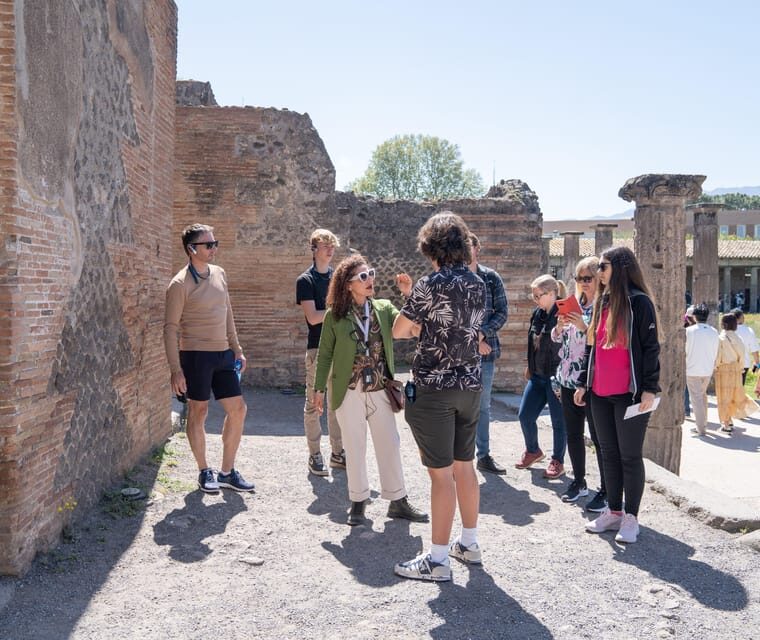
You report to the Office IBT Center/Touristation next to Chalet Donna Lucia. That sounds simple, but the practical trick is timing and orientation. The site area is active, and signs aren’t always obvious from every angle, especially if you’re coming from the train station side.
A smart approach is to arrive a bit early, confirm you’re at the IBT Center/Touristation office, and then follow the staff direction to your guide. One helpful detail: people have been greeted on arrival and guided through the handoff, so you’re not left to figure it out alone.
You’ll want to bring a passport or ID card, since ID is required for all participants. Also plan around the restrictions on gear: leave luggage and large bags at your hotel if possible, and skip umbrellas. Pompeii is outdoors, so a small, simple plan for sun or light rain helps keep the tour smooth.
The 2-hour route: what you actually get to see
This tour is designed as a fast, focused walk-through of the Pompeii highlights. In 2 hours, you won’t get everything—and that’s the trade. But you will get a coherent path that hits the places most people want first, then shows what to notice there.
Here’s how the flow typically makes sense:
1) Porta Marina Superiore and the city’s main rhythm
You start at Porta Marina Superiore, one of the city’s seven gates. Gates aren’t just architecture here. They’re the start of movement—where arrivals would funnel into the urban grid.
From there, you walk the main streets and get your bearings quickly. A good Pompeii tour helps you understand direction and layout fast, because the ruins can look like separate “photo stops.” With a guide, the streets become context: how people moved, where commerce would concentrate, and how public buildings shaped daily life.
2) The Forum as the social center
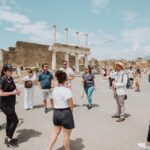
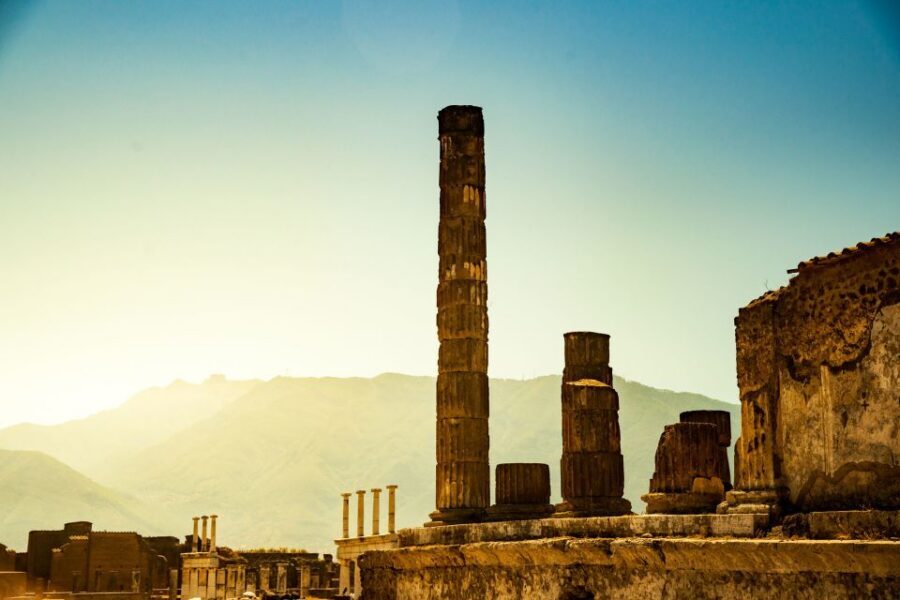
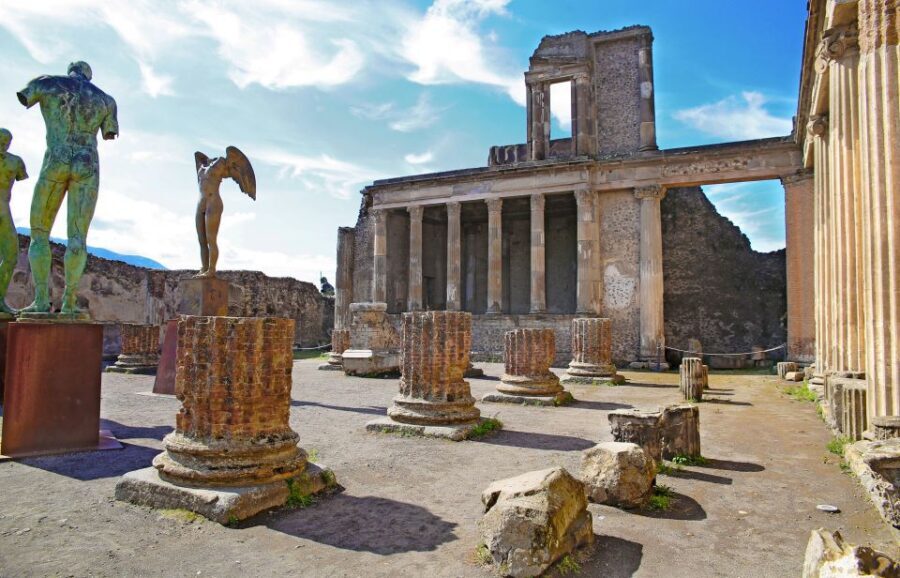
The Forum is the heart of Pompeii, and you spend time in that area because it explains the city’s public pulse. It’s where civic life happens, where people gather, and where the identity of the city shows up in stone.
The guide’s job here is to connect the dots: what the Forum tells you about power, community, and how people used shared spaces. Even if you only catch part of the architecture in detail, the Forum section helps you build a mental map.
You can also read our reviews of more guided tours in Pompei Campania


3) Mount Vesuvius views that make the story click
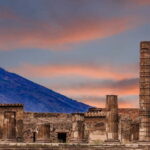
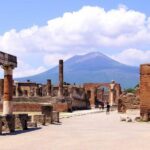
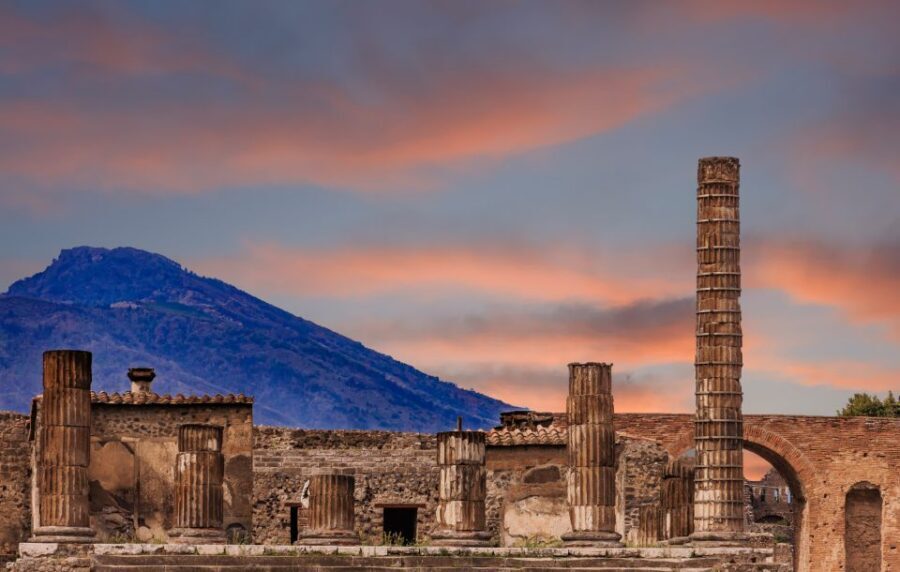
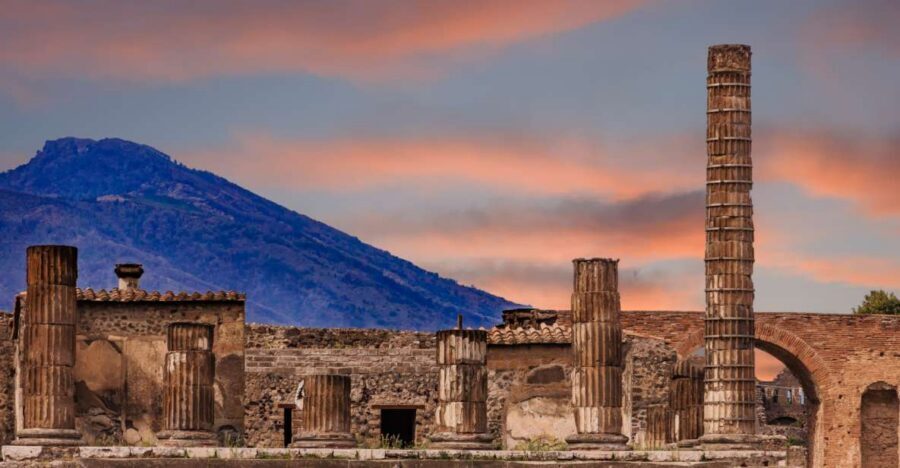
You’ll also get views of Mount Vesuvius beyond the city. Seeing the mountain in the landscape changes how the entire site reads. Suddenly you’re not just looking at ruins; you’re seeing how the environment presses into the city’s geography and why this place ended up becoming a time capsule.
This part works best if you pay attention to direction. Where the city sits relative to the mountain helps you understand how volcanic ash turned buildings and streets into preservation engines.
4) Baths and temples: the city’s routine in public form
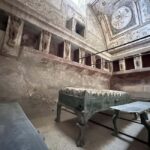
The route includes the baths and temples. These stops matter because they show that daily life had structure. Baths weren’t just about cleanliness; they were social time. Temples weren’t just architecture; they were part of belief, community, and the public calendar.
A guide adds value by telling you what to look for beyond columns and walls—signals of use, design choices that suggest routine, and how these buildings functioned in the civic day.
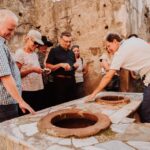
5) A bakery, the theatre, and the brothel: life beyond the monuments
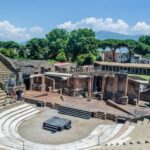
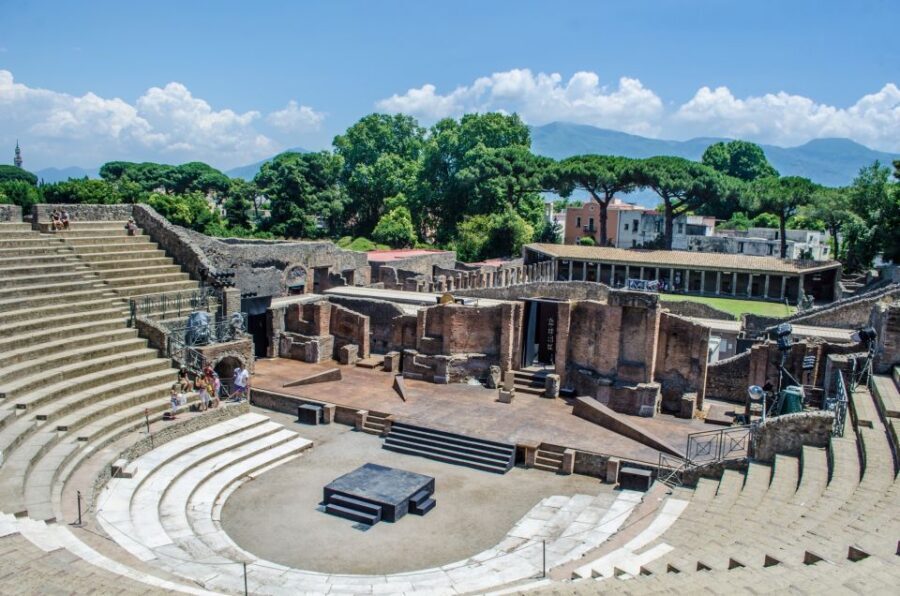
One of the most interesting parts of Pompeii is that it isn’t only “grand buildings.” You’ll also see a bakery, the great theatre, and a brothel.
That’s a big reason to book a guided experience. A bakery stop sounds basic, until a guide explains why it’s there and what the presence of these services tells you about the economy and daily needs. The theatre and brothel add another layer: entertainment and adult life were part of the city’s normal rhythm, not an afterthought.
If you like Pompeii as a window into human behavior—not just disaster history—these stops are where the tour delivers.
Frescoes and mosaics up close: why guidance helps
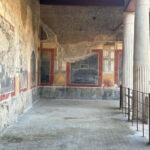
Pompeii’s walls and floors are full of preserved art, including frescoes and mosaics. On your own, it’s easy to treat them like a gallery you’re walking past quickly. With a guide, you get help interpreting what you’re seeing.
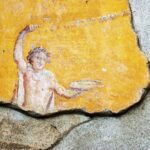
The tour highlights preserved artwork and explains the stories behind the site. That doesn’t mean you’ll leave with a complete art history degree. It does mean you’ll notice more: the themes, the placement, and the sense of what these images meant in a home or public space.
You also get a practical benefit: you’re not just scanning for the “wow” scenes. You learn how these artworks connect to the people who lived there and the rooms they decorated. That’s how Pompeii becomes more than set dressing.
How the guide keeps you moving without losing the plot
A common problem in Pompeii is being stuck in group chaos: everyone stops, someone else can’t hear, and the day turns into a blur of photos.
This tour fights that with tools and pacing:
- Headset provided to help you hear the live guide clearly
- A planned 2-hour sequence that aims to hit key areas without turning it into a sprint
- Group management that helps everyone stay together
Some people also report that guides focus on reaching key areas while avoiding the busiest spots where possible. That approach helps you experience the ruins with less crowd pressure, so you can actually look at details like frescoes, mosaics, and the wear patterns on steps.
And yes, guide quality matters. The tour has featured guides such as Diana, Ester, Roberta, Paul, Liliana, Marcela, Annorita, Theresa, Laura, and Valentina—each bringing an engaging style and a clear explanation of what you’re seeing. In practical terms, that’s what turns Pompeii from ruins into a readable city.
Semiprivate option: when smaller groups feel better
If you’re trying to avoid the “everyone hears different audio” effect, the semiprivate option is worth considering. It caps the group at 12 people.
Smaller groups usually mean:
- More control over the pace
- More chances to ask questions
- Less time waiting for someone to catch up
In a place as big as Pompeii, that can be the difference between a guided highlight tour and a tour that feels rushed.
Price and value: is $64 for 2 hours fair?
At $64 per person for a 2-hour guided visit, the value comes from what’s included, not the time alone. Here’s what you’re paying for in practical terms:
- Pompeii skip-the-line ticket so you don’t burn your morning in queues
- A 2-hour guided tour that turns ruins into story and layout
- Headset so you can hear the guide
- A city map
- Assistance at the tourist office
- Wi‑Fi
The cost can feel high if you’re picturing only a quick walk. But if you want Pompeii to make sense—streets, buildings, daily life, and the meaning of the preservation—then the guide is the difference. Without guidance, Pompeii can become “cool rocks” with no connective tissue.
Also think about opportunity cost. Pompeii is famous for a reason. If you only have a short window, paying to enter and navigate efficiently often beats trying to DIY the route, especially when time is tight.
Practical rules that affect comfort
This tour has a clear set of no-nonsense rules to keep things safe and moving:
- No smoking
- No luggage or large bags
- No umbrellas
- No oversized luggage
- No pets
One nuance: small dogs are permitted inside the archaeological area, but they must be kept on a leash and carried when inside buildings. If that’s relevant for you, plan for the carrying part, not just the leash part.
Also note who should skip this style of tour: it’s not suitable for people with mobility impairments and wheelchair users. If you need accessibility support, you’ll want a different option with appropriate logistics.
For comfort, plan around the outdoors. Bring a hat and water strategy that doesn’t require a bag or umbrella. The tour also includes a map, so you don’t need to over-plan navigation.
What’s not included: the Villa dei Misteri
One item that’s explicitly not included is entrance to Villa dei Misteri.
That means if this is a must-see for you, you’ll need to add it separately. The tour is built to focus on the main city experience and preserved features throughout the streets and public areas, rather than branching into additional villas.
A good add-on habit: where to eat after
After the tour, you may have time to explore and grab food nearby. There’s a cafeteria inside the ruins at the end of the visit area, and people have noted it can be a convenient stop for sandwiches before you exit.
This is useful because Pompeii can swallow your whole afternoon if you’re not careful. If you plan a simple meal after the guided part, you can keep your energy for further self-paced exploring.
Who this Pompeii tour suits best
This tour fits best if you:
- Want a guided route that gives you a quick mental map of the city
- Care about seeing frescoes, mosaics, and preserved art with context
- Have limited time and want the major highlights in 2 hours
- Prefer a smaller-group experience (consider the semiprivate 12-person option)
- Value skip-the-line entry and clearer audio with headsets
It’s not a great match if you:
- Need wheelchair-accessible routes
- Want to spend long hours lingering in one room or one specific building
- Are hoping to cover every single Pompeii site detail in one go
Should you book this tour?
If you’re aiming to leave Pompeii with understanding—not just photos—then yes, this is a solid choice. The skip-the-line entry reduces wasted time, the headset keeps the narration clear, and the guided walk covers the places that help the city feel legible: gates, the Forum, public spaces, and preserved artwork.
I’d book it especially if your schedule is tight or this is your first time in Pompeii. If you already know the site well and you want total freedom to roam at your own pace, you might not need a guide for only 2 hours. But for most first-timers, a guided structure is the easiest way to turn Pompeii into a real experience instead of a scatter of ruins.
FAQ
How long is the Pompeii skip-the-line guided tour?
The guided tour lasts 2 hours.
What’s included in the price?
The package includes a Pompeii archaeological area skip-the-line ticket, a 2-hour guided tour, headsets, a city map, assistance at the tourist office, and Wi‑Fi.
Where do I meet for the tour?
You report to the Office IBT Center/Touristation next to Chalet Donna Lucia (in the Piazza Esedra area).
Does this tour include skip-the-line entry to Pompeii?
Yes. The ticket included is designed for skip-the-line entry.
Are there restrictions on bags, umbrellas, or pets?
Yes. Smoking isn’t allowed, and you can’t bring luggage or large bags or oversized luggage. Umbrellas aren’t allowed either. Pets are not allowed, though small dogs are permitted if they are on a leash and carried when inside buildings.
Is the tour suitable for wheelchair users?
No. It’s listed as not suitable for people with mobility impairments and wheelchair users.