REVIEW · POMPEI CAMPANIA
Pompeii No-line Entrance Tickets with audioguide
Book on GetYourGuide →Operated by italypasstours srl · Bookable on GetYourGuide
Pompeii hits you fast. This self-guided entry lets you step into the ancient streets of Pompeii, buried after the 79 AD eruption of Mount Vesuvius, with an audioguide to pace your understanding as you go.
What I like most is the skip-the-ticket-line idea paired with a one-day ticket, so you can spend your limited time on the ruins instead of the wait. I also like that the audioguide is set up for the big anchors of Pompeii—things like the Temple of Apollo, thermal baths, and the House of the Vettii—so you’re not wandering without context.
One drawback to plan around: this is not a guided tour, and the audio-only format means you’ll rely on the route you choose and your willingness to read the signs on uneven ground; plus, a few operational snags (voucher timing and finding the right check-in point) can be stressful if you show up too late.
In This Review
- Key takeaways before you go
- Pompeii Without the Ticket Line: What Your Audioguide Gives You
- Getting In: Showing Your Voucher and Collecting Your Ticket
- First Walk Through: Cobblestones, Streets, and the Meaning of Everyday Pompeii
- A practical way to use the audioguide
- Forum and Theaters: Where Public Life Gets Real
- Temple of Apollo: Religion as a Street-Level Experience
- Thermal Baths and the House of the Vettii: Daily Life You Can Picture
- The Mummies of Pompeii: Fear, Escape, and What Ash Preserved
- UNESCO World Heritage Status: Why Pompeii Still Feels Urgent
- Price Value: Is $34 Worth It for Entrance Plus Audioguide?
- Comfort, Timing, and What to Pack for Uneven Ruins
- Who This Works For (and Who Should Choose Something Else)
- Book It or Skip It: My Practical Recommendation
- FAQ
- Is the audioguide included?
- Do I need to wait in line at the entrance?
- How do I use my voucher when I arrive?
- How long is the ticket valid?
- What time is the last admission?
- Is hotel pickup or drop-off included?
- Are food and drinks included?
- Can I bring pets, luggage, or smoke at the site?
- Is it wheelchair accessible?
- Is free cancellation available?
Key takeaways before you go
- Skip the ticket line by using your voucher at the reception to collect your ticket
- Audioguide included so you can learn Pompeii’s daily life as you walk
- Top stops are built into the experience: Temple of Apollo, thermal baths, House of the Vettii
- You’ll see the forum and theaters and get context for how people actually lived
- Last admission is 1 hour before closing, so you need a realistic plan
Pompeii Without the Ticket Line: What Your Audioguide Gives You
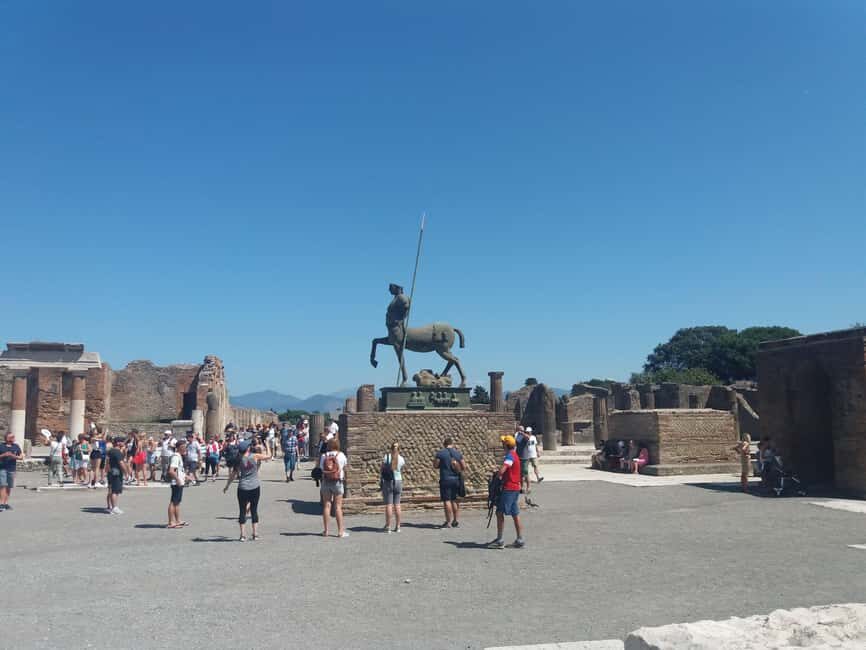
This is Pompeii in “show up and go” mode. You buy a ticket that’s designed to get you past the entrance queue, then use an audioguide while you walk the site at your own rhythm. That combo matters, because Pompeii is not small—and the most common mistake is spending half your day trying to get started.
The audioguide approach is best when you want freedom but still want the facts in your ear. You’ll learn what daily Roman life looked like, not just famous monuments, and you’ll connect the dots between streets, public places, and private homes.
And yes, the tragedy is the spine of the story here. Pompeii’s eruption narrative isn’t a side note—it’s what turns buildings and plastered walls into evidence of real fear, escape, and sudden survival.
You can also read our reviews of more tours and experiences in Pompei Campania



Getting In: Showing Your Voucher and Collecting Your Ticket

Your key step is simple: show your voucher at the reception and collect your ticket. The activity starts there and ends back at the same meeting point, so you’re not dealing with a wandering pickup system.
This is also where you should keep your expectations realistic. The most reliable way to avoid stress is to arrive early enough that you’re not racing the clock for last admission (which is one hour before closing). If your voucher arrives late on your phone, you may need extra patience while you get it sorted.
A word to the wise: there can be confusion about where the operator’s check-in office is located. When that happens, ticket inspectors can help you eventually find the right path, but you don’t want that to be your first day in Pompeii. Bring your voucher confirmation, and don’t cut it close.
First Walk Through: Cobblestones, Streets, and the Meaning of Everyday Pompeii
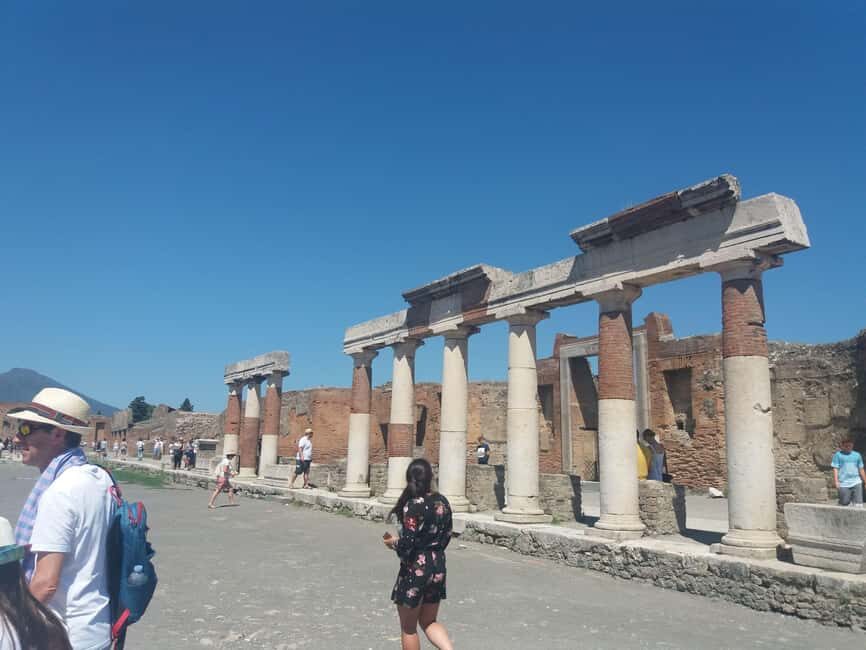
Once you’re inside, the ruins make more sense when you treat them like a city map instead of a photo stop list. Pompeii is at the foot of Mount Vesuvius in Campania, and that setting helps you understand why the eruption mattered so much.
Start by orienting yourself with the cobbled streets and public spaces. As you move, the audioguide’s focus on daily life helps you see how people used shared areas like the forum and theaters, and how private homes connected to the city’s social world.
Even if you’re not a “Roman architecture” person, you’ll notice patterns. Some buildings are designed for crowds; others for routine and family life. That contrast is what makes Pompeii more than just stone. It’s a snapshot of ordinary routines interrupted.
A practical way to use the audioguide
- Listen first when you arrive at a major area, then walk slowly and look for the details the audio points out
- If you’re in a crowd, pause the audio while you observe, then resume for the next stop
- Let the story guide your route—don’t jump randomly between far-apart locations
Forum and Theaters: Where Public Life Gets Real
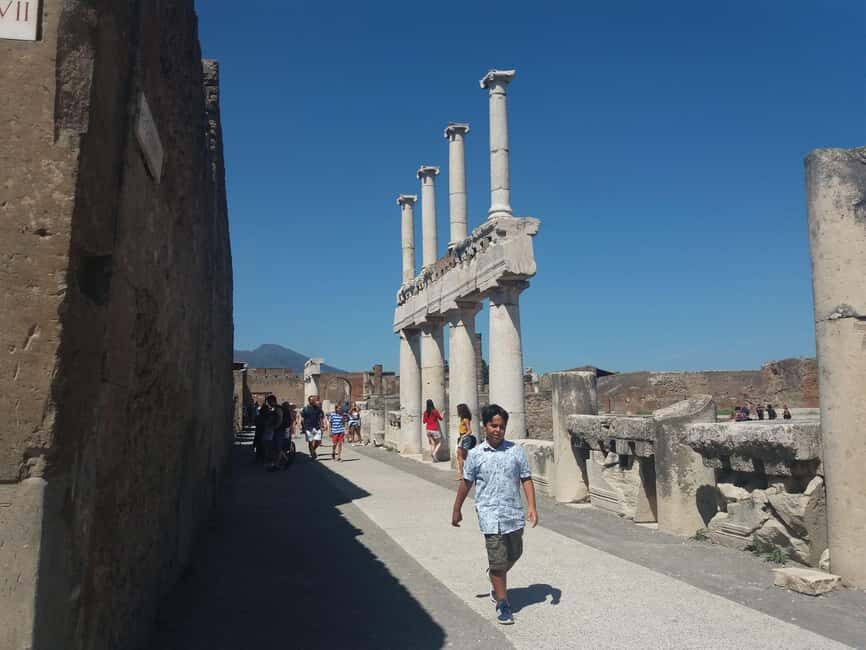
The forum and theaters are exactly the kind of stops that turn “ancient city” into “how people lived.” You’ll see public places that reveal the rhythm of civic life—where conversation, performance, and community energy would have been visible every day.
Theater spaces also give you a sense of how Pompeii worked socially. Even though you’re looking at ruins, the layout explains why gatherings mattered and how large audiences were organized.
One consideration: Pompeii is busy and walking paths can funnel you. If your plan is photo-first, you’ll get annoyed fast. If your plan is story-first, you’ll feel more satisfied even when you’re surrounded by other visitors.

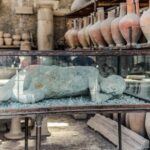



Temple of Apollo: Religion as a Street-Level Experience
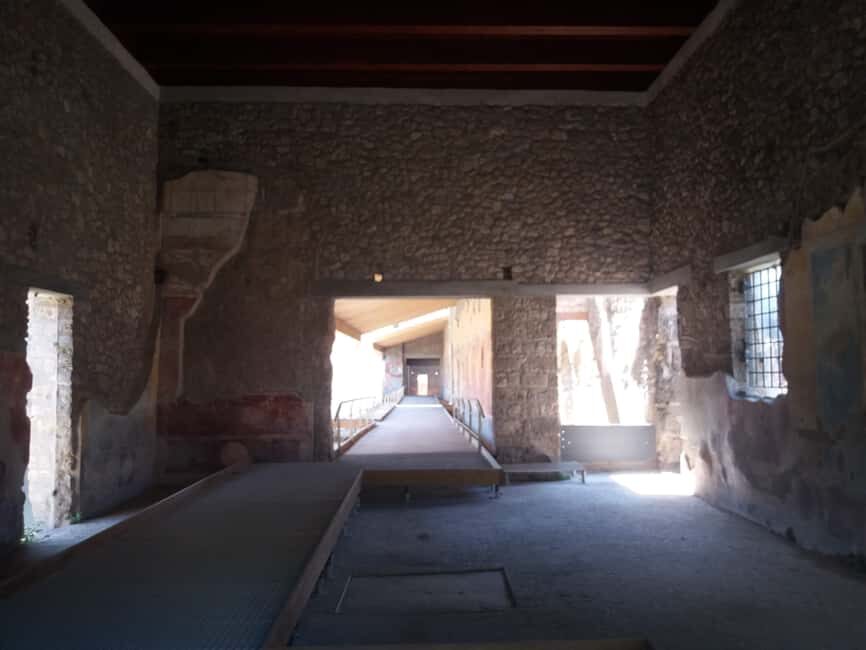
The Temple of Apollo is one of those stops that feels important because it was important. Pompeians didn’t just build temples as art pieces; religious life was tied to public identity, routine, and community meaning.
With the audioguide, you’ll get context that helps you connect the temple to the wider city. You’re not only admiring remains—you’re learning what people believed and how they would have understood their world.
Try to linger here. Even if you’re tempted to rush for the next major house, the temple area gives you a “religion anchor” for everything else you’ll see afterward.
Thermal Baths and the House of the Vettii: Daily Life You Can Picture
Thermal baths and homes are where Pompeii stops feeling like distant history and starts feeling like lived-in culture. The baths are about more than hygiene. They hint at social time, conversation, and a daily rhythm that shaped the city.
Then comes the House of the Vettii. This is a highlight for good reason: it’s known for splendid mosaics, and the house style helps you understand private space in a wealthy Roman household. Even from a distance, the layout gives you a sense of how rooms were used and how decoration communicated status.
What’s great about including both baths and a famous home in one self-paced experience is that you get the full spectrum: public routines plus private life. When you piece that together, the story stops being “eruption happened” and becomes “this is what people were doing when disaster struck.”
The Mummies of Pompeii: Fear, Escape, and What Ash Preserved
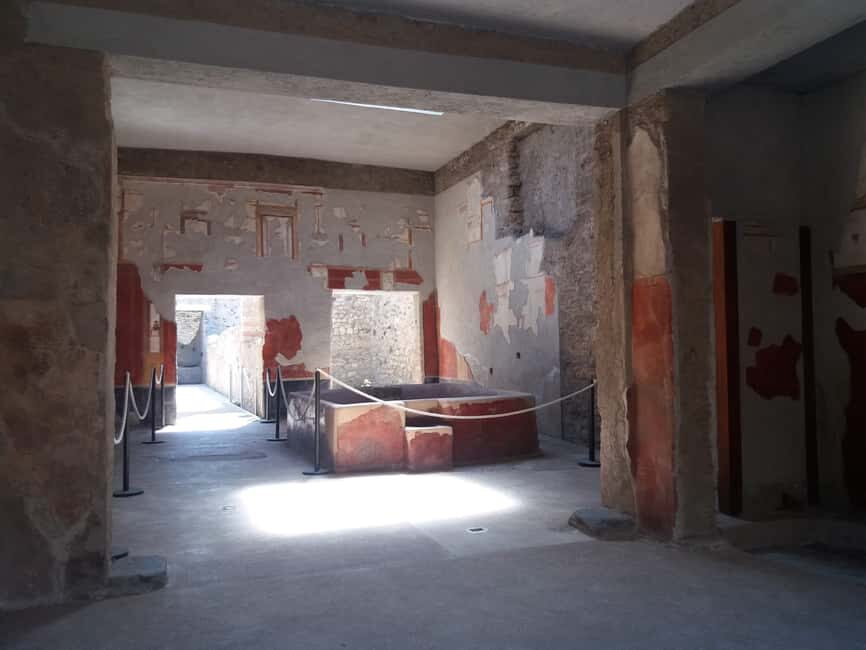
One of Pompeii’s hardest moments is also one of its most important. The site includes the famous “mummies” of Pompeii—human bodies fossilized by ash. They aren’t a dramatic reenactment. They’re evidence, and the audioguide treatment helps you understand the fear and escape story behind the remains.
This is not a stop you speed through. If you treat it like a quick photo moment, you miss what the site is trying to communicate. Give yourself a little time, read the surrounding context, and let the scale and suddenness of the event sink in.
The eruption of Vesuvius in 79 AD buried the city under thick layers of ash and pumice. That detail matters because it explains why Pompeii is so preserved. You’re walking among protected traces of real people and real architecture rather than vague ruins.
UNESCO World Heritage Status: Why Pompeii Still Feels Urgent
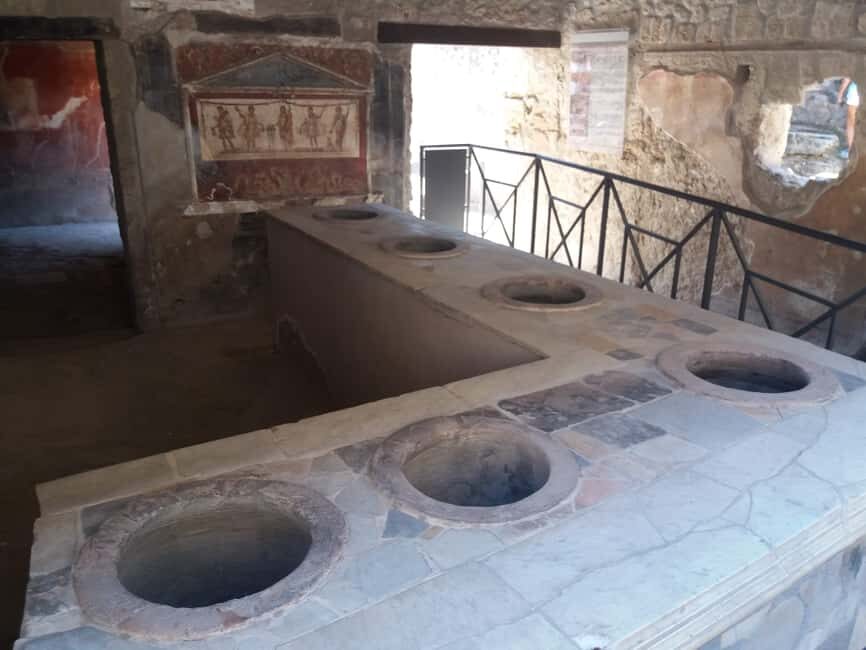
Pompeii was declared a UNESCO World Heritage Site in 1997, and that status isn’t just a badge. It reflects how exceptional the site is for understanding Roman culture, religion, and everyday routines.
The site is also still revealing new information through excavations and ongoing research. That means what you’re seeing today is part of a continuing puzzle, not a “fixed and finished” museum display.
If you care about authenticity, this matters. You’re not only consuming a well-worn script—you’re witnessing a place that keeps earning more understanding, stop by stop.
Price Value: Is $34 Worth It for Entrance Plus Audioguide?

At $34 per person, you’re paying for three things: entrance to Pompeii, the ability to skip the ticket line, and an audioguide. You’re not paying for a professional guide to lead you through the ruins.
That’s where the value question becomes personal. If you’re comfortable exploring on your feet and you like learning from audio, this can be a strong deal—because time saved at the entrance is real. Pompeii is one of those places where arriving on your schedule beats losing it.
If you prefer someone to correct your misunderstandings, explain subtleties in real time, and keep you from wandering to the “wrong” corners, then you may feel like the ticket is underpowered. For many people, though, the included audioguide strikes a workable balance between independence and context.
Also keep in mind what isn’t included: no food and drinks, no hotel pickup or drop-off, and no guided tour. So your real cost includes what you spend on a break and how you travel to the site.
Comfort, Timing, and What to Pack for Uneven Ruins
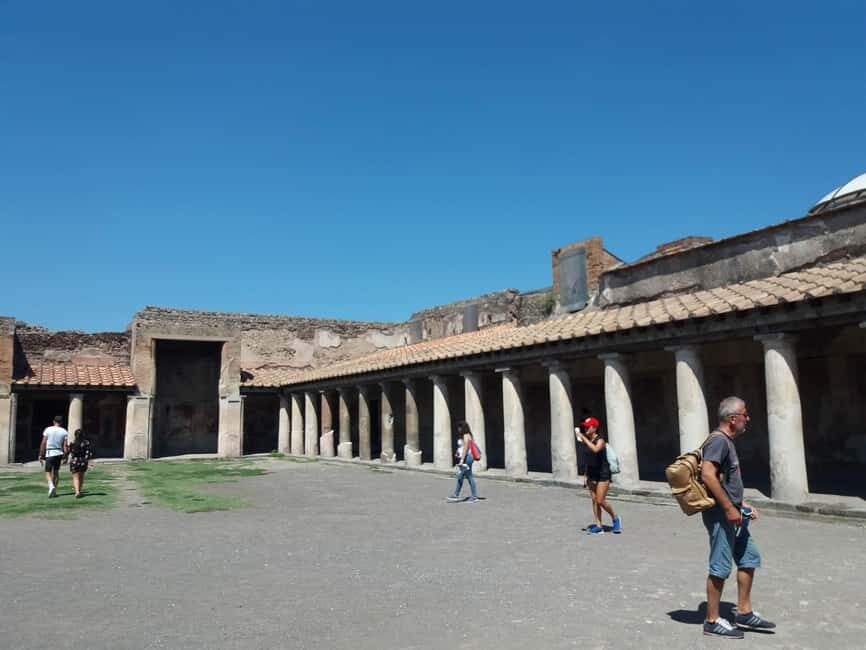
Wear comfortable shoes. The ground is uneven, and Pompeii punishes flip-flops and light sneakers. Bring a hat and water, especially in hot summer weather, because there’s a lot of walking under open skies.
Timing is your other big lever. Last admission is one hour before closing time, so you should plan your “can’t miss” stops early. If you wait, you might end up rushing the most meaningful areas.
One more practical thing: this isn’t the kind of visit where you can comfortably carry bulky luggage. Pets aren’t allowed, smoking isn’t allowed, and large bags or luggage aren’t permitted. If you’re traveling light, you’ll enjoy the day more.
Who This Works For (and Who Should Choose Something Else)
This fits travelers who want control. You can set your own pace, choose how long you linger, and use the audioguide as your explanation layer rather than a live tour guide.
It’s also a good match if you’re okay doing the interpretation work yourself. The ruins are complex, and the value of audio is that it gives you context without telling you where to stand every minute.
It may not be ideal for everyone:
- The experience notes it is not suitable for visually impaired people, and it also notes not suitable for people with mobility impairments, even while stating wheelchair accessibility. That contradiction means you should check directly before booking if mobility is a concern.
- It’s not designed as a guided tour, so if you want real-time answers and constant narration, look for a guided option instead.
Book It or Skip It: My Practical Recommendation
I’d book this if you want Pompeii with less friction. Skip-the-line entry plus an audioguide is a smart match for independent travelers who still want solid context for what they’re seeing.
I’d hesitate or plan extra carefully if you tend to rely on electronic vouchers that might arrive late. The key issues you should watch for are voucher timing and check-in confusion about where the company office is. You can sometimes solve it with ticket inspectors, but it’s better to arrive calm and early, not stressed at the gates.
If you’re traveling in peak season, arrive well before your preferred start time. Then use the audio to choose a route: hit the forum and theaters, then make time for the Temple of Apollo, the thermal baths, and the House of the Vettii, and don’t rush the ash-preserved remains.
FAQ
Is the audioguide included?
Yes. The ticket includes an audioguide along with your Pompeii entrance admission.
Do I need to wait in line at the entrance?
No. This option is designed to help you skip the ticket line.
How do I use my voucher when I arrive?
Show your voucher at the reception to collect your ticket.
How long is the ticket valid?
Your ticket is valid for 1 day. Starting times depend on availability.
What time is the last admission?
Last admission is one hour before closing time.
Is hotel pickup or drop-off included?
No. Hotel pickup and drop-off are not included.
Are food and drinks included?
No. Food and drinks are not included.
Can I bring pets, luggage, or smoke at the site?
Pets are not allowed, smoking is not allowed, and luggage or large bags are not allowed.
Is it wheelchair accessible?
It states the experience is wheelchair accessible, but it also notes it is not suitable for people with mobility impairments. If this applies to you, check the details with the operator before booking.
Is free cancellation available?
Yes. You can cancel up to 24 hours in advance for a full refund.