REVIEW · POMPEI CAMPANIA
Pompeii VIP 3h Tour: Skip-the-line with your Archaeologist
Book on GetYourGuide →Operated by Grand Tour Experience · Bookable on GetYourGuide
Pompeii feels personal on this tour. It’s a 3-hour walk through the city’s most important ruins, led by a licensed archaeologist who connects what you’re seeing to the science behind the excavations. I like that admission tickets are included and you start with skip-the-line entry, so you lose less time to lines and more time to the ruins. I also like that the route focuses on real highlights—forum areas, recently opened houses, and the Garden of the Fugitives—so it’s not just a loop of random stones.
One consideration: this is a walking tour of ancient, uneven ground. If you’re slow on your feet, expect it to take effort to keep pace for the full 3 hours.
In This Review
- Quick hits
- Skip-the-line and your archaeologist: why this format works
- Meeting at Porta Marina Superiore: get your bearings fast
- Antiquarium by Porta Marina: excavation finds that change the story
- Basilica, Forum, and the civic core of Pompeii
- Temple stops: Apollo and Jupiter, plus why temples feel different
- Greater Decumano and the everyday streets people actually walked
- Macellum and Forum Baths: food, routines, and the systems behind comfort
- Recently opened domus and restorations: the houses that make you rethink scale
- Theater and gymnasium-style spaces: entertainment, movement, and daily rhythm
- Garden of the Fugitives: the stop that hits hardest
- Amphitheater: your final big-picture view
- Price and value: what you really pay for
- Who this Pompeii VIP tour suits best
- Should you book this Pompeii VIP 3h Tour?
- FAQ
- How long is the Pompeii VIP 3-hour tour?
- Where do we meet, and where does the tour end?
- Are admission tickets included?
- Is skip-the-line entry included?
- What languages are the guides available in?
- Is the tour wheelchair accessible?
- Do I need to bring ID?
Quick hits
- Skip-the-line entry at the main entrance so your time goes to the archaeology, not queues
- A licensed archaeologist guide with excavation stories, not just general sightseeing
- Antiquarium stop near Porta Marina with finds from recent excavations (like a coin tied to the eruption date and a golden arm cuff)
- Recently opened domus and restorations such as the House of Golden Cupids
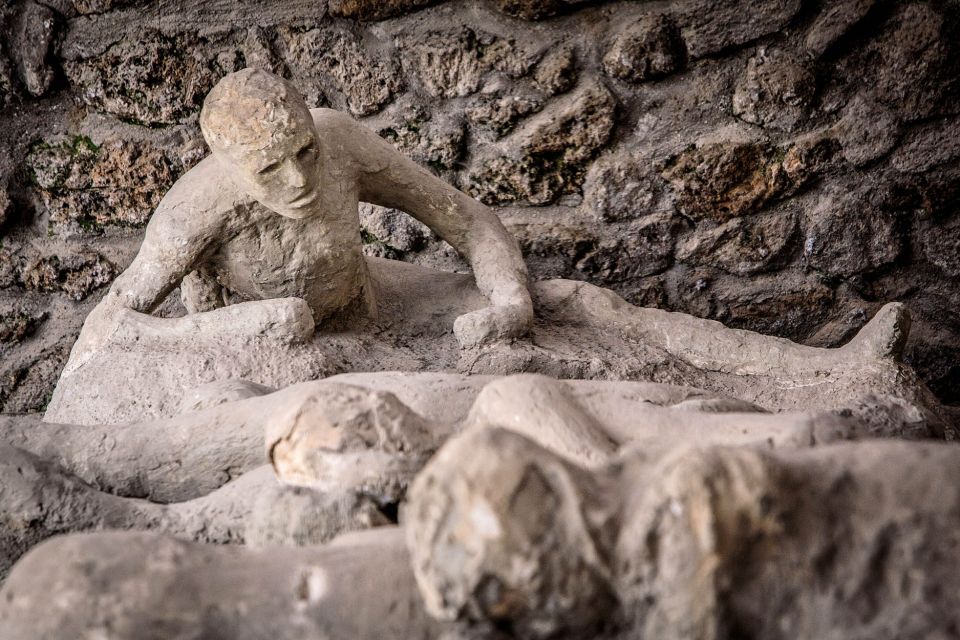
- Garden of the Fugitives with the story of people who tried to escape and the body moulds left by the eruption
- Amphitheater finish that caps the tour with a big, dramatic final ruin
Skip-the-line and your archaeologist: why this format works
Pompeii is easy to mess up with time. If you show up unprepared, lines and ticket confusion can eat your best hours. This VIP format fixes that by bundling skip-the-line service and admission tickets included right from the start.
The other big win is the guide. You’re not only hearing what the buildings were used for; you’re hearing how archaeologists learned what they learned. The tour is built around interpretation from excavation evidence, and that’s what turns a ruin into a story you can actually understand. In the guide examples shared by past groups, people mention experts like Ricardo, described as a studied archaeologist, and Federica, who helped the visit go beyond expectations.
A private group setup also matters. When it’s just your group, the pace and focus can be better tuned to questions—especially at the tough stops where a lot is going on and it’s easy to get lost.
You can also read our reviews of more tours and experiences in Pompei Campania.
Meeting at Porta Marina Superiore: get your bearings fast
You meet at Porta Marina Superiore, directly in front of Hortus Bar. It’s a smart place to start because it keeps you close to the main entry area and the route begins with the ancient entrance area itself.
That first moment is more than logistics. It helps you build a mental map before you’re surrounded by walls, stairways, and side streets. You also get the advantage of starting in daylight with a planned route instead of wandering and guessing.
Two practical notes from the tour rules:
- Tickets are personal. You must send full names and surnames for everyone joining, and you need an original ID/passport to match those names.
- Be on time. Since tickets are personal, arriving late can create friction even if you have the right booking.
Bring comfortable shoes and sunscreen. Pompeii ruins stay cooler than city streets at times, but you’ll still be outside enough that sun and heat matter.
Antiquarium by Porta Marina: excavation finds that change the story
The tour begins where you’ll soon be walking: the ruins around the main entrance, moving toward Porta Marina. One of the early stops is the antiquarium, positioned so you can understand what you’re about to see rather than treating it like random remains.
This is where the tour earns its VIP label. Instead of jumping straight into buildings, you’re shown objects from the last excavations. Examples listed in the tour description include:
- a coin that changed the understanding of the eruption date
- a heavy golden arm cuff
That kind of detail matters because it explains why archaeologists argue, revise timelines, and refine conclusions. You’re seeing how evidence updates the big picture—not just hearing old textbook facts.
If you like when tours connect the “why” behind the “what,” this is the best part to get oriented. Even if you’re not a hardcore museum person, the objects help you read the ruins with better eyes.
Basilica, Forum, and the civic core of Pompeii
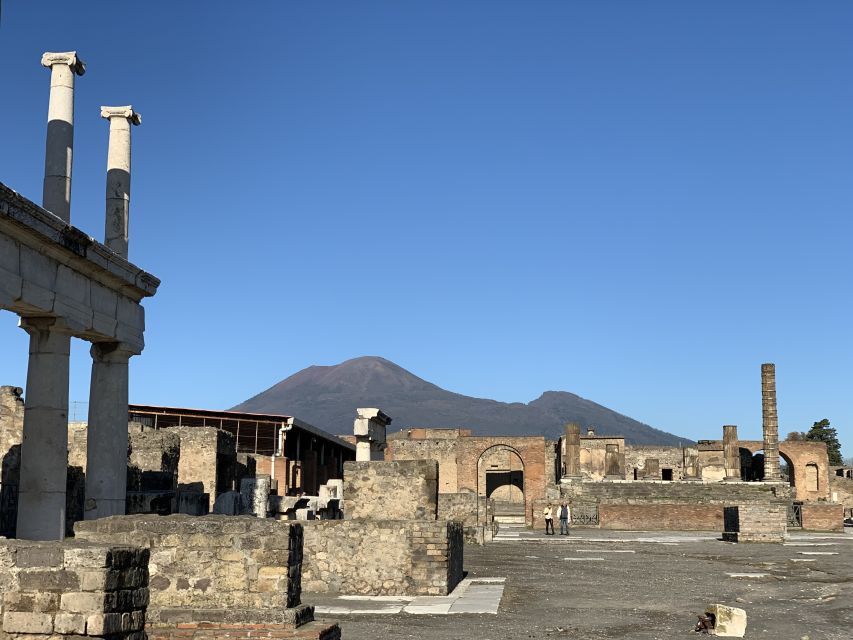
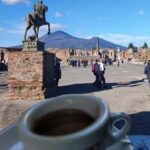
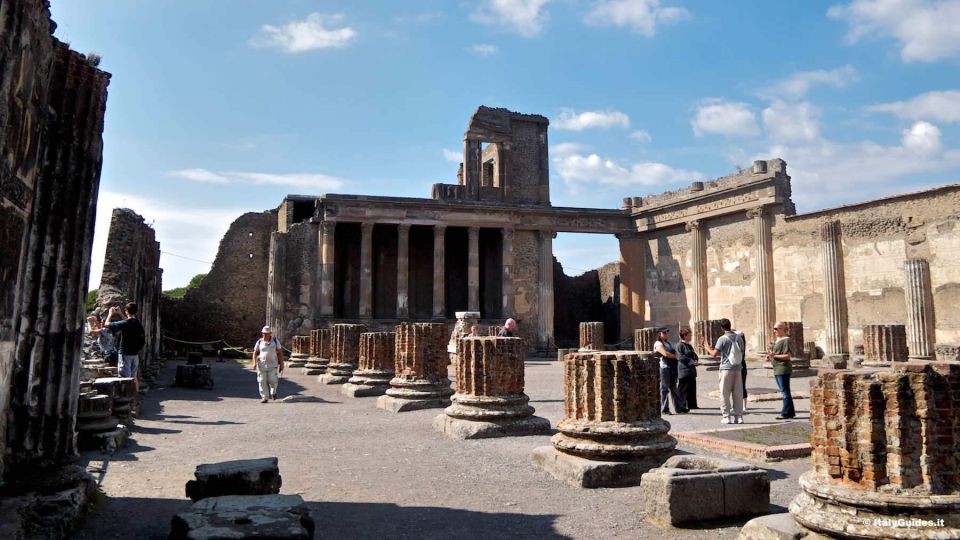
From the Porta Marina area, you move into the civic heart of the city. The tour includes the Basilica and the Foro Civile di Pompei, which is the forum with market and major temples.
This is where Pompeii shifts from “cool buildings” to “how the city worked.” The Basilica area gives you a feel for public life and administration, while the forum spaces help you imagine crowds, negotiations, announcements, and daily business.
What I appreciate about covering these in a guided format is the way the guide can link the layout to human behavior. Forums weren’t just monuments. They were places where people met, handled issues, and kept the city running.
Drawback to keep in mind: forums and temple areas can feel dense. There’s a lot to see in a short time, so if you’re someone who likes to stand and stare for long periods, you may need to choose moments to pause. The tour’s 3-hour pacing is focused, so it’s best to keep your pace in sync with the guide.
Temple stops: Apollo and Jupiter, plus why temples feel different
The route includes major temple areas such as the Temple of Apollo and the Temple of Jupiter. These aren’t separate “must-see wonders” in isolation. They’re part of the same idea: Pompeii’s public space was structured around religion and civic identity.
With an archaeologist guide, you’re likely to hear how these temples fit into street life and political symbolism. You’ll also often get help noticing details that a general walk-by would miss—shapes, placements, and clues that help explain function.
Also, if you’re the type who worries about tours being too “lecture-y,” this isn’t built as a museum talk. The temples are visited while you’re walking, so it stays tied to physical context.

Greater Decumano and the everyday streets people actually walked
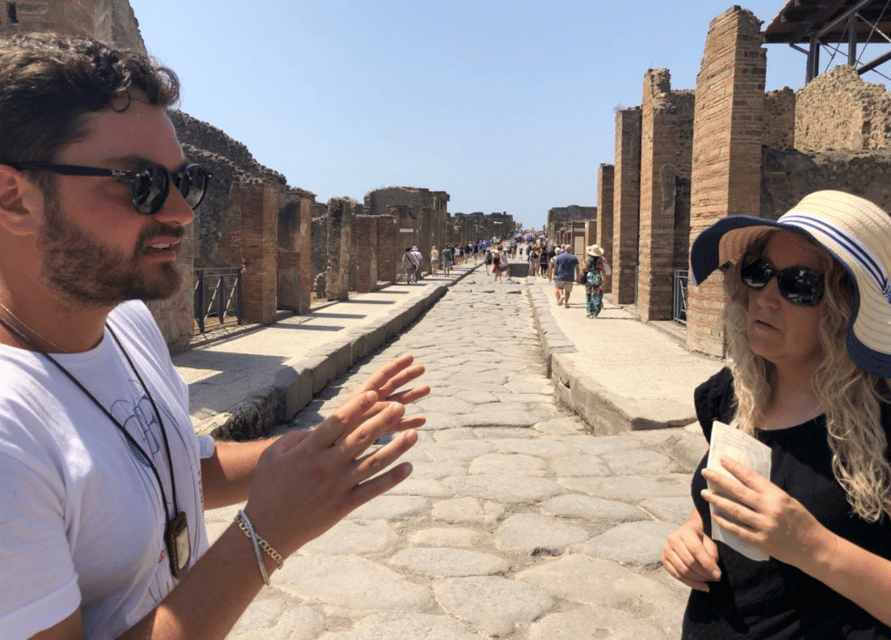
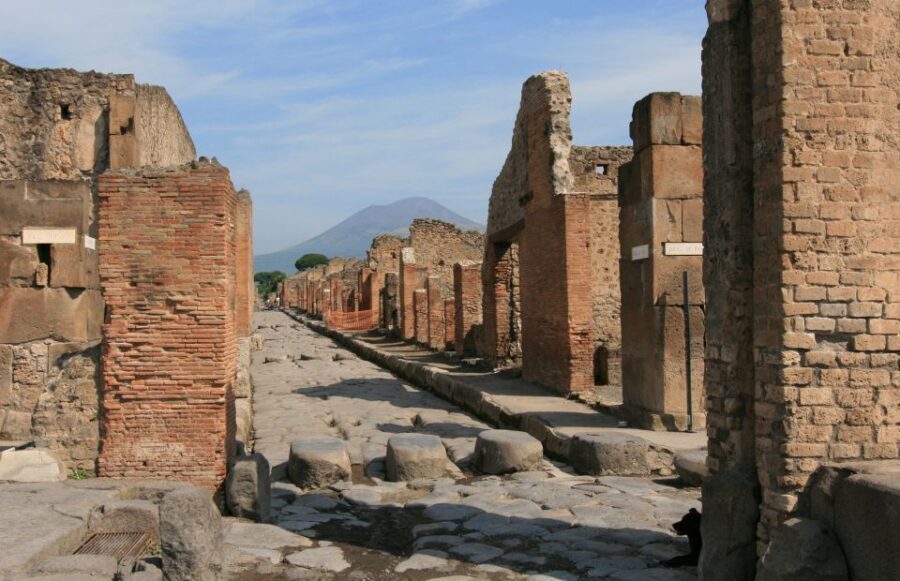
Next comes the feel of the city’s movement. The tour includes walking along the Greater Decumano, and you’ll also get a look inside the thermal system and at the Lupanare along the way.
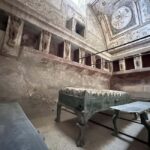
This is the segment that helps Pompeii become less postcard-like. Streets, drainage, access points, bath-related spaces, and entertainment-linked buildings show the Roman day-to-day rhythm. Seeing the thermal system in context makes it easier to understand that comfort and routine mattered as much as grand architecture.
The Lupanare stop is a reminder that Pompeii wasn’t only civic life and religious monuments. It also had private, commercial, and social spaces—an aspect that helps the city feel lived-in rather than frozen.
Keep expectations realistic here: you’re not doing a full “every street in Pompeii” tour. You’re getting the main arteries and the most meaningful links to how people moved and spent time.
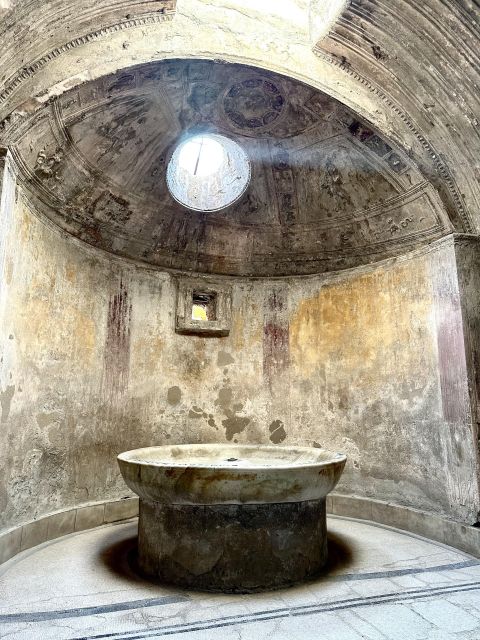
Macellum and Forum Baths: food, routines, and the systems behind comfort
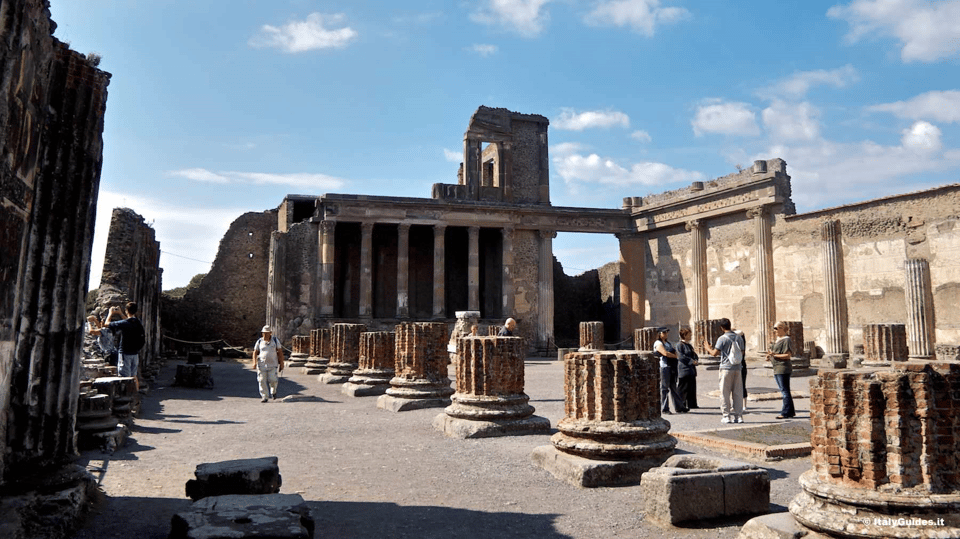
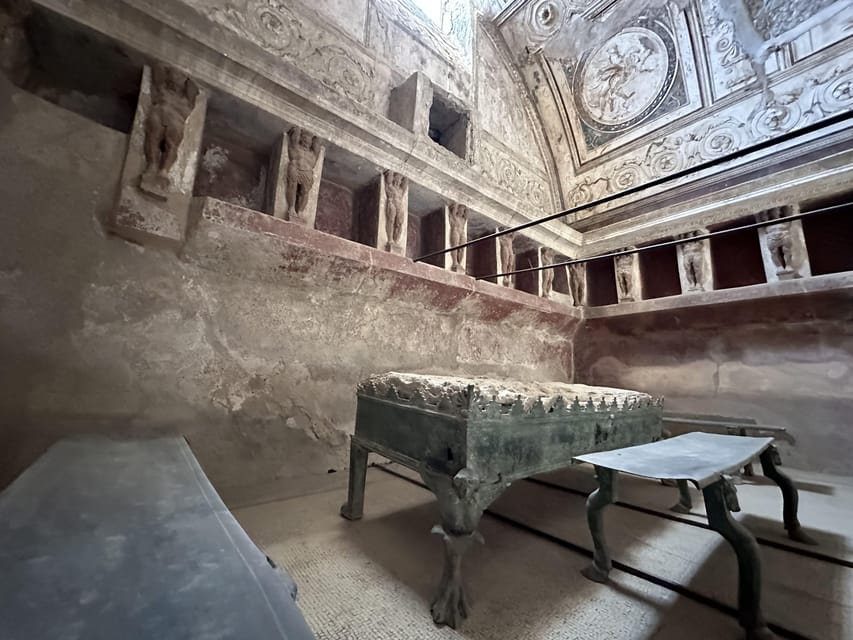
The itinerary includes the Macellum of Pompeii and the Forum Baths. Together, these stops help you understand two sides of daily life:
- food markets and social shopping routines (Macellum)
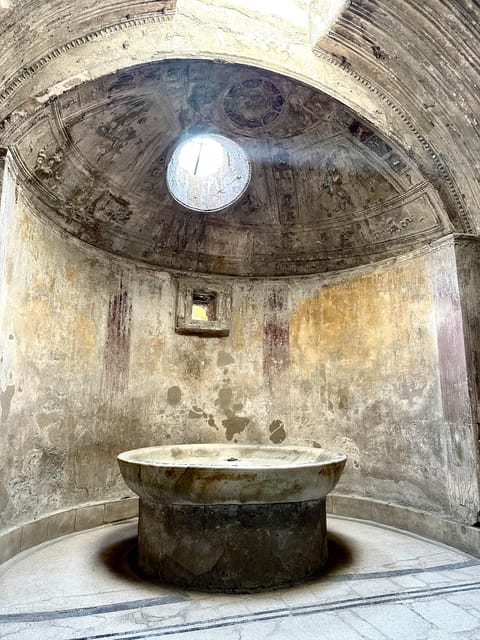
- hygiene, social time, and architectural planning (Forum Baths)
What’s valuable is that these places let the guide explain the logic of Roman urban systems. Baths weren’t just for washing. They were spaces where people met and spent time.
Also, since the tour description mentions the chance to look inside the thermal system, you should pay attention to how the site is arranged and what the spaces were built to do. That’s the difference between seeing ruins and understanding a city’s design choices.
If you’re a fan of “small evidence, big meaning,” this is a strong area to focus. Even when the structures look broken, the layout often still tells you what mattered.
Recently opened domus and restorations: the houses that make you rethink scale
One of the tour’s promises is “the last houses opened at Pompeii,” and that shows up in the route through multiple home stops and major house highlights. On this walk, you’ll visit domus such as:
- House of the Tragic Poet
- House of Menander
…and you’ll also hear about notable restorations like the House of Golden Cupids.
This is where Pompeii can change your brain. Villas and houses in Pompeii aren’t only about wealth. They show tastes, room-by-room functions, and the way decoration was part of identity. Seeing different domus in a guided route helps you compare instead of treating each as an isolated exhibit.
A useful way to experience these homes is to look for transitions: entry to main rooms, public-facing parts versus private spaces, and where daily life would have played out. With the archaeologist guide, you’ll get help noticing why those transitions mattered.
Possible drawback: domus can be visually intense. If you’re the kind of person who gets overwhelmed by “too much to look at,” pick 2–3 details per house and let the guide point you toward what’s most important. The pacing is designed so you don’t get stuck in one room too long.
Theater and gymnasium-style spaces: entertainment, movement, and daily rhythm
The itinerary includes the Large Theatre, and the tour description also mentions the Great Gymnasium. These are different but related: one is spectacle, the other is routines tied to fitness and social life.
This part of the tour helps you understand that Pompeii’s people used spaces for both planned events and ongoing daily activity. You’re not only walking through homes and temples. You’re seeing where people gathered, watched, and practiced parts of everyday culture.
If you like when a tour ends with a memorable “scene,” this segment sets you up for the finale.
Garden of the Fugitives: the stop that hits hardest
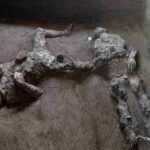
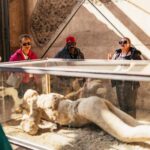
The tour includes the Garden of the Fugitives, tied to the story of people who tried to escape during the eruption. The visit highlights the body moulds left behind, which is the kind of evidence that makes Pompeii feel painfully real.
This is also where an archaeologist guide can help you process what you’re seeing without turning it into shock tourism. It’s not just a dramatic moment—it’s evidence of how people reacted and what the eruption meant at street level.
If you’re sensitive to intense historical artifacts, this is the stop where you should mentally prepare. There’s no getting around the emotion of it, and it’s better to treat it with focus rather than sprint past.
Amphitheater: your final big-picture view
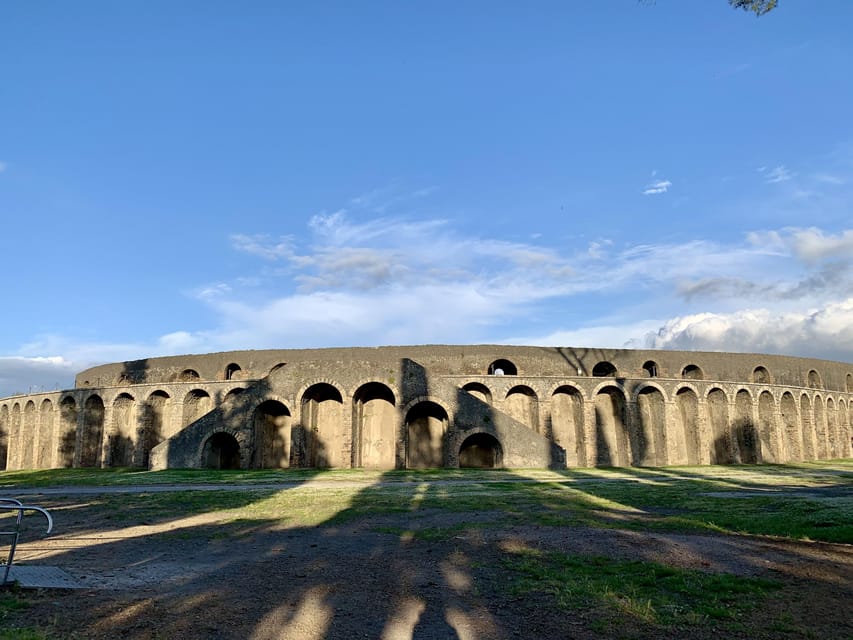
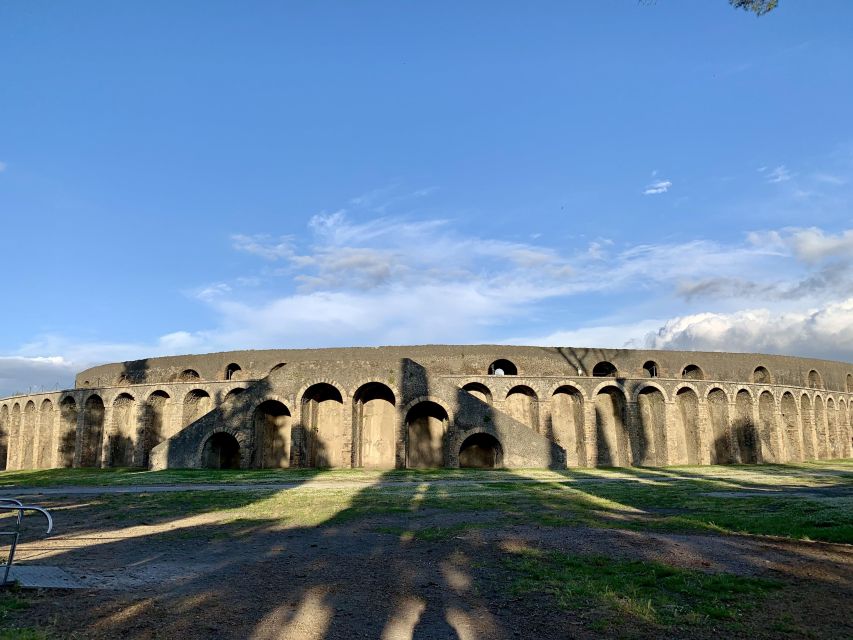
The last stop is the Amphitheater of Pompeii. Ending here works because it’s a public space that makes the city feel complete. After seeing homes, markets, baths, and temples, the amphitheater gives you the “crowd” perspective.
In a guided tour, this final stop also helps you connect city life to entertainment. You can imagine the flow of people moving in and out and the way Pompeii’s design supported gatherings.
It’s a good finish for photos too, but try not to spend the whole time behind your camera. Use the guide’s cues and look for the structural logic—how people would have experienced the space.
Price and value: what you really pay for
The price shown is $407.83 per group (listed as up to 1). That number can feel high until you break down what’s included.
Here’s what you’re paying for, based on the tour inclusions:
- a private guided tour
- skip-the-line service
- admission tickets included
- full assistance
- a personal archaeologist
- the full 3-hour route through major sites
You’re not just buying access to ruins. You’re buying time savings (skip the line), expertise (archaeologist interpretation), and a structured walk through the most meaningful sections of Pompeii.
If you’re traveling solo, that per-group pricing can actually be a strong deal compared with paying for a general group tour plus separate tickets plus hoping you get enough guide attention. If you’re traveling with someone else, compare the per-person math carefully, since the offer is shown as per group up to 1.
Who this Pompeii VIP tour suits best
This tour fits best if you want Pompeii to feel clear, not overwhelming.
It’s a good choice for:
- first-timers who want the big highlights and context from excavation evidence
- people who prefer a guided plan instead of figuring out routes alone
- anyone interested in how archaeologists revise knowledge, such as evidence connected to the eruption date (like that coin mentioned in the antiquarium stop)
- visitors who want to see recently opened houses and major restorations without guesswork
It might be less ideal if:
- you want a slow, free-roam day with lots of long pauses
- you’re not comfortable walking on uneven ancient surfaces for about 3 hours
Should you book this Pompeii VIP 3h Tour?
If you value guided structure and real interpretation, I’d book it. The combination of skip-the-line, admission included, and a licensed archaeologist makes this feel like a high-effort, high-clarity experience rather than a basic sightseeing walk.
I’d choose it especially if your Pompeii visit is limited in time and you want the route to hit forum life, street life, houses (including recently opened domus), the Garden of the Fugitives, and a strong finish at the amphitheater. Just plan for walking, and make sure your name details and ID are ready so the personal ticket rule doesn’t slow you down.
FAQ
How long is the Pompeii VIP 3-hour tour?
The tour lasts 3 hours.
Where do we meet, and where does the tour end?
You meet at Porta Marina Superiore, right in front of Hortus Bar, and the tour ends back at the meeting point.
Are admission tickets included?
Yes. Admission tickets are included in the tour.
Is skip-the-line entry included?
Yes. Skip-the-line service is included.
What languages are the guides available in?
The tour guide is available in English, French, Spanish, and Italian.
Is the tour wheelchair accessible?
Yes, the tour is wheelchair accessible.
Do I need to bring ID?
Yes. Tickets are personal, so you’ll need to bring an original ID or passport that matches the full names submitted for all participants.