REVIEW · POMPEI CAMPANIA
Pompeii: Entry Ticket and Guided Tour with an Archaeologist
Book on GetYourGuide →Operated by Askos Tours · Bookable on GetYourGuide
Pompeii clicks into focus with a real archaeologist. This 2-hour small-group walk through the ruins shows how a city was frozen after the 79 AD eruption of Mount Vesuvius, with skip-the-line entry and a guide who can explain what you’re actually looking at.
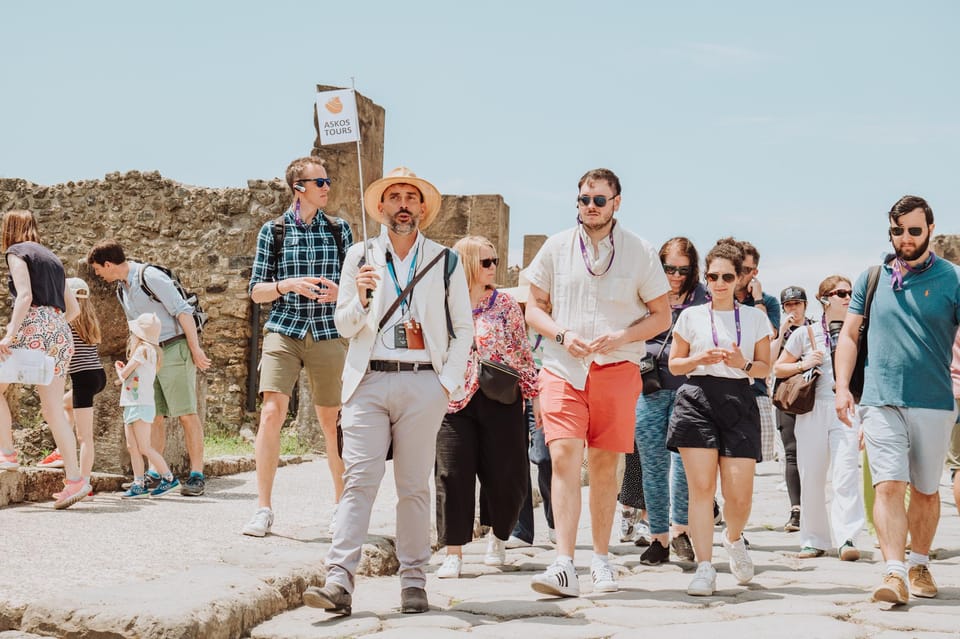
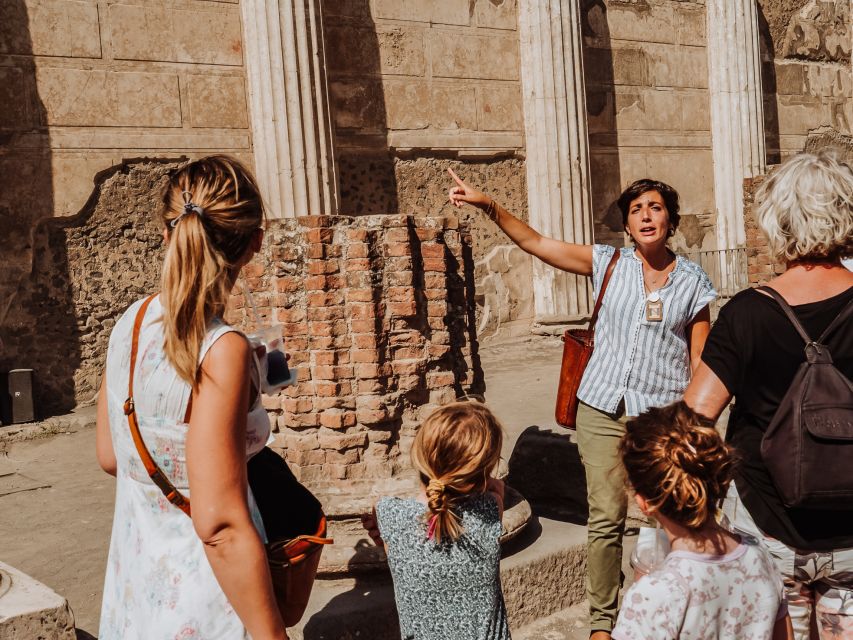
I love the small group size (up to 20) because you can ask questions without feeling like you’re shouting into a crowd. I also like the way the tour leans on an archaeologist-led interpretation, so big monuments connect to everyday life.
One consideration: the site involves uneven ground and steps, so comfortable, grippy shoes matter more than you expect.
In This Review
- Key things that make this Pompeii tour worth it
- Why Pompeii feels so real when a pro is walking beside you
- Skip-the-line entry, small group size, and what that means for your day
- Porta Marina and the Temple of Apollo: start where visitors naturally get oriented
- Foro Civile di Pompei and the Forum world: where public life gets loud
- House of the Faun: why this one still grabs attention
- The Lupanar and House of Menander: street life meets private elegance
- Macellum and Forum Baths: the daily rhythm you’d otherwise miss
- The route also includes the stuff that makes Pompeii unforgettable
- What you’ll remember most: guides who make details click
- Practical tips that make a Pompeii archaeologist tour much easier
- After the tour: how to use the 2-hour window to explore smarter
- Who this tour is best for (and who should reconsider)
- Should you book the Pompeii Entry Ticket and Guided Tour with an Archaeologist?
- FAQ
- How long is the Pompeii guided tour?
- Does the ticket include skip-the-line entry?
- What is included in the price?
- Are headsets provided?
- What languages are available for the live guide?
- Is this tour suitable for wheelchair users or people with mobility impairments?
- Can I bring a dog?
- Are unaccompanied minors allowed?
Key things that make this Pompeii tour worth it
- Skip-the-line access saves time so you can spend more of your visit inside the ruins
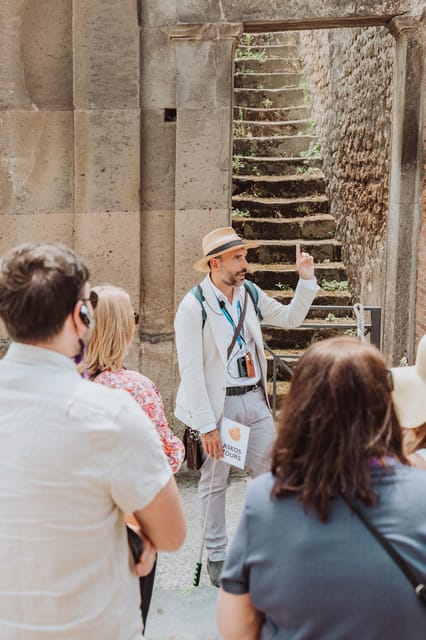
- Archaeologist-led guidance helps you read signs, rooms, and streets like a story
- A small group up to 20 keeps the pace human and the route easier to follow
- Headsets for 10+ make it easier to hear details while you’re walking past busy areas
- A smart highlights route covers major civic, domestic, and street-life stops in just 2 hours
Why Pompeii feels so real when a pro is walking beside you
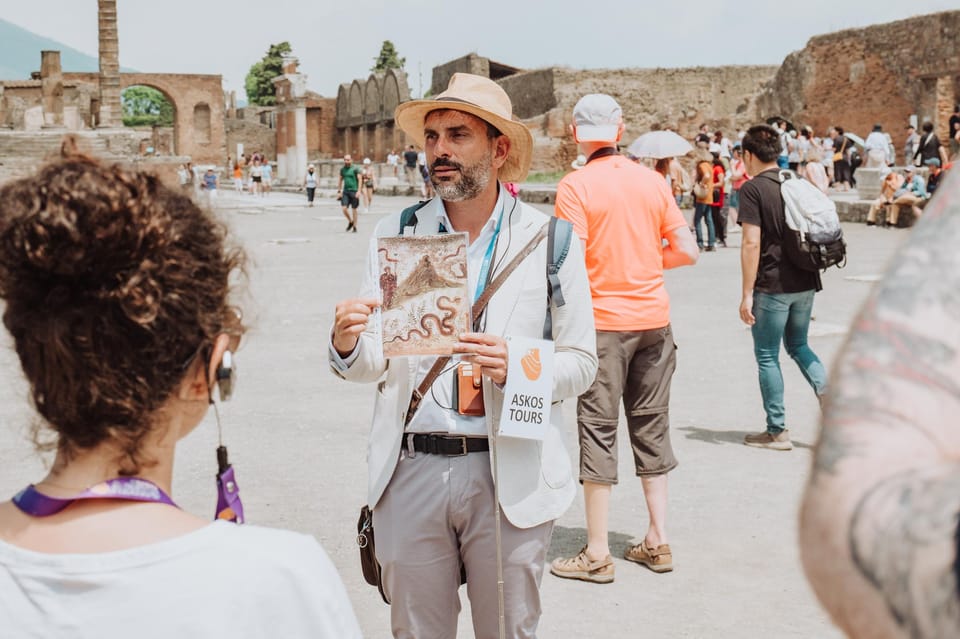
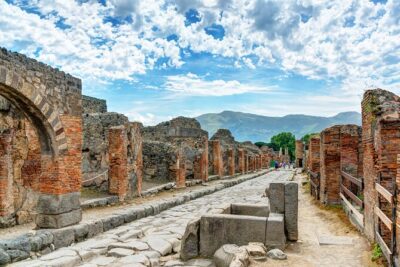
Pompeii is one of those places that can either feel like scattered ruins or like a working city—depending on how you view it. With an archaeologist guiding your route, you’re not just looking at walls. You’re seeing architecture, street planning, and household design tied to how people lived, worked, and spent time.
This tour is built around that idea: you move through landmark zones at a walking pace that lets context land. Instead of memorizing dates, you get a sense of what these spaces were for and why certain homes and public buildings mattered.
You can also read our reviews of more tours and experiences in Pompei Campania.

Skip-the-line entry, small group size, and what that means for your day
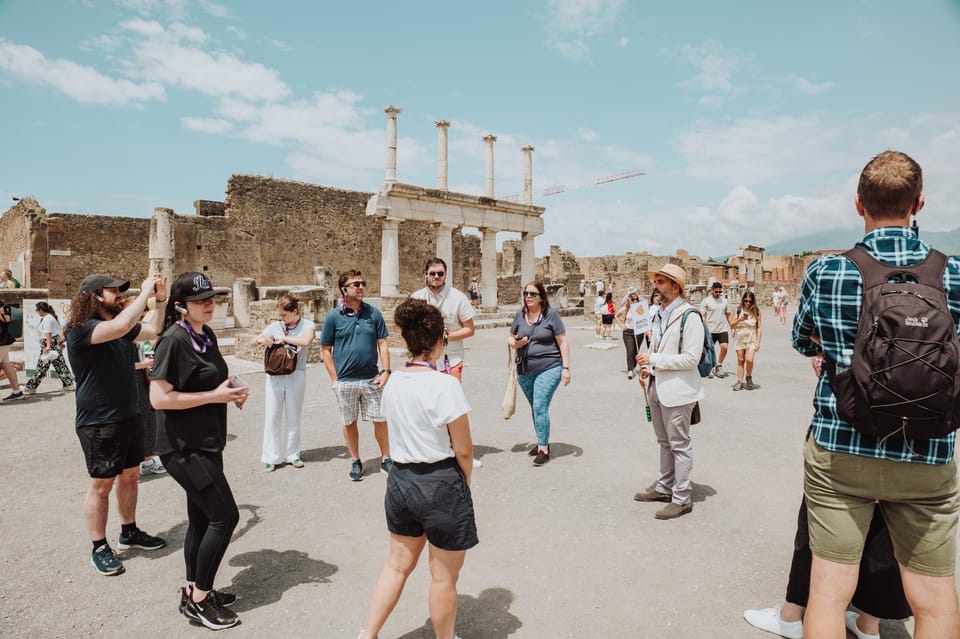
The price is listed at $35 per person for a 2-hour guided experience that includes the Pompeii Express entrance ticket plus an archaeologist guide. For Pompeii, that’s good value because you’re buying two things that are hard to DIY: timed entry (so you waste less time in queues) and interpretation that keeps the site coherent.
Group size stays small—up to 20 people—which changes the whole tone. You’ll have a better shot at hearing answers and taking photos without a constant crush around you. If your group is 10+ you also get headsets, which helps when crowds thicken.
There’s also a practical bonus: the tour ends with guidance on what to explore next. That matters because Pompeii is huge, and without a plan you can wander for ages and still miss the parts that give the city its shape.
Porta Marina and the Temple of Apollo: start where visitors naturally get oriented
You begin with a brief pass near Porta Marina, one of the key entry points into the city. Even if you only spend a short amount of time here, it’s a useful starting lens because it frames Pompeii as a place connected to movement—arrivals, departures, and the flow of people and goods.
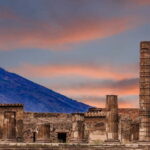
From there, the route includes the Temple of Apollo zone. Temples are a major clue to what the Romans valued in public life: religion wasn’t tucked away in one corner. It was woven into the civic center and everyday routines.
At this early stage, the guide’s job is to help you look past the wow-factor and spot patterns. When you understand what you’re seeing, the next stops don’t feel random.
Foro Civile di Pompei and the Forum world: where public life gets loud
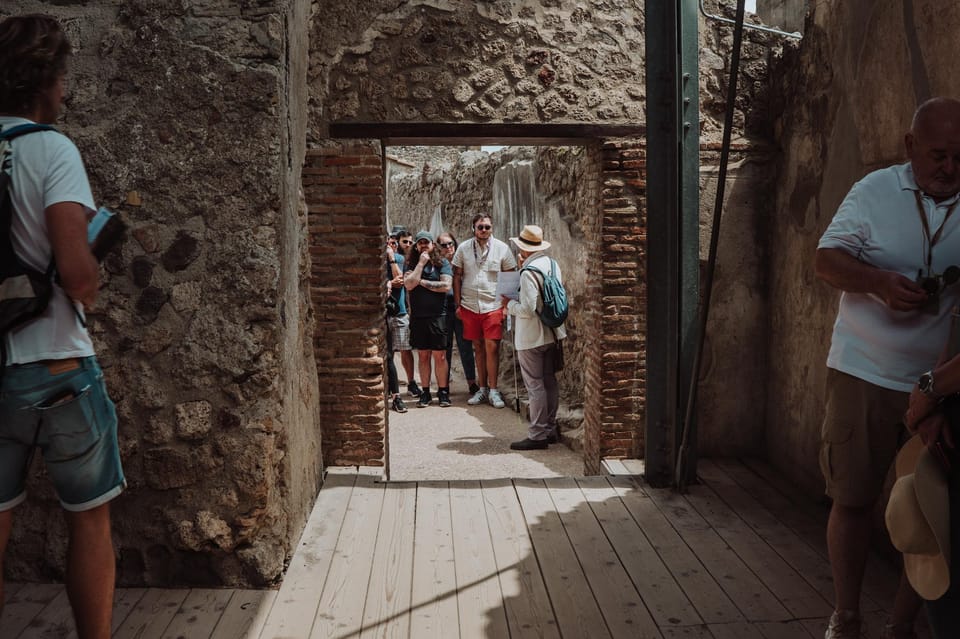
Next you hit the Foro Civile di Pompei and the broader forum area. This is where Pompeii stops being a set of buildings and starts acting like a city. You get to see the civic core—spaces where politics, ceremony, and community activity would have overlapped.
The tour route is designed to show how civic architecture works: open squares, significant structures, and the kinds of buildings people visited often. It also ties in stops connected to the forum zone, including the Basilica area mentioned as a highlight and the general forum atmosphere.
A big reason I like starting here is simple. Once you’ve seen the civic layout, the domestic stops later make more sense—because you can compare public space versus private space instead of treating them as separate worlds.
House of the Faun: why this one still grabs attention
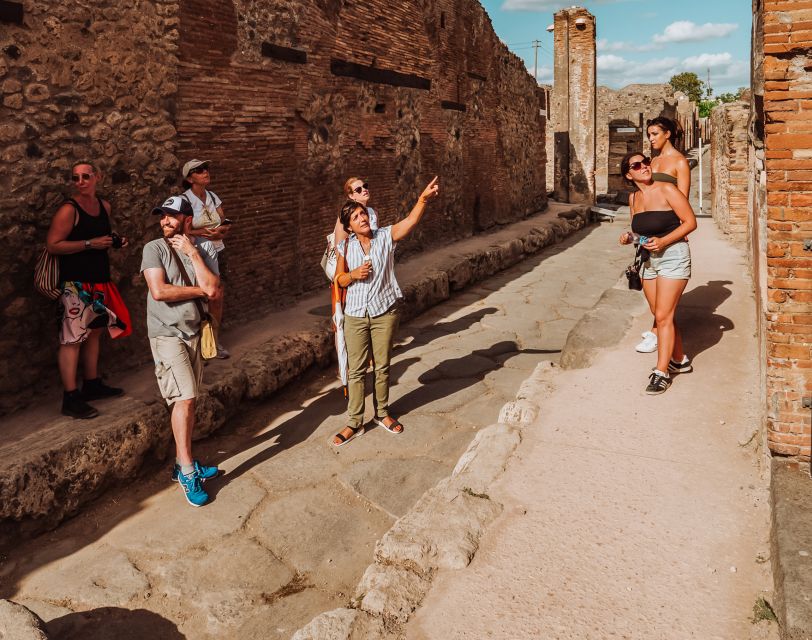
The House of the Faun (Casa del Fauno) is one of the most celebrated homes in Pompeii. You get a guided window into what makes it important, including how grand domestic architecture signals status and power.
This isn’t just about admiring a big house. The guide helps you notice layout logic—how rooms connect, where visitors might go, and what domestic spaces reveal about wealth and daily routines. Pompeii’s homes can feel like small museums of people’s priorities.
Even if you’ve read about Pompeii before, this stop usually changes how you remember it. It’s the difference between seeing a name on a sign and understanding why the place deserves that reputation.

The Lupanar and House of Menander: street life meets private elegance
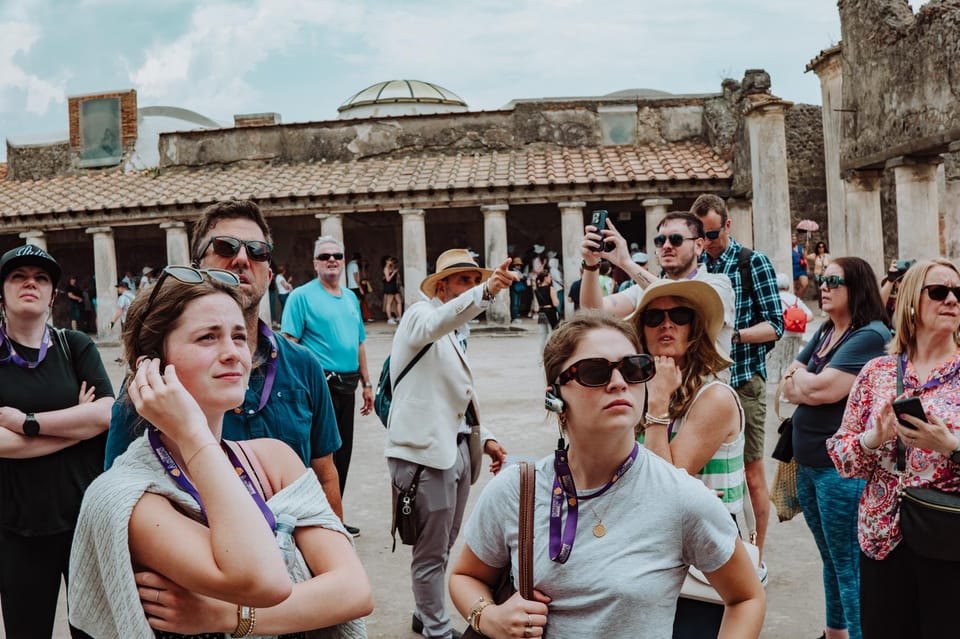
Then the tour moves into more human, more complicated territory with the Lupanar. This is one of the most discussed sites in Pompeii because it connects architecture to social reality. The guide’s explanations help you read what these rooms and the surrounding layout suggest about behavior, economics, and the city’s undercurrent.
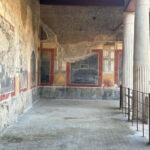
After that, you visit the House of Menander. This home offers a different mood: refined domestic space and evidence of art and taste. The pairing works well. Seeing the Lupanar and then stepping into a more “elite” home gives you a clearer sense of social contrast inside the same city grid.
If you’re the type who likes to understand what people did for fun, for work, and for status, this is where the tour starts feeling less like sightseeing and more like understanding a place.
Macellum and Forum Baths: the daily rhythm you’d otherwise miss
A Pompeii visit can go off the rails if you focus only on temples and big homes. That’s why the tour includes the Macellum and the Forum Baths zone.
The Macellum is tied to food and commerce—an easy way to understand how people ate and how goods moved through the city. When you see it with a guide, it’s not just a market building. It’s a window into routine and supply.
Then you get the ancient baths. Baths show up in Pompeii because hygiene, relaxation, and social time were built into public life. In a city that was buried and preserved, these spaces often feel like the most tangible proof that daily life had structure.
This combination matters for value. In just 2 hours, you’re seeing Pompeii not only as a tragedy, but as a functioning social system.
The route also includes the stuff that makes Pompeii unforgettable
Beyond the main stops, the tour is set up to highlight several of Pompeii’s most famous reference points. You may pass by areas connected to the Marina Gate and Basilica complex, and you’ll also be shown places associated with street life, including the Termopolium (a type of food stand).
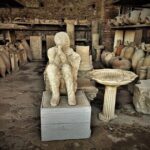
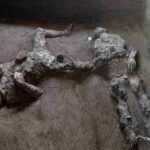
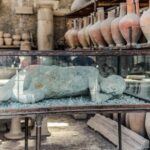
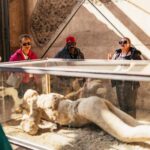
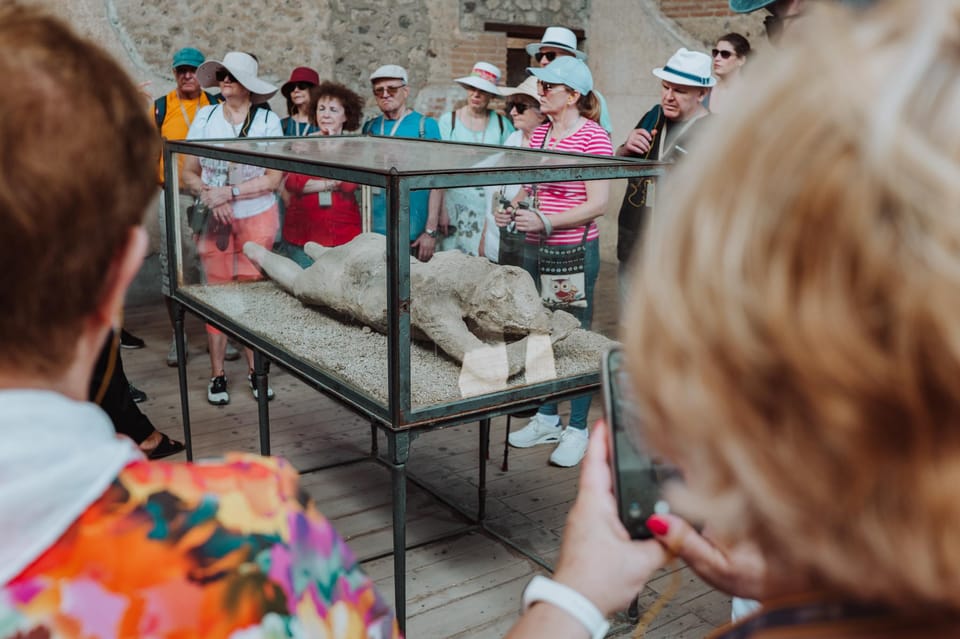
You’ll also encounter the Plaster Casts of victims as part of the broader experience. These are heavy, and a guide’s framing helps you understand what you’re seeing without turning it into a shock-only stop.
Finally, the tour includes the Theaters area as another key landmark. That’s a useful reminder that Pompeii wasn’t only houses and temples—it was also entertainment and public gathering.
What you’ll remember most: guides who make details click
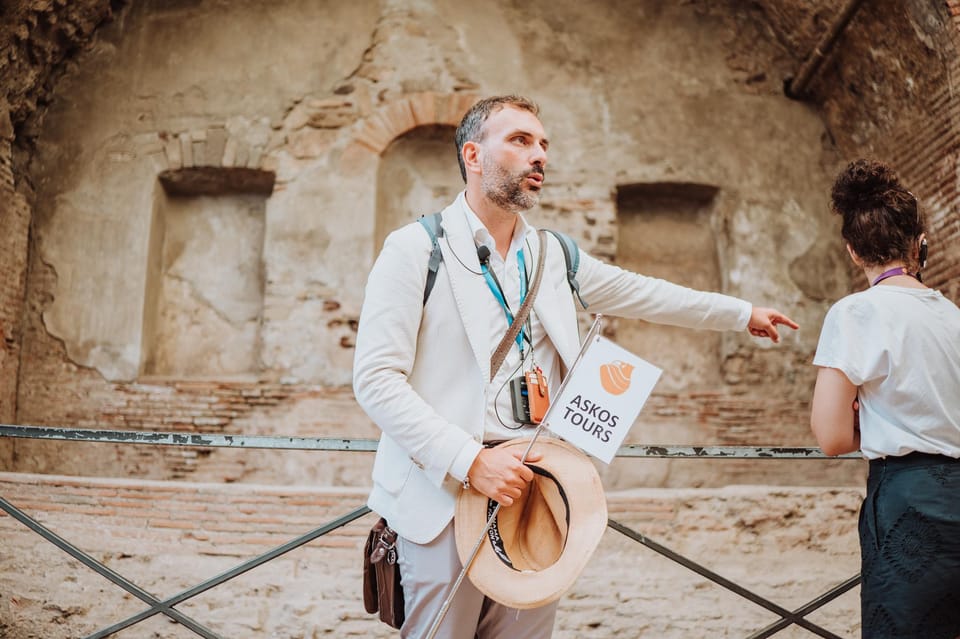
One pattern in the tours like this is that the best guides don’t just recite facts. They teach you how to look. That shows up in how people describe their experiences with guides such as Teresa, Anna Sorrento, Giancarlo, Alfredo, Mario, and Paolo (names vary by departure).
You’ll hear stories that connect architecture to daily habits. You’ll also get practical direction on where to focus your eyes next, especially when a room layout or street segment doesn’t scream its purpose from 10 steps away.
Humor and personality come up a lot too. It helps because Pompeii is emotionally intense, and a guide who can keep the mood readable makes it easier to stay attentive for the full walk.
Also, don’t underestimate audio. Headsets help, but I’d still plan to keep one ear ready to adjust if it’s crowded. The headset benefit is real; the setup is just not magic.
Practical tips that make a Pompeii archaeologist tour much easier
Pompeii rewards preparation. Here’s what I’d do before you go:
- Wear comfortable, grippy shoes. Paths are uneven, and you may climb a couple of steps.
- Bring water. The walk can be longer than you expect once you start pausing for explanations.
- Charge your phone but keep your camera strap secure. You’ll want photos, but you’ll also want hands free for safer footing.
- Plan for lots of walking. This is a 2-hour tour, but the site is spread out and the route moves.
If rain shows up, you’ll still have the tour. The bigger issue becomes visibility and footing, so shoes still matter even more.
After the tour: how to use the 2-hour window to explore smarter
The end of the tour isn’t just a goodbye. You’ll get recommendations for where to go next in Pompeii. That’s a big deal because the site is sprawling, and a guided route helps you build a mental map.
When you continue on your own, try to revisit the zones you found most meaningful during the walk. If you liked the civic core, keep exploring around the forum areas. If you leaned toward domestic spaces, spend extra time in and around the homes that match your interests.
And if the plaster casts and theaters hit you, don’t rush past them when you re-enter those sections. Pompeii is one of those places where the second pass sometimes matters more than the first.
Who this tour is best for (and who should reconsider)
This Pompeii tour is a strong fit if you want structure in a place that can otherwise feel confusing. It’s especially good if you like explanations that connect buildings to real life—food, public gathering, social behavior, and household status.
It’s not a fit for wheelchairs or mobility impairments, and mobility scooters aren’t allowed. Also note that unaccompanied minors aren’t permitted on this activity, so plan accordingly if you’re traveling with kids.
If you travel with a small group and want an archaeologist-led route that won’t swallow your whole day, this one hits the sweet spot.
Should you book the Pompeii Entry Ticket and Guided Tour with an Archaeologist?
If you care about understanding what you see—not just photographing it—this is an easy yes. The combo of skip-the-line access, an archaeologist guide, and a small-group pace means you spend your time inside Pompeii rather than stuck outside it.
I’d book it if you’re short on time or if this is your first visit and you want a route that makes the site feel logical. Even seasoned history fans often come away happiest when someone helps connect the dots between public buildings, private homes, and daily life.
If you hate walking on uneven ground or you need wheelchair access, reconsider. For everyone else with solid shoes and a willingness to look closely, a guided archaeologist tour is one of the best value ways to experience Pompeii in just 2 hours.
FAQ
How long is the Pompeii guided tour?
The tour lasts 2 hours.
Does the ticket include skip-the-line entry?
Yes. Your ticket includes skip-the-line access.
What is included in the price?
The price includes the Pompeii Express entrance ticket, an archaeologist guide, a small group tour, and headsets if your group is 10 people or more.
Are headsets provided?
Headsets are provided for groups of 10 people or more.
What languages are available for the live guide?
The live tour guide is available in English, Spanish, French, Italian, Portuguese, and German.
Is this tour suitable for wheelchair users or people with mobility impairments?
No. It is not suitable for people with mobility impairments and is not for wheelchair users.
Can I bring a dog?
Only dogs that do not exceed 10 kg in weight and a maximum height of 40 cm are permitted. The dog must be on a leash and held in the arms inside buildings, and you must collect the excrement.
Are unaccompanied minors allowed?
No. Unaccompanied minors are not allowed.