REVIEW · POMPEI CAMPANIA
Pompeii: Skip-the-Line Private Tour with Archaeologist Guide
Book on GetYourGuide →Operated by Rosaria all around naples · Bookable on GetYourGuide
Pompeii hits different with an archaeologist beside you. I love that this is a private, live guide tour focused on how people actually lived, not just pretty ruins. I also like that the tour includes priority entrance to the ticket office, so you spend less time standing around and more time looking closely. One possible drawback: the entrance ticket isn’t included, so you’ll need to buy that separately before you head in.
What makes it work well is the mix of big public stops and quieter domestic details. You’ll move through major sites like the amphitheater, gymnasium, baths, forum, and the ancient brothel, then shift to the domus side where mosaics and frescoes get your attention fast. It ends with freedom to wander afterward, but you’ll have to accept that the guided part is only 2.5 hours.
In This Review
- Key Highlights You’ll Notice Right Away
- Why This Private Pompeii Tour Feels Smarter Than Doing It Alone
- Getting In Faster: Priority Entrance to the Ticket Office
- The 2.5-Hour Pompeii Route With an Archaeologist Guide
- Amphitheater: How People Watched and Reacted
- Gymnasium: A Public Place for Body and Routine
- Baths: Cleanliness, Social Time, and Community
- Forum: Politics, Business, and Public Identity
- Ancient Brothel: Uncomfortable, Important, and Specific
- Domus With Frescoes and Mosaics: Private Taste and Status
- Pompeii as a City of Everyday Products: Laundry, Fast Food, and Bakery
- Skip the Crowds, Then Keep Going on Your Own
- Languages, Group Size, and What That Means for Your Visit
- Price and Value: What You’re Really Paying For
- Who This Tour Suits Best (And Who Should Rethink It)
- Should You Book This Pompeii Skip-the-Line Private Tour?
- FAQ
- Does this tour include the entrance ticket?
- How long is the Pompeii private tour with an archaeologist?
- What languages is the live guide available in?
- Where do we meet the guide?
- Is there skip-the-line access?
- Is entry free on the first Sunday of the month?
Key Highlights You’ll Notice Right Away
- Priority ticket-office entrance cuts down your wait before the real exploring starts
- Private archaeologist-led explanations help you connect buildings to daily life
- Mosaics and frescoes get treated as meaningful visuals, not decorations
- Public monuments and private homes both appear on the route
- Ancient shops like laundry, fast food, and a bakery show everyday routines
Why This Private Pompeii Tour Feels Smarter Than Doing It Alone
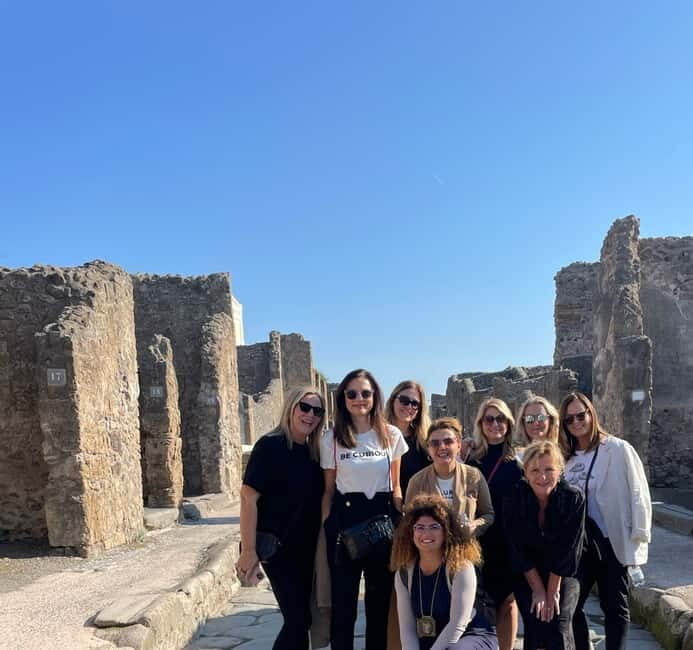
Pompeii is one of those places where you can look around for a long time and still feel like you’re not getting the whole story. This tour is built to fix that. You get a local archaeologist guide using the buildings themselves as evidence, walking you through what each place likely meant to the people who lived there.
The private format matters. You can follow along at a pace that makes sense for your questions and your attention span. And it’s not only about naming things. The guide frames what you’re seeing as part of the city’s last hours—how public life ran in spaces like the forum and amphitheater, and how private life looked inside homes where mosaics and frescoes were meant to impress.
If you’re the type who likes to understand a place rather than just photograph it, this is a good match. You’ll leave with clearer mental “links” between street-level details and the bigger public buildings.
You can also read our reviews of more guided tours in Pompei Campania

Getting In Faster: Priority Entrance to the Ticket Office
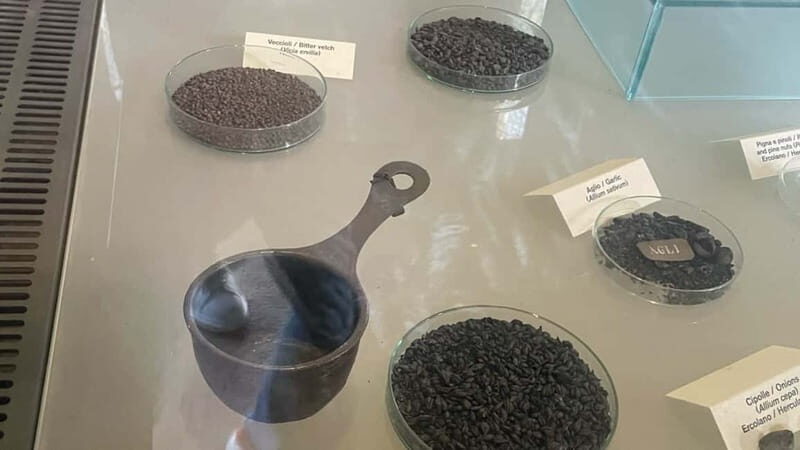
The “skip the line” promise here is specifically about the ticket office, not just the main site gates. That’s a helpful distinction because ticket queues are often the first bottleneck. With priority entrance to the ticket office, you’re more likely to start your visit without losing a chunk of your limited time.
Important practical note: the entrance ticket isn’t included. So you’re paying for the guided experience and the priority access to the ticket process, then bringing your own entrance ticket to enter the archaeological site. If you tend to travel with a tight schedule, this separation is worth planning for in advance.
Also, on the first Sunday of each month, entrance is free. But the trade-off is that tickets can’t be reserved ahead of time, so entry isn’t guaranteed. If your dates land on that day, I’d treat “free entry” as a bonus, not the foundation of your plan.
The 2.5-Hour Pompeii Route With an Archaeologist Guide
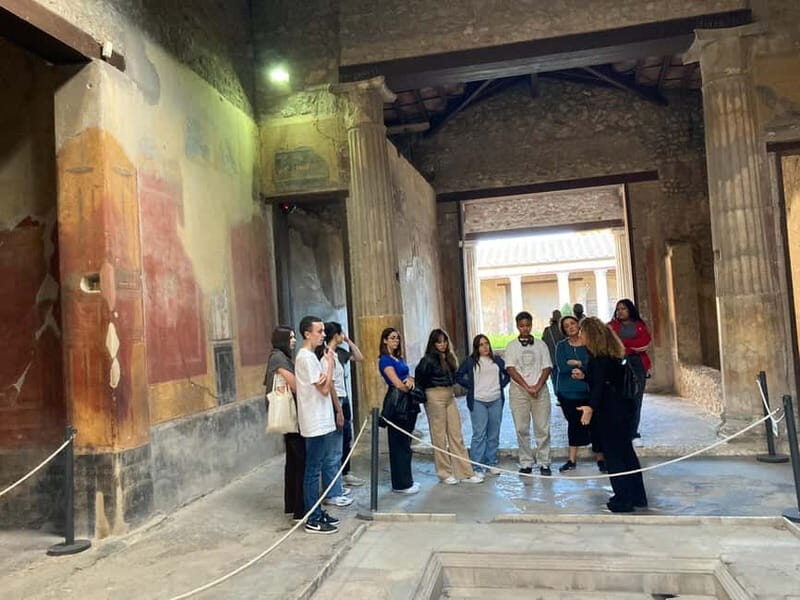
This tour runs for about 2.5 hours. That sounds short until you realize Pompeii can drain your attention quickly—so having a focused route is actually a win. You’re not trying to see everything. You’re trying to see the most important pieces in a way that makes them click.
Your guide focuses on what can be understood from major public buildings first, then uses the domus (private homes) to show the contrast. Along the way, you’ll also notice everyday commercial life—places that feel surprisingly familiar.
Amphitheater: How People Watched and Reacted
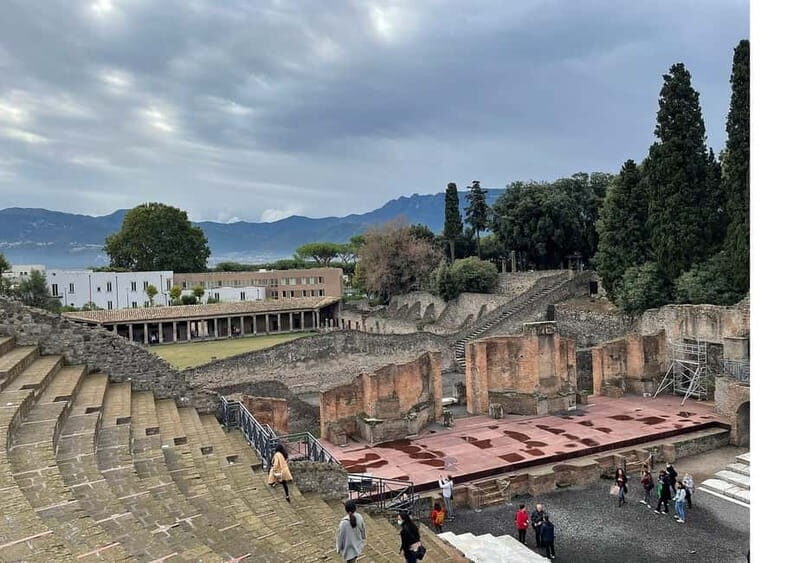
The amphitheater is one of the headline experiences for good reason. It’s where social life showed up in a big way—crowds, spectacle, and shared emotion. During your stop here, the key value is interpretation: you’re not just looking at seating and stone. You’re learning how this space functioned as a public “stage” for Pompeians.
Practical tip: when you’re standing in front of a ruin like this, try to picture the people in the stands and the flow of movement into and out of the space. A good guide helps you do that quickly.
Gymnasium: A Public Place for Body and Routine
Next, the gymnasium gives you a different slice of daily life. It’s still public, but it’s tied to routine and physical culture rather than spectacle alone. The guide’s job is to connect the purpose of the space to what people would have done there.
This stop is especially useful if you’ve only ever seen Pompeii through major postcard images. It expands the city beyond one big attraction.
You can also read our reviews of more private tours in Pompei Campania





Baths: Cleanliness, Social Time, and Community
Pompeii’s baths are where everyday rhythms come through. Baths weren’t only about hygiene; they were also about social interaction and relaxation. When your archaeologist guide explains the bathing environment, you start to understand how people might have moved through spaces and how the layout supported different activities.
Look closely for visual clues the guide points out—because baths can feel like “one big room” if you don’t get the mental map.
Forum: Politics, Business, and Public Identity
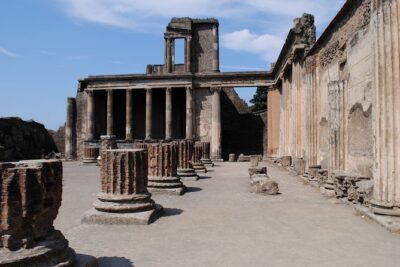
The forum is the civic center, and it’s where you’ll see the city’s public identity in action. You’re looking at the part of Pompeii where official and social life overlap. The value of a guided stop here is the way the guide connects what you see in front of you to how people organized themselves as a community.
If you like structure—where everything fits together—this is often where your understanding starts to lock in.
Ancient Brothel: Uncomfortable, Important, and Specific
Yes, the ancient brothel is part of the route. It’s uncomfortable, and that matters. Pompeii isn’t just about pretty mosaics and dramatic architecture. It’s also about frank details of daily life, including places where human behavior and social systems worked in particular ways.
A good archaeologist guide can handle this topic with clarity instead of sensationalism. You get the historical context and the architectural clues, which is more useful than just staring at a name.
Domus With Frescoes and Mosaics: Private Taste and Status
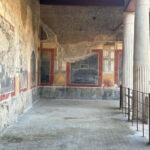
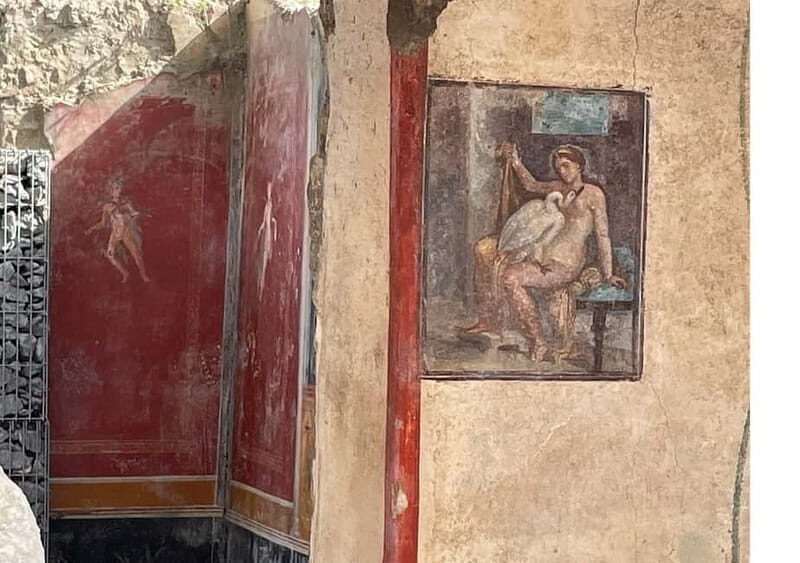
Then you shift gears to the domus, where the mood changes fast. This is where the guide’s archaeologist lens really pays off. You’re not just walking through rooms. You’re learning how homes reflected the owners’ taste and status through decoration.
The mosaics and frescoes are a highlight here. The tour’s focus makes you look for meaning—where images were placed, what they might have communicated, and why those interiors mattered to the people who lived there.
If you’re the kind of traveler who usually “walks past walls,” this stop helps you slow down.
Pompeii as a City of Everyday Products: Laundry, Fast Food, and Bakery
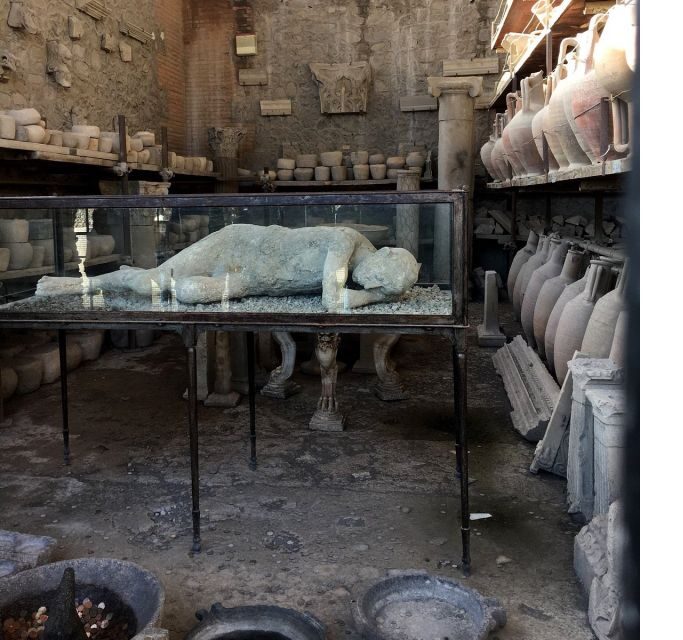
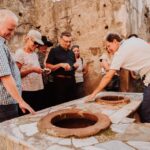
One of the most fun parts of this experience is the way the guide brings commerce into the conversation. You’ll spot ancient shop areas tied to routines that feel almost modern: laundry, fast food, and a bakery. The names might vary as you walk, but the concept lands quickly—you’re seeing a city where daily needs were handled in physical places, not abstract history books.
This is also where you’ll start to understand why the tour feels memorable. It’s not only about catastrophe and ruins. It’s about people buying, cleaning, eating, and living close to each other.
If you want authentic connections, pay attention to how shop spaces relate to the streets and to foot traffic. That’s where the city starts to feel like a real place again.
Skip the Crowds, Then Keep Going on Your Own
After the guided portion, you’re given freedom to explore independently. That’s a smart setup because it lets you turn what you learned into your own choices. You can linger where something caught your attention, and you can return to look again with better context.
The tour ends back at the meeting point, which keeps things simple and reduces decision fatigue at the end. You don’t have to worry about hunting for a guide while your brain is tired from information overload.
Practical “do it right” approach: once your guide finishes, pick one theme to follow—public monuments, domestic rooms, or street-level commercial life—and walk with that filter. It makes your self-guided time feel purposeful, not random.
Languages, Group Size, and What That Means for Your Visit
This is a private group experience, and it runs with a live guide in English, French, or Italian. The private format is ideal if your group wants to move together and ask questions without feeling rushed.
Pricing is listed as $192.58 per group up to 20, with starting times depending on availability. That group pricing model can be a good value if you’re traveling with friends or family and you can split the cost. It can also be cost-effective compared to paying for separate tours when you want one guide to cover the highlights in a coherent order.
One more reality check: 2.5 hours is built for focused learning, not for long wandering. If you like slow travel and you plan to take your time with every street corner, this tour pairs well with extra time on your own afterward.
Price and Value: What You’re Really Paying For
Let’s break down the “why it costs what it costs” in plain terms. You’re paying for four things:
- a guided tour with an archaeologist
- priority entrance to the ticket office
- a route that hits major public buildings plus domus details
- a structured tour that still leaves time to explore independently
You’re not paying for the entrance ticket itself. That’s separate, so your total day cost depends on how you handle tickets. But the value here is that an archaeologist guide turns stone into explanations you can use while you walk.
If you’ve ever visited Pompeii without context, you know the problem: it can feel like a pile of ruins until someone helps you read it. This tour is essentially buying that readability fast—then giving you the freedom to apply it.
Who This Tour Suits Best (And Who Should Rethink It)
This experience fits you if:
- you want Pompeii explained by someone who studies the buildings for a living
- you prefer a focused route over trying to plan every stop alone
- you like both major monuments and domestic details like mosaics and frescoes
- you want time afterward to explore without a guide hovering over you
It may not fit you as well if you need slow, stop-everywhere pacing with no structure. The guided part is 2.5 hours, and then the tour ends back at the meeting point.
One more note to watch: the tour info says wheelchair accessible, but it also says it’s not suitable for people with mobility impairments. Those two statements conflict. If mobility is an issue for you, check directly with the operator before booking so you don’t get stuck with an unpleasant surprise.
Should You Book This Pompeii Skip-the-Line Private Tour?
I’d book it if you want Pompeii to make sense quickly and you care about how people lived, not just what’s standing in the open. The priority ticket-office entrance is a real time-saver, and the archaeologist-led approach helps you read the big public spaces and the domus details without getting lost in the museum-like feeling that ruins can create.
I would hesitate only if you don’t like structured time or you’re traveling on a schedule where buying the separate entrance ticket and timing your start could get complicated. Also, if your mobility needs require special handling, don’t assume the accessibility note will solve everything—ask first.
If you’re ready to look at Pompeii with sharper eyes, this is a strong way to do it.
FAQ
Does this tour include the entrance ticket?
No. The entrance ticket is not included. The priority entrance is to the ticket office process, and you’ll need your own admission ticket to enter the site.
How long is the Pompeii private tour with an archaeologist?
The guided portion lasts about 2.5 hours, with starting times depending on availability.
What languages is the live guide available in?
The live guide is available in English, French, and Italian.
Where do we meet the guide?
You meet at the entrance to the excavations. The guide waits with a sign displaying the clients’ names, and the tour ends back at the meeting point.
Is there skip-the-line access?
Yes, there is priority entrance to the ticket office to help you avoid long waits there. This is separate from the entrance ticket itself.
Is entry free on the first Sunday of the month?
Entrance is free on the first Sunday of each month, but tickets can’t be reserved ahead of time, so entry isn’t guaranteed.