REVIEW · POMPEI CAMPANIA
Pompeii: Tour with Archaeologist Guide & Skip-the-Line Entry
Book on GetYourGuide →Operated by Angelo (Travelcampania) · Bookable on GetYourGuide
Pompeii can feel like a dream you can walk into. This Pompeii Express tour pairs official, skip-the-line entry with an expert guide who explains what you’re seeing—so the ruins don’t stay random stones. You move through a smart slice of the site, from the city’s early days to the 79 AD disaster tied to Vesuvius.
I love two things most: the priority access that saves your energy for the excavations, and the way your guide turns each stop into lived-in Roman life. On tours led by guides like Angelo, Teresa, Lilian, Paolo, or Mario, you get context you’d miss if you just wander—like why places such as the thermopolium (fast food counter) and the baths matter, not just that they exist.
One heads-up: this is not for everyone. The tour is listed as not suitable for wheelchair users and not for people with mobility impairments, and the check-in meeting spot can be a little tricky to locate on a busy day.
In This Review
- Key reasons this Pompeii Express tour works well
- Why Pompeii still feels like Roman life, not just ruins
- Priority entry: the real value of skipping the ticket line
- The 2-hour itinerary: what you actually see and why it matters
- Porta Marina: the city’s entrance moment
- Teatro Piccolo: entertainment for everyday people
- House of Menander: home life you can actually picture
- Thermopolium: fast food culture in ancient form
- Terme Stabiane: baths and the social rhythm
- Lupanare: an unfiltered look at Roman after-dark life
- Foro Civile di Pompei: public life and a short breather
- Guide quality, radio gear, and how the group moves
- What’s included (and what you’ll handle yourself)
- Practical tips that make Pompeii easier on your feet
- Price and value: what you’re really paying for at around $57
- Who should book this Pompeii Express tour
- Should you book? My quick call
- FAQ
- How long is the Pompeii Express tour?
- Where does the tour meet, and where does it end?
- Does this tour include skip-the-line entry?
- What’s included in the price?
- What languages are available for the live guide?
- Will we use an audio system or radio earpieces?
- What do I need to bring?
- Are bags allowed?
- Is the tour wheelchair accessible or suitable for people with mobility impairments?
- Can I cancel and get a refund?
Key reasons this Pompeii Express tour works well
- Skip-the-line priority so you spend less time waiting and more time looking closely
- Archaeologist-led interpretation that connects buildings, art, and daily routine
- A focused 2-hour route with time at the most meaningful stops
- Radio/earpiece support when groups are larger, so you don’t miss the story
- Smart pacing to see the highlights without feeling like you’re sprinting
Why Pompeii still feels like Roman life, not just ruins

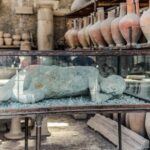
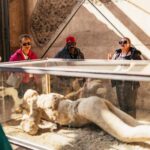
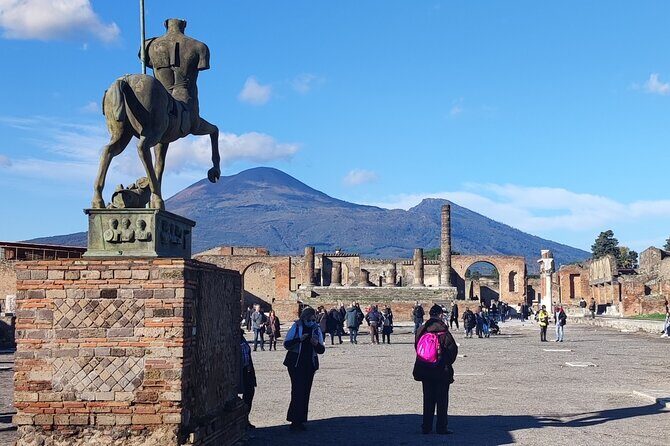
Pompeii is a rare kind of time capsule. The city was buried under debris and ash after Vesuvius erupted in 79 AD, and that catastrophe preserved streets, shops, homes, and public spaces in a way that’s hard to match anywhere else. It’s also a UNESCO World Heritage site, and for good reason: you’re not looking at fragments in a museum—you’re looking at a whole urban world.
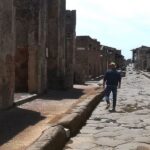
The tour’s great strength is that it doesn’t treat Pompeii like a checklist. Instead, it builds a timeline: the city begins in the era of the 7th century BC, then you watch daily life evolve until the eruption freezes everything in place. That story helps you read what you’re seeing—doors, thresholds, road design, and room layouts start making sense instead of feeling like architecture trivia.
You can also read our reviews of more guided tours in Pompei Campania



Priority entry: the real value of skipping the ticket line

At Pompeii, lines can eat your day. This tour includes a Pompeii Express entrance ticket and priority access, so you’re not stuck fighting for time while other groups slowly shuffle forward.
For a 2-hour visit, that matters. You only have so much daylight, so you need your minutes inside the excavations—where the magic is. Priority entry helps you get into the site while you still have energy to look closely. And once inside, your guide usually helps you get to the right spots efficiently, including quieter areas when the crowds build.
The 2-hour itinerary: what you actually see and why it matters

This tour is built for maximum meaning in limited time. You’ll spend about 2 hours inside the excavations, with guided segments plus a short break to roam.
Here’s the route and what each stop does for your understanding:
Porta Marina: the city’s entrance moment
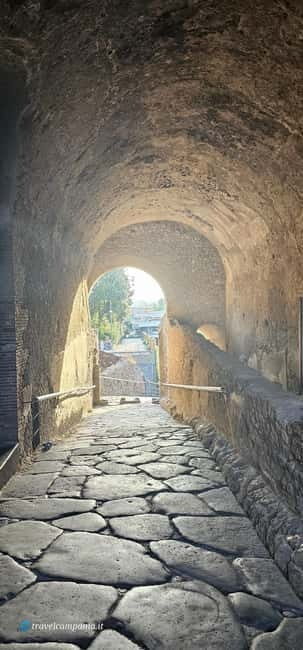
You start at Porta Marina, the kind of place where the city’s flow begins. A short guided stop here sets the stage: how movement worked through the city and what “arriving in Pompeii” would have felt like. It’s a quick orientation point, but it matters because it gives you a frame for the rest of the walk.
If you’re the type who needs to see the city’s “layout logic” first, this is a helpful start. If you prefer big monuments over street-level detail, you might find this stop brief—but it’s a smart warm-up.
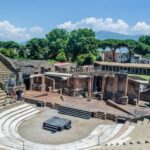
Teatro Piccolo: entertainment for everyday people
Next is Teatro Piccolo, a theater space tied to entertainment culture. Instead of treating it as a static leftover, your guide connects how performances fit into daily routines. Pompeii’s theaters were built for a public that expected leisure as part of life, not something reserved for special occasions.
Even in a short stop, you get a sense of scale and function. It’s also a good reminder that Roman cities weren’t only about politics and temples. People went out, watched things, and killed time.
You can also read our reviews of more tours and experiences in Pompei Campania




House of Menander: home life you can actually picture
The House of Menander is one of those stops that makes Pompeii click. Roman houses weren’t all “one style fits all.” Here, your guide focuses on how ordinary spaces were arranged and decorated, and what that says about status, taste, and daily habits.
This is where you start noticing details that a self-guided walk might miss: room purpose, how visitors would move, and why certain decorations showed up in specific places. It’s one of the stronger stops for turning ruins into a story you can hold in your head.
Thermopolium: fast food culture in ancient form
Then you hit Thermopolium—an essential stop if you like the social side of history. A thermopolium was basically a quick-stop counter where people could eat hot food and grab something without going home.
Your guide uses this stop to explain craft and everyday life: what people ate, how these businesses operated, and what the space suggests about how residents lived. If you’ve ever wondered what Roman meals were like beyond banquet fantasies, this stop gives you a grounded, human angle.
Terme Stabiane: baths and the social rhythm
Next comes Terme Stabiane. Baths were not just hygiene. They were social hubs, conversation zones, and a place to watch the day pass.
Your guide’s role here is to explain how the bathing spaces worked together—what you’d do first, how rooms connected, and why this wasn’t a private activity. Seeing the layout makes it easier to imagine people gathering, relaxing, and trading gossip while the city carried on.
Lupanare: an unfiltered look at Roman after-dark life
The Lupanare is more “real life” than many travelers expect. This stop gives you a look at the facilities connected to commercial sex work in Roman society. It’s not a comfortable topic, but it’s an important one—because Pompeii is famous precisely for preserving what polite history often smooths over.
Your guide will help you interpret the space without turning it into sensational entertainment. The value here is context: how the site’s design reflects how businesses operated and how Pompeians moved through public life.
If you’re easily made uneasy by adult topics, know this is part of the tour route and takes about 20 minutes.
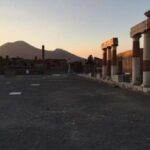
Foro Civile di Pompei: public life and a short breather
You finish at the Foro Civile di Pompei with guided time, then you get a short free window to wander.
This final area is where the city’s public face shows up: civic space, gatherings, and the kinds of activities that gave Pompeii its identity. The guided portion helps you connect buildings to civic functions. The free time then lets you do what self-guided tourists often forget—go back and look again at what your guide just made clear.
Use the break strategically. If you want photos, step back and frame wide first. Then come closer for details while you still remember what you’re looking at.
Guide quality, radio gear, and how the group moves
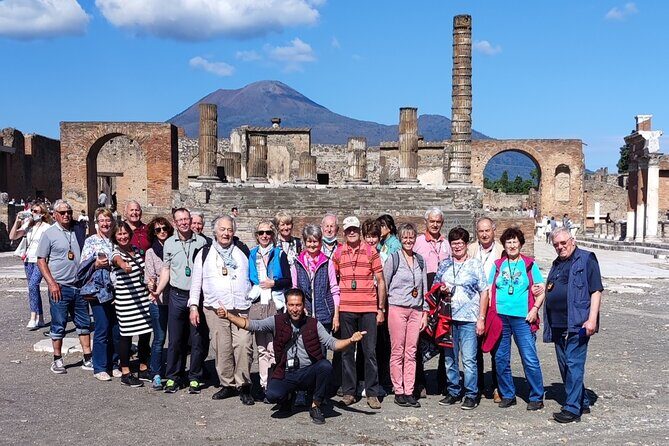
You’re getting a live guide—an authorized archaeology expert—with live narration available in Italian, Spanish, French, English, and German. Groups may use a radioguide system when the group passes 8 participants. That’s great because Pompeii ruins can be noisy and distance happens fast.
A small practical note from experience: earpieces can be loud. If you’re sensitive to sound, you might want to be ready for that and adjust as best you can.
In the best-case scenario, guides also route you around heavier crowd pockets. Several guides are praised for timing and pacing, and for making sure the group sees the real highlights rather than only the most obvious spots.
Also: guides can be funny and human. On tours with guides like Imme or Roberta, the storytelling style helps the history feel less like a lecture and more like walking through a city with a host who knows the backstory.
What’s included (and what you’ll handle yourself)
This tour includes:
- Pompeii Express entrance ticket to visit the archaeological site
- An authorized archaeology guide
Not included:
- Transport to/from Pompeii
- Lunch
- Tips
That “not included” part is normal, but it affects planning. You’ll want to treat this as the core Pompeii experience, then build your travel day around it. If you’re on a tight schedule, arriving on time is key—this is a guided route where timing moves fast.
For practical on-site needs, this tour’s walking route works best if you can handle uneven ground. It’s explicitly listed as not suitable for wheelchair users and people with mobility impairments.
Practical tips that make Pompeii easier on your feet

A few small things can save your day:
- Bring your ID or passport. Copies are accepted, and children need documents too.
- Bags are not allowed on the activity. The tour area has free lockers at the gates according to traveler notes, which is worth planning for.
- No bikes, no alcohol, no drugs. Straightforward rule, but don’t assume exceptions.
- Water helps. There are water fountains on site, though they may be unmarked, so don’t count on obvious signage.
If you want photos without stress, wear comfortable shoes and plan to accept that you’ll be moving between spots rather than stopping for long scenic pauses.
Price and value: what you’re really paying for at around $57
At about $57 per person for a 2-hour, guided, priority-entry visit, you’re not just paying to get into Pompeii. You’re paying for two high-impact time savers:
1) Priority access that protects your minutes
2) Interpretation from an archaeology-focused guide who helps you understand what you’re seeing
If you’ve ever wandered Pompeii solo and felt like you’re missing the “why,” this format solves that quickly. You also get a structured route through major daily-life and public-life areas, which is a real value when you only have a couple hours.
On the other hand, if you already know Pompeii well and you’re comfortable planning your own route, you might feel the price is unnecessary. But for most first-timers, the guide’s context turns the site from confusing to clear fast.
Who should book this Pompeii Express tour
This tour is a strong fit if you:
- Want skip-the-line entry and an efficient 2-hour visit
- Like your history explained in plain language, tied to what you’re standing next to
- Want the daily-life mix: entrance areas, entertainment, homes, food counters, baths, and a frank look at the Lupanare
- Prefer having someone manage pacing and crowd timing so you don’t waste energy
It’s not a fit if you:
- Need wheelchair access or have mobility limitations (it’s explicitly not suitable)
- Are over 95 (it’s listed as not suitable)
- Want a fully independent, slow stroll with no adult-topic stops (the Lupanare is part of the route)
Should you book? My quick call
I’d book this tour if you’re visiting Pompeii for the first time and you want the site to make sense quickly. Priority entry plus an archaeology guide is exactly how you get more out of your limited time.
I’d skip it if you’re looking for a quiet, self-paced walk or if accessibility needs make a guided route unrealistic. For everyone else, it’s a practical way to see a big chunk of Pompeii’s most meaningful spaces without losing half your day in lines or guesswork.
FAQ
How long is the Pompeii Express tour?
The guided tour lasts about 2 hours, with the exact starting time depending on availability.
Where does the tour meet, and where does it end?
The tour starts at the Welcome box and ends back at the meeting point.
Does this tour include skip-the-line entry?
Yes. The experience includes priority access so you skip the long ticket line.
What’s included in the price?
You get a Pompeii Express entrance ticket and an authorized archaeology guide.
What languages are available for the live guide?
The live tour guide is available in Italian, Spanish, French, English, and German.
Will we use an audio system or radio earpieces?
A radioguide is included when the group passes 8 participants. If your group is 4 participants or fewer speaking the same language, the tour runs with an audio guide plus a tour guide in English.
What do I need to bring?
Bring a passport or ID card. Children also need passport/ID documents. Copies are accepted.
Are bags allowed?
No bags are allowed. Free lockers are available at the gates, which can help you store a backpack.
Is the tour wheelchair accessible or suitable for people with mobility impairments?
No. It’s listed as not suitable for wheelchair users and not suitable for people with mobility impairments.
Can I cancel and get a refund?
Yes. You can cancel up to 24 hours in advance for a full refund.