REVIEW · POMPEI CAMPANIA
Pompeii: Small-Group Tour of Pompeii and Herculaneum
Book on GetYourGuide →Operated by Askos Tours · Bookable on GetYourGuide
History wakes up in ash. In this Pompeii and Herculaneum small-group tour, an archaeologist-led walk turns the ruins into something you can actually follow, street by street. I especially love the archaeologist guide approach, and the tight group size of up to 20 people. One possible drawback: the Pompeii break is short, so lunch time can feel rushed in the heat.
The structure is smart. You get guided time in Pompeii (then a breather), ride the Circumvesuviana train to Ercolano, and then get a second guided walk in Herculaneum, which is usually the site people didn’t expect to love this much. If you want a calm, unhurried visit, this schedule is full. If you want context and the right sights, it’s a very solid plan.
You meet at Piazza Porta Marina Inferiore (left side of the Pompeii entrance, near the Arte bus stop) where you’ll spot an Askos Tours sign. The tour ends at Parco Archeologico di Ercolano, so you’ll plan to get back from there on your own.
In This Review
- Key things that make this Pompeii and Herculaneum tour worth your time
- Where you meet and how the day actually flows
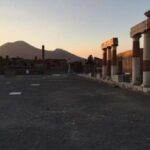
- Pompeii walk: what 79 A.D. left behind
- Pompeii lunch break: short time, real-world options
- The Circumvesuviana train to Ercolano: efficient and normal-feeling
- Herculaneum walk: mud burial and the shock of preservation
- Your guide, headsets, and why the small-group size matters
- Value and logistics: what you’re really buying
- Who should book this Pompeii and Herculaneum tour
- Should you book this Pompeii and Herculaneum archaeologist tour?
- FAQ
- How long is the Pompeii and Herculaneum small-group tour?
- What’s the group size on this tour?
- Where do we meet the guide?
- Do I need tickets for both sites?
- How do you get from Pompeii to Herculaneum?
- Is the tour guided in English?
- What should I bring?
- Is this tour suitable for wheelchair users or mobility impairments?
- Are headsets provided?
Key things that make this Pompeii and Herculaneum tour worth your time
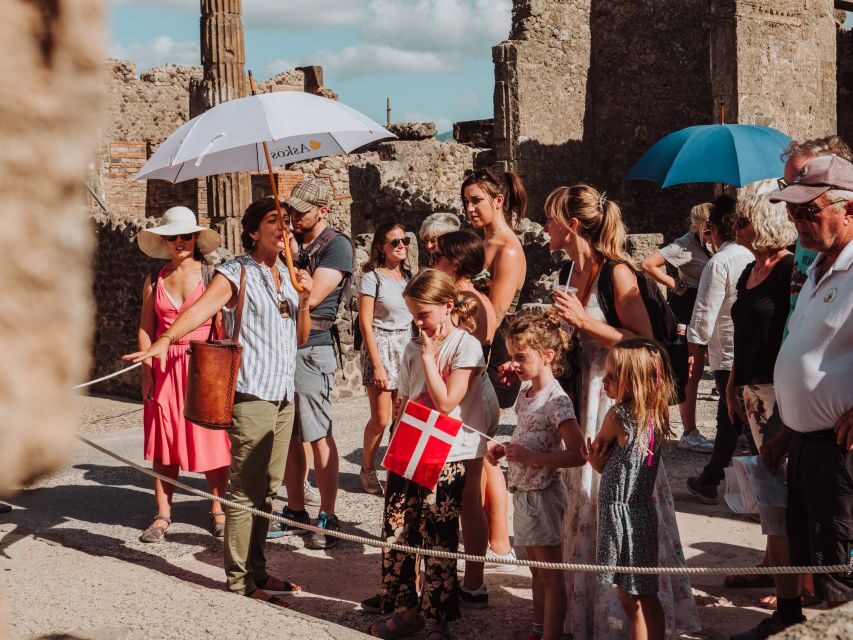
- Archaeologist-led walks at both sites so you’re not guessing what you’re looking at
- Small group size (max 20) for better pacing and easier questions
- Headsets for groups over 10 so the guide is clear even in crowds
- Pompeii to Ercolano by Circumvesuviana train for an efficient, local-feeling transfer
- Herculaneum’s preservation story: mud burial, carbonized wood, intact paintings, and mosaics
- On-the-ground focus: guides aim for the most meaningful areas, not random wandering
Where you meet and how the day actually flows
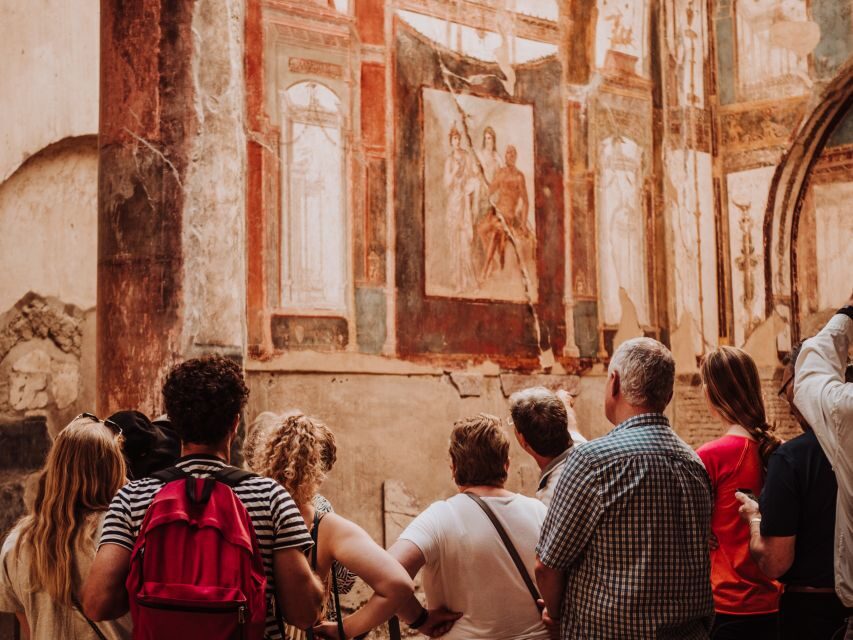
This is set up like a true site-to-site day. You start at Piazza Porta Marina Inferiore, 1, on the left side of the Pompeii entrance by the Arte bus stop. The operator provides a visible meeting point marker: an Askos Tours sign, which helps a lot because Pompeii entrances can feel like a maze.
The day is planned for about 5.5 hours total. You’ll tour Pompeii for around 2 hours, get a 30-minute break, then take the Circumvesuviana train to Ercolano for about 20 minutes. After that, you tour Herculaneum for another 2 hours, finishing at Parco Archeologico di Ercolano.
One thing to be aware of: you do not end back in Pompeii. Ending at Ercolano is convenient if you’re already staying nearby or catching onward transport from that side. If you’re day-tripping from somewhere farther out, make sure your return plan lines up with your finish point.
Also, this tour is not suitable for people with mobility impairments or wheelchair users. Pompeii and Herculaneum both involve uneven ground and lots of walking. If you’re on the fence, be honest with yourself about what you can manage for a long, active half-day.
You can also read our reviews of more tours and experiences in Pompei Campania.
Pompeii walk: what 79 A.D. left behind
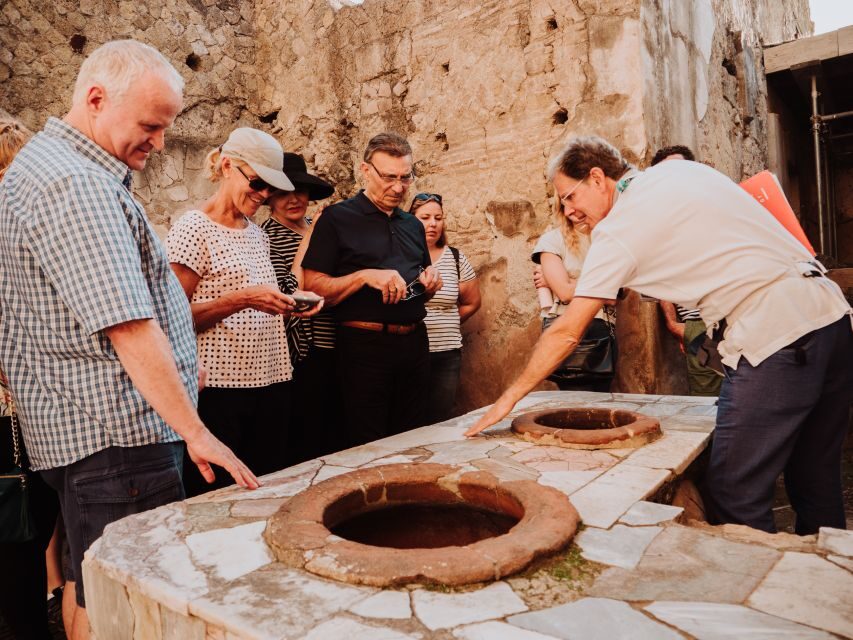
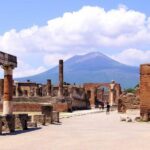
Pompeii is the big name, and this tour treats it that way. Your guided walk is about 2 hours, which is enough time to get past the “wow, ruins” stage and into “I understand what I’m seeing” mode.
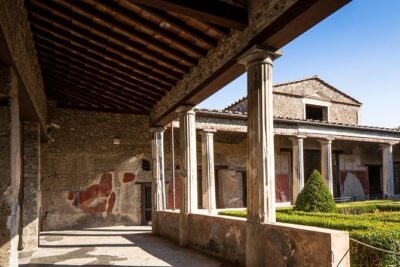
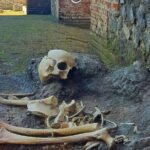
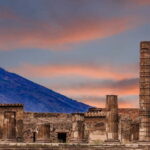
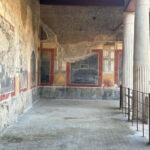
The core story is the eruption of Vesuvius in 79 A.D. When the city fell, Pompeii was buried under roughly four meters of volcanic ash. That kind of coverage preserved a lot, but it also created a harsh, layered archaeological puzzle. A good guide makes that difference. Instead of looking at walls and streets and trying to connect the dots, you get the context for what each area means in daily Roman life.
A highlight is how the city’s layout translates into real activities. Even when the buildings look “still,” the tour framing helps you imagine the motion: how people moved, shopped, prayed, ate, and worked. If you’re someone who likes inscriptions, household details, or the social side of history, Pompeii usually satisfies that curiosity fast—especially when the guide points out the practical evidence.
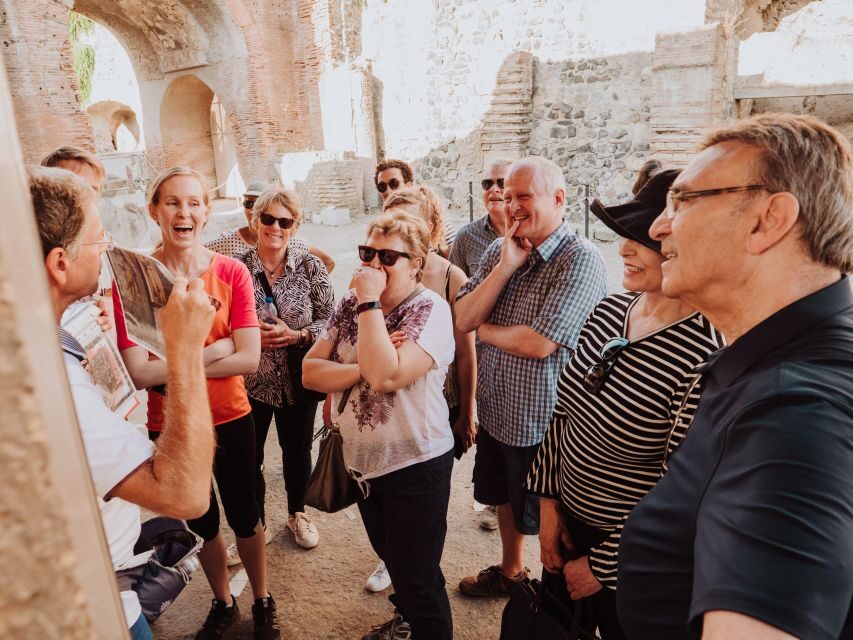
Crowds are part of Pompeii. In a small group, your guide can steer you toward quieter stretches and keep the day moving. You’ll also get headsets when your group is over 10, which is a lifesaver when you’re trying to hear explanations without leaning into other people’s conversations.
Pompeii lunch break: short time, real-world options
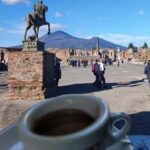
After Pompeii, you get a 30-minute break. It’s enough to grab a bite and reset your feet, but it’s not a “sit down and relax” window. The timing matters because Pompeii heat can be brutal, and a short break can turn into a quick sandwich plus a restroom stop, rather than a proper meal.
A practical way to think about it: treat lunch as something you do to keep going, not as a long recovery period. If you’re someone who needs a cooler, shaded seating break, you may find this part of the day tighter than you’d like.
If you do eat outside, plan for the usual Pompeii scene—sun, limited seating, and busy surroundings around the entrance area. In other words, don’t count on a perfect lunch moment. You can still make it work, but set your expectations accordingly.
The Circumvesuviana train to Ercolano: efficient and normal-feeling
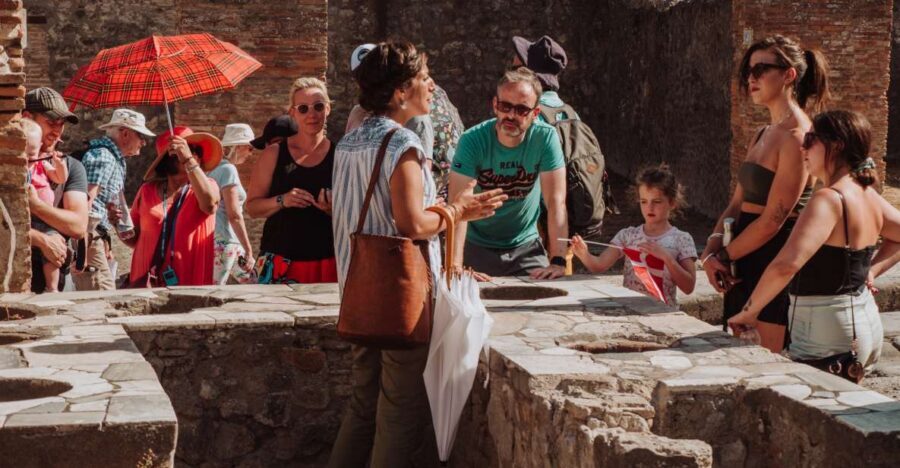
The transfer is part of the experience. After your Pompeii portion, you take the Circumvesuviana train to Ercolano, which is about a 20-minute trip.
Why this matters: it keeps the day efficient. Instead of burning time on long transfers, you transition between cities in a way that feels connected to the region. You’re also not stuck in a rigid schedule of constant walking right after walking. The train is a built-in pause.
Keep an eye on timing, though. Trains are trains. If there’s a delay, the day can stretch. The guide still has to keep the rest of the tour coherent, so your best move is to stay flexible and treat schedule bumps as part of a day on the rails.
Herculaneum walk: mud burial and the shock of preservation
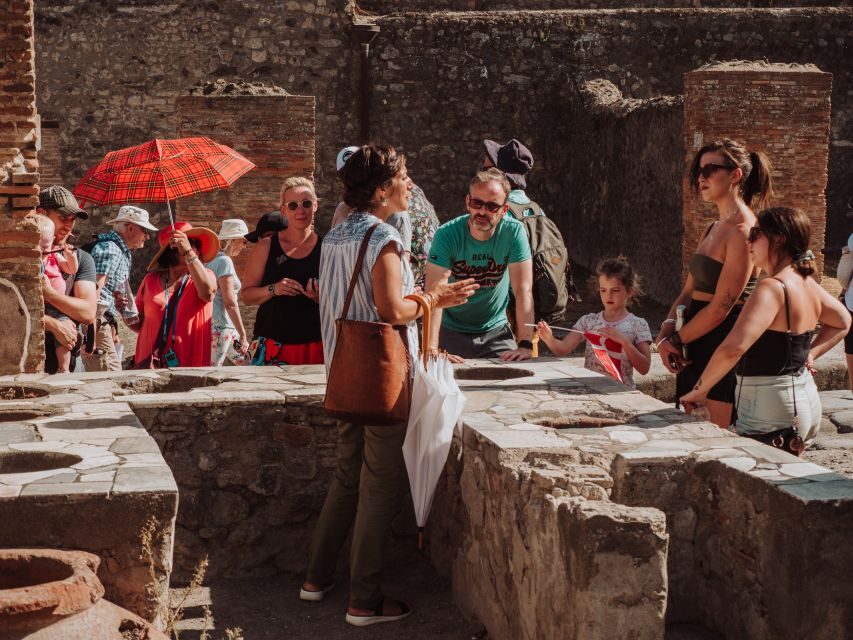
Then comes the shift in the story, and it’s usually the moment people go quiet.
Herculaneum is smaller than Pompeii, but it’s famously better preserved. Your guide connects that directly to how the eruption affected the two cities. Where Pompeii was buried by ash, Herculaneum was hit harder and differently: an avalanche of mud buried it under roughly 20 meters.
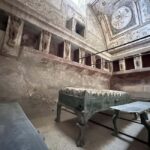
That “mud first” burial matters because it protected materials that would normally degrade. In Herculaneum you can see evidence that Pompeii doesn’t always deliver at the same level—carbonized wooden objects, and on display intact paintings plus mosaics. Seeing those remains in person changes the feeling of the site. It’s one thing to read about the eruption; it’s another to stand near evidence of private rooms that looked decorated and lived-in.
The tour frames Herculaneum as a window into Roman daily life, especially the more comfortable side of society. You’ll get a sense of how wealth and taste showed up in the home: floors that still show patterns, walls that still carry color, and spaces that suggest routines rather than ruins.
Small-group pacing helps here too. Even when the site can feel crowded, your guide can steer you toward the most meaningful areas and bring order to what can otherwise feel like a “walk and hope” situation. This is also one of those places where a guide helps you stop viewing everything as isolated artifacts and start seeing it as a functioning city.
Your guide, headsets, and why the small-group size matters
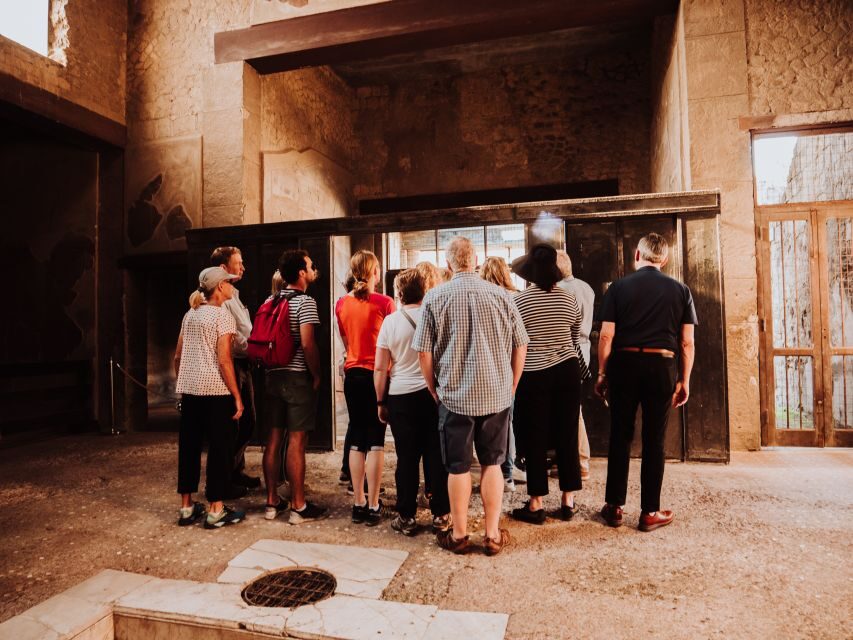
This tour is offered with an archaeologist guide, and the impact is practical. Pompeii and Herculaneum aren’t organized like modern museums. You can wander for hours and still miss the meaning of what you’re seeing.
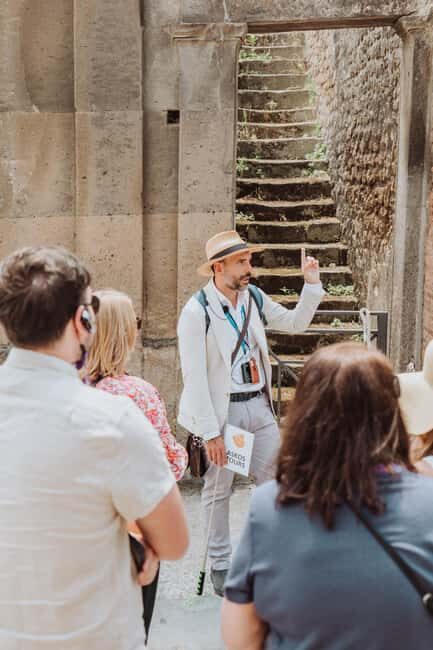
The guide’s job is to build a thread. They point out what to notice, explain how the architecture links to daily life, and translate the eruption from a dramatic headline into a real sequence of events you can picture.
You’ll also be surrounded by a range of group energy. With up to 20 people, it’s easier for your guide to keep the group together without rushing. That matters on uneven ground and in congested ruins. And since you’re usually given headsets for larger groups, you’re not stuck competing with crowd noise just to hear the explanation.
Guide names you might see in this program include people like Diego, Alfredo, Julia, Paulo, Vincenzo, Sergio, Antonio, and Amedeo/Amadeus. The common thread is clear: the best experiences hinge on the guide’s ability to connect details into a coherent story.
Value and logistics: what you’re really buying
I like this format because it bundles the big-picture stuff that’s hard to assemble solo.
You’re getting:
- guided time at both sites, not just one
- an archaeologist’s context instead of self-guided guessing
- a small group size that keeps the day functional
- the train transfer between Pompeii and Ercolano, so you’re not planning it under pressure
- skip-the-ticket-line support, which saves time in a place where every minute counts
About entry tickets: Herculaneum entry tickets are listed as €16.00 for adults and €2.00 for EU citizens 18–25. The tour includes ticket handling for the sites you’re visiting and helps you avoid the long ticket queue process.
Price is always relative, but the value equation here usually works for people who want two headline sites in one day and don’t want to spend that day figuring out logistics. If you only care about one ruin site, or you love going at your own rhythm for hours without a structure, then a guided combo might feel too scheduled.
Who should book this Pompeii and Herculaneum tour
This tour is a great fit if you want:
- a guided plan for both Pompeii and Herculaneum in one half-day
- a solid explanation of what the eruption did to each city
- a small-group format that keeps questions possible
- the chance to see why Herculaneum is so visually striking, with mosaics and surviving wall art
It’s especially appealing if you’re a history fan who likes social details—how people lived, not just dates and emperors. The Herculaneum portion tends to win people over because it feels more intimate than Pompeii once the guide helps you read the space.
If you’re traveling with limited walking ability, skip this one. Also, if lunch comfort is your top priority, plan to handle a shorter break with snacks or a quick meal mindset.
Should you book this Pompeii and Herculaneum archaeologist tour?
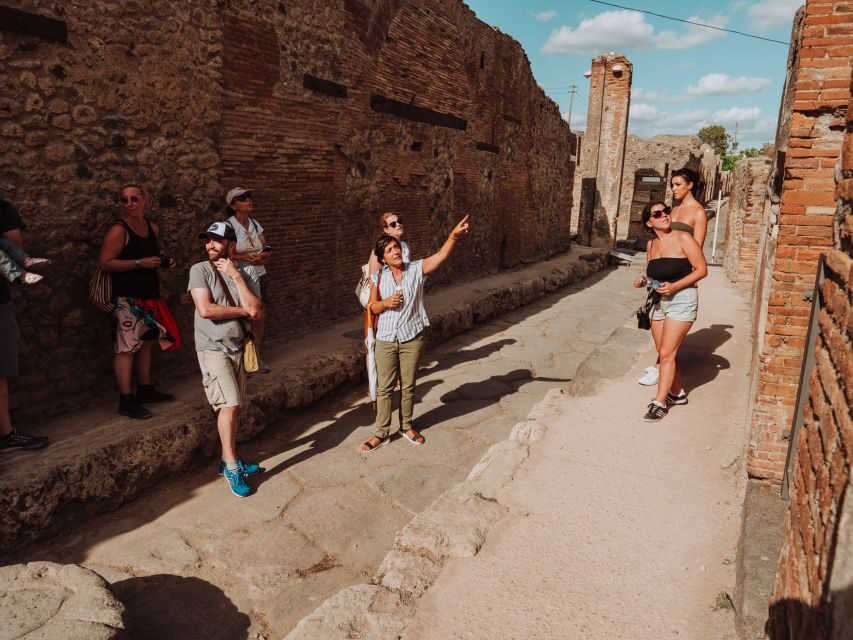
I’d book it if you’re aiming for the most meaningful experience in a limited amount of time. The small-group size, the archaeologist-led explanations, and the Pompeii-to-Ercolano flow make it a strong “best use of daylight” option.
I wouldn’t book it if you hate structured pacing, want a long sit-down lunch, or need accessibility support for mobility constraints. This is a lot of walking in two major sites, with a tight schedule designed for efficiency.
If you’re in between—curious, excited, but realistic—this is the kind of tour that helps Pompeii and Herculaneum stop being ruins and start being places you can understand.
FAQ
How long is the Pompeii and Herculaneum small-group tour?
The total duration is about 5.5 hours.
What’s the group size on this tour?
It’s a small group with a maximum of 20 people.
Where do we meet the guide?
Meet at Piazza Porta Marina Inferiore, 1, on the left side of the Pompeii entrance near the Arte bus stop. Your guide will have an Askos Tours sign.
Do I need tickets for both sites?
The tour includes entry ticket handling and you can skip the ticket line. For reference, Herculaneum entry tickets are listed at €16.00 for adults and €2.00 for EU citizens 18–25.
How do you get from Pompeii to Herculaneum?
You take the Circumvesuviana train to Ercolano, a trip of about 20 minutes.
Is the tour guided in English?
Yes. The live tour guide provides English (and also Italian).
What should I bring?
Bring your passport or ID card. Wear comfortable clothes, and bring sunglasses, a hat, and water in summer. Consider a raincoat or poncho for sudden rain.
Is this tour suitable for wheelchair users or mobility impairments?
No. It is not suitable for people with mobility impairments or wheelchair users.
Are headsets provided?
Yes. Headsets are provided for groups of more than 10 participants.