REVIEW · POMPEI CAMPANIA
Pompeii: Small Group Tour with an Archaeologist
Book on GetYourGuide →Operated by Askos Tours · Bookable on GetYourGuide
Pompeii makes more sense with a pro guide. This tour walks you through streets and buildings preserved by the 79 AD eruption of Mount Vesuvius, using real archaeology to connect what you’re seeing to how people lived.
UNESCO Pompeii isn’t just a list of ruins here. It’s a city you can follow scene by scene, gate by gate.
What I like most is the way you get both the big hits and the telling details in a short window. You’ll cover the Forum, temples, baths, theaters, and major houses, plus you get close-up time with frescoes and mosaics before you’re released to roam.
One thing to consider: it’s a walking tour with steps and ramps, and it’s not recommended for wheelchair users or travelers with mobility impairments. If your legs are limited, you’ll likely feel it.
In This Review
- Key takeaways before you go
- Why an archaeologist-led Pompeii tour is worth it
- Picking the right length: 2 hours vs 3 hours
- Porta Marina Superiore and the first moments of orientation
- The Forum, Basilica, and the public heartbeat of Pompeii
- Theaters, baths, temples, and the daily routines you can spot
- Major houses and the art that makes Pompeii feel human
- The Lupanar (brothel) and why the tour handles adult themes carefully
- Villa of the Mysteries: the 3-hour highlight for art lovers
- Hearing the guide: headsets, pacing, and question time
- Value check: what $40 really buys you
- Who this tour fits best (and who should rethink it)
- Using your free time after the tour: don’t waste it
- Should you book this Pompeii small-group tour with an archaeologist?
- FAQ
- How long is the Pompeii small-group (or private) tour?
- What does the tour include?
- Is transportation included?
- Do I need to buy my own entry ticket?
- Is a private tour available?
- What languages are offered?
- Where do I meet the guide?
- Are headsets provided?
- What are the rules on luggage and smoking?
- Is this tour suitable for wheelchair users?
Key takeaways before you go
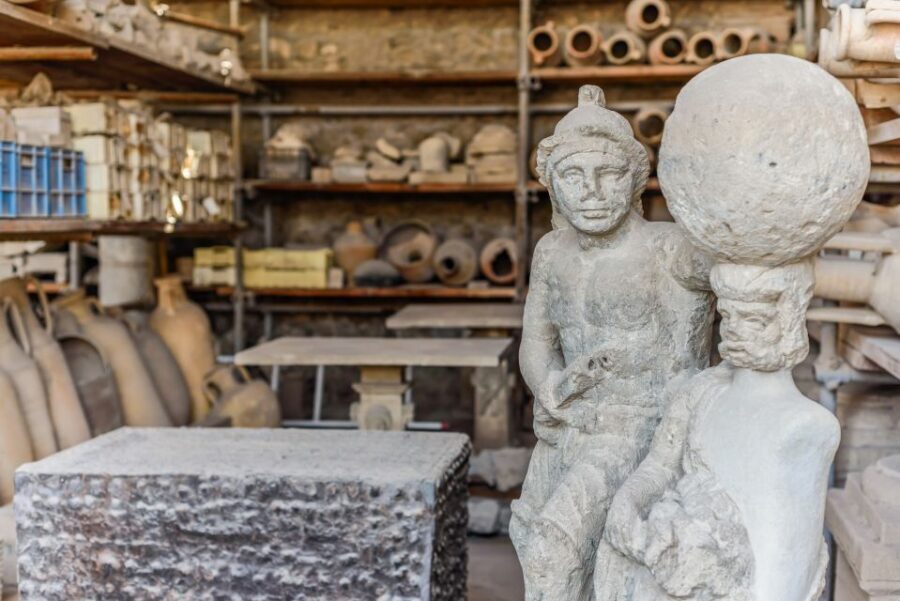
- Archaeologist-led explanations that turn building names into real daily life
- Choose 2 hours or 3 hours, with the 3-hour option adding the Villa of the Mysteries
- You enter through Porta Marina Superiore and get oriented fast
- Stops include the Forum, Basilica, thermal baths, temples, the theater, and major houses
- Headsets are provided for larger groups, so the guide’s story stays clear
- After the tour, you’re free to stay inside and explore at your own pace
Why an archaeologist-led Pompeii tour is worth it
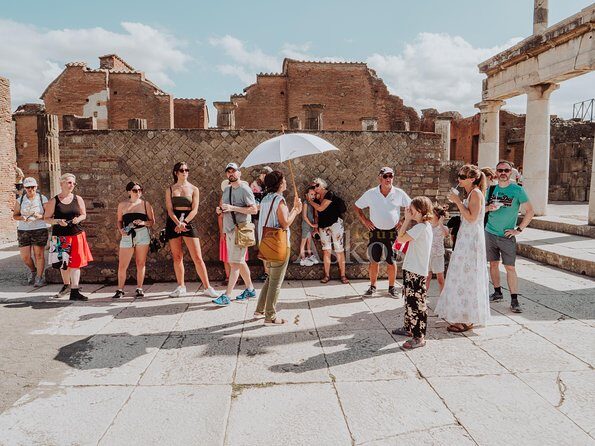
Pompeii is big, and your eyes can only do so much on their own. With an archaeologist guiding you, you start noticing the stuff that most people miss: small layout choices, where commerce likely happened versus where families lived, and how streets, markets, and public buildings fit together.
I also like that you’re not stuck in one zone. The route moves across the city’s center and out toward major landmarks, so you get a sense of scale and structure. The result feels like a guided “map of meaning.” You stop treating Pompeii like a photo spot and start treating it like a place where people ate, worked, prayed, argued, shopped, bathed, and slept.
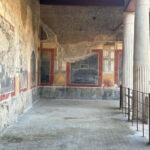
And yes, the preserved surfaces matter. Up close, frescoes, mosaics, and wall art stop being decorative and start being evidence. They show what people valued, how they decorated homes, and what the city’s taste looked like in Roman times.
You can also read our reviews of more tours and experiences in Pompei Campania.
Picking the right length: 2 hours vs 3 hours
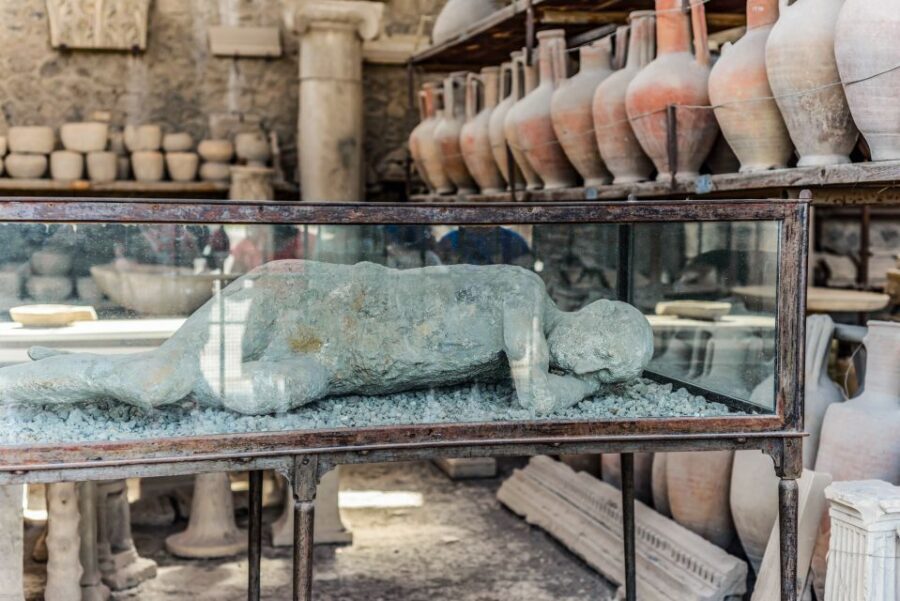
You’ve got two main timing options, and the difference is meaningful.
A 2-hour group tour is a fast orientation with the essentials. You’ll enter Pompeii, move through the Forum area, and hit major highlights like the Basilica and the theater. It’s ideal if you’re pairing Pompeii with other stops on your day and you want the guided foundation plus time afterward to wander.
The 3-hour option adds the Villa of the Mysteries, which is a big deal for people who care about art and symbolism. The frescoes there are often what make Pompeii feel personal rather than merely impressive. If you’re the type who wants more explanation and more time with the visual material, that extra hour is usually where the tour starts to feel complete.
Either way, you finish with freedom to explore more on your own. That’s the practical part: you’re guided into the right mindset, then you choose what to linger over.
Porta Marina Superiore and the first moments of orientation
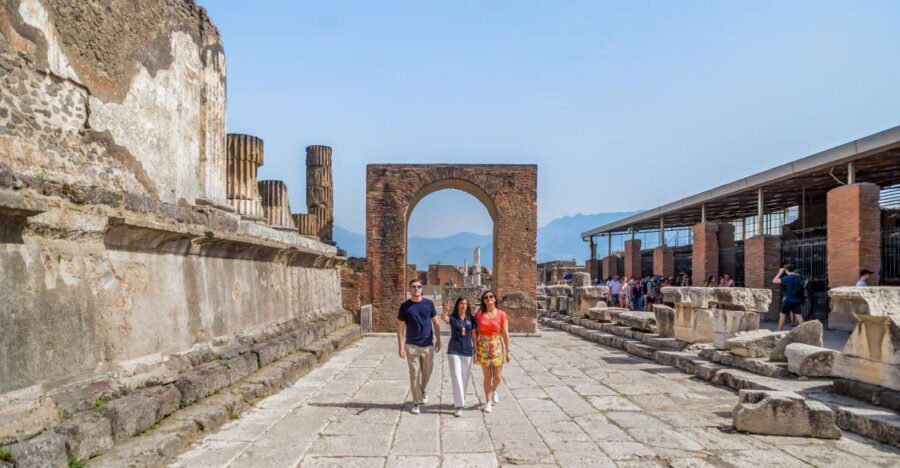
Your tour begins with meeting at a starting point that can vary depending on the option you booked. From there, you’ll enter Pompeii at Porta Marina Superiore, one of the city’s gates. Entering through an actual gate matters because you instantly understand Pompeii as a defended city with controlled access, not just scattered ruins.
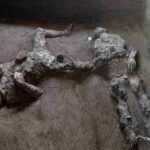
Right away, the guide typically sets the stage: this city was wiped out in 79 AD, and volcanic ash preserved the layout and many surfaces in a way that’s rare. That context helps everything you see after that land harder in your brain.
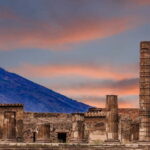
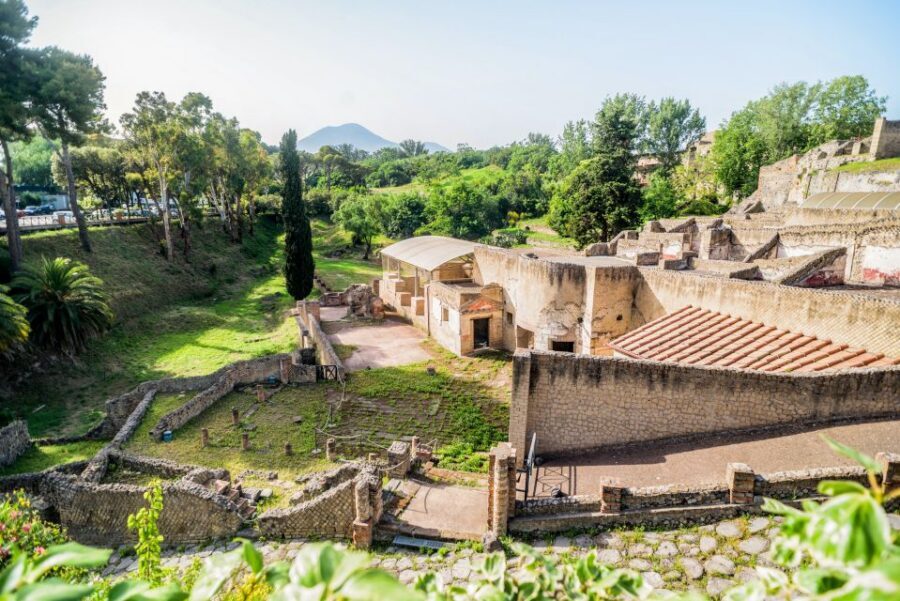
You also get practical orientation as you start walking the main streets. One of the classic landmarks you’ll come across is the view toward Mount Vesuvius from above the city center. Even in a short tour, that sightline gives you a real sense of where Pompeii sits relative to the disaster that ended it.
The Forum, Basilica, and the public heartbeat of Pompeii
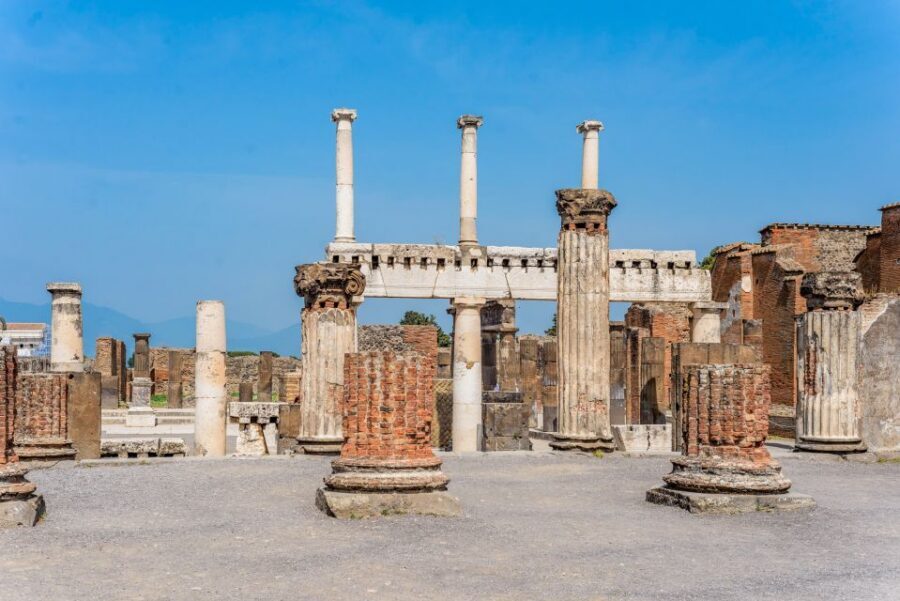
The Forum is the old heart of Pompeii and the center of public life, and you’ll spend real time around it. This is where the city behaved like a Roman city should: business, civic decisions, gatherings, and the daily rhythm of public space.
One highlight in this zone is the Basilica, which functioned as a business and legal center. The building details help you understand Roman civic power and how people conducted matters of law and commerce. You’re not just looking at stone walls; you’re looking at the infrastructure behind everyday decisions.
You’ll also pass major civic and religious structures, including stops associated with temples. The tour typically takes you to key landmark points like the Temple of Apollo and the Temple of Jupiter, which helps you grasp how religion, authority, and daily routines overlapped.
The practical payoff: by the time you move toward the neighborhoods and houses, you can tell what kind of place you’re in. Public square? Religious space? Civic building? Your eyes start sorting Pompeii for you.
Theaters, baths, temples, and the daily routines you can spot
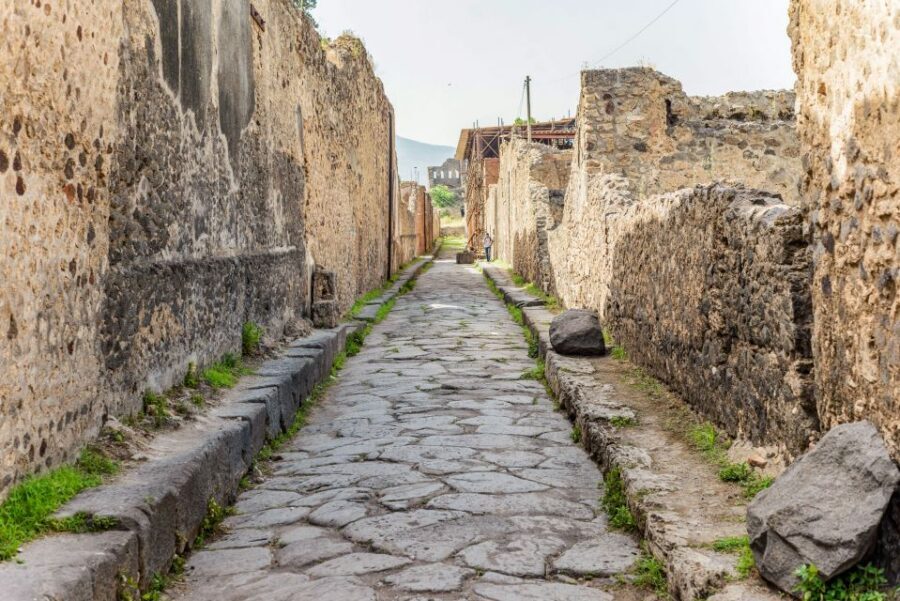
Pompeii isn’t only grand buildings. It’s also how people filled their days.
You’ll visit the Large Theatre, and walking into it with guidance is often a wow moment because the room is still shaped for performance and crowd viewing. It helps you imagine what a spectacle would feel like, even after almost 2,000 years.
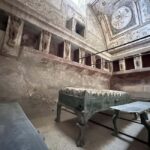
You’ll also see elements of the city’s bathing culture through a stop like the Forum Baths. Baths were social spaces as much as hygiene. Even if you don’t remember every feature, you’ll come away with a better sense that public leisure mattered, not just work.
And because Pompeii includes temples and everyday services, the guide’s narration can connect the dots. The tour format lets you notice how religious spaces sat alongside commercial areas like a bakery, and how public buildings and daily errands lived in the same city grid.
This is also where guides often share small, human details you wouldn’t catch alone. In one case shared by visitors, a guide pointed out things like handprints on fountains and cart tracks on roads. Those kinds of observations make Pompeii feel less like a museum and more like a lived environment.

Major houses and the art that makes Pompeii feel human
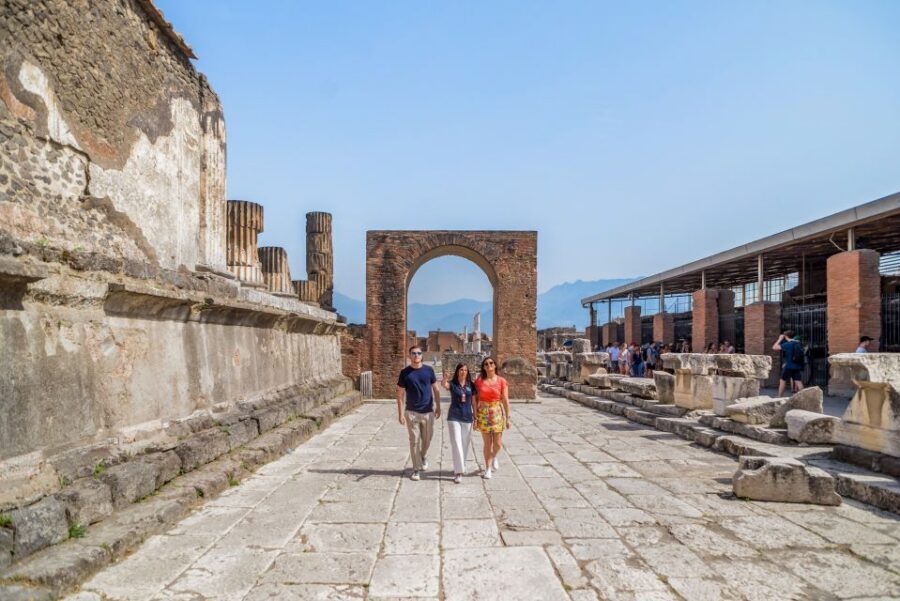
One of the best reasons to take a guided Pompeii tour is getting inside or right alongside major houses while someone explains what you’re looking at.
Stops on this tour can include houses such as the House of the Vettii, the House of the Faun, and the House of Menander. These names are big labels unless you’re taught what their layouts and artwork are trying to say. With guidance, you begin to understand why some parts are more public-looking, while other spaces feel designed for family life and privacy.
The House of the Vettii is a highlight because it showcases how wealthy Pompeians used art to express status and identity. You’ll also get to see preserved wall decoration like frescoes and decorative surfaces that reflect Roman tastes—without having to be an art historian to enjoy them.
Mosaics and painted walls are preserved in a way that’s rare across the ancient world. Up close, you can start to see brushwork, patterns, and how the design covers surfaces. That makes the experience more than “standing next to an old wall.” It becomes a visual archaeology lesson.
The Lupanar (brothel) and why the tour handles adult themes carefully
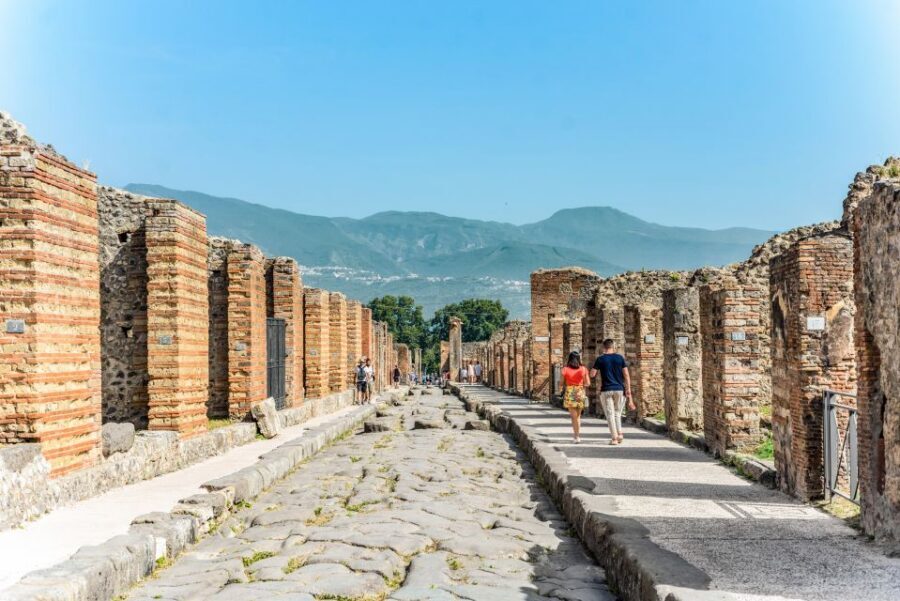
Yes, Pompeii includes adult themes, including the Lupanar, a famous brothel site. This tour specifically includes it, and the guide typically explains it with context rather than shock value.
The tour also aims to handle sensitive content appropriately for mixed groups, and one parent-focused example in the info you provided noted that adult themes were handled with care while a 10-year-old in the group mostly missed the meaning. If you’re traveling with kids, it’s still smart to know what’s ahead so you can decide what level of exposure you’re comfortable with.
You’ll see preserved stone beds and frescoes connected to the site, and you may also learn how the brothel got its name. It’s one of those Pompeii moments that reminds you this was a real city with real people and complicated social behavior, not just a place for emperors and temples.
If you’re uncomfortable with sexual imagery or the topic of prostitution, consider whether this stop fits your comfort level before booking.
Villa of the Mysteries: the 3-hour highlight for art lovers
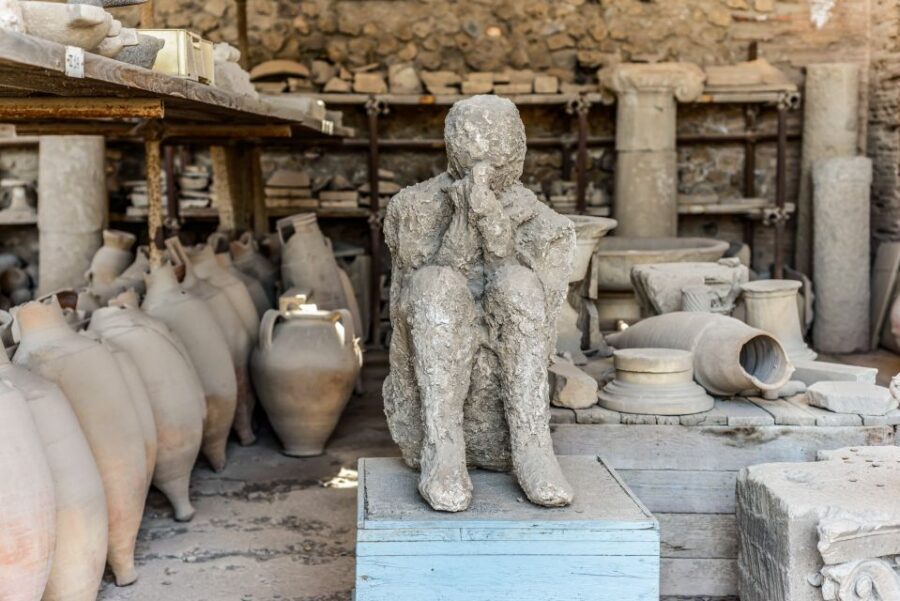
If you choose the 3-hour tour, you add a visit to the Villa of the Mysteries, and this is often where the art becomes the headline.
The reason this stop stands out is that you’re not just seeing decorative painting. You’re seeing a program of frescoes that feels designed for a purpose, with symbolism and story-like sequencing. It’s the kind of site that makes Pompeii feel like a message in pigment, frozen at the moment of destruction.
Guides tend to walk you through what you’re seeing so the frescoes become understandable rather than overwhelming. And because this is longer than the 2-hour format, you have a bit more breathing room to absorb the details without feeling rushed.
If you’ve got the schedule flexibility, this is the best “upgrade” reason for choosing the longer tour.
Hearing the guide: headsets, pacing, and question time
This tour includes headsets for groups of 16 or more, which is a practical detail that can make a big difference in a crowded archaeology site. Pompeii can be loud—your guide might be speaking over foot traffic, other groups, and open-air echoes. With headsets, you stand a better chance of catching the explanations.
You’ll also find that pacing matters. Many people want more time and more stories, but the tour is built to cover a lot of ground in a set window. In at least one example from the info provided, a visitor noted the ear pieces felt more difficult than prior ones. If you’re sensitive to audio equipment or you’re a frequent headset user, it’s worth coming prepared to adjust and ask if volume feels off.
A good sign of a strong tour is whether the guide answers questions and keeps the narration flowing without turning everything into a lecture. In multiple examples you shared, guides were praised for storytelling and for getting the group involved with questions.
Value check: what $40 really buys you
At about $40 per person, the value comes from three things: speed, expertise, and time afterward.
First, you skip the ticket line, so you start seeing Pompeii sooner instead of burning your energy waiting. Second, the tour is led by an archaeologist for 2 to 3 hours, which means you’re paying for interpretation. Pompeii is too big and too detailed to “DIY confidently” on your first visit.
Third, you get to explore on your own after the guided portion. That matters because it lets you convert the guide’s orientation into personal wandering. If you realize you love frescoes, you can circle back. If the theater grabbed you, you can spend extra minutes there. If you’re obsessed with mosaics, you can hunt them out with a better eye.
Could you do Pompeii without a guide? Sure. But the tour’s format helps you avoid that common problem where you see a lot but understand very little. For many visitors, the guide’s context is what makes the ruins feel worth the effort.
Who this tour fits best (and who should rethink it)
This is a solid choice for people who want structure. It’s especially good if you like having someone point out what matters and explain why it matters.
You’ll also benefit if you’re traveling in a small group mindset. The experience is offered as shared small-group tours and private group options, which is handy if your group wants control over pace and comfort.
Language availability is broad—French, Spanish, German, Portuguese, English, and Italian—but shared and private options don’t always offer the same languages. If language matters, check before you book so you don’t end up with a setup you can’t follow easily.
On the practical side, remember this tour isn’t recommended for mobility issues. Pompeii involves steps and ramps, uneven terrain, and some steep sections. If your legs are strong and your stamina is solid, you’ll likely be fine. If you struggle with walking or balance, this tour may not be the best match.
Children must be accompanied by an adult, and adult-themed content like the Lupanar is part of the route, so plan accordingly.
Using your free time after the tour: don’t waste it
The biggest advantage comes after the official tour ends. You’re free to stay inside and explore longer on your own.
Here’s how to use that time well:
- Pick one theme and stick with it. Frescoes and mosaics? Homes and family life? Public buildings like the Forum and theater?
- Return to the areas that clicked during the guided portion. You’ll notice more because you know what to look for.
- If you’re doing a 2-hour tour, you’ll want to prioritize what you care about most early in the morning or closer to the start of your visit. One of the examples you shared noted limited opening time late in the day, so starting earlier can help you see more of the park.
Also, Pompeii is huge. You can’t see everything. Even on a strong schedule, you’ll likely cover just part of it. Think of your guided time as training wheels. Then your self-guided time becomes your real trip.
Should you book this Pompeii small-group tour with an archaeologist?
If you want a first-time Pompeii visit that actually teaches you what you’re looking at, I’d book it. The short format is practical, and the included access plus time to explore afterward is a good deal.
Book it if:
- You want a guided backbone through the Forum, major temples, baths, theater, and key houses
- You care about art details like frescoes and mosaics up close
- You like learning from experts who can answer questions in real time
Skip it or rethink if:
- Your mobility is limited and you need wheelchair-friendly routes
- Adult-themed stops like the Lupanar are a hard no for your comfort level
- You’d rather wander without structure and don’t mind seeing less with fewer explanations
If you’re on the fence between 2 and 3 hours, go longer if art drives your interest. The Villa of the Mysteries is the most convincing reason to add time.
FAQ
How long is the Pompeii small-group (or private) tour?
It runs for either 2 hours or 3 hours, depending on the option you book.
What does the tour include?
The tour includes Pompei Express entry ticket access, a 2- or 3-hour guided tour by an archaeologist, and headsets for listening to the guide for groups of 16 or more. You can also explore the archaeological site on your own after the tour.
Is transportation included?
No. Transportation is not included.
Do I need to buy my own entry ticket?
Your entry ticket is included as part of the activity (Pompei Express entry ticket), and the tour also notes skipping the ticket line.
Is a private tour available?
Yes. A private group option is available.
What languages are offered?
Guides are available in French, Spanish, German, Portuguese, English, and Italian. The exact language options can vary by the type of tour you choose.
Where do I meet the guide?
The meeting point may vary depending on the starting option you book.
Are headsets provided?
Yes, headsets are provided for listening to the guide for groups of 16 or more.
What are the rules on luggage and smoking?
Smoking is not allowed, and luggage or large bags are not allowed on the site.
Is this tour suitable for wheelchair users?
No. It is not recommended for travelers with mobility issues or impairments and is not suitable for wheelchair users due to steps and uneven terrain.