REVIEW · POMPEI CAMPANIA
Pompeii: Afternoon to Sunset Guided Tour with Ticket
Book on GetYourGuide →Operated by Enjoy Pompeii · Bookable on GetYourGuide
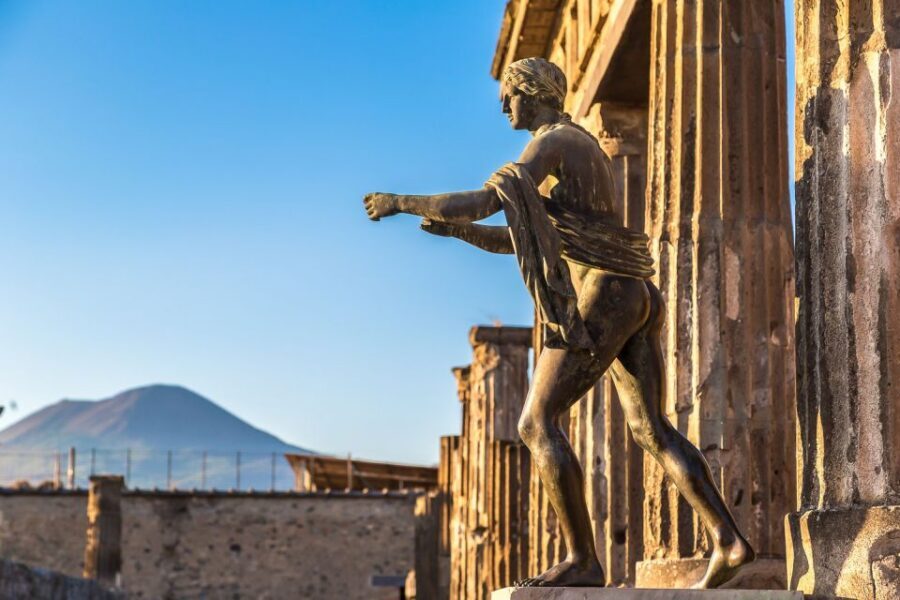
Pompeii at golden hour feels personal. This afternoon-to-sunset guided walk helps you read the ruins like a real city, from civic centers to street-level daily life, without trying to figure everything out alone. I especially like the timing—sunset light can make the stones and fresco spaces easier to take in.
Two things I’d pick this tour for right away: first, the archaeologist guide (often named Angelo, Anna, Sasa, Francesco or Frankie) who explains what you’re seeing in plain, story-driven ways. Second, you cover a tight set of major stops—Forum, Basilica, Thermal Baths, and Theater—so you don’t end up crisscrossing the site randomly. One drawback to plan for: you’ll be doing a fair amount of walking on uneven ground, so it’s not a great fit if you have mobility issues or certain health concerns.
In This Review
- Key Points That Matter Before You Go
- Pompeii at Sunset: Why This 2.5-Hour Window Works
- Meeting Point at Ristorante Bar Sgambati and Getting In Fast
- The Civic Heart Tour: Forum and Basilica Without the Guesswork
- Thermal Baths and the Theater: Public Life You Can Picture
- Neighborhood Streets, Bakeries, and Housing Blocks
- The Eruption Story and What Vesuvius Changed
- Time for Views and Extra Exploring After the Tour
- Languages, Group Size, and What That Means for Your Pace
- Price and Logistics: Is $58 Good Value?
- What to Bring and Who Should Reconsider
- So, Should You Book This Pompeii Afternoon-to-Sunset Tour?
- FAQ
- How long is the Pompeii afternoon to sunset guided tour?
- Is the Pompeii entry ticket included?
- Where do I meet the guide?
- What buildings and areas will we see?
- What languages are available for the guide?
- What should I bring with me?
- Is transportation included?
Key Points That Matter Before You Go
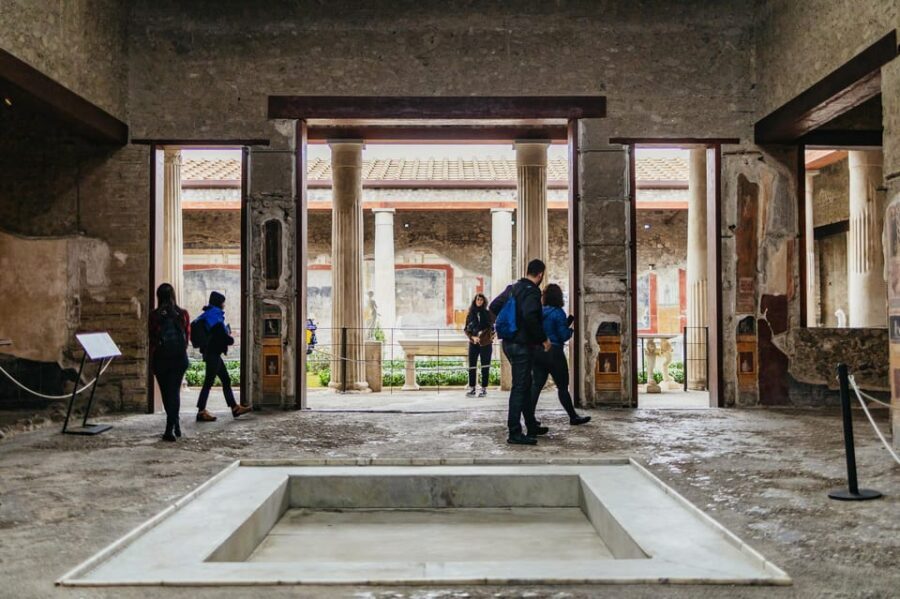
- Skip-the-line entry through a separate entrance, so you start walking sooner.
- Archaeologist-led stories that connect monuments to everyday routines.
- Forum + Basilica + Baths + Theater in one efficient 2.5-hour route.
- Neighborhood leftovers like bakeries and housing blocks, not just the big-name landmarks.
- Sunset atmosphere at the end of the tour for calmer light and a more relaxed feel.
- Small-group options are available, and some groups are reported as quite small.
Pompeii at Sunset: Why This 2.5-Hour Window Works
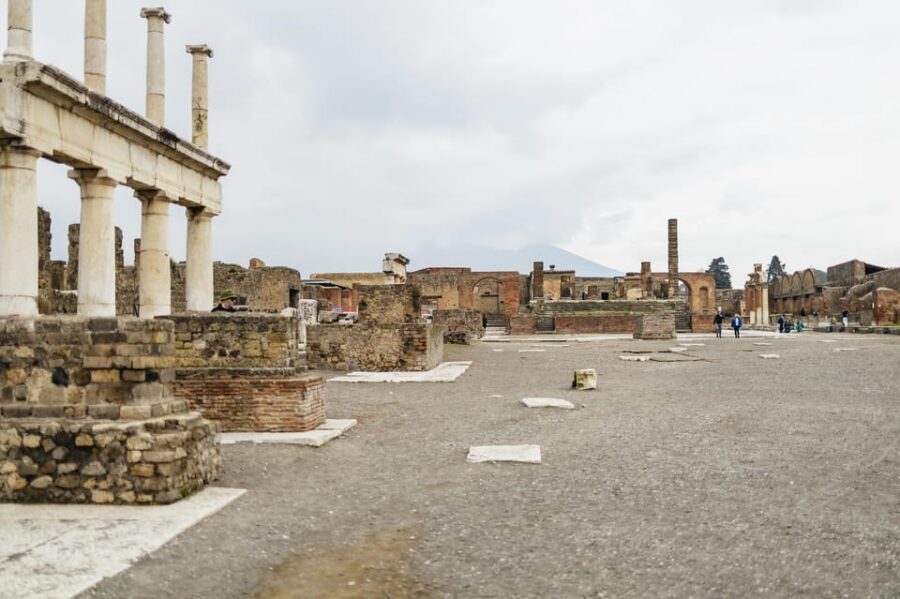
Pompeii is big, and the ruins are spread out. A 2.5-hour guided route is a smart match for real life: you get the core highlights and enough context to make it all click, without burning your whole day in the heat and crowds.
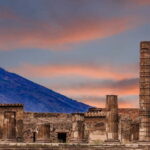
The sunset part is practical, not just pretty. Later in the day, the light is softer on stone and mosaics, and you’re walking with the day cooling down. In the reviews, people explicitly called out the better timing for comfort, with one noting their 3:30pm start as a sweet spot for both crowds and sun.
You can also read our reviews of more tours and experiences in Pompei Campania
Meeting Point at Ristorante Bar Sgambati and Getting In Fast
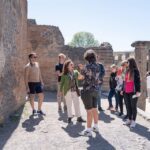
You meet at Ristorante Bar Sgambati. Look for a red Enjoy Pompeii sign. That’s a simple setup, and it matters because Pompeii can be confusing when you’re trying to find the right entrance while other people are queueing.
The tour includes a skip-the-line entry ticket. That means you’re not stuck waiting with everyone else, and it also keeps your short afternoon from bleeding away. Since transportation isn’t included, you’ll want to already have your plan to get to Pompeii squared away before the meeting time.
The Civic Heart Tour: Forum and Basilica Without the Guesswork
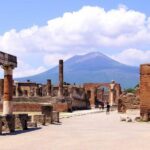
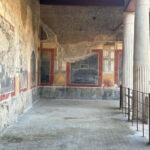
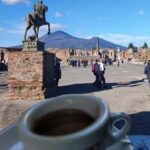
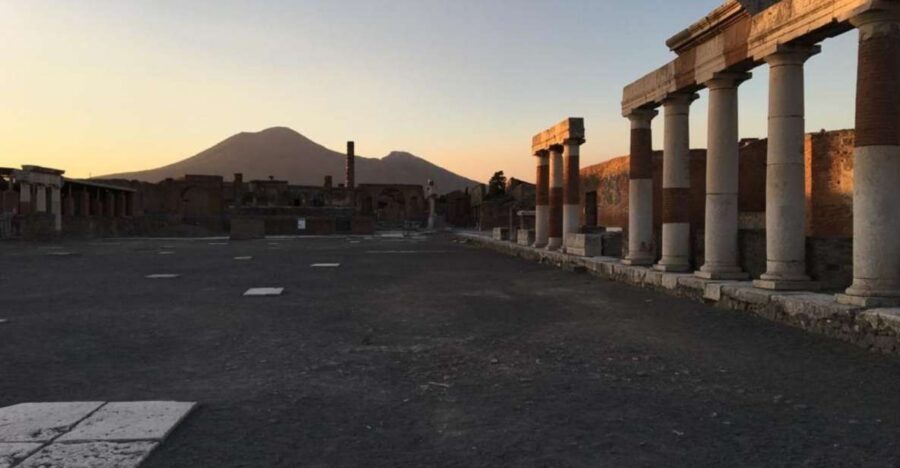
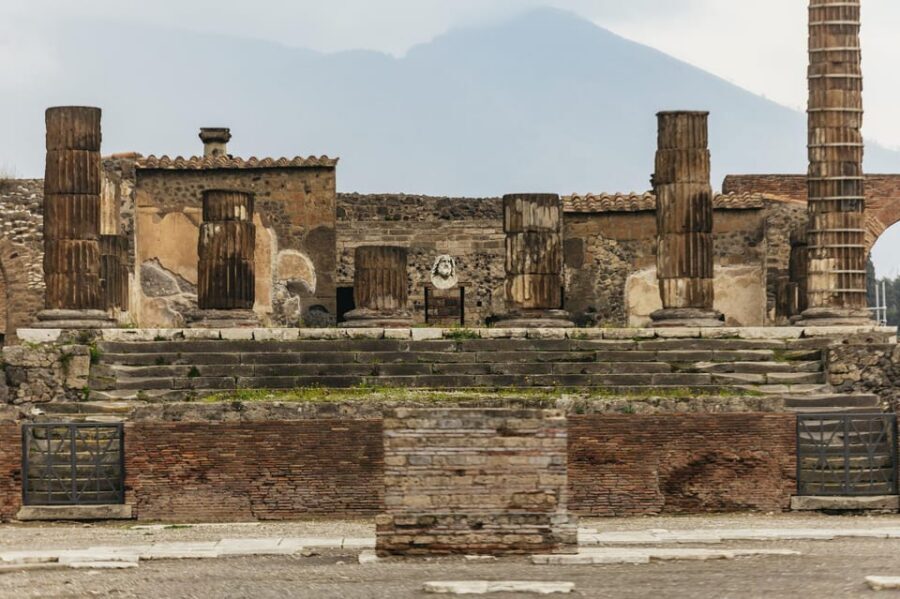
Pompeii’s Forum and Basilica are the kinds of places that feel like set dressing if you only glance and move on. With a guide, they become easier to understand fast: this is where people gathered for civic life, where business and public decisions played out, and where the city showed off its Roman identity.
On this route, the Forum and Basilica are treated like more than photo stops. You’re walked through what each area would have meant day-to-day, which is exactly what makes a short tour so worthwhile. You’re not just collecting images; you’re learning the function of the space.
A practical tip: Pompeii’s ground can be uneven. In the reviews, people praised guides for flagging where to be careful, which is the kind of small attention that can prevent an awkward stumble—and keep you moving at a good pace.
Thermal Baths and the Theater: Public Life You Can Picture
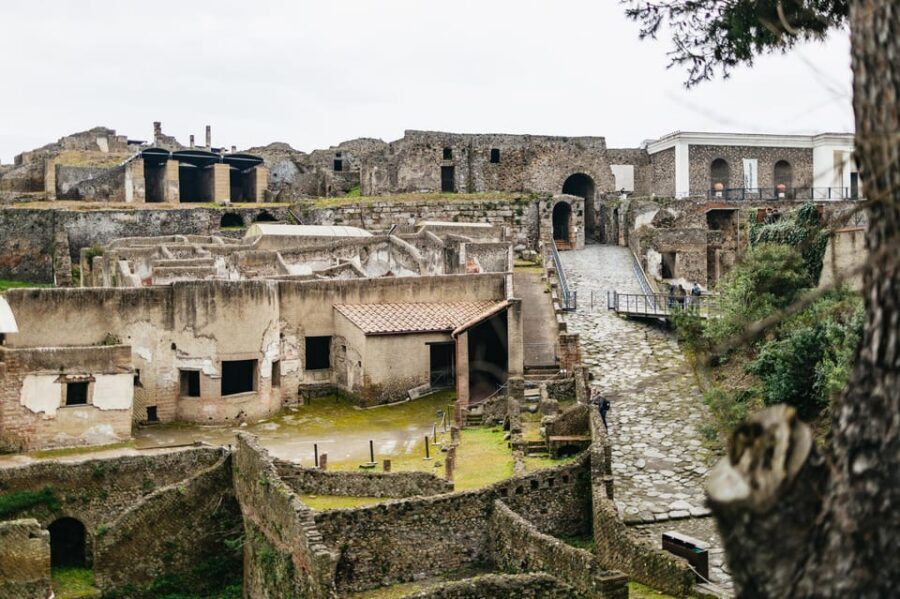
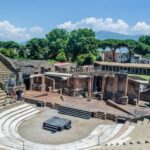
The Thermal Baths and Theater show a different side of Pompeii than the Forum. These are places where leisure and social time happened, and the architecture helps you “see” the routines.
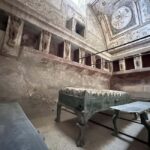
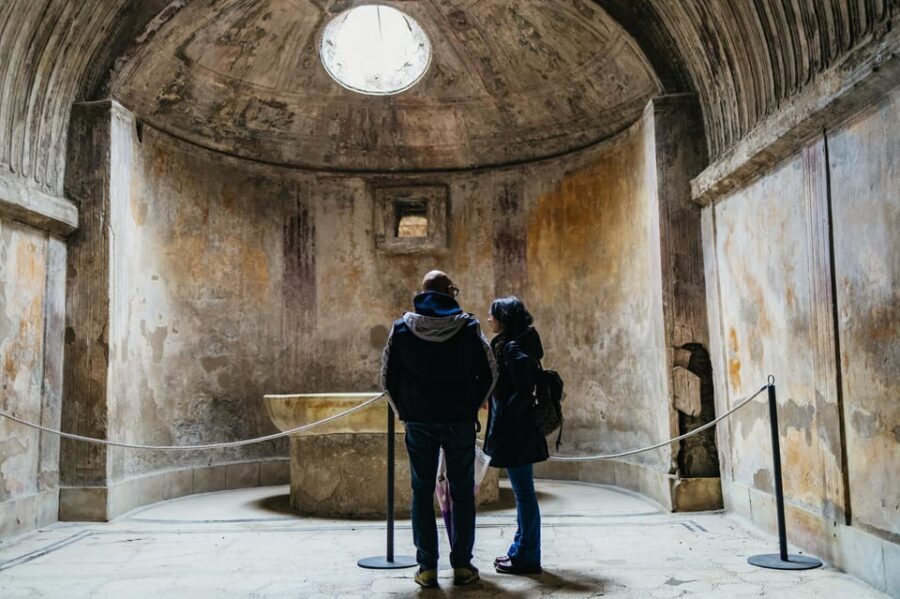
What I like about stopping at the Baths is that it turns Roman bathing into something concrete. You start noticing how the complex layout supported bathing and relaxation, instead of treating it like a pile of rooms. The Theater adds another angle: it helps you imagine how entertainment and public gatherings worked in a city of thousands.
If you’re the kind of person who likes context over checklists, these are the stops that reward you most. Reviews also mention guides using stories to bring the space to life, which is what makes the ruins feel less like rubble and more like a functioning place that stopped suddenly.
Neighborhood Streets, Bakeries, and Housing Blocks
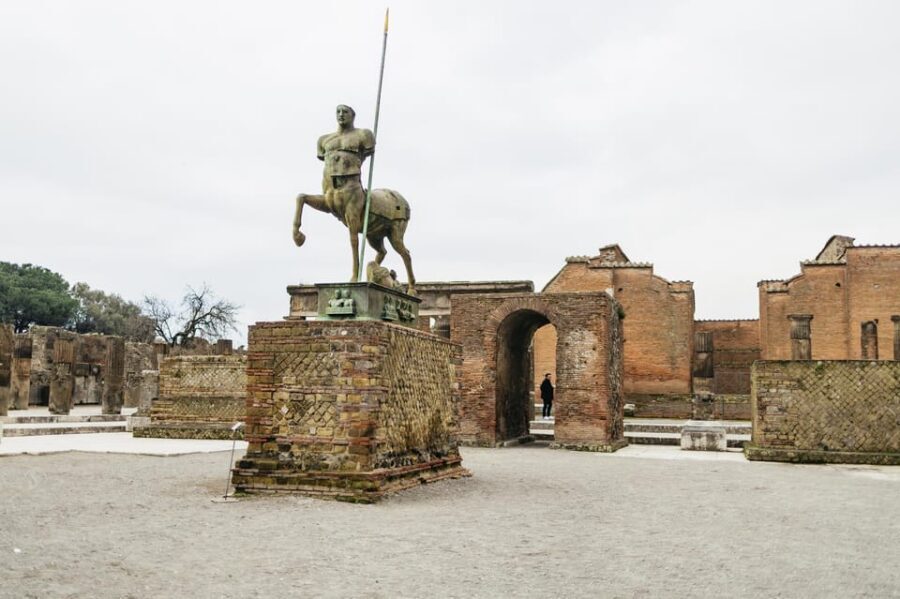
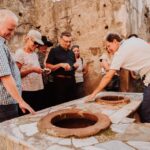
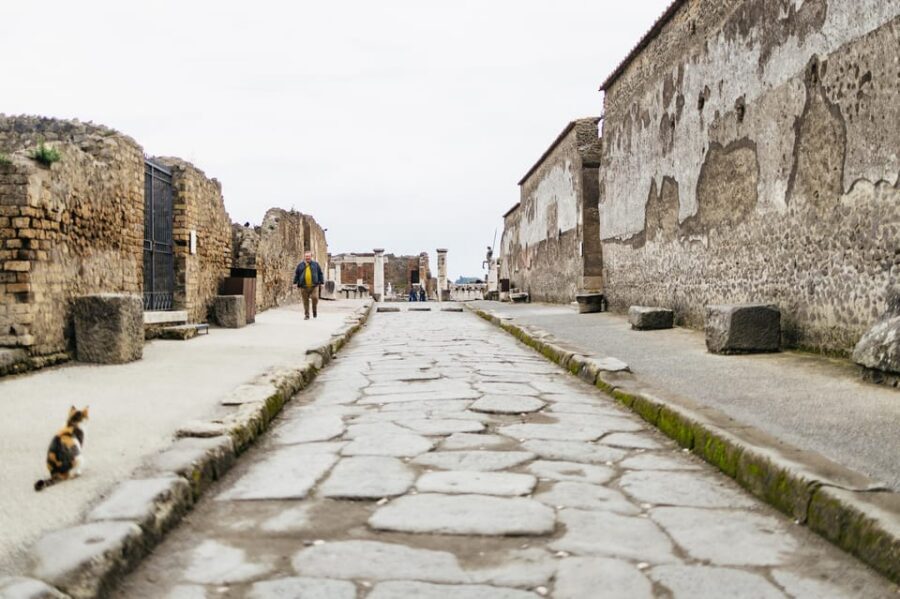
Pompeii isn’t only temples and famous civic buildings. The tour also takes you through parts that connect to commercial and residential life, including areas such as bakeries and typical housing blocks.
This is where the guided portion can be the biggest value. When you’re walking through streets and courtyard leftovers on your own, it’s easy to miss the clues that tell you what a space was used for. A guide can point out what a neighborhood arrangement likely meant for daily routines—where people ate, how homes were organized, and how the city’s “everyday engine” ran.
A small-but-meaningful bonus: because this route is focused, you don’t feel lost. You have a planned path that hits different types of buildings, so you get a more balanced sense of Pompeii than you would from only choosing a few zones on your own.
You can also read our reviews of more guided tours in Pompei Campania


The Eruption Story and What Vesuvius Changed
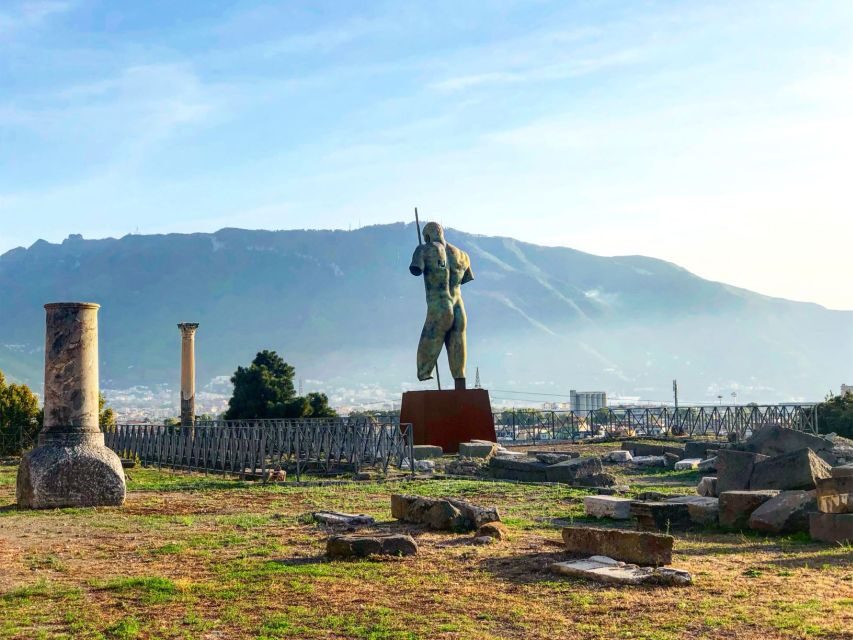
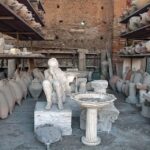
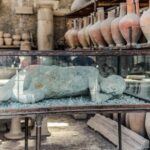
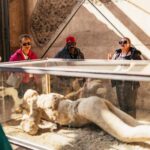
You’ll learn about the eruption of Vesuvius in 79 AD and how it affected Pompeii—both the city itself and the broader picture of what happened to Roman society.
This part matters because Pompeii isn’t just historic scenery. The eruption explains why the city was preserved in such striking detail, and it helps you understand why these ruins feel unusually “complete.” When a guide ties the story to the places you’re standing in, it turns geology into human scale.
One of the most repeated themes in feedback is that the best guides help you imagine day-to-day life before the disaster. That’s exactly the mental shift you want: not just seeing ruins, but understanding what was disrupted.
Time for Views and Extra Exploring After the Tour
Because the tour ends around sunset, you finish in a calmer stretch of the day. Some people noted that after the guided portion, they still had time to explore further on their own at the end of the experience.
If you’re the type who likes to keep wandering, plan for a bit of extra time so you can follow what grabbed your attention. And if there’s one extra “add-on” stop you care about—like the Arena—do keep in mind that some routes may not cover every major zone, so you may want to see what you can fit after your 2.5-hour walk.
Languages, Group Size, and What That Means for Your Pace
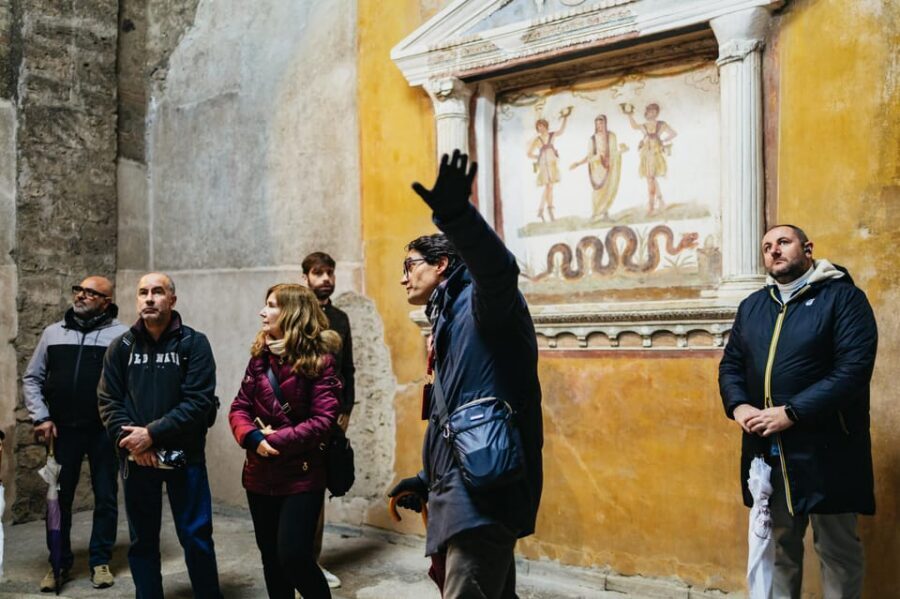
The guide is live and the tour runs in Italian, English, and French. That language option matters because Pompeii is detail-heavy, and you’ll get more from the explanations when you can fully track them.
Group size is another thing to consider. Reviews mention groups around 10, and also very small groups like five. Smaller groups tend to feel easier on your legs and your attention span, because you can ask questions without waiting for the guide to work through a crowd. Even when the group isn’t tiny, the overall format is built for walking with a set route.
Price and Logistics: Is $58 Good Value?
At $58 per person for 2.5 hours, this tour is priced like you’re paying for two things at once: the skip-the-line ticket and an archaeologist guide who directs your time across major ruins.
If you were to self-explore, you’d still pay entry, and you’d still face the challenge of picking what matters most across a huge site. For most people, the cost is justified by the time savings (skip-the-line entry) plus the way the guide turns buildings into understandable stories: Forum and Basilica as civic life, Baths and Theater as social life, and street-level neighborhoods as everyday survival.
Also note what’s not included: transportation. That’s normal, but it means you should factor your travel time to Pompeii into your day. If you’re already in the area with a train or short ride, this tour becomes a clean add-on block rather than a whole-day plan.
What to Bring and Who Should Reconsider
Bring a sun hat. Pompeii can get hot, and even at sunset you’ll still be walking outside for the full 2.5 hours.
Bring an ID card—a copy is accepted.
This tour is not suitable for:
- people with mobility impairments
- people with heart problems
- people with respiratory issues
- people over 95 years
If any of those apply, I’d treat this as a hard stop and look for a different format with less walking and fewer uneven surfaces.
So, Should You Book This Pompeii Afternoon-to-Sunset Tour?
If you want the Pompeii highlights with context—and you’d rather spend your energy looking and learning than plotting your own route—this is a strong choice. I’d book it if:
- you have limited time and want Forum, Basilica, Thermal Baths, and Theater covered in one focused walk
- you like getting explanations tied to what you’re standing next to
- you prefer the calmer feel of sunset timing over peak heat and peak crowds
- you want the advantage of skip-the-line entry to protect your schedule
I’d think twice if you can’t handle walking on uneven ground or if your health makes prolonged outdoor activity a bad idea.
If you’re on the fence, here’s the simplest way to decide: Pompeii rewards slow reading. This tour gives you the most important “head start” in a short window, so you leave understanding what you saw—and that’s the real souvenir.
FAQ
How long is the Pompeii afternoon to sunset guided tour?
The tour lasts about 2.5 hours.
Is the Pompeii entry ticket included?
Yes. You get a skip-the-line entry ticket included with the tour.
Where do I meet the guide?
Meet at Ristorante Bar Sgambati. Look for a red Enjoy Pompeii sign.
What buildings and areas will we see?
You’ll explore major sites including the Forum, the Basilica, the Thermal Baths, and the Theater, plus parts of neighborhood areas such as bakeries and housing blocks.
What languages are available for the guide?
The tour offers live guide service in Italian, English, and French.
What should I bring with me?
Bring a sun hat and an ID card (a copy is accepted).
Is transportation included?
No. Transportation is not included.