REVIEW · POMPEI CAMPANIA
Pompeii: Skip-the-Line Ticket and Guidebook with Itineraries
Book on GetYourGuide →Operated by Around Vesuvio · Bookable on GetYourGuide
Pompeii is big, but your day doesn’t have to feel chaotic. This ticket-and-guidebook setup helps you see the essentials without standing around, because you get skip-the-line entry and a practical Pompeii plan right in your hands. You explore independently, with access from 9AM to 5PM, so you can match the ruins to your energy level.
Two things I really like about this format: first, the freedom to walk when you want, stop when you want, and not feel tied to a rigid group pace. Second, the guidebook-style approach is built for navigation. You get an updated map plus itineraries for shorter or longer visits, and it points you toward high-impact areas like the amphitheater, the victims’ casts, and the best-preserved corners of the city.
One consideration before you buy: this package is guidebook-led, not a full live guide. The wording can feel confusing if you expect a person leading you around, so it’s worth going in knowing you’ll be using the book on-site.
In This Review
- Key things to know before you go
- Skip-the-Line Entry That Keeps Your Day on Track
- Your Pompeii Game Plan: 2, 4, or 6 Hours
- Walking the Millenary Streets: Houses, Shops, and Everyday Life
- Thermopolis and Roman Trade Spots: Food Without the Modern Filter
- Public Power: Spas, Temples, and Theaters
- One of the Best-Preserved Roman Amphitheaters
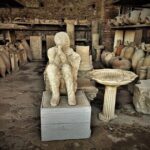
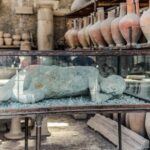
- Victims’ Casts: The Eruption Story That Hits Hard
- How the Guidebook and Map Actually Help You Navigate
- Price and Value: When $41 Makes Sense
- Who This Works Best For
- Practical Tips That Make the Day Smoother
- Should You Book This Pompeii Experience?
- FAQ
- What is included in the Pompeii ticket and guidebook package?
- How long can I spend inside Pompeii?
- What are the visiting hours?
- Where do I meet the provider staff?
- Where is the reservation entrance?
- Do I need to bring any identification?
- Are food and transportation included?
- What languages are available for the experience?
- Is there a youth price option?
Key things to know before you go
- Skip-the-line ticket saves time at one of Italy’s busiest archaeological gates
- Pick 2, 4, or 6 hours with routes that help you avoid random wandering
- Guidebook + map stays with you as a souvenir you can reference later
- A “see the city” mix of highlights covers public space, daily life, and the eruption story
- Entry window is 9AM–5PM, so you can time it to your day in Campania
Skip-the-Line Entry That Keeps Your Day on Track
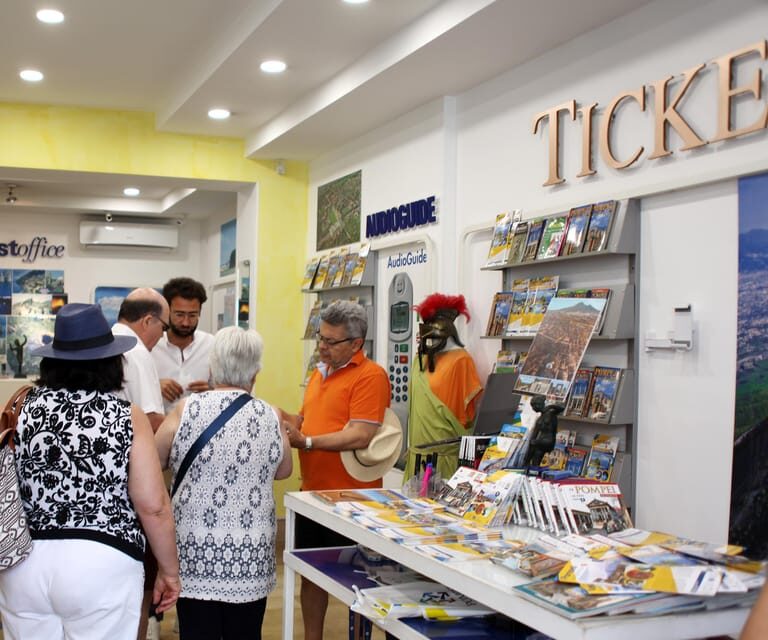
Pompeii works best when you respect two realities: the site is extensive, and lines can eat your schedule. This experience is built around solving the second problem. With a skip-the-line ticket, you should spend your energy on walking the streets instead of waiting at the entrance.
After you arrive, you meet the team outside their office area (you’ll usually spot them in blue and yellow). The key is where you get your access sorted. The reservation entry point is at Piazza Anfiteatro, and you’ll show your voucher at the information point on Via Roma 123, Pompeii.
Here’s the practical trick: if you’re given a voucher tied to paper tickets, plan your first minutes carefully. One review experience described needing to go to a nearby shop first to collect printed tickets, then re-entering the security flow. You can avoid that kind of stutter by making sure you have the right printed access sorted before you commit to any security line.
You can also read our reviews of more tours and experiences in Pompei Campania


Your Pompeii Game Plan: 2, 4, or 6 Hours
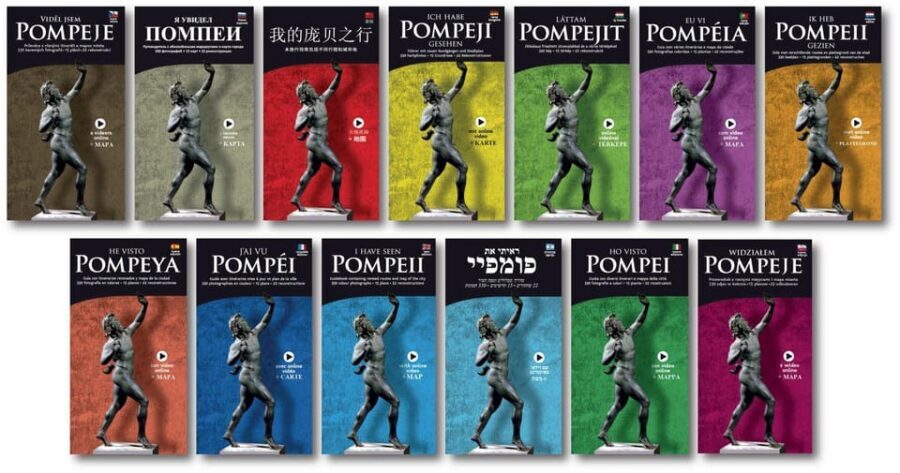
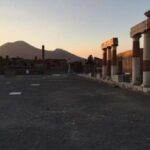
The guidebook is designed as an on-site tool, not just a souvenir brochure. You choose among itineraries for two, four, or six hours, and the map helps you find the next stop quickly. That matters because Pompeii can feel like you’re seeing the same kind of stone street over and over—until you arrive at a major cluster of ruins that changes the whole picture.
If you only have a short window, the 2-hour route is a taste. You’ll likely focus on the big, most recognizable areas and key story points rather than trying to cover the whole city grid. For most people, I think 4 hours hits the sweet spot: long enough to experience the “wow” moments (like the amphitheater and the victims’ casts) without turning your visit into a forced march.
If you choose 6 hours, you’re aiming for depth. That’s the time to linger over multiple neighborhoods and details: shops, frescoed walls, daily-life spaces, and more than one public building. You’ll also want extra buffer time if you like photos, shaded breaks, or just staring at how much detail survived.
No matter which route you pick, the guidebook’s job is to keep you moving in a logical loop instead of randomly bouncing around the site.
Walking the Millenary Streets: Houses, Shops, and Everyday Life
Pompeii’s power is that it doesn’t feel like a museum diorama. It feels like a city. One of the best ways to experience that is through the sequence the guidebook pushes you toward: streets first, then the spaces people lived in and used.
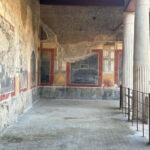
As you walk, you’ll see frescoed houses and household spaces that show how decoration worked in real life. Pay attention to walls and the way rooms connect. Even if you’re not an archaeology nerd, you’ll start to notice the difference between “rooms for daily business” and “rooms built for status.”
This self-paced format also gives you a huge advantage: you can slow down for the details you actually care about. If you like art, focus on color and painting styles. If you like design, look at layouts and how entrances and courtyards worked. If you like commerce, drift toward the shops and street-facing spaces where trade happened.
A good Pompeii route isn’t just sightseeing. It’s learning the city’s rhythm: public space, private space, and everything in between.
Thermopolis and Roman Trade Spots: Food Without the Modern Filter
Pompeii has a lot of “ancient version of this” places, and that’s exactly why the Thermopolis stop is worth your attention. This was a kind of coffee-fast food spot in its time—people would come for hot drinks or quick prepared items rather than full meals.
In a guided group, you might rush past these because they aren’t as famous as the theater. In an independent visit, you can give them the time they deserve. Stand in the right places, take in the setup, and imagine how locals used these stops during their daily grind.
The key value here is perspective. Thermopolis and shopfront ruins help you see Pompeii as everyday life, not only as disaster history. When your route includes both, the whole city lands more clearly.
Public Power: Spas, Temples, and Theaters
Pompeii wasn’t only houses and back alleys. It had public structures that shaped social life. This ticket-and-guidebook experience includes the major categories you should try to see: spas, temples, and theaters.
The spas are a great early anchor in your plan because they give you a sense of routine. Think about how bathing was tied to status, health, and community. Even just walking through the ruins helps you map where people might have gathered.
Temples add another layer. They help you understand that Pompeii’s culture wasn’t separate from its architecture. You’re looking at religion, politics, and civic identity all wrapped into the same stones.
Then comes performance space: theaters and the famous amphitheater. If you’re a fan of how crowds used to gather, theaters let you understand sight lines and building design. Even from the ruins, you get a feeling for how movement and seating worked.
The best part of this independent format is that you control the pace inside each cluster. If you want to take a longer break at a temple area, you can.
You can also read our reviews of more tours and experiences in Pompei Campania



One of the Best-Preserved Roman Amphitheaters
A big selling point here is the inclusion of one of the best-preserved Roman amphitheaters in Pompeii. This is a “don’t skip it” stop, because it’s where the city’s scale suddenly clicks.
When you’re standing in amphitheater surroundings, you start to feel what kind of entertainment pulled people into shared spaces. You also get a better sense of how Pompeii functioned as a social city, not just a tragic backdrop.
Plan to spend real time here. It’s not just the exterior. Let yourself see how the building is laid out and how the crowd area connects to the performance space.
Victims’ Casts: The Eruption Story That Hits Hard
Pompeii’s second truth is the story of the eruption, and this experience includes the casts of the victims of the eruption. This part of the visit is emotionally heavy, even if you’ve read about it before.
The value of including the victims’ casts in a self-guided day is that you can control how long you stay. Some people want to rush through to keep moving. Others need a pause. You can do that without worrying about holding up a group.
If you want the most impact, give yourself time after you see the casts. Then return to the city spaces nearby and notice the contrast. It helps the ruins become real rather than abstract.
How the Guidebook and Map Actually Help You Navigate
This experience is built around a simple toolset: guidebook + updated map + itineraries. If you’ve ever been to Pompeii with only a phone and a loose sense of direction, you know how easy it is to lose an hour.
The guidebook is designed to keep you oriented. It suggests routes for two, four, or six hours, and the map helps you connect those routes to real locations on the site. It’s also meant to be easy to use on the move, which matters because Pompeii is not the kind of place where you stop for long and then start walking again later.
One review mentioned needing clearer English directions at a key post on the route. That’s a reminder to stay alert: signage can be hit-or-miss. When you see a junction that feels confusing, pause and check your map instead of guessing. You’ll still feel in control.
A second review disappointment is worth noting for your expectations: this isn’t a live human guide. It’s a guidebook-led experience, with language options for the guide materials listed as English, Italian, Spanish, and French. If you want a person giving narration, this format might not match that desire.
On the bright side, the book is kept by you as a souvenir of the excavations. That’s useful because Pompeii is easier to remember when you can go back to a map and name the places later.
Price and Value: When $41 Makes Sense
At $41 per person for a one-day Pompeii visit, the real question is what you’re buying beyond the entrance itself. In this package, you get:
- a skip-the-line ticket
- a guidebook
- a Pompeii ruins map with three itinerary options
Transportation and food are not included, so plan for those separately. But if you already know you’ll spend at least half the day in the ruins, the guidebook value is easier to justify. You’re not just paying to enter; you’re paying to organize your time once you’re there.
Skip-the-line also has a hidden value: it reduces the stress that turns a historic site into a grind. When your schedule stays intact, you’re more likely to enjoy the slow parts too—like studying frescoed houses or taking a moment at the amphitheater.
If you’re visiting with another person, the guidebook is described as available for every two people. That’s a nice perk if you want to share one book while splitting up your pace for a few minutes.
Who This Works Best For
This is a strong fit if you want Pompeii on your terms. You’ll probably love it if:
- you prefer exploring independently rather than following a group
- you like having a plan but not a script
- you want a structured visit for either a short window or a longer, deeper day
- you value having a map and guided itineraries you can keep afterward
It may feel less ideal if you’re expecting a dedicated instructor-led walk. The materials emphasize self-guided movement with an itinerary book, and reviews suggest some people were surprised it wasn’t a human guide. If you want commentary as you go, you’ll need to adjust expectations or look for a different style of tour.
Practical Tips That Make the Day Smoother
A few small things make a big difference at Pompeii.
- Wear comfortable shoes. The ground can be uneven, and you’ll walk more than you think.
- Bring passport or an ID card since you’ll be asked for it.
- Dress comfortably for lots of standing and walking. You might be outdoors for hours.
- If you’re collecting paper tickets tied to an online purchase, make time for it before you reach security stages. That helps you avoid redoing steps.
- Use the itinerary choice to protect your energy. If you’re not sure, 4 hours is often the most satisfying balance.
Also, Pompeii entry is valid for one day, and starting times depend on availability. So it’s smart to check your chosen time window before you lock in the rest of your Campania plan.
Should You Book This Pompeii Experience?
I’d book it if you want a straightforward Pompeii day with less friction. The mix of skip-the-line entry plus a keep-it guidebook with 2, 4, or 6-hour routes is exactly what helps you enjoy the ruins instead of managing them.
I’d think twice if you’re hoping for a fully narrated, person-led tour. This is more about you using the guidebook and map to steer your visit, including major stops like the amphitheater, Thermopolis, frescoed houses, spas, temples, theaters, and the victims’ casts. If that matches your style, it’s a good value for your time in Pompeii.
FAQ
What is included in the Pompeii ticket and guidebook package?
You get a skip-the-line ticket to Pompeii, a guidebook (in multiple languages), and a Pompeii ruins map with three itinerary options.
How long can I spend inside Pompeii?
The guidebook offers itineraries for two, four, or six hours, and the ticket is valid for one day.
What are the visiting hours?
You can enter from 9AM to 5PM.
Where do I meet the provider staff?
Meet outside their office where the team is usually wearing blue and yellow jackets. The information point is at Via Roma 123, Pompeii.
Where is the reservation entrance?
The entrance to the archaeological park with your reservation is Piazza Anfiteatro.
Do I need to bring any identification?
Yes. Bring your passport or an ID card.
Are food and transportation included?
No. Food and beverages and transportation are not included.
What languages are available for the experience?
The experience lists English, Italian, Spanish, and French.
Is there a youth price option?
A youth price reduction (18–24 years old) is listed as available only for EU citizens.