REVIEW · POMPEI CAMPANIA
Pompeii: 3D Walking Tour with Entry Ticket
Book on GetYourGuide →Operated by AR Tour srl · Bookable on GetYourGuide
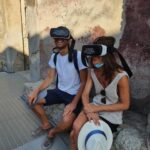
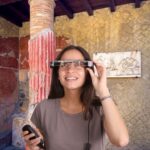
Pompeii gets real fast with AR glasses. This 2-hour 3D walking tour pairs a timed entry ticket with an augmented reality audio guide, so you can look at the ruins and then, right on top of them, see what key buildings likely looked like before the 79 A.D. eruption. I like the AR glasses approach because it makes the site visual instead of abstract, and I also like the small group setup (up to 20 people), which keeps the pace human. One consideration: the tour doesn’t cover everything. If you’re chasing the suburban villas, like Villa dei Misteri, you’ll still need extra time on your own.
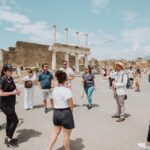
You meet your Tour Assistant at Porta Marina Inferiore, Piazza Esedra, outside the Vittoria Coffee Shop. The assistant helps you use the gear and stays with your group the whole time, and the style of guidance seems to land well with families and first-timers; I’ve seen praise for guides like Sabrina, Sam, Sara, Luigi, and Daniela for keeping things clear and manageable even when it’s hot and crowded. If you’re traveling with kids, double-check the rules: children under 8 can enter with a standard ticket, but they can’t use the 3D technology.
Finally, the format is built for a practical day at Pompeii. Once the tour ends and you hand back the AR glasses, you can explore the archaeological park independently, using what you just learned as a map in your head. The experience runs rain or shine, so pack for weather and plan to walk comfortably.
In This Review
- Key things that make this Pompeii AR tour worth your time
- Pompeii with AR glasses: what the 3D effect actually helps you do
- Where the tour starts: Porta Marina Inferiore and your AR setup
- The 2-hour walking tour: what you’ll see (and what you won’t)
- AR reconstructions over the ruins: temples, homes, squares, theaters
- Temples and religious spaces
- Houses and neighborhood life
- Squares and public gathering areas
- Theaters and entertainment
- Buildings in context
- The story thread: 79 A.D. told through what you see
- Price and value: $61 for entry plus AR glasses
- Guides you can trust: what the human piece adds
- Practical tips: what to bring, what to wear, and how to avoid day-ruining mistakes
- Kids, ages, and who this tour suits best
- Should you book this Pompeii 3D walking tour?
- FAQ
- Where do I meet the Tour Assistant?
- How long is the Pompeii 3D walking tour?
- What’s included with the ticket price?
- What languages are available?
- Are children allowed, and can they use the 3D technology?
- What should I bring and what is not allowed?
- Can I explore the park after the tour ends?
Key things that make this Pompeii AR tour worth your time
- Ruins + reconstructions at the same time through AR glasses, so you’re not switching between imagination and reality.
- A Tour Assistant with you from start to finish, including help setting up the AR glasses.
- Designed by archaeologists and experts, with reconstructions meant to reflect how life in Pompeii may have looked before the eruption.
- Covers major categories of sights like temples, houses, squares, theaters, and other key buildings.
- Audio in 6 languages (plus the assistant is available in Italian and English), which helps if your group isn’t all English-speaking.
Pompeii with AR glasses: what the 3D effect actually helps you do
Pompeii can be tricky in a good way. The buildings are there, but so much is missing that you can end up doing a mental flip: ruins in one moment, dinner-table normality the next. This tour tackles that problem with augmented reality overlays. You watch hologram-style reconstructions appear directly in front of you, aligned with the real stone and street grid. The effect is simple: you’re looking at the same spot twice—first as it is now, then as it may have been before 79 A.D.
That matters because Pompeii isn’t just a collection of nice photos. It’s a whole daily-life system: where people gathered, where they ate, what they worshipped, how public spaces functioned, and how neighborhood life worked. With the AR overlay, you’re not just learning that something was once a temple or a house. You can see the scale, the edges, and the relationship between buildings and open space. Even if you already know the headline story, the “before” visuals make the details easier to hold onto.
You also get AR audio in multiple languages, which helps you keep moving without stopping every few minutes to read. In places where the physical remains alone might feel quiet, the audio keeps the context running: what you’re looking at and why it mattered.
You can also read our reviews of more tours and experiences in Pompei Campania

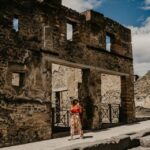
Where the tour starts: Porta Marina Inferiore and your AR setup
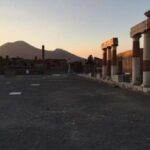
Your meeting point is Porta Marina Inferiore, Piazza Esedra, outside the Vittoria Coffee Shop. That’s useful because it means you’re not hunting for a random side street office. You show up, meet your assistant, and get the gear.
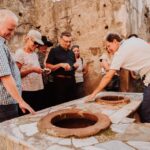
Once the group gathers, the Tour Assistant walks you through how the AR glasses work and what you should do while you’re moving. This is a big deal for an AR experience—without guidance, people tend to spend the first minutes fighting with equipment instead of looking at ruins. The assistant also stays with you through the tour, which gives you a safety net if the headset feels awkward or if you need help switching settings.
A quick practical note from the tour rules: AR glasses can be worn by participants who already wear eyeglasses. So if you use regular glasses, you’re not forced into contact lenses. And if you’re running late, they’ll wait for a maximum of 5 minutes, then the tour starts out of respect for other participants—so aim to arrive early, especially in peak season.
The 2-hour walking tour: what you’ll see (and what you won’t)
This experience is timed for 2 hours with a guided walk. That length is a sweet spot for Pompeii. It’s long enough to give you a real sequence—entry, multiple stops, and the story thread of daily life—but short enough that you’re not exhausted before you can explore on your own.
The tour covers the most significant parts of the site by category: temples, houses, squares, theaters, and buildings. You’re not just looking at one or two famous structures. Instead, you get a broad cross-section of public and private spaces, which is what makes the AR reconstructions useful. A reconstruction of a theater reads differently when you’ve also seen how nearby squares and buildings were laid out.
Here’s the trade-off: the tour does not include suburban villas (specifically, Villa dei Misteri). So if your personal must-see list includes those villas, you’ll need to plan extra time before or after this tour to cover them independently.
AR reconstructions over the ruins: temples, homes, squares, theaters
The heart of the tour is the moment you look at a ruined structure and see its likely pre-eruption form appear right on top of it. The tour is built to compare “what’s there now” and “what likely stood here before” through AR glasses, and it does that across several building types.
Temples and religious spaces
In ruins, religious sites can look like leftover foundations. With the reconstructions, you get a clearer sense of how people may have approached worship spaces, how the layout held meaning, and how the building related to the street and surrounding structures. Even when the exact details are lost to time, seeing the likely shape helps you stop thinking of Pompeii as just stone.
You can also read our reviews of more walking tours in Pompei Campania



Houses and neighborhood life
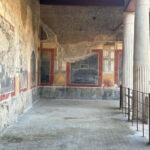
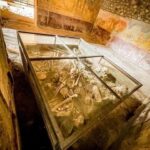
Residential buildings can be the most moving part of Pompeii because they connect to everyday routines. When you see the AR overlay on houses, it’s easier to imagine doors, courtyards, and the basic flow of movement through a home. The “before” view makes you think in routines—where people passed through, where they gathered, and how a house connected to its neighborhood.
Squares and public gathering areas
Squares are where a city performs. Without context, a plaza-like ruin can feel flat on the mind. With the AR reconstructions, you understand how these open spaces supported real social life—meeting, movement, and public activity. This also helps you interpret the role of nearby buildings, because squares don’t function alone; they’re the city’s connective tissue.
Theaters and entertainment
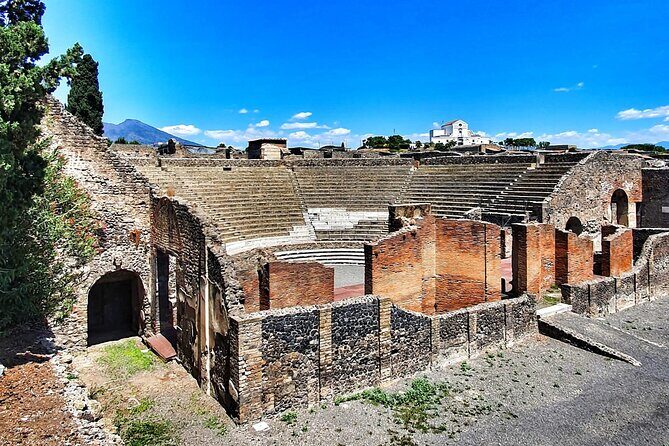
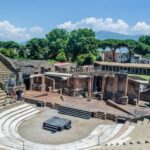
Theater ruins can be impressive, but they’re still hard to picture when you’re standing among collapsed remains. When the AR overlay brings back the likely form, you can connect the seating layout and stage orientation to the way people would have experienced performance. It’s a good match for families too, because kids often “get it” faster when they can see scale and layout instead of only hearing explanations.
Buildings in context
The tour also focuses on other key buildings, but the real value is how they build a mental map. Each stop strengthens the next one. After a while, you start looking at streets and spaces and asking better questions: What happened here? Why was this positioned this way? That’s where the AR audio and assistant explanations help you turn visuals into understanding.
The story thread: 79 A.D. told through what you see
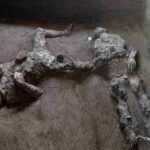
You’re not just watching a tech trick. The audio and guide explanation connect the site to the 79 A.D. eruption and what Pompeii may have been like before the disaster. That story is especially strong when it’s tied to physical locations.
Instead of treating the eruption as a vague event that happened off in the past, the tour uses reconstructions to show the city as a functioning place: a mix of public and private life, with buildings serving social roles and daily routines. That helps you understand why Pompeii feels unusually complete compared with many other ancient sites. The ruins are fragments, yes—but the overlays push you toward the full picture.
And because the reconstructions were developed with input from archaeologists and experts, the AR isn’t just a guess-the-painting game. You’re being guided toward interpretations that attempt to reflect what may have existed before the eruption.
Price and value: $61 for entry plus AR glasses
At $61 per person for entry ticket plus AR glasses, audio, and a walking guide, the pricing makes sense if you care about learning while you walk. You’re paying for more than admission. The bundle includes the equipment and the staff time to manage it, plus audio in six languages.
If you’re the kind of visitor who usually likes guided tours because you want context, this is a straightforward value: you get access to the park and the “how it looked” reconstructions without having to plan a separate audio strategy. It’s also good for groups that don’t want to split up—one guided experience keeps everyone moving together at the same points.
On the other hand, if you travel light and already know Pompeii very well, you might feel tempted by DIY entry. In that case, the value depends on whether AR reconstructions will genuinely change how you see the site. For a first-time visit, I think it usually does.
Guides you can trust: what the human piece adds
The AR tech is the headline, but the Tour Assistant is what keeps the experience smooth. The assistant introduces the itinerary, helps with the AR glasses, and stays with you during the tour. That human support matters when you’re walking through uneven ground and trying to look up, forward, and around without bumping into other people.
I saw lots of praise for guides by name—Sabrina for being excellent, Sam for smart explanations, Sara for creating a strong atmosphere, Luigi for helpful support with the equipment, and Daniela for thorough explanations. One theme shows up again and again: clarity plus patience. That matters most if your group includes kids, someone who needs extra time, or anyone who just wants a calm pace.
Practical tips: what to bring, what to wear, and how to avoid day-ruining mistakes
Pompeii can be hot and crowded, and this tour is a walk. The basics matter more than you think.
Bring:
- Comfortable shoes (you’ll be moving)
- Sunglasses and a sun hat
- Comfortable, weather-appropriate clothes
- Water
Don’t bring:
- Luggage or large bags
And here are a few “small rules” that can save your time:
- The activity runs rain or shine, so plan for wet weather if the forecast looks sketchy.
- Once the tour ends and the AR glasses are returned, you can stay in the archaeological park and explore independently. That’s a nice way to turn a guided 2-hour experience into a longer day.
- Tickets are nominal. To issue tickets, they require each participant’s full name and surname.
Kids, ages, and who this tour suits best
This is labeled as suitable for all ages, but the key age rule is specific: children under 8 years old can access the park with a standard ticket, but they cannot use the 3D technology. In practice, that means families with kids 8 and older can get the full AR effect.
The format also works well for:
- Families who want something more active than a museum-style visit
- Couples who want a guided “big picture” in a limited time window
- Solo travelers who don’t want to navigate major stops without context
- Anyone visiting Pompeii for the first time and wants a visual framework
If your group includes someone with limited mobility or a disability, the helpful factor is the pace and patience from the guide side, which has been specifically noted in feedback. Still, the tour is a walking experience, so you’ll want to judge your group’s stamina honestly.
Should you book this Pompeii 3D walking tour?
Book it if:
- You want Pompeii to make sense quickly, with ruins plus reconstructions instead of guesswork.
- You’re traveling with kids (especially age 8 and up) and want a format that keeps attention.
- You’d rather pay for a guided route and gear than plan reconstructions on your own.
Skip or add a DIY plan if:
- Your priority is suburban villas like Villa dei Misteri, since this tour doesn’t include them.
- You already have a deep Pompeii background and would prefer a longer, free-form walk without the timed structure.
If you’re on the fence, think of it this way: this tour is basically Pompeii with a visual translation layer. For most people—especially first-timers—that translation is the difference between seeing ruins and understanding a city.
FAQ
Where do I meet the Tour Assistant?
Meet your Tour Assistant at Porta Marina Inferiore, Piazza Esedra, outside the Vittoria Coffee Shop.
How long is the Pompeii 3D walking tour?
The tour duration is 2 hours.
What’s included with the ticket price?
You get an entry ticket, augmented reality assistant, augmented reality glasses, audio available in 6 languages, and a walking tour.
What languages are available?
Audio is available in Italian, French, Spanish, German, English, and Portuguese. The Tour Assistant is listed as Italian and English.
Are children allowed, and can they use the 3D technology?
Children under 8 can access the park with a standard ticket, but they cannot use the 3D technology.
What should I bring and what is not allowed?
Bring comfortable shoes, sunglasses, a sun hat, comfortable weather-appropriate clothing, and water. Luggage or large bags are not allowed.
Can I explore the park after the tour ends?
Yes. Once the tour is over and the AR glasses are returned, you can stay in the archaeological park and explore independently.