REVIEW · POMPEI CAMPANIA
From Pompeii: Vesuvius excursion + Pompeii guided tour
Book on GetYourGuide →Operated by Max travel · Bookable on GetYourGuide
Vesuvius and Pompeii in one day feels like science class and real life. You start near Pompeii’s main gate, ride up the mountain to walk to the crater rim, then drop back down for a guided look at the city that was frozen in time.
I especially like the structure: short walking time on the volcano side, plus a real guided Pompeii circuit afterwards with archaeology experts. I also appreciate that tickets are handled for you, so you can spend your energy on the sights instead of ticket lines and logistics.
One thing to consider: the crater access involves a path with steps/uneven terrain, and the crater area can close due to weather. If you have mobility limits, you’ll want to think carefully before booking.
In This Review
- Key Things I’d Focus on
- From Porta Marina Superiore to Vesuvius: The Day’s Logic
- The Van Ride Up and the 1,000-Meter Start Point
- Walking to the Crater: What You’re Signing Up For
- What You’ll Learn at Vesuvius (and Why It Changes Pompeii)
- Pompeii With Ima: How a Guided Walk Makes the Ruins Click
- Timing and Pace: How the 5 Hours Feel on the Ground
- Comfort Checklist: What to Bring So the Day Doesn’t Fight You
- Accessibility and Who This Tour Suits Best
- Price and Value: Is $147.27 Worth It?
- Weather Reality: When the Crater Can Close
- Should You Book This Vesuvius and Pompeii Combo?
- FAQ
- How long is the tour?
- Where does the tour start and end?
- Do I need to bring entry tickets?
- Is Villa dei Misteri included?
- What language is the live guide available in?
- What if the crater entrance is closed due to weather?
Key Things I’d Focus on
- Vesuvius crater walk from 1,000 meters: about 25 minutes along a path to reach the crater top area
- Guide-led Pompeii with archaeology experts: you get explanations designed to help you “read” the ruins
- Skip the ticket line: less waiting, more seeing
- Guides by name: Nello for the Vesuvius side drive and Ima at Pompeii are highlighted by past guests
- Good chance of a weather hiccup: crater entry can close if conditions are bad
From Porta Marina Superiore to Vesuvius: The Day’s Logic
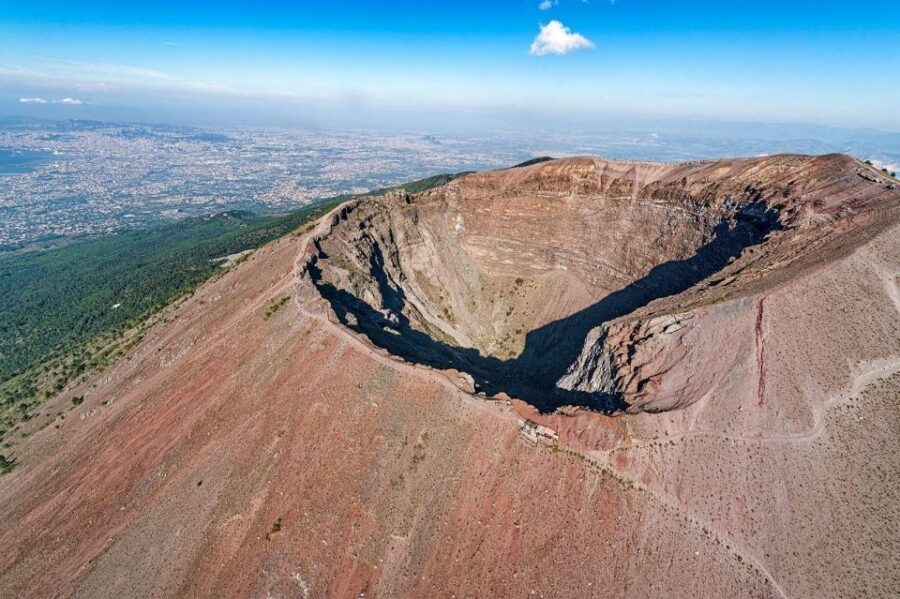
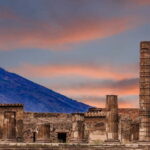
This tour is built for people who want the big hits without turning the day into a puzzle. You meet at the main entrance of Pompeii ruins, Porta Marina Superiore, then you’re moved by van to the volcano side. After the crater segment, you’re brought back to Pompeii for a guided walkthrough with your archaeology specialist.
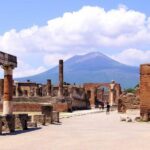
Why that order works: Vesuvius first sets the stage. You get the physical drama—height, cone shape, and the crater rim—then you return to Pompeii with context for what the eruption actually did. Instead of seeing random walls, you’re connecting geography to human life.
Also, this format saves you time. Pompeii and Vesuvius both involve planning, timing, and access rules. Here, the tour package stitches the pieces together: transfers + expert guidance + entry tickets.
You can also read our reviews of more guided tours in Pompei Campania
The Van Ride Up and the 1,000-Meter Start Point
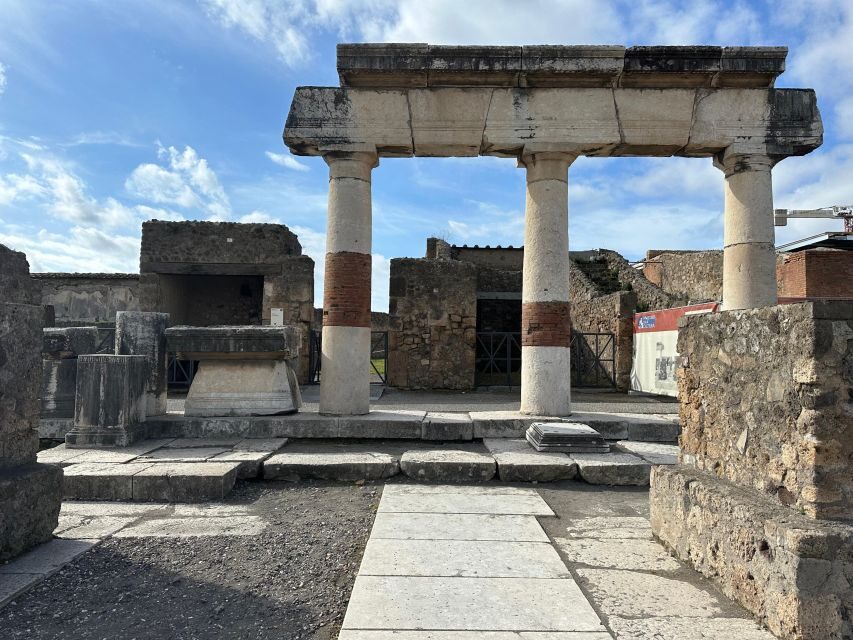
You’ll be picked up at Via Marina, 6, right by Pompeii’s Porta Marina Superiore. From there, your driver takes you up to an altitude of around 1,000 meters above sea level to begin the volcano portion.
That altitude detail matters. Starting higher means you’re not doing the full climb from the coast. You’re positioning yourself so that the walk is manageable for most visitors—though it’s still a real hike in mountain terrain, not a stroll.
As you ride, keep an eye on comfort and safety. One past guest flagged that a driver used a phone during the drive, which can make you feel uneasy on narrow roads. The same guest said the driver did pull over when asked. If you’re sensitive to distractions, it’s fair to mention your preference early and settle in.
Walking to the Crater: What You’re Signing Up For
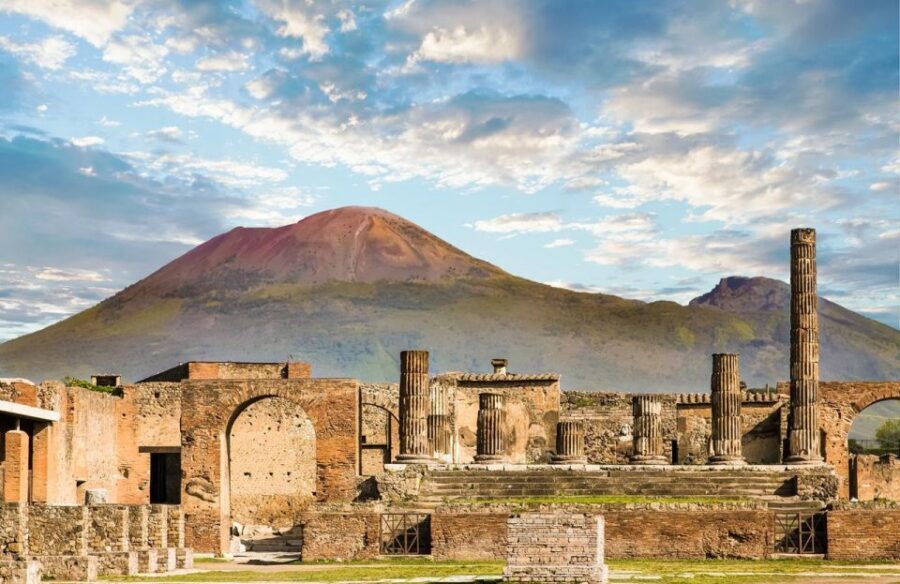
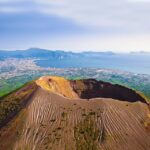
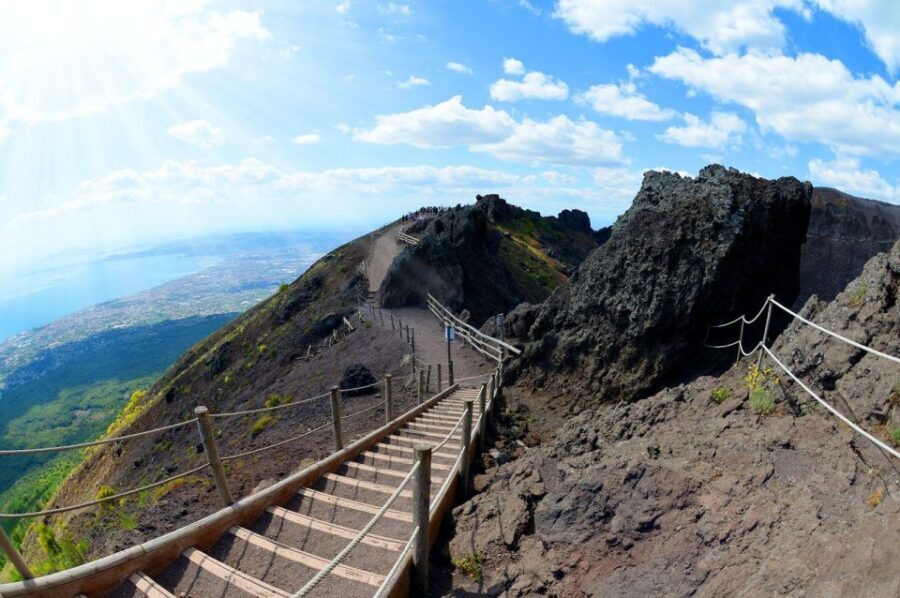
From the 1,000-meter starting point, you’ll walk for about 25 minutes along a path leading toward the top of the crater area. Think: uneven ground, outdoor sun, and a route that’s more “mountain hike” than “museum walk.”
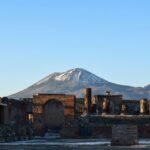
Then you’ll spend time around the great cone, taking in the crater view. This is the part where the facts stop being abstract. You’re standing close to the landscape that destroyed Pompeii, and the size of it is hard to grasp from photos.
Practical tip: wear shoes you trust. Bring comfortable shoes and plan for firm footing. Sunglasses and sunscreen are not optional in that open-air environment. And yes—bring water. The tour gives you no guarantee of long stops, so treat hydration as your job.
What You’ll Learn at Vesuvius (and Why It Changes Pompeii)
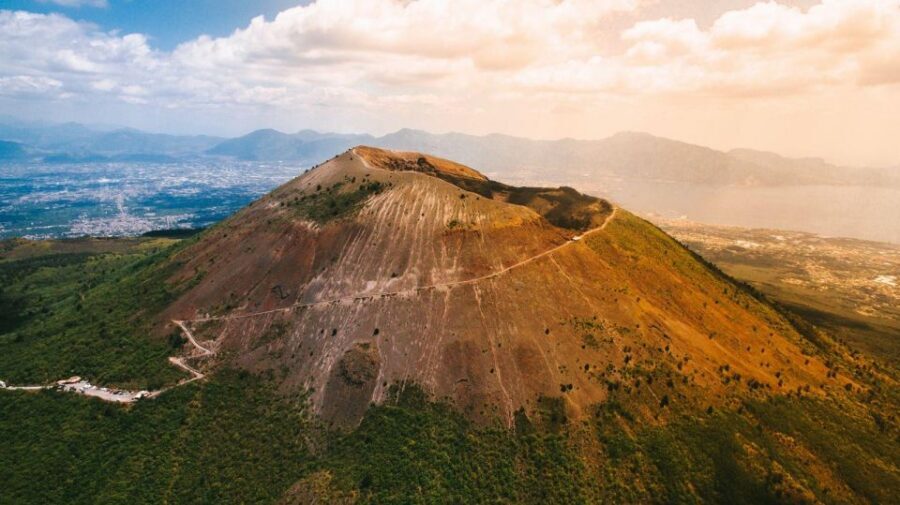
The eruption that destroyed Pompeii is usually taught as a date—August 79 A.D. But the crater experience makes it concrete. When you’re up near the crater rim, it’s easier to understand the geography of the disaster and why Pompeii’s location mattered.
You’re not just looking at a spectacular volcano. You’re getting a framework to interpret what you see later in Pompeii: how an eruption changes air, ash, and everything beneath the “ordinary” surface of daily life.
This is also where a good guide rhythm matters. You move from van to walk to crater area without chaos, and then you transition smoothly back down to Pompeii to meet the archaeology expert. That handoff keeps the day from feeling like two disconnected tours.
Pompeii With Ima: How a Guided Walk Makes the Ruins Click
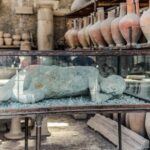
After the crater segment, you head back to Pompeii’s main entrance area and meet your archaeologist/guide for the Pompeii portion. This guided tour is about two hours, and that time is the heart of what you’re paying for.
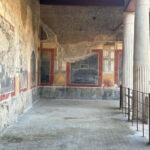
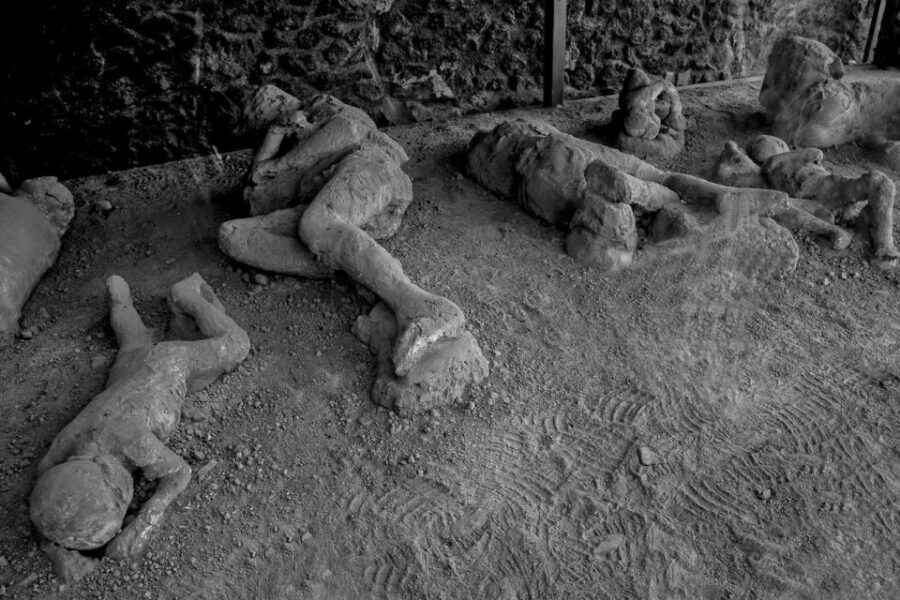
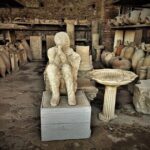
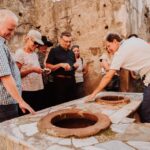
A real guide changes how you move through Pompeii. Instead of wandering, you’re directed toward the most important sites and you get explanations that help you connect the setting to the people who lived there. The goal is to help you relive daily life in the archaeological site, not just point out walls.
From the name you’ll hear—Ima—you can expect a focus on making the city legible. You’re guided through key areas so you can quickly get oriented and then understand what you’re looking at: streets, structures, and spaces tied to everyday routine.
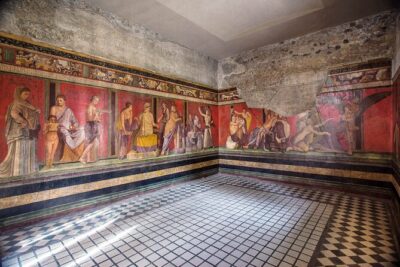
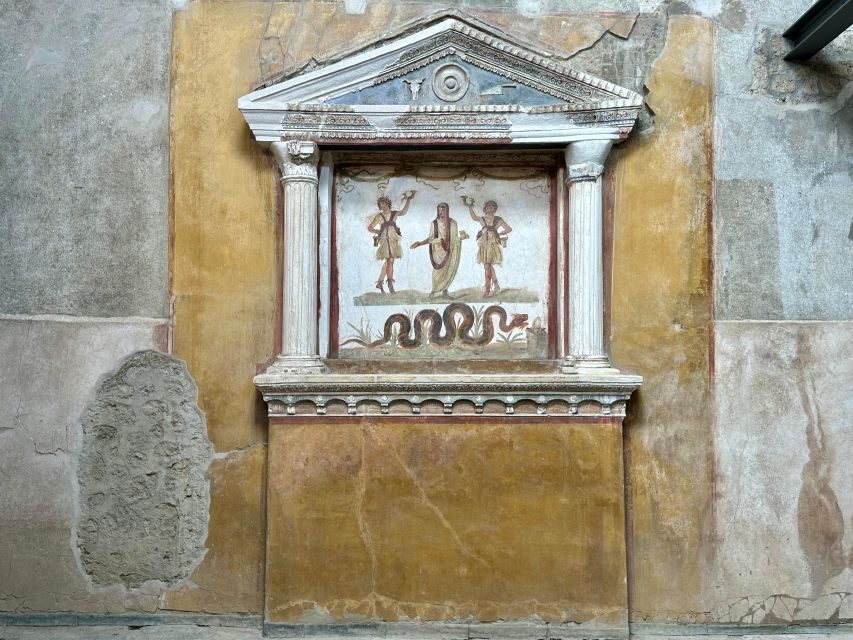
One more detail that affects planning: Villa dei Misteri is not included. That matters because some visitors come specifically for that highlight. If Villa dei Misteri is on your must-see list, you’ll want to plan a follow-up visit either on your own time after the tour or by choosing another option that includes it.


Timing and Pace: How the 5 Hours Feel on the Ground
This is a 5-hour outing. That sounds short, and it is—especially once you add the mountain drive and outdoor walking. But the pacing is reasonable if you’re aiming for maximum “big picture” value.
A good way to think about the day:
- Vesuvius portion: a relatively brief walk (about 25 minutes) plus crater viewpoints
- Pompeii portion: guided circuit lasting about two hours
- Transfer time: van segments around the walking blocks
So you’re not spending hours trekking across the crater or wandering indefinitely through Pompeii’s streets on your own. You get a focused route with stops that hit major sights.
Still, go in with realistic expectations. Pompeii is huge. Two hours guided can’t cover everything. The win here is that you’ll leave knowing what matters most and why.
Comfort Checklist: What to Bring So the Day Doesn’t Fight You
This kind of itinerary rewards preparation. Here’s what the tour asks you to bring, and it’s exactly what I’d pack:
- Comfortable shoes (crucial for uneven paths)
- Sunglasses
- Sun hat
- Sunscreen
- Water
- Comfortable clothes
Also, consider lightweight layers. Mountain air can feel different than the coast, and you’ll be outside for parts of the day.
If you tend to get cold on short hikes, pack a thin layer. If you run hot, prioritize sun protection and water. This is one of those tours where feeling physically okay makes the guide’s explanations land better.
Accessibility and Who This Tour Suits Best
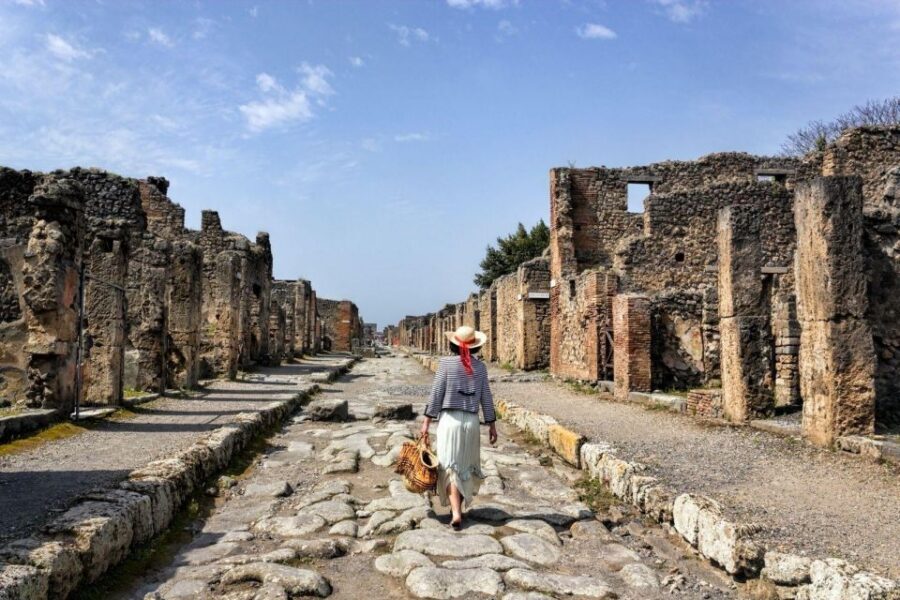
This tour is not suitable for wheelchair users. Beyond that, the crater walk and Pompeii terrain can be challenging depending on your mobility and comfort with steps or uneven ground.
Who this works well for:
- First-time Pompeii visitors who want a guided route
- People who want Vesuvius without a full-day trek
- Travelers who like structured experiences that help them understand what they’re seeing
Who should think twice:
- Anyone with difficulty ambulating on step terrain
- People who need mostly flat, even surfaces
- Visitors hoping for a relaxed pace and long indoor breaks (this is outdoor-heavy)
If you’re on the edge of what you can handle physically, it’s worth checking in with your own comfort level. The tour includes a short hike, but it’s still a hike.
Price and Value: Is $147.27 Worth It?
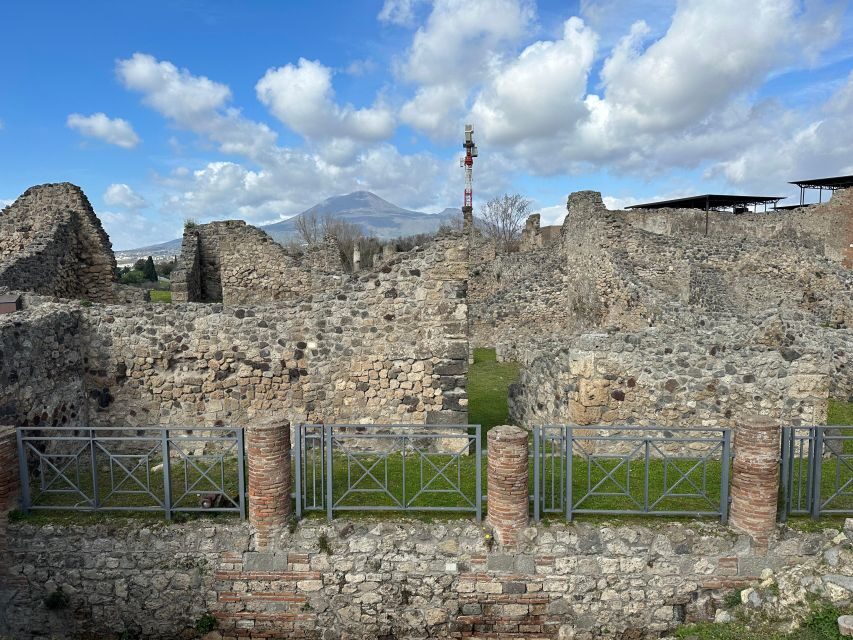
At $147.27 per person, you’re paying for more than just two attractions. You’re paying for the logistics and the “sense-making” factor: transfers, skip-the-line entry, guided Pompeii, and entry tickets for both Pompeii and the crater.
Here’s why that price can be fair value:
- Pompeii and Vesuvius each involve time costs (access, tickets, and planning).
- You get expert guidance for the Pompeii portion, which is where visitors often feel lost without context.
- You’re not cobbling together separate transport arrangements for a mountain route.
Could you do it cheaper on your own? Possibly, but you’d likely spend more time figuring out transit and tickets, and you’d miss the guided interpretation that helps ruins become a story.
The best “value” question isn’t just cost. It’s whether you want to understand Pompeii instead of just see it. This tour leans hard into understanding.
Weather Reality: When the Crater Can Close
One heads-up that matters: the entrance to the crater could close due to adverse weather conditions. That means the Vesuvius portion might be affected depending on wind, visibility, or safety rules.
The practical takeaway: be ready for changes and keep your expectations flexible on the volcano side. The rest of the day is designed to keep you moving, but weather can still change what you’re able to access.
Should You Book This Vesuvius and Pompeii Combo?
I’d book it if you want a straightforward, high-impact day: volcano crater views, then a guided Pompeii route that helps you understand daily life in the city.
I’d pass or look for alternatives if:
- You need full wheelchair accessibility
- You know the crater walk or Pompeii terrain will be too much
- You specifically want Villa dei Misteri included in the same outing
If you’re fit enough for outdoor steps and you value guidance, this is a strong option. You’re buying time-saving transfers, entry handling, and expert interpretation—so your day feels like a coherent story, not two separate “see what you can” stops.
FAQ
How long is the tour?
The tour duration is 5 hours.
Where does the tour start and end?
It starts at the main entrance of Pompeii ruins (Porta Marina Superiore) and ends back at the same place.
Do I need to bring entry tickets?
No. Entry tickets for Pompeii and the crater of Vesuvius are included, and the tour offers skip-the-ticket-line access.
Is Villa dei Misteri included?
No. Villa dei Misteri is not included.
What language is the live guide available in?
The live tour guide is available in Italian and English.
What if the crater entrance is closed due to weather?
The entrance to the crater could close due to adverse weather conditions, so access may be affected.