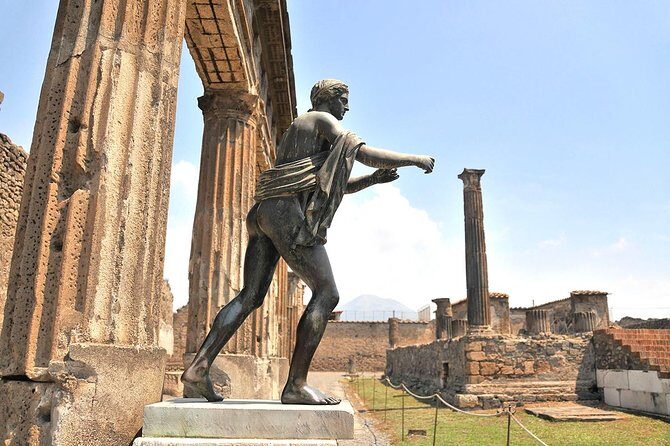
REVIEW · POMPEI CAMPANIA
Pompeii: Skip-the-Line Entrance Ticket with Audio Guide
Book on GetYourGuide →Operated by Tempio Travel Pompei Tickets · Bookable on GetYourGuide
Pompeii is one of those places that grabs you fast. With skip-the-line entrance plus an audio guide and map, you can focus on the ruins instead of burning time at ticket counters. I especially like the self-guided freedom to hop between the Roman center and the quieter corners, and I like having built-in context so the frescoes and public buildings make sense. One thing to plan for: it’s still a high-traffic site, so you may face some crowd flow near entry even with the shortcut.
You’ll start by exchanging your voucher at a very specific spot in Pompei, then you’re in for a full day among UNESCO-level ruins. Expect lots of walking in strong sun, a few practical constraints (like no large bags), and an audio experience that works best when you pair it with good headphones.
In This Review
- Quick hits before you go
- Pompeii Skip-the-Line: what you actually gain
- Where to exchange your voucher (and why location matters)
- Entering the archaeological site: start with the right mindset
- Audio guide strategy: how to use it without losing time
- The Pompeii highlights that matter most on your route
- Roman amphitheater: where spectacle met civic pride
- Small theater: a calmer counterpoint
- Public gym: daily routine, not just ruins
- Frescoes and painted rooms: the art you don’t want to rush
- Roman daily life areas and banquets
- Practical tips: heat, headphones, and bag rules
- What if you want extra guidance beyond audio?
- How long should you plan for?
- Accessibility, language, and who this suits best
- Price and value: is $39.97 a good deal?
- Should you book this Pompeii skip-the-line ticket?
- FAQ
- Where do I exchange my voucher for this Pompeii ticket?
- What’s included with the skip-the-line entrance ticket?
- Are headphones or a headset included?
- Can I bring luggage or large bags?
- What documents should I bring?
- How long is the experience?
- What languages are available for the audio guide?
- Is there a cancellation window?
- Is there an age-related price rule?
Quick hits before you go

- Exchange your voucher at Circumvesuviana station (first floor) at Via Villa dei Misteri, 1, Pompei—then head straight toward Pompeii.
- Audio guide + map mean you can design your route instead of being chained to a tour group.
- See the big set pieces fast: Roman amphitheater, small theater, and the public gym show the everyday rhythm of Roman public life.
- Frescoes are the star if you slow down—stop for details like painted scenes frozen in time.
- Bring proper headphones since the ticket includes the audio guide but not a headset.
- There can be a minor snag or two (like briefly missing where to pick up audio equipment), so be ready to ask at the exchange desk.
Pompeii Skip-the-Line: what you actually gain

This ticket is built for one main problem: Pompeii is popular, and time spent at the ticket office is time you’ll never get back once you’re inside. The skip-the-line entrance matters because the ruins are what you came for, not paperwork.
But here’s the honest part: skip-the-line usually means you bypass the most painful queue at the ticket stage. You can still run into normal congestion when many people flow toward entrances and major paths. One practical win is that you can start earlier with less friction—especially helpful if you want to beat peak heat.
The other value piece is that the ticket doesn’t just hand you entry. You get an audio guide and a map, which is key at Pompeii. The site is large and reads like a grid of streets and neighborhoods. Without guidance, it’s easy to wander for an hour and then realize you missed the clustered highlights.
You can also read our reviews of more tours and experiences in Pompei Campania.



Where to exchange your voucher (and why location matters)

Your meeting point is the activity provider’s office at the first floor of the Circumvesuviana train station in Pompei: Via Villa dei Misteri, 1, 80045 Pompei NA, Italia.
That location isn’t random. If you’re arriving by train from Naples, you’re already in the right transportation ecosystem. You exchange first, then you head into the archaeological area without a separate shuttle or long detour.
A small optional bonus mentioned with the experience: if conditions allow, there’s a chance for free parking at Osteria Nonna Cherubina (Via Andolfi 46, 80045 Pompei). I treat this as a maybe, not a plan, but it can help if you’re coming by car and want to avoid paid lots near the ruins.
Entering the archaeological site: start with the right mindset

Once you’re in, the biggest “make-or-break” factor is how you pace. Pompeii is spread out. Even if you only aim for the headline stops, you’ll still cover plenty of ground.
With the audio guide and map, your best approach is to pick a theme and then branch out:
- Roman public life (amphitheater, small theater, public gym)
- Street-level everyday life (places where Romans lived and ate)
- Artistic and domestic details (notably frescoes)
The site is also hot and often low on shade. One practical tip that keeps coming up: bring water. Even if you feel fine early, the combination of sun + walking can catch up quickly.
Audio guide strategy: how to use it without losing time
The audio guide is included, and it comes in French, German, Italian, English, and Spanish. The big advantage of audio over a live group is control. You can linger where you want and skip what doesn’t interest you.
Here’s how I’d use it to avoid common frustration:
- Listen while walking between clusters, not while staring at a wall from 20 feet away. The ruins are closer than they look, and you’ll understand more if you hear the explanation right as you reach the spot.
- Use the map to confirm you’re in the right zone. Pompeii can feel like a maze.
- Keep your headphones ready before you start. The headset itself is not included, so you’ll want your own.
One detail worth noting: some setups deliver audio through a mobile phone experience. If that’s how yours works, having an aux-style earphone cable (if you prefer wired audio) can be handy. At minimum, show up with working headphones you’re comfortable wearing for hours.
Also, one practical heads-up: audio guidance doesn’t always land perfectly if you’re moving fast. If you feel like you’re hearing directions but not sure what they refer to, pause for 30 seconds, check the map, and then restart the track at the right stop.
The Pompeii highlights that matter most on your route
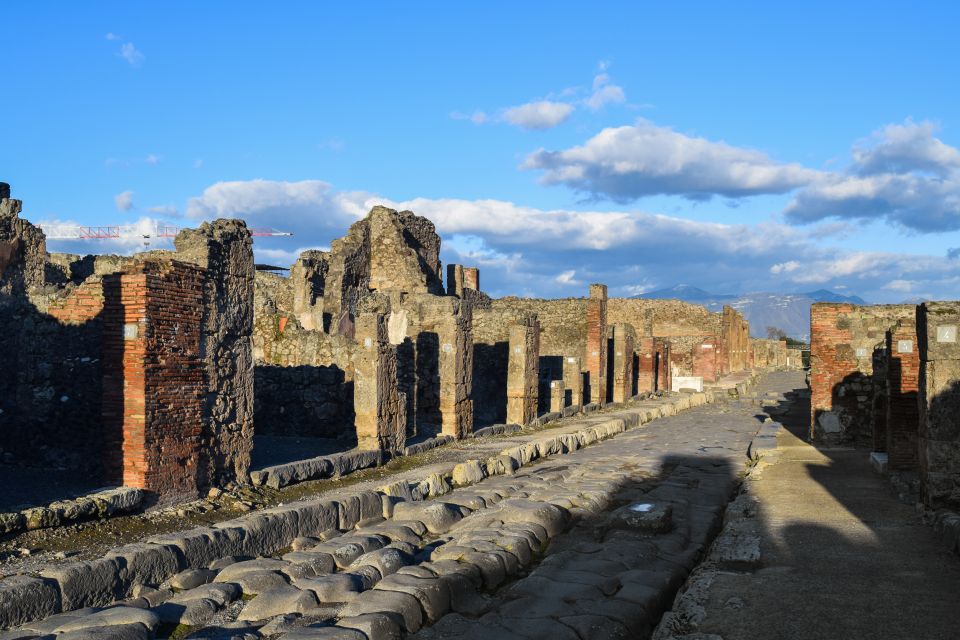
Pompeii’s power is that it’s both dramatic and ordinary. You get tragedy, yes—but you also get daily life: public spaces, neighborhood routine, art, and architecture. Here are the stops you should look for, and what to expect at each.



Roman amphitheater: where spectacle met civic pride
The Roman amphitheater is one of the easiest places to understand Pompeii quickly. You’ll see how public entertainment was part of Roman identity—built to gather people and stage events.
What I like about starting here (or working it into your first half) is that it gives you scale. Once you understand where crowds gathered, other public buildings feel more grounded. You’re not just looking at walls—you’re imagining the noise and movement that once filled these spaces.
Small theater: a calmer counterpoint
Right after the amphitheater energy, the small theater feels different. It’s a reminder that Roman entertainment didn’t only mean massive spectacles. This kind of space helps you see Pompeii as a city, not just a single monument.
It’s also a nice breather from the heaviest crowd flow. Even when people are everywhere, smaller theaters often give you a different rhythm—more pause, more detail.
Public gym: daily routine, not just ruins
The public gym is where Pompeii starts to feel less like a museum and more like lived-in architecture. A gym isn’t just a room—it’s social life, exercise culture, and routine.
If you’re interested in how people actually spent their time, the gym can be one of the most satisfying stops. Look for how it connects to surrounding areas and imagine a day in the city beyond markets and banquets.
Frescoes and painted rooms: the art you don’t want to rush
The frescoes are a major highlight—frescoes frozen in time is exactly right. These are the details that make Pompeii feel personal. They’re not just “old pictures.” They’re communication: fashion, myths, status, and private taste.
My advice: don’t treat fresco viewing as a checkbox. Slow down and zoom in with your eyes. Even when you can’t read everything, you can still track composition and color choices. You’ll end up remembering the faces, scenes, and patterns more than any broad description of the city.
Roman daily life areas and banquets
The ticket experience also points you toward places where Romans lived and held banquets. This is where the ruins become a story about social structure: who ate together, what rooms were used for community versus privacy, and how domestic space connected to the wider city.
If you’re doing Pompeii for the first time, this is also where audio helps most. Pompeii can feel “famous but confusing” unless someone explains what you’re looking at—especially for homes, street layouts, and how public and private life overlap.
Practical tips: heat, headphones, and bag rules
Pompeii rewards prepared visitors. A few practical points can make your day smoother:
- Headphones are on you: the ticket includes the audio guide and map, but it does not include a headset. Bring comfortable headphones you can wear for hours.
- No luggage or large bags: plan to travel light. If you’re arriving by train, keep it small enough to move through crowds without wrestling your bag.
- Sun and limited shade: bring water and protect yourself. You’re walking for a long time, and the ruins don’t care if you’re tired.
- ID and document basics: you’ll need passport or ID card. The info also lists driver’s license as something to bring, which you should follow if you want zero friction at the exchange stage.
What if you want extra guidance beyond audio?
This ticket is self-guided with an audio layer. Still, if you ever feel you’re missing the bigger picture, you might consider upgrading to a live tour add-on when available on the day. You’ll sometimes see names like Alfonso, Alfonso-Marie, Julià, or Astrid associated with guided options.
A live guide can help when you want efficiency: where to walk first, what to skip, and how to connect themes. It’s also a good match for first-timers who want the highlights explained clearly without having to figure out the site layout.
On the flip side, if your style is wander-and-pause, the audio ticket keeps that freedom intact. You don’t have to decide right away.
How long should you plan for?
The experience is listed as duration: 1 day. That’s a helpful umbrella, but your actual time depends on your pace.
If you like a full sweep with time to stop for frescoes and photos, treat it like a half-day to full-day plan. Some people fit an added guided component and then enjoy extra self-guided time afterward. Others go straight audio-first and use the map to pick their own priorities.
If you want the ruins to feel meaningful (not rushed), plan for breaks. Find a spot in the shade when you can and reset your brain. Pompeii is a lot, even when you love it.
Accessibility, language, and who this suits best
Languages are clear: the audio guide is available in French, German, Italian, English, and Spanish, and the host/greeter support listed includes those same languages.
Who this suits best:
- Independent explorers who want freedom to roam and linger
- First-timers who still want context, without booking a full guided tour
- People who dislike rigid schedules and prefer to move at their own speed
Where it may not be ideal:
- If you hate audio devices or don’t like figuring out logistics on-site, you might find the audio experience annoying unless you’re comfortable navigating with maps.
One caution from experience notes: there can be odd small admin moments, like being asked for a passport deposit for the audio device. Before you hand anything over, check what’s required and ask how the return works.
Price and value: is $39.97 a good deal?
At $39.97 per person, you’re paying for three things: skip-the-line entry, an audio guide, and a map. That’s good value compared to doing Pompeii as entry-only and then separately hunting down an audio solution on-site.
The main cost trade-off is what’s not included: headset. So you may need to buy or bring your own headphones. Also, no food or drinks are included, so budget for water and basic snacks if you’ll need them.
The value equation improves if you’re short on time and want to reduce friction at the start. If you’re arriving during peak hours, the “buy time back” part matters. If you’re arriving at a quiet time, the savings over regular entry might feel smaller, but you still gain the audio structure and map.
Should you book this Pompeii skip-the-line ticket?
If you want Pompeii without the slow start, I’d book it. The combination of skip-the-line access, audio guide, and a map is the sweet spot for people who like independence but still want context to make sense of what they’re seeing.
Book this if:
- you’re coming in by train and want the exchange to be close and simple
- you don’t want to rely on phone data for explanations
- you’re planning to cover multiple areas, not just the first stop
Skip it (or plan differently) if:
- you’re very sensitive to admin steps at the start and prefer a single meeting with everything handled automatically
- you’d rather have a fully guided route where navigation and explanations are managed end-to-end
Bottom line: this ticket is a smart way to see Pompeii at a human pace—so you can spend your time looking at Pompeii, not queueing for it.
FAQ
Where do I exchange my voucher for this Pompeii ticket?
You exchange your voucher at the activity provider’s office on the first floor of the Circumvesuviana train station, Via Villa dei Misteri, 1, 80045 Pompei NA, Italia.
What’s included with the skip-the-line entrance ticket?
It includes skip-the-line entry, an audio guide, and a map.
Are headphones or a headset included?
No. Headset/headphones are not included, so you’ll want to bring your own.
Can I bring luggage or large bags?
No. Luggage or large bags are not allowed.
What documents should I bring?
Bring a passport or ID card, and also a driver’s license.
How long is the experience?
The duration is listed as 1 day. Starting times vary, so you’ll need to check availability.
What languages are available for the audio guide?
The audio guide is available in French, German, Italian, English, and Spanish.
Is there a cancellation window?
Yes. You can cancel up to 24 hours in advance for a full refund.
Is there an age-related price rule?
Children aged 0 to 17 go for free. People aged 18 to 24 from the European community with an identification document pay €2.