REVIEW · POMPEI CAMPANIA
Pompei: Cooking class fresh pasta
Book on GetYourGuide →Operated by Giardini Balestrieri 132 · Bookable on GetYourGuide
If you like food with real people behind it, go.
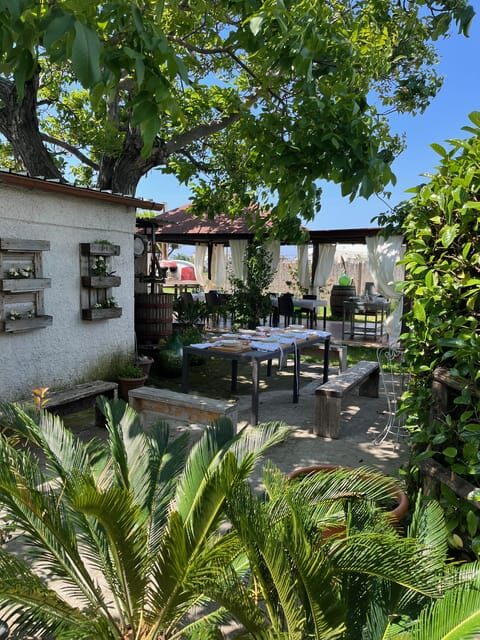
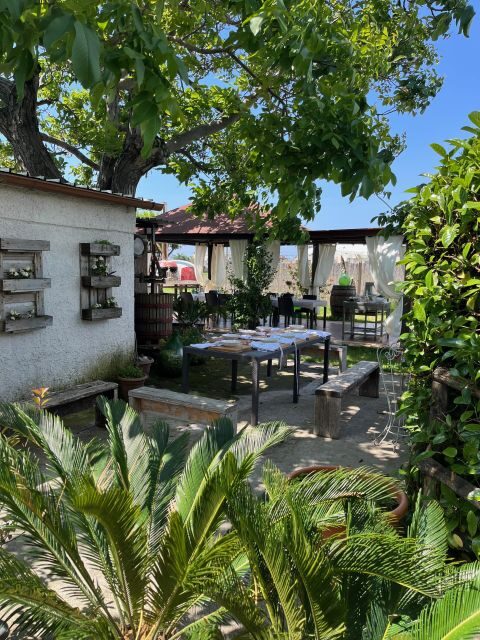
This Pompei cooking class happens just minutes from the excavations, but the setting feels like family life in the Pompeian countryside. I like the way Sabrina, a Cesarina (local home-cook tradition keeper), teaches you step-by-step in a garden with views of Vesuvius and the Lattari mountains, then you sit down and eat what you made.
You’ll make fresh pasta together and also enjoy a proper Campania menu: bruschetta with seasonal vegetables, a homemade dessert, water, and Gragnano wine. The best part is how relaxed and patient the teaching feels, even if you’re not a kitchen person.
One consideration: this experience has a minimum for two people, and transfers aren’t included, so you’ll want to plan how you get there and back.
In This Review
- Key things that make this Pompei pasta class special
- A family-style Pompei cooking class with countryside views
- What you’ll cook (and what you’ll eat) in about 3 hours
- Why fresh pasta in Campania matters beyond the dough
- Bruschetta first: a simple start that sets the tone
- Making pasta hands-on: what the lesson feels like
- The dessert and the garden connection
- Pairing it with Gragnano wine (and why that’s a nice touch)
- Views, timing, and where you meet
- Who this pasta class suits best
- Practical value: is $91.76 per person worth it?
- A quick heads-up on what to consider before booking
- Should you book this Pompei fresh pasta class?
- FAQ
- How long is the Pompei fresh pasta cooking class?
- Who teaches the class, and what language is it in?
- Where do I meet for the experience?
- What’s included in the menu?
- Is transfer included?
- Is there a minimum number of people?
- Does the activity start and end at the same meeting point?
- Is wine included?
- What’s the price per person?
- What is the cancellation policy?
Key things that make this Pompei pasta class special
- Cesarina hosting in a private family garden a few minutes from Pompeii’s excavations
- Fresh pasta hands-on with direct guidance (no chef credentials needed)
- Campania flavors you actually eat, not just watch and snack
- Menu includes wine and dessert, so the 3 hours feel like a full meal experience
- Garden-grown emphasis from the countryside setting, with home-style cooking energy
A family-style Pompei cooking class with countryside views
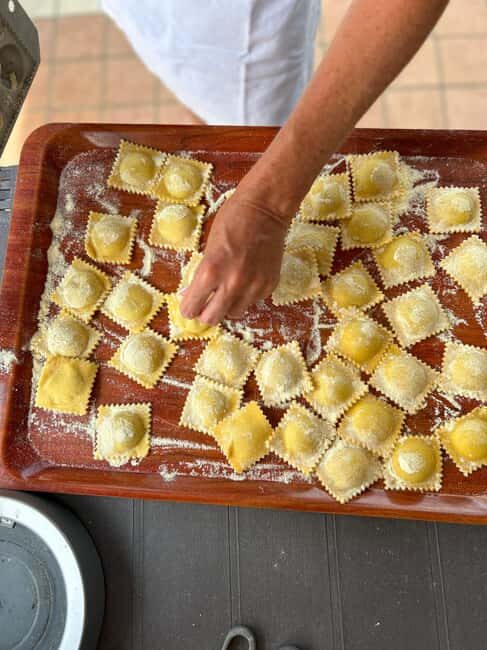
This is one of those Pompeii experiences that avoids the tourist-factory vibe. You start in a simple, familiar setting at Giardini Balestrieri, and you’re not treated like a ticket number. You’re treated like someone joining a Sunday table—hands in the dough, food on the plate, and plenty of warmth in between.
Sabrina is the face of the experience, and the vibe is clearly family-run. In practice, that means you get a steady pace and lots of reassurance while you learn. If you’ve ever worried you’ll slow the group down, relax. The cooking is guided, and the goal isn’t perfection. It’s learning the motions and then tasting the result.
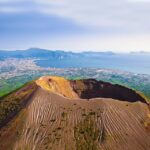
The location helps too. You’re close enough to Pompeii to make it feel convenient, yet the garden setting gives you that calm, fresh-air reset from the crowds. You’ll have the kind of view that makes you pause without even trying—Vesuvius in the distance, plus the mountains beyond.
You can also read our reviews of more cooking classes in Pompei Campania
What you’ll cook (and what you’ll eat) in about 3 hours
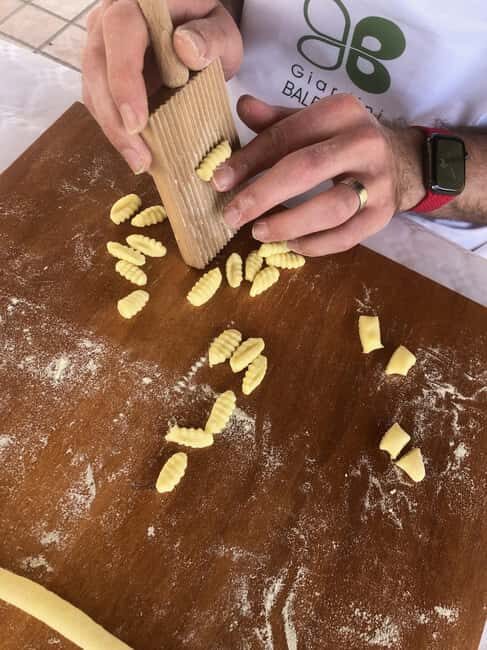
The class runs for about 3 hours, and the flow is built around making pasta from scratch, then eating together. You’ll also have an extra layer of Campania comfort food before and after the pasta.
Here’s what’s on the menu as part of the experience:
- Bruschetta with seasonal vegetables
- Fresh pasta (the main event)
- A homemade dessert (Campania style)
- Water
- Gragnano wine
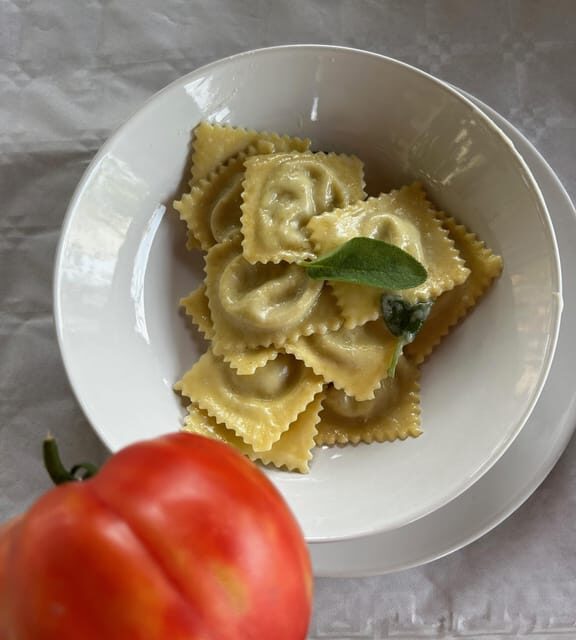
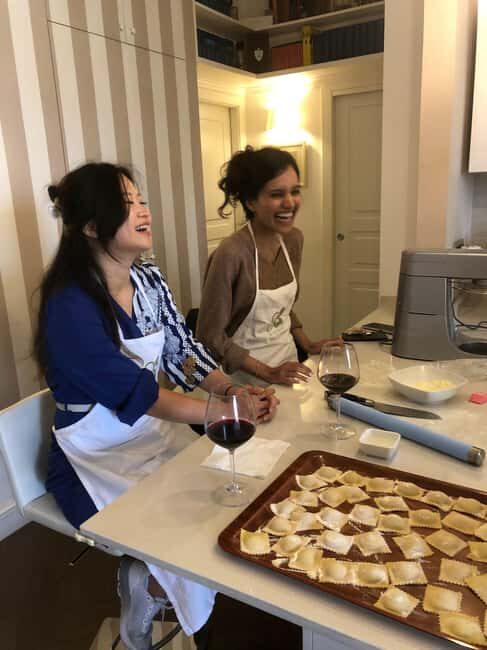
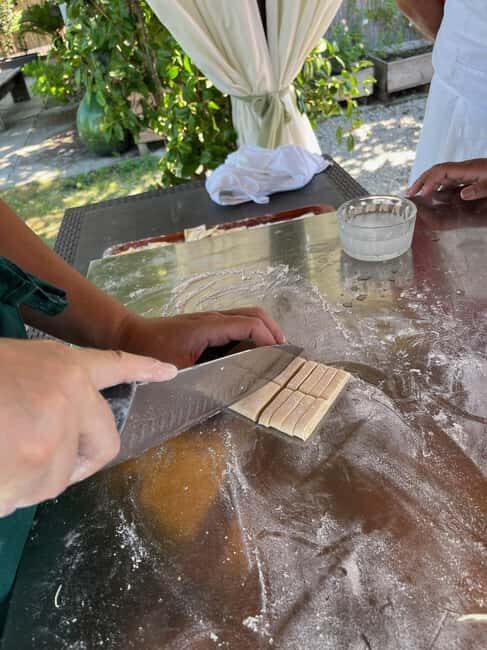
In the garden, you’ll put your hands in the pasta and work through the steps with Sabrina’s guidance. Depending on the day and the group, you may shape things like ravioli—you’ll hear about it in the way the class is explained, and you’ll end up eating the pasta you helped make.
This is also where the experience feels more “food culture” than “cooking demo.” You’re not just tasting a finished dish someone else prepared. You get to participate, then you sit down and eat like it’s your turn at the table.
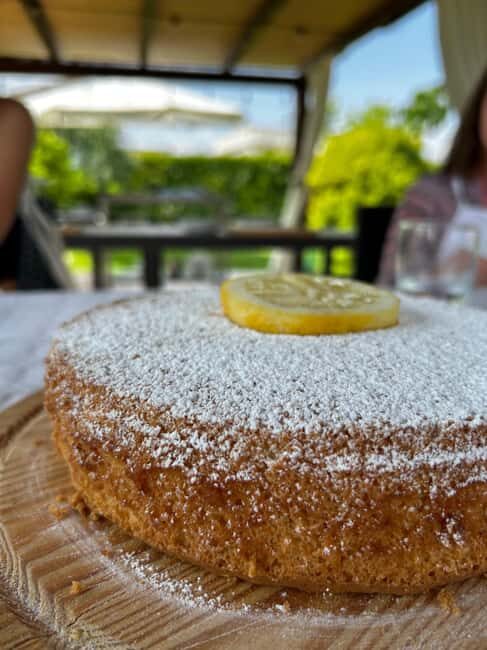
Dessert is part of the story too. One dessert you might encounter is a caprese lemon cake, and the key point is that it’s homemade and tied to local ingredients. Several people specifically loved the fact that much of what goes into the dessert feels rooted in the property and local harvest—so the flavors taste less manufactured and more seasonal.
Why fresh pasta in Campania matters beyond the dough
Pompei is famous for ruins. Campania is famous for food. This class bridges the two, and that’s the value you feel right away: you’re learning how people in this region actually eat at home.
Fresh pasta in Campania isn’t just a technique. It’s a social thing. It’s the kind of food you make when you want everyone to slow down and share time. That’s why the class is designed around eating what you cook. It turns pasta-making into a memory, not just a skill.
And the setting changes how you experience it. When you’re learning in a garden with a view of Vesuvius, the process feels less like a chore. You notice aromas more. You pay attention to texture. You’re more likely to remember the steps because you’re relaxed enough to enjoy them.
Bruschetta first: a simple start that sets the tone
You begin with bruschetta with seasonal vegetables. It’s not complicated, but that’s the point. A good first course like this does two things: it settles your hunger before you’re busy with dough, and it gives you a sense of the ingredients and timing.
The “seasonal vegetables” detail matters because it keeps the flavor local. You’re not eating some generic tomatoes-from-a-shelf situation. You’re tasting what’s being used in that moment, which makes the rest of the menu feel coherent.
If you’re trying to plan your day in Pompeii, this appetizer timing also helps. You can arrive already hungry and still not feel rushed or starving while you wait for the main cooking portion.
Making pasta hands-on: what the lesson feels like
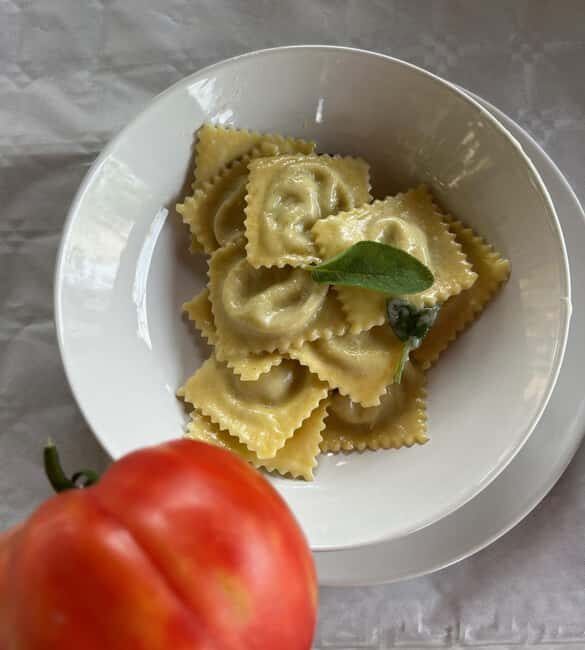
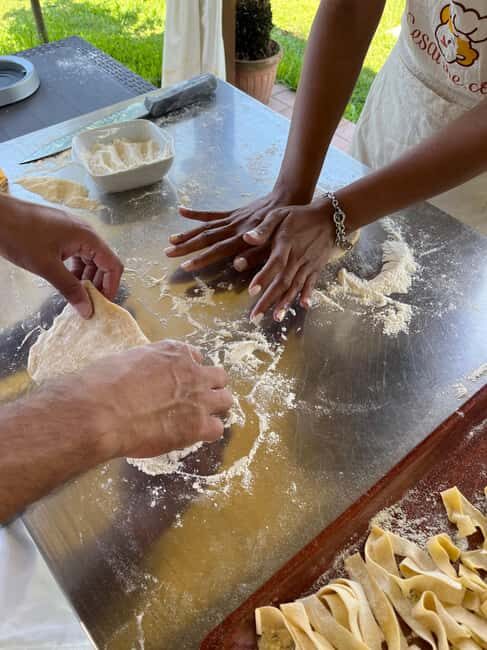
This is the centerpiece: you’ll make fresh pasta together after you put your hands in it. Sabrina’s role is to guide you through the process in a way that works for beginners.
From what you can expect in the class style, the teaching is patient and practical. People have described it as not needing to be a chef to succeed, which fits the whole “family life” approach. You’ll learn by doing: shaping, working, and then finishing enough to serve it at the table.
And it’s not just technique. You’re also getting a taste of how locals think about food—when to slow down, what texture looks like, and how Sunday cooking is about results you can share, not just impress.
One thing to keep in mind: pasta-making takes a little focus. If you’re the type who gets distracted, plan to arrive ready for a hands-on session. Keep your phone put away during the key prep steps. You’ll get more out of the class if you treat it like an activity, not background entertainment.

The dessert and the garden connection
After pasta, you eat what you prepared, then you move into dessert. This is where the Campania feel turns up. The dessert is homemade, and you may see offerings like caprese lemon cake, which people often remember because it’s light, lemony, and clearly made with care.
The garden matters again here. One reason dessert feels special is that the meal has a consistent theme: the ingredients come from the countryside and local rhythms. When something tastes like it came from the same place you’re standing, it’s easier to trust the flavors and enjoy them without overthinking.
Pairing it with Gragnano wine (and why that’s a nice touch)
Gragnano wine is included. That matters for value because it turns your meal into a true sit-down experience instead of a class where you snack and leave.
Gragnano is the kind of detail that signals regional care. You’re getting a pairing that fits the menu rather than a random drink. And since the class includes water too, you can pace yourself. This is a good option for an evening meal plan in the Pompeii area, especially if you don’t want to hunt for a restaurant right after a sightseeing day.
Views, timing, and where you meet
You meet at a sign that says balestrieri gardens. The experience starts there and ends back at the same meeting point. That makes your day easier to manage. You don’t have to worry about getting back to a different drop-off location.
The class location is a few minutes from Pompeii’s excavations and the sanctuary. So if you’re building a day around ruins, you can pair this with a morning or afternoon sightseeing block—then spend the rest of your energy on food and conversation instead of logistics.
You should still assume you’ll want to keep some buffer time. Three hours is a real block, and you’ll likely slow down for eating and talking. Treat it like a meal first, then add the cooking as the activity that happens inside it.
Who this pasta class suits best
This works well if you want one of the more authentic things to do around Pompeii. It’s also a smart fit for people who:
- want a hands-on cooking activity with an English instructor
- prefer small, personal experiences over big group tours
- enjoy eating regional food rather than sampling something generic
- like relaxed hosts and a friendly atmosphere
It’s especially appealing for couples, since there’s a minimum experience for two people. If you’re traveling as a pair, you’re likely to enjoy the family-table feel even more because you’re not stuck in the chaos of a huge group.
If you’re traveling with kids, the data you have doesn’t confirm age minimums or kid-friendliness, so you’d want to check directly with the provider before booking.
Practical value: is $91.76 per person worth it?
Let’s talk value in plain terms. At $91.76 per person for a 3-hour experience, you’re paying for more than “someone teaching you.” You’re getting:
- a full menu (bruschetta, fresh pasta, dessert)
- water
- Gragnano wine
- hands-on instruction in an English-language session
- a location experience in the Pompeii countryside, close to the major sights
Many cooking classes in Italy charge similarly, but a lot of them feel like a demo followed by limited tasting. Here, the structure is clearly built around eating what you made. That’s the difference that justifies the price: you’re not leaving hungry, and you leave with a memory that feels personal.
Also, the setting helps the value. You’re not stuck indoors with fluorescent lighting. You’re in the gardens of Campania, with views toward Vesuvius and the Lattari mountains. That doesn’t show up on a menu card, but it affects how the day feels.
Transfers aren’t included, though. If you’re relying on transportation to get there and back, that can change the overall cost and convenience. If you already have a plan for getting to the countryside, the class itself feels like a strong deal.
A quick heads-up on what to consider before booking
The class includes wine. If you don’t drink alcohol, you can still enjoy the meal and experience, but you may want to plan for pacing with water too. The data confirms water is included, which is a good start.
Another consideration is timing: it’s 3 hours. If your day is packed with Pompeii ruins, consider booking this at a time when you won’t feel rushed afterward. Pasta-making feels better when you’re not sprinting to the next ticket.
Finally, check that minimum for two people fits your travel plans. This one isn’t designed for solo travelers who want to join a random group of strangers.
Should you book this Pompei fresh pasta class?
Yes, if you want an experience that feels like food and family, not just a cooking worksheet.
Book it if:
- you like hands-on learning and then eating the results
- you want Campania food in a real countryside setting near Pompeii
- you’re traveling as a couple and want a warm, personal activity
Skip it (or at least check details carefully) if:
- you need a solo option beyond the minimum for two
- you don’t have an easy way to handle transportation since transfers aren’t included
- you prefer very structured, timed sightseeing over a sit-down meal experience
If you’re doing Pompeii and want one day moment that smells like fresh dough and tastes like Campania Sundays, this is a smart choice.
FAQ
How long is the Pompei fresh pasta cooking class?
The experience lasts about 3 hours.
Who teaches the class, and what language is it in?
The instructor is English-speaking.
Where do I meet for the experience?
You meet at a sign that says balestrieri gardens.
What’s included in the menu?
Included items are bruschetta with seasonal vegetables, fresh pasta, homemade dessert, water, and Gragnano wine.
Is transfer included?
No. Transfers are not included, though you can request one.
Is there a minimum number of people?
Yes. The experience has a minimum of two people.
Does the activity start and end at the same meeting point?
Yes. It ends back at the meeting point.
Is wine included?
Yes. Gragnano wine is included.
What’s the price per person?
The price is $91.76 per person.
What is the cancellation policy?
You can cancel up to 24 hours in advance for a full refund.