REVIEW · POMPEI CAMPANIA
Pompeii Ruins: Virtual Tour 360° with Authorized Storyteller
Book on GetYourGuide →Operated by POMPEII DISCOVERY VIRTUAL TOUR 360° · Bookable on GetYourGuide
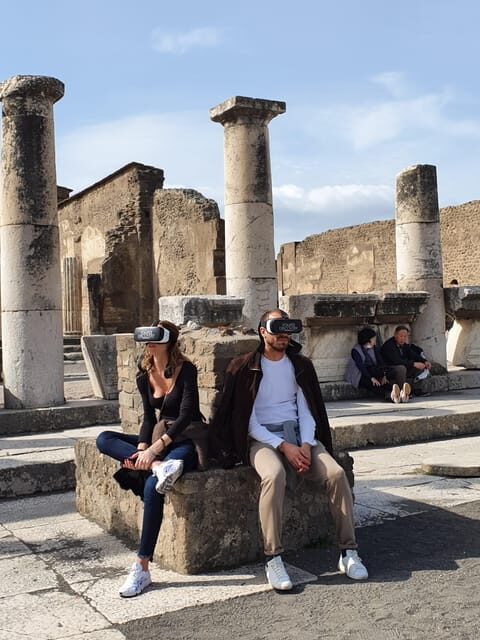
Pompeii is big, but the VR helps you make sense of it. This private experience pairs an authorized storyteller guide with 360° headsets so you can watch ancient streets and buildings take on real purpose, not just stone slabs. I like that it is focused and guided, with the VR used as a tool to understand what you are standing in front of.
Two things I really appreciate: the way the VR adds 3D context to major landmarks, and the strong emphasis on guided interpretation rather than a screen-only experience. One consideration: if you have epilepsy or sensitivity to VR motion, this is not for you, since it explicitly lists epilepsy as a no-go.
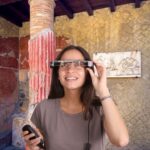
You also get names and structure you can follow. In one example, the guide Maria Novella was highlighted for turning the ruins into a lively picture of daily life, and that matches what the format is built to do. You will walk the site with a human guide, while VR shows you what used to happen there before the eruption of Vesuvius in 79 A.D.
In This Review
- Key moments to look for
- Why Pompeii looks different with 360° VR
- Your storyteller + private group format changes how you move
- Forum and Basilica: where city life starts
- Baths, houses, and the bakery: daily routines you can picture
- Large Theatre and Quadriporticus: shows and gladiators
- The Lupanar: nightlife, but with context
- Value and price: what $226.57 buys you
- Practical tips so the VR works with your feet
- What the guide brings (including Maria Novella)
- Should you book this Pompeii Discovery Virtual Tour 360°?
- FAQ
- Is the ruins entrance ticket included?
- What languages are available?
- How big is the group?
- How long is the experience?
- Do I need comfortable walking shoes?
- Is it suitable for children?
- Is it suitable for people with epilepsy?
Key moments to look for
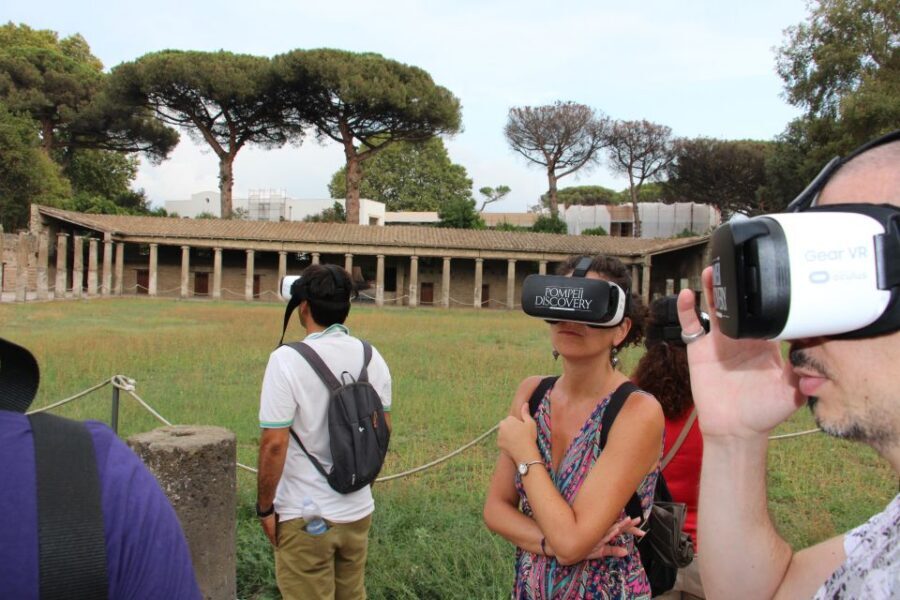
- 360° VR across nine famous Pompeii places, from the Forum to the Lupanar
- A real local storyteller in your language (English or Italian), not a prerecorded script
- Shop activity and a theatrical performance idea added to the experience
- Gladiator training in the Quadriporticus using VR to help you visualize the space
- VR that turns buildings into routines, like baths, markets, and theater-going
Why Pompeii looks different with 360° VR
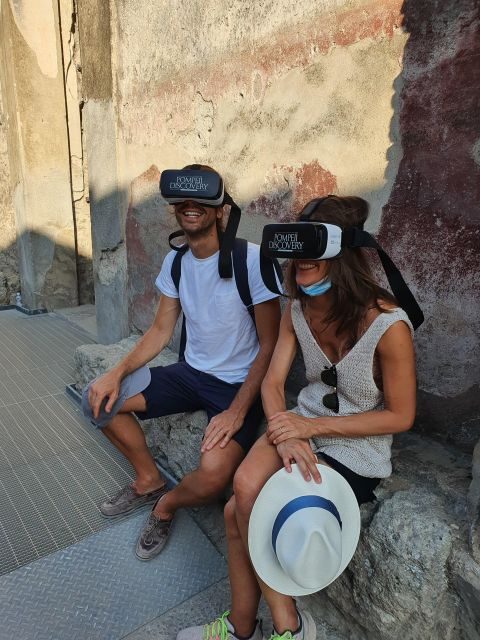
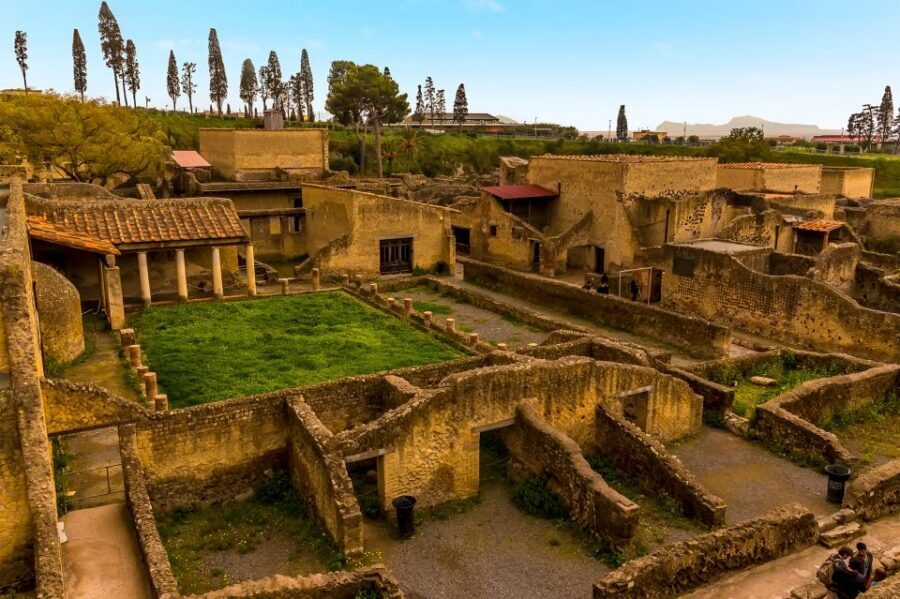
Pompeii is unforgettable, but it can also feel like a scavenger hunt. You see fragments, walls, and columns, and your brain has to do all the work to guess what was happening in the rooms when they were full of people.
That’s where this tour’s VR 360° concept matters. You still do the guided visit through Pompeii’s real ruins, with an authorized guide. But the headsets add missing pieces: how a space likely functioned, what the street or neighborhood could have looked and sounded like, and how daily routines fit together. Instead of memorizing buildings as labels, you start to understand why the Forum mattered, what people used the baths for, and how the city organized entertainment and nightlife.
It is also built around a simple idea: the VR highlights the city life before 79 A.D. The eruption is the reason Pompeii froze in time, but the experience helps you reconnect to the time when it was not frozen. I find that makes your walking route feel intentional, not random.
You can also read our reviews of more tours and experiences in Pompei Campania.

Your storyteller + private group format changes how you move
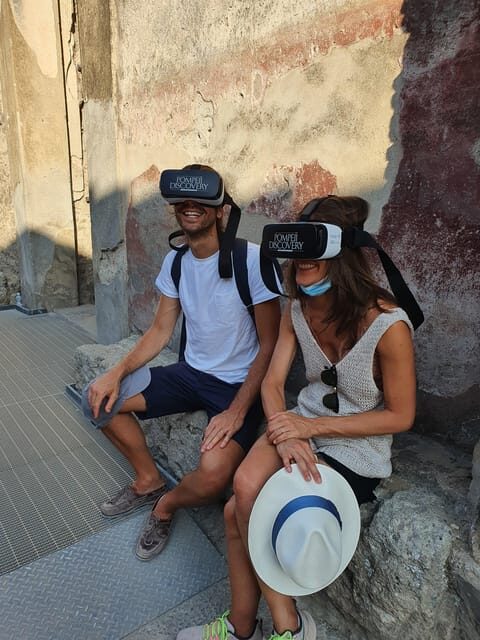
This is a private group experience, listed as up to 2 people per group for the price. That changes the feel right away. In a small group, you can ask quick questions and get answers that match what you are currently looking at, not what the guide discussed five stops earlier.
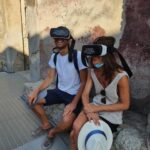
You also get a VR headset for each participant. That matters because Pompeii is visual. When the guide is talking about the Forum, you want to see the Forum context, not rely on a single person holding the only headset.
Language options are English and Italian. So if you care about understanding nuance—why certain spaces mattered, how daily life worked, what people did in entertainment areas—this format is set up to deliver it through the guide’s narration, with VR as the supporting layer.
If you are someone who likes structure, you’ll also appreciate that the tour is organized around a set of famous Pompeii sites. The VR does not scatter you. It sticks to landmarks that form a tour route you can follow.
Forum and Basilica: where city life starts
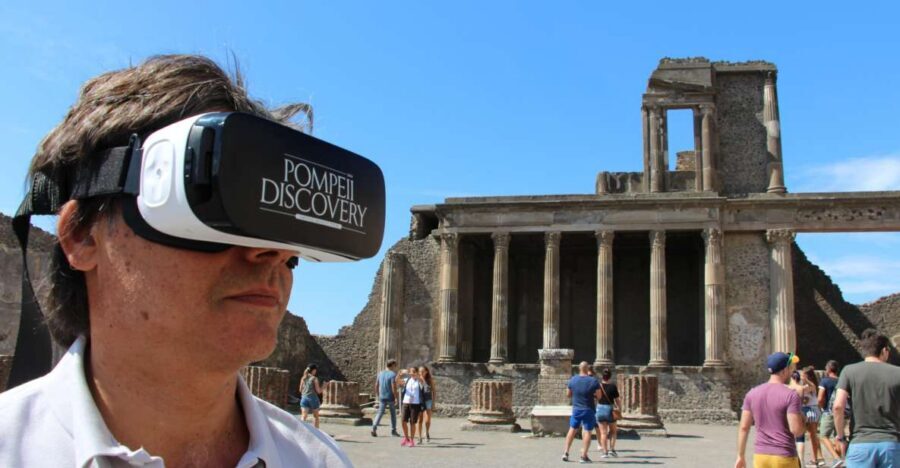
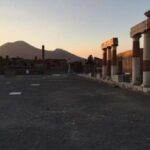
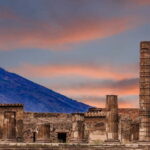
The Forum is the obvious heart of Pompeii, and this tour treats it like it is supposed to be. You see the imposing layout, but the key value is what the guide can help you imagine through the VR: this was the center of public life. It is where people came for news, announcements, and civic activity.
Then there’s the Basilica, which can be easy to overlook if you only think of it as another big ancient building. In Pompeii, the Basilica’s importance comes from what it supported. With the 3D VR layer, you get help visualizing the kinds of gatherings and business-like activity that would have taken place in a civic space like this.
Practical tip: when you start here, pause for a second before you rush forward. I like treating the Forum and Basilica as your orientation phase. If you get the logic of the city center right early on, the rest of Pompeii starts to connect in your head.
Baths, houses, and the bakery: daily routines you can picture
After the public center, the tour shifts into everyday life. That is where Pompeii gets personal.
You will look at the Baths, which is a great choice for VR use. Baths are not just architecture. They are about routine. You can stand in the right spot and still miss the rhythm of how people would move through spaces. VR helps bridge that gap so you can better understand the purpose of rooms instead of just noting that they are rooms.
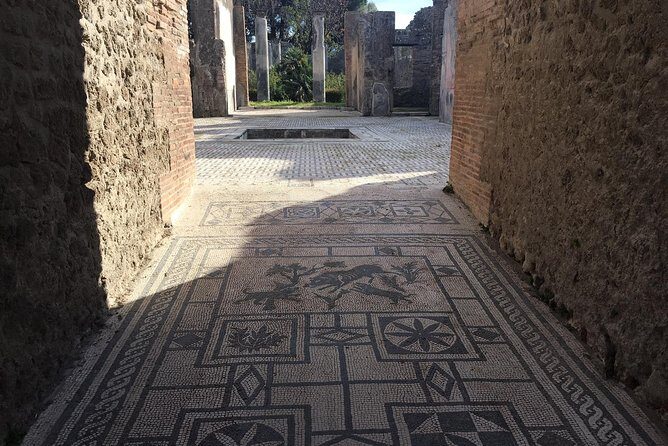
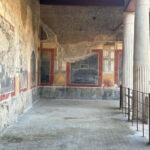
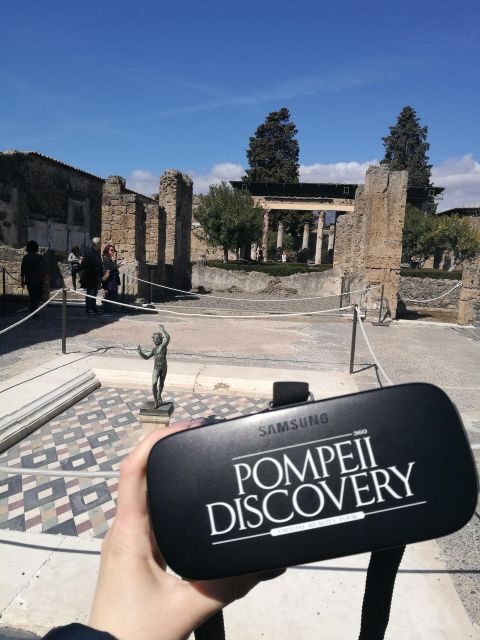
Next comes either the House of the Faun or the House of Menander. This is a smart decision for a VR-assisted tour because houses are where you feel how social class shows up in design. Even if you do not study every wall detail, the headset can help you see how the home functioned as a space for daily life and status.
Then you reach the Bakery. A bakery is the kind of stop that makes Pompeii feel grounded. You can walk past it like a curiosity, or you can treat it as part of the city’s food system. The added VR angle and guide narration support the idea that Pompeii was full of working shops and real commerce—not just ruins for sightseeing.
One thing I like here is how the tour keeps moving between public and private. You go from community spaces to home-life to production and food. That balance is what makes the whole experience feel cohesive.
Large Theatre and Quadriporticus: shows and gladiators
When the tour reaches the Large Theatre, you start seeing how entertainment shaped Roman city culture. The theatre is not only about drama or performance; it is about civic identity and public assembly. The guided VR layer helps connect the structure you see in stone to the idea of an audience gathering there.
Then you shift to the Quadriporticus area, where the experience includes the chance to see gladiators’ training. This is one of the stops where VR earns its keep. Standing among ancient corridors is interesting, but it can be hard to visualize the action that once played out there. With VR context, you can picture the space’s role in training and preparation instead of treating it as just another architectural grid.
I recommend you slow down at this point. If you rush, you miss the transformation. It’s the difference between noticing walls and actually understanding how the space functioned during Roman entertainment culture.

The Lupanar: nightlife, but with context
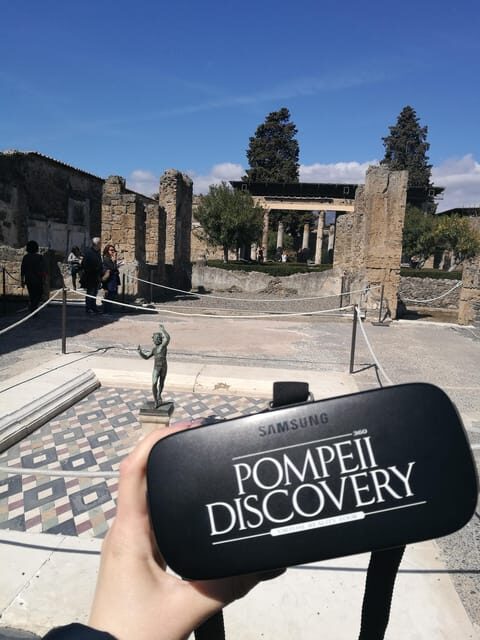
The last major stop is the Lupanar, described as the city’s brothel. This is a sensitive topic in any setting. What helps here is that the tour does not present it as shock value. The focus is on understanding the role it played in Pompeii’s nightlife, using VR to help you contextualize the environment inside and around the Lupanar.
The experience also points you toward nightlife around and inside the Lupanar, and includes opportunities to view activities connected with shops and a theatrical performance idea. That theme link matters: it frames Pompeii as a working city with leisure, not a museum with only one mood.
Important: you should know what kind of experience this is. It is still a guided tour through actual ruins. The VR adds historical scene context. You will still see the real site, and the guide helps interpret it, but you are not watching a cartoon. The goal is to make Pompeii’s social spaces easier to understand, not just to take photos.
Value and price: what $226.57 buys you
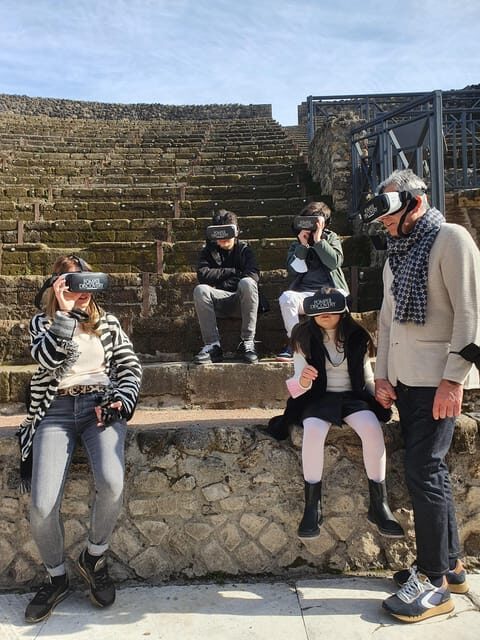
The listed price is $226.57 per group up to 2, and the ruins entrance ticket is not included. That means you should think of this as paying for the guide + VR-enhanced storytelling, while the entry cost gets handled separately.
Is it worth it? For many people, yes—especially if you care about interpretation and you like learning by seeing. A VR-assisted guide is not just a novelty when it is used to explain specific spaces like the Forum, Basilica, Baths, houses, bakery, theatre, Quadriporticus, and Lupanar.
Here’s how I look at the math. If you go as a pair, you effectively split the guide-and-headset cost between two people (about half of the total per person). If you are solo, it may feel pricier, since it is priced per group. Either way, the key is that you are buying structure and time-saving focus: the tour is designed to move through famous Pompeii sites in a way that makes their purpose easier to grasp.
You also get the benefit of skipping the ticket line, which can help when your day is tight. Just remember the entrance ticket itself is not bundled, so you’ll still need to handle that.
Practical tips so the VR works with your feet
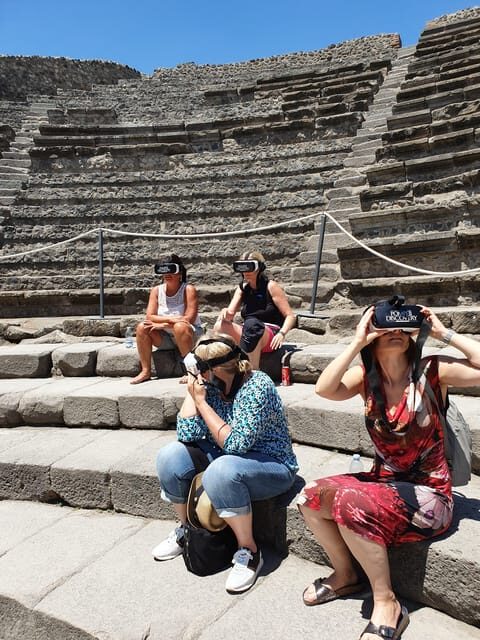
A few details matter on a site like Pompeii, and this tour is clear about what to bring:
- Wear comfortable shoes. Even with VR, you will be walking and standing.
- Bring a passport or ID card for children (for anyone traveling with kids who meet the age requirement).
- This activity is not suitable for children under 8, and it is not suitable for people with epilepsy.
Also, check the language you want ahead of time. English and Italian are offered, and the guide being in your language is part of why the experience works well. VR can guide your attention, but the guide explains what you are seeing.
Because the tour is wheelchair accessible, if you have mobility needs, this is likely one of the more considerate ways to experience Pompeii compared with a purely self-guided approach. Still, you’ll want to use common sense about how long you can stand and how many transitions you can handle.
One more tip: set your expectations for the headsets. They are there to complement the guide, not replace the guide. If you treat the VR as the main event, you might miss the point. If you treat it as a tool while you walk the real ruins, it clicks.
What the guide brings (including Maria Novella)
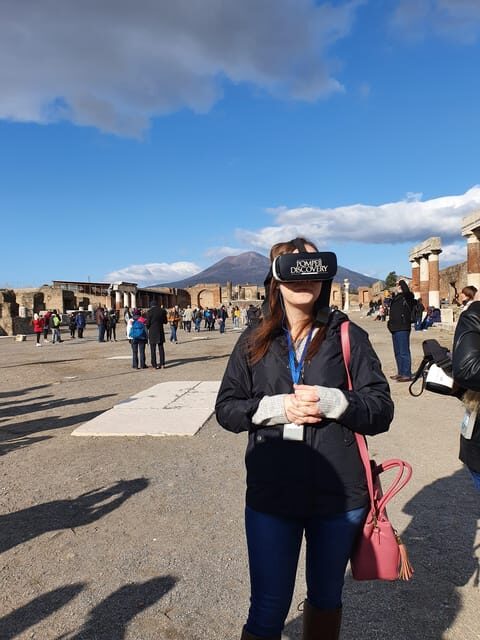
One of the most praised parts of the experience is the guide’s delivery. In at least one account, the guide Maria Novella was specifically called out for professionalism and for helping the virtual layer amplify the site’s beauty.
That lines up with how you should evaluate this kind of tour. VR does not teach itself. A good storyteller makes the headset feel like it is answering your questions in real time: what happened here, who used this space, and how this part of Pompeii fits into the bigger city picture.
So when you book, think of the guide as the backbone. The headsets are the add-on that helps you see what words alone might not fully convey.
Should you book this Pompeii Discovery Virtual Tour 360°?
Book it if you want Pompeii to feel understandable, not just impressive. If you like guided interpretation, and you think VR would help you connect the dots between ruins and real daily life, this is a strong match.
Consider skipping it if you dislike VR experiences in general, or if you fall under the explicit no-go category for epilepsy. Also consider your personal learning style: if you prefer wandering and studying at your own pace without any headset-based component, you might prefer a more traditional visit.
If you do book, go in ready to pair two modes: look with your eyes at the stone, then listen and watch with the guide’s VR context. That combo is the whole point of the experience.
FAQ
Is the ruins entrance ticket included?
No. The entrance ticket for the Ruins is not included, though the tour mentions skipping the ticket line.
What languages are available?
The live tour guide is available in English and Italian.
How big is the group?
This is a private group, listed as up to 2 people per group for the price.
How long is the experience?
It is valid for 1 day, and you can check availability to see starting times.
Do I need comfortable walking shoes?
Yes. The tour recommends comfortable shoes.
Is it suitable for children?
It is not suitable for children under 8 years old.
Is it suitable for people with epilepsy?
No. It is not suitable for people with epilepsy.