REVIEW · POMPEI CAMPANIA
Pompeii: 2-Hour Guided Tour with an Archaeologist
Book on GetYourGuide →Operated by Askos Tours · Bookable on GetYourGuide
Stone doesn’t talk. This tour makes it talk.
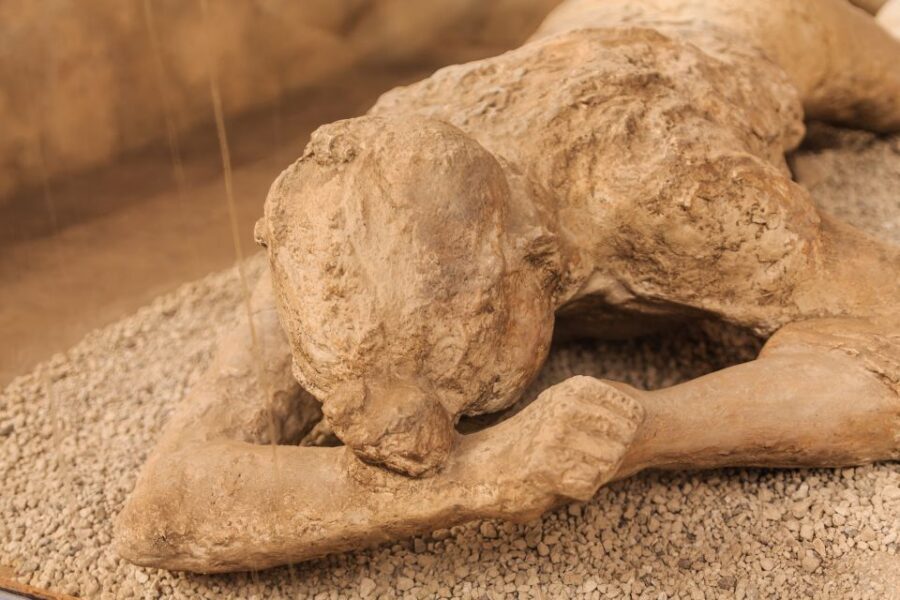
I love how fast you get your bearings in western Pompeii, walking the same lanes that once fed politics, commerce, and daily life. I also love the human side: you’ll hear how the city fell under ash and molten material in 79 AD, and then you’ll see the preserved plaster casts of victims and animals that capture the moment of death.
One consideration: you’re moving at a practical pace for only 2 hours, so this is a best-of route, not a whole-day “see everything” visit. Also, the start point is listed around Porta Marina, but meeting details can vary—so double-check your confirmation before heading out.
In This Review
- Key highlights you’ll actually feel on the ground
- Why a 2-hour archaeologist-led Pompeii tour works
- Porta Marina Superiore: the start that sets the whole tone
- Temple of Apollo to the Forum: how Pompeii’s west side tells one story
- Forum Civile and the Basilica: politics, law, and the place everyone knew
- Homes and street-level life: Menander, Faun, Vettii, and commerce
- Forum Baths and the Lupanare: the social world beyond official Rome
- Plaster casts and the moment the city stopped
- The Theatre, Amphitheater, and finishing near Villa dei Misteri
- Price and pacing: is $175.74 worth it?
- Who this tour fits best (and who should pick something else)
- Should you book this Pompeii with an archaeologist tour?
- FAQ
- How long is the Pompeii 2-hour guided tour?
- Where do I meet the guide?
- Does the tour include Pompeii entry tickets?
- What languages are available for the live guide?
- What should I bring for the visit?
- Is the tour free on the first Sunday of the month?
- Is it wheelchair accessible?
Key highlights you’ll actually feel on the ground
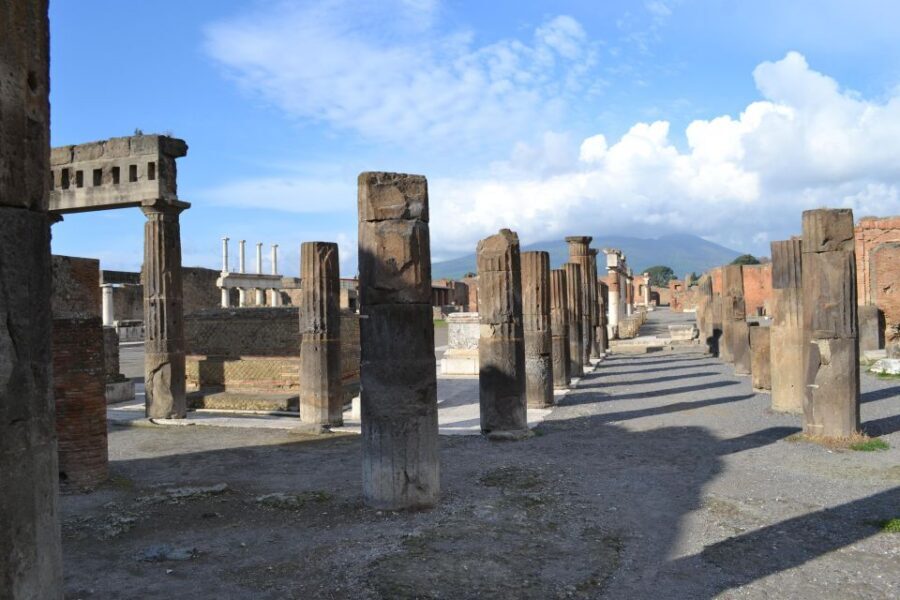
- Forum-first orientation: you spend real time on the civic heart, not just photo stops
- Apollo to Amphitheater route: a clean west-side loop that makes the site feel organized
- Lupanare visit: you’ll learn how a brothel functioned inside Pompeii’s social world
- Death casts and preserved traces: plaster victims and animals, plus a bakery area with utensils and food remains
- Private guide storytelling: guides like Rosalina, Enzo, Paola, and Giancarlo are praised for turning ruins into clear scenes
Why a 2-hour archaeologist-led Pompeii tour works
Pompeii is big. Left to your own devices, you can spend more time “finding the next thing” than understanding what you’re looking at. This tour solves that with a tight, western-side route and a guide who explains what matters most, including why the city’s layout is so legible centuries later.
The 2-hour format also helps you stay present. You’re not just collecting monuments. You’re building a mental map: public buildings for politics and law, homes for status and privacy, and performance spaces for entertainment. Then the eruption story lands harder, because you’ve already seen how people lived before it stopped.
You can also read our reviews of more guided tours in Pompei Campania
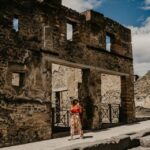
Porta Marina Superiore: the start that sets the whole tone
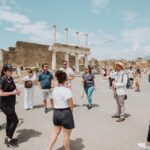
You’ll meet by old Porta Marina Superiore. Depending on the option you book, the start can be listed at Pompei – Porta Marina, Via Villa dei Misteri, 2, and the walk can begin at that same Porta Marina area. Either way, the goal is the same: start at a key gateway and work into the city’s west side.
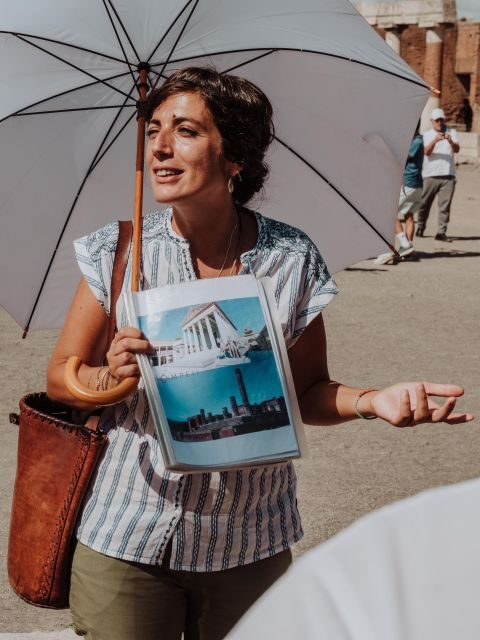
This is also where a strong guide makes the biggest difference. A good first few minutes will help you notice details you’d otherwise skip—street rhythms, entrances, and the way public space funnels people toward major buildings. In guides I’ve heard named for this experience—like Rosalina and Sergio—you often get energetic storytelling plus clear explanations, which helps the site feel less like rubble and more like a functioning town.
Practical note: Porta Marina can be a little annoying to locate if your phone struggles with the exact meeting point. If that happens, slow down and ask locally for Porta Marina / Villa dei Misteri references, then re-orient from there.
Temple of Apollo to the Forum: how Pompeii’s west side tells one story
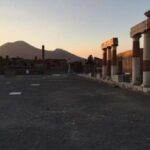
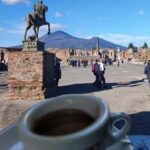
After the meeting area, you move through the western part of Pompeii, where you’ll hit many of the main public buildings and major homes. The route typically includes the Temple of Apollo first, then you push into the civic zone with the Foro Civile di Pompei and the buildings wrapped around it.
The Temple of Apollo stop matters because it anchors the religious side of Roman life. Even if you don’t know Roman rituals, you can learn to read the space: where people would gather, and how sacred architecture shaped civic identity. From there, the tour’s momentum shifts naturally into politics and public routine.
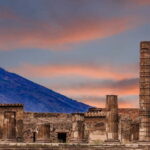
Then comes a big reason this guided format works so well: you get the background for why Pompeii was preserved and rediscovered centuries later. You’ll hear how the city was buried under ash and molten material after the 79 AD eruption of Vesuvius, and how later rediscovery in the 18th century turned Pompeii into one of the clearest windows into Roman daily life.
You’ll also be reminded that UNESCO inscribed Pompeii and Herculaneum because of how vividly they preserve society and everyday routines at a specific moment in the past. The guide’s job is to connect that UNESCO-level idea to what you can actually see in front of you—doorways, courtyards, counters, and public halls.
Forum Civile and the Basilica: politics, law, and the place everyone knew
The Foro Civile di Pompei and the Basilica are the “how a city ran” stops. This is where you learn how power and administration played out in stone—how people moved through the civic heart and used it as a stage.
The Basilica stop is especially useful on a short tour because it gives you a framework. Once you understand what the Basilica did (and why it mattered), other nearby buildings make more sense. You stop thinking in terms of disconnected ruins and start thinking in terms of systems: law, public meetings, announcements, and movement.
Expect the guide to point out how Roman public life worked. That includes the rhythm of visits—who used these spaces and how often—and how that connects to the eruption story you’re hearing along the way. It makes Pompeii’s tragedy feel more grounded, because you’ve already pictured the city’s normal schedule.
Homes and street-level life: Menander, Faun, Vettii, and commerce
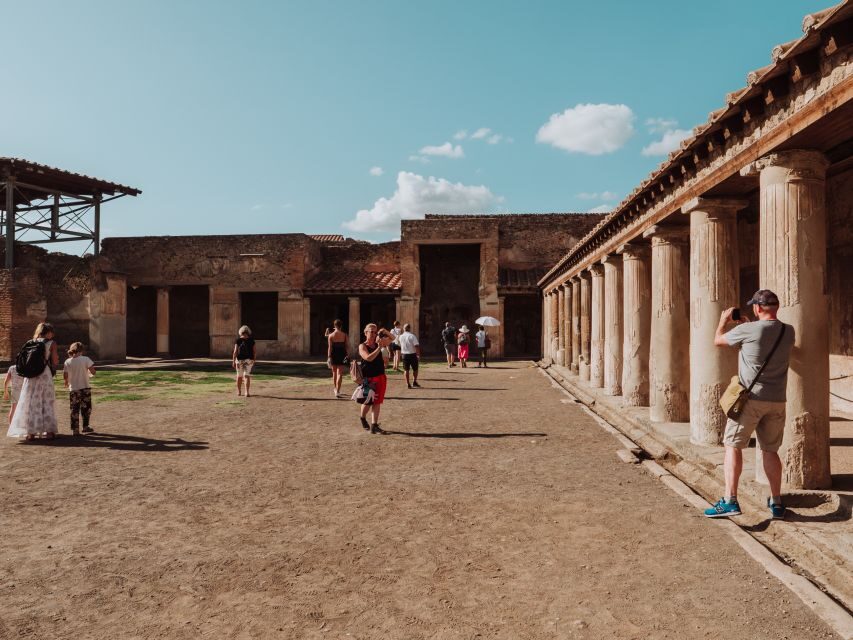
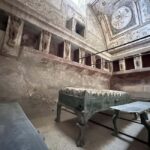
Pompeii is famous for buildings, but it’s the mixture—homes next to shops, privacy next to public noise—that makes it click. On this route, you’ll visit notable residences like the House of Menander, the House of the Faun, and the House of the Vettii. You may also see other standout examples along the walk, including areas highlighted for their preserved everyday use.
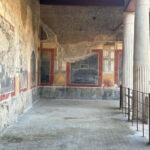
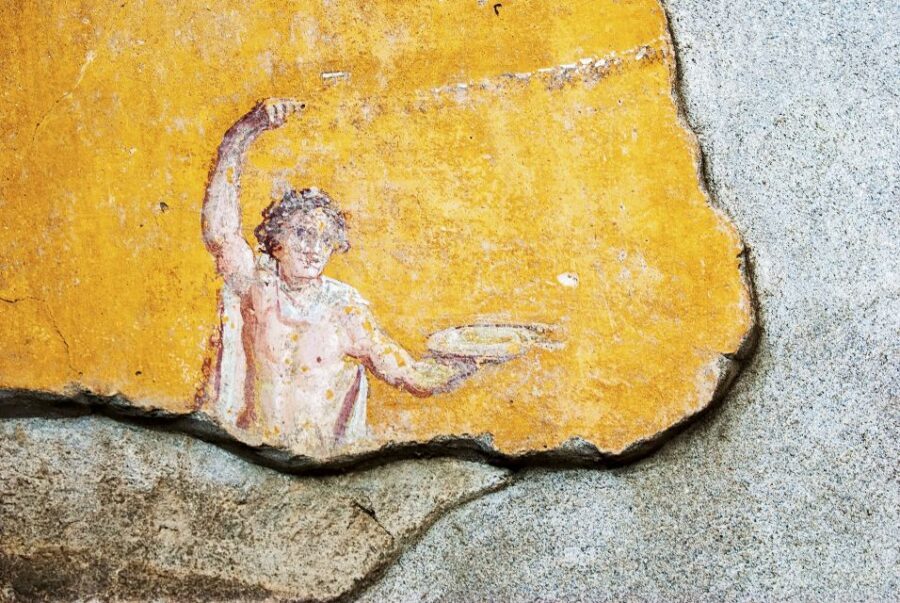
Here’s what these home visits do for you: they show Roman status without turning it into a lecture. The guides often help you read courtyards, thresholds, and room layouts as signals of wealth and family identity. You’ll likely hear how decorations and design choices reflected who lived there and how they wanted to be seen.
You’ll also encounter Pompeii’s “street economy.” The tour includes stops connected to local trade and daily routines—like a preserved bakery area where you can still see remains of utensils and even the food. That kind of detail is what makes the past stop feeling like theory.
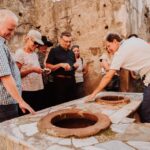
Other commerce and neighborhood highlights that fit this same idea include the Termopolium Capuano (a Roman snack bar type of place) and the House of the Tragic Poet. Even when you don’t spend long at each specific doorway, the guide uses them to show how people ate, shopped, chatted, and lived in the same streets as politics and religion.
In short: this section is where you learn that Pompeii wasn’t just monumental. It was practical. No one lived in a marble museum—so you get examples of how daily life actually worked.
You can also read our reviews of more tours and experiences in Pompei Campania
Forum Baths and the Lupanare: the social world beyond official Rome
The Forum Baths stop is one of the best “feel it” experiences on the tour. Baths weren’t just about cleanliness. They were social space—where you might talk, trade news, relax, and see familiar faces. Once you’ve walked through the forum and then hit baths, you get a fuller picture of Roman routines: public business in the morning zone, then community life elsewhere.
Then the route turns to a darker but important topic: the Lupanare (the old brothel). This stop matters because it helps you understand Pompeii as a real society, not a curated set of churches and big houses. The guide’s job is to keep it factual and contextual—what the space was, how it functioned, and how it fit into the city’s social and economic reality.
If you’re sensitive to the subject, it still helps to know you’re not watching entertainment here. You’re learning about how everyday life included transactions you’d rather not romanticize. A respectful guide makes a huge difference, and many guides on this route are praised for pairing expertise with sensitivity.
Plaster casts and the moment the city stopped
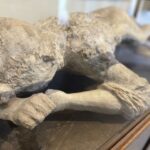
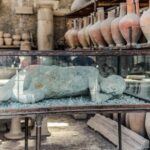
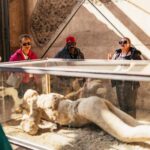
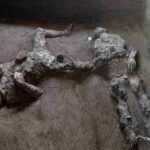
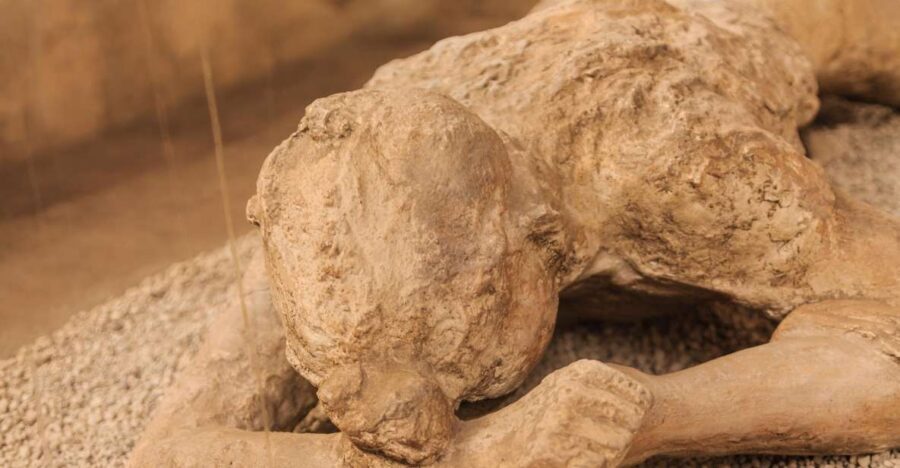
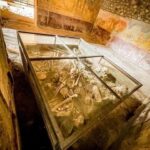
One of the most powerful components on this experience is seeing the plaster casts of humans and animals—the remains preserved to show the moment of death. Even with all the history lessons in the world, this part changes your brain from “Roman timeline” into “human moment.”
The guide will connect what you’re seeing to what happened during the eruption and burial. On a short tour, that connection is crucial. It prevents the casts from becoming a shock-and-photo stop and turns them into a learning experience tied to everything you just walked through: if you’ve seen homes, streets, and public spaces, you understand what kind of life was interrupted.
This is also where the guide’s storytelling really earns its fee. People remember ruins, but they remember meaning more. And casts are meaning made visible.
The Theatre, Amphitheater, and finishing near Villa dei Misteri
By the time you reach the Large Theatre, you’ve already learned how public life and private life sat side by side. Theatre adds the entertainment layer, and it helps explain why performance spaces were central to Roman culture. You start to read the structure not just as seating, but as an engine for community and identity.
Next you’ll visit the House of the Vettii, which slots naturally between performance and the final big crowd space. The tour’s structure helps you bounce between society’s extremes: public spectacle and private household design. Then you end with the Amphitheater, where the focus shifts to large-scale gatherings.
Finishing around Pompei Scavi – Villa Dei Misteri makes sense for pacing. It gives you a sense of completion rather than sending you back at random. Still, check your confirmation because the activity is described as ending back at the meeting point, while the route finish is also listed near Villa dei Misteri. Your voucher should clarify exactly how it ends in practice.
Price and pacing: is $175.74 worth it?
At $175.74 per person for a 2-hour guided visit, this is not a budget add-on. The value comes from three places:
1) Time saved and meaning added. Pompeii is too large to “figure out” quickly. A guide turns key stops into a coherent story.
2) Expert explanations, not just access. Since this is led by an archaeologist guide, you’re paying for interpretation—how to read buildings, layouts, and the eruption context.
3) Private-group control. Guides are praised for handling flow and choosing quieter routes on busy days, plus adjusting pace for small groups.
Would I recommend this price to everyone? Not automatically. If you’re the type who loves wandering without structure, you might prefer a self-guided visit and spend extra time. But if you want to leave Pompeii feeling oriented and informed after only a short window, this is the kind of tour that makes that possible.
Also, the included Pompeii entry tickets are part of the package, so you’re not stacking another separate purchase on top. Disposable earphones are included for bigger groups, which is a nice quality-of-life touch if your departure group ends up larger.
Who this tour fits best (and who should pick something else)
This works well for:
- You if you want a focused west-side Pompeii loop with a clear narrative and top public sights
- You if you’d rather learn how to interpret ruins than just photograph them
- You if you prefer a private-group pace, especially on hot days when crowd control matters
It may not fit as well if:
- You want to fully explore Pompeii at a slow, wandering pace
- You need lots of accessibility flexibility; the data lists wheelchair accessibility, yet it also states it is not suitable for wheelchair users. That contradiction is worth checking directly before you book.
- You’re hoping for a museum-style experience for all themes. This tour concentrates on major public buildings, select homes, and key emotional stops like casts and the Lupanare.
Should you book this Pompeii with an archaeologist tour?
If you have limited time and you want Pompeii to make sense fast, I’d book it. The price hurts a bit on paper, but the structure is what you’re buying: a guided route that links public life, private life, tragedy, and preservation into a story you can follow in real time.
Before you commit, do two quick checks:
- Verify the exact meeting point for your option and save it in a map app, especially if you struggle with GPS for Porta Marina references.
- If accessibility affects your plans, contact the provider with a direct question about suitability and on-site movement for your needs.
If those boxes work for you, this is one of the most efficient ways to experience Pompeii without turning it into random ruins.
FAQ
How long is the Pompeii 2-hour guided tour?
The guided tour runs for 2 hours, and you can check availability for starting times.
Where do I meet the guide?
The meeting point is listed by old Porta Marina Superiore, with start options that can include Pompei – Porta Marina, Via Villa dei Misteri, 2. Meeting details may vary depending on the option you book.
Does the tour include Pompeii entry tickets?
Yes. Entry tickets to the Pompeii archaeological site are included.
What languages are available for the live guide?
The live guide is available in French, German, Spanish, Italian, and English.
What should I bring for the visit?
Bring comfortable shoes, sunglasses, a sun hat, and water.
Is the tour free on the first Sunday of the month?
Entrance is free on the first Sunday of each month, but tickets can’t be reserved ahead of time, so entry isn’t guaranteed.
Is it wheelchair accessible?
The activity information lists wheelchair accessibility, but it also states it is not suitable for wheelchair users. If this applies to you, confirm directly with the provider before booking.