REVIEW · POMPEI CAMPANIA
Pompeii: Guided Tour with Archaeologist with max. 12 People
Book on GetYourGuide →Operated by Benedetto Tourist Guide · Bookable on GetYourGuide
Pompeii feels close when guided by an archaeologist. This 2-hour, max 12-person tour is built for seeing the key parts of the ruins in a smart order, with real explanations of how daily Roman life worked and what the AD 79 disaster destroyed.
I especially like the fresco-and-cast focus that helps you picture the people behind the stones, and I also like that you get skip-the-line express entry so you lose less time to logistics and more time to looking. One caution: you’ll do plenty of walking on uneven ground, and this tour isn’t suitable for wheelchair users or people with mobility impairments.
In This Review
- Key takeaways
- Pompeii in 2 hours: why this route works so well
- Meet your archaeologist guide: Benedetto and the value of real field experience
- Meeting point at Ristorante Suisse: get your bearings fast
- From Porta Marina Inferiore through the theaters: start where the city breathes
- House of Menander: frescoes and mosaics that make daily life tangible
- Terme Stabiane: baths as a social network, not just a washroom
- Lining up civic power: the Forum and public buildings
- Temple of Jupiter: religion, ceremony, and the city’s bigger message
- Macellum and Basilica: markets and law in the same walk
- The lupanare: a hard topic, handled by context
- Free time after the guide: use it like a pro
- Price and value: is $65 for 2 hours worth it?
- Who this Pompeii tour suits best (and who it may not)
- FAQ
- FAQ
- How long is the Pompeii guided tour?
- What is the group size limit?
- Where do we meet the guide?
- Is the ticket line skipped?
- What’s included in the tour price?
- Do I need to bring ID or passport?
- What should I bring for the walk?
- What languages are available for the live guide?
- Should you book this archaeologist-led Pompeii tour?
Key takeaways
- An archaeologist guide (Benedetto): you get context, not just dates—stories tied to what you’re standing in front of.
- Small group (up to 12): easier pacing, easier questions, and less crowd-clustering.
- Headsets when needed: included if your group is larger than 8, so you don’t miss the explanations.
- Route that hits the real highlights: from Porta Marina Inferiore to the Forum and the plaster casts.
- Roman-life “in slices”: homes, baths, markets, civic buildings, and the lupanare (brothel).
- Free time after the guided portion: you can return to what grabbed you without rushing.
Pompeii in 2 hours: why this route works so well
Pompeii is huge, and on your own it’s easy to wander… and still feel like you missed the point. What I like about this format is that it gives you a guided spine through the site. You’re not just seeing buildings; you’re learning how they fit together as a functioning city.
This tour is also deliberately timed. At 2 hours, it’s long enough to cover the essentials—houses, baths, civic space, and the most famous remains tied to the eruption story—without dragging you through every corner that takes forever to reach. If you’re visiting for a first time, that matters a lot.
You can also read our reviews of more guided tours in Pompei Campania
Meet your archaeologist guide: Benedetto and the value of real field experience
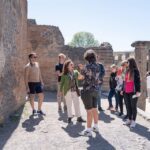
The star here is the guide: Benedetto Tourist Guide, often identified in traveler feedback as Benedetto D’Aloise, with a background in archaeology. The practical result is that explanations feel grounded in how archaeologists think—what evidence is visible, what can be inferred, and what you should be careful not to over-guess.
Benedetto’s style is also geared for conversation. Expect interaction and room for questions, which is a big deal at Pompeii. When you know what you’re looking at—an entryway layout, a bath-room function, the role of a market space—everything starts to click.
Meeting point at Ristorante Suisse: get your bearings fast
You meet at Ristorante Suisse, and the guide waits for you with a sign showing your name. That sounds small, but it reduces stress when you’re arriving in a busy tourist zone. You’re not trying to spot a group while also figuring out where the official entrance is.
There’s also express entry included, which means you’re skipping the ticket line. This is one of those details that quietly improves the whole day. Pompeii tours can get delayed by entry bottlenecks; having faster access helps you keep your momentum once you’re inside.
One more logistics note: Pompeii tickets are named. After booking, you’ll need to provide the list with first and last names of all participants. And on the day, bring your passport or ID card in original—don’t show a copy on your phone.
From Porta Marina Inferiore through the theaters: start where the city breathes
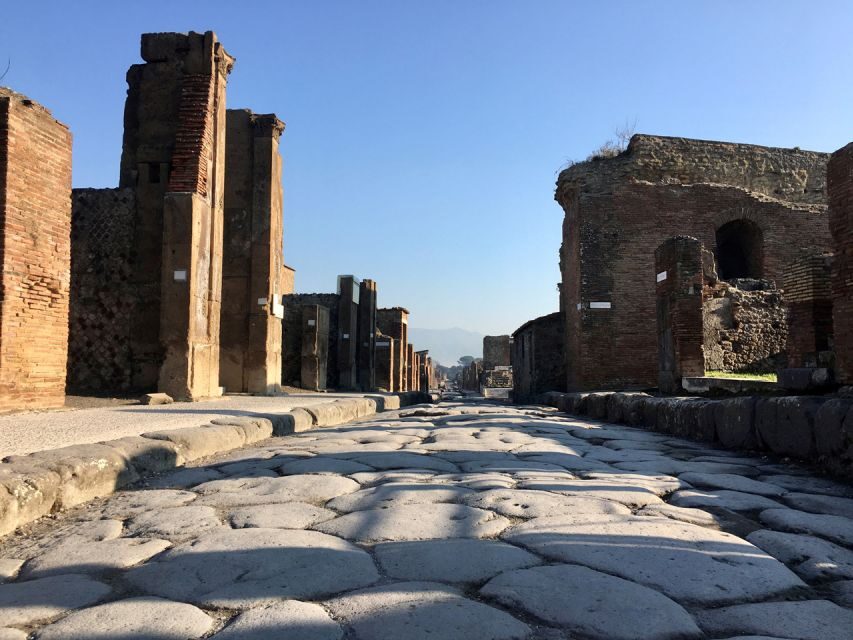
The tour begins at Porta Marina Inferiore and then moves through the theater area. That opening is smart because it helps you understand Pompeii’s urban “flow.” You’re not jumping randomly into the most photographed ruin. You’re easing into how the city’s parts connect.
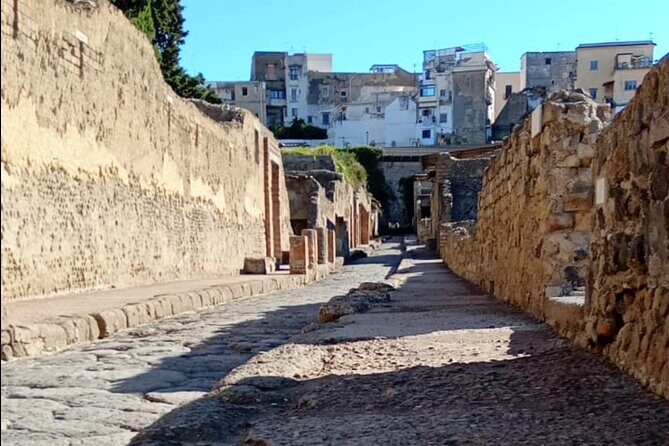
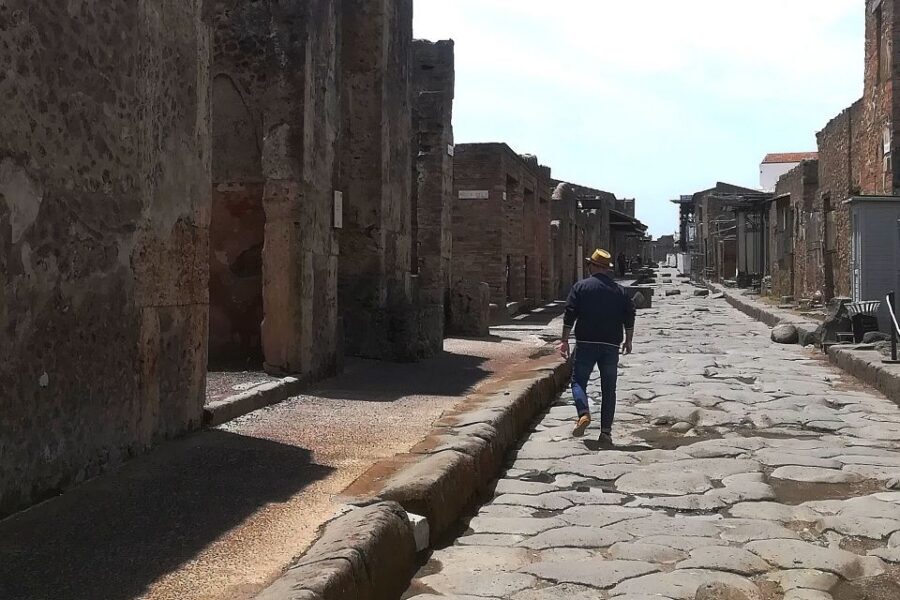
As you walk, you’ll see the street life that made Pompeii feel like a real place: shopfronts and the kind of daily commerce Romans depended on. Even though the buildings are battered by time and eruption, street-level details still give you cues—where people would gather, where services likely sat, and how foot traffic would have moved.
A practical tip: Pompeii is often hot, and surfaces can be sun-baked. The pacing here is meant to keep you moving without constant sprinting, so you can catch shade where it’s available.
House of Menander: frescoes and mosaics that make daily life tangible
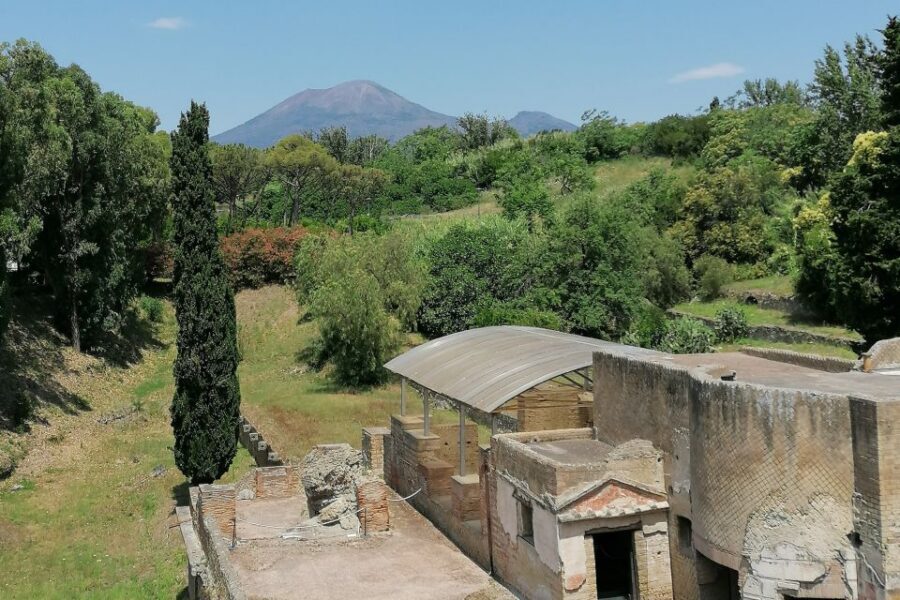
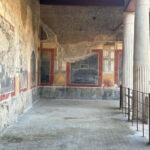
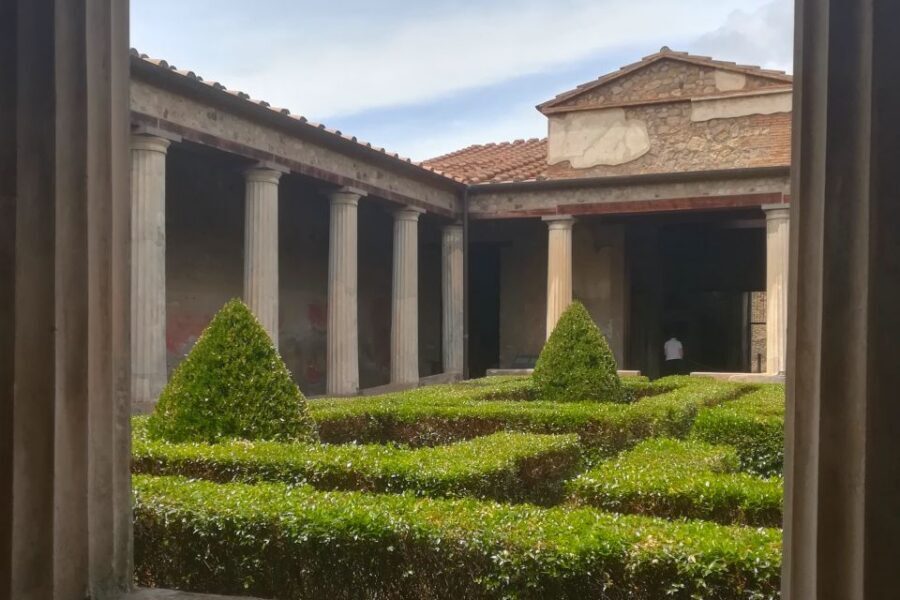
Next up is the House of Menander, one of those stops where the ruins shift from “cool stones” into “I can picture this.” This is the kind of home where the decorative program matters—frescoes, mosaics, and the overall feel of private space.
What I value in a guided stop like this is interpretation. You’re not just looking at art fragments; you’re learning what these visuals suggest about status, taste, and how people wanted their homes to function socially. A Roman house is more than sleeping rooms—it’s a machine for living, hosting, and displaying identity.
Drawback to be aware of: unless you’ve got strong stamina, houses can make you feel like you’re constantly scanning upward and sideways. Go slow with your eyes. If you rush, fresco details turn into “some color on a wall” instead of evidence you can read.

Terme Stabiane: baths as a social network, not just a washroom
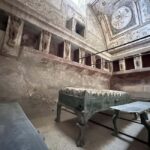
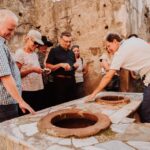
Then you head to Terme Stabiane (the Stabian Baths). This is one of Pompeii’s best reminders that the Romans didn’t treat hygiene as a private-only activity. Baths were also for talking, meeting, gossiping, and handling everyday social interaction.
This stop works because it’s physical. You can follow the logic of the space—how people would move through different areas, where they might linger, and how architecture supported routines. Once you understand the flow, the remaining rooms stop looking random.
And here’s the real payoff: after the baths, the city feels more human. You start seeing Pompeii less like a tragedy and more like a place with rhythms—work, leisure, errands, and then, abruptly, the end.
Lining up civic power: the Forum and public buildings
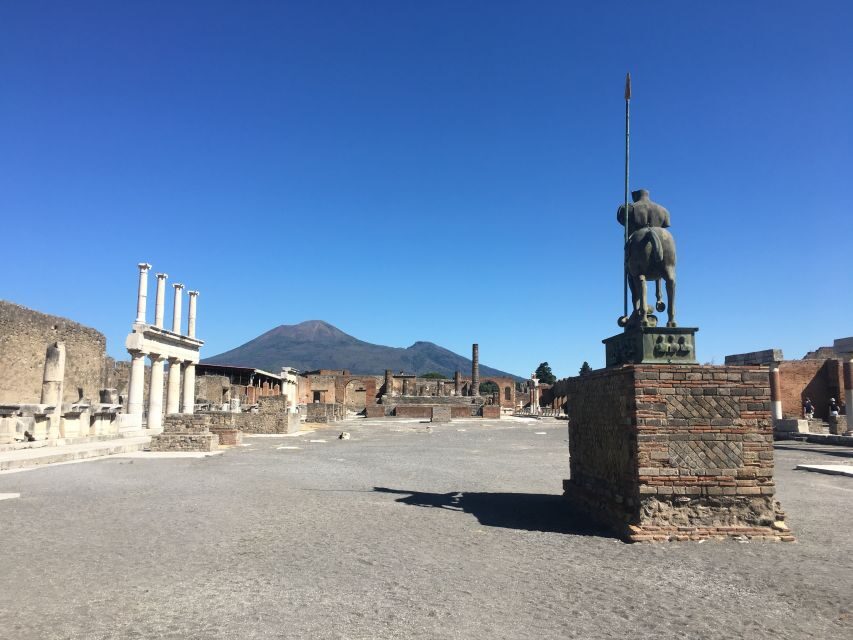
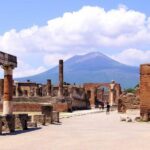
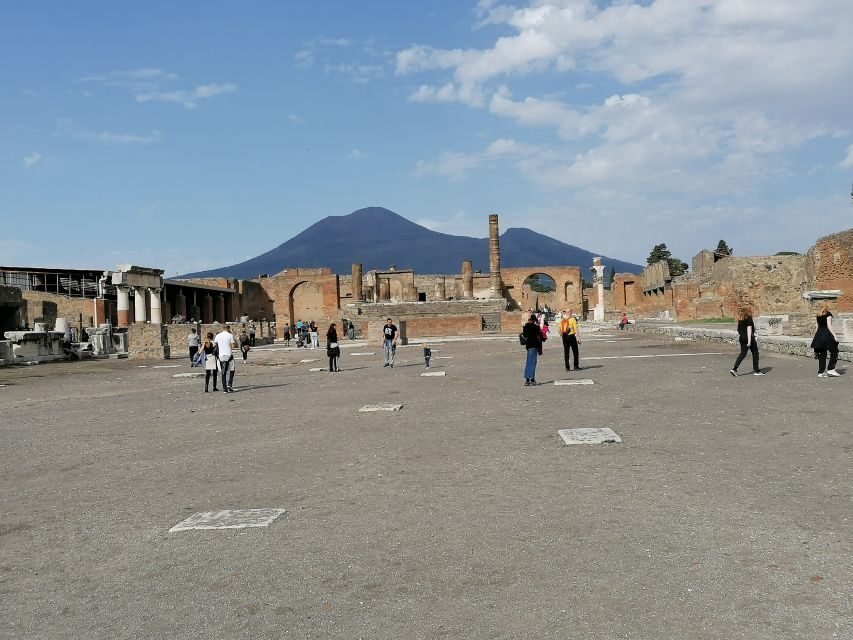
The tour continues toward the Foro Civile di Pompei (the Forum/civic area). This is where Pompeii shows you governance and public life—spaces built for authority, gatherings, and the kind of civic identity that kept a city running.
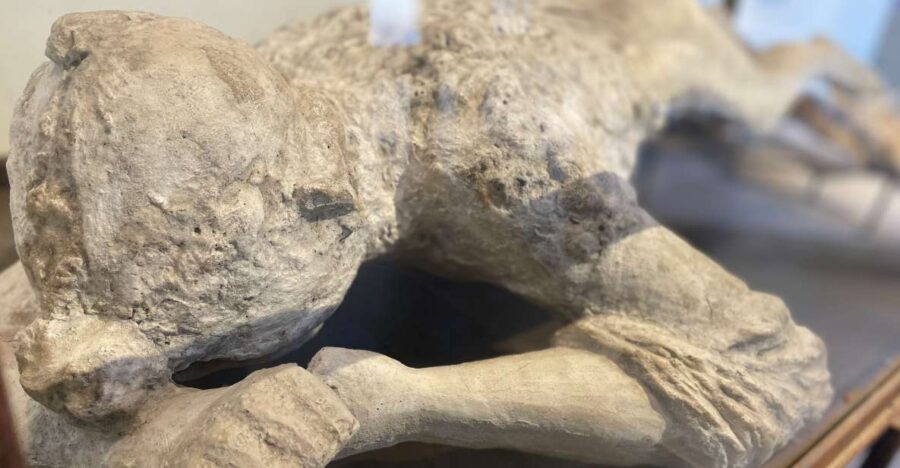
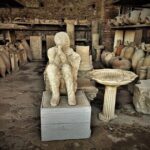
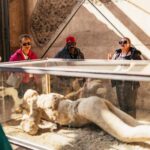
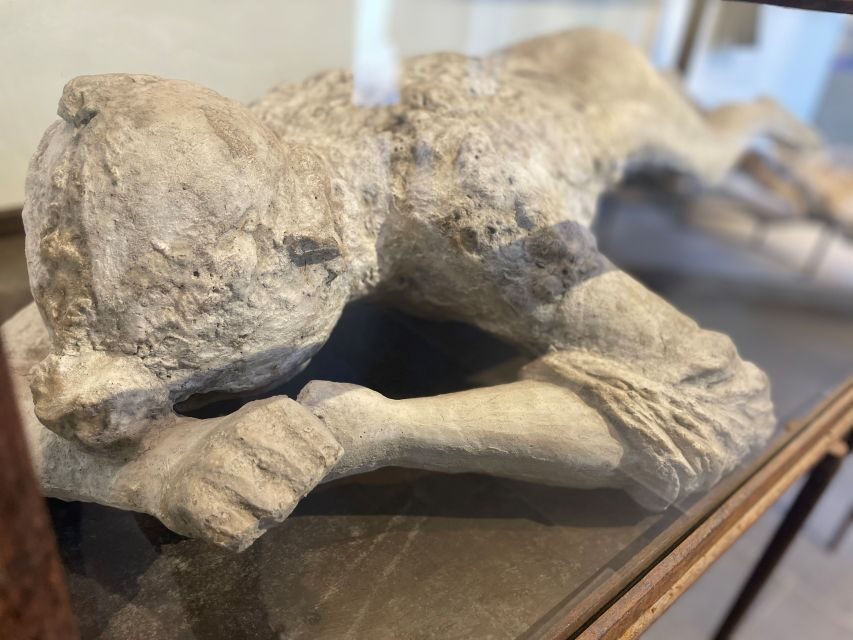
You’ll also hear about the eruption and the AD 79 catastrophe in a way that connects the civic setting to the disaster’s final impact. The Forum area includes the famous plaster casts of the victims, which is often the emotional high point of Pompeii. Standing near those casts without context can feel like looking at museum objects; with a guide, it becomes a forced but clearer understanding of sudden survival choices.
A caution here: this part of the site can feel heavy. If you’re easily overwhelmed by disaster history, consider taking a breath, letting the group move at your pace, and focusing on the information you can handle.
Temple of Jupiter: religion, ceremony, and the city’s bigger message
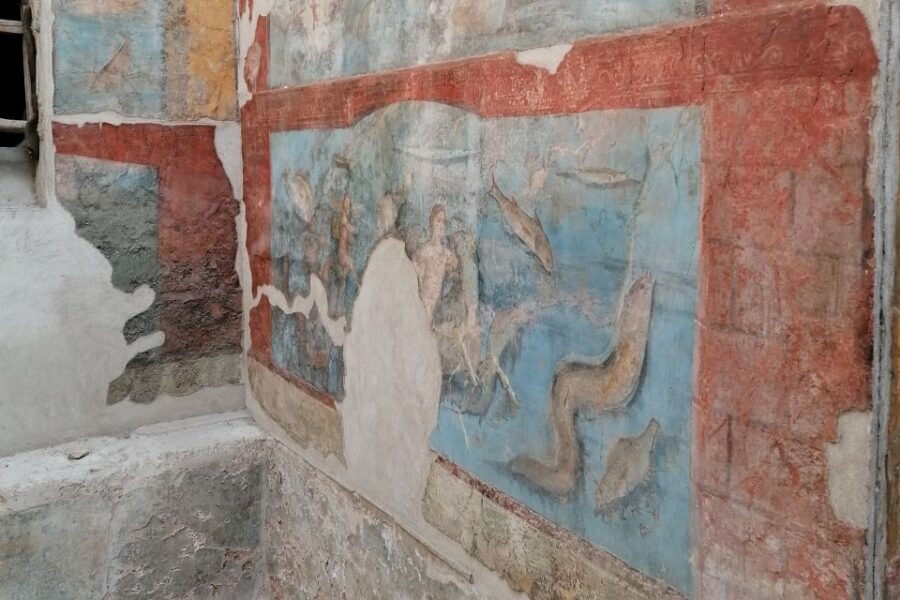
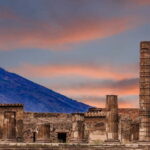
You’ll then see the Temple of Jupiter. It’s easy to think of temples as just “big rocks with columns.” With a guided explanation, you start to understand temples as public messaging—religion embedded into civic identity.
Temples also help you see how Roman life linked daily routines to larger belief systems. When you learn what people expected from their gods and how ceremonies reinforced social order, the ruins feel less like isolated monuments and more like the heart of a cultural system.
Macellum and Basilica: markets and law in the same walk
Two of the most practical and revealing stops are the Macellum of Pompeii and the Basilica, Pompeii.
- The Macellum (market area) gives you a sense of supply, trade, and what daily buying looked like. Even in ruins, markets show patterns—movement, density, and the mix of goods that would have mattered to ordinary people.
- The Basilica is tied to public functions. In Roman cities, buildings like this often relate to law, administration, and meeting spaces. So you’re seeing how order was enforced and how people interacted with institutions.
This is also where the tour’s pacing earns its keep. You’re walking between life-supporting spaces—food and buying first, then the place where decisions and public business happened. That combination helps you avoid the common mistake of thinking Pompeii is only about wealthy houses and dramatic plaster casts.
The lupanare: a hard topic, handled by context
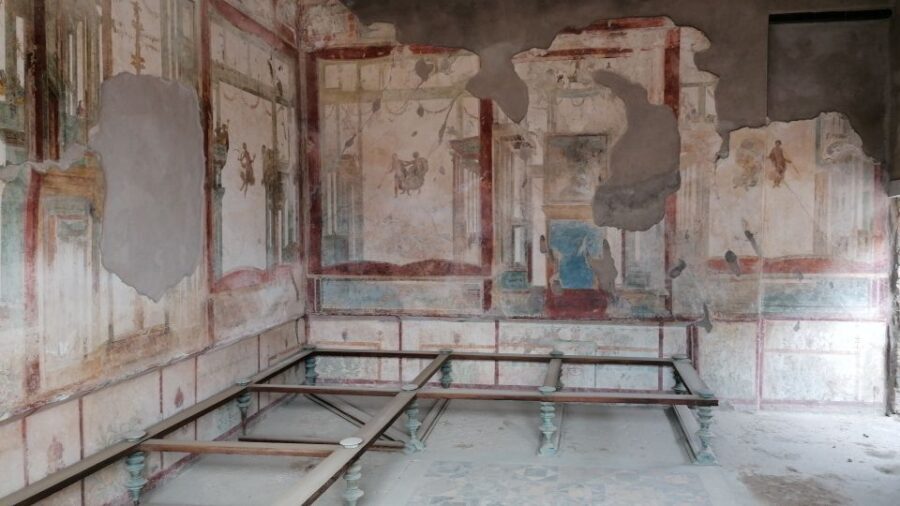
Finally, you reach the lupanare—the famous brothel in Pompeii. This is one of the most talked-about sites, and it can go two ways on tours: either sensational, or explained.
In this route, the value is in context—how the space functioned in a city that mixed entertainment, commerce, and strict social structures. You’re also seeing how Romans didn’t separate “public city life” from morally complicated realities. The lupanare is a reminder that cities have layers you won’t find on postcard tours.
If you’d rather keep this part of the experience lighter, you can still enjoy it by focusing on layout and everyday functioning, not trying to “feel” the topic in a way that may not match your preferences.
Free time after the guide: use it like a pro
One key inclusion is free time to explore the archaeological site after the guided portion. That matters because Pompeii rewards second looks. What grabs you—fresco fragments, a street corner, an entrance detail—might not be fully seen during a guided sprint.
Use your free time in a practical way:
- Return to the stop that you found most confusing and try to recognize it without the guide’s voice.
- Look for street-level connections: doorways, thresholds, and how people would have entered and moved.
- If you want photos, do it while you still remember what each location represents.
Price and value: is $65 for 2 hours worth it?
At $65 per person for a 2-hour tour, the price feels fair when you factor in what’s actually included: an archaeologist guide, express entry, and headsets when the group is larger than 8. Add the small-group limit of up to 12, and the main value becomes time saved plus understanding gained.
Pompeii can be slow to enjoy if you’re waiting in lines or constantly trying to decode what you’re seeing. This tour cuts those friction points, and it does it with expertise that changes how you read the ruins.
If you’re the type who hates crowds and wants to ask questions without shouting, the small size alone can justify the cost. It also helps when you’re visiting during busy periods—fewer people means less herd behavior and fewer “stop-and-start” delays.
Who this Pompeii tour suits best (and who it may not)
This experience fits best if you:
- Want Pompeii explained by someone working close to the evidence, not only by a scripted narration.
- Prefer small groups and direct questions.
- Like a focused route that hits the big themes: homes, baths, civic life, and the eruption aftermath.
It may not be the right choice if you:
- Have mobility impairments or need wheelchair access. This tour is listed as not suitable for wheelchair users.
- Want a totally self-paced wandering day. You’ll get free time after, but the heart of the experience is still a guided walk with planned stops.
If you’re visiting with kids, this kind of structure can also help. You move through Pompeii in bite-sized chunks, and the guide’s explanations can keep attention from drifting.
FAQ
FAQ
How long is the Pompeii guided tour?
The tour lasts 2 hours.
What is the group size limit?
The group is limited to a maximum of 12 people.
Where do we meet the guide?
You meet at Ristorante Suisse. The guide waits at the meeting point with a sign with your name.
Is the ticket line skipped?
Yes. Express entry is included so you can skip the ticket line.
What’s included in the tour price?
Included are the archaeologist guide, an express entry ticket to Pompeii, headsets (for groups of more than 8 people), and free time to explore the site.
Do I need to bring ID or passport?
Yes. Pompeii tickets are named, and you need to bring your passport or ID card in original.
What should I bring for the walk?
Bring comfortable shoes, a hat, and water, along with your passport or ID card.
What languages are available for the live guide?
The live guide is available in Italian, English, and French.
Should you book this archaeologist-led Pompeii tour?
If you want Pompeii to feel like a city, not a pile of ruins, this is a strong choice. The small group, express entry, and archaeologist-guided stops give you faster access and sharper understanding—especially around the Forum and the plaster casts. If walking uneven ground is a challenge for you, skip this one and look for a more accessible option.