REVIEW · ERCOLANO
Herculaneum: Private Walking Tour with Archeologist Guide
Book on GetYourGuide →Operated by Askos Tours · Bookable on GetYourGuide
Herculaneum hits you fast. This private walk makes the eruption of Vesuvius feel personal, not textbook. I love the licensed archaeologist guide who keeps the story moving, and I love what you can actually see because the town was preserved by volcanic ash and mud. Guides like Antonio and Luciano are the kind who can explain the past clearly and still keep the energy up for everyone in your group.
One thing to keep in mind: the tour is only 2 hours, so you’ll see a lot of highlights, but you won’t get slow, museum-style wandering. It’s also a site where you’ll want solid shoes and a little patience for walking surfaces and sun, depending on when you go.
If you like real “wow, I can see that?” moments, this is a strong choice. You get to skip the ticket line, and the route is built around major parts of town—from public spaces like the Forum to homes and the places where victims were found—so you leave with a clear sense of how Romans lived, ate, and worshipped before 79 A.D.
In This Review
- Key highlights that make this tour worth your time
- Why Herculaneum preserves everyday life better than Pompeii
- What an archaeologist guide adds (and why private matters here)
- Stop-by-stop: the 2-hour route that covers the town’s main stories
- 1) Forum area: public life before the private rooms
- 2) Houses with standout features: Salone Nero, wooden partitions, and more
- 3) Food and street-side routines: the Thermopolium and Bakery
- 4) More homes: Albergo, Neptune and Amphitrite, and the deer house
- 5) The House of Skeletons and the victims’ area: the emotional center
- 6) Sacellum of the Augustales: religion in small spaces
- The eruption story becomes clear when you can see the materials
- Timing and prep for a smooth 2-hour walk
- Price and value: what you’re really paying for
- Who this tour suits best
- Should you book this Herculaneum private archaeologist tour?
- FAQ
- How long is the Herculaneum private walking tour?
- Is this tour private?
- What language options are available for the guide?
- Is admission to Herculaneum included?
- Where does the tour start and end?
- Do I need transportation included?
- Can I skip the ticket line?
- Is entry free on the first Sunday of each month?
- Is the tour wheelchair accessible?
- What should I bring, and are there luggage restrictions?
Key highlights that make this tour worth your time
- Archaeologist-led storytelling that turns ruins into living routines
- Better preservation than Pompeii, thanks to ash and a mud avalanche burying Herculaneum deeper
- A packed route in just 2 hours, covering the Forum, major houses, and the victims’ area
- Seeing rare survivals, including preserved wooden objects, paintings, and mosaics
- A private format with multi-language guides, including English and Spanish (plus several others)
- Skip-the-line entry so you spend more time walking and less time waiting
Why Herculaneum preserves everyday life better than Pompeii
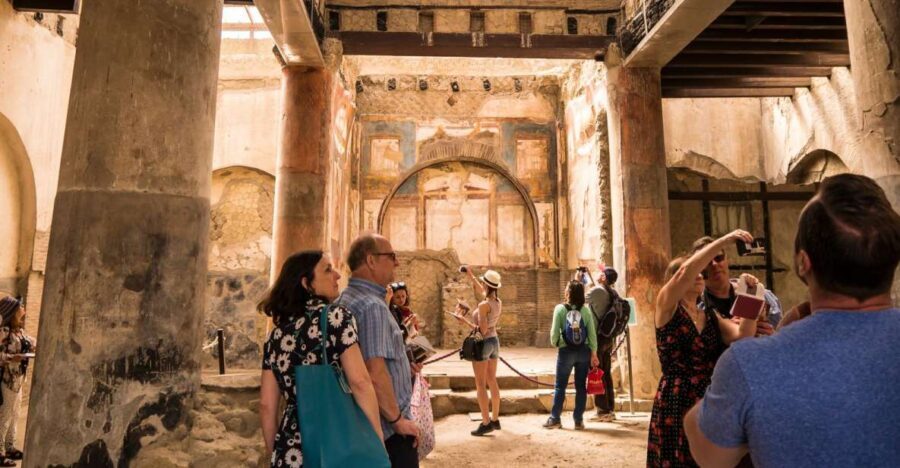
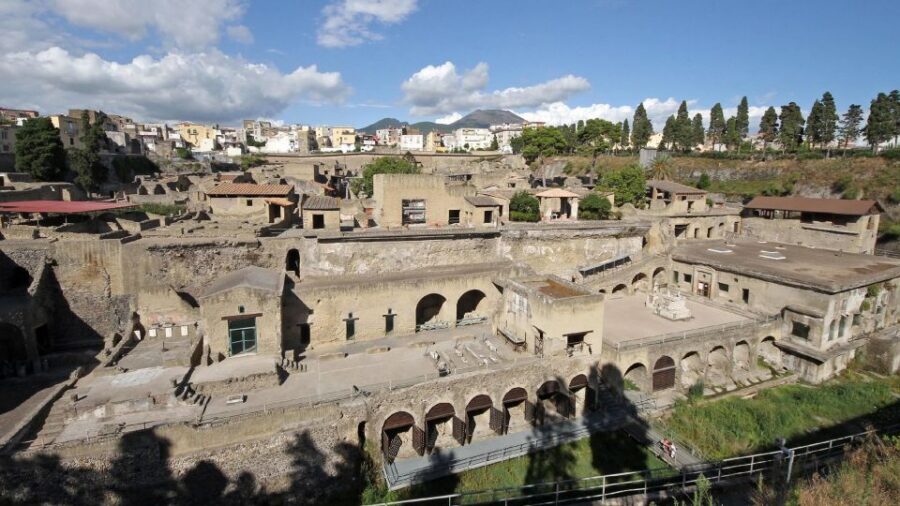
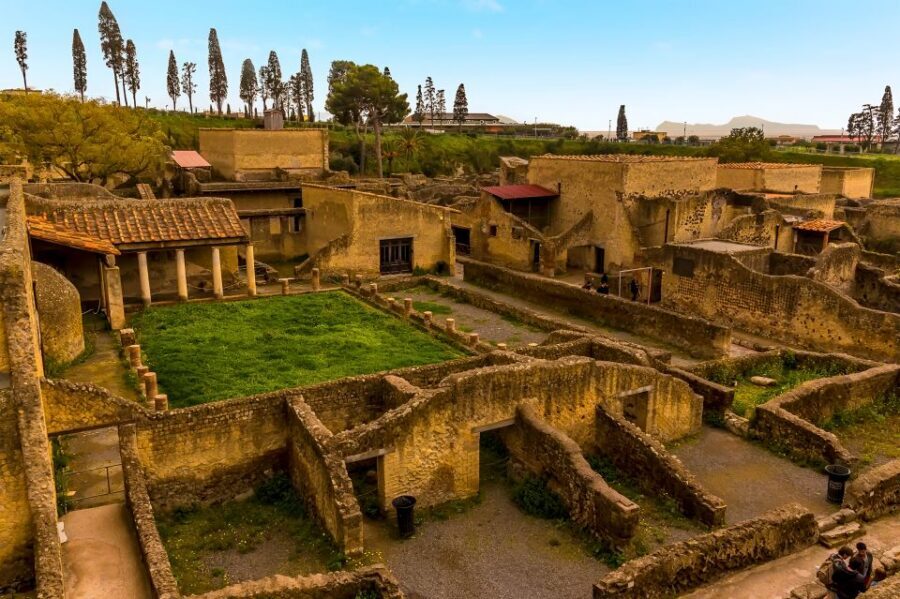
Herculaneum and Pompeii are siblings in the story of 79 A.D., but they don’t look the same when you stand in the ruins. Pompeii was covered by about 4–5 meters of ash, while Herculaneum was buried by an avalanche of mud reaching roughly 20 meters deep. That difference matters because it shaped how the site survived.
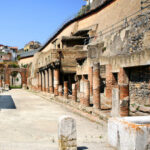
When you walk through Herculaneum with an archaeologist guide, the preservation isn’t just a technical detail. It changes what you can notice as a visitor. Instead of only imagining what was once inside buildings, you can often pick out elements that feel startlingly tangible—like wooden objects, painted surfaces, and mosaic patterns where other sites might be mostly stone foundations.
You also get a built-in lesson in how disasters work. The volcanic eruption of Vesuvius isn’t presented as one dramatic moment and then done. You learn how the town was overwhelmed, how quickly life likely shifted, and how the environment acted like a very extreme storage system for the material world.
You can also read our reviews of more walking tours in Ercolano
What an archaeologist guide adds (and why private matters here)
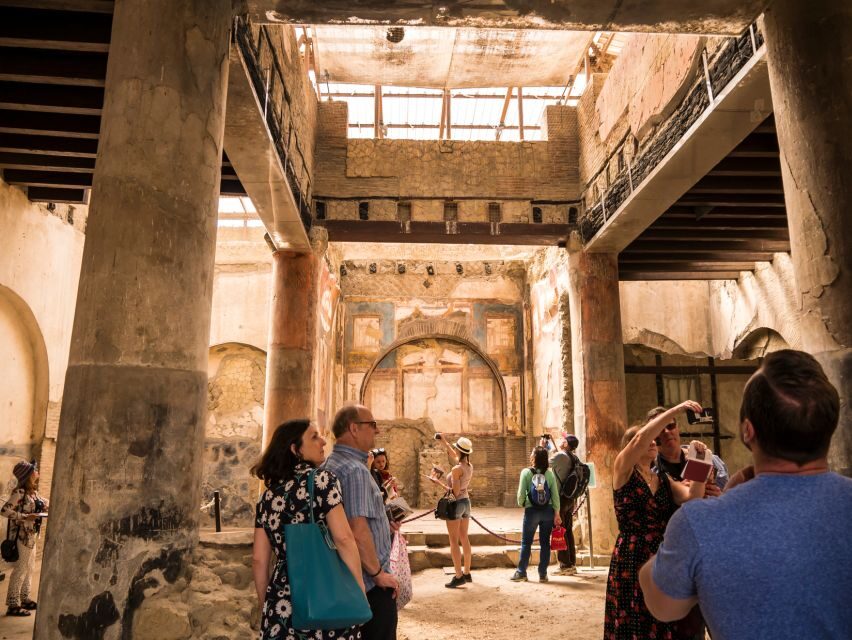
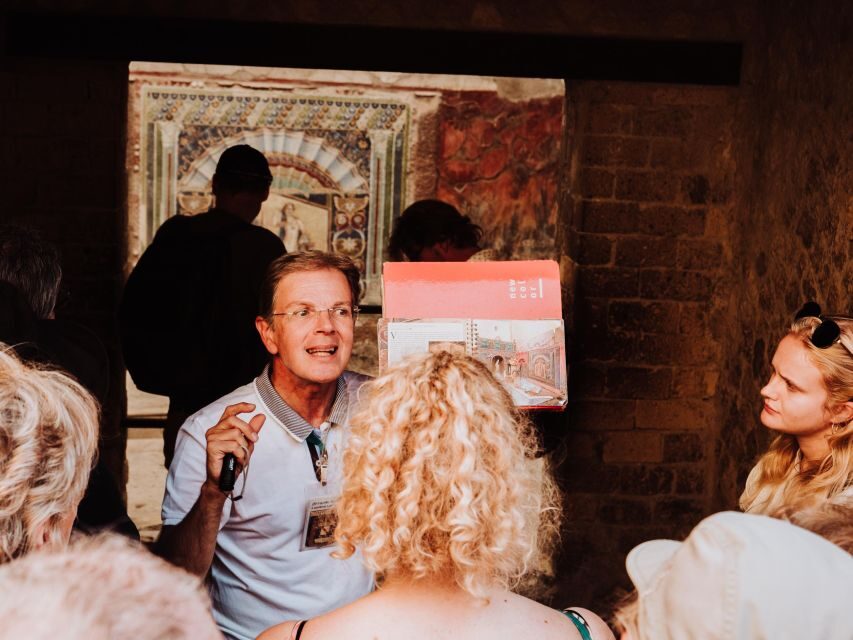
This isn’t a “walk and point” tour. You’re with a licensed archaeologist guide, which means you get explanations tied to what you’re seeing right now. In a place like Herculaneum, that changes everything, because the ruins can look similar at first glance: a wall here, a doorway there, a room shape over there. The guide helps you connect the shapes to how Romans actually used them.
Private format also means your questions land in the right place. If you want to slow down for one room type—homes versus street life, public space versus domestic space—you can. If your group includes kids or teens, this matters too. In the tour experience, guides like Antonio and Luciano were described as fun and relatable, which is a real advantage when you’re standing in ruins that can otherwise feel repetitive.
Language support is strong. The guide can work in Italian, Spanish, English, Japanese, Russian, French, Portuguese, Chinese, German. So if your group has mixed comfort levels, you’re less likely to feel left behind.
Stop-by-stop: the 2-hour route that covers the town’s main stories
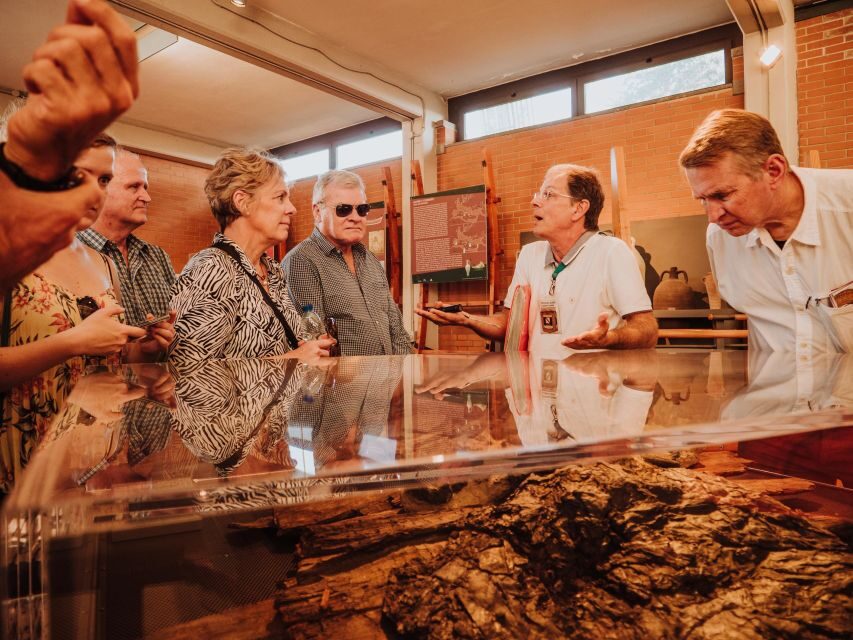
The walking tour is designed to hit the big emotional and practical anchors of Herculaneum. You’ll start around the Parco Archeologico di Ercolano area (Via dei Papiri Ercolanesi, 21), then move through the site and finish back near where you began.
Here’s how the main segments usually feel as you go:
1) Forum area: public life before the private rooms
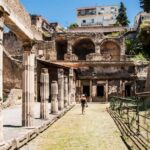
Early on, your guide points you toward the Forum—a good starting point because it sets the rules of the town. It’s where civic life would have happened, so you get context for what Romans did in shared spaces. This is also where you can mentally re-map the site before the tour shifts into individual houses and specialty rooms.
A practical tip: focus on movement and layout here. If you understand where public space sits relative to homes and businesses, the rest of the tour clicks faster.
2) Houses with standout features: Salone Nero, wooden partitions, and more
Next comes what most people remember from Herculaneum: houses and rooms with preserved details. You’ll visit the Casa del Salone Nero (the House of the Black Saloon), and your guide will connect it to the kinds of decoration and daily life Romans enjoyed at home. The idea isn’t just to admire art. It’s to understand how interior spaces worked as part of social status and routine.
The tour also routes you past other major house highlights, including the House of the Wooden Partition and areas that show how specific rooms were arranged. Even when a room is partly incomplete, the preservation can make the idea of the interior feel more real than at other sites.
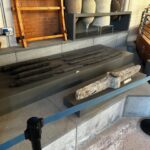
One more “wow” moment you’ll be told about is the kind of preserved material Herculaneum is famous for: wooden objects, paintings, and mosaics. In practical terms, the guide will help you look at the right spots—so you’re not just staring at shadows and thinking, I wish I knew what this was.
You can also read our reviews of more guided tours in Ercolano
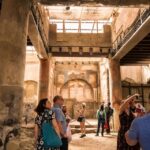
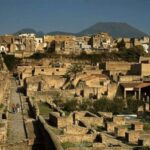
3) Food and street-side routines: the Thermopolium and Bakery
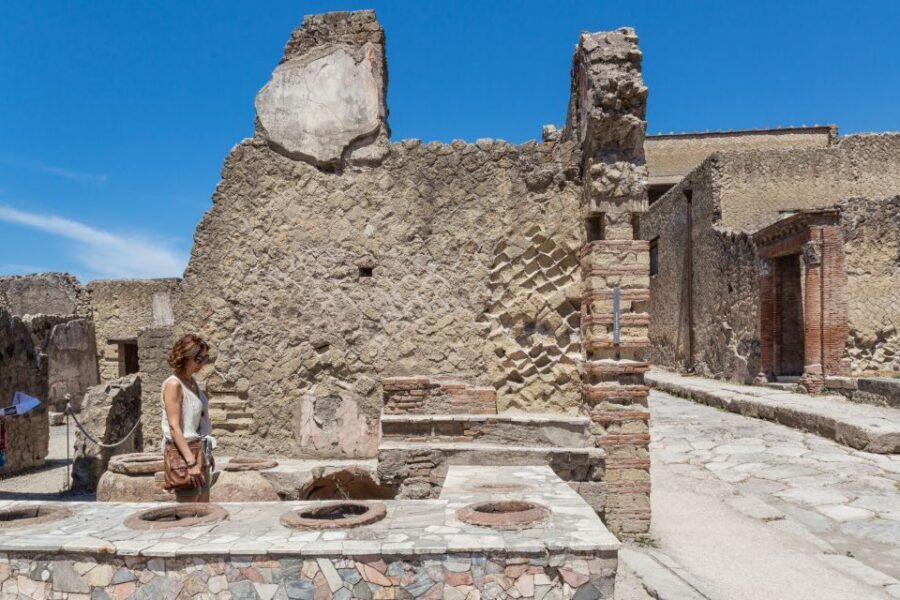
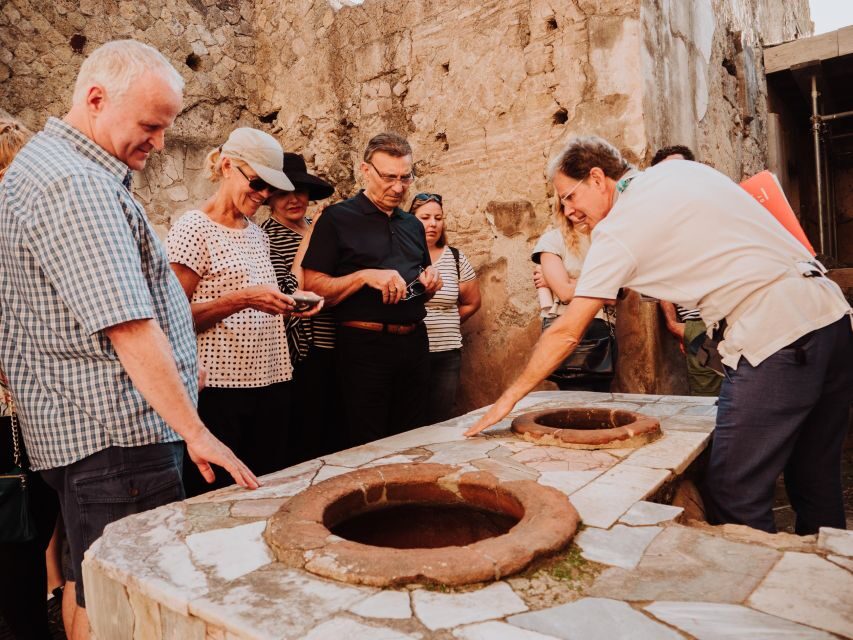
Then the tour leans into everyday life. You’ll visit the Herculaneum Thermopolium, which is essentially a small food-serving stop—one of those places you can imagine people grabbing something to eat without cooking at home every time. It’s a great contrast to the quieter domestic rooms.
You’ll also see a Bakery highlight as part of your route. That’s important because it broadens the story from houses and art to production and daily provisioning.
If you’re hungry while you tour (normal human condition), this section is a built-in reminder that ruins weren’t empty—they were part of an active supply chain.
4) More homes: Albergo, Neptune and Amphitrite, and the deer house
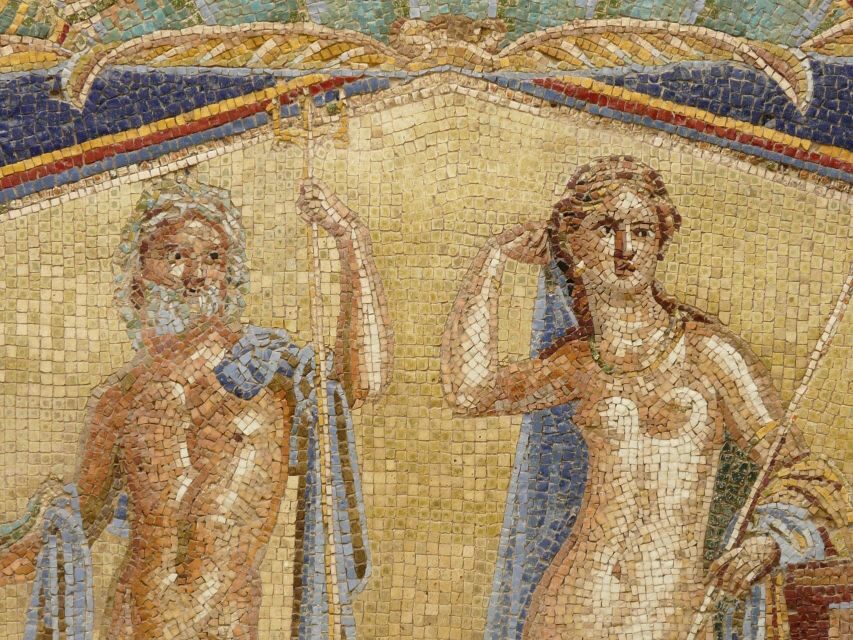
As the tour continues, you move through several private residences, including Casa dell’Albergo and Casa di Nettuno ed Anfitrite. Your guide uses these stops to show how Roman households could be arranged and themed, including how rooms might reflect status and taste.
You’ll also visit the Casa dei Cervi. Think of this as another chapter in how houses weren’t just shelter; they were identity.
The main drawback of focusing on so many homes in 2 hours is fatigue. The solution is simple: keep asking yourself, What would a person do in this room, and who would they interact with here?
5) The House of Skeletons and the victims’ area: the emotional center
This is the section that gives Herculaneum its weight. You’ll visit the House of Skeletons, and you’ll also be directed to the beach where hundreds of skeletons of the victims were discovered. The guide explains what happened during the eruption and the final stages of the disaster.
This part is not about sensationalism. It’s about seeing how the catastrophe is documented in the physical remains, and how preservation changed what survived—including human remains in a way that is heartbreaking and historically significant.
6) Sacellum of the Augustales: religion in small spaces
Finally, you’ll visit the Sacellum of The Augustales. Even if you’re not a religion-history person, this stop helps you balance the tour. So far you’ve got civic space, domestic space, food space, and the tragedy zone. Now you add worship and local community ritual.
By the time you reach this area, the tour’s structure makes more sense: a Roman town wasn’t only work and home. It had ways to mark belief and belonging, too.
The eruption story becomes clear when you can see the materials
Herculaneum is often described as well preserved, but here’s what that means for you on the ground: preservation makes the invisible visible. When you’re trained to look, you can start to recognize surfaces and object types that wouldn’t survive elsewhere.
You’ll hear how the town was buried after Vesuvius erupted in 79 A.D., and you’ll learn why Herculaneum’s “storage” conditions were different from Pompeii. That’s where the volcanic ash and mud story stops being an abstract timeline.
The tour’s design uses that contrast on purpose. You start with the town’s layout and public spaces, then move into rooms where decoration and daily routines show up. You’re basically walking through categories of life—public, private, food, shelter, worship—then returning to the emotional center where the disaster is documented.
If you’re the kind of traveler who likes photos, this is a site where you’ll actually capture more than empty stone. The guide’s pointing and context help you photograph what matters, not just what looks interesting.
Timing and prep for a smooth 2-hour walk
This is a tight, efficient tour. Duration is listed as 2 hours, so you’ll likely be moving at a comfortable but steady pace. Starting times depend on availability, so check what’s offered when you book.
Pack like you’re walking on uneven archaeological ground. The guidance is simple: bring comfortable shoes. Also note that oversize luggage isn’t allowed, so travel light.
If you’re planning your visit around the calendar, there’s a special case. On the first Sunday of each month, entrance is free, but tickets can’t be reserved ahead of time, and entry is not guaranteed. For that reason, I treat free-day plans as a bonus, not a foundation.
One more practical note: transportation isn’t included. That’s totally normal for site tours, but it means you should plan how you’ll get to the meeting point near the park.
Price and value: what you’re really paying for
The listed price is $317.76 per group (up to 1 in the listing details). That sounds steep if you think in per-person terms, but what you’re getting is a private archaeologist-led walking experience plus admission.
Admission fees are included at 16.00 euros each. You’re also paying for real interpretation, not just access. In places like Herculaneum, the difference between a self-guided walk and an archaeologist guide is the difference between seeing ruins and understanding what you’re seeing.
So here’s the value logic I use: if you’ll enjoy digging into details with a guide, the cost makes more sense. If you want a casual wander only, you might feel you paid for explanation you didn’t fully use. Private format is best when you actually plan to talk, ask, and connect the dots.
Who this tour suits best
This is a strong match if you want:
- a clear story of what Vesuvius did to a town in 79 A.D.
- an emphasis on human-scale details like home life, food routines, and worship
- a guide who can keep the pace lively and the explanations understandable across age groups
It’s also a good fit if you’re traveling as a small group and want to avoid the “follow the crowd” feeling. Multiple languages help if your group isn’t all the same comfort level.
Accessibility info is mixed in the provided details. The activity is listed as wheelchair accessible, but it also notes it is not suitable for wheelchair users. Before booking, I’d confirm what that means in practice for your specific needs.
Should you book this Herculaneum private archaeologist tour?
Yes—if you want the ruins to make sense fast and you value a guide who can translate the site into everyday Roman life. The best reason to book is simple: Herculaneum is preserved in a way that rewards focused looking, and an archaeologist guide helps you look at the right things without wasting your time.
If you’re only interested in a quick stroll for photos and don’t want explanations, you may not use the value fully. But if you like learning while you walk—especially around the Forum, the major houses, and the victims’ area—this private, 2-hour format is a very practical way to get the highlights in one go.
FAQ
How long is the Herculaneum private walking tour?
It lasts 2 hours.
Is this tour private?
Yes, it’s a private group tour.
What language options are available for the guide?
The live guide can be in Italian, Spanish, English, Japanese, Russian, French, Portuguese, Chinese, or German.
Is admission to Herculaneum included?
Yes. Admission fees to Herculaneum are included at 16.00 euros each.
Where does the tour start and end?
The starting meeting point may vary depending on the option booked, and the tour ends back at the meeting point. One listed starting/ending area is Parco Archeologico di Ercolano, Via dei Papiri Ercolanesi, 21.
Do I need transportation included?
No. Transportation is not included.
Can I skip the ticket line?
Yes, the tour includes skipping the ticket line.
Is entry free on the first Sunday of each month?
Entrance is free of charge on the first Sunday of each month, but tickets can’t be reserved ahead of time, so entry is not guaranteed.
Is the tour wheelchair accessible?
The information provided lists wheelchair accessibility, but it also states it is not suitable for wheelchair users. Check before booking to confirm what will work for your situation.
What should I bring, and are there luggage restrictions?
Bring comfortable shoes. Oversize luggage isn’t allowed.