REVIEW · ERCOLANO
Herculaneum – Small Group Tour (admission included)
Book on GetYourGuide →Operated by Pompeiify di Parlato Gabriella · Bookable on GetYourGuide
Herculaneum feels close to the moment. This tour takes you into a Roman town that survived in an unusually detailed way after Vesuvius buried it under scalding ash. It is smaller than Pompeii, but the preserved streets and homes make it feel more intimate than Pompeii.
I like two things most. First, the guide lays out the eruption story in a way that helps you actually understand what you’re looking at, not just read plaques. Second, you get that sense of daily life in a wealthy residential center, with the kinds of decorations and paintings you would expect from people with serious money in the Gulf of Naples.
One caution: at just 2 hours, the tour is paced. If you want to stop and stare at every wall painting or sketch every corner, you may wish you had more time on site.
In This Review
- Key things to know before you go
- Herculaneum feels more like a neighborhood than a ruin
- Starting point at Corso Resina: fast entry and easy orientation
- The eruption story you need before you step on the stones
- Why Herculaneum preserves differently than Pompeii
- Typical Roman life in a wealthy residential town
- Private houses, decorations, and the value of seeing art in context
- The Boat Museum stop: disaster evidence you can almost touch
- Ending near the site: add-on exhibits can extend the feeling
- The 2-hour pace: good for value, not for ultra-slow wandering
- Languages and guide style: you’ll get the story, not just the facts
- Is $75 good value for Herculaneum?
- Who this tour suits best
- Should you book this Herculaneum small-group tour?
- FAQ
- How long is the Herculaneum small-group tour?
- Is admission included in the price?
- Where do I meet the group?
- What languages are available for the live guide?
- What does the tour include besides the ruins?
- Is it a small-group experience?
- What is the cancellation policy?
- Are there flexible booking options?
Key things to know before you go
- A licensed guide (Regione Campania) leads the walk, so you get clear context instead of guesswork
- Skip-the-line admission is included, which helps when ticket lines get slow
- The eruption is explained up front, so the ruins make more sense as you go
- Preservation differences vs Pompeii shape what you’ll notice during the visit
- A Boat Museum stop adds a practical, grounded look at what the disaster affected
Herculaneum feels more like a neighborhood than a ruin
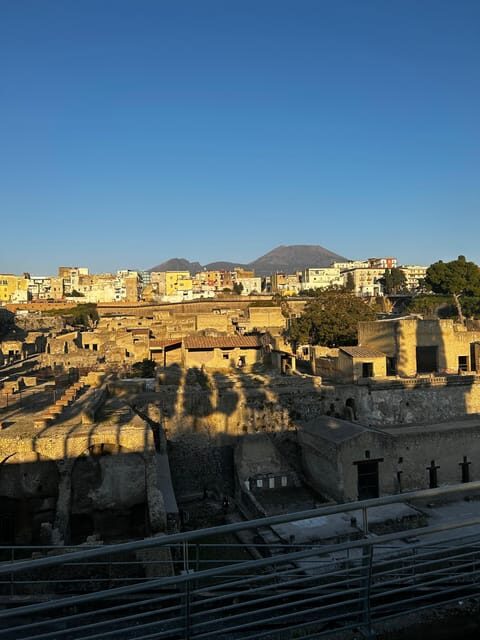
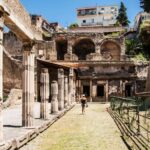
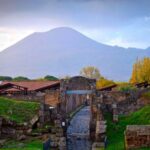
Herculaneum was destroyed by the eruption of Mount Vesuvius in 79 A.D. and preserved at the same time, thanks to pyroclastic flows that buried the town under a thick layer of ash—reported as about 60 feet of cinder. That mix of destruction and sealing is what gives Herculaneum its special tone. You’re not only seeing what got ruined; you’re seeing what got protected long enough to be studied and shown today.
This is why the experience can feel more personal than you might expect. Pompeii is big and dramatic, and it has its own scale and wow factor. Herculaneum is smaller, and the preserved details can make everyday life feel closer, like you’re walking through rooms and corridors rather than scanning a huge outdoor museum.
You can also read our reviews of more tours and experiences in Ercolano.


Starting point at Corso Resina: fast entry and easy orientation
You meet at Corso Resina, 187, just outside the Herculaneum ticket office. That matters more than it sounds. When you arrive at a major archaeological site, the first hour can get eaten by logistics: finding the right entrance, figuring out ticketing, and losing time to crowd flow. Here, the plan is built to get you moving.
The tour includes a skip-the-line admission ticket, which usually means you spend your energy looking at ancient places instead of watching people in front of you. A small group also helps. You’re not trapped in a long conga line, and you can ask questions without feeling like you’re talking into the void.
The eruption story you need before you step on the stones
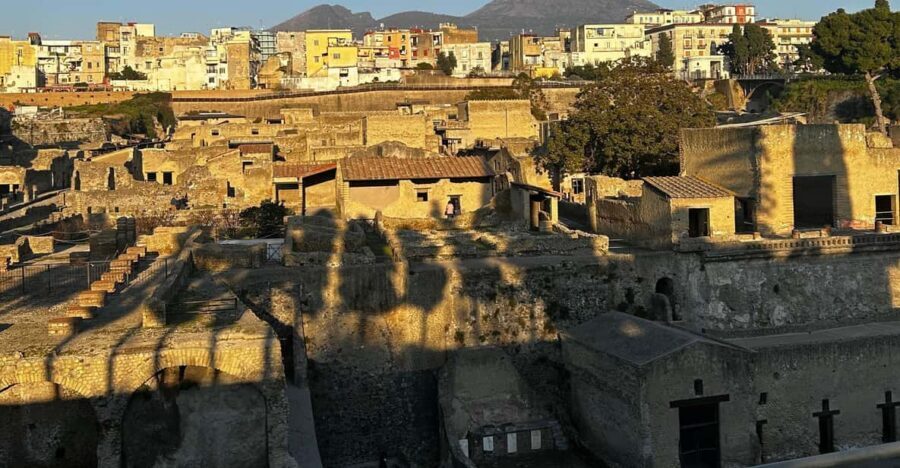
One of the strongest parts of this tour is the introduction: the guide focuses on the eruption and on what kind of city Herculaneum was. You can’t really “get” Herculaneum without understanding what happened and why it happened the way it did.
The guide’s framing is practical: the pyroclastic flows weren’t a gentle blanket. They were scalding, fast-moving, and catastrophic. That context helps you interpret what you see. Instead of treating the ruins like random fragments, you start understanding them as places that were interrupted mid-life, then sealed.
This is also where the tour’s small-group format becomes useful. In a group size that stays manageable, you can ask follow-up questions about the disaster—how the eruption affected different parts of the town, why the outcome looks the way it does, and what kinds of clues archaeologists can pull from that kind of preservation.
Why Herculaneum preserves differently than Pompeii
Both cities were destroyed by the same eruption. But the effects weren’t identical. Herculaneum’s preservation is often more “intimate” in feel, and that comes from the way the disaster played out across the landscape.
You’ll notice this difference as you walk. The contrast isn’t just academic. It changes what stands out visually and what the guide can explain. You spend less time treating the site like a broad panorama and more time focusing on details—materials, layout, and the sense of rooms and daily spaces.
If you already visited Pompeii, this tour is a good companion. You can use Herculaneum as the contrast point. Instead of repeating the same patterns, you learn how one eruption created different kinds of archaeological evidence, depending on conditions and location.
Typical Roman life in a wealthy residential town
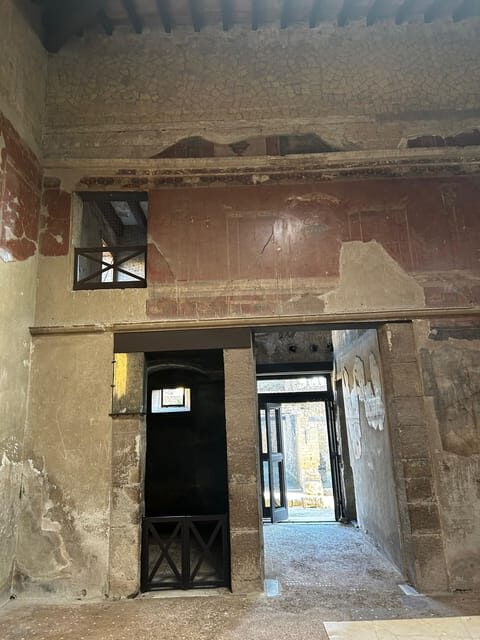
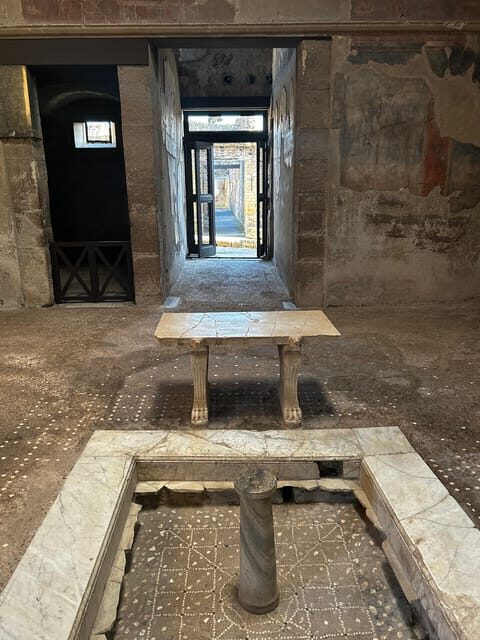
Herculaneum was home to the wealthy. It’s described as a residential area that was smaller than Pompeii, but richer. That difference shapes what you’ll see and, more importantly, what the guide will help you interpret.
During the walk, expect a focus on typical life in an ancient Roman center—how people lived, what their homes were like, and what the decorations suggest about status. The tour highlights elegant private houses and original styles that survive in a way that makes the affluence easy to grasp.
In the best moments, the tour turns ruins into story. Instead of only naming parts of buildings, the guide ties them back to how Romans lived day to day. You end up with a better sense of what “comfortable” and “high-status” looked like in this coastal world—not just what a city looked like in a textbook.


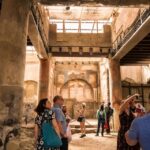

Private houses, decorations, and the value of seeing art in context
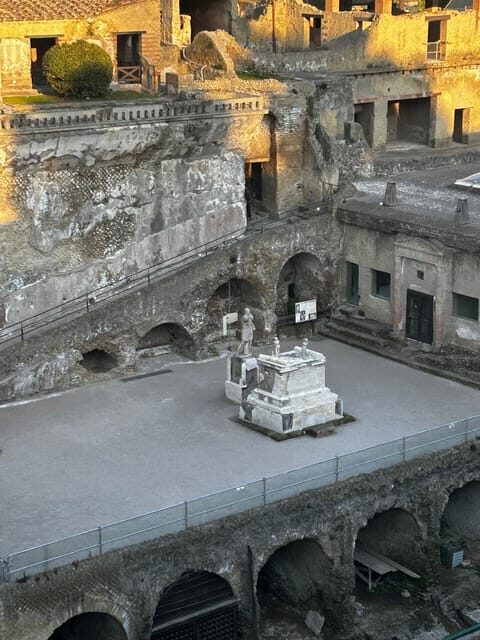
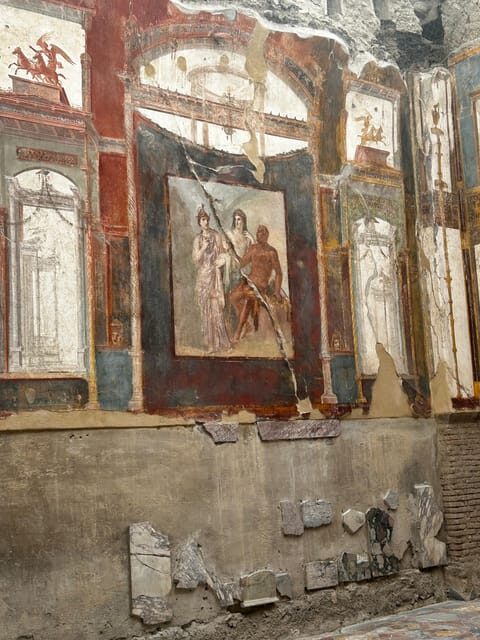
One of the most praised parts of this experience is the attention to details: buildings, paintings, and the way those features connect to daily life. Even if you’re not an art expert, it helps to have someone point out what you’re actually looking at and why it mattered.
This is where a good guide changes everything. A wall painting isn’t just a decoration. It’s a choice, and it’s expensive. When the guide connects that choice to the wealthy character of Herculaneum, you start seeing the site through the eyes of the people who lived there—people who were spending money on beauty, not just function.
Also, this kind of detail gets easier with a small group. When you’re not sprinting for the next photo spot, you can take in the visuals and ask questions. That’s often the difference between a quick pass and a “wait, I understand now” moment.
The Boat Museum stop: disaster evidence you can almost touch
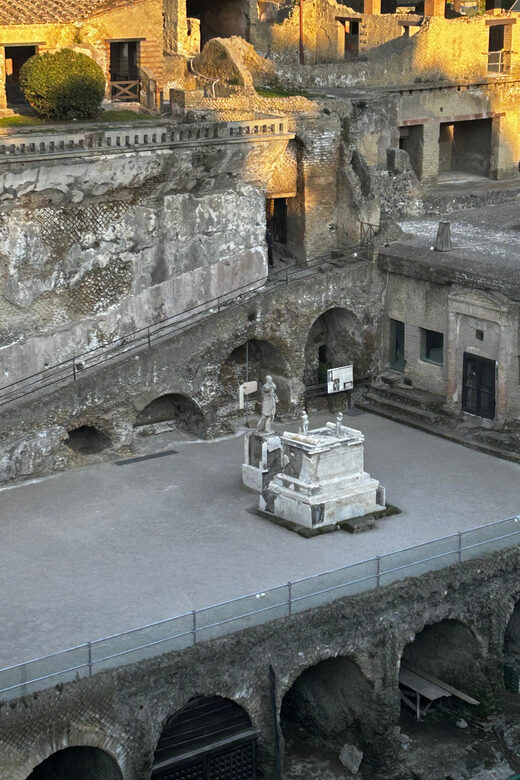
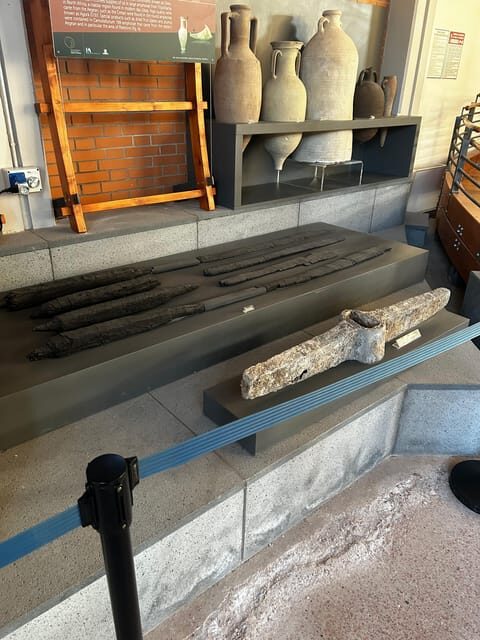
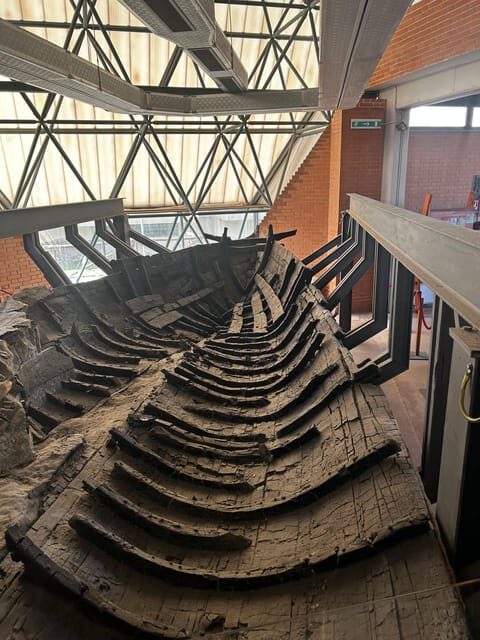
The highlights include a visit to the boat museum. This matters because it shifts you from just walking through ruined structures to seeing physical evidence of what the disaster disrupted.
A museum stop is not automatically fun. But the Boat Museum concept works here because it connects to the eruption story. You’re reminded that this was not only about buildings and streets. It was also about the coastline, movement, and daily activities tied to water.
If you like your history grounded in objects—things that survived, things that tell a story—you’ll likely appreciate this break in pace. It gives your brain a “new handle” on the same catastrophe.
Ending near the site: add-on exhibits can extend the feeling
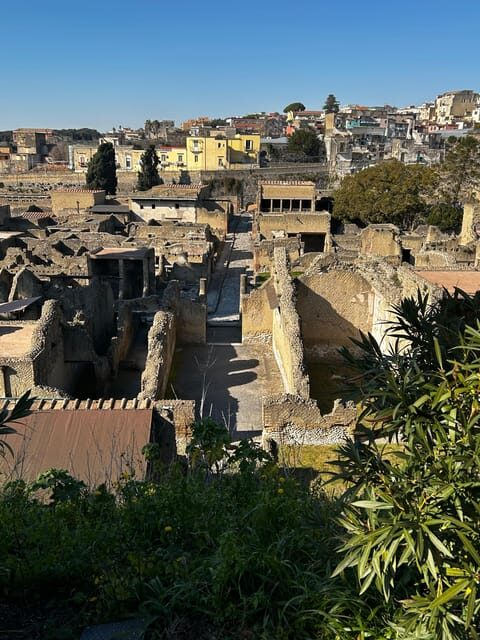
The tour is designed as a focused 2-hour experience. When you wrap up, you’ll return to the starting area at Corso Resina, 187.
In some cases, the guide may also bring you to the nearby Antiquarium to show exhibits from Herculaneum. That extra stop can be a nice way to carry the story forward, especially if you want more context for what you saw out on the stones.
The 2-hour pace: good for value, not for ultra-slow wandering
The duration is 2 hours. That’s a sweet spot for many people: long enough to understand the eruption and walk through key areas, but short enough to avoid museum fatigue.
The trade-off is time. You won’t have hours to linger in one section and “study mode” everything. So if you’re the type who reads every sign, sketches constantly, and wants to re-check every detail twice, you may find the pace brisk.
On the other hand, if you’re traveling smart and want the biggest learning payoff per hour, this timing fits well. In a small group, the tour can keep moving while still giving you time to ask questions.
Languages and guide style: you’ll get the story, not just the facts
The guide is live and available in German, Italian, or English. That’s a big deal at archaeological sites, because small phrasing differences can completely change what you notice.
The experience also benefits from strong communication. Past guides named Roberta and Marzia have been praised for balancing information with clear, thoughtful answers. Another guide named Gabriella has been noted for adjusting explanations to keep children interested, so the approach can flex depending on the group.
If you’re traveling with mixed ages, this matters. You’ll often get a version of the story that feels human, not just lecture notes.
Is $75 good value for Herculaneum?
At $75 per person for a 2-hour small-group tour with admission included, the value usually comes down to what you get that you can’t easily replicate on your own.
Here’s the value logic:
- Licensed guiding (Regione Campania) helps you interpret what’s in front of you instead of reading alone in the slow lane
- Skip-the-line admission saves time, and time is money when you’re touring around Naples
- Small group means you’re not stuck waiting for the group to catch up with you
- Eruption context + preservation differences gives you a framework, which makes the site more meaningful
If you’re short on time and want the best chance of leaving with real understanding, this price is easier to justify. If you have a lot of time and prefer independent exploring, you could spend less by going on your own—but you’d lose the guided connections that turn ruins into story.
Who this tour suits best
This tour is a strong pick if you want:
- A clearer understanding of Vesuvius and what happened at Herculaneum in 79 A.D.
- A walk focused on Roman daily life in a wealthy residential setting
- A paced visit that still allows questions in a small group
It may be less ideal if:
- You want a long self-guided photo session with no structure
- You’re determined to read every detail on your own first, then add interpretation later
- You prefer multi-hour site exploration beyond a single coherent narrative
Compared with Pompeii, Herculaneum is the choice if you like intimacy and detail over sheer size. Think of it as the quieter, more personal side of the Vesuvius story.
Should you book this Herculaneum small-group tour?
Book it if you want the simplest path to understanding Herculaneum well. The combination of a licensed guide, skip-the-line admission, and a structured focus on the eruption and everyday Roman life makes this a high-payoff way to spend 2 hours.
Don’t book it if you’re planning to spend the day lingering slowly and you already know the eruption story. In that case, independent wandering might suit you better.
If you’re aiming to do Vesuvius properly, this tour is a solid way to start with the right framework—then let the preserved details do the talking.
FAQ
How long is the Herculaneum small-group tour?
It lasts 2 hours.
Is admission included in the price?
Yes. Skip-the-line admission ticket is included.
Where do I meet the group?
The meeting point is just outside the Herculaneum ticket office, at Corso Resina, 187.
What languages are available for the live guide?
The tour is offered with live guides in German, Italian, and English.
What does the tour include besides the ruins?
The highlights include an explanation focused on the eruption and the city, plus a visit to the Boat Museum.
Is it a small-group experience?
Yes, it’s a small group tour.
What is the cancellation policy?
Free cancellation is available up to 24 hours in advance for a full refund.
Are there flexible booking options?
You can reserve now and pay later to keep your travel plans flexible.