REVIEW · ERCOLANO
Herculaneum: Skip The Line Entrance ticket + Audioguide
Book on GetYourGuide →Operated by Tempio Travel Pompei Tickets · Bookable on GetYourGuide
Ancient streets, paced exactly your way. This skip-the-line ticket combo gives you entry to the Herculaneum Archaeological Park along with an audio guide and site map, so you can explore without matching someone else’s schedule. Two things I really like: you can move at your own pace, and the audio guide helps connect what you see to the site layout. One thing to keep in mind: the Audioguide Desk at the entrance can be easy to miss if you arrive looking for the wrong sign.
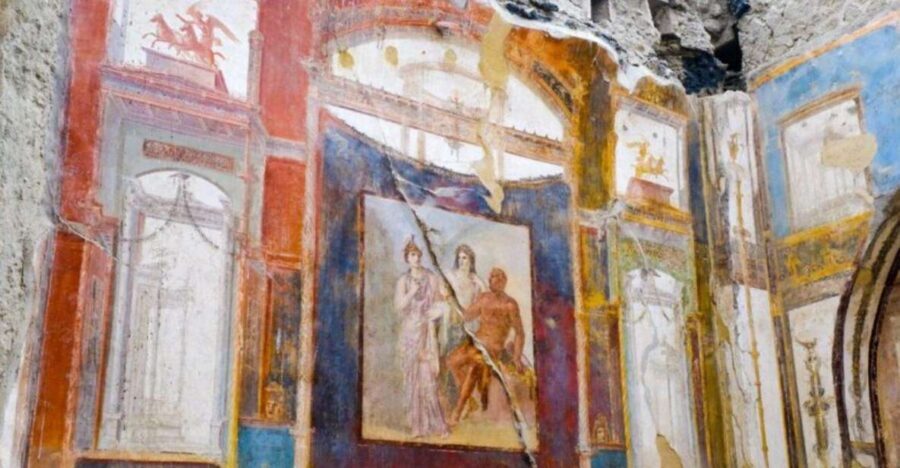
Herculaneum is a Roman town preserved under ash from Vesuvius’ 79 AD eruption. The site is smaller and calmer than Pompeii, and the preservation is striking, so it’s a powerful way to understand daily life from two millennia ago without feeling rushed.
This is a self-guided visit that runs rain or shine, for about a 3-hour window (while you’re also free to spend as much time as you want within opening hours). You’ll need a valid ID for audioguide hire, and you’ll be walking on uneven ground, so wear comfortable shoes and bring a passport or ID card.
In This Review
- Key highlights to know before you go
- Herculaneum vs. Pompeii: why this feels more manageable
- Skip-the-line entry and finding the Audioguide Desk at the Entrance
- Audio guide reality: languages, site map, and listening setup
- The heart of your visit: a self-guided walk through houses, villas, and mosaics
- Where the time can go
- A sobering but important context
- Timing and logistics: plan for walking, no café, and a half-mile approach
- Food and drink: vending machines, not a full café
- Weather: it runs rain or shine
- Is it worth paying $35 for skip-the-line plus an audio guide?
- Who this self-guided Herculaneum ticket suits best
- Should you book this Herculaneum skip-the-line + audio guide?
- FAQ
- How long does the Herculaneum visit take?
- What’s included with the ticket?
- Is this a guided tour?
- Do I need to bring headphones?
- Where do I pick up the audio guide?
- What languages are available for the audio guide?
- What ID do I need for the audio guide?
- Does the visit happen in bad weather?
Key highlights to know before you go
- Skip the line with your own set time: You get entrance without waiting behind the longest queues.
- Audio guide + map = faster orientation: The map and numbered stops help you find what the guide is talking about.
- Self-guided pacing: You’re not stuck with a group rhythm, which is great if you have a tight day plan.
- Compact site, strong preservation: It’s easier to “finish the story” here than at bigger sites.
- No full café on site: Plan for water and a lunch workaround (vending machines are there).
- Headphones aren’t included: You’ll want to plan how you’ll listen comfortably.
Herculaneum vs. Pompeii: why this feels more manageable
If Pompeii is the loud movie blockbuster of Roman ruins, Herculaneum is the quieter, sharper one. The archaeological park is compact, and that matters because it changes how you experience the place. Instead of sprinting between big set pieces, you can actually slow down enough to notice details: the way rooms connect, the preserved surfaces, and the overall “day-to-day” feeling of the town.
And yes, the mood can hit hard. One visitor described the experience as very sobering once the human loss is right there in front of you. It’s not a theme park vibe. It’s a real place where tragedy is part of the story, told through structures and space.
If you’ve already done Pompeii (or you’re planning to), Herculaneum can feel like a smart second stop. One review paired Herculaneum with a Vesuvius trip and called it a great same-day combo, and I agree with the logic: Herculaneum is easier to fit, and it makes the day feel less frantic.
You can also read our reviews of more tours and experiences in Ercolano


Skip-the-line entry and finding the Audioguide Desk at the Entrance

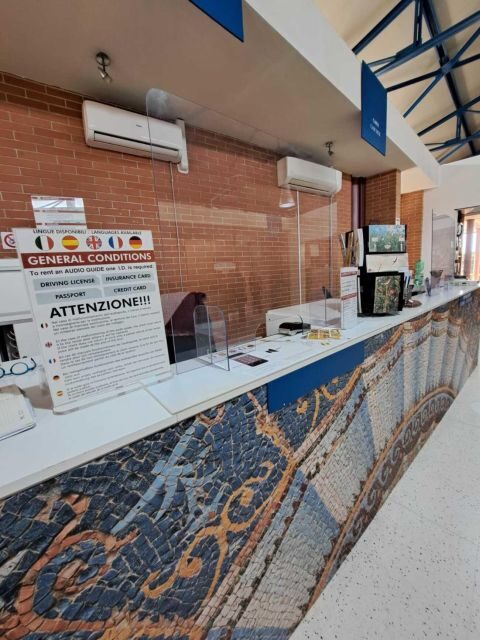
This ticket is built for independence. You pick up everything at the park entrance, where you’re instructed to look for the Audioguide Desk.
That’s simple on paper, but here’s the practical heads-up: some people find the entrance signage confusing and end up walking in the wrong direction first. So I’d do two things to save yourself stress:
- Arrive with a few extra minutes, not right on the edge of your plan.
- Have your ID ready so you can move through pickup fast.
Once you’re set, the rest is on you. There’s no guide herding you from stop to stop, which is the point of the self-guided format.
Audio guide reality: languages, site map, and listening setup
You get an audio guide included, plus a map. The guide is available in multiple languages: Italian, German, English, French, and Spanish. That’s a big deal here because the site doesn’t always explain itself at street level. When you can follow along in your language, it helps you connect the buildings, alleys, and rooms to the story being told.
What the audio guide does especially well is orientation. Several visitors noted that the device uses numbers indicated on buildings and areas of the park. Translation: you can actually follow what you’re looking at, instead of walking around wondering which building matters and why.
Now, a practical note about listening gear. Headphones aren’t included, and some audio-guide setups require you to hold the device close to your ear. One review mentioned that a device felt sensitive and could drop out when it shifted. Another said it wasn’t straightforward to pair Bluetooth headphones with the device. So if you can, bring your own small earphones and test how they work with the device at pickup—don’t wait until you’re halfway into the ruins.
Also be aware of quality variation. One review complained the audio guide didn’t work properly, and another thought the language could use updates or felt a bit high-brow. That doesn’t mean your experience will be bad, but it’s worth having a backup mindset: if the audio isn’t perfect, the site is still absolutely worth the walk.
The heart of your visit: a self-guided walk through houses, villas, and mosaics
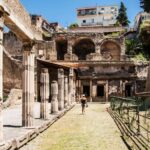
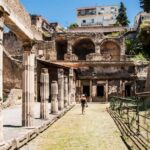
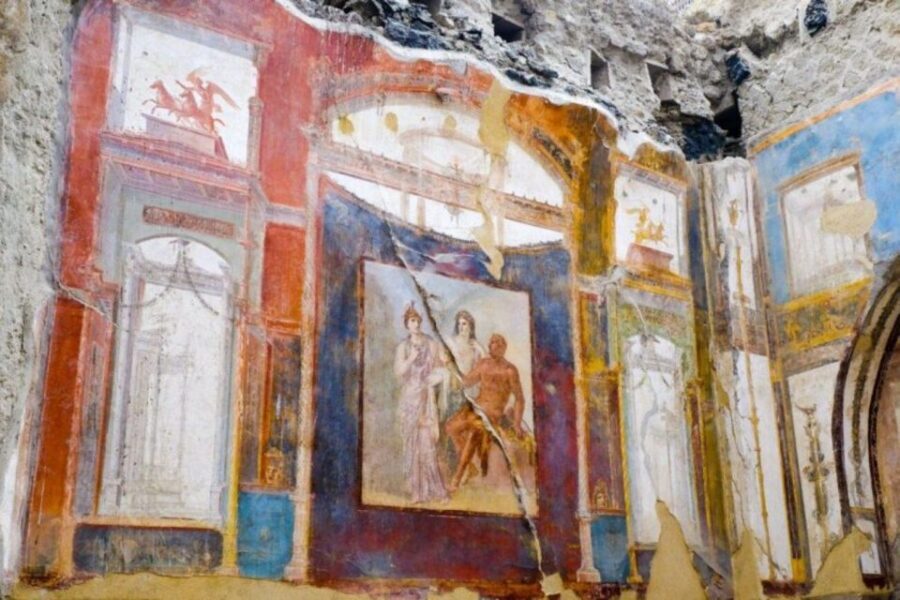
Your visit is self-guided, and the content is designed around wandering the ancient streets and alleys while stopping at key points. The ruins are from a Roman town buried by Vesuvius in 79 AD, so the “logic” of the place is physical. You’re seeing rooms and circulation patterns the way residents would have experienced them—through thresholds, courtyards, and connected spaces.
Expect to spend most of your time in:
- Well-preserved houses and villas
- Areas with mosaics
- Streets and alleys that help you understand daily movement through the town
Two things you should know about pacing. First, the park is compact, and at least one visitor completed it in about 2.5 hours. Second, if you want to see a lot and read along carefully, two hours may feel tight. The ticket is set up as a 3-hour duration, but the good news is that it’s still a “you decide” visit within opening hours, so you can slow down when something catches your eye.
Where the time can go
- The first 20–30 minutes are for orientation. If you get your bearings early, the rest of your walk feels smoother.
- When the audio guide points out numbered spots, you’ll naturally slow down at those stops. That’s where you learn the most, because the guide is tying meaning to the specific thing in front of you.
- If you’re the type who likes to pause and look closely (textures, layouts, mosaics), you’ll probably take longer than you planned.
You can also read our reviews of more tours and experiences in Ercolano

A sobering but important context
Because Herculaneum preserves more than just walls, it can feel emotionally close. That’s part of what makes the visit powerful: the site layout helps you imagine real lives, not just sightseeing photos. If you’re going on a day where you want light and fun only, this might not be the right mood. If you want something real and moving, it’s a strong choice.
Timing and logistics: plan for walking, no café, and a half-mile approach
This is a “show up, walk, listen, and wander” kind of visit, so your travel time needs to match your energy.
One review flagged a common detail: there’s about a half-mile downhill walk from the station to the site. If you’re coming by train, that matters because it’s part of your total day. Downhill is one thing; getting back up is another. Plan water and breaks accordingly.
Food and drink: vending machines, not a full café
A consistent theme is that there’s no real café or restaurant on site—only vending machines. That means you should bring your own lunch or plan to eat before you arrive. Even if you’re traveling light, at least bring a bottle of water. Don’t assume you’ll grab a proper meal once you’re inside.
Weather: it runs rain or shine
This visit takes place rain or shine, so pack for slippery stone and changeable weather. If the ground is wet, you’ll be happy you chose shoes with traction.
Is it worth paying $35 for skip-the-line plus an audio guide?
Let’s talk value, because $35 can be either a bargain or a letdown depending on how you travel.
Here’s what you’re buying:
- Skip-the-line entrance
- Audio guide
- Map
- A self-guided format (so no group schedule pressure)
If you’re the kind of person who wants to spend time in the exact places that interest you, the audio guide can be a real payoff. One visitor said the audio guide was invaluable because there’s very little information on site without it. Another mentioned that because rail options were limited (only a couple of direct trains each day), the audio guide helped them use their limited time to focus on what mattered most. That’s exactly when this combo tends to feel worth it: when your schedule is tight and you can’t afford to guess.
But there are two “watch-outs”:
- The site may be free on Sundays. One visitor reported that Herculaneum is free on Sundays and advised checking official pricing rather than relying on a third-party purchase. I can’t confirm the current rules, but I’d treat this as a real planning variable. If your dates include Sunday, it’s worth verifying before you buy.
- Audio guide issues can happen. Even good systems can have device glitches. Since headphones aren’t included and pairing may not be easy, bring your own listening plan so you’re not stuck.
Overall, for most first-timers, $35 for entrance plus a working audio guide is solid value, especially if you like independence more than guided commentary.
Who this self-guided Herculaneum ticket suits best
This package fits people who want freedom without sacrificing understanding.
You’ll probably love it if:
- You want a self-guided visit instead of being rushed by a group.
- You like learning as you go, using an audio guide instead of reading walls.
- You’re traveling with friends or family but don’t want to stick together at every stop.
- You’re visiting Herculaneum after (or before) another major stop like Pompeii or Vesuvius and need something that’s easier to time.
It may feel less ideal if:
- You strongly prefer guided commentary with a human guide answering questions.
- You know you won’t tolerate any audio-device quirks. (Some reviews mentioned devices not working properly, and at least one person found listening more awkward than expected.)
Should you book this Herculaneum skip-the-line + audio guide?

Book it if you want an efficient, independent visit where you still get context. The biggest win here is simple: you can see the ruins at your own pace while the audio guide helps you understand what you’re looking at through the site map and numbered references. For a compact park like Herculaneum, that combo turns a good walk into a meaningful visit.
Skip it or at least double-check your plan if you’re going on a Sunday and you haven’t confirmed ticket pricing rules, because there’s a possibility the site is free. And if you have specific expectations about headphones (Bluetooth pairing, for example), think about bringing your own simple earphones and testing early at the Audioguide Desk.
If you’re making room in your Campania trip for one Roman ruin site that’s easier to manage than Pompeii, this is a strong choice.
FAQ
How long does the Herculaneum visit take?
The activity duration is listed as 3 hours.
What’s included with the ticket?
You get an entry ticket for Herculaneum, an audio guide, and a map.
Is this a guided tour?
No. It’s self-guided, and a guided tour isn’t included.
Do I need to bring headphones?
Headphones are not included.
Where do I pick up the audio guide?
Go to the Entrance and look for the Audioguide Desk.
What languages are available for the audio guide?
The audio guide is available in Italian, German, English, French, and Spanish.
What ID do I need for the audio guide?
You’ll need a valid passport, identity card, or driving licence for audio guide hire.
Does the visit happen in bad weather?
Yes, it takes place rain or shine.