REVIEW · POMPEII ARCHAEOLOGICAL SITE
Pompeii: Skip-the-Line Guided Archaeological Discovery Tour
Book on GetYourGuide →Operated by Towns of Italy · Bookable on GetYourGuide
Pompeii is easier when you skip the fight. This guided visit focuses on the moments that make Pompeii feel human: daily routines, political life, and the homes of people who lived right here before Vesuvius. I like the fact that an archaeologist guide leads the walk, not just a general storyteller. That expert lens helps you notice what you’d otherwise miss in plain sight.
Two details really sealed it for me: small-group attention (earphones are included for groups up to 5) and the promise that the tour stays in English or Spanish only, so the narration stays clear and consistent. The route also hits the major areas without turning the whole visit into a sprint. My only real watch-out is this: even with the skip-the-line ticket, there’s still a compulsory security check, so entry may not be instant.
In This Review
- Key Things to Know Before You Go
- A 2-Hour Pompeii Plan That Feels Like More Than Ticket-Collecting
- Entering Pompeii From Piazza Esedra: Meeting Point Math
- The Reality of Skip-the-Line: Priority Entry Still Has a Security Step
- Stop-by-Stop: What You’ll See and Why It Matters
- Garden of the Fugitives: Fast Photo Stop, Strong Atmosphere
- Forum Baths: A Peek Into Daily Rhythm
- Amphitheater: Public Entertainment in Stone
- Lupanare: A Content Note, and a Historical One
- House of the Vettii: Elite Life and Preserved Detail
- Vetutius Placidus House and the Thermopolium: Food, Walls, and Everyday Life
- The Grand Theater, the Forum, and the “Read the City” Approach
- What I’d Pack (So the Tour Doesn’t Get Annoying)
- Price and Value: Why $42.19 Can Make Sense Here
- Who This Tour Fits Best (And Who Might Want to Rethink It)
- Quick Notes on Language and Group Experience
- Should You Book This Pompeii Skip-the-Line Tour?
- FAQ
- How long is the Pompeii skip-the-line guided tour?
- Where do I meet the guide?
- What’s included in the ticket?
- What do I need to bring or show?
- Is there still a security check even with skip-the-line?
- What items are not allowed during the tour?
Key Things to Know Before You Go
- Skip-the-line express entry helps you beat the biggest entry bottlenecks
- Archaeologist-led explanations give you better context for what you see
- Small groups with included earphones keep details audible
- All-weather operation with a set 2-hour pacing across key sites
- Strict practical rules (ID required, dress code, bag limits) affect how smoothly you start
A 2-Hour Pompeii Plan That Feels Like More Than Ticket-Collecting
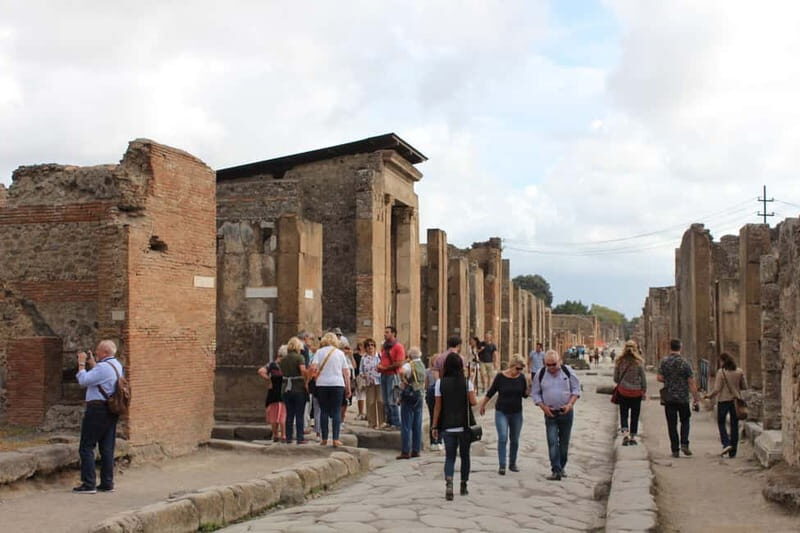
Pompeii can be overwhelming fast. Streets are everywhere, doorways repeat, and it’s easy to get lost in the scale of it. This tour is built around a simple idea: take you through the parts most people want to see, but connect them with real archaeological interpretation along the way.
You’re walking for about two hours, and the focus is on major highlights rather than trying to cover every corner of the site. That pacing matters. In a place this large, a good plan turns Pompeii from a checklist into something you actually remember.
The big “why” for me is the guide. An archaeologist doesn’t just point at ruins—they help you read them. You’ll get explanations tied to daily life, social status, and how the city functioned at the height of Roman civilization.
You can also read our reviews of more guided tours in Pompeii Archaeological Site

Entering Pompeii From Piazza Esedra: Meeting Point Math
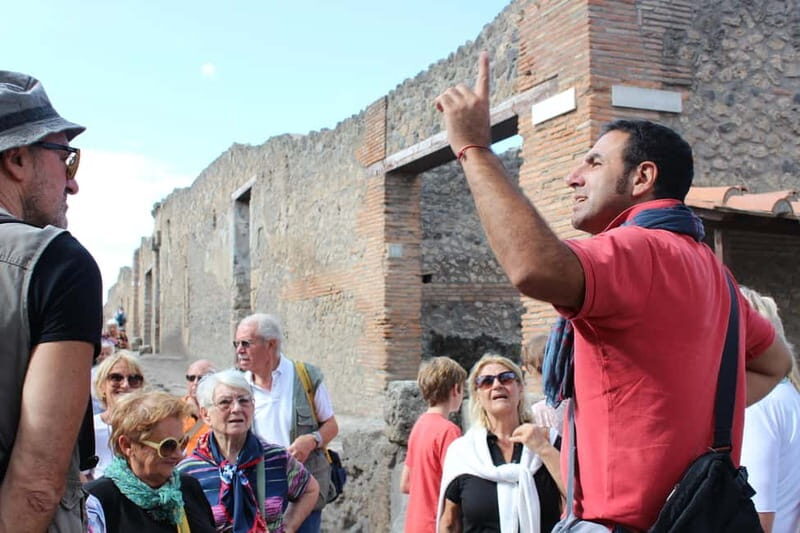
Your tour starts at Piazza Esedra, and you meet the guide at the Towns of Italy–Vox Kiosk, right next to Coffeeshop Vittoria. Arrive at least 15 minutes early. Latecomers can’t join, and refunds aren’t provided for that.
That “arrive early” advice sounds basic, but it’s the kind of thing that quietly protects your day. Pompeii has its own rhythm: security, lines, and the general chaos of lots of people trying to start at the same time. If you show up late, you lose the best part—being there before the tour gets fully moving.
The Reality of Skip-the-Line: Priority Entry Still Has a Security Step
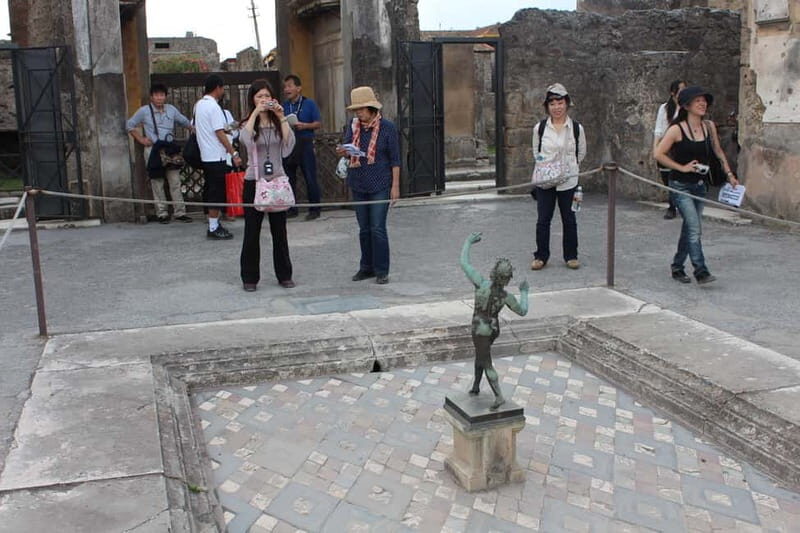
This tour includes skip-the-line guided archaeological entry with an express security check. Still, plan for a compulsory security check even after the priority part. In other words: you’ll likely save time versus general entry, but you shouldn’t assume you’ll walk straight in like it’s a private museum.
If you want the smoothest start, bring what you need and keep your bag situation tidy. You’ll be asked for an ID or passport, and large bags aren’t allowed (bags must be within 30x30x15 cm). Anything outside the limit goes into the clockroom, so it’s worth packing light.
Stop-by-Stop: What You’ll See and Why It Matters
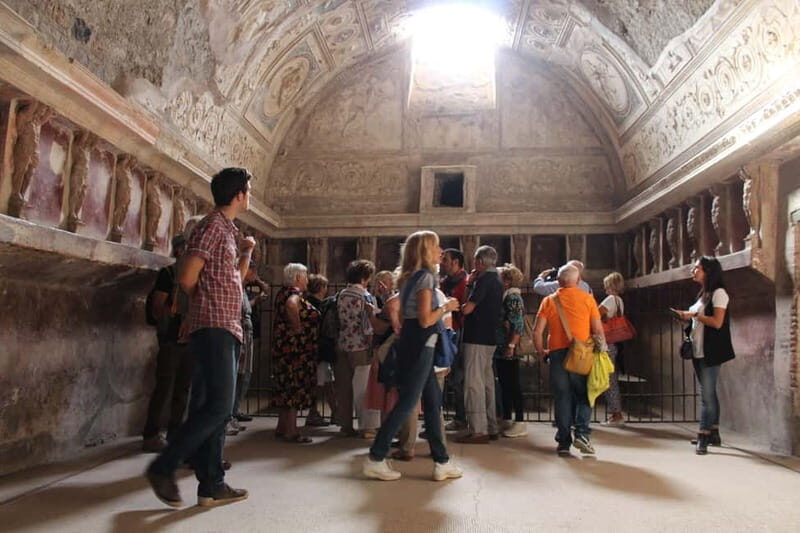
The itinerary is timed, but it’s not just a run through photo spots. Each stop is there because it teaches you something about Pompeii’s layout, class differences, and everyday life.
Garden of the Fugitives: Fast Photo Stop, Strong Atmosphere
You’ll pause at the Garden of the Fugitives for a brief guided look and a short photo break. This is one of those Pompeii moments where the setting hits you even if you only get a few minutes. In a short stop like this, you’re usually learning how to place what you’re seeing in the broader story of the city—what happened, and how archaeologists understand the space.
Why it’s worth your time: even a quick stop here helps you mentally reset. After you understand the setting, the next streets and buildings start to make more sense.
You can also read our reviews of more tours and experiences in Pompeii Archaeological Site



Forum Baths: A Peek Into Daily Rhythm
Next comes the Forum Baths, with a photo stop and guided explanation. Baths weren’t just about cleanliness. They were social spaces, part of how people spent time and interacted.
Even if you’re not a “bath” person, this kind of stop is useful because it shows you Pompeii’s public life. It helps you understand the city wasn’t only temples and villas—it was routine.
Quick practical note: the Roman world can be hard to picture without context. The guide’s job here is to help you place the space in your mind.
Amphitheater: Public Entertainment in Stone
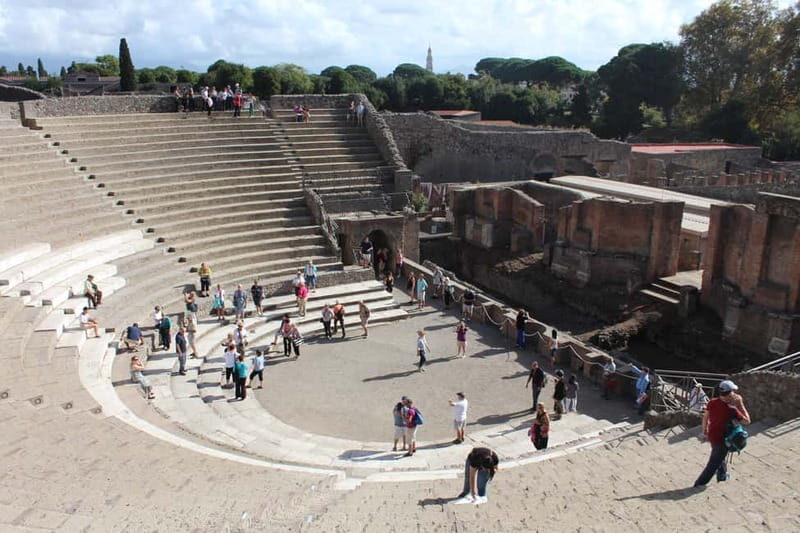
You’ll get another short stop at the Amphitheater of Pompeii. This is one of the best places to grasp how public entertainment worked in a city like this.
In a timed tour, the amphitheater is a smart choice. From a few angles, you can connect size and layout to the idea of crowd energy—people gathering for spectacle, guided by social status and local identity.
Lupanare: A Content Note, and a Historical One
The Lupanare is included, with a guided visit and a longer photo stop. The tour also mentions an erotic art collection as part of the broader experience, so be aware that this is not a “family only” style tour.
That said, it’s also historically important. Pompeii didn’t hide what people talked about or what existed in everyday life, and the guide’s archaeologist framing matters here. You’ll see these features in context rather than as shock value.
If you’re sensitive to sexual or adult-themed content, you may want to decide how you feel about including this stop before booking.
House of the Vettii: Elite Life and Preserved Detail
This is one of the standout home stops: the House of the Vettii, with a guided visit and time to look closely (about 10 minutes).
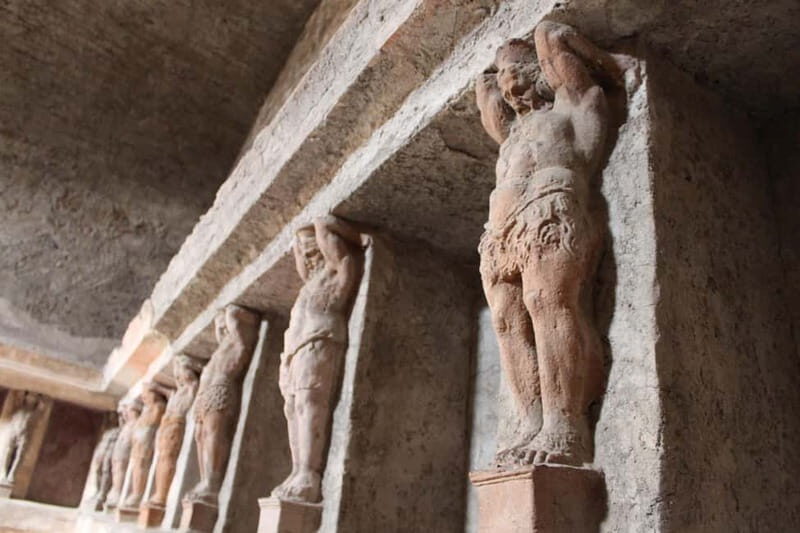
The value here is that elite residences are where Pompeii shows its “social meaning.” Frescoes, rooms, and the overall feel of the home tell you about taste, status, and how wealthy families represented themselves. The guide helps you connect those details to what archaeologists can actually infer from the evidence.
If you love architecture and art—especially frescoes—this stop is the kind you’ll remember later when you think of Pompeii as more than ruins.
Vetutius Placidus House and the Thermopolium: Food, Walls, and Everyday Life
The final main stop is the Vetutius Placidus House and Thermopolium. You’ll get guided interpretation and a chance to see Roman “fast-food” style spaces—thermopolia were places where people bought ready-made food and drink.
This is where Pompeii turns human. It’s the daily-life angle: not just what people believed, but what they ate, where they gathered, and what the commercial spaces looked like. A well-timed tour gets this right, and this one does by pairing a household stop with a food-serving stop.
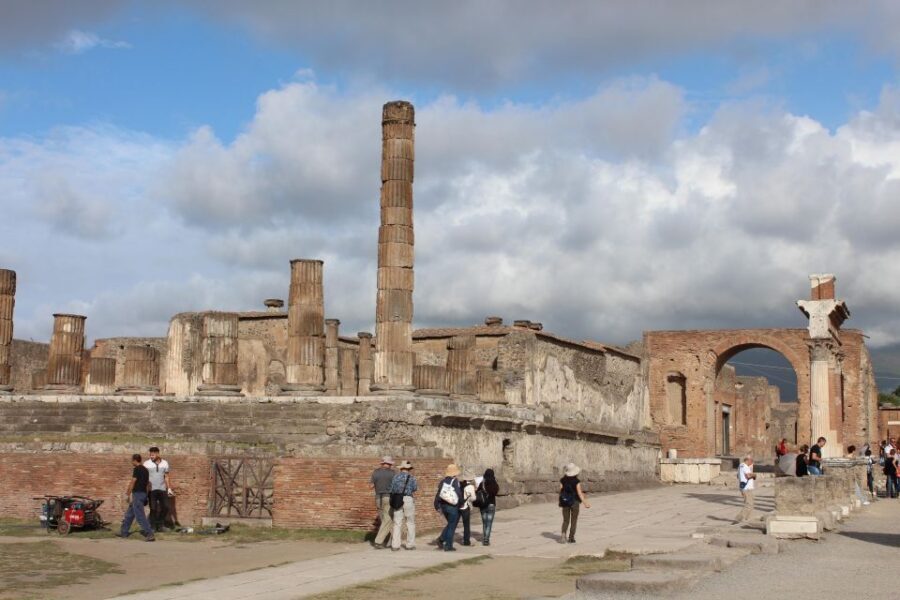
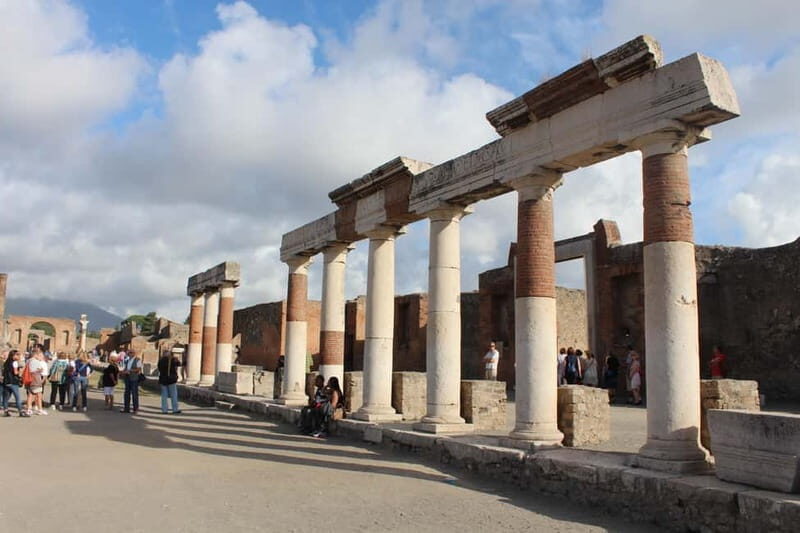
You’ll also be exposed to other major highlights across the route, including the Forum (political and social heart) and moving plaster casts connected to Vesuvius victims. Those elements help the city connect back to the tragedy that ended it—without turning the visit into pure gloom.
The Grand Theater, the Forum, and the “Read the City” Approach
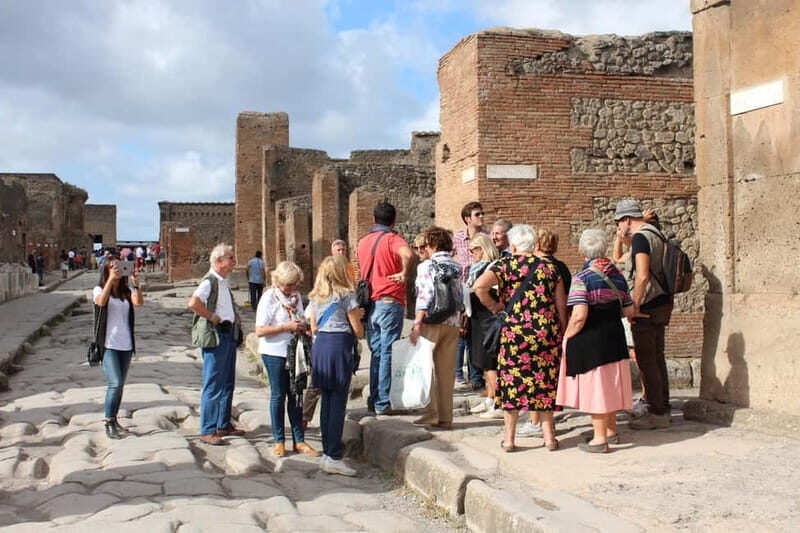
Beyond the listed quick stops, the tour is designed to include major elements like the Grand Theater (Teatro Grande), the Forum, and multiple daily-life scenes such as the thermopolia. It also includes plaster casts related to the Vesuvius victims and an erotic art collection.
What that means for you: you’re not only seeing impressive structures—you’re learning how Pompeii worked as a full city. Theater for public culture, the Forum for politics and social life, baths and food spaces for daily routine, and elite villas for class and display.
That mix is part of why an archaeologist guide is so valuable here. Without that guidance, it’s easy to see buildings as isolated attractions. With it, you start connecting the dots.
What I’d Pack (So the Tour Doesn’t Get Annoying)
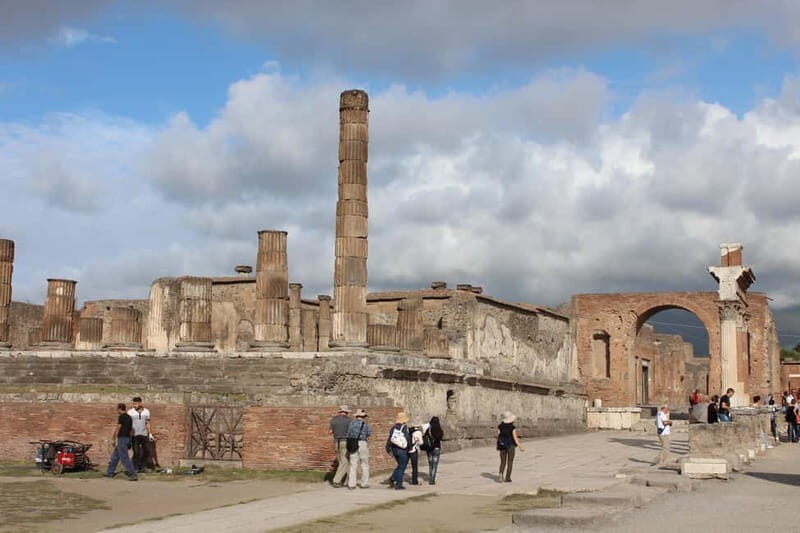
This experience is straightforward, but Pompeii is strict. A few things matter:
- Bring your passport or ID card
- Wear good walking shoes. No flip-flops
- Consider a hat and sunscreen
- Keep bags within 30x30x15 cm to avoid issues at security
- Follow the dress code for the Pompeii Archaeological Park (no shirtless or disrespectful clothing). Entry can be refused if you don’t comply
Also: the tour includes earphones for groups up to 5, which is great for hearing details clearly. But it also means you should plan to keep your attention on the guide and the ruins, not your phone.
No pets are allowed, and drones or other professional audio/optical gear aren’t permitted. So if you’ve got camera gear meant for serious production, this may not be the right time to use it.
Price and Value: Why $42.19 Can Make Sense Here
At about $42.19 per person for a 2-hour guided experience, this isn’t “cheap,” but it also isn’t trying to be. What you’re paying for is the combination that helps Pompeii run smoothly:
- Skip-the-line access (priority entry and express security)
- An archaeologist guide with interpretive explanations
- Small-group earphones for up to 5 people
- Coverage of major sites across the city’s core highlights
For Pompeii, time is the real currency. If you’ve ever fought crowds at entry or wandered without context, you know how quickly the day can slip away. This tour is designed to buy you clarity and momentum in the same package.
Food and drinks aren’t included, so budget for that separately. But the trade-off is that you spend more of your paid time inside the ruins with an expert guide.
Who This Tour Fits Best (And Who Might Want to Rethink It)
You’ll likely enjoy this tour if you:
- care about archaeology-based explanations
- want a guided framework for Pompeii’s major highlights
- like small groups and clear narration
- plan to walk and can handle uneven, outdoor surfaces
It’s not suitable for people with back problems, mobility impairments, heart problems, or wheelchair users. That’s important for deciding early. Even with a guide, Pompeii involves walking and long periods outdoors.
If you’re traveling with adult content sensitivity, the Lupanare and erotic art collection may affect your comfort level.
Quick Notes on Language and Group Experience
The tour is monolingual to preserve quality—offered in English or Spanish. That’s a plus for comprehension. You’re not switching between languages mid-stream, and the guide’s pacing can stay consistent.
Earphones are included for groups of max 5, so you’re not stuck straining to hear. This is especially helpful in outdoor ruins where sound carries poorly and people can drift.
Should You Book This Pompeii Skip-the-Line Tour?
I’d book this if you want Pompeii guided by an archaeologist, with small-group support and a route that targets the big “you should see this” sites without turning your day into wandering. The skip-the-line part helps, but the real value is interpretive guidance—learning what you’re looking at and why it matters.
I wouldn’t book it if you can’t manage longer walks, or if the strict dress code and security rules feel like they’d stress you out. And if adult-themed content is a hard no for you, the Lupanare and erotic art stop may not be your style.
If you’re the kind of traveler who likes to understand places instead of just photographing them, this tour is a strong match.
FAQ
How long is the Pompeii skip-the-line guided tour?
The tour lasts 2 hours.
Where do I meet the guide?
Meet at the Towns of Italy–Vox Kiosk at Piazza Esedra (next to Coffeeshop Vittoria). The activity ends back at the meeting point.
What’s included in the ticket?
Included are skip-the-line Pompeii ruin ticket access, a professional archaeologist guide, earphones for groups up to 5, and a monolingual tour in English or Spanish.
What do I need to bring or show?
You should bring a passport or ID card. Comfortable walking shoes are strongly suggested, and you may also want a hat and sunscreen.
Is there still a security check even with skip-the-line?
Yes. Even with skip-the-line entrance, there is a compulsory security check that may cause some delays.
What items are not allowed during the tour?
Pets are not allowed. Large bags aren’t allowed (max 30x30x15 cm) and must be deposited in the clockroom. Professional optical and audio equipment is not allowed, and drones are not permitted.