REVIEW · 2-HOUR EXPERIENCES
2-Hour Private Walking Tour of Pompeii
Book on GetYourGuide →Operated by Leisure Italy · Bookable on GetYourGuide
Pompeii rewards slow looking. In just two hours, you’ll walk the basalt streets and see how a Roman town worked day to day, not just what survived the eruption. I love the private guide format because it turns scattered ruins into a clear story, and I love the gritty, practical details like the street design and the Roman “fast-food” bakery stops. One possible drawback: this is a lot of walking on uneven, ancient surfaces, so comfortable shoes and a realistic pace matter.
The best part is that you don’t spend your time stuck in lines or guessing what you’re looking at. You get skip-the-line tickets through the city walls, and your guide chooses stops that match your interests and physical ability, with at least one example from each building type. If you want a quick photo-only sweep, this may feel a bit structured; if you want meaning, you’ll eat it up.
In This Review
- Key Pompeii moments you’ll actually remember
- Pompeii hits different when a guide sets the pace
- Where to meet: Café Hortus Pompeii at the park entrance
- Walking the original basalt road and spotting the torchlight tricks
- The Forum: Temple of Apollo, Capitolium, Emperor, and the Basilica
- Markets, villas, baths, taverns, and shops: Pompeii’s real daily rhythm
- The human casts: when the city becomes painfully specific
- Bakeries and carbonized loaves: the Roman fast-food moment
- The Red Light District frescoes and the reality of public art
- Choosing between Pompeii’s three theaters
- Private guide tailoring: how your pace shapes what you see
- Price and time: what you’re really paying for at $175.22
- Who this Pompeii tour suits best
- Should you book a 2-hour private Pompeii walk?
- FAQ
- How long is the 2-hour private walking tour?
- Where do I meet the guide?
- What’s the group size?
- Do I need to skip the ticket line?
- What languages are available for the live guide?
- What sites will I see during the walk?
- Is the tour wheelchair accessible?
- What should I wear?
- Do I need to provide my name for tickets?
- Is entry free on the first Sunday of each month?
Key Pompeii moments you’ll actually remember
- Basalt street engineering: you’ll walk the original road with basalt blocks and travertine torch-light reflectors
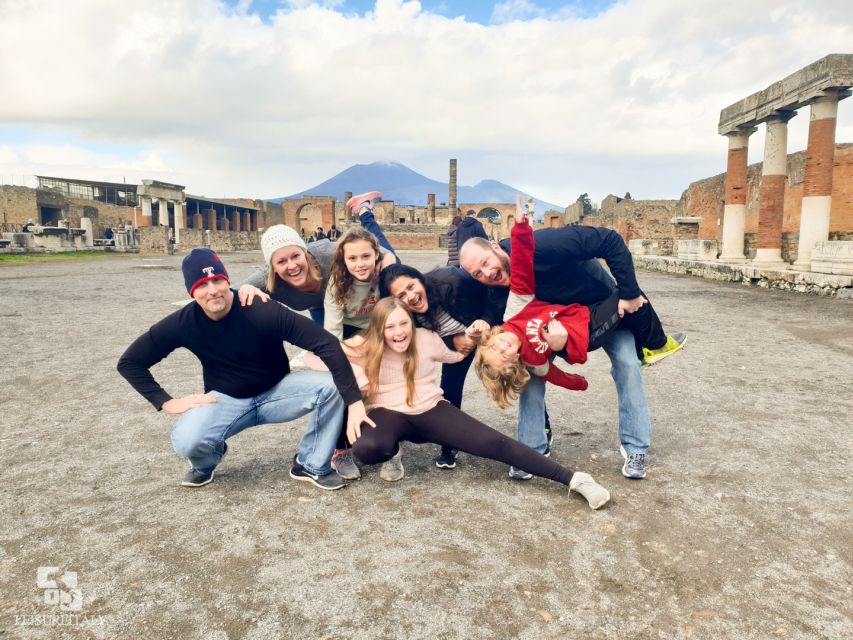
- Forum landmarks in context: Temple of Apollo, Capitolium, Temple of the Emperor, and the Basilica explained in plain terms
- Macellum and everyday commerce: a market-like stop that shows Roman shopping and eating rhythms
- Bakeries like Roman fast food: carbonized loaves and the idea of grab-and-go meals
- Three theaters, one smart choice: you’ll visit the arena, indoor theater, or outdoor theater depending on the day’s flow
Pompeii hits different when a guide sets the pace
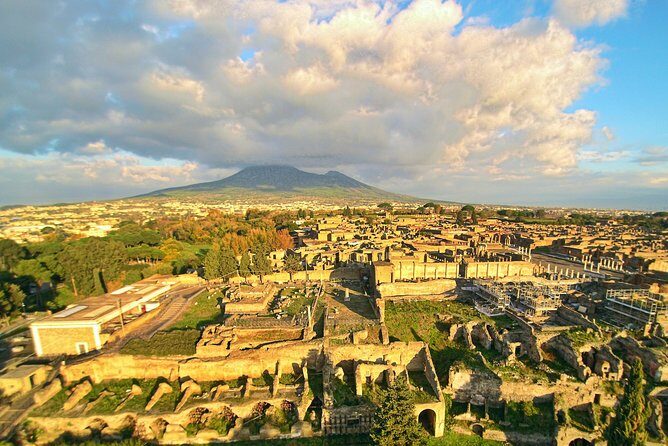
Pompeii is the rare kind of site that feels both enormous and weirdly personal. You’re looking at rooms, streets, and storefronts that were meant for real people who argued, shopped, ate, performed, and relaxed—then got frozen in the same moment. With a private walking format, the ruins stop being a collection of rocks and start being a workable town plan.
I also like that the tour is short enough to stay sharp. Two hours means you can move between major areas without burning the day, especially if you’re seeing other places in Campania. And because tickets are skip-the-line, you can spend more time on the ground and less time waiting.
Where to meet: Café Hortus Pompeii at the park entrance
Your tour starts at Café Hortus Pompeii, in front of the entrance at Via Villa dei Misteri 2, at the Pompeii Archaeological Park. Plan to arrive a few minutes early so you’re not rushed when the guide is matching you to the right tickets.
This is a walking tour, so your first job is simple: wear shoes you can trust. The day-to-day surfaces are uneven, and you’ll be stepping around ancient edges and small changes in elevation. If you’re the type who trips on cobblestones at home, this will ask more of you.
Walking the original basalt road and spotting the torchlight tricks
One of my favorite ways to understand a ruin is to walk its streets, not just stand in front of walls. Here, you’ll go along the original basalt road made from volcanic rock. This matters because Pompeii wasn’t built for tourists; it was built for feet, carts, and daily weather.
Your guide will point out little details that make the space feel engineered: you’ll notice hundreds of small white travertine spots used to reflect torch light. That’s a small thing, but it’s huge for your brain—suddenly nighttime life is not a guess. You’ll also see big blocks of basalt emerging from the road, used by pedestrians to avoid getting wet when it rained.
If you like “how did they live” questions, this street segment is a payoff you’ll feel all day. Even if you never become an architecture person, you’ll start seeing Pompeii as a working system.
The Forum: Temple of Apollo, Capitolium, Emperor, and the Basilica
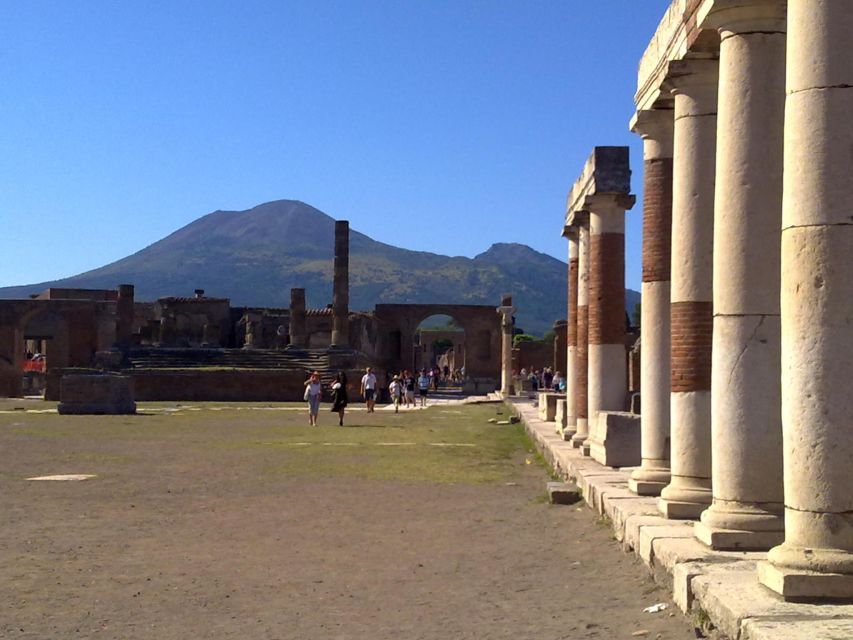
After you get oriented on the street level, the tour moves toward civic power—the Forum, the city center for religion, trade, administration, and politics. This is where your guide’s job becomes really important: these buildings can look similar if you’re just scanning. With a private guide, you get the difference between what’s ceremonial, what’s administrative, and what’s meant for gathering.
You’ll admire key landmarks such as the Temple of Apollo, the Capitolium, the Temple of the Emperor, and the Basilica. Each stop is a chance to understand how Roman cities ran on ritual and rules, not just monuments. You’ll also learn how the Forum connects to everyday life—because religion and government weren’t distant concepts. They were right in the middle of the town’s traffic.
A practical tip: give yourself permission to pause. The Forum areas can feel busy even when you’re not surrounded by crowds, and it’s easy to sprint to the next ruin. Take 30 seconds at each main building to look at what faces where. That’s how the space clicks.
Markets, villas, baths, taverns, and shops: Pompeii’s real daily rhythm
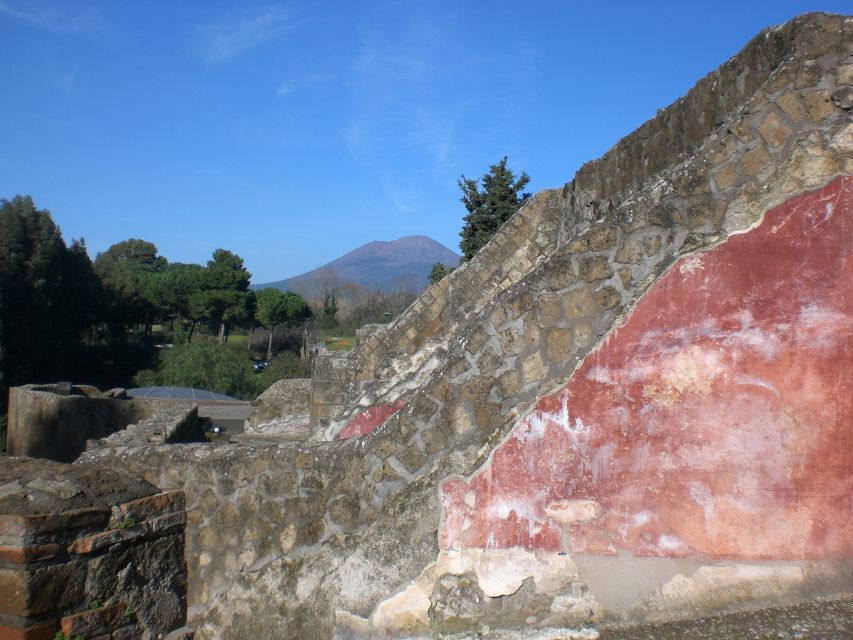
Pompeii isn’t only about big temples. It’s also about ordinary routines, and the best parts to visit for that are the everyday building types. Your tour aims to take in at least one example of each, so you’re not stuck with just one theme.
You’ll encounter the kinds of places where people ate, shopped, and did business—like taverns and shops—and you’ll see the public baths area. Baths in Pompeii are a great anchor because they show social life in stone: people didn’t just wash, they talked, relaxed, and caught up.
You’ll also visit the Macellum market, the Roman equivalent of a place where you’d grab ingredients and ready-made food. Even if your guide doesn’t “roleplay” the scene, you can still picture the flow: arrivals, browsing, buying, and eating. That’s the power of a short guided walk—your guide hands you a map for imagining the human day.
One caution: because the itinerary is flexible, the exact order may change based on your interests and physical ability. You might get the Forum first or pick a different street path, but the key categories are built in.
The human casts: when the city becomes painfully specific
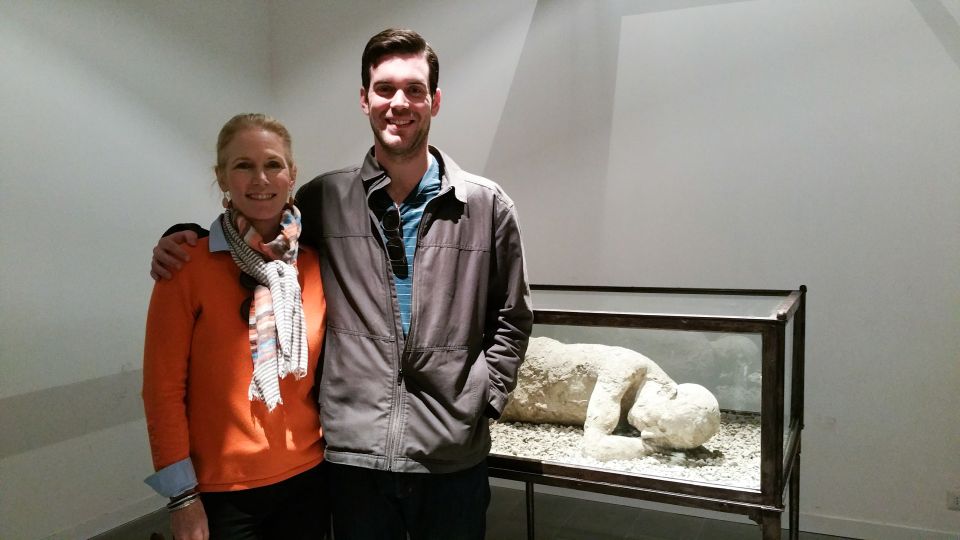
Pompeii has a special kind of shock: the human casts show residents caught by the eruption in the exact pose they died in. Standing near these casts can feel heavy in a way ruins usually don’t.
I like that the tour includes this, because it prevents Pompeii from turning into a purely aesthetic experience. You’ll see the result of tragedy in a form that makes it hard to detach. Just be ready for the mood. If you’re sensitive to this kind of material, you may want to pace yourself and take breaks as you move between sections.
Bakeries and carbonized loaves: the Roman fast-food moment
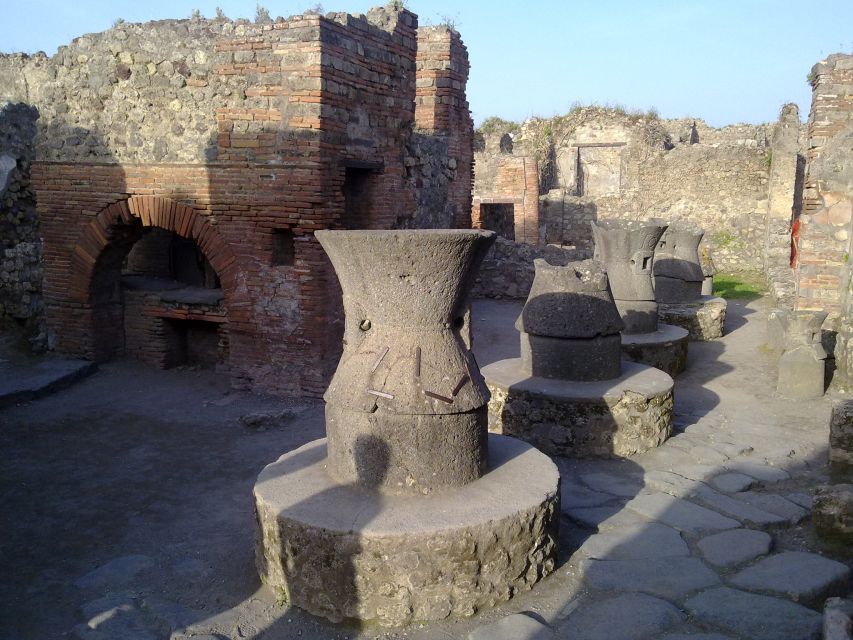
After the emotional weight of the casts, Pompeii brings you back to practical life. One of the tour’s most memorable stops is a visit to one of Pompeii’s bakeries.
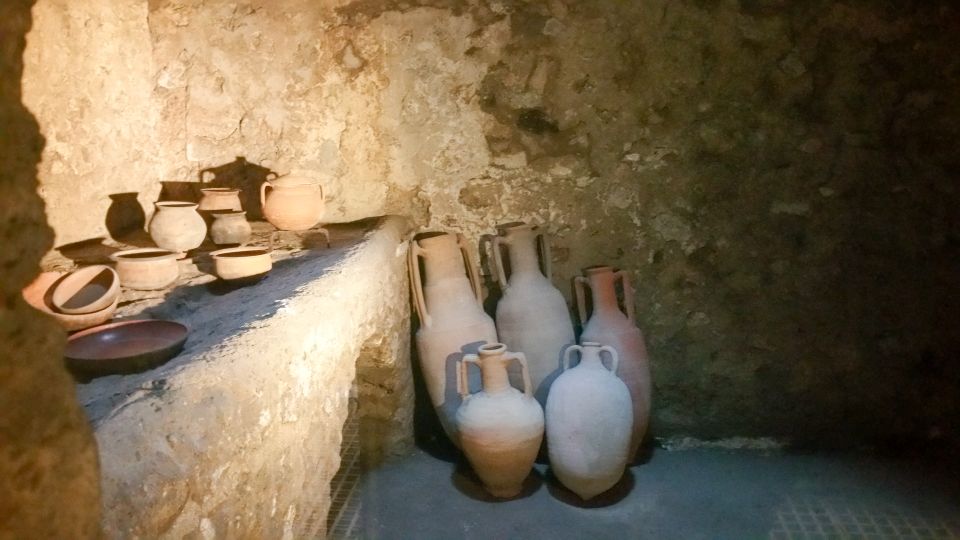
Here’s where the site gets fun in a very real way: carbonized loaves of bread were found during excavations, and the guide uses that evidence to explain how bread production worked. You’ll also get what you might call the Roman version of fast food—something you could buy quickly and eat without turning the moment into a long sit-down event.
Even if your own diet has moved on from Roman bread, this stop gives you something tangible: food technology, daily hunger, and the rhythm of cooking for a city full of people. The bakery theme is a smart choice for a 2-hour tour because it’s easy to connect to your own life.
The Red Light District frescoes and the reality of public art
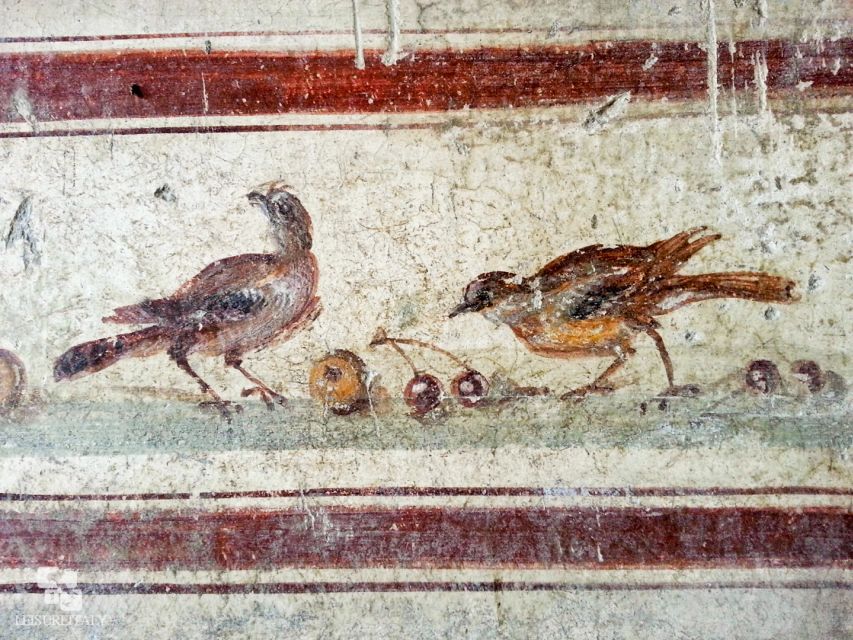
Pompeii also included art that modern visitors sometimes find surprising, including a former area associated with erotic frescoes. On this tour, you’ll continue to that part of town to see Roman frescoes of erotic images.
This isn’t “behind the scenes.” It’s part of how Pompeii communicated in public spaces. If you’re traveling with someone who dislikes explicit imagery, you might want to give them a heads-up before you arrive at that segment. The guide can also help you frame what you’re seeing in context, so it doesn’t feel random.
I find that these frescoes—handled thoughtfully—make Pompeii feel less like a museum and more like a town where people expressed themselves in many ways, including through bold visual messages.
Choosing between Pompeii’s three theaters
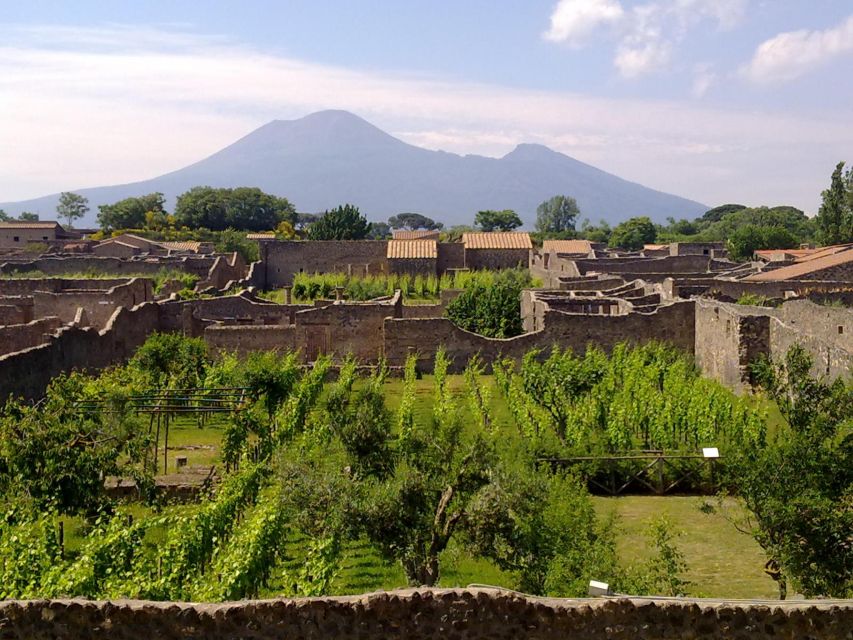
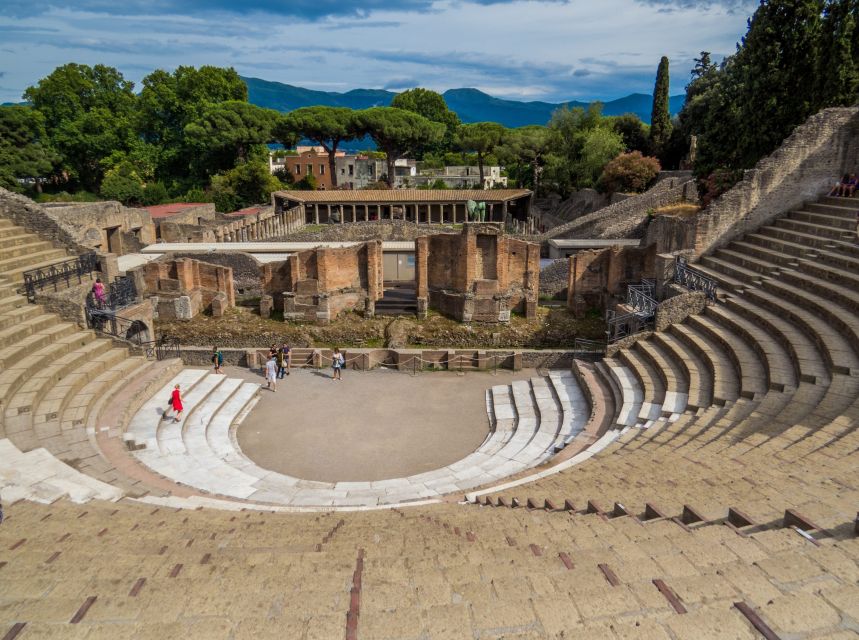
Pompeii’s theaters are a great way to finish because they show entertainment and culture in action. On your tour, you’ll visit one of three theaters, depending on how the day unfolds and what best fits the route.
You might go to the outdoor arena for public performances, the indoor theater for mime and poetry, or the outdoor theater for tragedies and comedies. The key value here is the comparison: different performance spaces imply different audiences and different kinds of spectacle.
If you enjoy live-performance history, this is a strong stop. If you’re more into everyday life, the theater visit still works because it shows how leisure and art sat beside commerce and religion.
Private guide tailoring: how your pace shapes what you see
This tour is built around a simple promise: a private guide for you, with a small group limited to 10 participants. In practice, that means you can ask questions without shouting, and your guide can slow down when you need a moment to absorb something.
The itinerary is flexible based on your interests and physical ability. That flexibility is not just comfort—it’s also smart sightseeing. If you care more about the Forum and temples, your guide can give those areas more attention. If you’re more drawn to food and daily life, you’ll spend more time around the bakery and market-type stops.
Languages available include Spanish, English, French, and Italian, which is genuinely useful in Pompeii where quick explanations help you read the ruins better. Clear language turns stones into sense.
About accessibility: the activity is listed as not suitable for wheelchair users and not suitable for people with mobility impairments. Still, I’d treat that as a signal to expect challenges, not an automatic no for every scenario. One review noted the guide adapted for a participant using a wheelchair over longer stretches, which suggests some adjustment is possible—but you should plan for uneven ground and lots of walking.
Price and time: what you’re really paying for at $175.22
At $175.22 per person for a 2-hour private walking tour, you’re not paying for “more ruins.” You’re paying for speed, focus, and a human translator for the site.
Here’s why it can be good value:
- You get skip-the-line tickets that allow access across all areas within the city walls, so you’re using your sightseeing time efficiently.
- You get a live guide who can point out details like the travertine torch reflectors and the basilica/Forum logic, which is hard to do alone.
- You get a small group experience, which usually means less waiting and less time lost to crowd pressure.
The main cost consideration is time. Two hours is great for a first hit, but it won’t feel like you covered the entire park. If you want to linger for a long sit-down lunch, revisit museum rooms, or keep circling your favorite building, you may want extra time in Pompeii after the tour.
Who this Pompeii tour suits best
This is a solid choice if you:
- want a guided overview that covers major building types without getting lost
- enjoy concrete details like streets, markets, and bakeries—places tied to daily life
- prefer a short, efficient Pompeii plan
- appreciate a private style of Q&A and pacing
It may be less ideal if you:
- need a mostly seated or low-movement experience
- dislike any chance of encountering erotic imagery in public frescoes
- want a completely free-form visit with no structure at all
Should you book a 2-hour private Pompeii walk?
Yes, if you want Pompeii to feel understandable fast. The blend of Forum landmarks, everyday stops (baths, market, taverns/shops), a bakery-food segment, and a theater finish is a smart way to build a mental picture in only two hours. The skip-the-line ticket access helps you arrive at the ruins with energy.
I’d say book it now—then plan to add extra time only if you find yourself obsessed with one area. Pompeii has that effect.
FAQ
How long is the 2-hour private walking tour?
It lasts 2 hours, so you’ll want to plan your day around that focused time window.
Where do I meet the guide?
Meet your guide at Café Hortus Pompeii, in front of the entrance at Via Villa dei Misteri 2, Pompeii Archaeological Park.
What’s the group size?
The group is limited to 10 participants.
Do I need to skip the ticket line?
Yes. The tour includes skip-the-line tickets (Pompeii Express) so you can visit areas within the city walls without waiting in the main ticket line.
What languages are available for the live guide?
The guide is available in Spanish, English, French, and Italian.
What sites will I see during the walk?
You’ll see key Pompeii ruins including the Forum area (with highlights such as the Temple of Apollo, Capitolium, Temple of the Emperor, and the Basilica), a basalt street segment, bakeries, market buildings like the Macellum, human casts, erotic frescoes in a former red light district area, and one of Pompeii’s three theaters.
Is the tour wheelchair accessible?
It is listed as not suitable for wheelchair users and not suitable for people with mobility impairments.
What should I wear?
Wear comfortable shoes. Pompeii involves walking on uneven, ancient surfaces.
Do I need to provide my name for tickets?
Yes. You must provide the full names of all participants because they are required for the tickets.
Is entry free on the first Sunday of each month?
Entrance is free of charge on the first Sunday of each month, but tickets can’t be reserved ahead of time, so entry is not guaranteed.