REVIEW · POMPEII ARCHAEOLOGICAL SITE
Pompeii: Skip-the-Line Tickets and Tour with Archaeologist
Book on GetYourGuide →Operated by Raphael Tours & Events · Bookable on GetYourGuide
Pompeii starts making sense fast. This small-group tour uses skip-the-line access and an archaeologist-led route to turn a huge, confusing site into a story you can follow street by street. I like the immediate entry (so you spend more time inside and less time waiting) and the way your guide connects ruins to daily Roman routines, down to market life and how people actually ate and trained. The main catch: the tour is only about 2 hours, so if you want to linger in every corner, you’ll still need extra time on your own after.
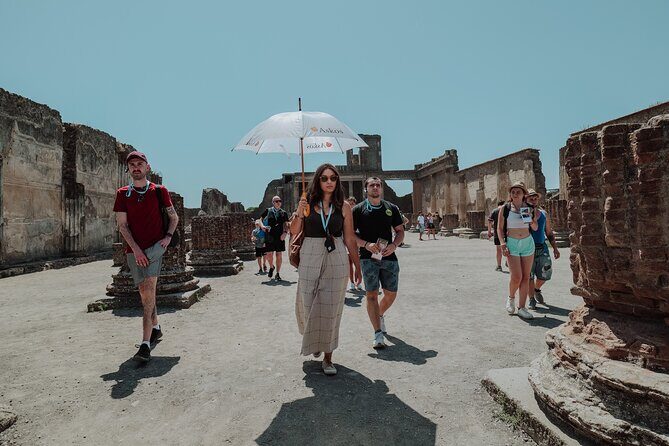
You’ll meet at the entrance area by Coffee Shop Vittoria, near Porta Marina Inferiore, and then head straight into the archaeological zone. Many groups are set up so you can hear the guide clearly (some visitors note headsets), which helps if the site is busy. One more consideration: this is walking-focused, and there are restrictions like no strollers and no large bags.
If you’re doing Pompeii for the first time, this tour is a smart way to get your bearings. You’ll walk on original volcanic stone pavement and get context for big zones like the Forum and the market, plus vivid descriptions that make places feel like they’re still used—gyms, dining rooms, bakeries, and more.
Key highlights at a glance
- Skip-the-line entry through a separate entrance so you start faster
- Archaeologist storytelling that ties buildings to everyday Roman life
- Original street pavement that makes walking feel real, not imagined
- Forum and market context so the ruins connect to power and politics
- Small-group pacing with room for questions and photos
- Family-friendly energy when guides bring the city to life with humor
In This Review
- Why skip-the-line matters more at Pompeii than anywhere else
- Meeting at Coffee Shop Vittoria near Porta Marina Inferiore
- The 2-hour route: streets, pavement, and daily Roman routines
- What you’ll walk through (and why it’s the right order)
- Forum and market stops that make politics and commerce click
- Bakeries, baths, villas: using ruins to understand real daily life
- A reality check: you may not see every famous structure
- Gymnasium and triclinium storytelling you can almost smell
- Small-group benefits (and why headsets can help)
- What’s included in the $105 ticket price (and where you’ll spend extra)
- Value: why $105 can be a good deal
- What to budget for
- Practical stuff before you go: what to bring and what to avoid
- How long is enough at Pompeii: the best way to pair this tour with free time
- Who should book this Pompeii skip-the-line archaeologist tour?
- Should you book? My take
- FAQ
- Where do I meet the guide?
- How long is the tour?
- Is skip-the-line access included?
- What’s included in the price?
- What should I bring, and what isn’t allowed?
- Can I cancel?
Why skip-the-line matters more at Pompeii than anywhere else
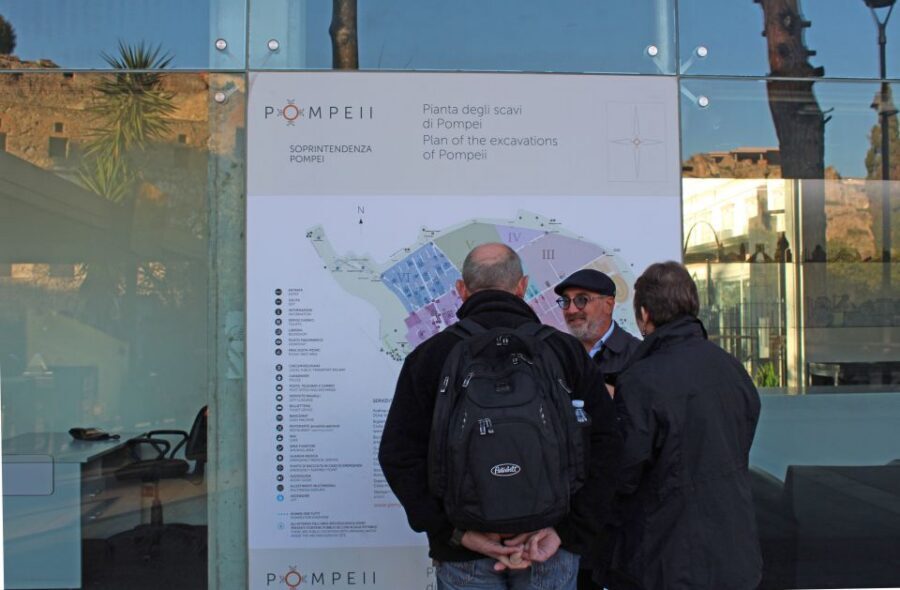
Pompeii is huge. Even with good planning, you can lose a lot of time just moving through crowds, then scramble to see the “big” sites before you’re exhausted. The value of this tour is that you trade waiting for walking—and that changes everything.
With skip-the-line access, you don’t just save minutes. You also avoid the “end-of-day shuffle” where your brain is too tired to absorb what you’re seeing. By getting in quickly, you’re more likely to remember details—like what you’re looking at and why it matters—because you’re not rushing.
The other upside: fewer people in your immediate orbit at the start. That makes it easier for an archaeologist guide to manage the group and keep explanations clear.
Meeting at Coffee Shop Vittoria near Porta Marina Inferiore
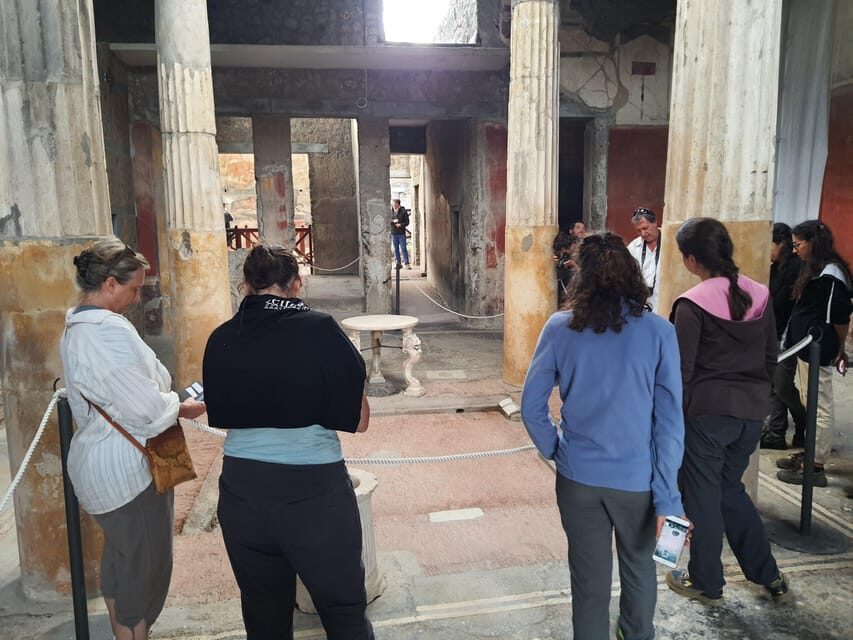
The meeting point is straightforward: the guide waits at the entrance of Coffee Shop Vittoria, close to Porta Marina Inferiore. Plan to arrive early so you’re not stuck trying to locate the right person while others are already moving.
This area is practical because it puts you close to where you’ll enter the archaeological grounds. It also reduces the odds of last-minute stress—Pompeii logistics can get messy when you’re running late, and a guided start helps you stay on track.
What I like here for first-timers: you don’t spend your first hour trying to decode a map. You start with direction, and the guide sets the mental framework for the whole site.
You can also read our reviews of more tours and experiences in Pompeii Archaeological Site



The 2-hour route: streets, pavement, and daily Roman routines
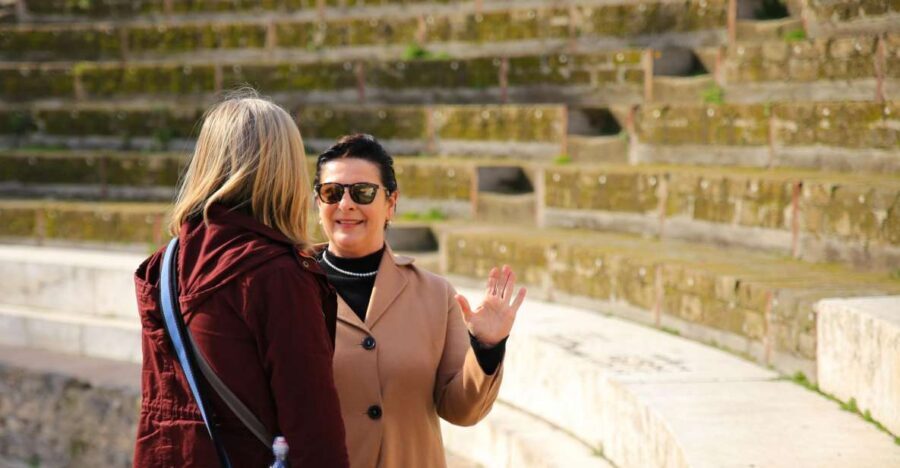
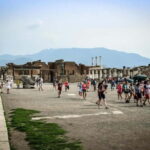
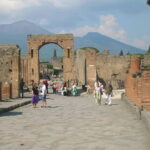
The tour’s heart is walking through the remaining streets and ruins of this UNESCO-listed city, which was buried under volcanic ash nearly two millennia ago. You’ll literally step onto surviving volcanic stone pavement, which is one of the most powerful ways to understand Pompeii: it’s not just walls and fragments; it’s street-level life.
Expect explanations that go beyond “this building used to be important.” You’re guided through the daily routine of Roman citizens—how people moved, where they gathered, and how the city worked on ordinary days. One review highlight worth taking seriously: the best guides don’t lecture. They paint scenes with small, concrete details so the ruins feel connected to real behavior.
What you’ll walk through (and why it’s the right order)
The tour is designed to show you a selection of major areas within a limited time. You start near the entrance and then move through streets and landmarks while the guide interprets what you’re seeing. Many visitors mention a pace that doesn’t feel rushed, with stops that include time for questions and photos.
Because Pompeii is massive, you should treat this as an orientation tour, not a complete city survey. If you try to “cover everything,” you’ll miss what matters. This format does the opposite: it helps you cover the right pieces so you can return afterward with better instincts.
Forum and market stops that make politics and commerce click
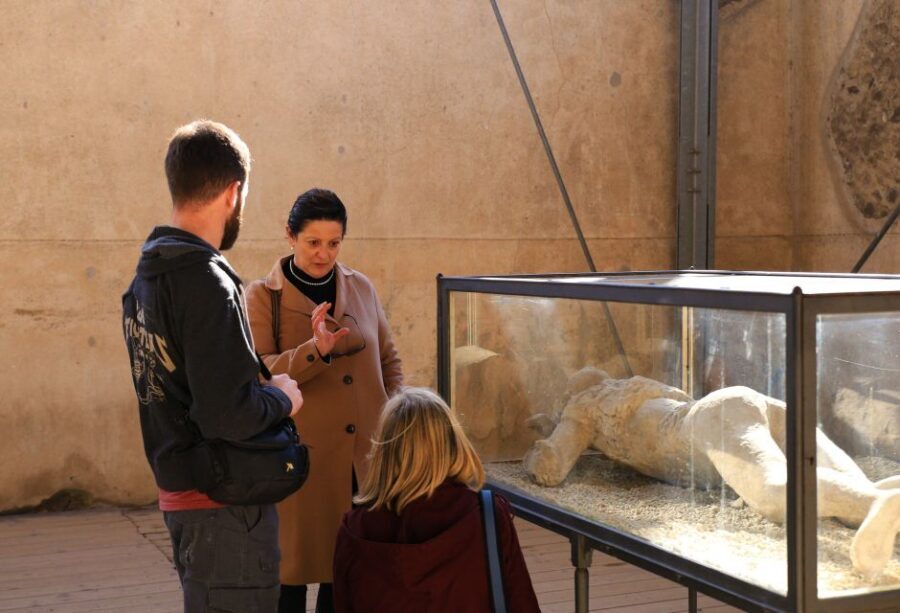
Two areas come up again and again in the tour description: the market and the Forum. Those aren’t just sightseeing stops. They’re where you watch how power and everyday life braided together.
Here’s what makes this kind of guided stop valuable: the guide points out how people walked, where they gathered, and how politicians would be encountered in daily movement. Without that context, it’s easy to look at open spaces and think, okay, this was a plaza. With the context, it becomes a place where you can imagine shouting, trading, waiting, and watching decisions happen.
Some visitors also mention that their archaeologist guide helped them understand how to interpret what they were seeing—so that after the tour, self-exploration felt easier. That’s a big deal at Pompeii because “I have a ticket” doesn’t equal “I know what I’m looking at.”
Bakeries, baths, villas: using ruins to understand real daily life
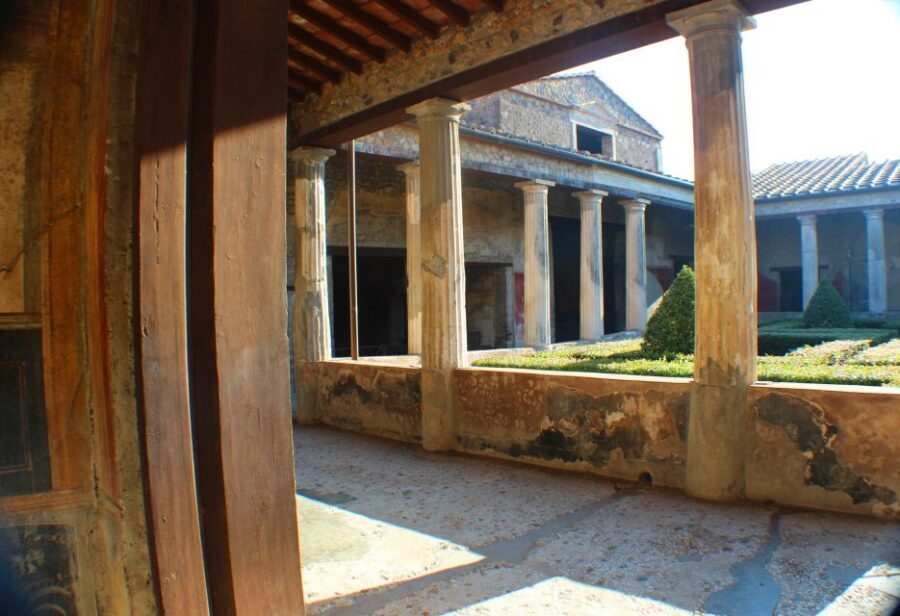
Pompeii’s best moments often come from the “ordinary” buildings. The tour leans into that. You’ll get context for places like bakeries and other spaces tied to routine and comfort, not just monuments.
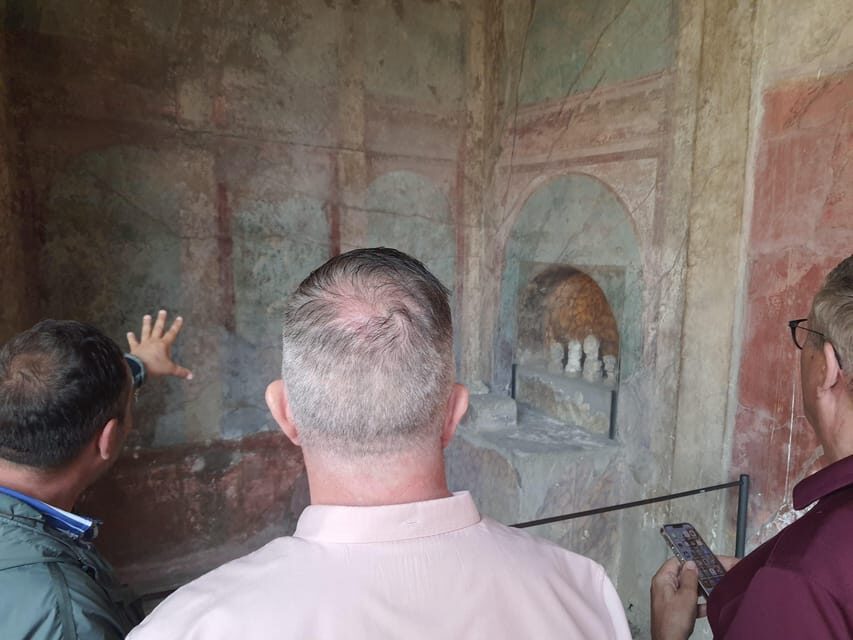
Think about the tour’s verbal storytelling: you may hear vivid descriptions that connect the physical features to what would have happened there. One common theme in the feedback is the way guides bring everyday details to the front—fresh bread from ovens rising, women relaxing in a marble triclinium, and city life unfolding in rooms you can still walk near.
And yes, Pompeii visitors talk about scale. The excavations and restorations are difficult and expensive, and a good guide can help you understand that process. When the guide explains why some things look the way they do—weathering, excavation limits, restoration choices—you stop treating the site like a theme park and start treating it like real archaeological work.
You can also read our reviews of more tours and experiences in Pompeii Archaeological Site


A reality check: you may not see every famous structure
This tour focuses on a portion of the city, not the entire site. That’s not a flaw—it’s the point. If you want everything, you’ll need more time. If you want the best starting layer of context, this tour does that job well.
Gymnasium and triclinium storytelling you can almost smell
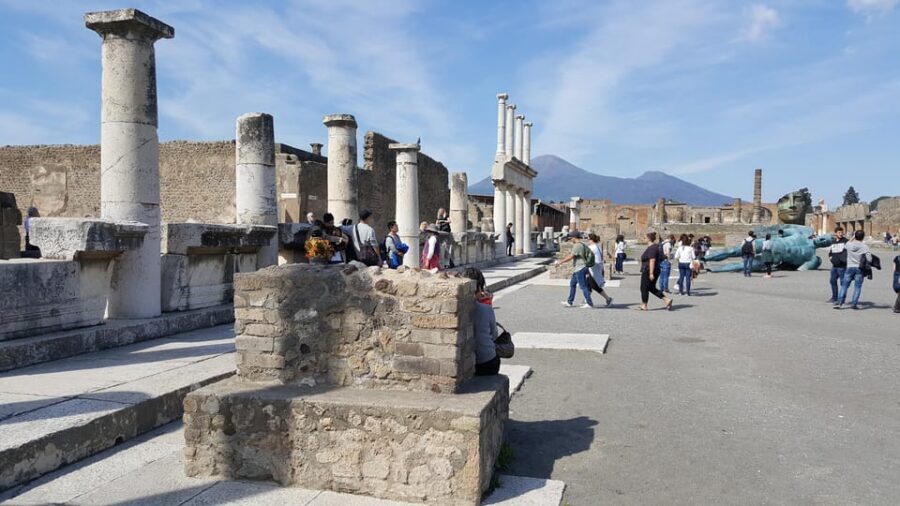
Some of the most memorable tour moments are the “what would it feel like” explanations. The tour description specifically points toward scenes like gladiators working out in a gymnasium and women lying on the marble triclinium during meals. The value isn’t just the drama. It’s that the guide uses those scenes to explain design, function, and social behavior.
This is where different guides can shape your experience. In the feedback, names like Lallo, Lello, Italo, Leonardo, Anna, Maria, Rosanna, Nello, and Raffaele show up as archaeologist guides known for humor, energy, and interactive explanations. Even if your guide isn’t one of those exact names, the pattern matters: the best tours connect architecture to people, not just facts to facts.
If you’re traveling with kids, this part can be the difference between a “school trip” and a “how did they live like that” moment. Multiple reviews highlight guides who engage younger visitors and keep attention through interactive storytelling.
Small-group benefits (and why headsets can help)
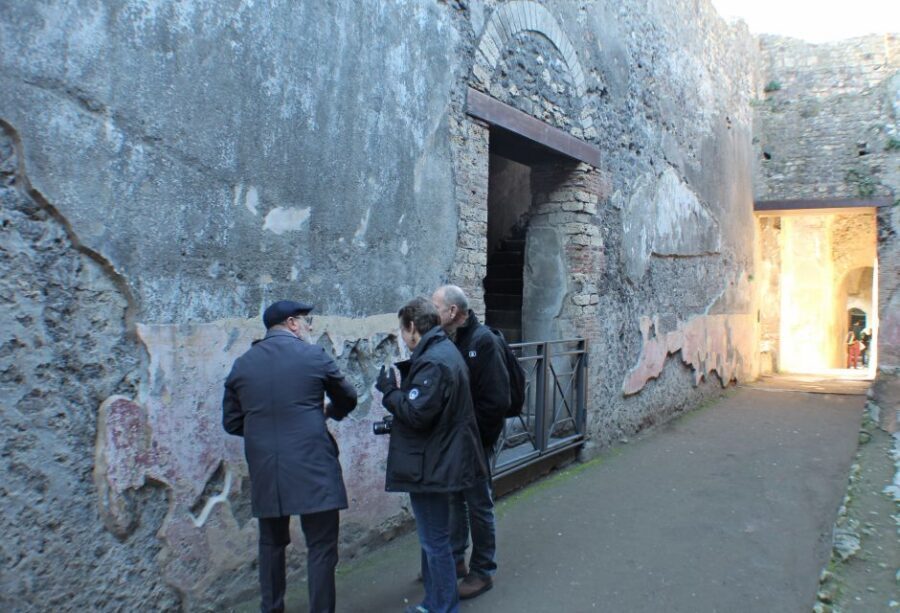
A small-group format isn’t just nicer. It’s practical at Pompeii. Fewer people make it easier to keep a steady pace, avoid unnecessary crowding, and let the guide manage the group so nobody disappears behind a wall.
Several visitors mention headsets or audio support that helps you hear without being stuck right beside the guide. That matters when the site is crowded and when you want space to look at details rather than craning your neck.
Also, a good archaeologist guide tends to “teach you how to look.” One of the most useful kinds of feedback here is that, after the tour, visitors felt confident exploring more on their own because they understood how to interpret what they were seeing.
What’s included in the $105 ticket price (and where you’ll spend extra)
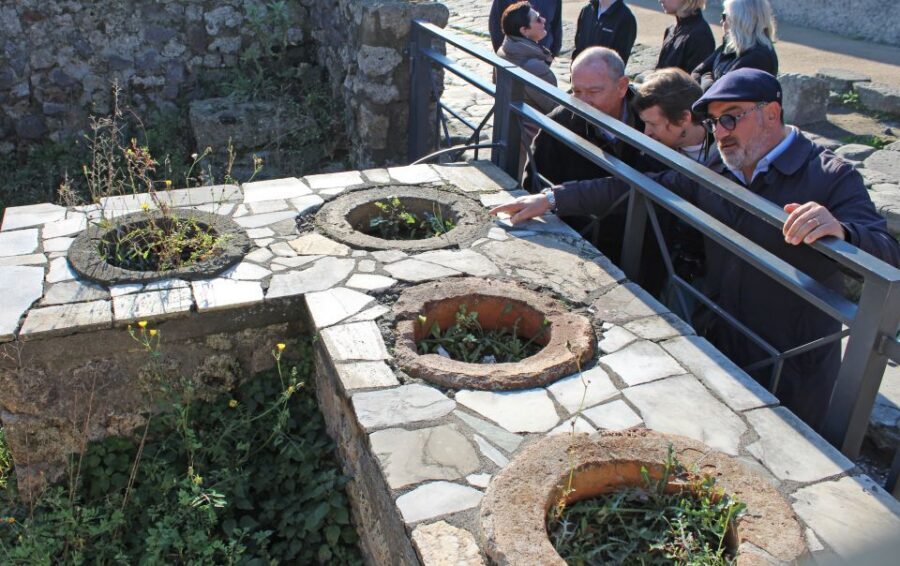
This tour includes:
- Professional guide (archaeologist-led)
- Admission tickets to the site
- Guide
Not included:
- Lunch and drinks
- Hotel pickup and drop-off
Value: why $105 can be a good deal
At Pompeii, time and context are the two things you can’t easily buy later. Paying for skip-the-line access plus a guide who can explain daily Roman life is often more efficient than planning your own route and trying to piece everything together.
Also, this price supports the kind of experience people consistently describe as worth it: a focused route, clear storytelling, and a pace that doesn’t feel like you’re being dragged through ruins. In other words, you’re paying for fewer wasted minutes and more meaningful minutes.
What to budget for
You’ll still want food and water. Pompeii can be hot and walking-heavy, and the tour doesn’t include lunch or drinks. Bring your own water (even if you plan to buy later), and plan for simple snacks so you don’t end up hungry halfway through.
Practical stuff before you go: what to bring and what to avoid
Bring
- Comfortable shoes (you’ll be on uneven ground and walking a lot)
- Sun hat
- Sunscreen
- Passport or ID for children
Not allowed
- Baby strollers
- Luggage or large bags
- Umbrellas
Two quick tips I think matter here. First, wear shoes you can walk in for longer than you expect; Pompeii surprises you with how quickly your feet add up. Second, leave big bags behind so you’re not stuck at entry points while the group reorganizes.
How long is enough at Pompeii: the best way to pair this tour with free time
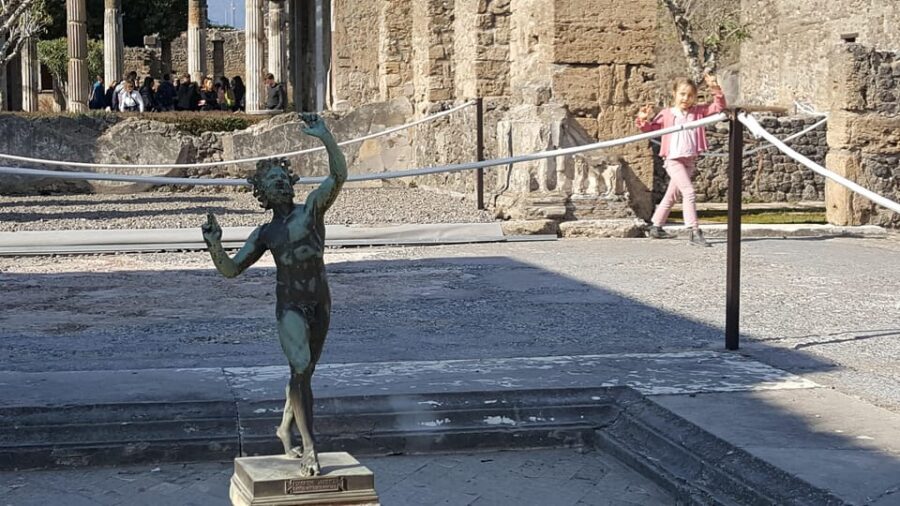
This tour is listed as 2 hours, and some visitors report closer to 2.5 hours. Treat it as a strong introduction, then plan your own extra time afterward if you care about seeing more than the highlights.
A smart pairing goes like this:
- Do this tour to understand the layout and the meaning of major spaces.
- After the guide leaves you, follow your new instincts to explore on your own.
That approach is especially helpful because Pompeii is so large that even a well-prepared solo map can feel like noise. Guidance helps you find the signal.
Who should book this Pompeii skip-the-line archaeologist tour?
You’ll probably love it if:
- You’re visiting Pompeii for the first time and want context fast
- You like explanations that connect buildings to how people actually lived
- You’re traveling with family and want an engaging guide rather than a lecture
- You prefer a small group pace over a huge crowd experience
- You want skip-the-line entry so you start exploring without delay
It might not be your best match if you:
- Want to spend hours in one single area (this tour is time-limited by design)
- Need an option that accommodates strollers or larger baggage
- Are planning to treat Pompeii as a pure do-it-alone photo walk
Should you book? My take
Book it if you want Pompeii to feel readable. This is the kind of tour that turns scattered ruins into a place with rhythm: streets you can walk, spaces you can imagine, and landmarks explained with real-world daily life in mind. The skip-the-line part is the practical win, but the bigger win is that an archaeologist guide helps you “see” instead of just “look.”
If you only have one shot at Pompeii, or if you want to get the most from limited time, this is an efficient, high-satisfaction choice. Just go in knowing the tour is short—then plan a little extra time for wandering once you’ve been oriented.
FAQ
Where do I meet the guide?
You meet at the entrance of Coffee Shop Vittoria, close to Porta Marina Inferiore.
How long is the tour?
The tour duration is listed as 2 hours (some tours may run closer to about 2.5 hours).
Is skip-the-line access included?
Yes. The tour includes skip-the-line access through a separate entrance.
What’s included in the price?
Your ticket includes a professional guide and admission tickets to the Pompeii site.
What should I bring, and what isn’t allowed?
Bring comfortable shoes, a sun hat, sunscreen, and ID for children. Strollers, luggage or large bags, and umbrellas are not allowed.
Can I cancel?
Free cancellation is offered up to 24 hours in advance for a full refund.