REVIEW · POMPEII ARCHAEOLOGICAL SITE
Pompeii: Skip-the-Line Ticket and Virtual Museum
Book on GetYourGuide →Operated by TOURISTATION · Bookable on GetYourGuide
Pompeii hits you fast—then it slows down. This one-day ticket pairs skip-the-line entry to the archaeological site with a Virtual Museum that recreates key places in 3D, so your walk through Pompeii makes more sense. You get to roam the city ruins on your own schedule, while the virtual experience sets the scene first.
I especially like that the Virtual Museum frames Pompeii as lived-in daily life (not just stone and facts), and I also like the practical pace: no rush, no forced group tempo.
One possible drawback: the Virtual Museum presentation can feel dated depending on the exact session and setup, so if you mainly want a traditional guide, you may want to plan around that.
Key highlights at a glance
- Skip-the-line Pompeii ticket to save time at one of Italy’s busiest sites
- Reserved Virtual Museum entry to preview what you’ll see (Forum, baths, amphitheater)
- On-your-own pacing across ruins spread over more than 50 hectares
- Animated 3D reconstructions tied to real locations you can stand in front of
- Pompeii-to-Vesuvius multimedia finale that brings the eruption timeline to life
In This Review
- Where to Meet, What You Get, and How the Day Works
- Skip-the-Line Pompeii Entry: Why It’s Worth It
- Virtual Museum First: How 3D Helps You See the Forum, Baths, and Amphitheater
- Walking Pompeii: Forum, Streets, Aqueduct Remnants, and Daily Life
- Amphitheater and Dramatic Theater: Frescoes and the Feeling of a Crowd
- What’s Not Included: Villa dei Misteri (If You Want the Extra Stop)
- Practical Rules and Easy Wins Before You Go
- Price and Value: Is $60 Fair for Pompeii + Virtual Museum?
- Should You Book This Pompeii Skip-the-Line + Virtual Museum Ticket?
- FAQ
- How long is the Pompeii skip-the-line and Virtual Museum experience?
- Where do I meet for this activity?
- What’s included in the $60 per person price?
- Is a guided tour or audio guide included?
- Do I need to bring my ID?
- Are pets allowed?
Where to Meet, What You Get, and How the Day Works
Your day starts at the IBT Center/Touristation office next to Chalet Donna Lucia. This matters because transportation isn’t included. So you’ll want to get yourself there smoothly and a bit ahead of your reserved start time.
The included lineup is straightforward:
- Skip-the-line ticket for the Pompeii archaeological site
- A reserved ticket for the Virtual Museum experience
- A city map
- Wi-Fi during the experience
You’re not getting a guided tour or an audio guide in this package. That can be a good thing. Pompeii is best when you can pause, look closely, and wander where your curiosity pulls you—especially because many signs are there, but the real magic is noticing how the spaces connect.
What isn’t included is also important. Villa dei Misteri doesn’t come with this ticket, and food and drinks aren’t included. You’ll want to plan snacks or at least know where you’ll stop to refuel.
Finally, bring your passport or ID card. You’ll need it for all participants, and there’s no way around that.
Skip-the-Line Pompeii Entry: Why It’s Worth It
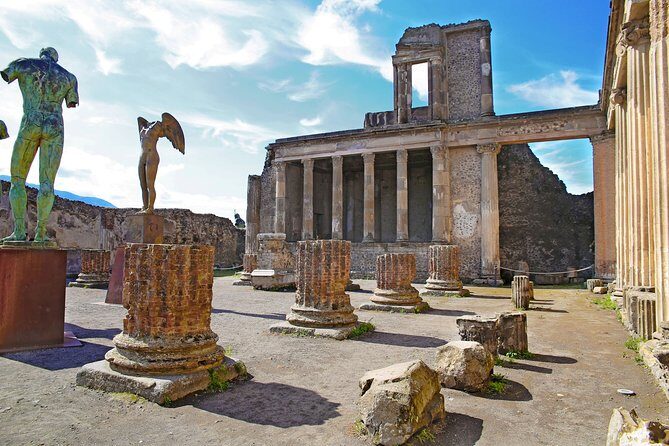
Pompeii can feel like a “line city.” It’s popular, and it doesn’t care about your schedule. That’s exactly why I like this setup: skip-the-line entrance helps you start the real sightseeing sooner.
The ticket also supports the kind of visit that works best at Pompeii. This archaeological site covers over 50 hectares, meaning you’re not looking at one neat loop. You’ll be walking, crossing open areas, and moving through streets and structures that were once tightly packed in a living city.
Because you’re exploring at your own pace, you can match the ruins to your energy:
- If you like big highlights, you can focus on the Forum area and the main public spaces.
- If you like “street-level Pompeii,” you’ll spend more time with the quieter remnants like fountains, thresholds, and business spaces.
Also, skip-the-line doesn’t magically remove walking time. It just removes the delay before the ruins start. For a one-day visit, that’s a big deal. The more time you spend inside Pompeii itself, the less your visit feels like a checklist sprint.
You can also read our reviews of more tours and experiences in Pompeii Archaeological Site



Virtual Museum First: How 3D Helps You See the Forum, Baths, and Amphitheater

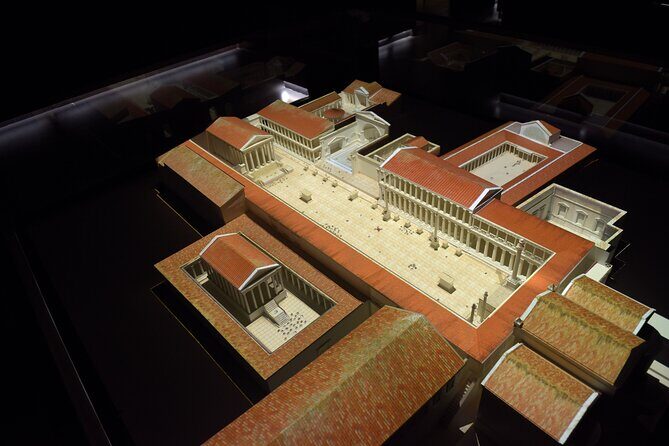
The Virtual Museum experience is designed as a warm-up. You first see Pompeii through the eyes of a citizen, then you transition to the real site and start recognizing buildings and layouts with a mental map already loaded.
What I find useful here is the focus on major anchors:
- The Forum
- The baths
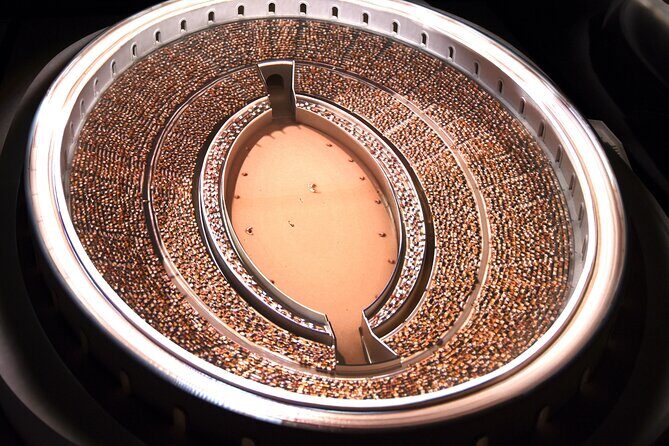
- The amphitheater
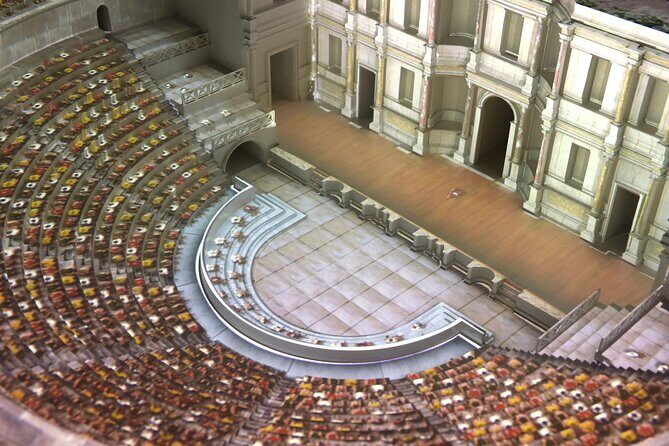
The experience uses animated reconstructions and 3D versions of key structures, including houses and important buildings. It also includes a multimedia video segment that revisits Pompeii life and the eruption sequence that ended the city in 79 AD.
This is where the value really shows. Pompeii can be confusing at first—columns without walls, doorways without buildings, streets that look like open-air sketches. The virtual part helps you interpret what you’re standing in front of. Even if you’re not a “history person,” you’ll likely feel that moment when the ruins start behaving like a city again.
One heads-up: reviews note that the Virtual Museum experience can feel obsolescent in some cases. So if you’re sensitive to tech that looks like it hasn’t been updated in a while, set your expectations accordingly. Still, the format can be genuinely helpful for first-time visitors.
Walking Pompeii: Forum, Streets, Aqueduct Remnants, and Daily Life
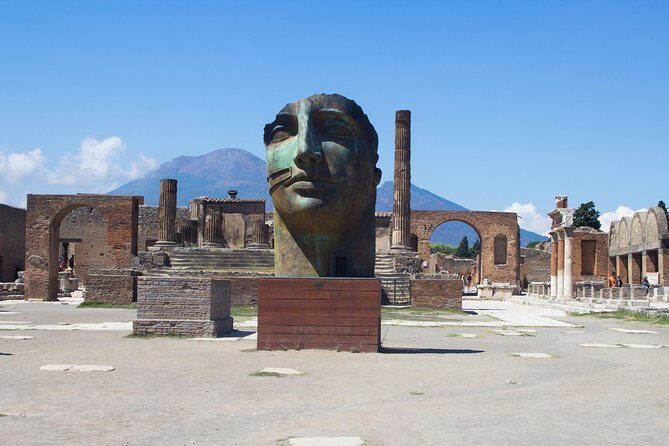
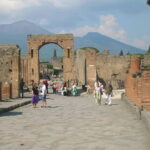
Once you step out into Pompeii, the ruins start reading like a street plan rather than random stones. You’ll be exploring the central areas and moving through city spaces that cover the rhythms of everyday life.
One of the best parts is the way the Forum area sets the tone. You can walk around the central civic space and take in the surroundings, with Mount Vesuvius in the background. That visual connection helps you understand the stakes—Pompeii isn’t just archaeology. It’s a city surrounded by a volcano that eventually changed everything.
As you move through the streets, you’ll notice remnants that bring the city’s systems back:
- Columns and doorways still in place enough to imagine the buildings
- The aqueduct remnants that supported water flow
- Street fountains you can almost trace with your eyes
- Public baths and the spaces tied to daily hygiene and social life
- Private houses and neighborhood-sized residences
- Businesses and statue remnants that hint at commerce and public messaging
This is where Pompeii shines. It’s not only grand temples or famous monuments. It’s the in-between stuff—thresholds, storefront-like spaces, and the layout of where people likely moved from home to work to baths—that makes the city feel human.
Because you’re going at your own pace, you can slow down for the details you enjoy most. If you like architectural shapes, spend time with the doorways and wall remnants. If you want social life, gravitate toward the baths and public spaces. The city supports it.
Amphitheater and Dramatic Theater: Frescoes and the Feeling of a Crowd
Next up are the big performance spaces: the amphitheater and the dramatic theater. These are emotionally powerful places because they were built for crowds, and you can feel that even in ruin form.
In the amphitheater area, you get the sense of drama and spectacle. Pompeii isn’t quiet here. It once held eager spectators, and the shape of the space still tells that story.
The dramatic theater adds another layer. It’s a reminder that this wasn’t just practical Roman city life. People gathered to watch performances, to participate in public culture, and to share entertainment.
This is also where you’ll see what remains of colorful frescoes from houses and businesses. Even when fresco fragments are faded or partial, they’re striking. They make Pompeii feel less like a museum and more like a place where color mattered.
The best strategy: don’t rush this section. If you only get a quick glance, Pompeii stays flat. If you linger, the amphitheater and theater spaces start to “hold” imaginary scenes, and you’ll understand why Pompeii became such a famous window into the ancient world.
What’s Not Included: Villa dei Misteri (If You Want the Extra Stop)
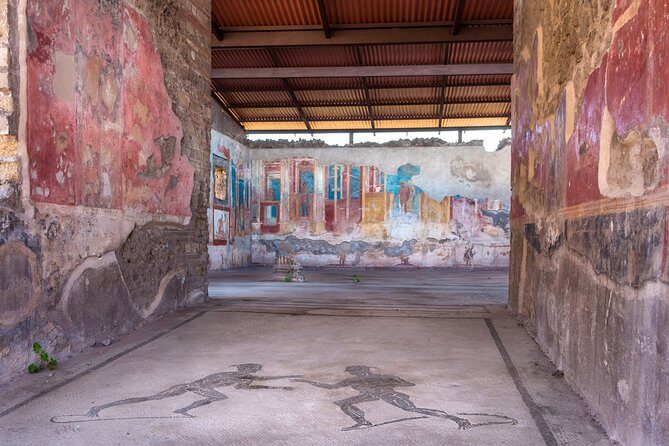
A quick but important note: this ticket does not include entrance to Villa dei Misteri.
That matters because Villa dei Misteri is the kind of stop that some people specifically plan for—especially if you’ve heard it mentioned in connection with famous frescoes and a standout villa interior. Since it’s not included here, you’d need to add it separately if it’s on your priority list.
So I’d make a simple decision:
- If you want a classic Pompeii highlights day and don’t need one specific villa, this combo ticket is a solid fit.
- If you specifically care about Villa dei Misteri, plan extra time and budget and don’t assume this day includes it.



Practical Rules and Easy Wins Before You Go
Pompeii is strict about what you bring, and it’s smart to plan before you arrive. Here’s what you should expect:
- No pets (but small dogs are permitted inside the archaeological area; they must be kept on a leash and carried when inside buildings)
- No smoking
- No luggage or large bags
- No alcohol and drugs
- You must have ID with you
This is one of those places where a “just in case” mindset helps. Keep your bag small, wear comfortable shoes, and bring your ID ready rather than digging for it at the gate.
Also, while you won’t have a guided tour or audio guide included, you will have a city map and Wi-Fi. That combo is enough for self-navigation if you choose a few target areas and then wander within reasonable distance.
For disabled visitors, the info states free admission is available with certified disability documentation. If that applies to you, plan ahead and bring the certification.
Price and Value: Is $60 Fair for Pompeii + Virtual Museum?
At $60 per person, this isn’t a bargain ticket. But it isn’t overpriced either—if it matches how you like to travel.
Here’s what you’re paying for:
- Skip-the-line entry, which saves time at a high-demand site
- A reserved Virtual Museum experience that helps you interpret what you’ll see
- A built-in structure for a one-day visit, so you’re not piecing things together from scratch
If you’re the kind of visitor who arrives and wants to understand the layout quickly—Forum, baths, amphitheater—then the Virtual Museum component can make the ruins click faster. You’re less likely to spend the day trying to guess what you’re looking at.
If you’re primarily a “show me the ruins, no tech” person, the Virtual Museum might feel like a mixed bag, especially given the note about obsolescence. In that case, you may decide the value mainly comes from the skip-the-line benefit and the convenience of a reserved museum add-on.
Should You Book This Pompeii Skip-the-Line + Virtual Museum Ticket?
Book it if you want a smooth, efficient day that pairs ruin-watching with a 3D visual primer. It’s especially good for first-timers who want Pompeii to make sense without relying on a guide. The skip-the-line entry plus self-paced exploration is a strong combo for a one-day plan.
Skip it (or adjust your plan) if you’re expecting a modern, polished Virtual Museum presentation every time, or if you specifically want Villa dei Misteri, since it’s not included. If Villa dei Misteri matters to your trip, you’ll need to add it.
Bottom line: I think this is a strong way to experience Pompeii when you want time saved, a helpful orientation before you walk the streets, and the freedom to linger where the ruins grab you.
FAQ
How long is the Pompeii skip-the-line and Virtual Museum experience?
It’s listed as 1 day. Starting times depend on availability, so you’ll need to check what’s offered for your date.
Where do I meet for this activity?
Meet at the IBT Center/Touristation office next to Chalet Donna Lucia.
What’s included in the $60 per person price?
You get a skip-the-line ticket to Pompeii, a reserved ticket for the Virtual Museum, plus a city map and Wi-Fi.
Is a guided tour or audio guide included?
No. This package includes tickets, a map, and Wi-Fi, but it does not include a guided tour or an audio guide.
Do I need to bring my ID?
Yes. You need passport or ID for all participants.
Are pets allowed?
Pets aren’t allowed, but small dogs are permitted inside the archaeological area. They must stay on a leash and be carried when you go inside buildings.