REVIEW · POMPEII
Exclusive Pompeii with Wine and Lunch on Vesuvius-Skip-the-line
Book on Viator →Operated by Leisure Italy · Bookable on Viator
Pompeii gets easier when someone maps it for you. This exclusive day is built around skip-the-line entry and a private guide so you see the real highlights without feeling like you’re fighting the crowd. The best part is how the guide ties ruins to everyday life, from mosaics and wall paintings to the story of AD 79.
I also love the way the day doesn’t stop at ancient stone. You finish with wine tasting and a sit-down Vesuvius lunch at Cantina del Vesuvio (Russo Family Winery) with a serious focus on local flavors. The only real drawback to plan for is walking: Pompeii is big, and you’ll want solid shoes and a calm pace.
In This Review
- Key points before you go
- From your hotel to Pompeii: the real time-saver
- Skip-the-line Pompeii: getting oriented fast
- A quick reality check on time
- Porta Marina and the city walls: entering through the original mindset
- Why this stop is more than a photo spot
- The Forum loop: Basilica, Temple of Apollo, and civic life you can read
- Macellum and the Forum Baths: food and social life
- Macellum: the market with a rhythm
- Forum Baths: the daily reset
- Casa dei Vettii and Casti Amanti: wealth, work, and what art meant
- Casa dei Vettii: elite taste on display
- Insula dei Casti Amanti: neighborhoods frozen mid-routine
- Teatro Grande: public entertainment with real scale
- Antiquarium di Pompei: the emotional bridge before and after the ruins
- Premium Plus: the Villa of the Mysteries worth extra time
- Russo Family Winery on Vesuvius: 5 wines and a real sit-down lunch
- How much walking is too much for a 5 to 7 hour day?
- Price and value: is $575.35 per person worth it?
- Should you book this Pompeii and Vesuvius wine day?
- FAQ
- Is there a climb to the top of Mount Vesuvius?
- How long is the Pompeii portion, and how long is the winery portion?
- What’s included at Cantina del Vesuvio (Russo Family Winery)?
- Does the tour offer vegetarian, vegan, or gluten-free options?
- Do you get pickup from hotels and other locations?
- Is this tour private?
Key points before you go
- Skip-the-line tickets help you cut through the worst waiting and get moving faster
- Private, certified guide keeps Pompeii organized instead of random
- Forum, baths, markets, and theaters show Rome as daily life, not just monuments
- Premium Plus adds Villa of the Mysteries for a major fresco experience
- Wine tasting on Vesuvius slopes includes 5 wines plus a 3-course lunch
- Pickup from multiple towns means you spend less time figuring out transit
From your hotel to Pompeii: the real time-saver
If you’ve ever tried to time Pompeii tickets against traffic and ticket lines, you already know the stress tax. This tour starts by picking you up from wherever you’re staying—Naples, Sorrento, Pompeii, and more—so you don’t waste your morning on buses, confusing routes, or hunting down a meeting point.
I like that the day is designed to feel round-trip easy. You’re not coordinating multiple transfers, and your driver handles the Naples traffic and timing so you can focus on the ruins. Your ticket is also handled digitally with a mobile option, so you’re not scrambling at the entrance.
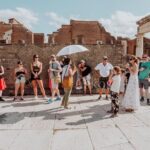
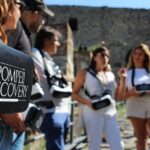
One nice touch: the walking pace is flexible. Your private guide sets the rhythm, but you can ask for small adjustments. If you have mobility concerns, mention it ahead of time. One guide (Danilo) has specifically been praised for working with a husband’s mobility needs, keeping the experience as comfortable as possible for what’s doable.
You can also read our reviews of more wine tours in Pompeii

Skip-the-line Pompeii: getting oriented fast
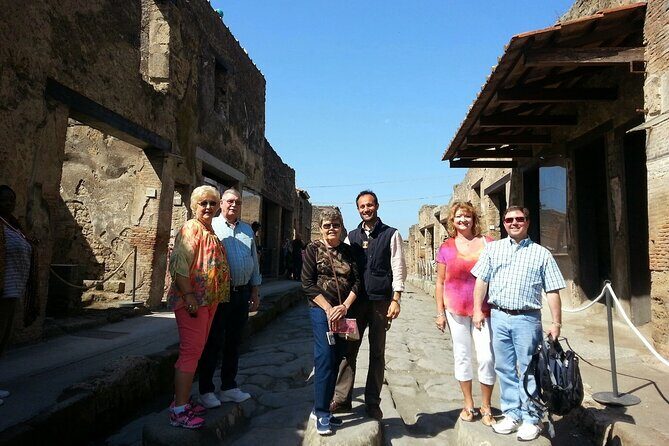
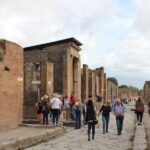
Pompeii is larger than most first-time visitors expect, and the site can feel like a maze if you wander without a plan. The core win here is structure. Your private, certified guide shows you key areas and then connects them—how the city functioned, how people lived, and what changed the day Vesuvius woke up.
Your visit includes the highlights that usually take a long time to piece together on your own. Expect to see the Forum area, private spaces and neighborhoods, shops, the Bath-House zones, and theater settings that help you picture public life. You also get visual anchors like floor mosaics and wall paintings, which make the ruins feel less like “old stuff” and more like rooms people actually inhabited.
You’ll also get a grounding moment on what buried Pompeii: ash and pumice rock. That matters because once you understand the material that covered the city, the ruins stop looking random. They become a snapshot of AD 79 caught in place.
A quick reality check on time
This is a highlights tour, not a slow, every-street scavenger hunt. That’s the trade. If you love spending hours in just one house or one mosaic, you may want the Premium Plus option (more on that later). If you want the biggest “aha” moments without burning an entire day, this format is a strong fit.
Porta Marina and the city walls: entering through the original mindset
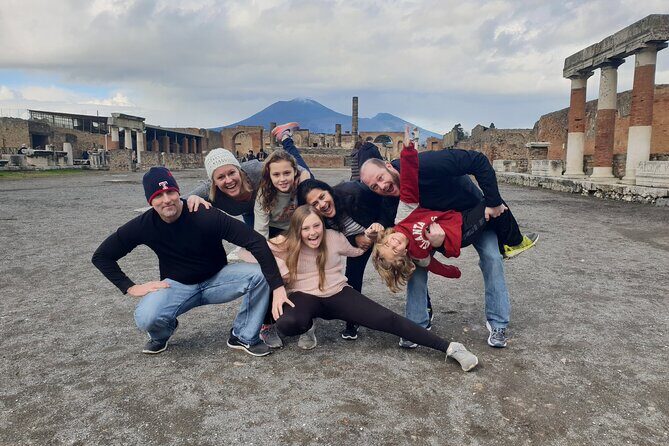
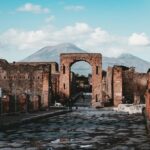
Before you head deep into the Forum and major buildings, you pass through Porta Marina and the surrounding wall circuit. This is a smart warm-up stop because it shows you Pompeii as a defended city, not an open-air museum.
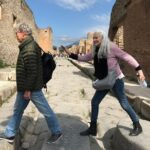
Porta Marina was a major entry point near the port area. You can see how Pompeii controlled access, including the original stone ramp and the fortifications that once welcomed merchants, sailors, and visitors arriving from the Bay of Naples. It helps you understand where crowds would have gathered and why movement through gates shaped daily life.
Why this stop is more than a photo spot
A gate sounds like a quick stop until you learn what it implies: logistics, protection, and commerce. You come away with a clearer sense of how people moved into the city, where supplies likely flowed, and how Pompeii’s public face differed from private residential streets.
You can also read our reviews of more tours and experiences in Pompeii


The Forum loop: Basilica, Temple of Apollo, and civic life you can read
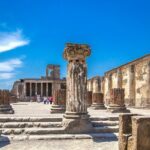
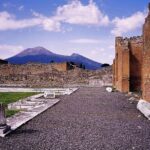
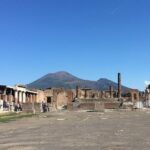
The Forum is where Pompeii explains itself. In this tour, you get the big trio around the civic center: the Basilica, the Temple of Apollo, and the Forum square views that tie everything together.
- Basilica: This is one of the most imposing public buildings, dating back to the 2nd century BC. It’s one of those structures that makes sense once you know its role in civic administration and public gatherings.
- Temple of Apollo: Near the Forum, dedicated to Apollo as god of sun, music, and prophecy. The setting in an open courtyard makes it easier to imagine ritual offerings and public religious life.
- Forum views: From higher modern walkways, you can see how the square relates to temples, administrative buildings, and market structures. This “look down” perspective helps you understand the city’s layout without getting lost at ground level.
I like this approach because it gives you mental maps. Instead of memorizing ruins one by one, you learn how public spaces worked like Rome’s living network—politics, religion, and commerce all in one monumental zone.
Macellum and the Forum Baths: food and social life
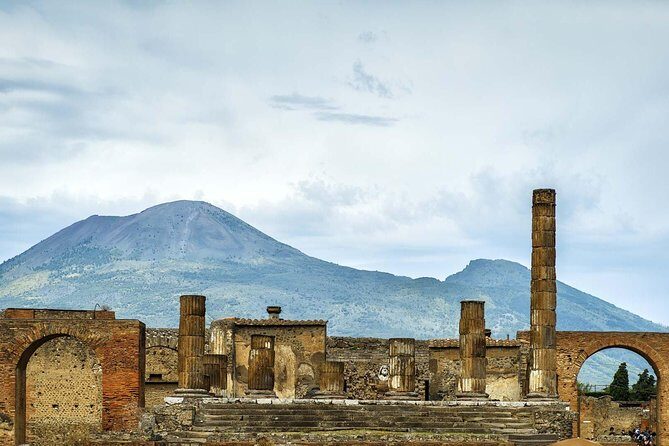
Roman Pompeii wasn’t just about temples and speeches. It was also about eating, shopping, and showing up for daily routines. Two stops make that real: the Macellum and the Terme del Foro (Forum Baths).
Macellum: the market with a rhythm
The Macellum was Pompeii’s main food market, a covered complex where fish, meat, fruit, and imported goods would have circulated. Seeing the layout—stalls, counters, and shrine elements—shows how the city organized commerce. Even if you only spend a short time here, the market structure helps you picture mornings of bargaining and social chatter.
Forum Baths: the daily reset
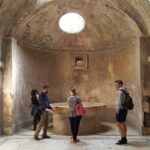
The Forum Baths were a major social hub, split into men’s and women’s areas. The hypocaust heating system (the underfloor warmth) is a great reminder that Romans engineered comfort as a daily habit. You’ll also notice how well-preserved elements like stucco reliefs and vaulted ceilings make the bath experience feel more “designed” than random.
If you want a Pompeii highlight that feels human-scale—more like a place you’d meet a friend than a monument—you’ll probably enjoy these stops a lot.
Casa dei Vettii and Casti Amanti: wealth, work, and what art meant
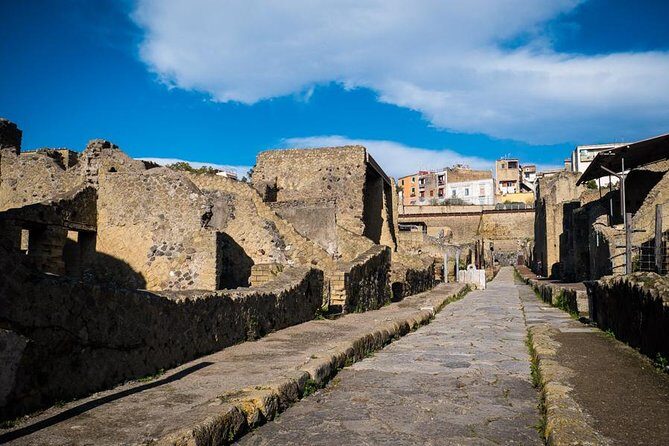
Once you step into homes and mixed residential blocks, Pompeii becomes personal. Two stops do the most work here: Casa dei Vettii and the Insula dei Casti Amanti block.
Casa dei Vettii: elite taste on display
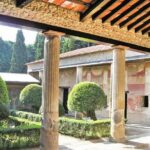
Casa dei Vettii is one of the finest aristocratic residences, known for rich frescoes and an elegant layout around atria and peristyle gardens. It’s a strong choice because it shows how wealthy merchants likely lived—how art and architecture advertised status and refined taste. You get a clearer sense of how private life differed from public buildings, and how stillness inside homes contrasted with busy Forum life outside.
Insula dei Casti Amanti: neighborhoods frozen mid-routine
Insula dei Casti Amanti is named after a vivid fresco of lovers and includes workshops, storerooms, and domestic rooms. One of the most useful features here is the way you view it: you access the site via ramps that give you a clear view into the spaces below without messing with fragile surfaces.
This is where you start seeing Pompeii as a living city with interwoven trade and home life. You can almost picture craftsmen working and families moving between spaces right up to AD 79.
Teatro Grande: public entertainment with real scale
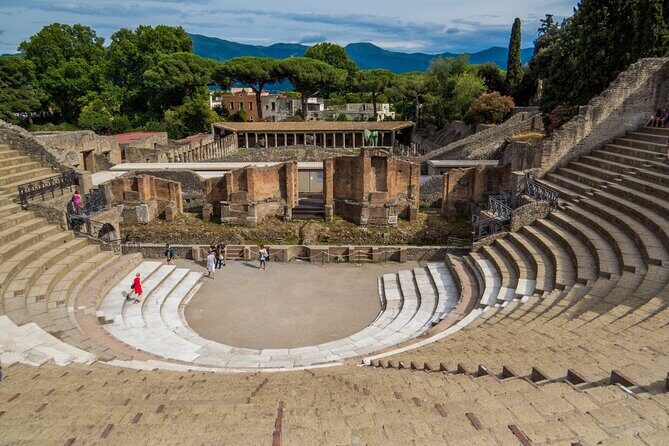
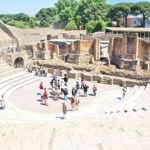
The Teatro Grande is where you feel Pompeii’s culture as something shared. You’ll look down at the semicircular seating tiers, the stage area, and the orchestra space. From the terraces and walkways, you can take in the size of the amphitheater setup and understand why shows drew crowds.
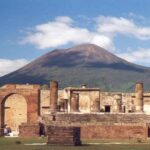
It also helps that the theatre’s setting supports good acoustics and impressive views toward the city and Mount Vesuvius. Standing within the auditorium area (where possible) makes it easier to imagine costumes, applause, and performances as a regular social outlet—not just special occasions.
Antiquarium di Pompei: the emotional bridge before and after the ruins
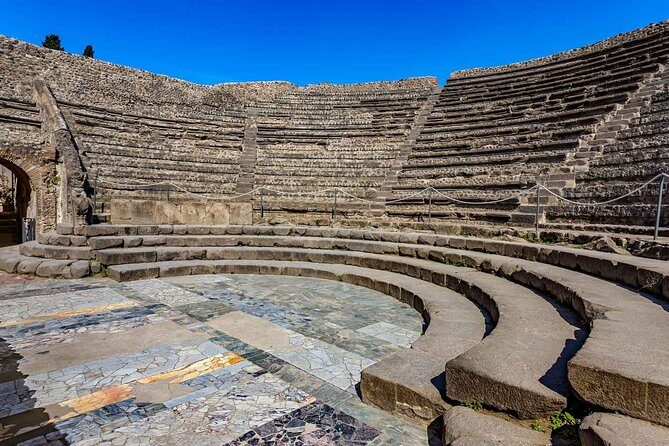
If you want Pompeii to land in your heart and not just in your camera roll, the Antiquarium matters. It functions like a gateway: you move through organized galleries with statues, household objects, inscriptions, and jewelry recovered during excavations.
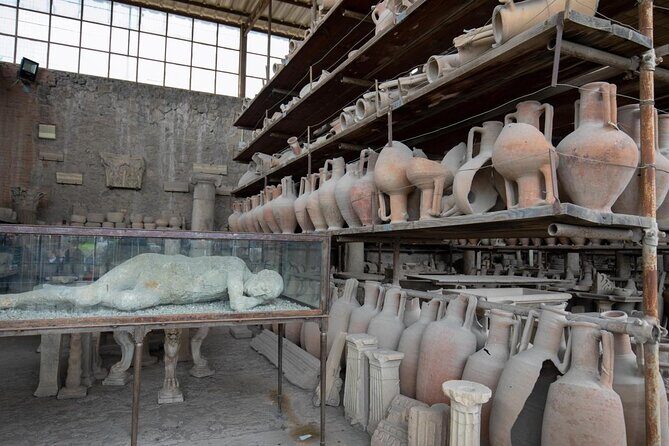
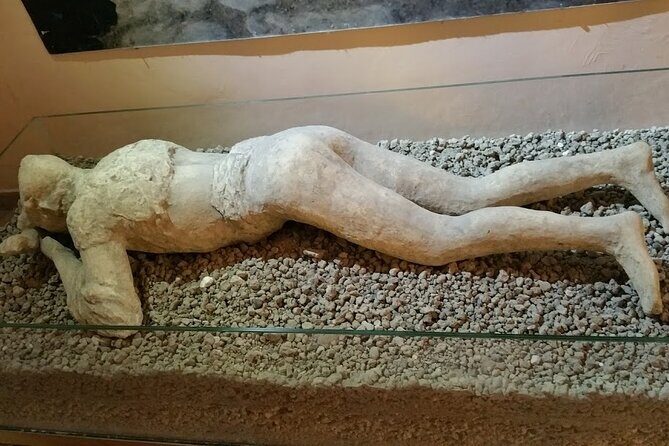
What I appreciate here is the context. Seeing delicate items in controlled displays helps you understand what you can’t always notice in the open ruins. The final rooms include plaster casts of victims and eruption materials, giving you a powerful frame for the wreckage outside.
This stop can be the difference between seeing Pompeii as ruins and understanding Pompeii as people.
Premium Plus: the Villa of the Mysteries worth extra time
If you’re choosing between the standard experience and the Premium Plus upgrade, here’s how I’d think about it.
Premium Plus includes a longer private guided visit and adds the Villa of the Mysteries (Villa dei Misteri), located just outside the ancient city walls. It’s famous for remarkably preserved frescoes showing a mysterious Dionysian ritual.
In plain terms: it’s the fresco stop that many people hope to add. If you love art, symbolism, and rooms that feel like they’re still holding their original atmosphere, this upgrade can make your day feel more complete. If you’re only after the biggest general highlights, the standard route still covers a lot.
Russo Family Winery on Vesuvius: 5 wines and a real sit-down lunch
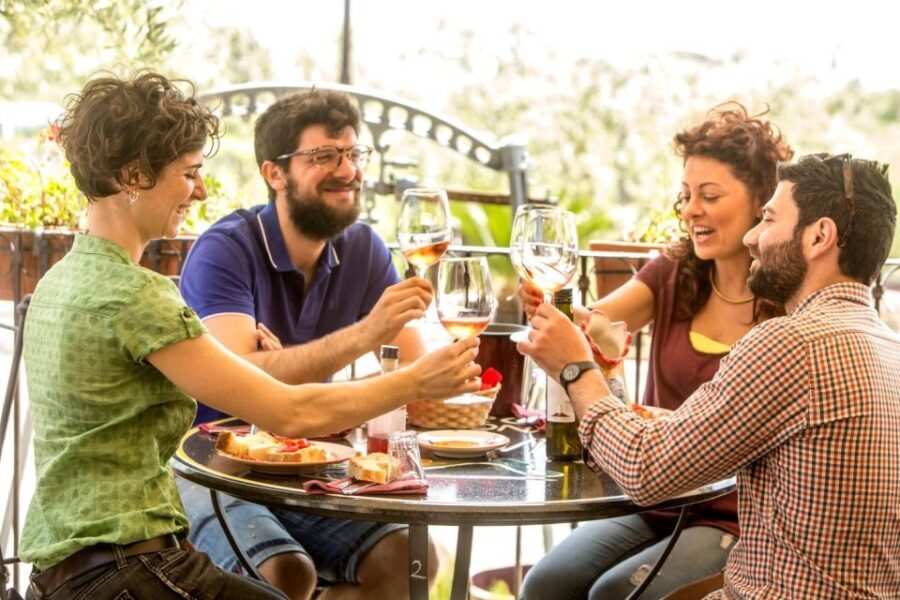
Most Pompeii days end in a blur. This one gives you a chance to slow down with views, wine, and food made from local ingredients.
You do not climb Mount Vesuvius here. Instead, you enjoy the scenery during the drive and from the winery area on the slopes. That’s a smart choice for most people because it keeps the day from turning into a hiking contest right after Pompeii.
At Cantina del Vesuvio (Russo Family Winery, family-run since 1930), you’ll get:
- a guided tour of the vineyard and cellar
- a tasting of 5 wines (classic or superior options)
- a 3-course lunch built from traditional local ingredients
The lunch menu is specific and properly regional: you’ll see items like salami and cheeses (provolone and ricotta), casatiello, roasted eggplant, and bruschetta with Piennolo tomatoes. Then comes pasta with Piennolo cherry tomatoes and basil, followed by Neapolitan Pastiera with ricotta, cooked wheat, and candied fruit.
And yes, there are vegetarian, vegan, and gluten-free options, which makes it easier if you have dietary needs. This is one of those details that can make or break a “food day” tour.
How much walking is too much for a 5 to 7 hour day?
This experience is best for people with at least moderate comfort walking through uneven historic ground and lots of outdoor areas. You’ll cover multiple ruins and major stops, plus time at the winery.
I recommend you plan for real steps, not museum-stroll steps. Bring shoes you trust. And if you’re going between May and September, bring sun gear. Pompeii can feel bright and hot fast, and shade is never guaranteed.
The good news is pacing is built around a guide who can adjust. If you need breaks for photos or just to reset your brain, this tour is set up to work that way.
Price and value: is $575.35 per person worth it?
At $575.35 per person, this isn’t a budget day. But it’s also not “just entry tickets and a bus.”
You’re paying for a bundle that usually costs more when bought separately:
- round-trip transportation with pickup from multiple areas
- skip-the-line access
- a private, certified guide that keeps Pompeii organized and readable
- admission for the Pompeii stops you cover
- an extended winery portion with 5 wine tastings and a full 3-course lunch
For value, the key question is how you travel. If you hate waiting in lines, if you don’t want to spend your day decoding ruins with a map, and if you want the Pompeii experience to feel like a guided story rather than a self-guided checklist, this price can make sense quickly.
If your priority is maximum ruins time for the lowest cost, you might feel the pinch. But if you want efficiency plus high-impact stops, this tour is priced like a premium day—and it delivers the parts that matter.
Should you book this Pompeii and Vesuvius wine day?
Book this if you want Pompeii without chaos: skip-the-line tickets, a private certified guide, and a route that hits Forum life, baths, houses, markets, and theatre without you getting lost. The Vesuvius wine and lunch add-on is also a smart balance—history in the morning, then a relaxing meal with local wines and views.
Skip it if you want a slow, unhurried wander through every corner of the park, because this is structured around highlights. Also, if long walking distances are hard for you, tell the team early and plan for breaks.
If you get a guide like Natalia (paired with Dino in one praised team) or one of the other strong guides named in the program such as Fabio, Danilo, Paola, or Fabrizio, you’re set up for a day that feels both organized and personal.
FAQ
Is there a climb to the top of Mount Vesuvius?
No. The tour includes stunning views of Mount Vesuvius during the day, but it does not include a climb.
How long is the Pompeii portion, and how long is the winery portion?
The Pompeii visit is about 2 hours, and the winery experience is about 2 hours. The overall tour is approximately 5 to 7 hours.
What’s included at Cantina del Vesuvio (Russo Family Winery)?
You’ll get a guided tour of the vineyard and cellar, a tasting of 5 wines, and a 3-course lunch made with traditional local ingredients.
Does the tour offer vegetarian, vegan, or gluten-free options?
Yes. Vegetarian, vegan, and gluten-free options are available for the lunch.
Do you get pickup from hotels and other locations?
Yes. Pickup is offered in Naples, Sorrento, Pompeii, and other listed locations including hotels, vacation rentals, train station, airport, and cruise terminal/port.
Is this tour private?
Yes. It is a private tour/activity, and only your group participates.