REVIEW · POMPEII
Pompeii: Tour with Archaeologist Guide & Skip-the-Line Entry
Book on Viator →Operated by Travelcampania · Bookable on Viator
Pompeii hits fast, in just two hours. This guided walk is built for people who want the big sights plus context: skip-the-line entry, an archaeologist-style explanation of how the city worked, and the 79 AD eruption story that turns ruins into a real place. I like that the route hits famous anchors (the Forum area, major streets, baths, and the Lupanare) instead of wandering randomly. I also like the way the tour brings the site’s details into focus, including the historic 1863 casts connected to Arch. Giuseppe Fiorelli. The main drawback is simple: two hours means you’ll get a strong overview, but you may not have time to linger where you personally want more.
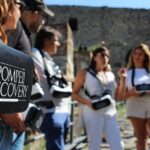
You’ll start in the Piazza Esedra area, meeting near the Coffee Shop Vittoria bar, and you’ll finish in the Foro di Pompei zone. Piazza Esedra is also where you redeem the entry, and the guide handles the skip-the-line ticketing, so you spend less time waiting and more time walking. The group stays small, with a maximum of 25 people, and the pace assumes moderate physical fitness. After the tour, you can stay inside the archaeological park if you want to continue at your own speed.
In This Review
- Key highlights at a glance
- A fast, guided Pompeii run with skip-the-line entry
- Meeting point on Piazza Esedra to a Forum finish
- What you actually do in those 2 hours
- Teatro Grande: start strong and get oriented
- Amphitheater and Roman domus frescoes
- Via dell’Abbondanza: the street that helps everything click
- Stabian Baths: leisure, routine, and preserved design
- The Lupanare: a social space with a blunt reality
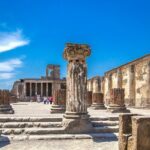
- Forum, Basilica, and the public heart of the city
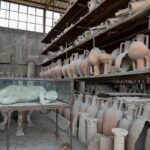
- The 1863 casts and the eruption story in a human scale
- Price and value: why $57.84 can make sense
- Who this Pompeii tour is best for
- Should you book this Pompeii archaeologist tour?
- FAQ
- How long is the Pompeii tour with an archaeologist guide?
- Is the entrance ticket included, and does it include skip-the-line entry?
- Where does the tour start, and where does it end?
- What key places will we see during the tour?
- How large is the group?
- Do I need moderate physical fitness?
- Can I cancel for free?
Key highlights at a glance
- Skip-the-line entry handled for you: your guide takes care of the entrance tickets after meeting.
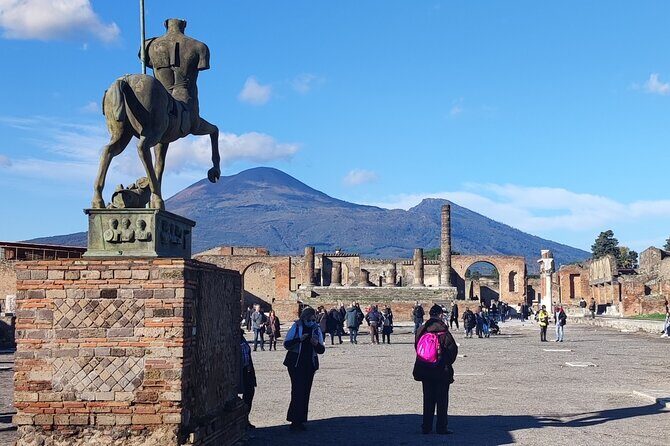
- A tight route that covers the classics: amphitheater, Domus homes with frescoes, Via dell’Abbondanza, Forum area.
- The Stabian Baths and Lupanare: two very recognizable stops that show everyday life and social spaces.
- Fiorelli’s 1863 casts in the mix: an early chapter in how Pompeii was rediscovered and studied.
- Small groups (max 25): enough structure without feeling like a crowd sprinting.
- Ends in the Forum area: a convenient landing point if you plan to keep exploring after.
A fast, guided Pompeii run with skip-the-line entry
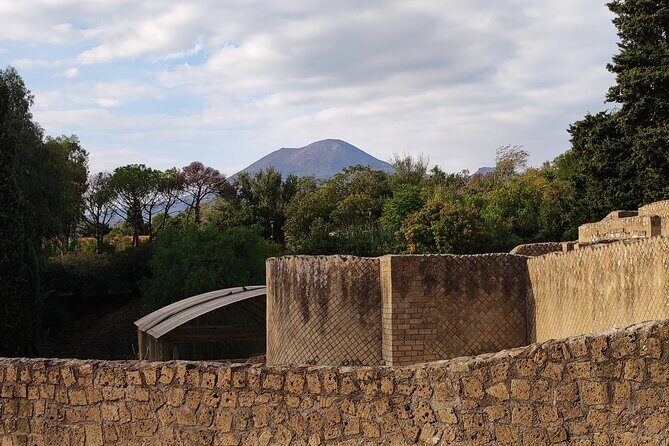
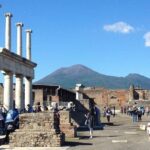
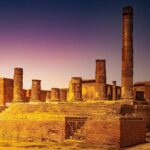
Pompeii is famous for a reason, but it can also feel overwhelming. With a guided 2-hour format, you’re not trying to read every wall and sign yourself. Instead, you’re getting a guided path that connects the dots: where people gathered, how they lived, and what the city looked like before the eruption of Vesuvius in 79 AD.
I especially like tours like this because the “hard part” is removed. The skip-the-line setup matters at a site that can eat time fast if you’re stuck at the entrance. Here, you meet near Piazza Esedra and the guide purchases the archaeological entry ticket for you, so you can start viewing sooner rather than waiting around with your camera already charged.
The other value of a short, structured tour is mental. In two hours, you can actually remember what you saw because you’re guided from one key location to the next. It helps you build a simple story: Pompeii as a city with public life (Forum and basilica area), leisure (the amphitheater), and private spaces (Roman homes with frescoes), all cut short by disaster.
You can also read our reviews of more guided tours in Pompeii
Meeting point on Piazza Esedra to a Forum finish
Logistics can make or break a short tour, so I focus on the flow. You’ll meet at Travelcampania at Via Plinio, 107, Pompei, and the practical meeting point is near the Coffee Shop Vittoria bar in the Piazza Esedra area. The ticket redemption point is also in that area, at Tour & Audio Guide on Piazza Esedra, 2.
That’s useful because it keeps everything clustered. You don’t have to hunt across town for the right checkpoint before the tour begins. For many people, this alone is worth choosing a tour that centralizes the start.
The tour ends at Foro di Pompei, near Via Villa dei Misteri, 2. That finish location is handy because the Forum area is one of Pompeii’s main “keep exploring” zones. If you want to stretch your visit beyond the 2 hours, you’re already in the thick of the site when the guided portion wraps up.
What you actually do in those 2 hours
This is not a “stand and stare” tour. You’re walking between major zones and getting explanation along the way. The itinerary is built around a sequence that moves from iconic public structures to street life, to baths and social spaces, and finally into the Forum area and the historic casts connected to Arch. Giuseppe Fiorelli (1863).
The tour also sets the emotional framework for what you’re seeing. You travel back in time and relive the last moments of the city during the Vesuvius eruption in 79 AD. That framing matters because it changes how you interpret details—frescoes feel less like decoration and more like a glimpse into daily routines.
And yes, frescoes and preserved everyday objects are part of the payoff. Pompeii is not just about “big ruins.” It’s about the small things—marks of daily habits—still preserved in place. In a short tour, that’s exactly what keeps it from turning into a checklist.
Teatro Grande: start strong and get oriented

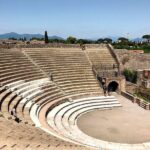
The first stop is Teatro Grande (the Great Theater). Starting here makes sense because it gives you an early sense of how Romans gathered for performances and public life. Even if you’re not a theater buff, this is where you begin to understand Pompeii as an active city, not just a pile of stone.
In a well-paced guided walk, this is where you learn basic orientation: what you’re looking at and why it matters. You’ll also pick up context that later stops will build on, especially when you move toward other public spaces like the amphitheater and the Forum area.
The practical upside: starting at a major landmark helps you navigate mentally. When you later walk along streets like Via dell’Abbondanza, you’re not just “walking through ruins.” You’re moving through a mapped-out experience of the city’s layout and rhythm.
Amphitheater and Roman domus frescoes
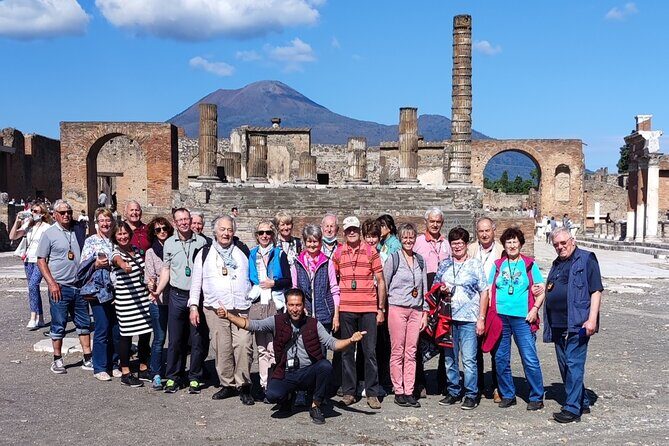
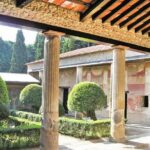
After the theater start, the route includes the amphitheater and private houses known as domus with frescoes. This pairing is one of the better ways to understand Pompeii in a short time. The amphitheater shows public entertainment. The domus shows the more personal side—how wealthy residents lived, decorated, and displayed taste.
Frescoes are often the moment people realize Pompeii is more than archaeology—it’s art in context. In a guided setting, you get a clearer sense of what you’re looking at, instead of guessing why a wall scene is where it is.
You should also pay attention to how the guide talks about these homes. A strong guide ties decorative details back to real life: rooms, walls, and what people used them for. That turns “beautiful paintings” into “evidence of how people lived.”
You can also read our reviews of more tours and experiences in Pompeii

Via dell’Abbondanza: the street that helps everything click
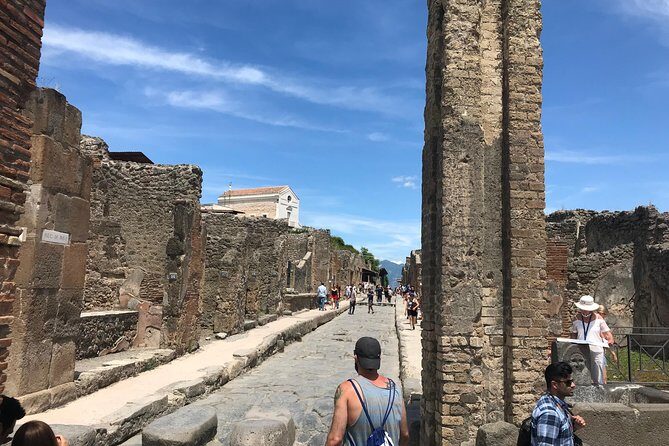
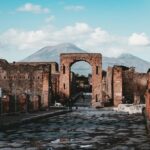
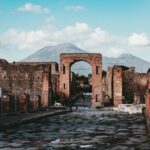
The tour includes Via dell’Abbondanza, one of Pompeii’s most famous streets. This stop is valuable because it acts like a backbone for your understanding. When you see key places connected by a main road, the city’s layout stops feeling random.
Streets are also where your sense of scale improves. Even though you’re moving through ruins, you can better imagine movement—who walked where, how busy a central corridor might have been, and how shops or everyday services would have fit into the street world.
If you’re doing Pompeii for the first time, this is a smart inclusion. You’ll leave with a mental map that helps you keep exploring after the tour.
Stabian Baths: leisure, routine, and preserved design
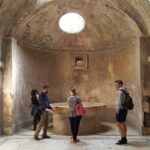
Next up is the Stabian baths. Baths are one of those Pompeii experiences that feel instantly recognizable even if you’re not a Roman-history expert. They’re about routine and comfort—places for bathing, socializing, and daily care.
In a guided tour, you can focus less on memorizing Roman terminology and more on understanding what spaces were for. A bath complex also gives you strong “everyday life” contrast to the tragedy narrative. It reminds you that people were living normal routines right up until the eruption.
A practical tip: baths and interior areas can have uneven or worn ground. Wear comfortable shoes and plan to keep moving steadily. Two hours is short, but Pompeii still demands a real walking rhythm.
The Lupanare: a social space with a blunt reality
The itinerary includes the Lupanare, often described as an ancient brothel. This is one of the stops that makes Pompeii feel unfiltered—an ugly truth alongside beautiful art and tidy streets.
In a respectful guided format, this part of Pompeii works best when it’s explained with context rather than sensationalism. Even if you’d rather skip it, the tour includes it for a reason: it shows that Pompeii’s social life included places that served specific roles in the city.
If you’re sensitive to adult-history topics, this is the kind of stop you should think about before you book. The tour is still within a short 2-hour window, so you’re not stuck there for long—but it is part of the core route.
Forum, Basilica, and the public heart of the city
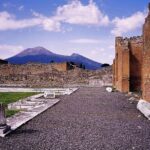
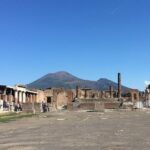
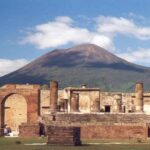
You’ll visit the Forum and the Basilica as well. This is the civic core: where people would have gathered for public life, business, and community decisions. When you reach this area after seeing homes, streets, and baths, the Forum feels like a different side of Pompeii—more official, more structured.
This sequence is helpful. It prevents the common first-timer problem: focusing only on the most photogenic spots. The Forum/Basilica stops help you see Pompeii as a functioning city with systems for public activity.
Also, finishing your tour in the Forum area is a smart design choice. You’re already at the center of things when the official guiding ends, so you can keep exploring without repositioning.
The 1863 casts and the eruption story in a human scale
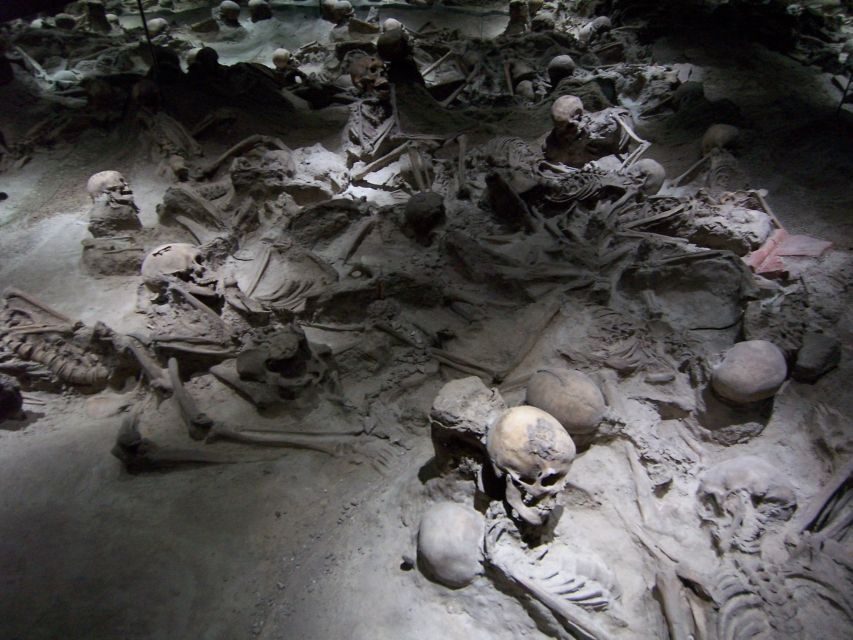
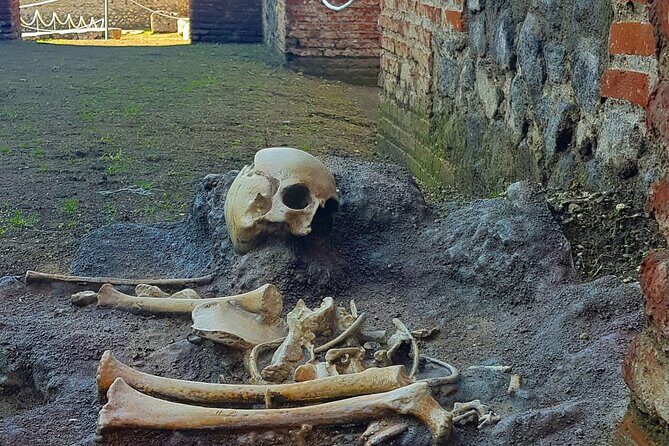
A defining feature here is the inclusion of the first casts made in 1863 by Arch. Giuseppe Fiorelli. These casts are part of how Pompeii was studied after its rediscovery, and they’re often where people get an emotional jolt because they connect the ruins to real people.
The tour also frames everything with the Vesuvius eruption in 79 AD. That narrative is what turns a historical site into a lived tragedy. In a good short tour, the goal is not shock value. It’s to help you understand that the city didn’t just “collapse,” it ended abruptly, leaving behind a snapshot of daily life.
This is one of the tour’s most memorable elements. If you’re the kind of person who wants Pompeii explained in a way that respects both the art and the human stakes, you’ll likely appreciate how the tour mixes the overview with this heavier anchor point.
Price and value: why $57.84 can make sense
At $57.84 per person for about 2 hours, the price looks like a “mid” option rather than a budget ticket. The key value is that admission is included, and the skip-the-line part is handled by the guide (not by you standing in a queue).
So you’re paying for three things at once:
- a timed route so you cover major sights without wasting time,
- an archaeologist-focused explanation that connects details,
- and entry ticket coverage so you start faster.
For a time-limited visit, that’s often a good trade. If you’re spending a day at Pompeii anyway, the tour can save you from doing the hardest planning step: figuring out a logical path through the site.
One thing to consider is your personal style. If you prefer total freedom and like to linger for 30–40 minutes in the same area, a short guided route may feel like it’s moving slightly too fast. For that style, you can still do it—then plan to extend your visit after the guided portion ends at the Forum.
Who this Pompeii tour is best for
This tour is a strong fit if you want:
- the headline monuments in a single visit,
- an archaeologist-led explanation that keeps you oriented,
- and a short, structured experience that still includes meaningful sites like baths, the Lupanare, and the Forum.
It’s also a good pick if you’re traveling with limited time. Pompeii can expand into a full-day commitment fast, but a 2-hour guided window gives you momentum and clarity.
If your group includes people who get tired of long walks, the maximum group size of 25 and the tight itinerary help. The tour still expects moderate physical fitness, but the time is bounded, which reduces the chance of turning the visit into an endurance test.
Should you book this Pompeii archaeologist tour?
I’d book it if you want a practical introduction to Pompeii that feels purposeful. The combination of skip-the-line entry, an archaeologist-style guide, and a route that hits major landmarks in two hours is exactly what makes this kind of tour useful.
I would not book it if you know you want long, quiet time in only one or two spots. In that case, you might prefer a self-guided visit where you can stay as long as you want at the frescoes or casts.
My rule of thumb: if you want a solid Pompeii story you can carry into the rest of your trip, this format is a good use of time.
FAQ
How long is the Pompeii tour with an archaeologist guide?
The tour is about 2 hours.
Is the entrance ticket included, and does it include skip-the-line entry?
Yes. Admission is included, and the guide uses the skip-the-line service by purchasing the archaeological site entrance tickets.
Where does the tour start, and where does it end?
You meet near the Coffee Shop Vittoria bar in the Piazza Esedra area, and the tour ends at the Foro di Pompei area (Via Villa dei Misteri, 2).
What key places will we see during the tour?
You’ll visit Teatro Grande to start, and then see highlights such as the amphitheater, Roman private houses with frescoes, Via dell’Abbondanza, the Stabian baths, the Lupanare, the Forum, the Basilica, and the first casts connected to Arch. Giuseppe Fiorelli (1863).
How large is the group?
This tour has a maximum of 25 travelers.
Do I need moderate physical fitness?
Yes. The tour is listed as requiring a moderate physical fitness level.
Can I cancel for free?
Free cancellation is available. You can cancel up to 24 hours in advance for a full refund.