REVIEW · POMPEII
Pompeii with an archaeologist, the original!!!
Book on Viator →Operated by Naplesprit · Bookable on Viator
Pompeii makes more sense with an archaeologist. This is the original kind of Pompeii tour, led by someone trained in archaeology and tied directly to real research at the site. You’re not just being shown ruins; you’re getting a guided explanation of how Roman life worked in one of the most dramatic moments in history, after Vesuvius buried the city in 79 AD.
I especially like the one-to-one focus that comes with a private group up to 8, which means you can ask questions without the usual shuffle. I also like that the visit is guided by an archaeologist plus a local government guide, so you get both scholarly context and on-the-ground site knowledge.
The main thing to consider is that the tour includes the guiding but not the entrance ticket, which costs extra (19€ for adults). If you’re going with a small group, budgeting for that entry fee is the only real downside.
In This Review
- Key things you’ll want to know
- Why this Pompeii visit is different: archaeology in plain sight
- What you actually see in 2 hours at Pompeii
- Classic houses and street-level clues
- Shops and the sound of commerce
- Thermal baths and the Roman routine
- Theater and public life
- The lupanar and what it tells you
- The plaster casts people come for
- How the timing helps: heat, crowds, and late-day light
- Price and value for a private group up to 8
- Where to meet and how the tour runs
- Who should book this Pompeii archaeologist tour
- Should you book? My practical call
- FAQ
- FAQ
- How long is the Pompeii archaeologist tour?
- Is the entrance fee included?
- How much is the entrance fee?
- What is the group size limit?
- Where do we meet for the tour?
- Is the ticket mobile?
- Who provides the tour guidance?
- Is confirmation sent after booking?
- Can service animals attend?
- What are the cancellation rules?
- Is the tour dependent on good weather?
Key things you’ll want to know
- Real archaeologist-led visit: not a general storyteller, but an archaeology-trained guide with excavation/research experience tied to Pompeii.
- Small private group (up to 8): you can move at a human pace and actually talk with your guide.
- Timed for late-day comfort: the afternoon route is designed to reduce heat and crowds, with great light near the end.
- A focused, 2-hour route: you’ll hit major areas without trying to cram the entire park into one session.
- Mobile ticket: easy to handle when you arrive at the start point.
Why this Pompeii visit is different: archaeology in plain sight
Pompeii can feel like a theme park if you’re rushing through. This experience is built to stop that. An archaeologist is looking at the site differently than a typical guide: they pay attention to layers, construction choices, and what the objects and spaces suggest about everyday Roman routines.
What makes it feel “real” is the guide profile. The person leading your tour is either the archaeologist themselves or a trusted colleague archaeologist. The point is simple: you’re getting someone with serious training in archaeology, not an agency script. That usually changes everything about how fast you learn and how much you remember.
You also benefit from the added local government guide included in the experience. Together, they help bridge the gap between history you read and a city you can actually walk through. You’ll still see the famous buildings, but you’ll understand what you’re looking at and why it mattered.
You can also read our reviews of more tours and experiences in Pompeii.


What you actually see in 2 hours at Pompeii
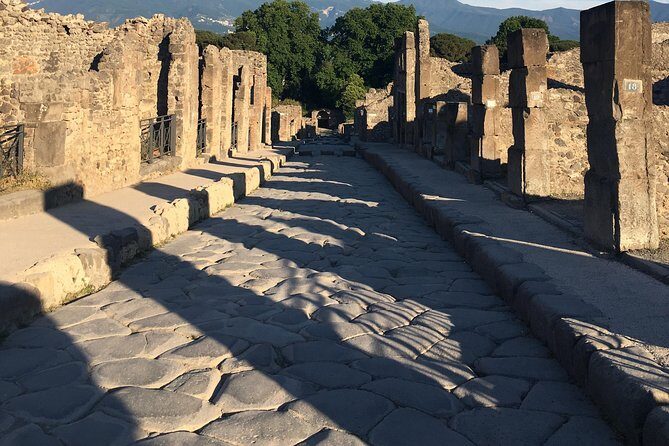
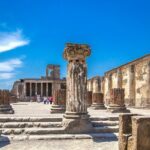
This tour stays focused inside the Pompeii Archaeological Park. It lasts about 2 hours, which is important because Pompeii rewards attention. When you cram too much into the day, you end up taking photos and forgetting what you saw.
Here’s the kind of route you can expect, with why each stop is worth your time:
Classic houses and street-level clues
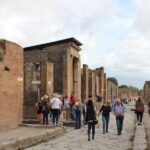
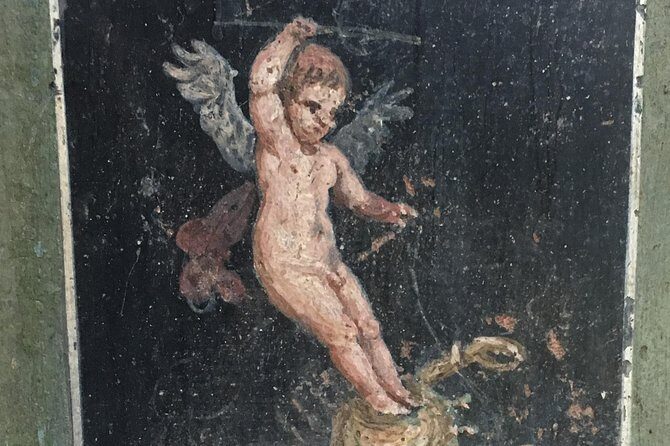
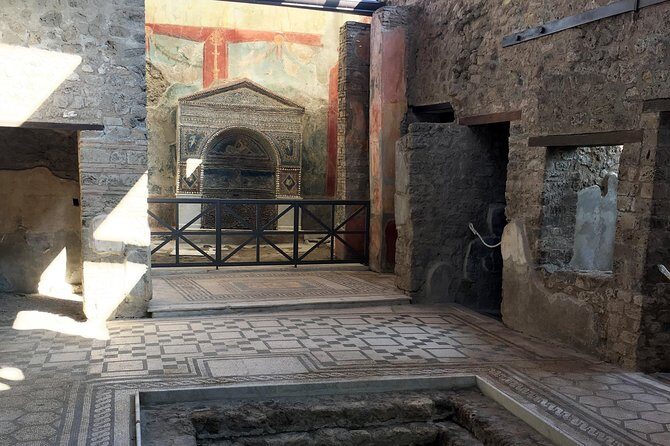
You’ll spend time with the typical houses and their decorations. The value here isn’t only the walls and floors. It’s the way the layout explains privacy, household space, and how family and visitors moved through rooms. Roman houses weren’t just pretty shells; they were social machines.
Even if you’ve seen pictures before, an archaeologist’s guidance helps you connect details—like where decoration appears and how spaces relate—to daily habits.
Shops and the sound of commerce
Pompeii’s shops bring the city’s economy into focus. You’ll look at spaces shaped for trade and everyday transactions. With a guide explaining what’s in front of you, it feels less like a set of remains and more like a functioning street.
This is especially helpful if you don’t want only big-ticket sites. Pompeii is at its best when you can understand normal life, not just monuments.
Thermal baths and the Roman routine
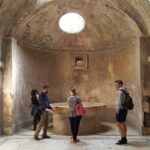
Thermal baths are one of Pompeii’s best “how people lived” clues. You’ll see them alongside explanations that make the bathing routine understandable in context. It’s not just a cool building to point at. It helps you picture what a day might have looked like for Romans—how they socialized, exercised, and relaxed.


Theater and public life
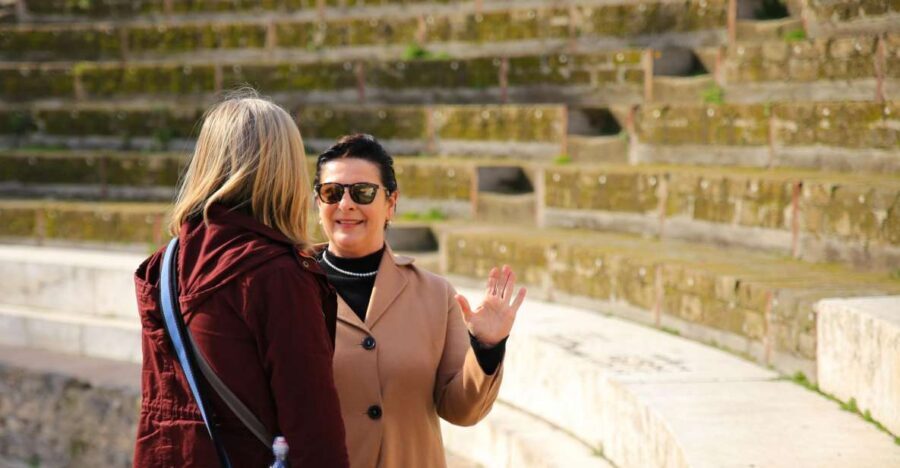
The theater area adds the public angle. Pompeii wasn’t only private homes and commerce; it was also entertainment and civic life. With a well-paced guide, you’ll get a sense of why people gathered where they did and how architecture shaped the experience of events.
Even in ruins, a theater can teach you a lot about crowd flow and visibility—when you’re not stuck guessing.
The lupanar and what it tells you
The tour includes the lupanary, the famous building often associated with sex work in Pompeii. It’s not a stop that needs sensational framing. With an archaeologist helping interpret what you see, it can become a reality-check lesson about social norms, signage, and how different lives intersected in a city that was otherwise highly structured.
This is also where your guide’s tone matters. The best tours handle it as history, not shock value.
The plaster casts people come for
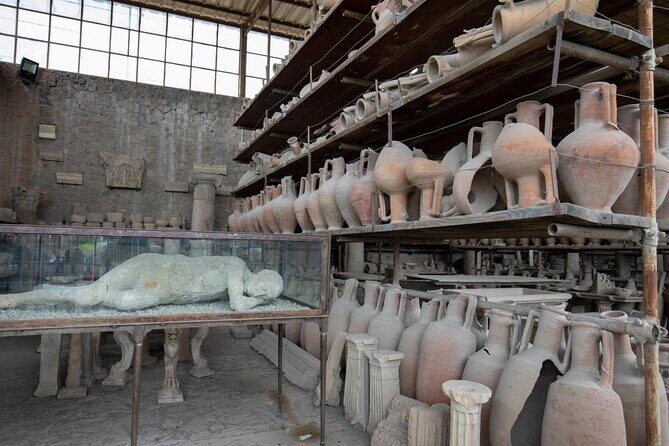
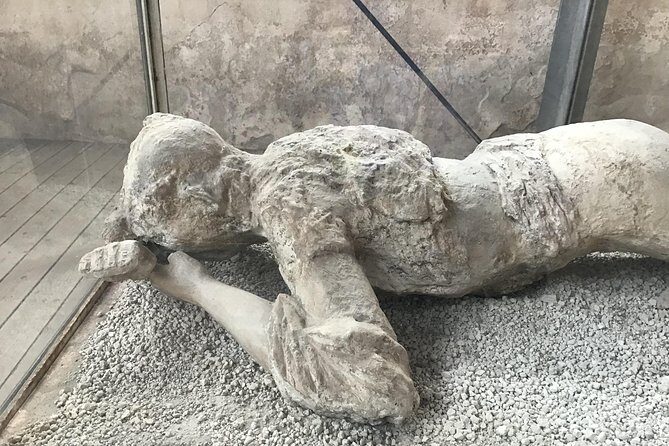
You’ll also see the preserved casts often described as molds. These are the famous “filled-in” figures that communicate what happened at the moment of eruption. It’s not just emotional impact; it’s also a technique-based story about how those forms were captured and studied.
If you’ve ever wondered why these casts look so specific, a guide will help you understand what the evidence represents and what it can’t prove. That’s the archaeology part: learning to read remains without turning them into myths.
How the timing helps: heat, crowds, and late-day light
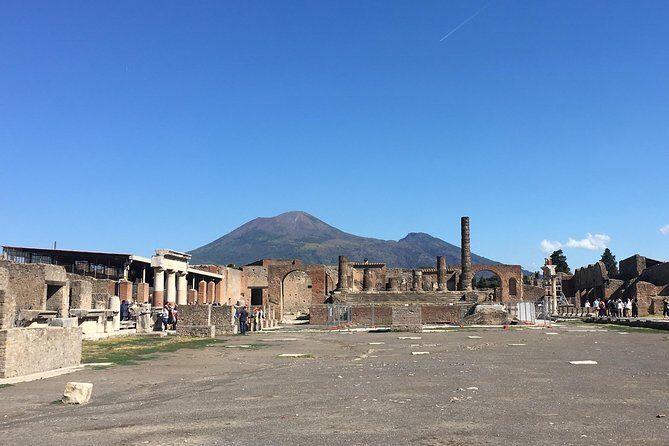
Pompeii is outdoors and it gets intense. The tour is designed specifically to avoid the worst heat and the worst crowding, and it runs in the afternoon with the bonus of end-of-day light. That matters in real-world terms.
- You’ll likely get better visibility for details in the stone and plaster.
- You’re more likely to enjoy the walking because the day isn’t at its hottest.
- Photos tend to look better, sure, but more importantly the site looks clearer and less washed out.
If you’re booking this for the summer or shoulder seasons, that timing is a bigger deal than it sounds. When ruins are easy to see, you spend less time squinting and more time learning.
Price and value for a private group up to 8
The price is $226.89 per group for up to 8 people, and the tour lasts about 2 hours. That structure is what makes it feel like value for many groups: you’re not paying per person for the archaeologist.
But there’s an important split to understand: the entrance ticket is not included. Adults pay 19€ (youth 18–24 in the EU pay 3€, and minors are free). That means your true total depends on how many adults you have in your group.
For a couple or a small family, the math can work out well because you’re paying for specialized guiding rather than a general sightseeing walk. For larger groups, your cost per person drops faster—but the group cap stays at 8, so you don’t get the chaos of huge tours.
One more practical note: this is typically booked about 51 days in advance on average. If you have a specific date in mind, treat it as a popular slot, not an afterthought.
Where to meet and how the tour runs
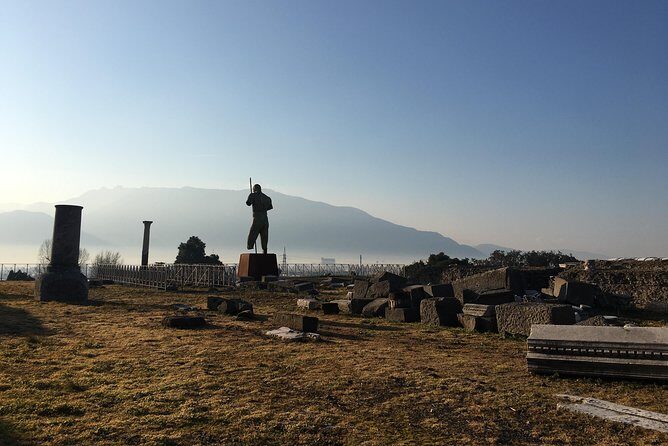
You start at Ristorante Suisse, Piazza Esedra, 10/13, 80045 Pompei NA, Italy. The activity ends back at the meeting point, so you don’t have to solve the puzzle of getting across the park alone afterward.
The ticket is mobile, which is simple and keeps you from juggling paper. The tour is private, meaning only your group participates. That matters because Pompeii can be a loud place, and a small group keeps your learning session from turning into a frantic herd move.
It’s also near public transportation, and most travelers can participate. Service animals are allowed, which is helpful to know ahead of time.
Who should book this Pompeii archaeologist tour
This is a great fit if you want Pompeii to feel like real interpretation, not a checklist. I’d especially recommend it if:
- You care about archaeology and want explanations tied to how the site is studied.
- You prefer a smaller group pace with time for questions.
- You want the famous highlights—houses, baths, theater, the lupanary, and the casts—but explained in context.
If your idea of Pompeii is more about quick sightseeing and you’re fine reading guideboards on your own, you might not get your money’s worth. This tour’s strength is guided understanding, and that works best when you actually want to pay attention.
Should you book? My practical call
Book it if you want Pompeii to be more than photos. The combination of an archaeologist-led visit plus a local government guide gives you a stronger layer of meaning than most standard tours. The small private group size also helps you stay in control of the experience instead of being dragged through it.
Skip it only if you’re determined to do a self-guided walk and you’re comfortable with the added mental effort of figuring out what you’re seeing without expert help. Otherwise, this is the kind of Pompeii experience where the ruins stop being random and start becoming a story you can follow.
FAQ
FAQ
How long is the Pompeii archaeologist tour?
It runs for about 2 hours.
Is the entrance fee included?
No. Entrance fee (Biglietto d’ingresso) is not included.
How much is the entrance fee?
The entrance fee is 19€ for adults, 3€ for young people 18–24 from the EU, and free for minors.
What is the group size limit?
This is a private tour for your group only, up to 8 people.
Where do we meet for the tour?
The meeting point is Ristorante Suisse, Piazza Esedra, 10/13, 80045 Pompei NA, Italy.
Is the ticket mobile?
Yes, the tour uses a mobile ticket.
Who provides the tour guidance?
The visit is private and includes an archaeologist (100% archaeologist) plus a local government guide.
Is confirmation sent after booking?
Confirmation is received within 48 hours of booking, subject to availability.
Can service animals attend?
Yes, service animals are allowed.
What are the cancellation rules?
You can cancel for a full refund up to 24 hours in advance. If it’s canceled due to poor weather, you’ll be offered a different date or a full refund.
Is the tour dependent on good weather?
The experience requires good weather. If it’s canceled because of poor weather, you’ll be offered another date or a full refund.