REVIEW · POMPEII
Explore Pompeii with an Archaeologist
Book on Viator →Operated by Askos Tours · Bookable on Viator
Pompeii suddenly makes sense. This small-group tour gives you skip-the-line admission and archaeologist-led storytelling as you move fast between the big names of the ruins. Guides such as Mario Celentano, Alexandra, and Julia are called out for clear English, patience, and fun details that help the stones feel like a real city.
I also like the setup for asking questions. With a maximum of 20 people per guide (and headsets for larger groups), you get more back-and-forth than the usual “walk and whisper” style tours, and you’ll cover a strong mix of public spaces, homes, and everyday life stops. One thing to keep in mind: even with fast entry, Pompeii can get crowded, and on busier days it can be harder to hear perfectly through the headset system.
In This Review
- Why This Pompeii Tour Works Better Than a Self-Guided Walk
- What You’re Really Buying for $35.67 in Pompeii
- The 2-Hour Flow: From Porta Marina Superiore to Piazza Esedra
- Stop-by-Stop: The Route and What Each Place Teaches You
- Porta Marina Superiore: Your Entry Point Into the City
- Foro de Pompeya: The Main Square and City Life
- Basilica: The Court House
- Lupanar: The Brothel
- Granaries of the Forum: Where Food Supply Meets Power
- House of Menander and House of the Faun: Two Homes, Two Lenses
- Stabian Baths (Terme Stabiane): The City’s Routine
- Via dell’Abbondanza: A Walk That Helps You Track the City
- Thermopolium VI: A Street-Level Food Stop
- Teatro Grande: A Public Stage
- Casa dei Vettii: The Finale Home Base
- Practical Tips for Enjoying Pompeii Without Losing Your Mind
- What Makes the Archaeologist Guide Different
- Who Should Book This Pompeii Archaeologist Tour
- Should You Book It
- FAQ
- How long is the Explore Pompeii with an Archaeologist tour?
- Is admission to Pompeii included?
- What language is the tour offered in?
- How big is the group?
- Are headsets provided?
- Where do I meet the guide and where does the tour end?
- Can I bring a service animal or a pet?
- Is there a cancellation option?
Why This Pompeii Tour Works Better Than a Self-Guided Walk
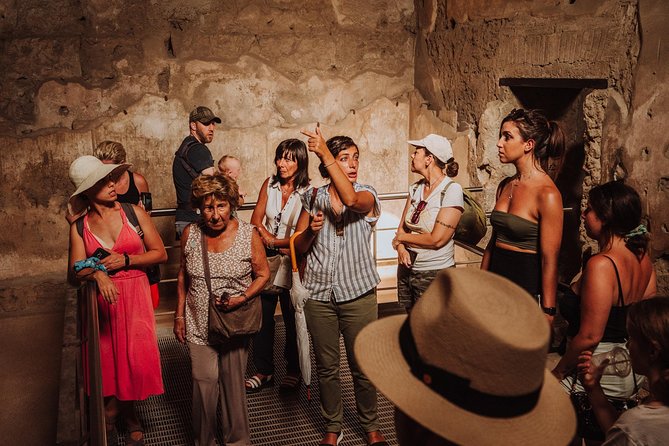
This is the kind of Pompeii experience you book when you want to see a lot without losing the plot. The ruins are impressive, but they can also feel like random walls unless someone connects the dots. Here, an archaeologist guide does that work for you, translating the city layout into stories you can follow in real time.
The pacing also matters. You’re in for about 2 hours, and the route is built to hit major highlights without trying to cover every square meter of the site. That’s good value for most visitors because Pompeii rewards smart focus. You finish with enough context to explore further on your own if you want.
What You’re Really Buying for $35.67 in Pompeii
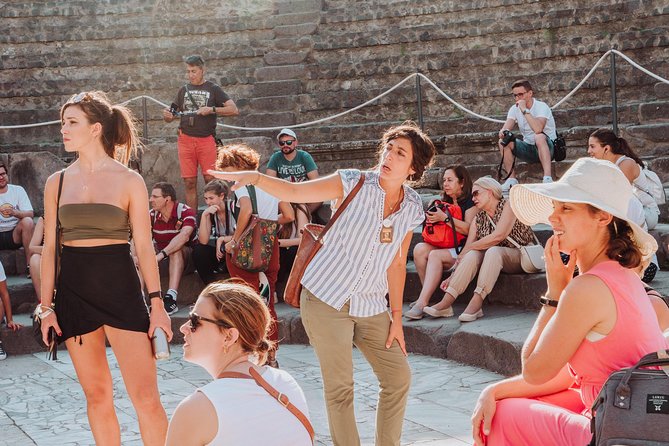
At $35.67 per person for about 2 hours, you’re not just paying for a walk through ruins. You’re paying for three practical advantages:
- Skip-the-line admission so you start the day with less waiting.
- An archaeologist guide, which is the difference between seeing buildings and understanding what you’re looking at.
- Included Pompeii admission, so you don’t have to sort out separate entry tickets.
For many people, that combo is the sweet spot. You get the main sights plus explanations, without spending your whole vacation planning logistics. And the small-group cap of 20 helps keep the tour from feeling like a human conveyor belt.
You can also read our reviews of more tours and experiences in Pompeii.


The 2-Hour Flow: From Porta Marina Superiore to Piazza Esedra
You meet at Via Villa dei Misteri, 2, 80045 Pompei NA, and the tour starts at the main entrance area called Porta Marina Superiore. The guide holds an Askos Tours sign so you can spot them quickly. The tour ends at Piazza Esedra, which is convenient because you can keep exploring or grab transit afterward without backtracking.
Time is managed in tight chunks. Each major stop is roughly 10 minutes, with one short free-walk segment on Via dell’Abbondanza. That structure keeps the tour moving and makes it realistic to see a lot in one afternoon, especially if you’re trying to fit Pompeii into a busy itinerary.
Headsets are provided for groups of 16 or more. That’s a big deal at Pompeii. The site is open air and noisy, and the headset makes it easier to hear the guide instead of guessing what they’re saying over the crowd.
Stop-by-Stop: The Route and What Each Place Teaches You
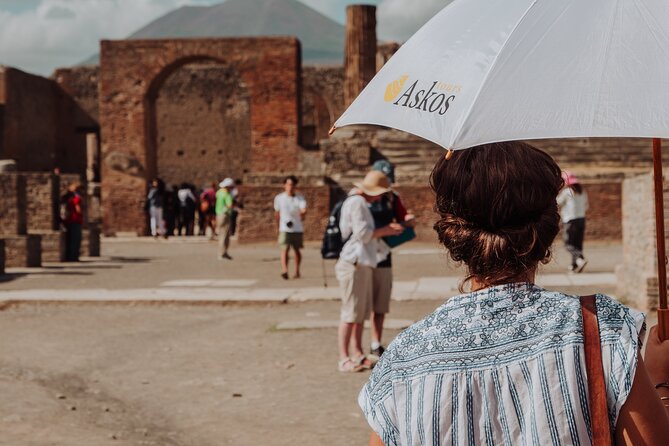
Porta Marina Superiore: Your Entry Point Into the City
The tour begins at Porta Marina Superiore, the main entrance meeting point. This first stop matters because it sets the tone: you’re not just entering a park, you’re entering a city with systems—streets, public spaces, homes, and power centers.
This is also when you want your guide’s framing the most. An archaeologist can point out what to watch for as you walk in, like how Pompeii’s layout shapes what you see next. If you’ve ever wandered among ruins and felt lost, that initial orientation helps a lot.
Foro de Pompeya: The Main Square and City Life
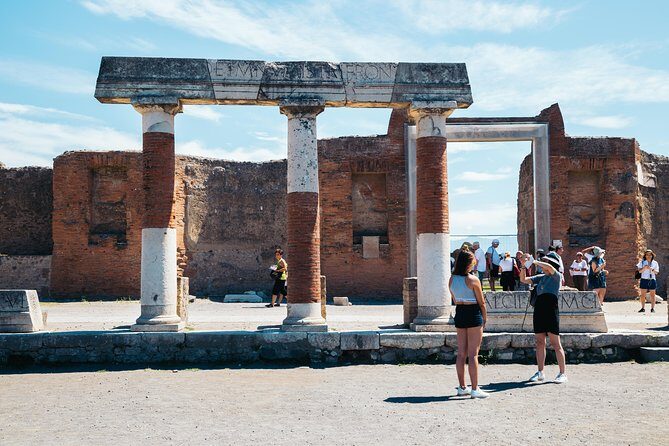
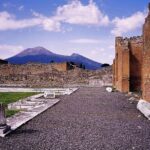
Next is the Foro de Pompeya, the main square. This is where tours usually slow down for a reason: it’s the public core. In a short time, you can learn how the square functioned as a social and civic center, not just an open area surrounded by old buildings.
Because the tour is guided, you also avoid the common trap of treating the forum as just scenery. The archaeologist explains what makes the square important and how it connects with the next landmarks.


Basilica: The Court House
Then you head to the Basilica, described on the tour as the court house. Even in 10 minutes, a guide can help you read the space like it has a job: a place for decisions, rules, and civic matters.
This stop is useful because it gives you a contrast. You’ve been in an open civic square, and now you’re in a space tied to law and public administration. That contrast helps your brain organize Pompeii into categories instead of one big pile of ruins.
Lupanar: The Brothel
The Lupanar comes next, the brothel. This is one of Pompeii’s most discussed locations, and a guided approach makes it less sensational and more informative. An archaeologist can explain how spaces like this fit into daily urban life.
Candid note: this stop isn’t for everyone, but it is part of Pompeii’s real picture. If you’re traveling with kids, you’ll likely want to gauge how your family feels before this portion. (The tour does run through it either way.)
Granaries of the Forum: Where Food Supply Meets Power
At the Granaries of the Forum, you’re shown the ancient granaries. Grain storage tells you a lot about how a city handles survival. A guide’s explanations help you see these structures as practical infrastructure, not just another set of stone rooms.
This is also a good time to ask a question. If you’re the kind of traveler who likes the why behind the what, this stop often sparks good conversation because it connects to economy and daily needs.
House of Menander and House of the Faun: Two Homes, Two Lenses
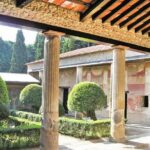
The tour moves into residential areas with the House of Menander and the House of the Faun. Seeing multiple homes close together is a smart way to learn how domestic spaces were organized.
In a short guided run, you’re not getting a museum-style lecture. Instead, you get quick, targeted explanations as you look at layout and rooms. That helps you spot differences without needing to memorize a textbook.
If you enjoy architecture and street-level impressions, these home stops are often what make Pompeii feel human.
Stabian Baths (Terme Stabiane): The City’s Routine
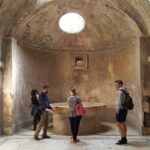
The Stabian Baths are next. This stop shifts the mood from public power and private homes to daily routine. Even if you only have a moment here, a guide can help you understand what a bathing complex represents in a city.
This is the part of the tour where you often get the most “oh, so that’s how people lived” feeling. It’s not glamorous, but it’s real.
Via dell’Abbondanza: A Walk That Helps You Track the City
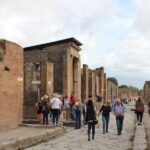
Then you have a short stretch on Via dell’Abbondanza, the street called Via dell’Abbondanza. This free portion is valuable because it reminds you Pompeii isn’t only buildings—it’s movement between places.
Walking a main street in the middle of the tour gives you a mental reset. It can also be a good time to adjust your pace if the earlier stops felt fast.
Thermopolium VI: A Street-Level Food Stop
The route includes Thermopolium VI, the thermopolium. This is the kind of stop that gives Pompeii texture. A guided explanation helps you connect the “where” to everyday behavior, not just the “what.”
If you like travel stories about food and daily habits, this is often a highlight. And if you’re not sure what a thermopolium is, the archaeologist guide is exactly the person to make it click quickly.
Teatro Grande: A Public Stage
Next is Teatro Grande, the theatre. The value here is the shift from civic life and private space into performance and public gatherings. Even with limited time, the guide can help you imagine how people used the theatre as part of their social calendar.
This stop is also a nice break from dense clusters of ruins because theatres give you open sightlines and a different sense of scale.
Casa dei Vettii: The Finale Home Base
The tour ends at Casa dei Vettii, the House of Vettii. This is a strong final choice because it brings you back to the domestic side of the city—good for balancing your route.
By the time you reach this house, you’ve already seen public square, law space, entertainment, food stop, baths, and more. That makes the ending feel like a wraparound. You’re not leaving Pompeii with random impressions; you’re leaving with categories you can remember.
Practical Tips for Enjoying Pompeii Without Losing Your Mind
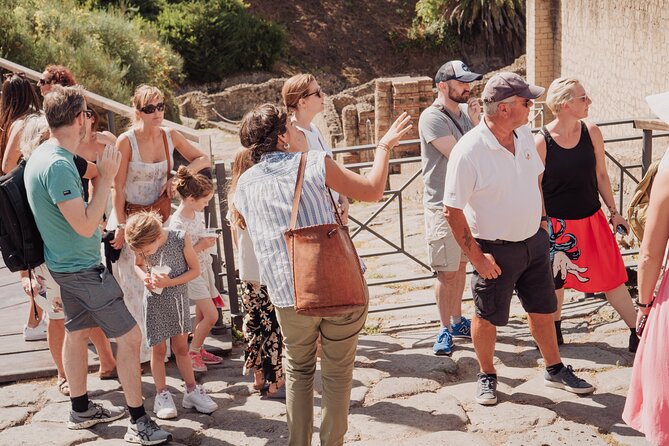
Pompeii is famous, but it’s also physically tough. Uneven ground is part of the deal, so wear sturdy shoes you trust. One of the most consistent bits of advice from guide-friendly travelers is that you should expect real walking over imperfect surfaces.
Heat is another factor. If you’re going in summer, bring a fan and consider an umbrella for shade. Also bring a refillable water bottle. There are fountains in the area, and having water on hand keeps you from turning your tour into a dehydration sprint.
If you’re sensitive to crowds, pick your timing wisely. Even with skip-the-line admission, Pompeii can be full, and that can make it harder to hear the guide through the headset when the site is very busy.
What Makes the Archaeologist Guide Different
This tour gets high marks for a reason: the archaeology isn’t delivered as vague awe. Guides are praised for clear explanations, answering questions patiently, and keeping a nice pace. People mention names like Antonio, Teresa, Diego, and Rosanna for being able to make key sights feel understandable instead of overwhelming.
The headset system also helps the guide do their job. When the tour group is larger, being able to hear the commentary makes the stops feel like they have meaning, not just locations on a map.
That said, one caution: if you get a less interactive guide style, the experience can feel more like a lecture than a conversation. If you like high-touch Q&A, pick a day with fewer crowds and arrive on time so the guide has room for questions.
Who Should Book This Pompeii Archaeologist Tour
This is a great fit if you:
- Want skip-the-line entry and don’t want to waste your limited time waiting.
- Prefer a small group with room to ask questions.
- Like a mix of Pompeii highlights—public spaces, homes, baths, and a food stop—in about 2 hours.
- Are visiting for the first time and want a guide to translate what you’re seeing.
It’s also a solid choice for families, as long as you’re comfortable with the brothel stop and you bring whatever helps kids handle walking and heat. For repeat visitors, this tour can still work as a fast refresher, especially if you’re the type who learns best with explanations while you walk.
If you want total freedom to wander at your own pace through every corner, you may still want to add extra time after the tour. This itinerary is designed for focus, not for staying forever.
Should You Book It
Yes—if you want Pompeii to feel understandable quickly. The value is strongest when you take advantage of what you pay for: skip-the-line access, a real archaeologist guide, and a tight, highlight-heavy route.
Book it if:
- You’re short on time and want the biggest sights with context.
- You prefer guided pacing over trying to decode Pompeii alone.
- You like hearing the story as you stand in front of the ruins.
Consider a different option if:
- You hate crowds and need a quieter experience.
- You want to linger at a small number of rooms for a long time.
- You strongly dislike the idea of guided stops that include sensitive sites.
FAQ
How long is the Explore Pompeii with an Archaeologist tour?
It lasts about 2 hours.
Is admission to Pompeii included?
Yes. Pompeii admission fees are included in the tour.
What language is the tour offered in?
The tour is offered in English.
How big is the group?
The tour has a maximum of 20 travelers.
Are headsets provided?
Headsets are provided for groups of 16 or more.
Where do I meet the guide and where does the tour end?
You meet at Via Villa dei Misteri, 2, 80045 Pompei NA, Italy, and the tour ends at Piazza Esedra, 80045 Pompei NA, Italy.
Can I bring a service animal or a pet?
Service animals are allowed. For dogs, only those that do not exceed 10 kg in weight and a maximum height of 40 cm are permitted, and they must be on a leash and held in the arms inside buildings. You must also collect their excrement.
Is there a cancellation option?
Yes, free cancellation is available. You can cancel up to 24 hours in advance for a full refund.