Pompeii makes sense in three hours. This Pompeii Ruins Special is built for a calm, high-value walk through the Forum, thermal baths, theatres, and the main streets—so you understand daily Roman life instead of just collecting ruins. It’s paced to help you connect the big public spaces to what people ate, sold, and painted in their homes.
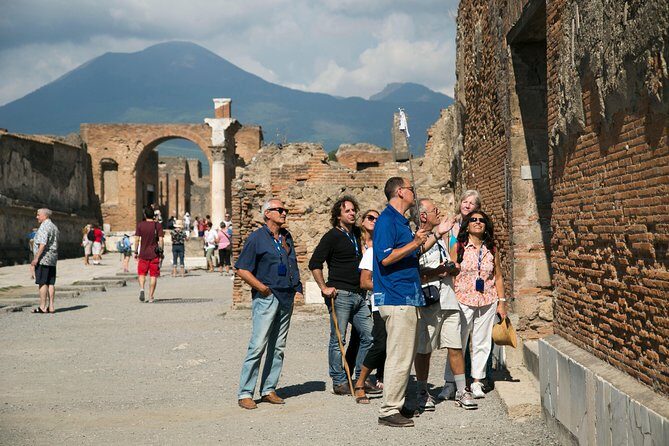
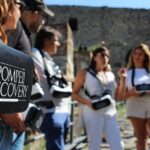
I like that the tour is led by a licensed guide from Campania Region—and the guide names you may encounter, like Lucia in past groups, come with the kind of storytelling that makes the stones feel like a town. I also like the private-group feel: your party of up to 8 stays together, so you can ask questions without waiting for a big bus rhythm.
One consideration: the admission ticket isn’t included, so you’ll need to handle entry costs on your side, and the tour is about the central highlights rather than trying to cover every corner of the archaeological park.
In This Review
- Key things I’d bet you’ll care about
- A Pompeii highlight route that doesn’t feel like a sprint
- Meeting at Pompei Scavi (Villa dei Misteri): start at the right moment
- The Forum and city center: where power and routine met
- Theatres: entertainment as a social engine
- Thermal baths and bathing culture: when leisure had rules
- Ancient streets, fountains, and food stops: the daily-life payoff
- Frescoes and mosaics: the art you’ll miss if you rush
- Price and group value: when $335.48 makes sense
- Tickets and what to bring (admission is separate)
- How the tour timing fits a real day trip
- Who should book Pompeii Ruins Special?
- Should you book Pompeii Ruins Special?
- FAQ
- How long is the Pompeii Ruins Special tour?
- Is this a private tour?
- What is the group size limit?
- What’s included in the price?
- Is the admission ticket included?
- What ticket format do I receive?
- Where is the meeting point in Pompeii?
- How soon will I receive confirmation?
- Is public transportation nearby?
- What’s the cancellation window for a full refund?
Key things I’d bet you’ll care about
- Private group up to 8: small enough for real questions, not a crowd shuffle
- A 3-hour structure: see the essential zones without a full-day grind
- Roman daily life stops: streets, fountains, shops, and the places people ate and worked
- Built-in interpretation: the Forum, baths, and theatres are explained as a system, not separate sights
- Mobile ticket: fewer paper hassles once you’re in town
A Pompeii highlight route that doesn’t feel like a sprint
If you’re short on time, Pompeii can feel like a blur. This tour’s strength is that it targets the most recognizable parts of the site at a speed that lets the place register in your brain. You’re not trying to do everything. You’re learning the main “neighborhoods” of the ancient city and how they link together: public power, entertainment, bathing culture, and everyday street life.
The 3 hours (approx.) matters. It’s long enough to go beyond the postcard angles and short enough that you don’t lose your energy halfway through. Pompeii is sunny, uneven underfoot, and mentally tiring if you’re constantly translating “what am I looking at?” into meaning.
Also, this is a good entry point if you love history and archaeology but you don’t want to spend an entire day trapped inside a site map. The tour is designed to get you oriented: where the center was, how people gathered, and what kinds of spaces were part of daily routines.
You can also read our reviews of more tours and experiences in Pompeii.
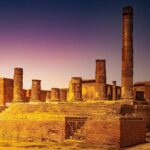
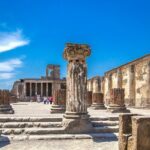
Meeting at Pompei Scavi (Villa dei Misteri): start at the right moment
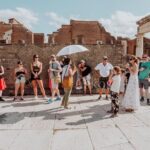
The meeting point is Pompei Scavi Villa Dei Misteri, 80045 Pompei, Metropolitan City of Naples, Italy. Starting here helps you get your bearings quickly, because Pompeii is huge and easy to feel lost in if you walk in with only a guidebook and good intentions.
Since the meeting spot is listed as near public transportation, you’re not locked into a single transport plan. That’s useful if you’re coming from Naples, Sorrento, or staying somewhere else along the Amalfi Coast. If you’re driving, it can still help to plan for a bit of walking at the beginning because the area around major entrances is not the same as a parking lot-and-stroll situation.
Practical tip: show up on time. Pompeii tours run best when the group starts together. Once you’re inside the archaeological park, the real work is the guided flow—so don’t arrive late and miss the first orientation.
The Forum and city center: where power and routine met
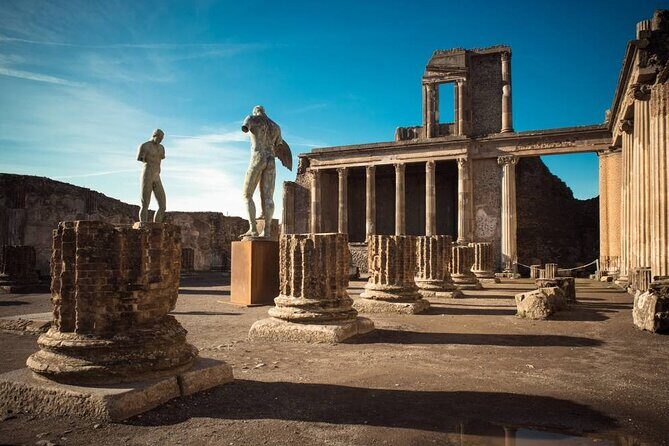
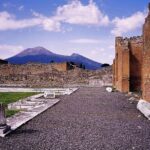
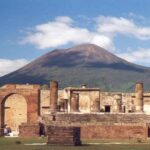
The tour kicks off inside the Pompeii Archaeological Park with the city center around the ancient Roman square called the Forum. This is one of the best places to understand a Roman city, because the Forum is where politics, religion, and civic life overlapped.
What makes this stop valuable is that you’re not just seeing “big stones in an open square.” You’re learning why the Forum mattered—how public buildings shaped how people behaved, met, and conducted business. When you later walk streets and look at everyday spaces, the Forum gives you a mental anchor. You start to notice patterns instead of random fragments.
A big plus here is that the tour connects the Forum to the rest of the city. You’re not trapped at one viewpoint. You move from civic space into the places where entertainment, commerce, and movement through the town would have made daily life feel busy and continuous.
Drawback to keep in mind: because the tour is only about three hours, you’ll spend a shorter amount of time at each individual building than you would if you were free-roaming with a flexible plan. If you love lingering in one spot to study every detail, you may feel the pressure to keep moving. The tradeoff is you get the overall story without getting stuck.
Theatres: entertainment as a social engine
Next up are the theatres. In Pompeii, theatres aren’t just “cool ancient architecture.” They’re a clue about how Romans relaxed, gathered, and built shared experiences.
With a guided format, you get context for what you’re seeing—how these spaces functioned, what kinds of events people would have attended, and why the location of public entertainment mattered in a city layout. The result is that the theatre stop becomes part of the same narrative as the Forum, not a separate time capsule.
One thing I like about this kind of stop: theatres help you understand scale. Pompeii can look “small” when you’re outside looking in, but once you see how these public spaces were built for crowds, the city stops feeling like a quiet museum. It becomes a lived environment.
Thermal baths and bathing culture: when leisure had rules
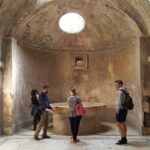
The tour includes the thermal baths. Roman bathing wasn’t just hygiene—it was a whole social routine with spaces for different activities and temperatures, and it acted like a public meeting point.
A guided approach helps you read the architecture as a system: you can start to understand why certain areas existed, how people would move through the bathing process, and what the layout suggests about daily leisure and social life. Even if you’re not an architecture nerd, this is the kind of stop that tends to click because everyone understands the basic idea of bathing and relaxation. The details make it special.
If you’re coming from a warm-weather mindset (Italy in general), the baths also give you a “cool down” counterpoint—one reason Pompeii can feel more human. You’re not only looking at tragic ruins. You’re seeing how people spent time.

Ancient streets, fountains, and food stops: the daily-life payoff
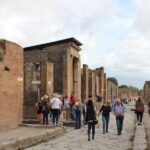
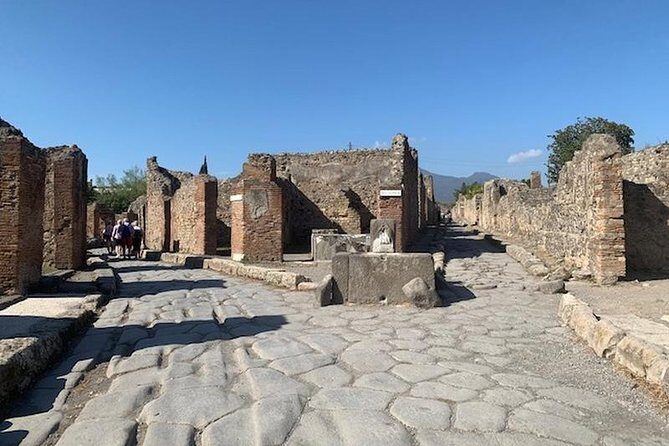
One of the most fun parts of this tour is that it includes the ancient streets and features that reflect regular life: fountains, bakery/food areas, fast food-style places (as described in the experience overview), plus houses and shops.
This is where Pompeii turns from architecture into storytelling. Streets tell you how movement worked—where people likely walked, paused, and shopped. Fountains are more than decoration; they hint at water use and public amenities. Food-related areas matter because they’re one of the strongest ways to connect an ancient city to modern instincts: people needed meals, snacks, and quick stops.
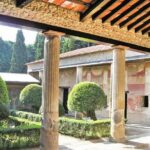
The homes and shopfronts help you shift from “public buildings” to “private life.” You begin to understand how the city supported a mix of social classes and routines, all within a walkable grid. That blend is what makes Pompeii feel like a real place rather than a set of highlights.
If you’re short on time, I consider this day-to-day layer the best value. Public spaces are impressive, yes. But streets and everyday commerce are often what make the trip stick with you after you leave.
Frescoes and mosaics: the art you’ll miss if you rush
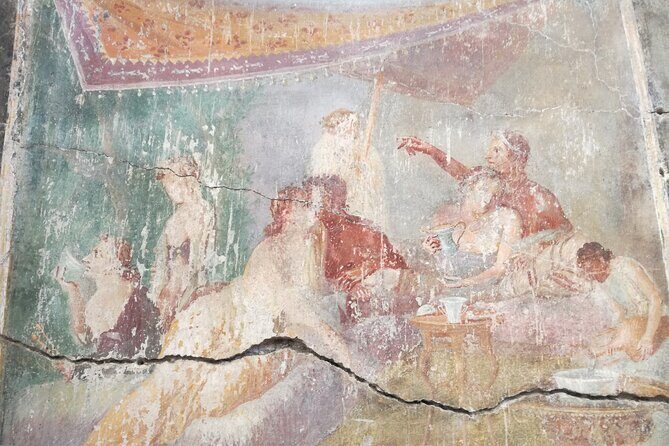
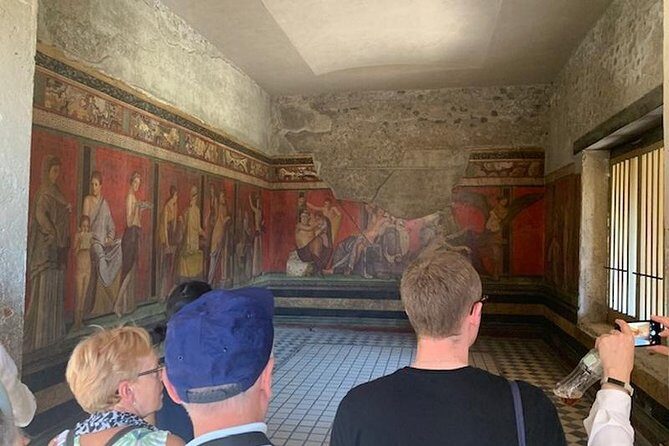
The tour also takes in frescoes and mosaics. These are the kinds of details that make Pompeii feel personal. You’re not just reading about a city. You’re looking at what people decorated their spaces with—design choices, patterns, and scenes that reveal taste and identity.
Guiding helps here because it’s easy to see paint fragments or floor designs and wonder what you’re supposed to think. With interpretation, the art becomes evidence. You start to connect it to wealth, function, and everyday aesthetics.
Even within a limited time window, including this kind of art stop is smart. It adds emotional weight to the trip, and it also balances out the “structure heavy” parts like theatres and baths.
Price and group value: when $335.48 makes sense
The price is listed as $335.48 per group (up to 8). That sounds like a lot if you’re thinking per person. But in practice, it can be good value if you’re traveling with friends or family and you want a private, guided flow instead of a large group tour.
Here’s the value equation I’d use:
- You’re paying for a licensed guide and a structured walkthrough of top sites
- You’re paying for private group pacing, which means you can ask questions and keep momentum
- You’re not paying for admission inside this price, so your total day cost will be higher once you add entry
Because Pompeii is crowded at peak hours and confusing to read without context, a guide can save time and reduce frustration. If you hate standing around while everyone catches up, this format is a better fit than mass tours.
One more thing: since it ends back at the meeting point, you don’t have to coordinate a complicated end location on your own. That matters when you’re also trying to line up transport.
Tickets and what to bring (admission is separate)
This experience includes a tour guide, but it lists Admission Ticket Not Included. That means you should plan on buying or securing your entry separately.
The booking also includes a mobile ticket, which is convenient. Instead of printing paperwork, you’ll have what you need on your phone. Still, double-check your phone battery and bring a basic backup plan (like a power bank). Pompeii days are phone-heavy: tickets, directions, photos, and quick reference browsing.
Also note: the tour overview says all fees and taxes aren’t included. So if you’re budgeting, treat the quoted price as the tour fee only, then add whatever entry and local costs apply on your day.
How the tour timing fits a real day trip
This is a smart choice for a “Pompeii window,” meaning you’re likely pairing it with another stop, lunch, or travel time. Three hours inside Pompeii is enough to get a coherent arc: civic center → entertainment → bathing → everyday life → art details.
It also helps with decision fatigue. If you’ve ever walked around a huge archaeological site with just a checklist, you know the mental load. You start second-guessing which building matters. A guided route removes that stress and gives you a storyline to follow.
If you’re planning a longer trip to the Amalfi Coast area, this tour format is also easier to fit than options that take most of the day. It’s built for people who want meaningful time without turning the day into a marathon.
Who should book Pompeii Ruins Special?
Book this if you want:
- Top Pompeii highlights in a controlled time frame
- A guided narrative that ties Forum, theatres, baths, streets, and art together
- A private experience for a small group up to 8
It’s also a strong option if you’re the kind of traveler who likes to learn while walking, not after the fact. The pacing is designed to keep you moving but not frantic.
If your dream Pompeii day is 5+ hours of slow solo wandering with frequent stops to photograph one fresco, then this may feel too structured. But if you want the best chance of understanding the city quickly, it’s a solid bet.
Should you book Pompeii Ruins Special?
My take: yes, if you’re aiming for clarity and value over total coverage. This tour is built around the places that explain how Pompeii worked—public life, leisure, daily routines, and the art people saw every day.
It’s especially worth it when you’re traveling with a group of up to 8 and you want a guide-led flow through the main zones. Just budget for admission separately, show up on time at Pompei Scavi Villa Dei Misteri, and plan to walk with comfortable shoes.
If you want a Pompeii day where the ruins actually make sense by the time you leave, this format is hard to beat.
FAQ
How long is the Pompeii Ruins Special tour?
The tour lasts 3 hours (approx.).
Is this a private tour?
Yes. It’s listed as a private tour/activity, meaning only your group participates.
What is the group size limit?
The tour is priced per group (up to 8).
What’s included in the price?
The price includes a tour guide.
Is the admission ticket included?
No. The experience notes Admission Ticket Not Included.
What ticket format do I receive?
You get a mobile ticket.
Where is the meeting point in Pompeii?
The meeting point is Pompei Scavi Villa Dei Misteri, 80045 Pompei, Metropolitan City of Naples, Italy.
How soon will I receive confirmation?
Confirmation is received within 48 hours of booking, subject to availability.
Is public transportation nearby?
Yes. The listing says it’s near public transportation.
What’s the cancellation window for a full refund?
You can cancel for a full refund if you cancel up to 24 hours in advance of the experience start time.