REVIEW · POMPEII
Pompeii Skip-the-line Tour with Archaeologist Guide
Book on Viator →Operated by Raphael Tours & Events · Bookable on Viator
Pompeii hits harder with an archaeologist guide. This Pompeii skip-the-line tour turns the ruins into a story, from the ruts in the old streets to the theater, baths, forum, and the famous Lupanare brothel—then ties it all back to the AD 79 eruption of Mt. Vesuvius.
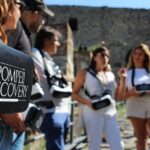
I love how this tour is run as a small-group walk, and I love that the guide isn’t just reading facts. People like Lelo, Italo, and Cela are described as archaeologists with real site experience, so you get specific details you’d miss if you just wander.
The main drawback to weigh is simple: you have only about 2 hours, and you really do walk on lava rock. Bring comfortable shoes and plan for sun, because the pace is active.
In This Review
- Key highlights you’ll care about
- Skip-the-line entry that actually saves time
- Meet your archaeologist guide and get the story in English
- Ruts in the old streets: the walking part is the lesson
- The itinerary’s backbone: forum, temples, and civic power
- Theater stop: tragedy, comedy, and a lesson in Roman entertainment
- Baths and gossip: the thermal bathhouse routine
- Gladiators and the training spaces you might miss alone
- The Lupanare brothel: confronting a famous Pompeii landmark
- Mt. Vesuvius AD 79: why the ruins feel so personal
- House names and the “small stops” that make Pompeii click
- Price check: is $71.35 worth a 2-hour archaeologist tour?
- Who this tour fits best (and who might prefer solo)
- Practical tips before you go
- Should you book the Pompeii skip-the-line archaeologist tour?
- FAQ
- How long is the Pompeii skip-the-line tour with an archaeologist guide?
- Is admission to Pompeii included?
- Where do I meet for the tour?
- Will I need to arrange transport to Pompeii myself?
- What should I wear or bring?
- What happens if weather is poor or I miss the tour?
Key highlights you’ll care about
- Skip-the-line entry with a guide so you get moving instead of stuck at the gate
- Small group (max 16) for easier questions and less crowd stress
- Audio headsets so you can hear the guide clearly while walking
- Forum, theater, baths, and gladiator areas covered in a tight, well-paced route
- The Lupanare (brothel) stop gives you a vivid look at everyday Roman life
- Mt. Vesuvius AD 79 explanation so the ruins make emotional and historical sense
Skip-the-line entry that actually saves time
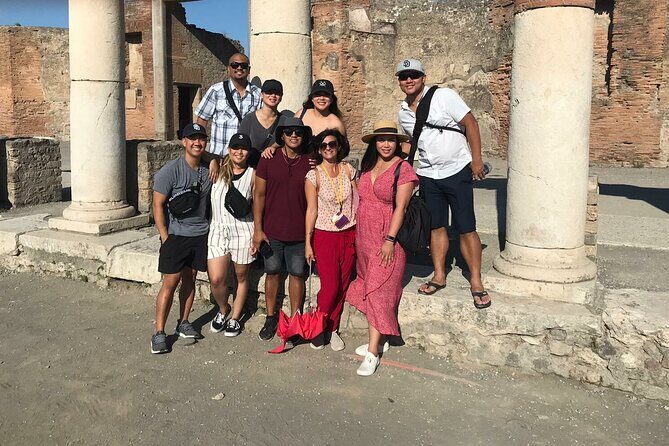
This tour is set up so you don’t show up and figure things out while crowds build. You meet at Hotel Vittoria, Piazza Esedra, then your guide brings you toward the entrance area and into the archaeological park.
The practical win is that your guide helps you get through the entry point faster than doing it solo. You’re not buying a standalone ticket for self-guided roaming. This is a guided-tour confirmation you can use only with the guide, which keeps the whole experience controlled and timed.
You’ll feel the difference right away. Two hours is short for Pompeii’s sheer size, so anything that reduces waiting and confusion is real value.
You can also read our reviews of more guided tours in Pompeii

Meet your archaeologist guide and get the story in English
The big reason this tour works is the guide. You’ll be with a local guide, offered in English, and the group is capped at 16 travelers. That small number matters in Pompeii, where sound carries, paths get narrow, and it’s easy to lose track of your bearings.
I also like that several guides associated with this experience are described as archaeologists who have worked at the site for years. Guides such as Lelo, Italo, and Cela come through in accounts as witty, fast-moving, and able to answer questions on the spot. Even if you’re not a history person, you’ll still get the “why does this matter” version of Pompeii, not just the dates.
And because the tour is guided, you don’t need to play archaeologist yourself. You get pointing, context, and a mental map as you walk.
Ruts in the old streets: the walking part is the lesson
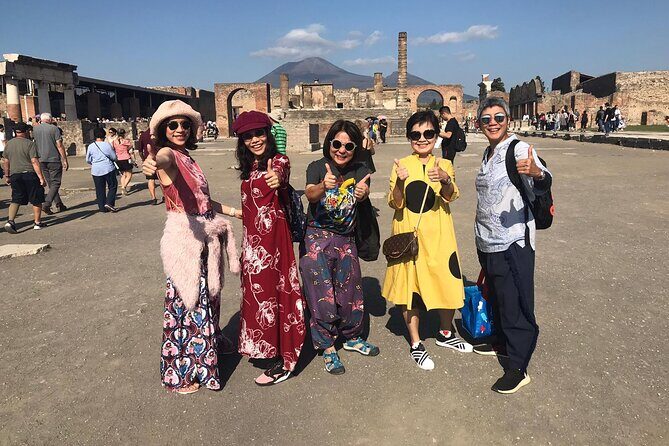
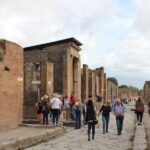
Pompeii is famous for ruins. It’s also famous for what you walk on. You’ll cover the ancient streets with your guide, including cobblestones with wagon-wheel ruts you can actually spot.
This matters because it turns the city from a postcard into a place with movement and friction—literally. Those ruts help you picture daily traffic: carts, deliveries, and how the city’s roadways wore down over time.
Plan for the ground and the weather. The tour specifically warns you to wear comfortable shoes because you’re walking on original ancient streets, and you’re even walking on lava rock. If you’ve got blister-prone feet, treat this as a hiking walk, not a museum shuffle. A hat helps in summer sun, and you’ll want sunglasses.
The itinerary’s backbone: forum, temples, and civic power
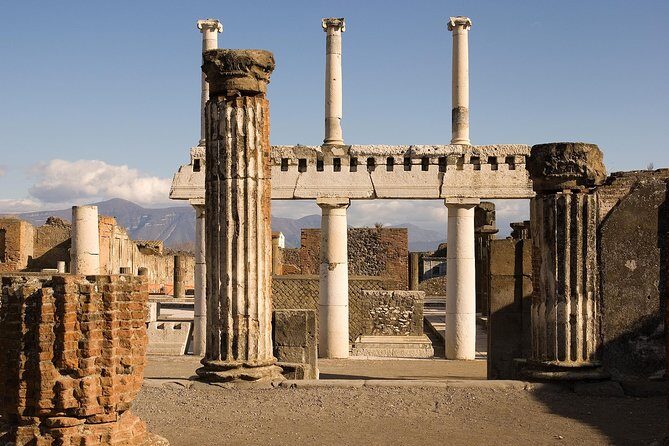
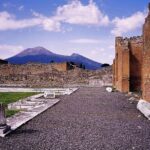
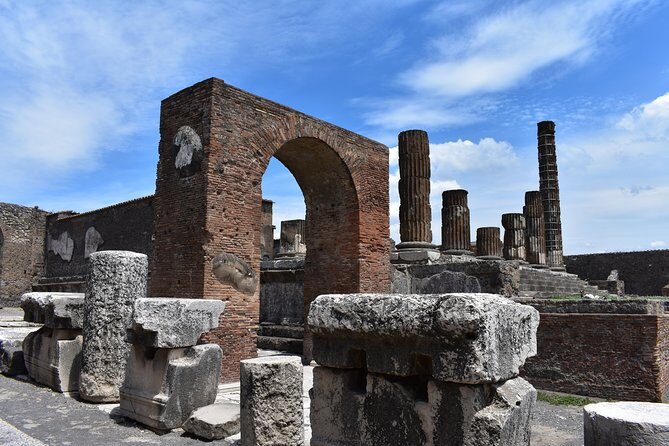
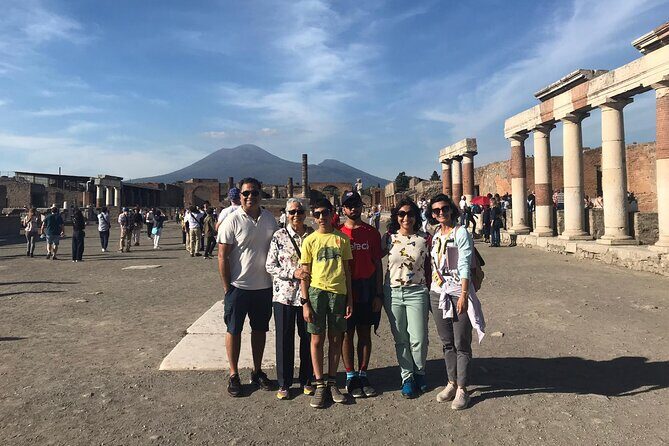
One of the tour’s best strengths is that it hits Pompeii’s “center of gravity” early. You’ll walk through the forum, the heart of Roman civic life, where government and religion overlapped.
Here’s what you should expect from a guided stop like this:
- Temples and civic buildings, explained so you know what you’re looking at
- A sense for how priests and politicians shared public space
- Clear wayfinding through a site that can feel confusing fast
Even if you’ve read a bit about Pompeii, the forum can still blur together. A guide keeps you from treating it like a collection of columns. You start seeing patterns: who would gather, what rituals would happen, and how public space shaped daily life.
If you’re short on time, the forum stop is one of the highest-return uses of your two hours.
Theater stop: tragedy, comedy, and a lesson in Roman entertainment
You’ll also visit the theater, one of the places that makes Pompeii feel human. The tour route includes stops where you can picture performances—tragedy and comedy—for people who lived, argued, flirted, and socialized in the same city streets you’re walking now.
The value of a guided theater stop isn’t just naming the structure. It’s getting the social context: where this sat in the culture, what kind of entertainment mattered, and how public gatherings shaped identity.
A key thing I’d suggest for you here: don’t rush your listening. The theater area can tempt you to take quick photos and move on. Slow down for the explanation, because it changes how the seats and stage space make sense.
You can also read our reviews of more tours and experiences in Pompeii


Baths and gossip: the thermal bathhouse routine
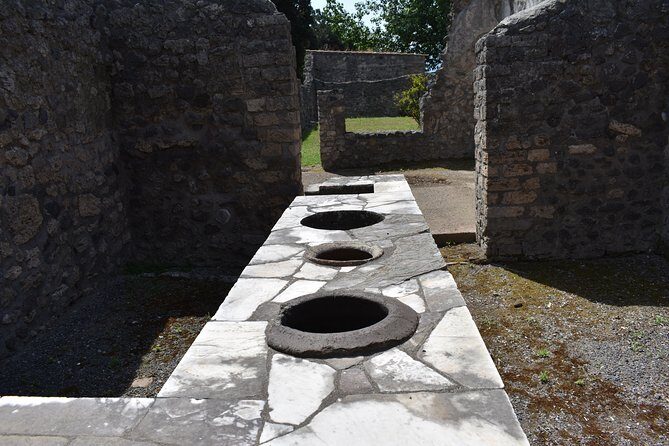
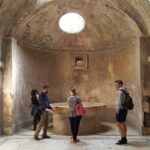
Another strong part of the route is the thermal bathhouse. This is one of those Pompeii features that turns everyday life into something you can picture instantly.
The guide points out how residents would bathe, exercise, and gossip. In other words, it’s not just hygiene. It’s a social system, and it shows how people used shared spaces to meet, talk, and unwind.
If you like the “real life” side of history, you’ll probably get a lot out of this stop. Pompeii isn’t only about grand monuments. It’s about routines, and bath culture is one of the most recognizable routines of all.
Gladiators and the training spaces you might miss alone
You’ll see barracks where gladiators trained and lived. This is a smart inclusion because it connects entertainment with labor and discipline.
When you self-tour, gladiator-related remains can blur into “more ruins.” With a guide, you get the intended function of spaces: where training happened, how living quarters worked, and how performance culture was supported behind the scenes.
If you’re visiting with kids or teens, this is often a high-interest stop. Even if the subject matter isn’t your usual pick, the idea of living and training inside a city you can walk through today feels immediate.
The Lupanare brothel: confronting a famous Pompeii landmark
The route includes the rebuilt Lupanare, one of Pompeii’s most popular attractions. This stop is probably the most emotionally charged, mostly because it’s not modern and it’s not sanitized.
A good guide keeps it factual and grounded: what the site likely represented, how the space worked, and why it’s preserved enough to interpret. You’ll also get it framed as part of daily Roman life rather than a shock-only detour.
If you’re sensitive to adult themes, I’d plan your mindset before you arrive. The stop is part of the core highlights route, and the tour doesn’t hide the reality of what Pompeii contained.
Mt. Vesuvius AD 79: why the ruins feel so personal
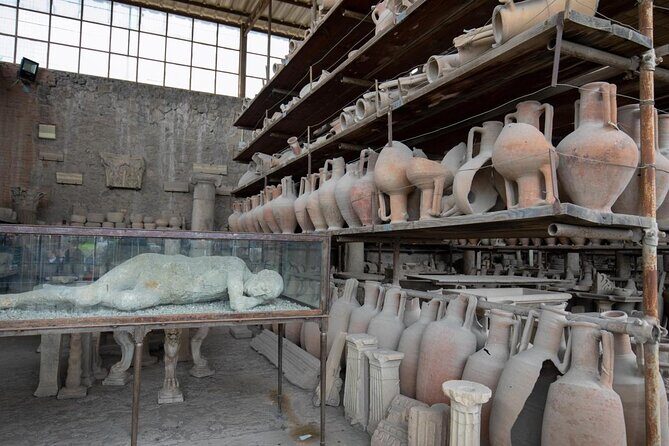
So much of Pompeii’s power comes from one event: the Mt. Vesuvius eruption in AD 79 that buried the city and preserved much of what you see. Your guide ties stops back to that bigger story as you move through the ruins.
This is where a real expert guide adds value. It’s easy to read that Pompeii was buried. It’s harder to understand what preservation means for your experience: why details remain, why certain rooms feel oddly intact, and why the city can feel like a snapshot rather than a total loss.
If you want your trip to land emotionally, this is the backbone moment. It’s not just for trivia. It’s why Pompeii is still one of the world’s most moving archaeological sites.
House names and the “small stops” that make Pompeii click
Even within a two-hour structure, the route includes more than just the big-name spots. The itinerary highlights mention places such as the House of Menander, the Gymnasium, and additional highlights across the excavated area.
These names matter because they help you build a mental map. Pompeii is huge, and without labels you can end up walking past rooms and thinking everything looks the same. A guide anchors your attention so you learn how different building types fit into the city’s life—homes, training spaces, leisure spaces, civic space.
You’ll walk ancient routes on the way between sites. The combination of physical movement and verbal context is why the two hours can feel surprisingly full.
Price check: is $71.35 worth a 2-hour archaeologist tour?
Let’s talk value. At $71.35 per person, this isn’t the cheapest way to see Pompeii. But the price includes a local guide and admission tickets, and you’re capped at 16 people, which usually keeps the experience from turning into a stampede.
You also get what matters most in Pompeii: time. Two hours is enough to see major anchors—the forum, theater, baths, gladiator areas, and the Lupanare—without losing your entire day to wandering and re-wandering. If you’re only spending a short window in the area, this is often the smarter choice than self-guided exploration.
What’s not included is food, plus there’s no hotel pickup/drop-off. So you should budget for a simple snack plan on your own. Also remember the tour is weather-dependent, so if you’re traveling in shoulder-season or rainy months, you’ll want backup flexibility.
Who this tour fits best (and who might prefer solo)
This tour is a strong match if:
- You want a first-time introduction that hits Pompeii’s must-see highlights
- You prefer small-group walking with an archaeologist-type guide
- You’d like help understanding what you’re looking at, not just seeing ruins
It may feel less ideal if:
- You want to spend hours in one area digging into details at your own pace
- You don’t handle walking on uneven ancient ground comfortably
- You dislike guided pacing and prefer to wander freely without stopping
For most people, though, this is a good “get your bearings fast” plan. Then you can choose what to expand after you’ve learned how to read the site.
Practical tips before you go
If you want this to feel smooth, plan like this:
- Wear comfortable walking shoes. The tour says you’ll be on original streets and lava rock.
- Bring a hat for summer sun. The route takes place outdoors.
- Expect active walking for a two-hour program, so pace yourself and listen in the stops.
- Use the audio equipment if provided (headsets are mentioned), so you don’t miss the guide’s explanations.
And one more tip: after your tour ends, the site is huge. If you have time, stay a bit longer and follow the mental map your guide gave you.
Should you book the Pompeii skip-the-line archaeologist tour?
Yes, if you want a high-impact Pompeii experience with a real guide, not a self-touring puzzle. The combination of skip-the-line style entry, small group size, and stops like the forum, theater, baths, gladiator barracks, and the Lupanare makes this a solid use of a short visit.
Book it especially if you’re traveling with limited time or you’d rather understand Pompeii than just photograph it. Skip it only if you’re fully committed to wandering the site for half a day or more on your own.
FAQ
How long is the Pompeii skip-the-line tour with an archaeologist guide?
It lasts about 2 hours.
Is admission to Pompeii included?
Yes. Admission tickets are included, but this is not a standalone ticket to the ruins. You use the guided confirmation only with the guide.
Where do I meet for the tour?
The start point is Hotel Vittoria, Piazza Esedra, 80045 Pompei NA, Italy.
Will I need to arrange transport to Pompeii myself?
Yes. There’s no hotel/port pickup or drop-off, so you make your way to the Pompeii archaeological site on your own.
What should I wear or bring?
Wear comfortable shoes because you’ll walk on original ancient streets. A hat is recommended for summer sun, since you’re walking outdoors. The tour also notes you’ll be walking on lava rock.
What happens if weather is poor or I miss the tour?
The tour requires good weather. If it’s canceled due to poor weather, you’ll be offered a different date or a full refund. If you’re late or miss the tour, there are no refunds.