REVIEW · POMPEII
Pompeii & Herculaneum Family Adventure | Guide+Transport+Tickets
Book on Viator →Operated by Leisure Italy · Bookable on Viator
Two ancient cities, one unforgettable day.
This Pompeii and Herculaneum family adventure works because it pairs Herculaneum’s shockingly preserved streets with a private guide who keeps the story moving for kids. You also get smart, practical time management: you start at the calmer site first, then move to Pompeii once everyone’s warmed up. I like how the itinerary is built around real daily life—homes, shops, baths, and even a harbor—so the ruins feel like places where people actually lived.
I especially love the contrast you get in one day: Herculaneum’s eruption preserved everyday objects with unusual detail, while Pompeii shows more of the city’s public spaces and big-city rhythm. One possible drawback is the day is long (about 8 hours) and you’ll be doing moderate walking, plus there’s sun and stone. If your family moves slowly or needs frequent breaks, plan for that ahead of time.
In This Review
- Key things that make this family tour work
- Why Herculaneum feels more emotional than you expect
- Herculaneum: from the boat pavilion to the women’s baths
- The harbor story: Boat Pavilion and maritime equipment
- Antiquarium: carbonized wood you can still picture
- The shoreline walk: the sea-level and escape attempt
- The House of the Deer: luxury with a dramatic scene
- Exercise courtyard and the civic idea of training
- A restored residence: wall paintings and upper-floor details
- An ancient shop: terracotta jars and everyday commerce
- Mosaic house and Roman color: Neptune and Amphitrite
- Public baths: women’s section with benches and wooden shelving
- Cult of the Emperor hall: frescoes and the Augustales
- Pompeii’s main sites: from Porta Marina to the theater
- Porta Marina gateway: start where merchants entered
- Basilica: contracts and civic power
- Temple of Apollo: religion plus a volcano view
- The Forum: public life as the city’s engine
- Macellum marketplace: terracotta counters to grocery shopping
- Forum Baths: wash, relax, and catch up
- Aristocratic home with dancing faun and Alexander mosaics
- House of the Vettii: frescoes and a garden courtyard
- The liveliest street: stepping stones and storefronts
- Bird’s-eye platform: the dollhouse effect
- Main theater: ancient acoustics you can test
- Antiquarium: artifacts plus sensitive context
- How the guide keeps Roman life understandable (and not overwhelming)
- Price and value: what $738.31 per person is buying
- What to pack and how to make the day easier
- Who this tour fits best
- Should you book Pompeii & Herculaneum Family Adventure?
- FAQ
- How long is the Pompeii & Herculaneum Family Adventure?
- Is the tour offered in English?
- Does the tour include pickup?
- Is this a private tour?
- Are tickets included, and do you skip lines?
- Do you drive to the top of Mount Vesuvius?
- Is lunch included?
- Is bottled water included?
- Are service animals allowed?
- What is the cancellation policy?
Key things that make this family tour work
- Herculaneum first, Pompeii second: start with the easier-feeling site for kids, then tackle the larger Pompeii.
- Private Blue Badge guides in both places: you get explanation tailored to your group’s pace.
- Roman port storytelling in Herculaneum: boat pavilion, maritime equipment, and the shoreline walk make the harbor real.
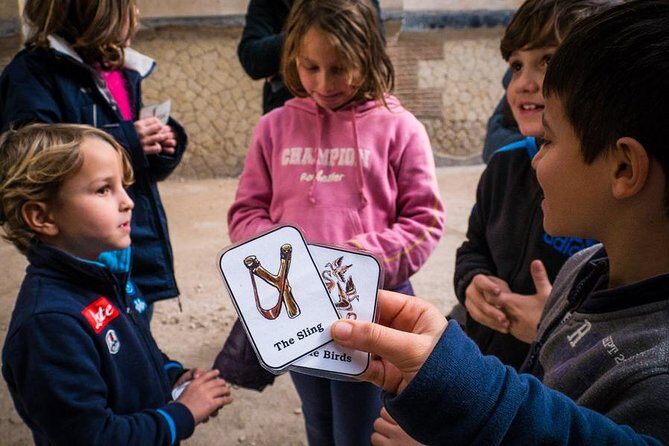
- Hands-on family activities in Pompeii: riddles, spotting symbols, and sticker-style learning keep attention from wandering.
- Skip-the-line entry for both sites: less waiting means more time seeing what matters.
Why Herculaneum feels more emotional than you expect
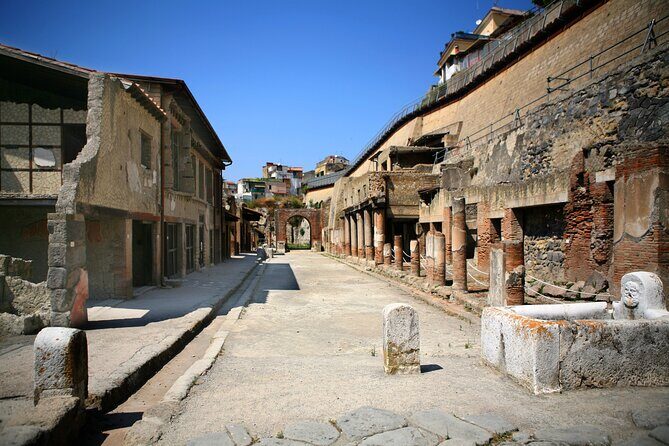
If Pompeii is the blockbuster, Herculaneum is the closer look. Pompeii shows a city frozen by volcanic destruction—dramatic, huge, and often crowded. Herculaneum is smaller, and that difference changes everything. The park is set at the base of Mt. Vesuvius, and the eruption story hits in a more intimate way because the town layout is compact enough to absorb without feeling lost.
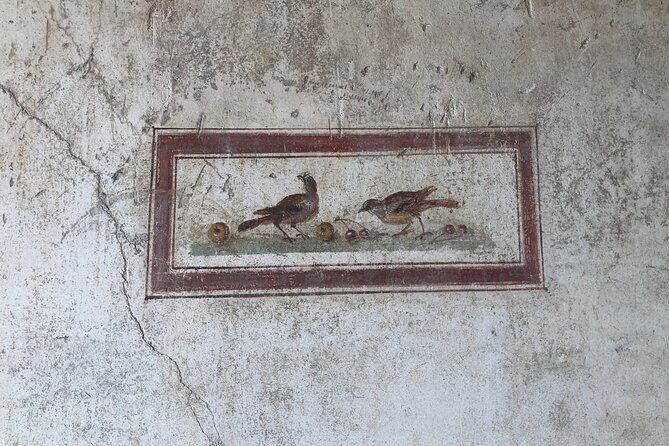
What you’ll notice first is how “whole” Herculaneum feels. It wasn’t just buried; it was sealed in a way that protected details that usually vanish. That’s why you can walk through painted spaces and see wooden elements that help you imagine daily routines. For families, it’s easier to picture where furniture sat, where doors opened, and how upper floors once functioned as part of real houses—not just archaeological fragments.
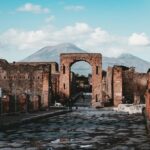
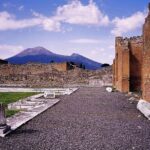
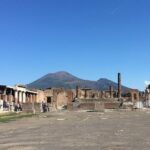
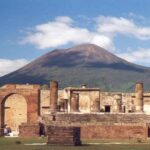
Also, you’ll get great photo views of Mt. Vesuvius from the bottom. This tour does not drive up to the top of the volcano, so you’re not wasting time on a climb or road detours. You’ll still get the key visual connection between landscape and tragedy—just in a more family-friendly way.
You can also read our reviews of more tours and experiences in Pompeii
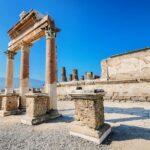
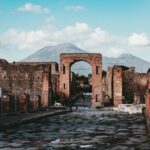
Herculaneum: from the boat pavilion to the women’s baths
Your day begins at the Parco Acheologico di Ercolano (Herculaneum) with about 2.5 hours here. The guiding approach is built for families: you’re not just looking at stones; you’re learning how the town functioned—by sea, through trade, and inside households.
The harbor story: Boat Pavilion and maritime equipment
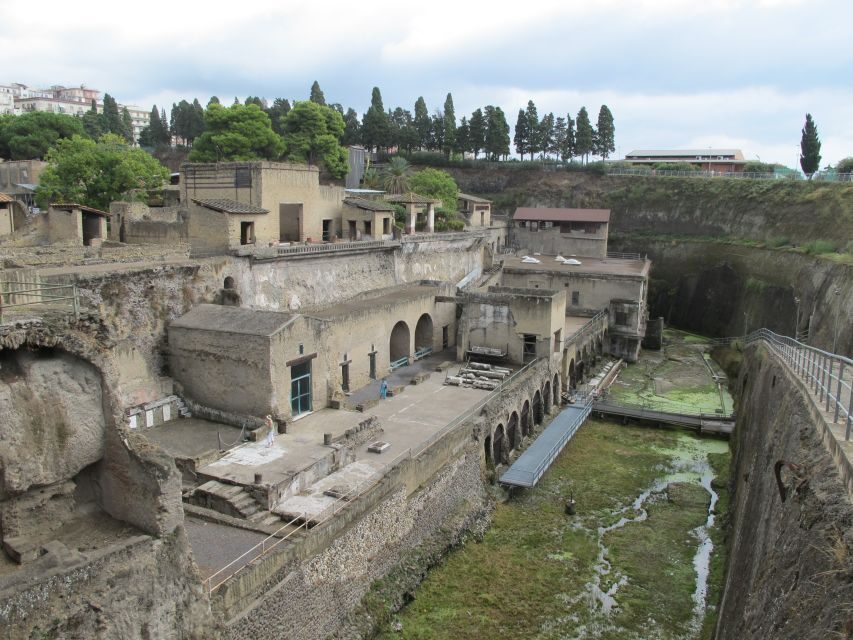
One of the most memorable pieces is the Boat Pavilion, where a Roman vessel and maritime equipment were discovered. Kids tend to latch onto the simple idea: fishermen and sailors had a job to do, and the harbor was where journeys started. Adults usually appreciate the bigger point—Herculaneum wasn’t only a pretty coastal town; it was connected to trade and travel through the water.
If you like “show, don’t tell” learning, this is where the tour earns its keep. The boat-related material makes the place feel practical and alive rather than museum-like.
Antiquarium: carbonized wood you can still picture
Next comes the Antiquarium, where you’ll focus on objects that survived in extraordinary condition. The highlight here is carbonized wood—pieces connected to furniture, doors, beams, and shelves. For kids, it’s a mind-bender: wood shouldn’t survive like that. For adults, the explanation turns that survival into a lesson about how Herculaneum’s burial conditions worked and why these materials are so rare.
It’s the kind of stop that makes the rest of the walk feel less random. Suddenly you’re not just seeing artifacts; you’re understanding why you’re seeing them at all.
The shoreline walk: the sea-level and escape attempt
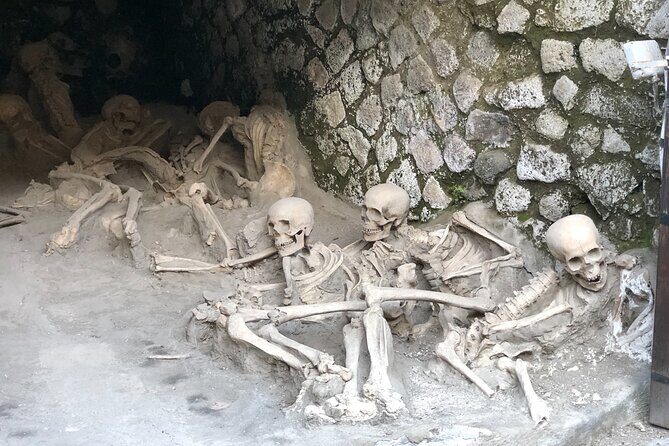
Your guide will lead you down to the ancient shoreline and help you connect the geography to the final moments of 79 AD. One especially heavy detail you’ll hear about: in 1980, archaeologists found over 300 skeletons in the boathouses area. That discovery changed the story of how people tried to escape—some sought the sea.
This section is handled with sensitivity so families can absorb it at a pace that works. It’s powerful, and it’s also useful, because it turns “the eruption” from a textbook headline into a human choice people tried to make.
You can also read our reviews of more guided tours in Pompeii
The House of the Deer: luxury with a dramatic scene
Then you’ll move into the seafront villa known for marble sculptures of deer attacked by dogs. Kids often enjoy the drama of the scene—they get a picture book moment of animals mid-action. Adults usually connect it to Roman luxury: the villa’s terraces and sea views weren’t an accident. They were part of leisure culture and status display.
If your family likes visual surprises, this stop delivers. If your family doesn’t love sculpture, that’s okay. Your guide can anchor the scene in “why it was there” rather than just “what it is.”
Exercise courtyard and the civic idea of training
In the next portion, you’ll explore a large exercise courtyard, once used by young citizens for athletic training and social life. This isn’t just about sports. Roman society linked fitness with education and civic pride, and this space reflects that.
The scale helps you imagine the daily rhythm—teachers overseeing from shade, students training, and special events tied to public life. For kids, it can feel like an ancient school yard. For adults, it’s a reminder that Roman education wasn’t only about reading and writing.
A restored residence: wall paintings and upper-floor details
You’ll also enter a celebrated residence that reopened after decades of restoration. The focus is on wall paintings, wooden shutters, and the structure of upper floors. That multi-level layout is a big part of why this tour feels satisfying: you can understand a home as a lived-in space across levels, not just a single room with a view.
This stop tends to land well for families because it makes interior life concrete. Kids can picture where someone might sleep or store daily items. Adults can appreciate the work it took to bring those details back into view.
An ancient shop: terracotta jars and everyday commerce
Another favorite is the ancient shop recognizable by its rows of terracotta jars (cucumae) set into a marble counter. The guide points out serving/storage spaces and even wooden shelving that survived.
It’s a small stop that hits hard because it’s so normal. You’re basically looking at an old version of buying food or drink on the go.
Mosaic house and Roman color: Neptune and Amphitrite
Your tour continues to an elegant home famous for a mosaic panel of Neptune and Amphitrite. You’ll see deep blues and golden glass tesserae that still look striking. Kids often like the “bright picture” feeling in an ancient interior. Adults get a clear sense that Roman art was decorative, social, and often meant to impress.
Even if your group isn’t museum-obsessed, a mosaic stop helps everyone recalibrate. It’s a visual “reward” after the heavier excavation story.
Public baths: women’s section with benches and wooden shelving
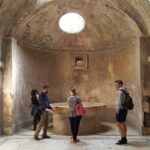
One of the most lifelike segments is the women’s section of the public baths, preserved because of the rapid burial. You’ll see benches, painted walls, and wooden shelving—including changing-room details and warm/hot areas where steam once filled the space.
For kids, it can become a question game: how did people get cleaned here? For adults, it clarifies that baths weren’t only hygiene. They were social spaces with routine and conversation.
Cult of the Emperor hall: frescoes and the Augustales
Finally, you’ll visit a richly decorated hall tied to the cult of the Emperor, with frescoes showing mythological scenes. Your guide explains the role of the Augustales, a prestigious local group of freedmen, and how religion, civic life, and imperial politics blended together.
This is where the tour starts to feel like a real city, not just a collection of houses. You see how people belonged to institutions and how public identity worked.
Pompeii’s main sites: from Porta Marina to the theater
After Herculaneum, you’ll head to Pompeii for about 2.5 hours. Pompeii is larger and more spread out, so the guide’s job becomes choosing routes and keeping your family moving without rushing.
Depending on the day and season, your guide may suggest going in the afternoon when Pompeii can feel less crowded. The itinerary stays flexible, including adjustments for family comfort or schedules.
Porta Marina gateway: start where merchants entered
You’ll walk through Porta Marina, a main gateway. The guide helps you picture merchants and sailors arriving from the port, turning your first steps into a sense of entry into the city’s working life.
This stop matters because it sets the context early. Instead of jumping straight to “famous ruins,” you understand how the city fed itself through arrivals and trade.
Basilica: contracts and civic power
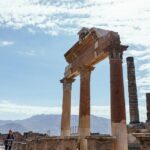
Next is the Basilica, Pompeii’s key civic building where legal disputes and contracts were handled. Even without its roof, the surviving columns make it feel official and organized.
For families, it can be a quick history win: “this is where decisions happened.” For adults, it shows how Roman civic life operated long before modern paperwork.
Temple of Apollo: religion plus a volcano view
At the Temple of Apollo, kids can imagine ceremonies, while adults learn how religion and politics were tied together. You’ll also get a clear view toward Mt. Vesuvius from the temple terrace, creating a strong “history in one frame” moment.
This is a good photo stop that doesn’t require climbing or extra walking. It’s also an easy place to explain how close the disaster was—without turning the day into a scary lecture.
The Forum: public life as the city’s engine
The Forum is where the tour leans into community life: business, religious ceremonies, and political speeches. Kids are invited to imagine noise and movement; adults connect the space to how Roman cities organized people around shared identity.
If you’re trying to help children understand “why these buildings matter,” this is the place to do it. The guide helps you read the space like a map of daily life.
Macellum marketplace: terracotta counters to grocery shopping
The Macellum is the ancient marketplace where citizens bought meat, fish, fruit, and imported delicacies. Kids tend to enjoy the idea of vendors calling out prices; adults appreciate how the counters, storage vessels, and decorative elements reveal what Romans ate and how they shopped.
It’s a stop that keeps the tour human. Pompeii stops being abstract.
Forum Baths: wash, relax, and catch up
You’ll see Pompeii’s Forum Baths, again reinforcing that bathing was daily routine and social time. The guide shows changing rooms and heated bathing areas, along with original mosaics and stucco decorations preserved from the eruption.
It’s a fun comparison stop after Herculaneum’s bath visit. You can literally see how different bath spaces reflect different parts of city life.
Aristocratic home with dancing faun and Alexander mosaics
The tour includes a grand aristocratic home with gardens and intricate mosaics. Two standout features are the small bronze statue of the dancing faun (often described like a house mascot) and an impressive mosaic depicting Alexander the Great in battle.
Kids usually remember the dancing faun because it’s character-like. Adults tend to appreciate the battle mosaic because it reflects how elite families used art to show education, taste, and status.
House of the Vettii: frescoes and a garden courtyard
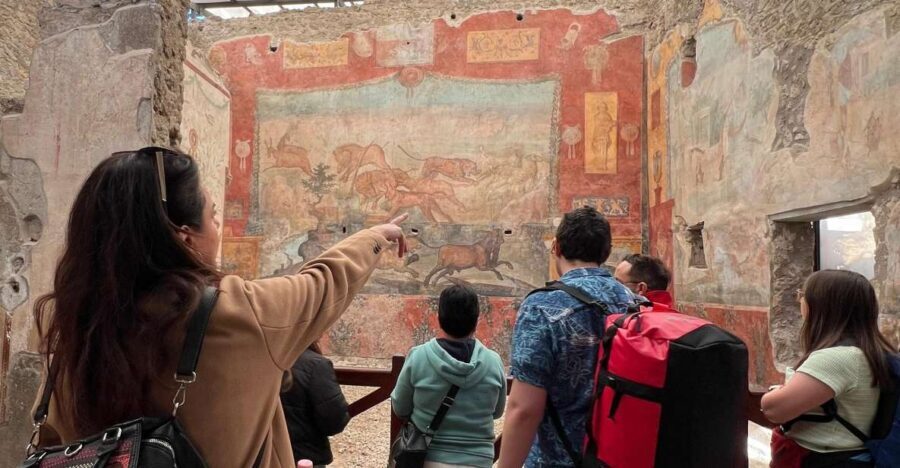
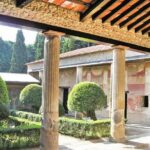
Then you’ll enter the House of the Vettii, known for vivid frescoes and a refined garden courtyard. Kids can treat the mythological scenes like story panels. Adults learn how the Vettii brothers rose to wealth and used art for status and identity.
The layout helps you imagine where guests gathered for dining and where household life unfolded between meals and work.
The liveliest street: stepping stones and storefronts
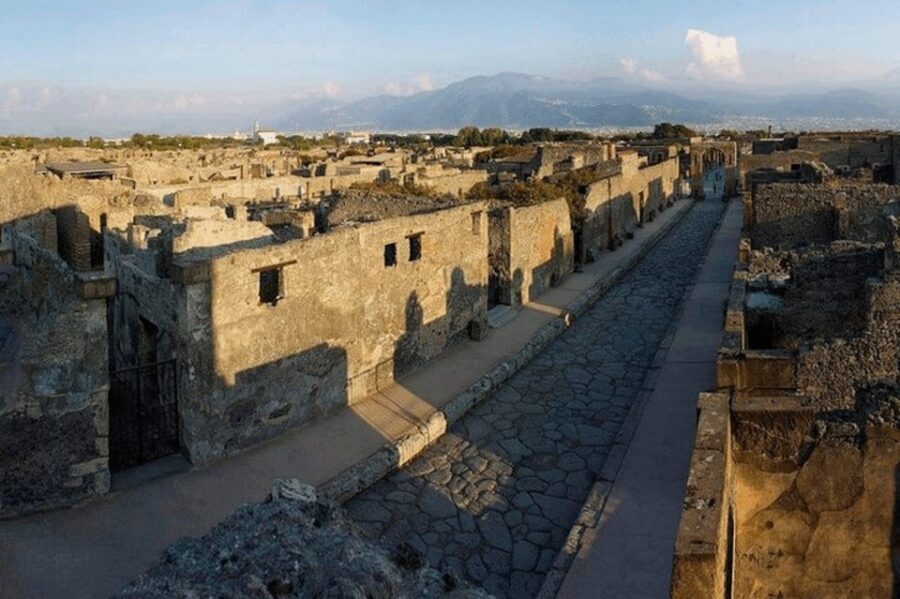
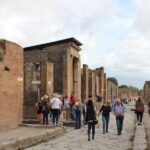
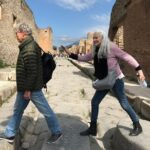
A walk along Pompeii’s liveliest ancient street brings the city feel closer to real life. You’ll pass by bakeries, bars, and storefront spaces tied to everyday errands. Kids get a playful connection through stepping stones and the guide’s prompts about carts rattling over basalt pavement.
Adults appreciate the street fountains, shop counters, and signage traces that make the experience oddly familiar.
Bird’s-eye platform: the dollhouse effect
From a raised platform, you’ll get an aerial view into an entire Pompeii city block. Kids often call it the dollhouse effect—seeing rooms and layouts without roofs and imagining movement between kitchens, workshops, and dining areas.
Adults use this to understand how densely built the city was, where homes and businesses sat packed behind street façades.
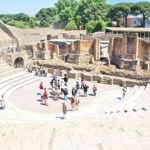
Main theater: ancient acoustics you can test
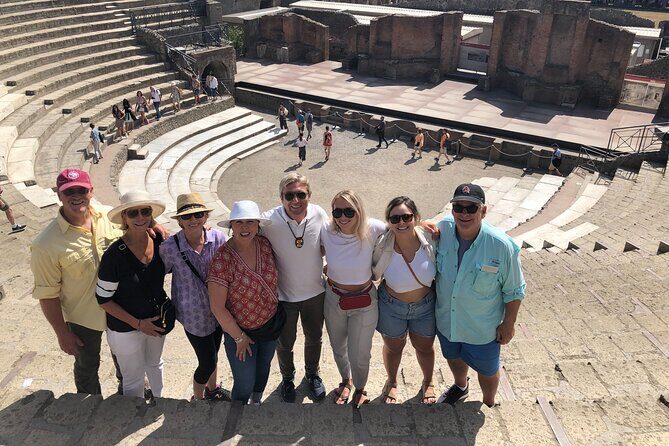
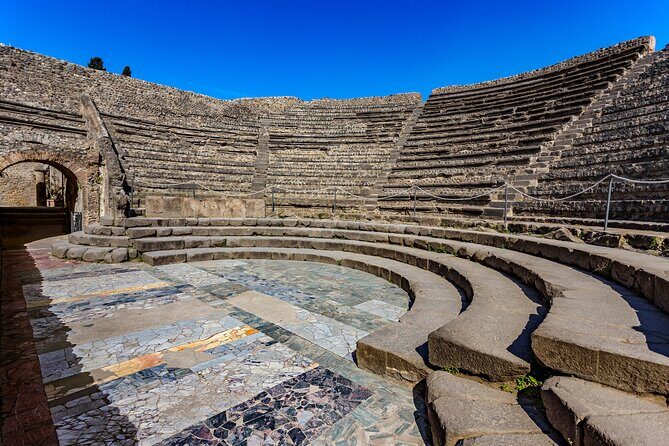
You’ll visit Pompeii’s main theater built into the hillside to amplify sound. Kids can test acoustics from the stone steps, asking if they can be heard. Adults see how entertainment shaped Roman culture, from comedies to musical performances.
This stop is where the ancient world feels slightly closer to modern habits—audiences showing up, listening, and reacting.
Antiquarium: artifacts plus sensitive context
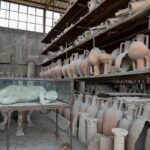
You’ll end at the Antiquarium with real artifacts recovered from excavations. Expect jewelry, coins, tools, and household objects that connect the ruins to the personal side of city life.
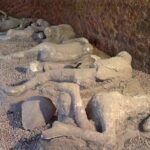
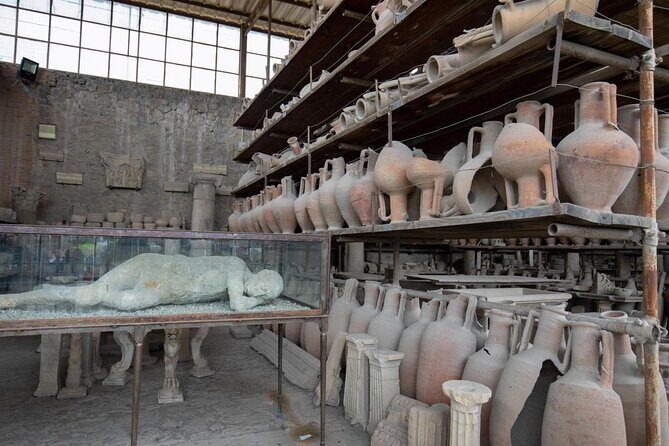
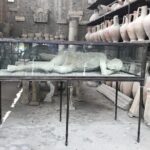
The plaster casts of eruption victims are introduced sensitively, giving families space to handle the human story without overwhelm. It’s a thoughtful ending, because it reminds you that the ruins belong to lives, not just buildings.
How the guide keeps Roman life understandable (and not overwhelming)
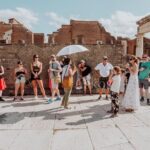
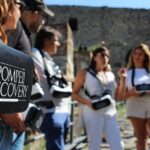
The tour’s best feature isn’t only what you see—it’s how your guide shapes the day. This is built as Blue Badge guided time in both sites, and that matters. Roman archaeology can turn into “stone reading” fast. A strong guide turns it into cause-and-effect and daily routines.
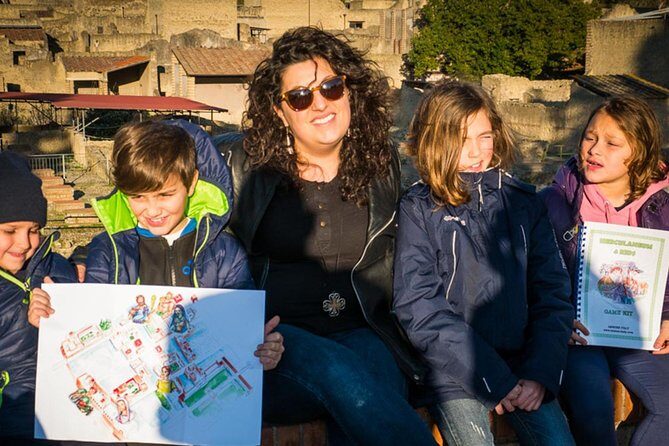
You’ll notice the guide repeats key threads: how people worked, where they shopped, how they relaxed, and how civic life ran through big public spaces. For families, there’s also built-in momentum—activities, booklets, and map-style prompts that help kids stay curious instead of melting down mid-heat.
Guides like Giuseppe D’Angelo (mentioned in top feedback) represent the style you want here: calm, kind, and tuned to families. Even when the subject turns serious, the tone stays manageable. That is a real value factor, especially when you’re doing a long day across two major sites.
Price and value: what $738.31 per person is buying
At $738.31 per person for a roughly 8-hour private family tour, you’re not paying for entry tickets alone. You’re paying for three big things:
First, transport by private vehicle and pickup options from places like Naples, Sorrento, Pompeii, hotels, vacation rentals, train stations, airports, and cruise terminals/ports. That saves time and stress, especially for families trying to avoid complicated public transit.
Second, you’re paying for private guided time in both Herculaneum and Pompeii, plus express skip-the-line tickets. Waiting in queues with kids is the kind of friction that makes great days feel short.
Third, you’re paying for family-focused structure: family-friendly activities, booklet/map support, and a guide who keeps explanations age-appropriate.
You do need to plan for costs that aren’t included: bottled water is not included, and meals are only included if you select the pizza lunch option. If your family drinks a lot of water or snacks frequently, budgeting matters.
Overall, the value is best if you care about a guided, low-stress day. If your family is fine roaming on your own and you enjoy figuring everything out without support, you might choose a simpler self-guided option. But if you want the ruins translated into daily life—this tour is designed for that.
What to pack and how to make the day easier
You’ll walk, you’ll look up, and you’ll move between sites. So pack like you’re doing a long “walking day with museum stops,” not a quick sightseeing loop.
I recommend:
- Comfortable walking shoes you trust on uneven stone and steps
- Sunscreen (seriously, you’ll want it)
- A plan for water and snacks, since bottled water isn’t included
- An extra layer or hat for the cooler shade areas in theaters and courtyards
Also, since you see Mt. Vesuvius from the bottom and not from the top, you can plan your energy around walking and viewing rather than trekking upward.
Who this tour fits best
This is a strong match if you’re traveling as a family and want Roman sites explained in a way kids can hold onto. The Herculaneum start helps because it’s compact and emotionally powerful, then Pompeii adds the city-scale experience.
It also works well if you want to visit both places in one day but still feel like you’re touring with a purpose. The guided route hits major themes—harbor life, domestic houses, baths, religion, marketplaces, civic buildings, and entertainment.
If your family has very limited walking tolerance or you expect minimal walking, you might find the total day a stretch. The tour says moderate physical fitness is best, so be honest with yourselves when planning.
Should you book Pompeii & Herculaneum Family Adventure?
I’d book it if your top priorities are private guided time, skip-the-line entry, and a day built around understanding daily life in both towns. The Herculaneum-to-Pompeii rhythm makes sense for families, and the inclusion of kid-friendly activities reduces the “ruins fatigue” factor.
I’d think twice if your budget is tight and you’re comfortable organizing transport and tickets on your own. Also consider that you’re doing a long day with lots of walking and sun.
If you want a family day that feels structured, story-driven, and still flexible enough to fit your pace, this is the kind of tour that can turn history into something you remember.
FAQ
How long is the Pompeii & Herculaneum Family Adventure?
It runs for about 8 hours.
Is the tour offered in English?
Yes, the tour is offered in English.
Does the tour include pickup?
Yes. Pickup is offered in a flexible way from places like Naples, Sorrento, Pompeii, hotels, vacation rentals, train stations, airports, and cruise terminals/ports.
Is this a private tour?
Yes. It’s described as private, so only your group participates.
Are tickets included, and do you skip lines?
Yes. The experience includes Herculaneum and Pompeii express skip-the-line tickets, and admission tickets are included for both sites.
Do you drive to the top of Mount Vesuvius?
No. The plan is to see the volcano from the bottom, with photo opportunities from Pompeii and Herculaneum.
Is lunch included?
Meals are only included if the pizza lunch option is selected.
Is bottled water included?
No. Bottled water isn’t included.
Are service animals allowed?
Yes, service animals are allowed.
What is the cancellation policy?
Free cancellation is available up to 24 hours in advance for a full refund.