REVIEW · POMPEII
Pompeii 2-hour Private Tour with an Archaeologist-Ticket included
Book on Viator →Operated by Askos Tours · Bookable on Viator
Pompeii hits different with a plan. This private 2-hour walk through the ruins focuses on the places that explain how people actually lived, worked, ate, bathed, and entertained. You get an archaeologist guide and the Pompeii admission ticket included, so you spend your time looking instead of sorting logistics.
What I like most is the pacing. You’re not stuck with a big crowd shoulder-to-shoulder, and the stops are timed so you can hear the story and still step back to notice details. I also love that the guides bring real questions to the surface, from everyday commerce to the meaning of major buildings, so you leave with a clearer sense of the city rather than just photos.
One thing to consider: two hours is just enough to hit the big highlights, but it’s not enough for a full, slow day of wandering. If you want to linger for hours in fewer places, you may wish you’d booked a longer option.
In This Review
- Key highlights you’ll feel right away
- Pompeii in two hours: calm, personal, and actually helpful
- Where the tour starts at Porta Marina Superiore
- Basilica and the Forum walk: learn the city’s daily engine
- Granaries of the Forum: where commerce meets human stories
- House of Menander and House of the Faun: spot the wealth markers
- Terme Stabiane and Lupanar: Roman leisure and the reality of entertainment
- Teatro Piccolo and Teatro Grande: the city’s performance spaces
- Pricing and value: is $214.75 per person worth it?
- What guides bring to the experience (and why it matters)
- Who should book this Pompeii private tour
- Should you book? My straight answer
- FAQ
- How long is the Pompeii private tour?
- Is the tour private?
- What’s included in the price?
- Do I need to buy Pompeii tickets separately?
- Where do we meet the guide?
- Where does the tour end?
- Is hotel pickup or drop-off included?
- What language is the tour offered in?
- Will the tour run in bad weather?
- What about fitness needs and footwear?
- Can I cancel for a full refund?
Key highlights you’ll feel right away
- Private guide, not a herd: only your group on a 2-hour route
- Tickets are handled: Pompeii admission is included with the tour
- Forum to houses to leisure: you see the city’s everyday rhythm, fast and focused
- Stop-by-stop interpretation: each location gets context, not just directions
- Comfort matters: the route moves through real rough ground, so good shoes help
Pompeii in two hours: calm, personal, and actually helpful
Pompeii is huge, and most first visits feel like: I’m here, now what. This tour solves that problem by giving you a clear path and an expert who can explain what you’re standing in front of. The result is that you don’t just see ruins; you understand why a basilica mattered for merchants, what a main square did for daily life, and how Roman leisure spaces worked.
It’s also truly private. Only your group participates, so you can ask follow-up questions without turning the whole tour into a meeting. That matters in Pompeii, because the same stone wall can look impressive or confusing depending on whether someone explains the function and the timeline.
And yes, the tour runs in all weather. You’ll want to dress for sun or rain, because you’ll be outside the whole time.
You can also read our reviews of more tours and experiences in Pompeii


Where the tour starts at Porta Marina Superiore
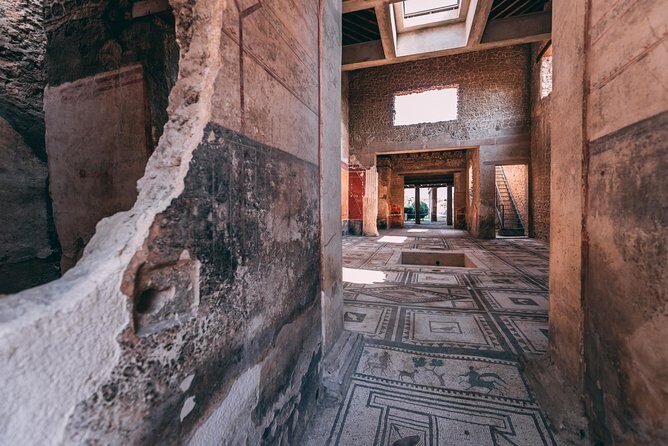
You meet at the Archaeological Park main entrance called Porta Marina Superiore. Your guide will be holding a sign with Askos Tours on top, which is a small detail but a big relief when you’re arriving with limited time and your phone battery is doing its best.
The tour starts at Via Villa dei Misteri, 2, 80045 Pompei NA, Italy and ends at Piazza Esedra, 80045 Pompei NA, Italy. You’re not picked up from your hotel, and there’s no transportation included to or from the ruins, so plan on getting yourself there. The good news: the meeting area is near public transportation, and the guide can help you with directions back to your accommodation or to the closest train station.
One practical tip: wear comfortable shoes. Pompeii is uneven, and the route includes both flat-ish areas and steeper ground. The tour is listed as moderate fitness, so if stairs and rough surfaces slow you down, go easy and ask your guide to pause when needed.
Basilica and the Forum walk: learn the city’s daily engine
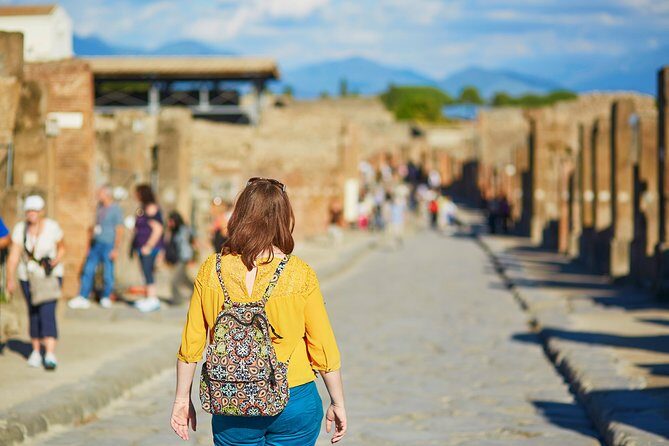
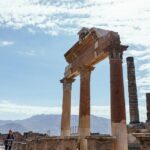
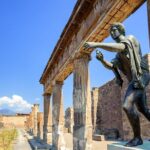
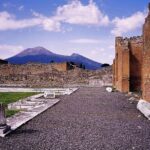
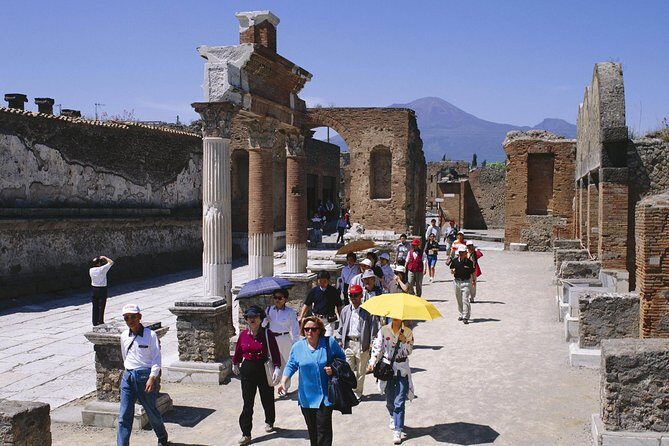
The opening part of the tour sets the tone. First comes the Basilica, described as an open portico that offered shelter to merchants and other activities. Standing there, you’ll start to connect the dots between stone layout and daily routine: trade, foot traffic, and the kind of community space where people conducted business.
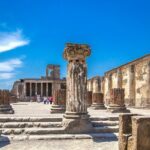
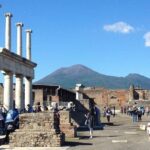
Next you head to the ancient main square area, the Foro de Pompeya. This is one of those places where it’s easy to think, I’m just looking at a plaza. With a guide, you’ll get a better sense of why main squares mattered for public life—meeting points, civic identity, and the stage where everyday decisions played out.
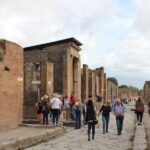
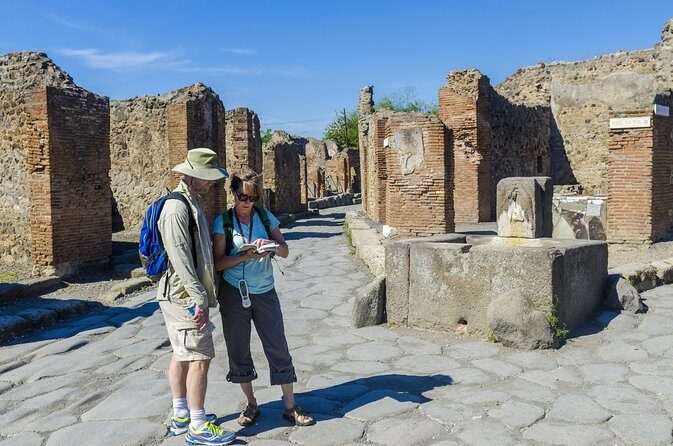
The tour then threads through the main street of Pompeii. This is a smart move because it helps you mentally map the city instead of treating each building like an isolated postcard.
Granaries of the Forum: where commerce meets human stories
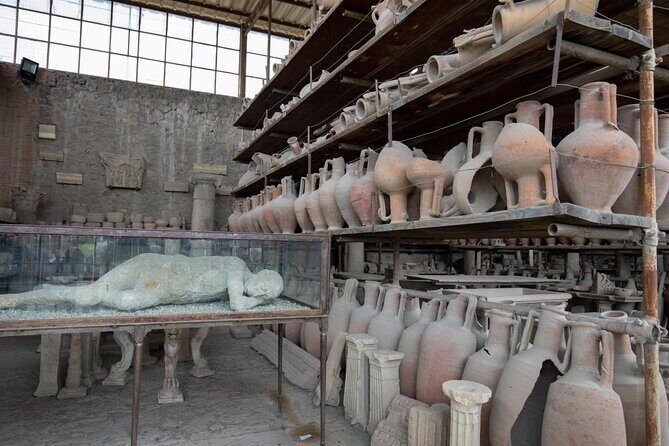
The Granaries of the Forum are one of the more emotional stops on the route. You’ll see marble tables and baths for fountains that adorned entrances of houses. That might sound decorative, but it’s really about how people showcased status and welcomed guests.
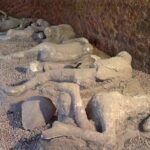
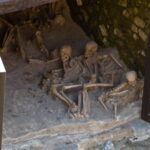
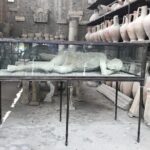
This stop also includes references to casts of victims of the eruption, along with casts of a dog and a tree. It’s a somber element, and your guide’s job is to keep it respectful while still explaining what you’re seeing. The way the stop is framed helps you shift from shock to context: what these casts mean, why they matter, and how Pompeii’s tragedy is documented through the site.
A consideration: if you prefer a lighter tone, this section can land heavier than you expect. The trade-off is that it’s also one of the clearest places to understand the human scale of the eruption.
House of Menander and House of the Faun: spot the wealth markers
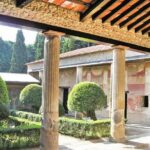
After the public spaces, the tour moves into private life. The House of Menander is highlighted as one of the richest and most magnificent houses in Pompeii, especially for architecture, decoration, and contents. In plain terms, this is where you can see how wealth showed up in design choices—space, ornament, and the kind of detail that signals status to visitors.
Then you shift to the House of the Faun, described as one of the largest and most impressive private residences. This stop helps you compare two elite homes in a short window. You’ll likely notice that “grand” in Pompeii isn’t just about size; it’s about how the house communicates through layout and display.
What I like about adding houses in a timed private format: you get a sense of social layers without needing a full day. What you should bring: patience for careful looking. Even with a guide, these homes can feel like a lot at first. Give yourself time to watch what your guide points out, then take a quiet minute to look again.
You can also read our reviews of more private tours in Pompeii

Terme Stabiane and Lupanar: Roman leisure and the reality of entertainment
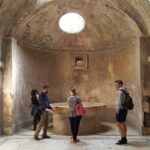
Next comes a big contrast—thermal baths and a famous brothel. The Stabian Baths (Terme Stabiane) take up a vast area between Brothel lane, Holconius crossroads, and Via Stabiana. They’re described as the oldest thermal complex in the city. If you’ve ever wondered why Romans treated bathing like a social event, this is a strong place to connect bathing to community life.
The Lupanar is the most famous brothel in Pompeii. Your guide will help you interpret what you’re seeing rather than just letting it be a sensational headline. You’ll come away with more than shock value: you’ll understand how commercial sex was structured in the urban world of Pompeii, and how the site records that reality.
One note: this portion is not for everyone. If sexual content is uncomfortable for you, you can still do the tour, but you may want to tell your guide ahead of time so they can tailor the amount of detail and keep the experience comfortable.
Teatro Piccolo and Teatro Grande: the city’s performance spaces
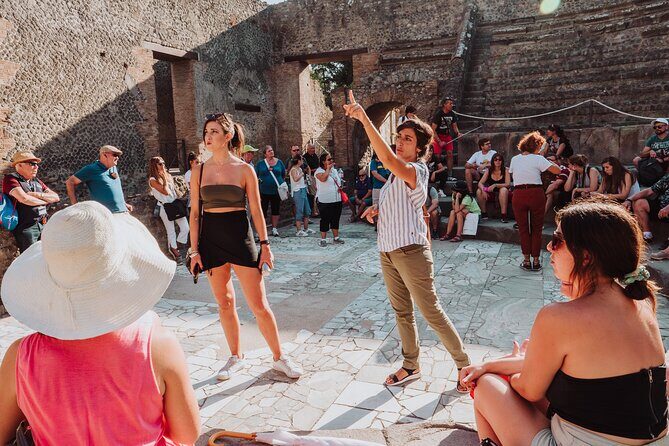
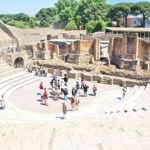
To round out the tour, you’ll take in both Teatro Piccolo and Teatro Grande. Teatro Grande is described as the most important theater in Pompeii. Even in ruins, theaters work like machines for crowd energy: you can sense where people would gather, how performances would draw attention, and how civic culture turned into shared entertainment.
The smaller Teatro Piccolo is given a quick look as well, and it helps you understand that Pompeii’s entertainment wasn’t one big venue only. It was a full system of spaces for different types of public life.
If you like the “why did people gather here” angle, the theater stops will likely be a highlight. They also provide great natural moments to slow down, look around, and orient yourself in the site.
Pricing and value: is $214.75 per person worth it?
At $214.75 per person for about two hours, this isn’t a budget ticket—but it does feel priced for what you’re getting.
Here’s the value math as I see it:
- You’re paying for a private guide who can interpret multiple major stops in a short time.
- Admission fees to Pompeii are included, so you’re not layering on another expense mid-trip.
- The tour is structured to reduce wasted time. Instead of guessing where to go first, you follow a route that hits public life, elite homes, leisure sites, and key theaters.
For me, the sweet spot is when you want more than a self-guided scan. Pompeii can be overwhelming, and an archaeologist-level guide helps you make sense of what you’re looking at—especially at complex sites like the Forum area and the houses.
If you’re traveling with kids, the value can jump again. The tour has worked well for families, with guides keeping younger visitors engaged and pacing the walk to match different energy levels.
What guides bring to the experience (and why it matters)
One reason this tour keeps getting top marks is the guide quality. I’ve seen strong emphasis on guide expertise and the ability to explain without turning it into a lecture. Names like Alessandra and Silvia come up in ways that point to serious academic experience, including working on or excavating parts of Pompeii. Ivan also gets singled out for bringing Pompeii to life, which usually means good storytelling plus solid context.
You’ll also benefit from practical, human skills. Giovanni is known for being patient if the group runs late, and Mena is described as focusing on what people want to see—plus handling photo time without making it feel like the tour is derailed. Paolo is noted for logistics being easy, and that matters because Pompeii can be confusing on arrival day.
The biggest takeaway: the guide isn’t just naming buildings. They help you understand why the site is laid out the way it is and what everyday life looked like.
Who should book this Pompeii private tour
You’ll likely enjoy this tour if:
- You want Pompeii highlights in a tight window and hate the stress of planning your own route.
- You care about interpretation—how buildings worked and what details mean.
- You prefer private pacing over large groups.
- You want tickets handled and a guide who can point you back toward trains or your hotel after.
You might want to reconsider if:
- You love slow travel and plan to spend long periods inside fewer areas.
- You’re bringing someone who dislikes the brothel topic or prefers very minimal detail on sensitive subjects.
- You’re hoping for a “complete Pompeii” experience. This is a focused route, not an all-day deep sweep.
Should you book? My straight answer
Yes, you should book this tour if your goal is a guided Pompeii visit that feels organized, personal, and worth your money. Two hours is the right length for first-timers who want context without burning the whole day. The inclusion of Pompeii admission and the private archaeologist-style guidance makes it easier to justify the cost versus a cheaper self-guided plan where you’ll spend more time figuring things out than understanding what you’re seeing.
If you’re the type who enjoys lingering for hours, you could pair this with a bit of independent time later. But as a first Pompeii hit, this private route is a smart way to get oriented fast and leave with real clarity.
FAQ
How long is the Pompeii private tour?
It runs for about 2 hours.
Is the tour private?
Yes. It’s a private tour/activity, so only your group participates.
What’s included in the price?
Guidance by a professional archaeological guide, admission fees to Pompeii, and the private tour format.
Do I need to buy Pompeii tickets separately?
No. Admission fees to Pompeii are included, and you’ll receive a mobile ticket.
Where do we meet the guide?
You meet at the main entrance called Porta Marina Superiore.
Where does the tour end?
The tour ends at Piazza Esedra in Pompeii.
Is hotel pickup or drop-off included?
No. Hotel pickup and drop-off, plus transportation to and from the ruins, are not included.
What language is the tour offered in?
The tour is offered in English.
Will the tour run in bad weather?
Yes. It operates in all weather conditions, so dress appropriately.
What about fitness needs and footwear?
Comfortable shoes are recommended, and the tour lists a moderate physical fitness level. The ground inside Pompeii can be rough.
Can I cancel for a full refund?
Yes. Free cancellation is available up to 24 hours in advance for a full refund.