REVIEW · POMPEII
Pompeii: Exclusive Private Walking Tour with an Archaeologist
Book on Viator →Bookable on Viator
Pompeii is huge and easy to wander through the wrong way. This exclusive private walking tour with an archaeologist helps you connect the dots fast, because the route hits the city’s standout themes: wealthy homes, public bathing, everyday street life, and major civic spaces.
What I like most is that you get two things most group tours miss: expert interpretation and a tight, well-paced loop. You’ll spend about 2 hours moving between major sites instead of losing time trying to decide what matters.
One thing to think through before you go: you’re still responsible for the Pompeii entry ticket, and many stops are intentionally brief (think quick, high-impact viewing rather than a long sit-down).
In This Review
- Key highlights you’ll feel right away
- Why This Two-Hour Pompeii Walk Actually Makes Sense
- Casa del Menandro: Pompeii Luxury Up Close (and Big on Details)
- Stabian Baths: The Oldest Big Public Bath Complex in Pompeii
- Lupanar: Eroticism as Wall Art, Not Just a Shock Stop
- Casa del Fauno and the Big Hellenistic Palace Feel
- Teatro Grande: Pompeii’s Biggest Theatre Moment
- Via dell’Abbondanza and the Best-Preserved Street
- Foro de Pompeya: The City’s Most Important Square
- What You’re Paying For: Price, Private Setup, and Real Value
- Meeting Point, Mobile Tickets, and How to Avoid a Tough Start
- The Guides Matter: Humor, Clarity, and Teaching Style
- Who This Private Pompeii Tour Fits Best
- Should You Book This Pompeii Archaeologist Tour?
- FAQ
- Is this a private tour?
- How long is the Pompeii tour?
- What language is the tour offered in?
- Is the Pompeii entry ticket included?
- Where do we meet the guide?
- How big is the group?
Key highlights you’ll feel right away
- Archaeologist-led explanations that help you understand what you’re looking at, not just where it is
- A compact route in ~2 hours with short visits to Pompeii’s most recognizable areas
- Top picks that cover different sides of Roman life, from luxury houses to public baths
- Small-group feel (up to 12) while keeping the tour exclusive for your party
- Guides with strong personality, with examples like Clelia, Leonardo, Ines, and Lilo/Lello
Why This Two-Hour Pompeii Walk Actually Makes Sense
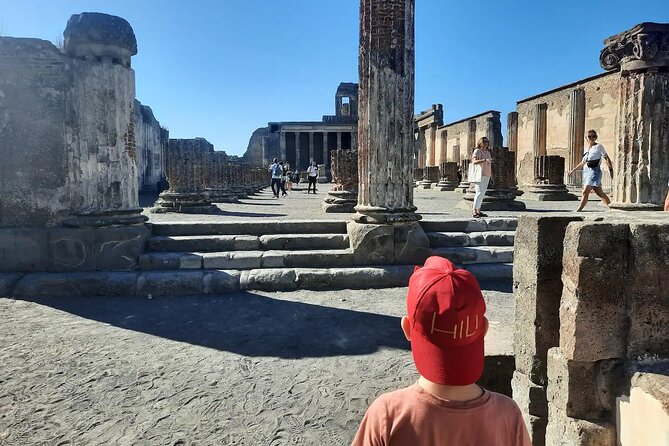
Pompeii rewards people who can read it like a puzzle. In two hours, you can’t see everything, and you definitely can’t linger at every doorway. What this tour does well is pick stops that act like anchors—places that help you understand the rest of the site when you return on your own.
It’s also a practical format. You get an English-speaking, licensed guide who can translate the “ruins” into daily life themes: how wealthy people lived (in the houses), how Romans handled public hygiene and social time (in the baths), and how entertainment and city structure shaped movement (the theater, main street, and forum).
And since it’s private for your group, you’re less likely to get swallowed by the crowd. You don’t have to shout over anyone, and the guide can keep the pace aligned with your group.
Casa del Menandro: Pompeii Luxury Up Close (and Big on Details)
Your first major stop is the Casa del Menandro, often described as one of the richest and most magnificent houses in Pompeii for architecture, decoration, and contents. This place isn’t a small villa you quickly glance at. It covers about 1,800 square metres—about 19,000 sq ft—and takes up most of its insula (a block of city land).
Why this matters on a short tour: this house gives you a baseline for scale. Once you’ve seen what “major” means in Pompeii, the other spaces start to make more sense. You can also connect decoration and layout to status, because this house is specifically noted for both architecture and decoration—not just one or the other.
Time is about 20 minutes. That’s enough to pick up the big architectural ideas and notice visual details, but not enough to study everything like an art student. If you’re the type who wants to take photos from every angle, use those 20 minutes to identify the features you want to revisit later.
Stabian Baths: The Oldest Big Public Bath Complex in Pompeii
Next comes the Stabian Baths (Terme Stabiane), one of Pompeii’s oldest and largest public bathing complexes. The tour highlights that the original construction dates back to around 125 BC, placing it among the oldest known bathing complexes from the ancient world.
This stop is valuable because baths in Roman cities weren’t just about washing. They were a built environment for social routines and public life. Even without turning it into a lecture, the guide can point out why a bath complex is a major city project: it’s infrastructure, not decoration.
Expect about 20 minutes here. The upside: you get a clear framework for what public bathing meant in Pompeii. The trade-off: you’ll move on before you can fully absorb every room and function. If you already love Roman daily life, you’ll probably want to linger later after the tour ends.
Lupanar: Eroticism as Wall Art, Not Just a Shock Stop
The route then moves to the Lupanar, Pompeii’s well-known brothel. The specific hook here is the erotic paintings on the walls, which are called out as the main point of interest.
This is one of those stops where a guide’s tone matters. You’re seeing something that’s intentionally provocative, but what makes it tour-worthy is the context and visual reading—how art, commerce, and daily reality intersected in the city.
Time is about 30 minutes, which is longer than some of the other stops on the list. That longer window is useful because you may need a moment to reset your brain after a charged topic, then re-focus on what you can actually observe in the space.
Casa del Fauno and the Big Hellenistic Palace Feel
After the Lupanar, you’ll visit Casa del Fauno (Casa del Fauno). This is described as a grand Hellenistic palace constructed in the 2nd century BC during the Samnite period (with 180 BC referenced). In Pompeii, it’s framed by a peristyle—basically a columned courtyard arrangement that shapes how you experience the home’s interior flow.
If you loved Casa del Menandro for scale and decoration, this house adds another layer: architectural identity. It’s less about being “rich like your neighbor’s rich” and more about showing a different grand style and how Pompeii’s wealthy homes could look and feel.
Your stop is around 20 minutes. Again, it’s enough for the major layout impressions and notable architectural features. If you’re traveling with teens or you want a mix of beauty and big-picture ideas, this one tends to land well because you can almost feel how the space would have guided movement.
Teatro Grande: Pompeii’s Biggest Theatre Moment
Then you hit Teatro Grande, described as the biggest theatre in Pompeii. This is a straightforward stop with a huge payoff: it’s one of the clearest examples of public entertainment on the route.
Time is only about 10 minutes, so the guide’s job is to orient you quickly—what you’re looking at, why it’s significant in Pompeii, and how it fits into the city as a whole. If you like to understand a site in terms of public systems (where people gathered and how cities worked), you’ll appreciate this quick hit.
If you want more time here, you’ll likely have to plan extra self-guided time after your tour ends.
Via dell’Abbondanza and the Best-Preserved Street
Next is Via dell’Abbondanza, described as the best preserved street in Pompeii. You only get about 10 minutes at this stop, but this is exactly the kind of place where a guide can give you a mental map in a short time.
A preserved street is more than scenery. It helps you picture movement: what walking through Pompeii felt like, how you’d reach major areas, and how the city’s layout connected the big public spaces. It’s also a great “linking” stop—after that, the forum will click more easily.
If you’re hoping for lingering photo time, use your 10 minutes to capture angles you want to recreate when you explore the rest of the site on your own.
Foro de Pompeya: The City’s Most Important Square
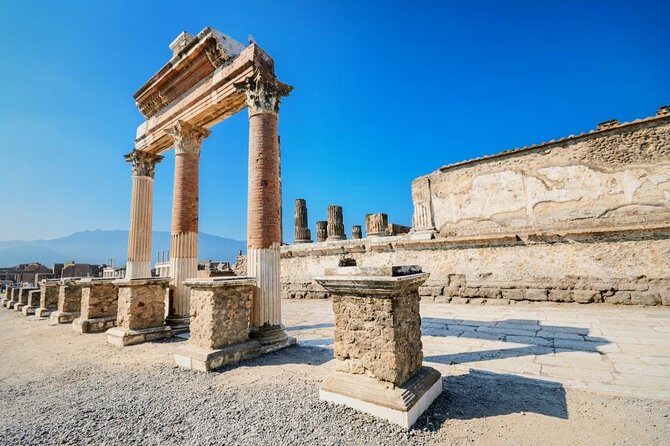
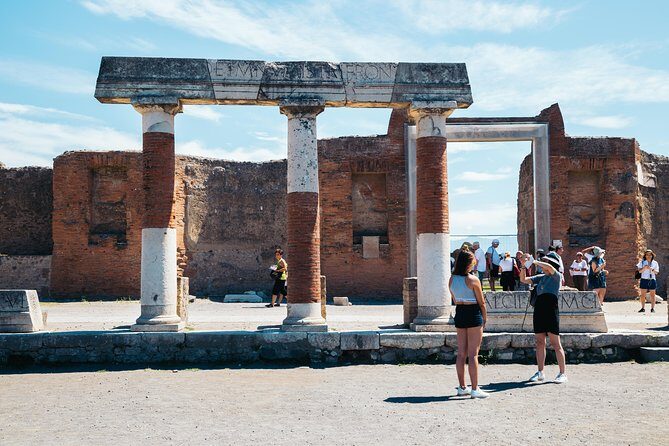
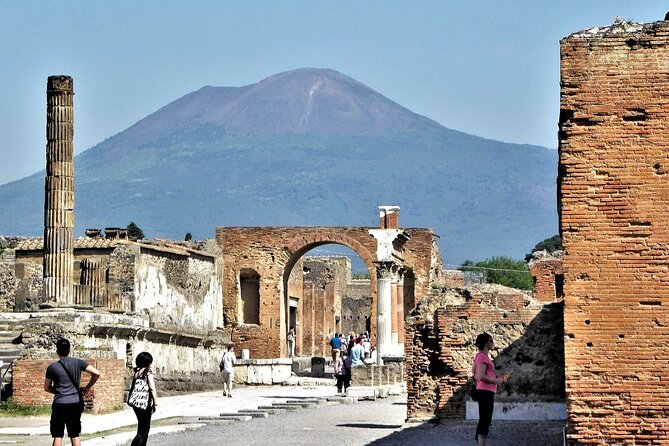
Your final stop is the Foro de Pompeya, identified as the most important square of the city. This matters because it gives you the civic backbone of Pompeii. Houses show private life; baths show public routine; theater shows entertainment. The forum is where a city organizes itself into power and social coordination.
You’ll spend about 10 minutes here. With short stops, your goal is to walk away with a clear “why this place mattered” feeling, not to read every carved detail.
Once you’ve seen the forum after the street and theater, the city layout feels less random. Even if you never return to this exact route later, the way the spaces relate tends to stay with you.
What You’re Paying For: Price, Private Setup, and Real Value
The price is listed as $421.03 per group, up to 12 people, for roughly 2 hours. So the real question isn’t just the number—it’s how efficiently the tour uses your time.
Here’s the value math that usually matters on Pompeii:
- A private, archaeologist-led guide costs more than a basic walking tour.
- But you gain interpretation and direction right away, and you also get a route with high-recognition stops.
- Because it’s exclusive for your group, the experience tends to feel smoother and more personal than a large group shuffle.
If you’re traveling as a small family, this can still be a good deal because you’re not paying “per person plus friction.” If you’re a bigger group approaching 10–12, this format can feel like a smart way to buy expertise without spending a day on logistics.
In short: you’re paying for time savings and expert meaning—not just access to ruins.
Meeting Point, Mobile Tickets, and How to Avoid a Tough Start
You meet at Coffee Shop Vittoria, Via Mare, 80045 Pompei NA, Italy, and the tour ends back at the same point.
Two practical tips based on real-world friction points people report with tours in Pompeii:
- Arrive early enough to handle confusion. Even a short delay can eat into your first 20-minute window at Casa del Menandro.
- Look closely at the guide details on your confirmation. One experience noted a mismatch in company name and difficulty locating the guide exactly where expected.
On the ticket side, the tour includes a mobile ticket, and the sites themselves can require separate entry. The tour listing says the Pompeii entry ticket is not included, and one guide-focused review called out that you may need to buy entrance tickets separately to access the archaeological area.
If you want a smooth morning: confirm what your mobile ticket covers, then plan for the archaeological entry ticket on your side.
The Guides Matter: Humor, Clarity, and Teaching Style
This is where the tour’s reputation comes through. The stops are important, but the delivery can make or break a short visit.
For example:
- Clelia is praised for making it easy to picture ancient Pompeii and for turning archaeology and history into something you can almost see in your mind.
- Leonardo is described as very knowledgeable and helpful, with a kind approach.
- Lilo/Lelo/Lello shows up in feedback as an entertaining archaeologist with a strong sense of humor and a knack for pointing out small details that help you understand the big picture.
- Ines is recognized for handling the fact that Pompeii is very big and for guiding people to the spots that feel most worthwhile in a limited time.
Even if you end up with a stricter teaching style, the upside of an archaeologist guide is that you’ll leave with more structure. You’ll know what you saw and why it matters.
Who This Private Pompeii Tour Fits Best
This experience is a strong match if:
- You want Pompeii but don’t want to spend your first day figuring out where to start.
- You like homes, public buildings, and the “how people lived” side of Roman culture.
- Your group benefits from an English-speaking guide who can explain as you walk (instead of you reading everything at once).
It’s also a solid option for families with older kids, since the route includes variety without requiring you to sit for long stretches.
If you’re the type who wants a slow, open-ended wandering day with minimal structure, you might feel the short stop times. That’s not a failure of the tour—it’s the trade-off of packing these major anchors into about two hours.
Should You Book This Pompeii Archaeologist Tour?
Book it if you want the biggest Pompeii “signals” in a compact, guided loop. You’ll get expert-led context at Casa del Menandro, Stabian Baths, Lupanar, Casa del Fauno, plus major public landmarks like Teatro Grande, Via dell’Abbondanza, and Foro de Pompeya—with each stop designed to be high-impact, not a random walk.
Skip or rethink it if:
- You dislike brisk viewing and prefer long time at fewer spots.
- You’re not interested in the interpretive angle and just want to wander on your own.
- You’d rather avoid the planning step of arranging your Pompeii entry ticket separately.
My practical take: if you only have a limited window and you want your time to feel meaningful, this is the kind of Pompeii tour that pays off fast.
FAQ
Is this a private tour?
Yes. It’s a private tour/activity, and only your group participates.
How long is the Pompeii tour?
It runs for about 2 hours.
What language is the tour offered in?
The tour is offered in English.
Is the Pompeii entry ticket included?
No. The tour does not include the entry ticket to Pompeii, so you should plan to purchase archaeological area admission separately.
Where do we meet the guide?
The start is at Coffee Shop Vittoria, Via Mare, 80045 Pompei NA, Italy, and the tour ends back at the meeting point.
How big is the group?
The tour price is listed per group (up to 12), so it can accommodate up to 12 people in your party.