REVIEW · POMPEII
Private Pompeii & Ravello Day Trip via Amalfi Coast (Tickets)
Book on Viator →Operated by Leisure Italy · Bookable on Viator
Pompeii and the Amalfi Coast in one long day. The mix is the point: you get ancient streets in the morning and cliffside towns and gardens by afternoon, all driven by a real pro. I especially liked the hotel pickup convenience and how smoothly the day flows without you wrestling maps or timing.
My second big plus is the option for a Pompeii private licensed guide (and skip-the-line tickets when you choose it). One thing to plan around: the whole day is lots of walking in Pompeii plus serious heat and traffic risk on the Amalfi roads, especially on weekends.
In This Review
- Key highlights to know
- A private day with the right kind of freedom
- Pompeii: start at Porta Marina, then walk like you mean it
- Temple of Apollo: the city’s older layers
- The Forum: politics, markets, and statues
- Macellum: food shopping wasn’t casual
- Forum Baths: the Roman social network
- House of the Faun: wealth on a whole city block
- House of the Vettii: a wealthy home you can actually picture
- Insula of homes and workshops: the city kept working
- Via dell’Abbondanza and Teatro Grande: streets and entertainment
- Antiquarium: context before or after the walk
- Basilica: civic life under one roof
- When Pompeii guided time is worth the upgrade
- The Amalfi Coast drive: views without the stress
- Ravello’s high ground: Villa Rufolo and the Terrace of Infinity
- Villa Rufolo
- Villa Cimbrone Gardens
- Minori, Maiori, Cetara, and Vietri sul Mare: the “real coast” flavor
- Minori: City of Taste pause
- Maiori: long beach, easy promenade
- Cetara: fishing village feel
- Vietri sul Mare: ceramics and bright tilework
- Timing, heat, and how to make the day feel smooth
- Price and value: what $508.61 buys you
- Who this private day trip fits best
- Should you book this day trip?
- FAQ
- Is hotel pickup included for this private trip?
- How long does the tour take?
- What’s included for Pompeii tickets and guiding?
- Are Ravello villas and gardens included in the price?
- What should I wear or bring?
- Can I cancel for a full refund?
Key highlights to know
- Hotel pickup + full-day driver: you stay focused on sights, not logistics.
- Optional Pompeii licensed guiding: better context fast, and less time wasted finding your way.
- A route with real view stops: Amalfi towns, photo pull-offs, and quieter high-ground in Ravello.
- Pompeii’s day-in-the-life details: markets, baths, and homes make the city feel lived-in.
- Villa Rufolo and Villa Cimbrone viewpoints: Ravello’s best terraces with dramatic sea views.
- Small seaside breaks on the way back: Minori, Maiori, Cetara, and Vietri sul Mare add flavor without crowd overload.
A private day with the right kind of freedom
This isn’t a cattle-car tour where you’re herded from one photo spot to the next. It’s built around a simple idea: Pompeii is huge and the Amalfi Coast is tricky to drive, so you want one team managing the clock while you choose how fast to walk.
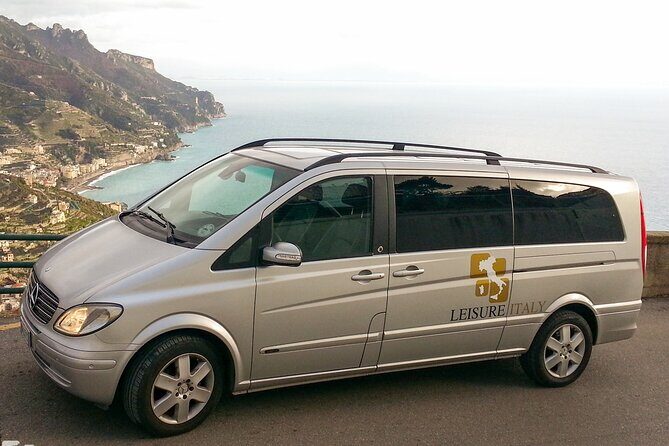
You’ll have a driver with live English commentary on board, and pickup is offered from places like Naples, Sorrento, Pompeii, vacation rentals, train stations, airports, and cruise terminals. That matters because getting out of the city center and into Pompeii on your own can take time you don’t have in an 8 to 9 hour day.
If you’re going with kids or you just hate feeling rushed, this setup is a big deal. Several guide names came up in real-world feedback—Fabrizio and Viviana in Pompeii, Stefano and Nico behind the wheel, plus others like Umberto and Tommy—so it’s clear the day often centers on strong guiding, not just transportation.
You can also read our reviews of more tours and experiences in Pompeii


Pompeii: start at Porta Marina, then walk like you mean it

Pompeii is one of those places that can either feel overwhelming or wonderfully specific. The difference is where you start and what you notice. Here, your visit begins at Porta Marina, one of Pompeii’s main gates in Roman times. Standing there sets the mood fast: this was a working city with arrivals and departures, not just a museum of stones.
From the gate, you’ll pick up the city’s defensive mindset through the surrounding walls, then move into some of the best “how people lived” stops:
Temple of Apollo: the city’s older layers
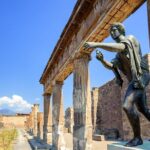
The Temple of Apollo dates back to the 6th century BC, which gives you a helpful perspective before Roman-era routines take over. Even if you only catch a few details—like the portico and the altar layout—you’re seeing how Greek influence shaped Pompeii before later Roman control.
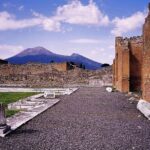
There’s also a symbolic view moment toward Mount Vesuvius, which makes the whole city feel tied to place, not just time.
The Forum: politics, markets, and statues
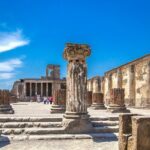
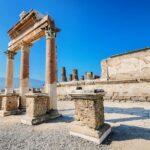
The Forum is Pompeii’s civic heart. You don’t need to be a history nerd to feel what it was like. Picture a public square where religion, government, and everyday commerce mixed in the same area. Mount Vesuvius framed by the colonnades makes it extra powerful—this volcano wasn’t background scenery. It was part of civic life.
Macellum: food shopping wasn’t casual
A short walk away is the Macellum, Pompeii’s main food market. This is one of my favorite types of ruins: places where the everyday rhythm survives. Marble counters, basins, and storage areas make it easy to imagine merchants selling fish, meat, fruit, and imports.
You can also spot how commerce and power mixed—there was even a small shrine tied to the imperial family. In other words: you bought dinner and lived inside the empire.
You can also read our reviews of more private tours in Pompeii




Forum Baths: the Roman social network
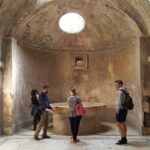
The Forum Baths show the daily ritual of bathing—changing rooms, warm spaces, and hot plunge areas that are still easy to follow. The heating system and ventilation details help you understand that this wasn’t just hygiene. It was social time and status.
House of the Faun: wealth on a whole city block
The House of the Faun covers a full block and plays like a palace. Expect courtyards, gardens, and high-quality mosaics. The Dancing Faun and the famed Alexander Mosaic are the kinds of details that make people slow down and look longer than planned.
House of the Vettii: a wealthy home you can actually picture
The House of the Vettii focuses on colorful frescoes and the layout of a wealthy household. What you get here is not only beauty, but story: banquets, business, family life—life unfolding in rooms still covered in brilliant painting.
Insula of homes and workshops: the city kept working
One of the most practical “wow” moments is seeing a residential/commercial block that still shows signs of active use. You’ll encounter bakeries, ovens, shops, and building work uncovered mid-renovation. It’s a rare kind of ruin: you don’t just see what survived—you see what was happening right up to AD 79.
Via dell’Abbondanza and Teatro Grande: streets and entertainment
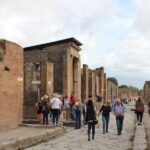
Walking Via dell’Abbondanza helps you feel Pompeii as an organized pedestrian city. You’ll notice stepping stones, fountains, and storefront remnants that make the street look busy even without people.
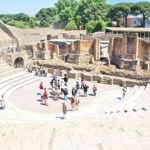
Then comes Teatro Grande, an open-air theatre carved into a natural slope. It’s dramatic because it’s practical: you can still picture performances and the way crowds formed in different seating areas. Elevated walkways also give you scale from above, which helps when your brain wants to compare size to what you’ve seen elsewhere.
Antiquarium: context before or after the walk
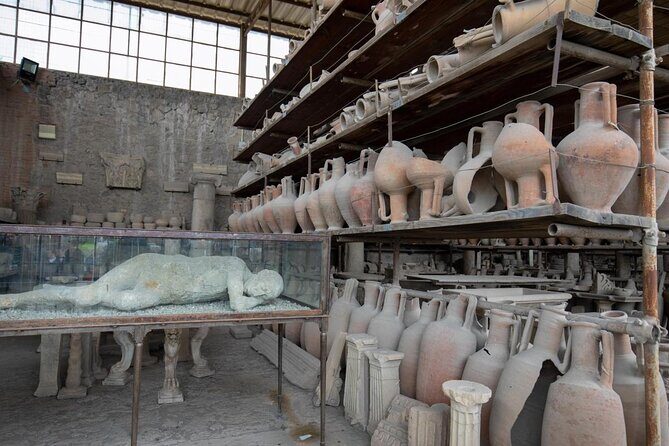
The Antiquarium is Pompeii’s museum space with objects and fresco fragments, plus plaster casts tied to the eruption. If your head starts spinning after hours in the park, this is a great place to reset and understand what you’re seeing across the ruins.
Basilica: civic life under one roof
Toward the end, you’ll step into a grand public building with a layout that reflects civic business—columns, open hall spaces, and side aisles. Even though it’s roofless today, the design makes it easy to imagine magistrates and citizens meeting for legal and commercial work.
When Pompeii guided time is worth the upgrade
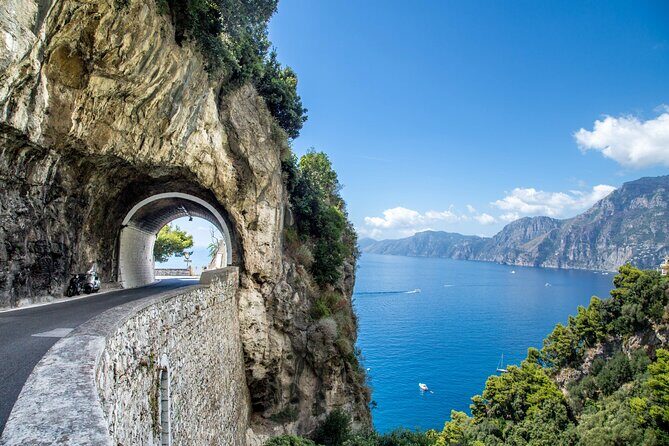
Pompeii is vast, and you can do it at your own pace—but you’ll get more from it with guidance. This tour offers a Pompeii option that includes a Pompeii Express skip-the-line benefit and a private Blue Badge guide in Pompeii.
Here’s the practical part: a licensed guide helps you understand what you’re looking at in real time, so you’re not stuck reading everything on your phone. In Pompeii, interpretation is the difference between seeing a wall and understanding what that wall meant to daily life.
Also, you have flexibility. One of the nicest things about this style of day is that you can keep it moving when you want highlights, or slow down for specific homes, streets, or the baths.
If you don’t want to walk much inside Pompeii, there are cafés and gift shops right in front of the ticket office area, so you can step out briefly without derailing the full schedule.
The Amalfi Coast drive: views without the stress
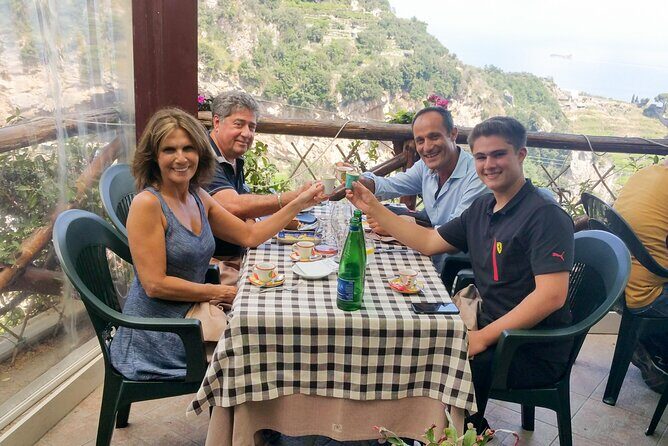
After Pompeii, the day turns into the part most people think of first: the Amalfi Coast drive. You’ll travel along a cliff-hugging road with tunnels, perched villages, terraced lemon groves, and little harbors way down below.
This is where having a private driver is more than comfort. The roads are narrow and winding. One review called out the driver handling the scary roads with confidence, which is exactly what you want when you’re already tired from Pompeii and now you’re trying to enjoy the views.
Your driver will also help with timing and planning photo stops. The best advice here is simple: don’t try to do Amalfi like you’re commuting. Let the road do the work, then get out when the viewpoint makes the effort worthwhile.
Ravello’s high ground: Villa Rufolo and the Terrace of Infinity
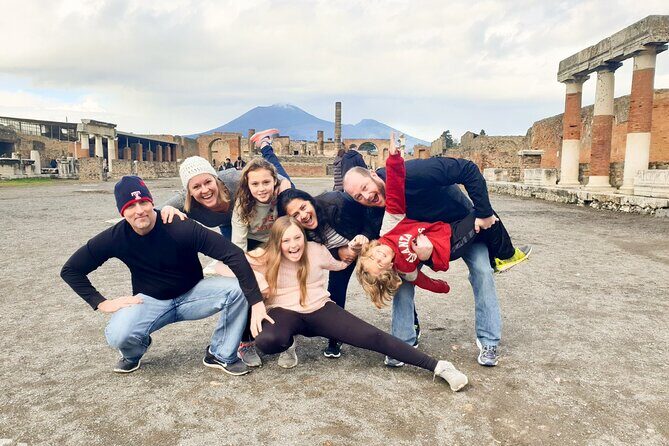
Ravello is a palate cleanser after Pompeii. It sits above the coast and feels calmer, more refined, and less “right on the water.”
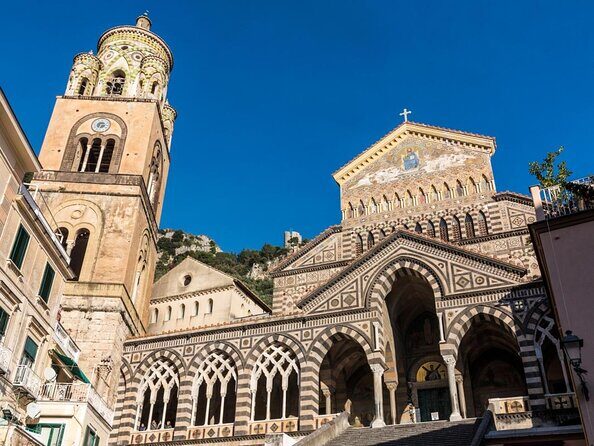
You’ll get about an hour of free time to explore Piazza Duomo in Ravello, with its 11th-century cathedral and bright interior. This is also where you’ll find the kind of relaxed wandering that doesn’t feel like a checklist.
Then the day typically includes two big Ravello stops:
Villa Rufolo
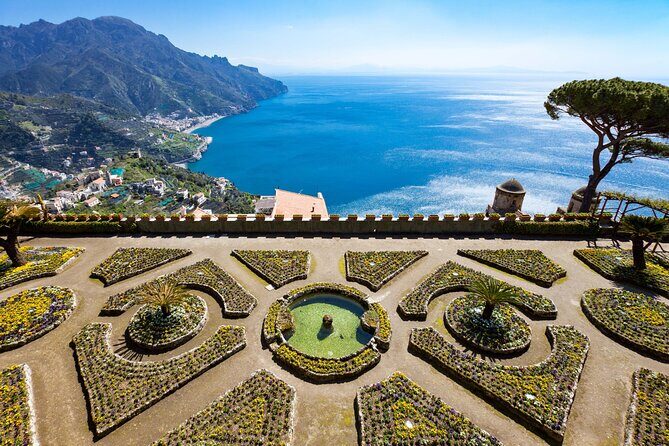
Villa Rufolo sits near the main square and carries a long artistic connection, including a link to composer Richard Wagner. You’ll walk through cloistered courtyards and Neo-Moorish arches, then step into tiered gardens where the view opens dramatically over the Amalfi Coast below.
Villa Cimbrone Gardens
Villa Cimbrone Gardens are about panorama. The highlight is the Terrace of Infinity, where the balustrade lined with marble busts creates that famous feeling of sky meeting sea.
If you want one place that makes Ravello feel worth the effort, these gardens do it. Even a short visit pays off because the view is the point.
Admission for these gardens is not included, so if you care about budgeting, check what you’re paying before you go in.
Minori, Maiori, Cetara, and Vietri sul Mare: the “real coast” flavor

The Amalfi Coast can turn into a theme park fast if you stay only in the flashiest towns. This route helps by mixing in smaller places with everyday life.
Minori: City of Taste pause
Minori is known as the City of Taste, with a small seaside feel, gentle waterfront energy, and strong local food culture. It also has ancient roots as a Roman maritime village, including the remains of a 1st-century villa.
The fun part for non-foodies too: narrow lanes with lemon-based specialties so you get a real sense of place even if you only stop for a quick snack.
Maiori: long beach, easy promenade
Maiori stretches along one of the longer beaches on the Amalfi Coast. Compared to cliffside neighbors, it feels more open and breezy, with an easy promenade for a short walk or a coffee. If you want a break from steep streets, this is a good stop.
Cetara: fishing village feel
As you travel, you may catch views of Cetara, a small fishing village with a tiny harbor and colorful boats. It’s known for its anchovy tradition, which gives you another layer beyond scenery: food culture built on work at sea.
Vietri sul Mare: ceramics and bright tilework
Near Salerno, Vietri sul Mare appears with bright ceramic tiles and a domed church. It’s the artistic gateway to the Amalfi Coast, tied to centuries of hand-painted ceramics.
Even from the road, the color pattern helps you spot the place quickly, and the town’s tile tradition is easy to bring home as a souvenir if you like something more local than mass-produced trinkets.
Timing, heat, and how to make the day feel smooth
This day can be long. Pompeii itself takes stamina, and the Amalfi Coast adds sun and road time.
A few practical moves that make a difference:
- Wear comfortable shoes. Pompeii’s surfaces are uneven and you’ll want grip.
- Bring sun gear in warm months. The park is partly shaded, but you’ll still do long stretches in full light.
- Keep expectations realistic on weekends. Traffic can squeeze the time you have in each town, so early starts are a huge advantage.
- If you’re picky about drinks, plan ahead. Some guides may provide water and soda, but you should still expect you might need to buy drinks during the day.
Also, don’t overbook yourself the night before. If you start the day already exhausted, Pompeii can feel harsher than it needs to.
Price and value: what $508.61 buys you
At $508.61 per person for about 8 to 9 hours, you’re not paying for a cheap bus ride. You’re paying for the hardest parts to DIY: a driver who knows the roads, the day’s rhythm, and the logistics between Pompeii and multiple Amalfi stops.
The value equation looks like this:
- If you choose Pompeii guiding, your money shifts from transportation to interpretation, and that can be the difference between a good visit and a meaningful one.
- If you’re doing this with family (or you simply want to control pacing), private format usually saves time and stress.
- If you don’t upgrade for Pompeii guidance, you’re still getting a structured route plus the driver’s commentary, but you’ll likely spend more time figuring out what to look at.
In other words: the price makes sense most if you care about getting the best out of Pompeii without wasting daylight.
Who this private day trip fits best
This is a great match if:
- You want Pompeii plus Amalfi Coast in one shot without juggling tickets and transfers.
- You’d rather have a driver handle navigation while you focus on views and photo stops.
- Your group includes kids or anyone who benefits from a guide managing pace and priorities.
It might be less ideal if:
- You hate long road time or you’re expecting lots of beach time.
- You’re traveling in peak heat and don’t want to do serious walking in the Pompeii park.
Should you book this day trip?
If you want a full, well-managed day where Pompeii doesn’t feel like a blur and the Amalfi Coast feels like more than a few quick viewpoints, I’d lean yes. The biggest reason is simple: private driving plus the option for a licensed Pompeii guide is a smart combo. You get the scale of Pompeii without the confusion, then you get Ravello and coastal towns with better timing than you’d manage on your own.
My call: book it if your priority is meaningful Pompeii time and dramatic coastal views, and you’re okay with a long day and lots of walking. If you only want a casual stroll and a beach blanket vibe, you might be happier with a lighter single-region plan.
FAQ
Is hotel pickup included for this private trip?
Yes. Pickup is offered from Naples, Sorrento, Pompeii, and other locations like vacation rentals, train stations, airports, and cruise terminals/ports. You’ll specify your pickup place when booking.
How long does the tour take?
Plan on about 8 to 9 hours.
What’s included for Pompeii tickets and guiding?
Admission fees at Pompeii are included only if you choose the Pompeii guide option. That same option is also where Pompeii Express skip-the-line tickets and a private Blue Badge guide are offered.
Are Ravello villas and gardens included in the price?
Ravello’s Piazza Duomo is listed as free. Villa Rufolo and Villa Cimbrone Gardens have admission not included, so you’ll likely pay separately if you want to enter.
What should I wear or bring?
You should wear comfortable shoes for Pompeii. In summer, bring sun gear as well.
Can I cancel for a full refund?
Yes. Free cancellation is available up to 24 hours in advance for a full refund. If you cancel less than 24 hours before the start time, the amount paid is not refunded.