REVIEW · POMPEII
Skip the Line Guided Tour of Pompeii led by an Archaeologist
Book on Viator →Operated by Tours of Pompeii with Lello & Co. · Bookable on Viator
Pompeii hits harder when someone explains what you are looking at. This guided, archaeologist-led walk is built to help you make sense of the UNESCO ruins fast, from the city’s Roman layout to details like everyday street life and famous fresco sites. I also like the skip-the-line entry piece, because Pompeii can chew up time before you even reach the first plastered doorway and stone arch.
My favorite part is the focused route and small group feel (up to 15), which keeps the experience from turning into a race. One thing to plan for: you will cover ground on original ancient streets, so bring comfortable shoes and expect a moderate walk in warm weather.
In This Review
- Key highlights to know before you go
- Skip-the-line Pompeii with an archaeologist guide
- The 2-hour route: Pompeii’s best-known stops, paced for walking
- Stop 1: Archaeological Park of Pompeii and the Vesuvius backdrop
- Via dell’Abbondanza: the main street you’ll understand faster
- The Forum (Foro): markets, civic life, and the city center feel
- Stabian Baths (Terme Stabiane): public space with real clues
- Lupanar: erotic frescoes, context, and what to expect
- How the small group format changes your Pompeii experience
- Price and value: what $95.53 buys you in real time
- Getting to Piazza Esedra and not missing your start
- Who this tour suits best (and who may want a different plan)
- Should you book this Skip-the-Line guided Pompeii tour?
- FAQ
- What is the duration of the Pompeii skip-the-line guided tour?
- Is the tour offered in English?
- Does this include skip-the-line admission?
- Is this a standalone ticket to the ruins?
- Where does the tour start and end?
- Do I need to bring anything for entry?
Key highlights to know before you go
- Skip-the-line, guaranteed no long waits so your short visit stays on the ruins, not in a queue
- Archaeologist-led explanations that turn ruins into daily life stories
- Small group size (max 15) for a calmer pace and more attention
- Main Pompeii headlines in about 2 hours without trying to see everything
- Stop-to-stop focus on Via dell’Abbondanza, the Forum, Stabian Baths, and the Lupanar
- Smart start at Piazza Esedra and return to the meeting point at the end
Skip-the-line Pompeii with an archaeologist guide
Pompeii is big, and your time is short if you are only in town for a day. This tour is designed to solve the two biggest problems: you lose less time trying to enter, and you do not wander around guessing what matters.
The guide lead matters here. In the feedback I’ve seen, guides like Lello and Italo get praised for making Pompeii feel like a place people actually lived in—then they point out details you would easily miss on your own. One theme shows up again and again: the explanations connect the geography (where you are) with the culture (how people behaved there).
Also, the format is simple. You get a guided walk with set stops, each one timed so you keep moving and still get real context. If you love history, it’s satisfying. If you are more curious than scholarly, it is still friendly and clear—like a smart local telling you where to look and why.
You can also read our reviews of more guided tours in Pompeii

The 2-hour route: Pompeii’s best-known stops, paced for walking
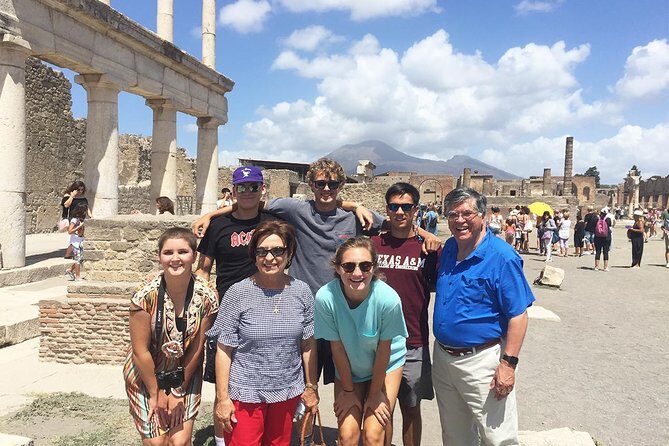
This is about 2 hours on foot through the heart of Pompeii’s highlights. The tour is structured around several concentrated areas, each with its own payoff. You’re not trying to see every corner of the Archaeological Park, and that’s a plus. Trying to do everything usually turns into rushing and forgetting.
Here is what the route covers, in the same order you’ll experience it:
- Archaeological Park of Pompeii (your foundation stop)
- Via dell’Abbondanza (the main street you’ll understand better after the explanation)
- Forum (the city’s central market and civic space)
- Stabian Baths (Terme Stabiane) (a major public bath complex)
- Lupanar (famous for its erotic frescoes)
- A return to the Pompeii park experience to finish with the guide and keep the story coherent
Each stop is roughly 20 minutes, so you get a steady rhythm: see it, learn it, move on.
One practical note: the experience asks for moderate physical fitness. It’s not described as a full-on hiking tour, but the walking is real because you’ll be on paths and streets from Pompeii’s original layout.
Stop 1: Archaeological Park of Pompeii and the Vesuvius backdrop
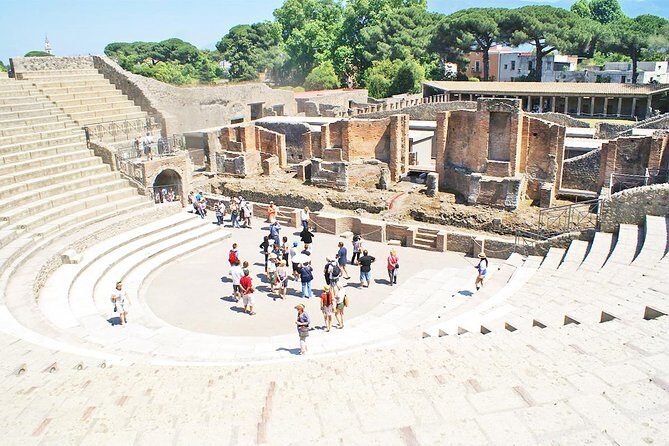
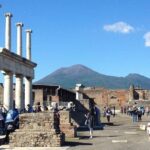
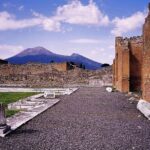
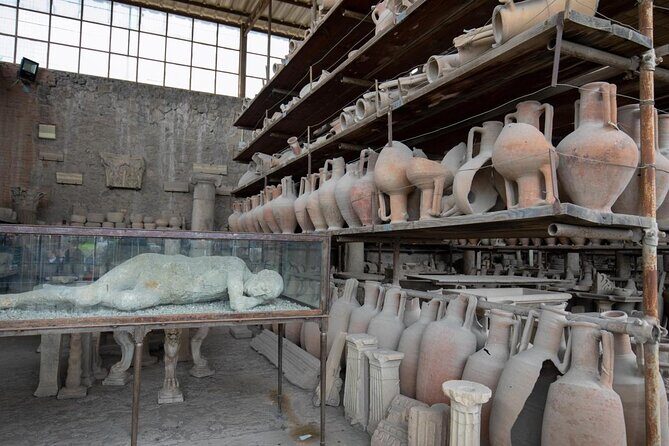
You start inside the Archaeological Park of Pompeii, which is the UNESCO World Heritage Site that has drawn people for generations. The eruption of Mt. Vesuvius in 79 A.D. is the dramatic anchor for everything you’ll see after—ash and pumice buried the city, and the ruins preserve it in a way modern visitors can read like a frozen moment in time.
This first stop is valuable because it sets the frame. Pompeii can feel overwhelming at first. A good archaeologist guide gives you a mental map before you start naming places. You’ll also get oriented to what you’re actually standing near: not just a random pile of stones, but buildings shaped by Roman life, Roman wealth, and Roman routine.
The short timing helps too. You do not get stuck in one spot. Instead, you leave Stop 1 with enough context to make the next streets and squares make sense.
Via dell’Abbondanza: the main street you’ll understand faster
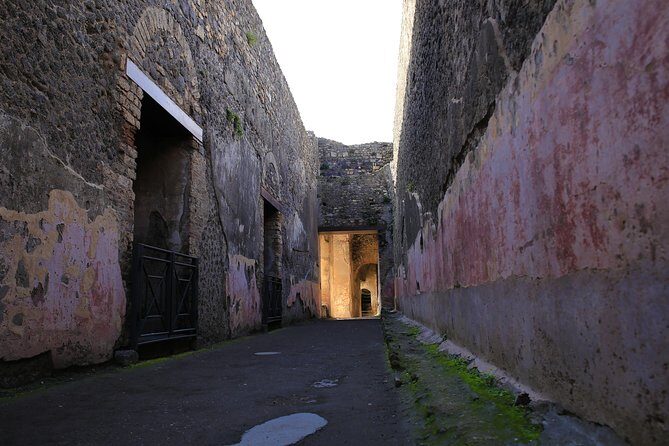
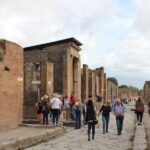
Next comes Via dell’Abbondanza, one of Pompeii’s main thoroughfares. At Pompeii scale, a single street can feel like “just walking.” This stop changes that by giving you something to watch for as you move.
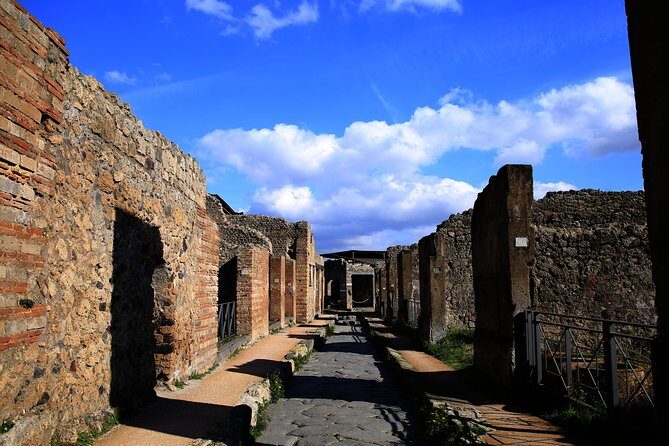
On this street, you are essentially moving through Pompeii’s daily flow: where foot traffic concentrated, how storefronts and entrances behave along a corridor, and how the city’s design funnels people toward bigger civic spaces. Even if you have seen photos, you still might not grasp how movement and architecture work together until someone walks you through the logic.
I like this approach for first-timers. It turns the walk into a guided “where are we and what was this used for” lesson, rather than a long stretch of sightseeing.
The Forum (Foro): markets, civic life, and the city center feel
The Forum is the dramatic center of the city’s public life. This stop is where Roman Pompeii starts to feel less like ruins and more like a place with schedules, crowds, and commerce.
You’ll learn how people lived in Roman times as you walk the main streets and end with the main square. The Forum is where you would expect markets and social energy—so it helps to have the guide connect the buildings around you to roles they played in everyday life. Without that, the Forum can look like a big open space plus a few surviving walls. With the explanation, it becomes a functional hub.
A smart bonus here: the Forum is often where you can continue exploring independently after the tour. One of the best practical takeaways I’ve seen is that you get enough orientation to use the site layout afterward, instead of just leaving with a general wow.
You can also read our reviews of more tours and experiences in Pompeii


Stabian Baths (Terme Stabiane): public space with real clues
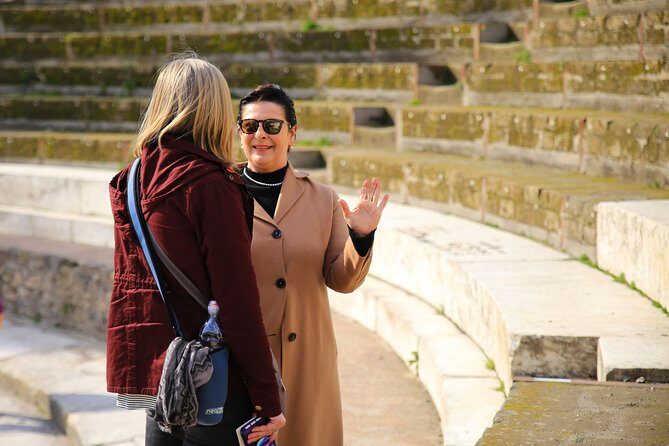
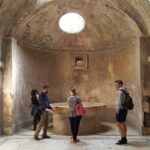
Then you’re off to the Stabian Baths (Terme Stabiane), a major thermal bath complex. Baths in Roman cities were more than hygiene. They were social spaces, workout-and-relax routines, and places where people talked.
This stop is usually a turning point for visitors because it shows Pompeii wasn’t only about grand temples and fancy homes. Public facilities—where ordinary people gathered—tell you how routines worked. You’ll see the bath areas and get context that helps you read the layout without guessing.
A small caution: baths areas can involve uneven walking surfaces. Wear shoes you can trust for comfort and grip. If you have even mildly sore feet already, plan to treat Stabian Baths as a “slow and read” stop rather than a photo sprint.
Lupanar: erotic frescoes, context, and what to expect
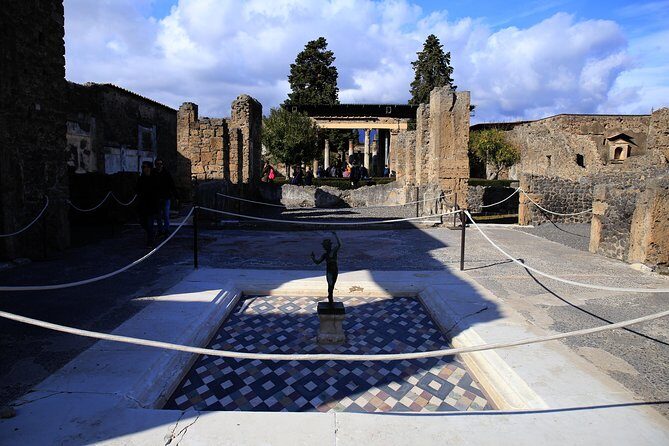
The Lupanar is the last big content stop: famous for erotic frescoes. If you are visiting with family or teens, this is the area where you’ll want to be prepared for adult-themed imagery. The tour itself notes it as a highlight, so it should not come as a surprise, but you still might want to decide ahead of time what you are comfortable seeing.
What makes this stop more than shock-value is context. You’ll learn how the site fits into Roman life and city realities. The guide can also help you understand that this was not random graffiti. It’s part of how the ancient city communicated with visitors and residents.
If you prefer a gentler tone, you may still appreciate this stop because the archaeologist-led explanation keeps it anchored in interpretation rather than sensationalism.
How the small group format changes your Pompeii experience
One big advantage of this tour is its scale: up to 15 travelers. That smaller number matters. Large groups at Pompeii can turn the experience into a stampede with your neck craned over other people’s cameras.
Here, the pace feels steadier and more human. In the feedback I’ve read, guides are praised for keeping groups moving through busier areas, and for a relaxed style that still stays structured. If your priority is seeing a lot without losing your place or your ability to hear, this format helps.
There’s also a practical listening detail you may find useful: some guides hand out audio gear so you can hear clearly. You should plan to wear your ears, not your patience. With a crowded site, anything that improves sound is worth it.
Price and value: what $95.53 buys you in real time
At $95.53 per person, this isn’t the cheapest Pompeii option. But you’re paying for two things that add up fast: a professional guide and skip-the-line tickets.
Pompeii’s long waits are not a small annoyance. They are time theft. When you are only there for a short visit, the best value is time you can spend learning instead of standing still. Since the tour is about 2 hours, the ticket advantage protects the whole plan.
Then you add the guide portion. Pompeii rewards attention. A good archaeologist guide can make you notice clues that would take you years of study to recognize. If you have ever walked around a major archaeological site and felt you were “getting the vibe” but missing the story, this is what you’re trying to fix.
For best value, I think this tour fits people who want the highlights explained clearly and who want a guide to help you decide where to spend extra time afterward.
Getting to Piazza Esedra and not missing your start
Your tour starts at Piazza Esedra, 80045 Pompei NA, Italy, and it ends back at the same meeting point. That matters for planning because you do not have to figure out transportation out of a far-off corner of the park once you’re done.
The tour is also listed as near public transportation, which helps if you’re coming in from Naples or connecting by train. Still, local roads and timing can be tricky, and you should treat the start time as firm.
Two practical rules that can quietly ruin the day:
- Arrive early. If you’re late or miss the tour, there are no refunds.
- Bring ID the day of the tour. The names used when you book have to match your IDs.
One more important detail: this is not a standalone ticket to the ruins. You get a guided tour confirmation, and you can use it with the guide. So if you think you are buying a generic entry pass, you are not. You’re buying a guided experience that includes entry through their process.
Who this tour suits best (and who may want a different plan)
This tour is a strong match for:
- First-timers to Pompeii who want the major sites explained in a short window
- People who care about Roman daily life details, not just big monuments
- Anyone who prefers a small group over a big, noisy crowd
- Travelers who want a guide to help them understand how the Forum and main streets connect
It may be less ideal for:
- People who struggle with walking for a couple of hours on stone streets
- Anyone who wants a totally self-paced visit with no fixed stop timing
- Visitors with concerns about adult-themed fresco content at the Lupanar
If you’re traveling with kids, the tour notes that children must be accompanied by an adult. I’ve also seen comments praising a guide’s ability to keep kids engaged, but you should still expect walking time in the sun and heat.
Should you book this Skip-the-Line guided Pompeii tour?
I’d book this tour if you want Pompeii to feel readable, not just impressive. The combination of skip-the-line entry, an archaeologist guide, and a small group makes sense for anyone who only has one half-day or a short stop.
Before you click confirm, do a quick reality check:
- Can you handle comfortable walking on original streets for about 2 hours?
- Are you okay seeing the Lupanar frescoes as part of the official stops?
- Will you arrive early and bring your ID?
If you answered yes to those, this is one of the better ways to spend your Pompeii time—because it trades guessing for clarity, and it protects your hours from the line outside.
FAQ
What is the duration of the Pompeii skip-the-line guided tour?
The tour lasts about 2 hours.
Is the tour offered in English?
Yes, it is offered in English.
Does this include skip-the-line admission?
Yes. Skip-the-line tickets are included, with guaranteed no long waits.
Is this a standalone ticket to the ruins?
No. It is a guided tour confirmation, and you can use it only with the guide.
Where does the tour start and end?
It starts at Piazza Esedra, 80045 Pompei NA, Italy, and ends back at the meeting point.
Do I need to bring anything for entry?
Yes—IDs are mandatory on the day of the tour, and the names used during reservation must match your IDs. Comfortable shoes are also strongly recommended for walking.