REVIEW · POMPEII
Ancient Pompeii Private Tour: Skip the Line & Kid-Friendly Option
Book on Viator →Operated by Leisure Italy · Bookable on Viator
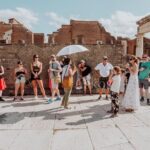
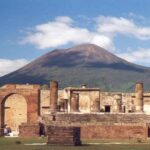
Pompeii feels personal with the right guide. This private tour uses skip-the-line entry plus a local, hands-on walkthrough, so you spend your time looking at the real stuff instead of waiting in lines. It’s built around the big moments of AD 79, when Vesuvius buried the city—and somehow left behind a whole Roman world you can still walk through.
I especially like how the pace stays flexible. If you want more detail on daily life, politics, or Roman public spaces, your guide can shape the route as you go. I also like that the family option isn’t just slower—it’s designed for kids, with a kid map, stickers, games, and clues that turn ruins into a mission.
One consideration: Pompeii is a walking site. You should plan on uneven ground, sun exposure, and a moderate fitness level, so good shoes and water matter a lot.
In This Review
- Key things to know before you go
- Why a private Pompeii guide changes everything
- The family option: games, clues, and a kid-sized map
- Start point, timing, and how the walking day feels
- Stop-by-stop: the heart of Pompeii in a smart, doable route
- Stop 1: Archaeological Park of Pompeii (your overview moment)
- Stop 2: Forum of Pompeii (politics, religion, and commerce)
- Stop 3: Via dell’Abbondanza (the main street of daily life)
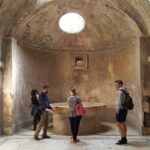
- Stop 4: Terme del Foro (Roman baths, room by room)
- Stop 5: Temple of Apollo (Greek-Italic blend and a key landmark)
- Stop 6: Basilica (the big public building feel)
- Stop 7: Casa dei Vettii (the restored “Sistine Chapel” home)
- Stop 8: Teatro Grande (old-world theater built into lava)
- Stop 9: Antiquarium di Pompei (cast displays you can’t ignore)
- More than ruins: streets, markets, stepping-stones, and everyday systems
- Price and value: is $165 a good deal?
- Who should book this Pompeii private tour?
- Should you book it?
- FAQ
- Is this a private tour?
- How long is the Pompeii tour?
- Is it in English?
- Where does the tour start and end?
- Are admission fees included?
- Do children need a passport?
Key things to know before you go
- Skip-the-line entry included, so you start seeing Pompeii faster
- Private guide means better questions, less crowd stress, and a route that can flex
- Family option for kids 6–11 includes a Pompeii4kids kit with map, stickers, activities, and an activity book
- Modern museum stop for casts gives context for what the eruption did, without turning it into a shock ride
- Forum-focused route packs politics, religion, and commerce into one central area
- A “see the whole city” style walk hits major ruins like baths, temples, theaters, and standout homes
Why a private Pompeii guide changes everything
Pompeii is huge, and it’s not the kind of place where random wandering always pays off. A private guide helps you connect the dots. You’re not just looking at walls and columns—you’re learning what each place did and why people would have cared.
The big win is that skip-the-line tickets are built in. That doesn’t just save time. It keeps your day intact. Pompeii’s best “wow” moments happen when you’re alert, not when you’re stuck waiting at ticket barriers under the sun.
Then there’s the private format. You get undivided attention and can ask questions as they come up. This matters in Pompeii, where the same building can be confusing until you know what you’re looking at—like bath-room sequences, political layouts in the Forum, or how street design worked around flood and sewage issues.
You can also read our reviews of more private tours in Pompeii
The family option: games, clues, and a kid-sized map
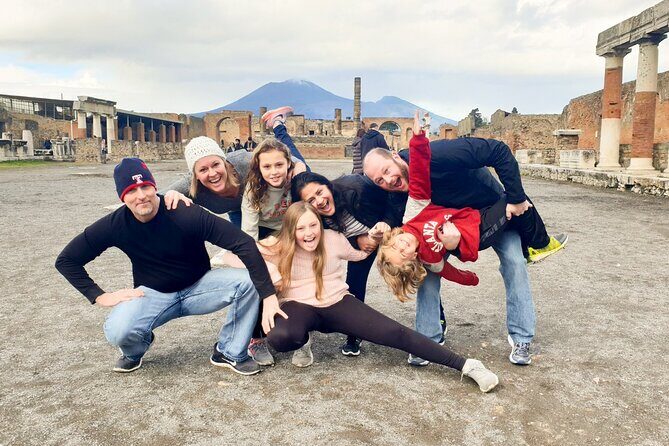
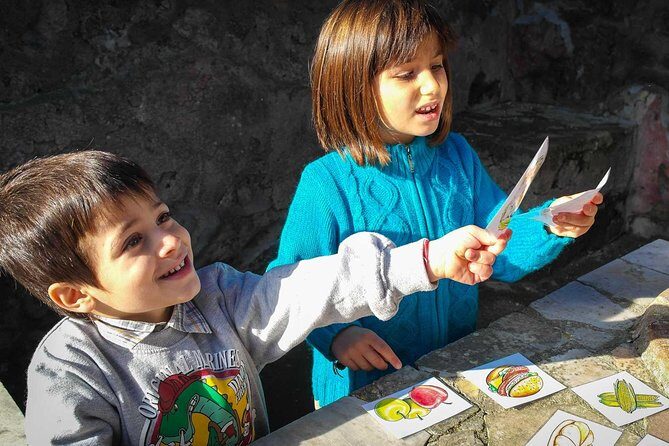
If you’re traveling with kids, the family option is the part worth paying extra attention to. It isn’t simply a “family-friendly” label. It includes a Pompeii4kids kit with a map, stickers, activities, and an activity book. Your guide also uses games, puzzles, and clues, and adjusts the route to keep younger visitors engaged.
Kids 6 to 11 are specifically called out for this option, which makes sense. At that age, a guided scavenger-style approach works. You get to use the map like a quest. Kids place stickers during the visit, and the activities help them connect buildings to real people and real jobs in ancient Pompeii.
The guides also seem to be very practiced at managing the human side of a Pompeii visit—heat, impatience, and questions that come fast. Names that keep showing up for this kind of kid-friendly success include Francesca, Anna, Sabrina, Viviana, and Fabrizio, with families praising how the guide kept kids involved while also answering adults’ questions.
Start point, timing, and how the walking day feels
This tour meets at Via Villa dei Misteri, 2, 80045 Pompei. The tour ends back at the same meeting point. That loop is nice because you’re not trying to figure out a new logistics puzzle after you’ve already walked half a city.
The duration is listed as about 2 hours. That’s a realistic window for Pompeii highlights if you’re aiming for maximum learning and minimum stress. Still, Pompeii is not flat, and it can get hot. A moderate physical fitness level is recommended, and good walking shoes are a must.
Also note what’s not included: pick up and drop off. You’ll arrive on your own, likely using public transport nearby (the tour notes it’s near public transportation). So plan your start time with enough buffer to avoid rushing.
Stop-by-stop: the heart of Pompeii in a smart, doable route
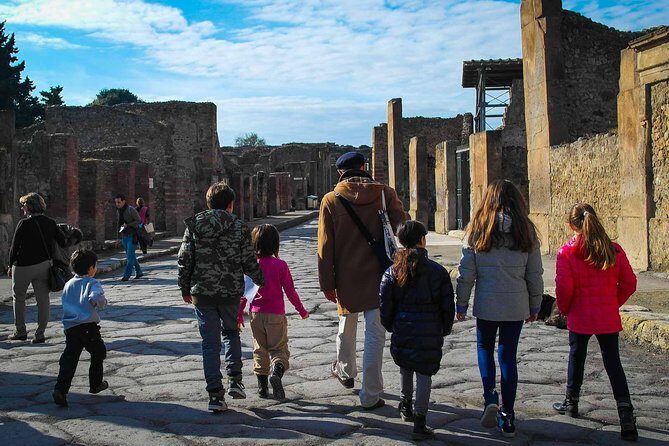
This tour is structured around Pompeii’s signature “big ideas,” not a long checklist. Expect a guided walk that mixes architecture, daily life, and the eruption story—so by the time you hit the big public buildings, you already understand what you’re seeing.
Stop 1: Archaeological Park of Pompeii (your overview moment)
You begin in the Archaeological Park of Pompeii, where your guide frames the city and the eruption. The tour explanation starts with the timeline of Vesuvius erupting on August 24 in AD 79. That gives you a lens for everything else you’ll see.
From there, you’re set up to spot the details that make Pompeii feel real: colorful wall paintings, floor mosaics, and how advanced Roman daily life was. You also get oriented to the city layout, including walls and entry points like Porta Marina, once connected to the harbor.
What to look for here: pay attention early to street design and how people moved through the city. One detail you may hear about is how parts of the streets had stepping-stones across areas that often flooded or had sewage issues. If your guide points out the logic, the city stops feeling random.
Possible drawback at the beginning: if you’re not in the mood for context yet, Pompeii can feel overwhelming fast. That’s why the tour’s opener is important—it tries to turn chaos into a story quickly.
You can also read our reviews of more tours and experiences in Pompeii

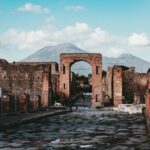
Stop 2: Forum of Pompeii (politics, religion, and commerce)
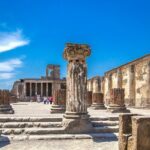
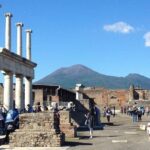
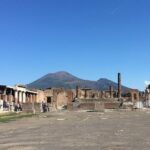
Next comes the Forum, Pompeii’s main hub. This large rectangular plaza is described as roughly 157 by 38 meters, and chariot traffic was off-limits. That alone tells you something: this wasn’t just a market square. It was the civic stage.
Your guide will explain what the Forum was used for and how it worked as a political, religious, and commercial center. That makes the next buildings easier to interpret, because you can mentally place them in the city’s power and public-life system.
What to look for: stand back for a moment and let your guide explain the space. When you understand the function of the plaza, the buildings stop being isolated ruins.
Stop 3: Via dell’Abbondanza (the main street of daily life)
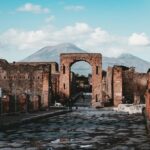
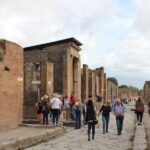
Via dell’Abbondanza is Pompeii’s main commercial and social artery, stretching from the Forum to the Sarno Gate. This is where you get a vivid glimpse of everyday Roman life moving through a long street.
If you like street-level history, this stop usually hits. It’s also a good area for photos because the street gives you depth—your eyes can travel down the line and imagine carts, shoppers, and daily rhythms.
One consideration: since it’s the main street, you might feel more foot traffic depending on the day. The private guide and pacing help, though, because you’re not forced into one rigid group flow.
Stop 4: Terme del Foro (Roman baths, room by room)
The Forum Baths (Terme del Foro) are a standout because they’re remarkably well preserved. Built around 80 BC, they’re also described as the only public baths still operational at the time of the eruption in 79 AD.
Here you walk through the sequence of Roman bathing spaces:
- Apodyterium (changing room)
- Frigidarium (cold bath)
- Tepidarium (warm room)
- Calidarium (hot room)
You’ll also hear about the architectural features—high barrel-vaulted ceilings, stucco reliefs, and telamones (terracotta figures used as structural or symbolic supports).
What to look for: don’t rush this. The whole point of baths is flow—cold to warm to hot—and the building layout helps you understand how people relaxed and socialized.
Stop 5: Temple of Apollo (Greek-Italic blend and a key landmark)
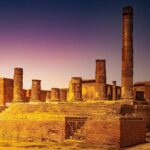
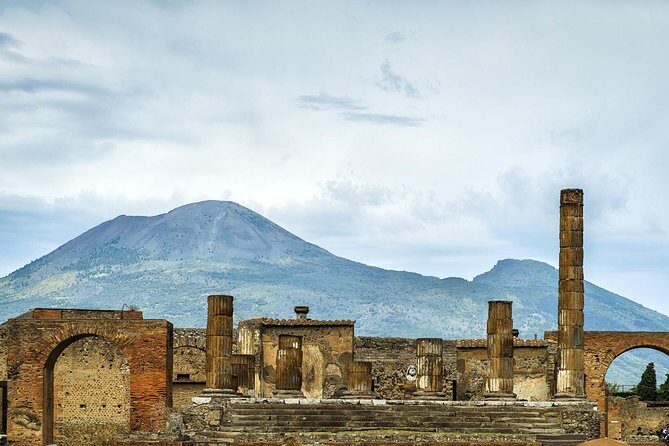
The Temple of Apollo is one of Pompeii’s oldest and most important religious sites, with origins dating back to the 6th century BC. Located in the Forum area, it’s also a key landmark, so it helps your mental map click into place.
The temple is described as a mix of Greek and Italic styles, with an elevated podium reached by stairs and a portico with 48 columns. Your guide may mention bronze replicas of Apollo as an archer and his twin sister Diana, with the original Hellenistic bronzes preserved in Naples’ National Archaeological Museum.
What to look for: even if you can’t see everything in detail, stand where the podium would frame the temple’s presence. It gives you a sense of how religious space dominated the city’s skyline.
Stop 6: Basilica (the big public building feel)
The Basilica is described as the most imposing public building in the Forum area, dating to the 2nd century BC. In Roman terms, it’s the kind of structure that signals administration and civic gravity.
You get a quick, clear introduction to why this building matters, and where it sits in the Forum’s logic.
Drawback to keep in mind: this stop can feel short compared with the bathrooms, because your time must keep moving to cover Pompeii’s highlights. If architecture is your thing, ask your guide to linger for 2 extra minutes to take in shape and proportions.
Stop 7: Casa dei Vettii (the restored “Sistine Chapel” home)
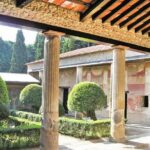
One of the most rewarding stops on the route is the Casa dei Vettii. It’s widely considered the Sistine Chapel of Pompeii, and it reopened in 2023 after a meticulous 20-year restoration.
This is a feast for anyone who likes luxury and storytelling through art. The house belonged to Aulus Vettius Conviva and Aulus Vettius Restitutus, both freedmen who became wealthy wine merchants. The house was designed to flaunt that new status.
What to look for: treat the rooms like a social résumé. When you understand the owners’ background, the decoration reads like ambition.
Stop 8: Teatro Grande (old-world theater built into lava)
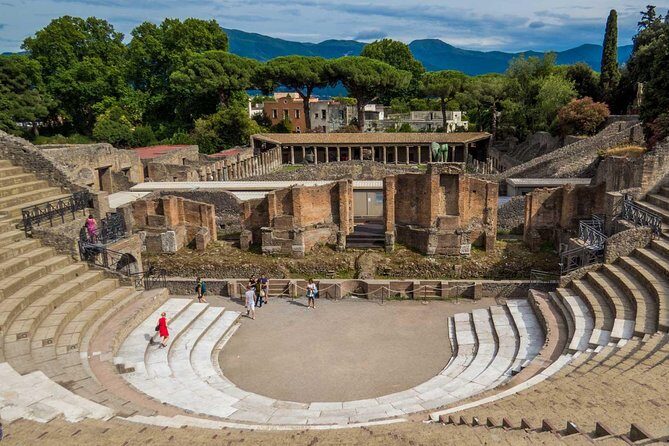
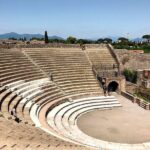
The Teatro Grande is one of the oldest surviving masonry theaters. Built in the 2nd century BC and carved into a natural lava hillside, it shows the transition from Greek to Roman architectural styles.
If you want a break from civic buildings, this is a good one. A theater stop reminds you Pompeii wasn’t just about politics and commerce. People watched performances here.
What to look for: notice how the hillside and masonry shape the seating space. The setting itself is part of the design story.
Stop 9: Antiquarium di Pompei (cast displays you can’t ignore)
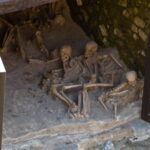
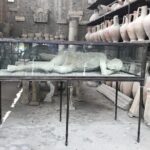
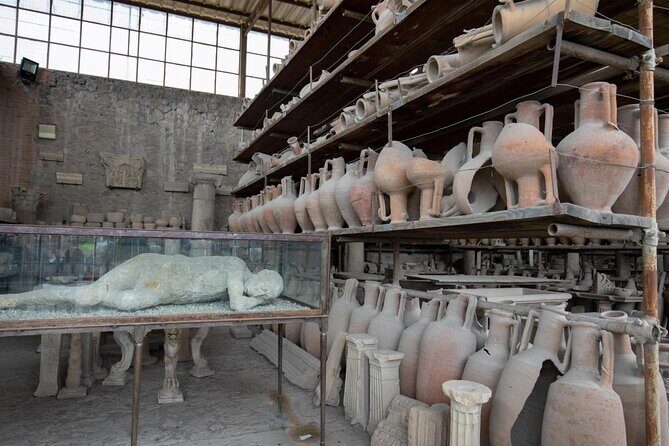
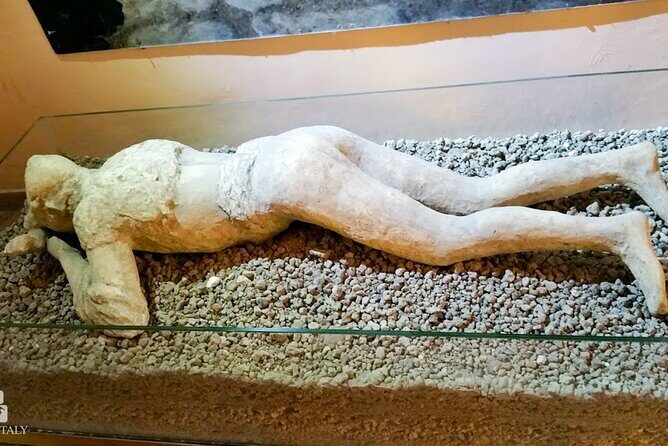
The Antiquarium di Pompei is the site’s main museum and a climate-controlled place for fragile artifacts. It’s also where you’ll see the casts of victims preserved in their final moments.
Even though some casts remain in situ at the ruins, the museum is where you see several of the most poignant plaster figures, including small children.
This stop carries emotion. The tour framing matters here. You’ll be guided to understand what you’re seeing as evidence of the eruption’s impact, not just a dramatic spectacle.
What to look for: let your guide explain the scene and the timeline. When the context is clear, you can process it without feeling like you’re rushing through grief.
More than ruins: streets, markets, stepping-stones, and everyday systems
Pompeii’s power is that it’s not only temples and theaters. This tour style also points out “systems” you can’t easily get from a guidebook.
You may hear about basalt-laden streets and squares, plus public weighing scales. You might also be shown the Roman-style “fast food” idea—vases used for storing food—along with must-sees like the Temple of Apollo, the Macellum market, and the stepping-stones that helped people cross problematic areas.
And yes, the overview also notes a stop that includes an old brothel. That’s part of how Pompeii documents daily life, not just religious and political power.
Price and value: is $165 a good deal?
$165.05 per person for a private, 2-hour Pompeii walk can feel steep until you compare what you’re getting.
Here’s what you’re buying:
- Private guide time (one group only, no mixing)
- Skip-the-line entry included
- A route that targets major highlights and ties them together with context
- A family kit if you select the kid option (map, stickers, games, activity book)
Also, the tour notes include group discounts and a mobile ticket. That can reduce friction on a day when paperwork and queueing can eat your energy.
The value question comes down to you. If you’re a solo traveler or a couple who wants a smarter route, private Pompeii can be worth it because you cut the guesswork. If you’re a family, it can be especially worth it because the kids-specific activities turn the visit into something they can participate in, not just sit through.
Who should book this Pompeii private tour?
I think this is a strong match if:
- You want maximum impact in a short visit (about 2 hours)
- You’re traveling with kids 6–11 and want a real family-focused approach
- You care about understanding how a Roman city worked—Forum life, baths, religion, theater, and domestic wealth
- You prefer a flexible pace and the ability to ask questions without feeling rushed
It may not be the best fit if your group wants a slow, open-ended wander. This is a structured highlights tour, and it’s built to move.
Should you book it?
If you want Pompeii to feel like a story you can follow, I’d book this. The biggest strengths are the private guide attention and the fact that skip-the-line tickets let you use your limited time for actual seeing. Add the family kit if you’re traveling with kids, and you’ve got a plan that keeps young visitors engaged while still delivering the core highlights adults care about.
FAQ
Is this a private tour?
Yes. It’s listed as a private tour/activity, meaning only your group participates.
How long is the Pompeii tour?
The duration is listed as about 2 hours.
Is it in English?
Yes, the tour is offered in English.
Where does the tour start and end?
It starts at Via Villa dei Misteri, 2, 80045 Pompei NA, Italy, and ends back at the same meeting point.
Are admission fees included?
Admission is listed as included (Admission Fee – Admission fee). However, the family option description also says admission fees are not included. I’d confirm at booking so you’re not surprised.
Do children need a passport?
Yes. The tour notes that a current valid passport is required on the day of travel for children under 18.