Pompeii moves faster with a pro guide. I like this because you get an archaeologist guide explaining how people actually lived in Pompeii, not just big monuments. I also like the small group feel (up to 15), which makes it easier to hear your guide and ask questions. The main consideration: it’s a walking tour and you should plan ahead for heat, footwear, and limited breaks.
This tour is designed to get you into the ruins quickly with pre-reserved entrance, so you’re not burning time in line. You also get headsets when needed, which is a big deal at Pompeii’s busy pinch points. If you’re short on time, you can book the 2-hour express option for a highlights route.
Meet at Via Villa dei Misteri, 1, and the tour ends inside the Archaeological Park of Pompeii. It’s near public transportation, but a couple of guides and groups can create confusion at the entrance, so use the map and arrive a few minutes early.
In This Review
- Key highlights you’ll feel in the moment
- Why skip-the-line Pompeii is worth it (especially in peak season)
- How the archaeologist guide experience changes everything
- Your Pompeii route: from the bakery to the forum
- Stop: Archaeological Park of Pompeii (the core “complete” start)
- Plaster casts: the most emotional part of the tour
- Photo stops that actually help (not just scenic fluff)
- Main Street and Roman Baths: where Pompeii feels like a living city
- Pompeii’s Main Street
- Roman Baths
- The complete tour vs the Pompeii Express option
- Price and value: what $71.38 buys you in the real world
- What to expect from pacing, breaks, and meeting points
- You’ll have breaks built into the route
- Meeting details matter at Pompeii entrances
- Small-group tips I’d follow again
- Wear the right shoes
- Plan for bathroom time
- Bring water and sun protection
- Expect a moderately paced walk
- Who should book this Pompeii tour
- Should you book the Complete Pompeii Skip the Line Tour?
- FAQ
- How long is the Complete Pompeii Skip the Line Tour?
- Is the Pompeii admission ticket included?
- Do I need to bring headphones or can I hear the guide?
- How big is the group?
- Where does the tour start and end?
- Is there an option for a shorter tour?
Key highlights you’ll feel in the moment
- Skip-the-line entry with pre-reserved Pompeii tickets, so you start seeing faster
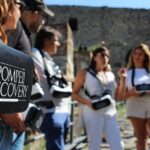
- Small groups of 15 or fewer, led by an official Pompeii guide/archaeologist
- Headsets when needed to keep the commentary clear, even in crowds
- Stop sequence hits Pompeii’s everyday life: bakery streets, baths, forum areas, and more
- Plaster casts of the victims give a heavy but unforgettable look at the eruption’s final moments
- Express option (about 2 hours) if you want only the essentials
Why skip-the-line Pompeii is worth it (especially in peak season)
Pompeii isn’t hard to enjoy, but it’s easy to do badly—meaning you waste time at the entrance, then rush through the parts that matter. This tour’s whole point is to reduce that friction. You get pre-reserved admission and skip the long lines, which means you spend more of your limited time inside the city rather than standing around outside.
That time trade matters because Pompeii also has a built-in challenge: it’s a large site, with open areas that cook in the sun. When you arrive ready—water in hand, shoes on—the ruins feel less like a maze and more like a real place with a street plan you can follow.
Another quiet win is the small-group size. With a larger crowd, you get swept along and your attention gets chopped up. With a group of 15 or fewer, you’re more likely to hear the guide’s story and keep up without feeling stressed.
You can also read our reviews of more guided tours in Pompeii

How the archaeologist guide experience changes everything
The big difference here is the guide’s approach. You’re not only touring stones. You’re getting commentary on daily life in ancient Pompeii—food, work, public spaces, and what people used for social and commercial routines.
In the field, that can mean your guide points out details that most people skip. For example, one minute you’re looking at preserved streets, and the next minute you’re understanding what those streets were for and who would have walked them. Several guides who lead this tour have been described as former archaeologists or trained archaeologists with long experience (I’ve seen names like Enzo, Ilaria, Francesca, Sonia, and Vito associated with the tours). That background shows in the way they explain why certain rooms and buildings look the way they do.
You’ll also get a practical perk: headsets when needed. Pompeii gets busy. Hearing your guide clearly is one of the easiest ways to make the tour feel worth it.
If you prefer control and flexibility, you still can have it. You’re not locked into a bus-type experience. You’re guided through a route, and after the tour ends inside Pompeii, you can continue on your own based on what you found most interesting.
Your Pompeii route: from the bakery to the forum
You’ll spend about 2 to 3 hours walking Pompeii, with an express option at about 2 hours. The schedule can include photo stops as well as guided stops, and the guide may adjust the exact flow as new discoveries and preservation updates shape what’s visible and worth seeing.
Here’s what to expect as you move through the city:
Stop: Archaeological Park of Pompeii (the core “complete” start)
This is where the tour stakes out Pompeii’s storyline. After meeting your guide and group, you’ll enter with skip-the-line access and start learning how the eruption year, Roman neighborhoods, and everyday life fit together.
Early on, your guide focuses on ordinary people. That’s when Pompeii clicks. You’re likely to see:
- A preserved bakery area where some food remains almost intact in the way it was found
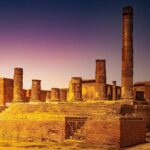
- The Temple of Apollo
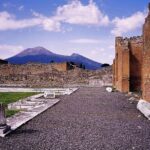
- Roman Forum space (the civic and social heart)
- An ancient supermarket-type stop (a commercial comparison helps many first-timers)
- A cemetery area
- Even a brothel stop, handled with age-appropriate context
One note: this is a walking tour at a moderate pace, so bring shoes you trust. Pompeii’s uneven ground makes sandaled sightseeing a bad idea. A lot of people regret it fast.
Plaster casts: the most emotional part of the tour
At some point, you’ll reach the heart-wrenching plaster casts of people caught during the eruption. This is where the site’s tragedy becomes real in a physical, visual way. The tour format matters here: having a guide explain what you’re seeing helps you avoid turning it into a quick photo moment.
This part can feel difficult. If you’re sensitive to heavy historical scenes, plan your headspace. I’d treat it like a moment of remembrance, not a stop you rush through.
You can also read our reviews of more tours and experiences in Pompeii

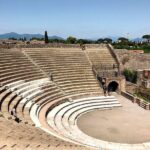

Photo stops that actually help (not just scenic fluff)
The tour includes guided stops and photo stops. That might sound like a simple “look and snap” pattern, but in Pompeii, it’s useful. Some views are hard to understand if you’re walking without context. Your guide’s commentary plus a photo pause gives your brain time to organize what you’re seeing into a real map.
Main Street and Roman Baths: where Pompeii feels like a living city
After the early highlights, you’ll move through Pompeii’s built environment in a way that helps you visualize daily life.
Pompeii’s Main Street
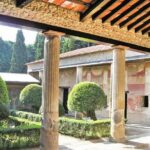
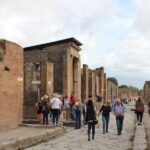
The tour includes Pompeii’s main thoroughfare with a guided route and photo stop. This is one of the best segments for first-timers because it shows how streets, buildings, and public-facing activity connect.
On Main Street, you’re likely to notice:
- How storefront or commercial spaces would have lined a busy route
- How the city’s layout supports movement, gathering, and transactions
- How the ruins still hold the rhythm of city life, even after nearly 2,000 years
If you’re the type who hates being overwhelmed, Main Street helps. It’s a backbone. Once you “get” the street, you can connect the dots faster for the rest of the tour.
Roman Baths
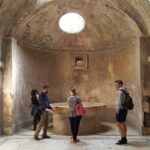
You’ll also visit the Roman Baths, guided with photo stops. Baths are a great stop because they show how Romans handled leisure, hygiene, and social time. Even without going room-by-room on your own, you’ll get explanations that make the architecture feel purposeful rather than random.
A practical tip: baths areas can be shaded or open depending on the layout, but there’s still walking between sections. Water and sunscreen matter even if you get a few cooler pockets.
The complete tour vs the Pompeii Express option
If you don’t have much time, choose the express route. It still gets you an archaeologist-led visit, but the tour follows a curated highlights set meant to cover the best-known areas without the full-length walk.
Here’s how to decide:
- Choose Complete if Pompeii is your main stop and you want the fuller arc: streets, major sites, forum-type civic spaces, baths, plus those plaster casts.
- Choose Express if you’re combining Pompeii with another itinerary (or you’re traveling with limited stamina) and you want the highlights quickly.
Both options include admission and guidance. The difference is how much ground you cover and how long you get to absorb each segment.
Price and value: what $71.38 buys you in the real world
At about $71.38 per person, the price isn’t low, but it’s also not just paying for “someone to walk beside you.” You’re buying several concrete things:
- Official tour guidance tied directly to Pompeii’s site interpretation
- Pre-reserved entrance tickets, which prevents line-wasting
- Small group size (15 or fewer), which improves the experience quality
- Headsets when needed, helping you actually hear the guide
For many people, Pompeii becomes expensive in a sneaky way: not money, time. If you’ve already planned the day and you’re trying to cover a lot without burning hours, skip-the-line and a tight route can be worth more than a cheaper, less organized option.
Also, you’re paying for context. Pompeii can be visually impressive but emotionally confusing if you’re walking without a framework. A guide who can explain why the bakery, forum spaces, and plaster casts matter changes the whole feel of the day.
What to expect from pacing, breaks, and meeting points
This tour is generally smooth, but you should know two practical things before you go.
You’ll have breaks built into the route
Some feedback points to pauses during the tour, including stretches where you can’t really do much except wait, rest, or use the bathroom if it’s available at that time. Think of those breaks as part of the physical reality of Pompeii: it’s hot, it’s large, and you’re on stone paths.
My advice: treat the breaks as a reason to refill water, check your map, and reset your brain. If you want maximum forward motion, pick Complete vs Express based on your energy level, not just your interest level.
Meeting details matter at Pompeii entrances
The meeting point is Via Villa dei Misteri, 1, 80045 Pompei. The tour ends inside the archaeological site. A couple of people have described initial confusion about where exactly to find the guide at the entrance area. So, do this:
- Arrive a few minutes early
- Use the exact address in your map app
- If you see multiple tour groups, follow the guide’s sign/meeting point more than the first landmark you find
Once you connect with your group, everything usually clicks into place.
Small-group tips I’d follow again
Even with skip-the-line access and an archaeologist guide, your comfort will shape your experience. Here’s what to do so you enjoy more and complain less.
Wear the right shoes
Pompeii is uneven. Bring walking shoes, not sandals. Your feet will thank you by mid-tour.
Plan for bathroom time
One review noted there wasn’t a bathroom for about three hours during the hot part of the experience. Even if your timing isn’t identical, assume bathrooms may be scarce. Use the bathroom before you start, then bring a water bottle and pace your sips.
Bring water and sun protection
Bring water and use sun protection. Even if you get shaded stops, you’ll still be in open-air Pompeii for long stretches. People also recommend sunglasses, and that’s not a bad idea with how bright the site can be.
Expect a moderately paced walk
You should be able to walk at a moderate pace without difficulty. If you’re traveling with limited mobility, this walking format can be tough. In that case, consider whether an alternate style of tour better fits your day.
Who should book this Pompeii tour
This is a strong pick if:
- Pompeii is a top priority and you want the best first-pass route
- You like explanations that turn ruins into real human stories
- You want a manageable group size and clear audio via headsets
- You want to see the major stops, including Roman Forum-type areas, baths, and plaster casts
It may not fit as well if:
- You hate walking tours and want a mostly seated experience
- You strongly dislike waiting during set breaks
- You’re traveling with needs that require more frequent stops than a shared route allows
Should you book the Complete Pompeii Skip the Line Tour?
I’d book it if you want Pompeii to feel organized, meaningful, and doable in a half-day. The skip-the-line entry alone reduces stress. The archaeologist-led storytelling is what turns the ruins into something you can actually picture. And the small-group size gives the guide’s explanations room to land.
If you’re tight on time or traveling with limited stamina, take the Express version and focus on the highlights. If Pompeii is your big moment, go Complete and give yourself the time to process the plaster casts and the city’s everyday-life stops.
FAQ
How long is the Complete Pompeii Skip the Line Tour?
It’s listed as about 2 to 3 hours.
Is the Pompeii admission ticket included?
Yes. Pre-reserved entrance tickets to Pompeii are included.
Do I need to bring headphones or can I hear the guide?
Headsets are provided when needed, so you can hear the guide more clearly.
How big is the group?
The tour has a maximum of 15 travelers, in a small group format.
Where does the tour start and end?
It starts at Via Villa dei Misteri, 1, 80045 Pompei (meeting point) and ends inside the Pompeii Archaeological Site.
Is there an option for a shorter tour?
Yes. You can book the Pompeii Express option, which is about a 2-hour highlights route led by an archaeologist.