REVIEW · 1-DAY TOURS
Pompeii and Herculaneum day trip
Book on Viator →Operated by A DRIVE INTO THE BLUE · Bookable on Viator
Pompeii and Herculaneum feel like two different worlds. This day trip pairs them in one smooth loop from Naples, with a private driver so you’re not stuck waiting for a bus schedule. I also like how the plan gives you a mix of iconic sights and the smaller, everyday corners that make Roman life click. You’ll get a true one-day framework for both sites, instead of doing just one and calling it a day.
The main trade-off: the tour price does not include all admission fees, and Porta Marina has its own separate entrance. So you’ll want to budget a bit extra on top of the tour cost, then plan your day around those ticketed entry points.
In This Review
- Key Highlights You’ll Feel Immediately
- Naples Pickup and the Real Value of a Private Driver
- Porta Marina Meeting Point: Where Your Day Gets Its Shape
- Pompeii’s Core Stops: Public Life, Markets, and Main Streets
- Foro di Pompei (Civil Forum)
- Via dell’Abbondanza
- Teatro Grande (Large Theatre) and the Entertainment Cluster
- Casa del Menandro (A Rich House)
- Stabian Baths (Terme Stabiane)
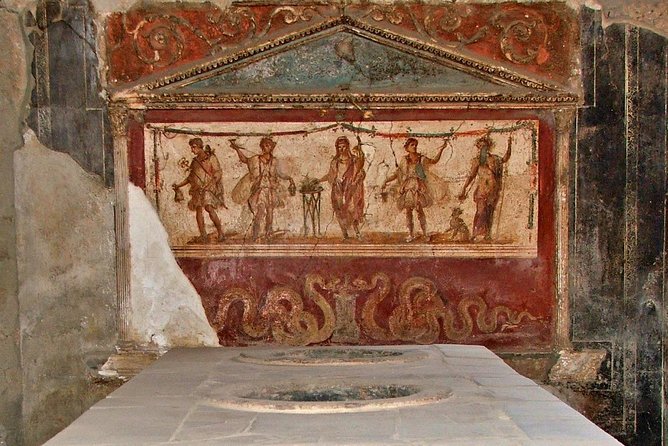
- Lupanar (Purpose-Built Brothel)
- Antiquarium of Pompeii (Pompei)
- Herculaneum: Smaller Site, Better Preserved Feel
- Parco Acheologico di Ercolano
- House of the Hotel and House of the Wooden Tramezzo
- Decumano Massimo
- College of the Augustales and Suburban Baths
- Antiquarium di Ercolano
- How the Admission Fees Actually Work (Budgeting Without Surprises)
- Timing, Pacing, and What 6–7 Hours Means on the Ground
- Guides and the Small Details That Make It Feel Worth It
- Who Should Book This Pompeii and Herculaneum Day Trip
- Should You Book This Tour?
- FAQ
- Is pickup from Naples included?
- How long is the Pompeii and Herculaneum trip?
- Is this a private tour?
- Is a guide included?
- Are admission tickets included in the price?
- What language is the tour offered in?
- Does the tour include transportation details like air-conditioning and bottled water?
- Are tickets mobile?
- Do I need to wear a mask on the vehicle?
- Can I bring a service animal?
- What if I cancel?
Key Highlights You’ll Feel Immediately
- Private driver freedom: you set the pace within the day, not the calendar of a large group.
- Two UNESCO-era sites in one run: Pompeii’s scale plus Herculaneum’s preservation, side by side.
- Optional guided ruins: you can do self-paced wandering or add a pro at the sites.
- Comfort matters: air-conditioned vehicle plus bottled water, for a long but manageable 6–7 hours.
- Family-friendly format: the way the stops are chunked makes it easier to keep kids engaged.
- High satisfaction rate: a 4.8 rating with 95% recommending it.
Naples Pickup and the Real Value of a Private Driver
Starting in Naples is convenient, but the bigger win is how you travel once you leave the city. This is a private tour, meaning it’s just your group in an air-conditioned vehicle—no weaving through other parties, no “everyone here yet?” drama.
Your pickup is designed to be practical. If your street is reachable by car, you’re picked up straight from your accommodation. If not, you’ll meet at the closest spot your driver can access. If you’re on a cruise, you also have Naples-area cruise docking pickup coverage.
Why that matters: Pompeii and Herculaneum require timing. You’re dealing with ticket lines, entrances, and crowd control. A private driver doesn’t magically eliminate crowds, but it gives you the freedom to move efficiently, take breaks, and return at the right moment without waiting on strangers.
Also, note the day-trip rules of the road: you’ll be in a vehicle for a chunk of time, so bring a light layer. Even with air-conditioning, historic sites don’t care if it feels hot outside.
Porta Marina Meeting Point: Where Your Day Gets Its Shape
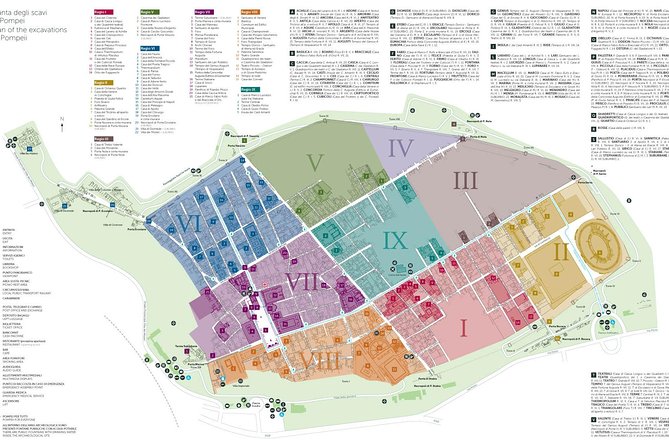
Most days at Pompeii go better when you get your bearings early. The first stop is Porta Marina, where you meet a licensed guide after tickets are purchased. From there, the day starts with an orientation walk through the ruins of this ancient town.
Porta Marina isn’t just a random entry point. It’s the kind of place where you begin to understand the city layout—then the rest of Pompeii lands more clearly: where public life happened, where people shopped, where entertainment lived, and where wealth showed itself in domestic architecture.
This stop is about two hours, and it’s also the part where having a guide can really pay off. If you chose the option that includes a professional guide at the ruins, that means you’ll have expert help from the start. If not, you’ll still have a licensed guide meeting point process at Porta Marina, but you’ll be responsible for more of the self-navigation.
Pompeii’s Core Stops: Public Life, Markets, and Main Streets
Once you’re inside Pompeii’s world, the schedule shifts into shorter, high-impact segments. This is smart. Pompeii is huge, and the ruins can turn into a blur if you try to sprint your way through everything.
Foro di Pompei (Civil Forum)
This is the heart of daily life in Pompeii—the zone tied to administration, justice, business management, trade activities, and citizen worship. The stop here is brief (around 10 minutes), but it’s the kind of place where even a quick look helps you understand the city’s rhythm.
Via dell’Abbondanza
This street gets called the street of abundance because it was the prosperous shopping and commercial corridor. In practice, this means you’ll see how Roman streets were designed for people on foot, business activity, and social flow—less like a museum hallway, more like a living route.
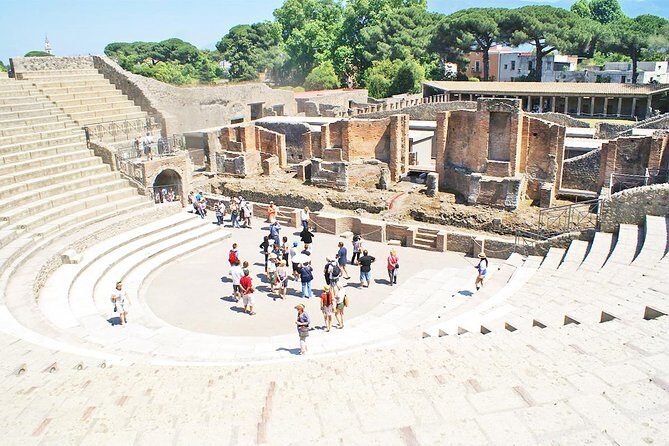
Teatro Grande (Large Theatre) and the Entertainment Cluster
Pompeii’s theatre area isn’t just about watching performances. It was also a meeting and entertainment hub. The key is that the area includes several structures—the large theatre and smaller related buildings—so you get a sense of how Pompeians spent their evenings and gathered in public space.
Casa del Menandro (A Rich House)
This house is one of Pompeii’s standout residences, known for both architecture and decoration. The time here is short, so don’t expect a slow “study session.” Instead, use the visit to spot what makes a wealthy home wealthy: layout, scale, and decorative ambition.
Stabian Baths (Terme Stabiane)
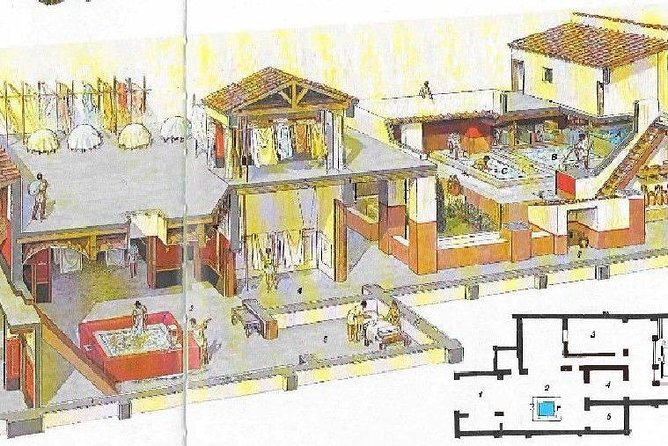
If you want a reality check on Roman leisure, this is it. Public baths were major social infrastructure—centers for grooming, conversation, and routine. This stop is only about 10 minutes, but it’s a strong contrast to the theatres and forums. You see a different side of the culture: daily and practical, not ceremonial.
Lupanar (Purpose-Built Brothel)
The Lupanar is the brothel in Pompeii, and it’s known for erotic wall paintings. If you’re sensitive to graphic or adult-themed imagery, it’s smart to mentally prepare. The visit is short, but it’s also one of those places that makes Pompeii feel painfully human—people worked, lived, desired, and built their world with no moral distance from everyday needs.
Antiquarium of Pompeii (Pompei)
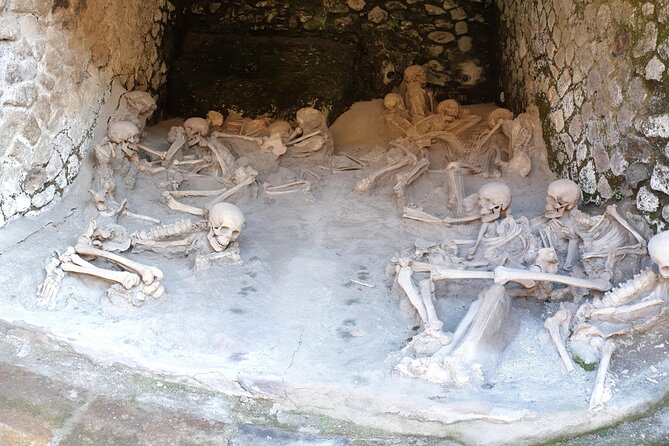
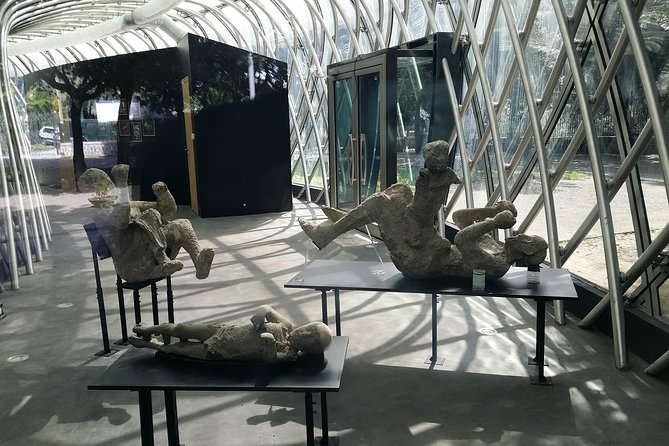
You’ll also make a stop at the Antiquarium, which focuses on archaeological finds and how victims from the eruption were studied (including casts). This is a chance to reset your understanding between street-level ruins and the bigger eruption story. It can feel heavy, but it also gives meaning to what you’re seeing outside.
Herculaneum: Smaller Site, Better Preserved Feel
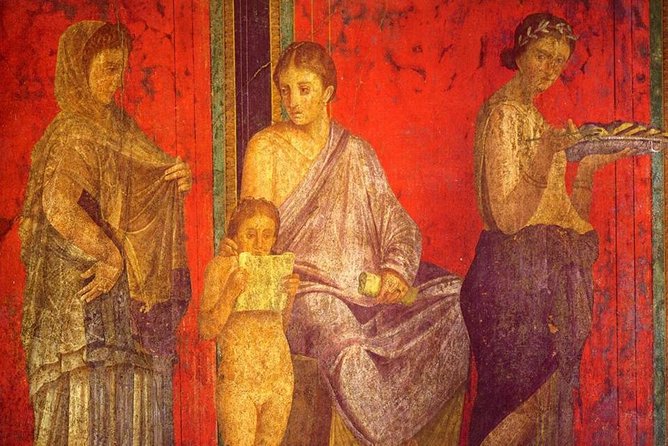
Then you swing to Herculaneum, which is smaller and often less crowded in a way that can make your time there feel more focused.
The key difference is preservation. Herculaneum was covered by lava and mud during the AD 79 eruption, and the volcanic materials helped preserve structures in a way you don’t always get at Pompeii. That’s why Herculaneum often feels more intact—like you can read the buildings with fewer gaps.
Parco Acheologico di Ercolano
This is the main Herculaneum archaeological park. The stop time is short (about 5 minutes), but the site is the anchor of the visit: a UNESCO-listed excavation area that shows how Herculaneum was buried and recovered.
House of the Hotel and House of the Wooden Tramezzo
You’ll visit two additional house ruins:
- House of the Hotel: a wealthy big-house ruin, giving you a sense of how upper-class domestic life looked.
- House of the Wooden Sacellum: this one includes the story of a wooden partition or door that was charred during the eruption. Even if the details are brief, it’s the kind of feature that helps you imagine how daily space worked—how rooms were separated and used.
Decumano Massimo
This is Herculaneum’s main street. A short stop, but it helps you connect buildings into a walkable city picture. Streets matter in both Pompeii and Herculaneum because they’re how you understand movement—where people went and how neighborhoods connected.
College of the Augustales and Suburban Baths
Next are more civic and everyday-living stops:
- College of the Augustales: a building tied to the Augustan period. You’ll also get context from inscriptions found on-site, which helps turn the stone into people and funding and ceremony.
- Suburban Baths: a public bathhouse that reflects how routine public life ran beyond the “big” attractions.
Antiquarium di Ercolano
Finally, you end at the Herculaneum museum area, known for objects found near skeletons. This stop adds an extra layer: it helps you understand the human scale behind the ruins. It’s also a good place to cool down a bit and gather your thoughts before the trip back to Naples.
How the Admission Fees Actually Work (Budgeting Without Surprises)
The tour price is $429.69 per person, and it sounds like a full day—because it is. But you should budget for additional entry fees.
The tour lists:
- Access fees to ruins and monuments: listed as €34.00 per booking (with mention that visitors younger than 18 are free).
- Porta Marina entrance fee: €18.00 per person.
- Some stops in both Pompeii and Herculaneum are marked as included versus not included, but your safest move is to plan on paying the extra ticket lines that apply to the main entrances and sites.
If you’re comparing value, this is the honest way to do it: you’re paying for a private vehicle, pickup, and driver time, plus optional guided support, while the museums/ruins have their own ticket system. For many people, that division still makes sense because you’d struggle to stitch this perfectly together on your own in one day without a headache.
One more practical tip: you’ll buy certain tickets at the start of the day, and the guide meeting happens after tickets are handled. That means arriving without your head full of questions helps.
Timing, Pacing, and What 6–7 Hours Means on the Ground
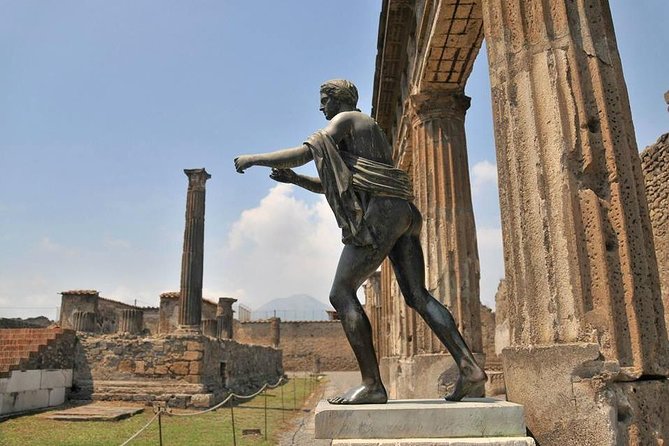
This is a 6 to 7 hour day trip, so the schedule is built to move. Some stops are 5–10 minutes. That can sound rushed until you realize Pompeii and Herculaneum are too big to “do slowly” in a single day.
So here’s the trick: treat each stop like a chapter, not an essay. Spend your attention where it helps you understand the place:
- For Pompeii, focus on public life (forum and theatre) and the domestic contrast (wealthy house, baths, brothel, street life).
- For Herculaneum, focus on preservation and the layout (main street plus civic and bath life).
Comfort also matters in a long day. The vehicle is air-conditioned and includes bottled water. Service animals are allowed too, which you’ll appreciate if you travel with a companion animal.
If you’re traveling during the current Italian COVID-era guidance, the tour also notes mask-wearing requirements on the private vehicle. Bring a couple of backups just in case.
Guides and the Small Details That Make It Feel Worth It
The experience can be either self-paced or guided depending on the option you choose. What consistently shows up as the “wow” factor is how the guide handles explanations in a way that sticks.
In the feedback you’ll see names like Antonino, Pepino, and Anna tied to standout days. People praised Antonino for adjusting the tour based on sensory needs (visual and hearing impairment), and praised his ability to answer questions and keep kids engaged. Anna is singled out for Pompeii guidance, along with a crowd-smart strategy: enter early when possible to reduce time in crushes.
Even if you’re not choosing a guided ruins upgrade, you’ll still have guided support at Porta Marina, and the private driver helps you keep the day moving. In practice, it’s that mix—help where it counts, freedom where it matters—that makes a day trip feel like more than a checklist.
Who Should Book This Pompeii and Herculaneum Day Trip
This tour fits best if you want:
- One day, two sites without hopping on trains or building a complicated route.
- Flexibility from a private driver, especially if you prefer not to spend your whole vacation stuck in a bus line.
- A structured plan that still lets you linger briefly when something grabs you.
It may be less ideal if you:
- Want long, slow museum-style time. The stops are short, so you won’t get “read every inscription” pacing.
- Need a fully guided deep lecture for every stop. You can upgrade for guidance at the ruins, but the schedule still assumes movement between key points.
Families often like this format because it keeps momentum. Couples tend to like it too because it’s efficient but still human-paced.
Also, book earlier rather than later. The tour is commonly booked about 12 days in advance on average, so you’ll get better options by not waiting for the last minute.
Should You Book This Tour?
Yes, if your goal is a high-effort, low-stress day that covers both Pompeii and Herculaneum with pickup, private transport, and optional guided support. The price is not cheap, but when you factor in a private driver for the whole day and the time you save versus DIY planning, it often feels like a solid value.
Hold back if you’re the type who wants to spend half a day inside one building and then wander for hours. For that style, you might do better with more time dedicated to each site.
My practical call: if you want the best shot at seeing both places in one go, this is a strong option. If you want depth over breadth, consider splitting your visits—or booking a tour that gives more time at fewer stops.
FAQ
Is pickup from Naples included?
Yes. Pickup is offered from Naples hotel, ports, and train station or airport pickup/drop-off. Your driver will meet you at your accommodation if the streets allow; otherwise at the closest car-accessible spot.
How long is the Pompeii and Herculaneum trip?
It runs about 6 to 7 hours.
Is this a private tour?
Yes. It’s a private tour/activity, so only your group participates.
Is a guide included?
A professional guide at the ruins is included only if you choose the option that includes guided tours. Otherwise, you’ll have guidance where the tour specifies meeting points.
Are admission tickets included in the price?
Not fully. Access fees to ruins and monuments and the Porta Marina entrance fee are not included and are listed as extra costs.
What language is the tour offered in?
The experience is offered in English.
Does the tour include transportation details like air-conditioning and bottled water?
Yes. The vehicle is air-conditioned, and bottled water is included.
Are tickets mobile?
Yes. A mobile ticket is offered.
Do I need to wear a mask on the vehicle?
The tour notes that, according to Italian laws during the COVID-19 period, passengers must wear a mouth mask when traveling on a private vehicle.
Can I bring a service animal?
Yes, service animals are allowed.
What if I cancel?
You can cancel for a full refund if you cancel at least 24 hours in advance of the experience’s start time.
If you tell me your travel dates and whether you want the guided-ruins upgrade, I can help you think through the best budgeting plan for admissions and how to structure the day for your interests.