REVIEW · POMPEII
Skip-the-Line Half-Day Private Tour Ancient Pompeii Highlights with Native Guide
Book on Viator →Operated by Tours of Pompeii with Lello & Co. · Bookable on Viator
Pompeii in two hours is a smart move. I like that this tour keeps things private and focused, so you get a real sense of Roman daily life without wasting time. And I love the skip-the-line setup, because Pompeii’s entrances can eat up a big chunk of your day.
You’ll also hear Pompeii explained in a clear, story-driven way: from the sound tricks of Teatro Piccolo’s setting to the street-and-square feel of the Forum markets. Still, the biggest thing to consider is time: it’s short, so you’ll see key highlights, not every single corner of the park.
In This Review
- Quick take: what makes this Pompeii tour work
- Why Pompeii feels easier with a skip-the-line plan
- Meeting at Hotel Vittoria and getting oriented fast
- Teatro Grande to the Forum: how the route tells one Roman-life story
- Via dell’Abbondanza: the main street feeling you can actually sense
- Stabian Baths (Terme Stabiane): what bathing tells you about Pompeii
- The Forum of Pompeya: markets, power, and the best “wow” value
- Lupanar: the mature stop that needs the right expectations
- Pompeii Archaeological Park time: pacing, questions, and not getting lost
- Price and value: is $83.48 worth it?
- Who should book this private Pompeii highlights tour
- Tips so you actually enjoy Pompeii (instead of enduring it)
- Should you book this skip-the-line Pompeii private tour?
- FAQ
- How long is the Pompeii highlights private tour?
- Is there skip-the-line entry?
- Is the tour private?
- What language is the tour offered in?
- Are admission tickets included?
- Where does the tour start and end?
- Is hotel pickup and drop-off included?
- Do I need to print tickets?
- What fitness level do I need?
- Is there free cancellation?
Quick take: what makes this Pompeii tour work
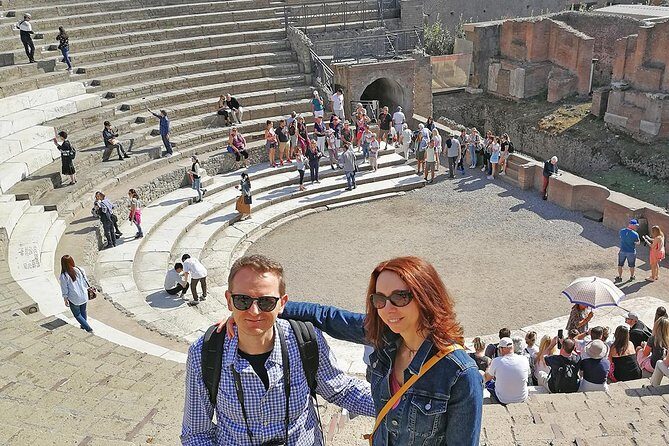
Skip-the-line priority means you start seeing ruins faster
Art historian + private format helps you ask questions and set pace
A tight route covers Via dell’Abbondanza, the Forum, the Stabian Baths, and the Lupanar area
Roman life details link places like domus, mills, and the Gladiators’ Gym into one story
English-speaking guides make the experience easier to follow
Why Pompeii feels easier with a skip-the-line plan
Pompeii is amazing, but it’s also easy to mismanage. You can stand in lines, you can get turned around in the streets, and suddenly you’re paying for time you never really used to see anything. This tour is built to prevent that. Priority entry helps you spend your energy on walking the sites and listening, not waiting.
And because it’s private, you don’t get stuck with the “hurry up and catch up” vibe you see on big group tours. Your guide can slow down if you want more detail at the Forum or the baths, and they can move on when the route gets crowded.
This is the kind of booking that makes sense when you have limited time in Naples/Pompeii and you want your day to feel efficient without feeling rushed.
You can also read our reviews of more guided tours in Pompeii
Meeting at Hotel Vittoria and getting oriented fast
Your tour starts back at a simple, easy-to-find meeting point: Hotel Vittoria, Piazza Esedra, 80045 Pompei NA. It also ends back at the same place, which matters more than people think. Pompeii mornings can start chaotic—trains, taxis, and traffic—so having a clear start/end reduces stress.
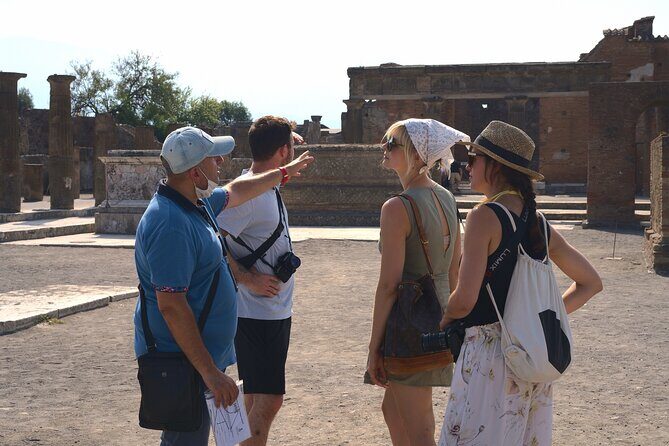
The tour includes a mix of guide support (a local guide plus a professional art historian guide and a professional guide). In plain terms, you’re not just handed a headset and sent walking. You’re steered, and you get explanations tied to what you’re looking at right in front of you.
Also helpful: the tour is offered in English, and it uses a mobile ticket. That’s one less thing to fumble with while you’re standing near entrances.
Teatro Grande to the Forum: how the route tells one Roman-life story
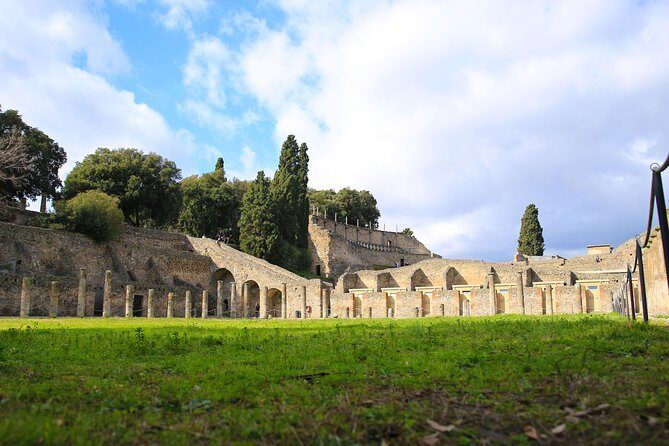
The heart of this experience is how it strings Pompeii together like a living place. The first stop—Tours of Pompeii with Lello & Co.—is where your guide starts building the city in your mind. You’ll move through main streets and end up at the Forum area, with the guide connecting daily routines to the layout you’re seeing.
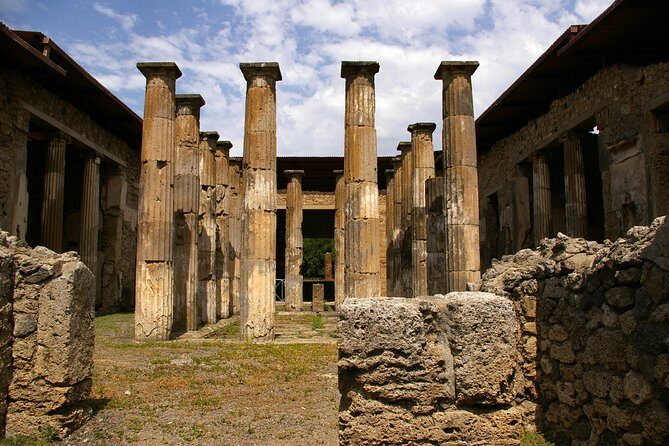
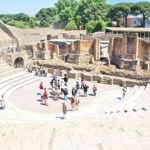
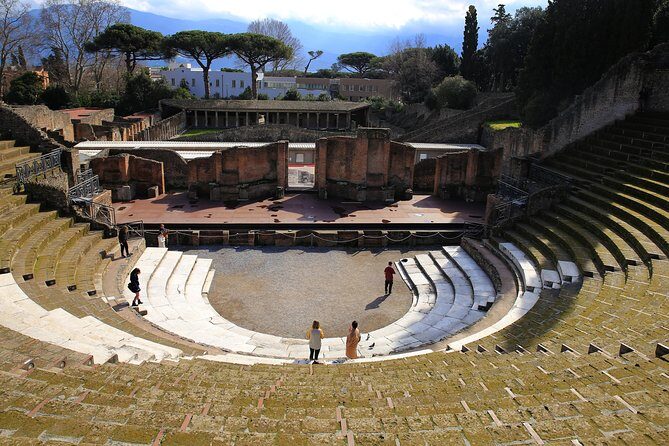
A highlight here is the theatrical pair: Teatro Grande and Teatro Piccolo. Pompeii visitors often see buildings; this tour aims to help you understand them. Your guide talks about the auditory perfection of Teatro Piccolo—how the space works and why it sounded the way it did. Even if you’re not an acoustics person, it turns the site from stone into function.
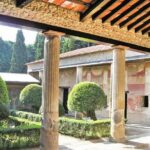
As you walk, you also get pointed toward places tied to daily life and work: a domus (house life), the Gladiators’ Gym, mills (grinding and food supply), and the Lupanar (the famous erotic frescoes). The Forum is the finish for this opening act—market energy, political center energy, and the “people were here” energy.
What to watch for: because it’s a highlight tour and your time is limited, you won’t linger in every spot. If you’re hoping to read every inscription at a museum pace, you may find two hours feels tight.
Via dell’Abbondanza: the main street feeling you can actually sense
Via dell’Abbondanza is one of those Pompeii streets that makes the ruins feel less like a theme park and more like a real city. This section focuses on walking through Pompeii’s main street atmosphere—so you can picture movement, commerce, and neighborhood life rather than treating each stop like a separate postcard.
This isn’t just “walk and look.” The guide’s role is to point out what matters visually and explain how street life connects to the bigger picture: where people would have gone, how Roman urban design shaped daily routines, and why Pompeii’s layout still reads as a system.
In short, this stop helps you get your bearings fast. And when you later stand at the Forum, it hits harder because you understand the street-to-square logic.
Small consideration: like all Pompeii walking, expect uneven surfaces and some stairs. The tour lists a moderate physical fitness level, so wear shoes you trust.
Stabian Baths (Terme Stabiane): what bathing tells you about Pompeii
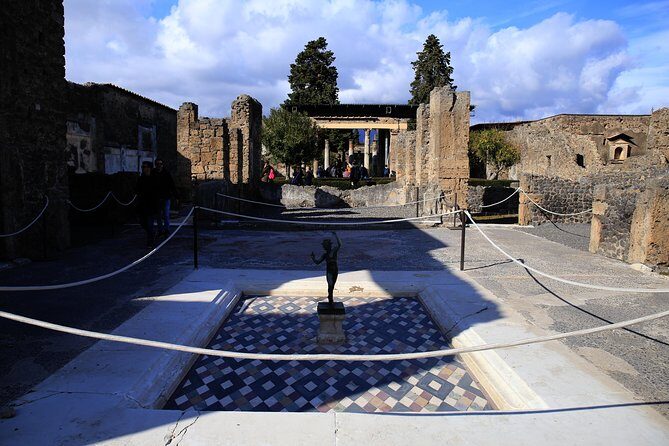
Next comes the Stabian Baths, the Terme Stabiane. This is where Pompeii stops feeling purely dramatic and becomes social. Baths were more than hygiene—they were a hub for conversation, leisure, and routine.
On this tour, you’ll be shown the thermal baths area with an emphasis on Roman life—how people used bathing spaces and how the design supported it. If you’ve ever visited modern spas and tried to imagine the social culture behind them, this is the ancient version: a public space with a daily rhythm.
You also get the advantage of timing. Pompeii is huge, so having a guide helps you focus on the key parts of the baths rather than spending too long figuring out what you’re looking at.
What I’d plan for: bath areas can involve stairs and transfers between levels. One of the most praised moments in this experience is an underground section where you can appreciate the space from a lower level. If your guide takes you there, it’s a great reminder that Pompeii isn’t always viewed straight-on.
You can also read our reviews of more private tours in Pompeii
The Forum of Pompeya: markets, power, and the best “wow” value
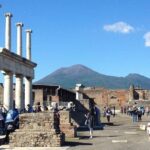
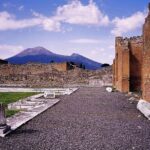
The Forum stop is the classic Pompeii anchor: the Foro de Pompeya. This is where Roman public life gathered—politics, commerce, announcements, and the daily pulse of a major city.
What makes the Forum so worth your limited time is that it’s easy to connect to the stories you’ve already heard. By the time you reach the square area, you’ve walked main streets, so the space doesn’t feel random. You understand how people would have arrived, circulated, and used the square.
Your guide focuses on the Forum as markets as the ancient Romans did—so you’re not just looking at excavation. You’re seeing a layout meant for crowd movement and public activity.
One drawback to keep in mind: excavation areas can be busy and can shift what you can see from certain angles. A private guide helps you keep your focus on the most important parts while still respecting what’s practical in the moment.
Lupanar: the mature stop that needs the right expectations
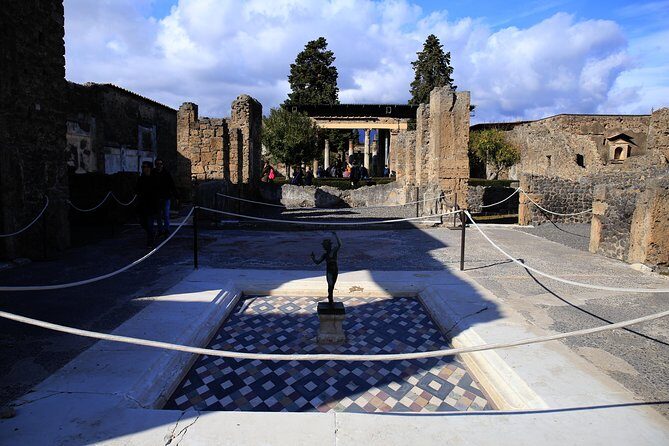
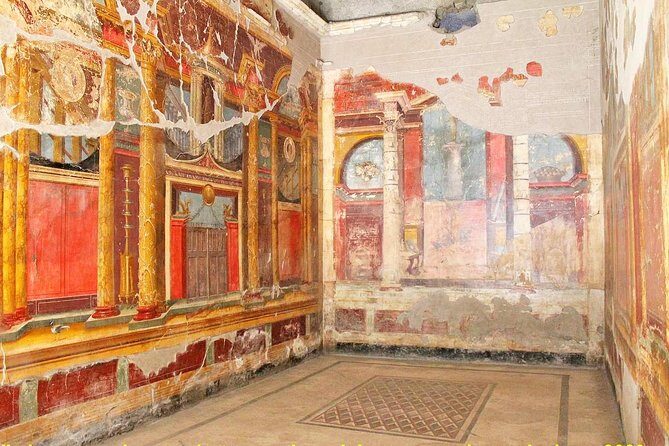
Then there’s the Lupanar (often discussed as the house associated with erotic frescoes). This is a real Pompeii shock for first-timers, and it’s also the kind of site that benefits from a guide who can explain context instead of letting it become awkward or superficial.
This tour includes you seeing the Lupanare area because it’s part of the city’s full picture: not just grand buildings and public spaces, but also private commerce and the everyday realities that show up in surviving artwork and architecture.
Important expectation-setting: this stop involves erotic frescoes, so if you’re traveling with kids, decide in advance how you’ll handle that content. The tour notes that children must be accompanied by an adult, which is helpful, but it doesn’t make the subject less mature.
For adults, it can be fascinating in a history-and-society way. For some families, it might be the one moment you want to manage carefully.
Pompeii Archaeological Park time: pacing, questions, and not getting lost
The final portion is time in the Pompeii Archaeological Park, where you spend time with a private and top rated guide. This is where the tour’s private nature pays off again. Pompeii is too big to “wing.” Even if you’re a careful map person, you’ll miss meaning because ruins need explanation.
A strong guide helps you connect what you saw earlier—streets, baths, the Forum, and theatrical spaces—into one coherent picture. The result is that Pompeii feels like a city rather than a collection of walls.
One of the most praised elements in the overall experience is the idea that you can better appreciate parts of the site from more than one level, including an underground section. That kind of viewpoint shift can make a huge difference. It’s not only scenic; it gives you a better sense of how complex the infrastructure really was.
Price and value: is $83.48 worth it?
At $83.48 per person for about two hours, the price looks high if you compare it to a casual self-walk. But it’s competitive once you factor in the reason you booked: skip-the-line entry, private attention, and admission tickets included for the listed stops.
Also, the tour is popular—on average it’s booked about 87 days in advance. That’s a hint that this is a well-timed product for limited schedules. When demand is high, it’s usually because people find it reduces hassle without cutting content too hard.
Here’s the practical value equation I’d use:
- You pay for time saved at entrances.
- You pay for a guide who can point you to the right highlights.
- You pay for private pacing so you don’t feel herded.
If you only have a short window in Pompeii and you want the most meaningful highlights without a lot of guesswork, this is a solid way to spend money. If you have all day and you prefer to wander slowly with no structure, a guided tour might not feel as cost-effective.
Who should book this private Pompeii highlights tour
This works best for:
- Couples, small groups, and families who want a clear route and smart use of time
- People who want historical context tied to what they can see, not a checklist
- Travelers who don’t want to spend the day solving navigation puzzles
- Visitors who like stories and explanations in English
It may not be ideal if:
- You want a long, museum-style experience at every stop
- You’re hoping to see everything in the park in one visit (Pompeii doesn’t do that)
- You’re traveling with kids and the Lupanar content might be hard for your comfort level
If you’re the kind of traveler who likes the best highlights with minimal friction, you’re in the right place.
Tips so you actually enjoy Pompeii (instead of enduring it)
Pompeii in warm months can be intense. One of the practical tips I’d take from the experience details is simple: bring water bottles in summer. Even with a guided pace, the walking adds up fast.
Then make your clothing do the heavy lifting:
- Wear comfortable shoes with good grip for uneven ground.
- Use sun protection if you go in warmer months.
- Keep your phone charged enough for your mobile ticket.
Weather matters too. The experience requires good weather, so if forecast conditions are poor, the plan may shift to another date or refund.
And here’s the slightly funny part: Pompeii rewards curiosity. If you want to maximize your two hours, ask your guide small questions as you walk. A private format makes that easy.
Should you book this skip-the-line Pompeii private tour?
I’d book it if you’re visiting Pompeii as a “highlights” stop and you care about getting in faster, not staring at lines. The private setup and the art historian angle make the sites easier to understand—especially the Theatre pairing, the Forum, the baths, and the Lupanar context.
If your schedule is tight, this is one of the smarter ways to buy your day back. You’ll come away feeling like you saw the major story beats of Pompeii, not just a bunch of disconnected ruins.
If you’re the type who wants total freedom and hours and hours to wander, you might prefer something longer and less structured. But for most visitors, skip-the-line + private attention is exactly the blend that turns Pompeii into a memorable day.
FAQ
How long is the Pompeii highlights private tour?
It’s about 2 hours (approx.).
Is there skip-the-line entry?
Yes. The tour includes guaranteed skip-the-line entry to help you avoid long entrance lines.
Is the tour private?
Yes. This is a private tour for only your group.
What language is the tour offered in?
It’s offered in English.
Are admission tickets included?
Yes. Admission tickets are included for the sites listed in the tour stops.
Where does the tour start and end?
It starts at Hotel Vittoria, Piazza Esedra, 80045 Pompei NA, Italy and ends back at the same meeting point.
Is hotel pickup and drop-off included?
No. Hotel pickup and drop-off are not included.
Do I need to print tickets?
No. You’ll have a mobile ticket.
What fitness level do I need?
You should have a moderate physical fitness level.
Is there free cancellation?
Yes. You can cancel for a full refund up to 24 hours in advance. The experience also requires good weather, and if it’s canceled due to poor weather you’ll be offered a different date or a full refund.