REVIEW · POMPEII ARCHAEOLOGICAL SITE
Pompeii 3-Hour Walking Tour
Book on GetYourGuide →Operated by Askos Tours · Bookable on GetYourGuide
Pompeii hits hard in only a few hours. This private walking tour guides you through a Roman city frozen in time by Vesuvius, then brought back to life through rediscovery in the 18th century. You’ll get an expert archaeologist’s view, plus a clear storyline of Roman public life versus private life.
Two things I really like about this tour are the skip-the-ticket-line setup and the chance to see the plaster casts of people and animals at the moment of death. Those casts don’t feel like museum props; they make the eruption’s human cost immediate and understandable.
One possible drawback: you’re outside. The tour runs in any weather condition, and you’re told to plan for rain with a small umbrella and/or raincoat.
In This Review
- Key highlights worth caring about
- Why a 3-Hour Private Pompeii Walk Works Better Than Touring Alone
- Getting Oriented: Meeting Points and Porta Marina
- Villa of the Mysteries: Learning Pompeii Through a Single Big Scene
- Temple of Apollo and the Civic Heart: Forum and Basilica
- Houses, Mosaics of Daily Life, and Wealthy Interiors
- Bathing Culture and Food Stops: Sarno Baths, Forum Baths, and More
- The Lupanar: An Old Brothel and How to Talk About It Respectfully
- Plaster Casts: The Moment the City Stops Being Abstract
- Theatres, Odeion, and Amphitheater: Entertainment as City Structure
- Temples of Jupiter, Venus, and Apollo: Religion in Built Form
- Finishing the Circuit: Where the Walk Lands
- What You’ll Want to Bring (and What to Leave Behind)
- Pricing and Value: Is $508.15 Worth It?
- Should You Book This Pompeii 3-Hour Private Walking Tour?
- FAQ
- How long is the Pompeii 3-hour walking tour?
- Is this a private tour?
- What’s included in the price?
- What’s not included?
- Where does the tour start?
- Where does the tour end?
- Which languages are available for the live guide?
- Do I need to bring anything?
- What am I not allowed to bring?
- Does the tour run in bad weather?
Key highlights worth caring about
- Archaeologist-led explanations that connect sites to how people actually lived
- Plaster casts showing humans and animals from the eruption moment
- Pompeii’s public core with the Forum, Basilica, and civic spaces
- Daily-life stops like thermal baths and even an ancient brothel
- Temple circuit and theatres that show how religion and entertainment shaped the city
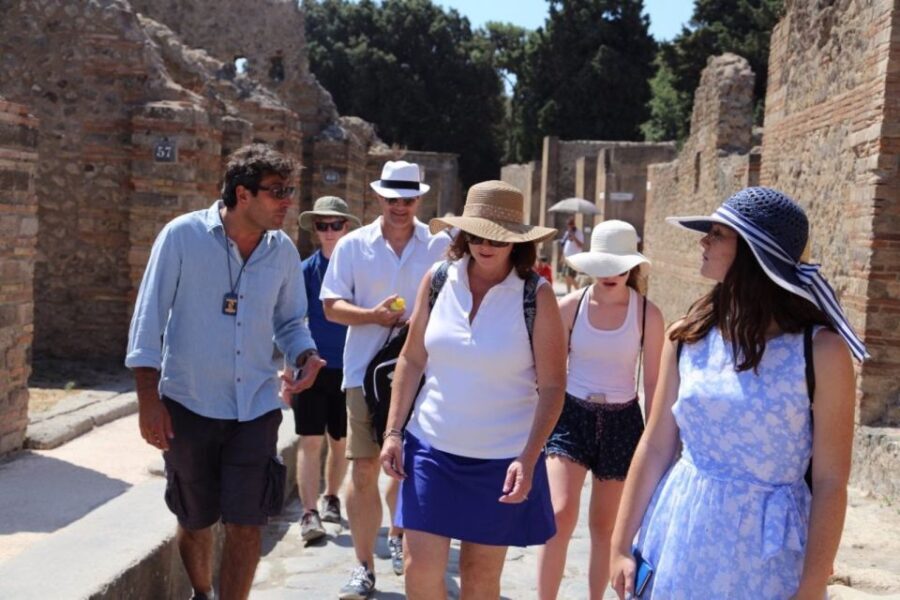
- Private group format that keeps the pace human and the questions useful
Why a 3-Hour Private Pompeii Walk Works Better Than Touring Alone
Pompeii is big, and good information can be the difference between seeing ruins and understanding them. This tour is built for focus: 3 hours with private guidance, so you’re not relying on a map app and guesswork while you walk past major landmarks.
You also get practical value baked into the price. It’s listed as $508.15 per group (up to 1), and that sounds steep until you remember two things are included: Pompeii admission fees and a live guide. If you’re traveling solo, you’re paying for the private guide experience; if you’re traveling as a pair or small group, you can think of it as buying clarity and time, not just paying for entry.
Another quality-of-life win: you get to skip the ticket line, which matters a lot when your time on site is limited. And Pompeii is one of those places where starting wrong can drain your energy. A guide helps you start in the right mindset and then keep the thread.
Language options are strong too. The live guide can be Spanish, German, Russian, Chinese, English, Italian, Japanese, and Portuguese. That’s useful because Pompeii rewards details—inscriptions, layouts, and the reason a specific spot matters.
If you’re the kind of traveler who likes asking questions, this format is also friendly. Your tour is private, so you’re more likely to get answers that match what you notice.
You can also read our reviews of more tours and experiences in Pompeii Archaeological Site.
Getting Oriented: Meeting Points and Porta Marina
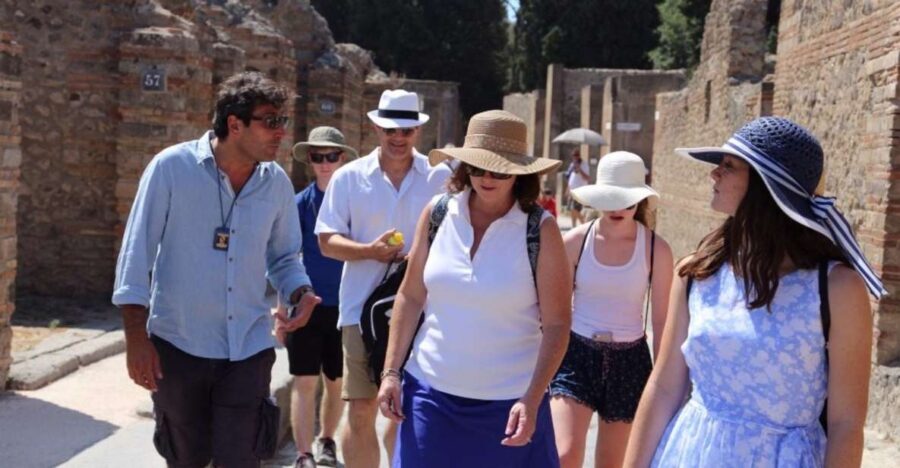
Your tour starts at one of two possible meeting locations: Via Villa dei Misteri, 2 or Via Villa dei Misteri, 3. The exact meeting point can vary depending on the booked option, so it’s worth arriving a few minutes early to locate your guide fast.
From there, you’ll move into Pompeii at Porta Marina. Gates are underrated in Pompeii touring. They aren’t just entrances; they’re a way to read the city’s movement—how people arrived, where they funneled in, and how the city’s rhythm would have felt.
In the early stages, the tour’s big promise is also its best use: you travel back to the Roman Empire era, then connect it to the specific catastrophe of 79 A.D. You learn how the town was buried under ash and molten material from Vesuvius, which is the reason so many structures survived at all.
That framing matters because Pompeii isn’t only ruins. It’s a preserved record of daily life. UNESCO’s World Heritage description is part of the tour’s messaging too: Pompeii and Herculaneum offer a “complete and vivid picture” of society and daily life at a specific moment in the past.
Villa of the Mysteries: Learning Pompeii Through a Single Big Scene
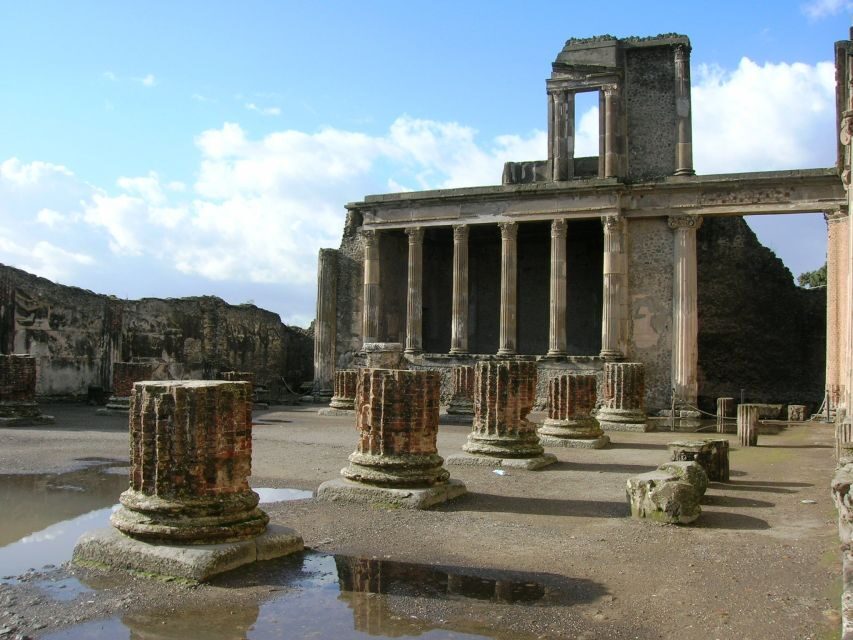
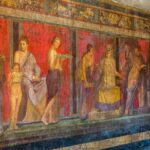
After entering from the gate area, you’ll visit the Villa of the Mysteries. This is one of those stops where your guide can make Pompeii feel less like scattered buildings and more like a coherent place.
A villa isn’t just “someone’s house.” In Pompeii, it’s a window into wealth, education, and taste—things that would have shaped how elite families thought and lived. Even if you’re not an art-history person, a guide can help you see what makes this site important and what to look for as you walk around.
This is also where pacing starts to become important. With a 3-hour time window, you don’t want to spend too long trying to interpret everything alone. The guide’s job here is to point you toward the main idea at each site, so you leave with a mental map.
Temple of Apollo and the Civic Heart: Forum and Basilica
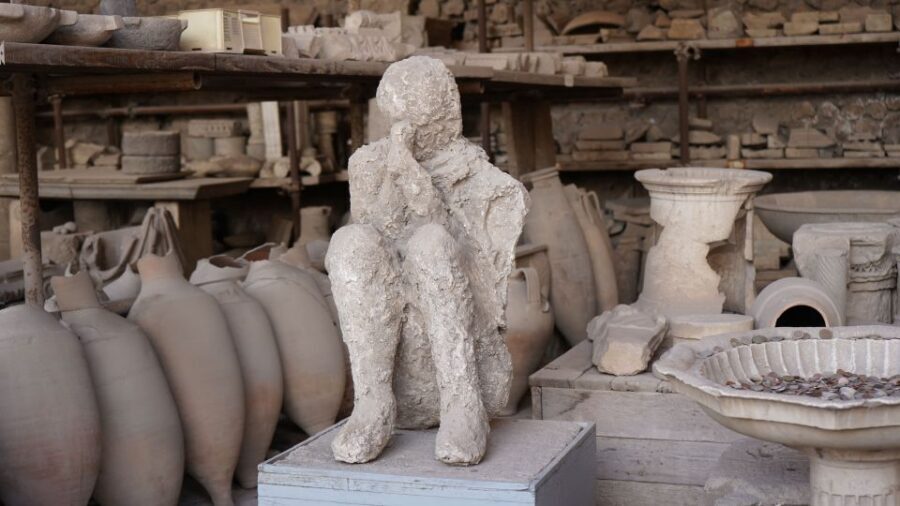
Next you’ll hit major civic and religious spaces, including the Temple of Apollo and the Foro Civile di Pompei (the civic forum area). Pompeii’s forum zone is where public life happened—politics, gatherings, official business, and the kinds of activities that made the city feel like a shared organism.
The Basilica is another key stop. It’s described in the tour as the court house, and even without getting lost in architectural jargon, you can understand the role: legal and administrative life. A guide helps you connect those functions to what you’re seeing, so the space becomes meaningful instead of just big stone rooms.
If you’ve ever toured a historic site and wished you could “hear” the place from the past, this is where you start to get that feeling. The tour’s focus on how Romans lived in public and private keeps the forum stops from becoming a list of monuments.
Houses, Mosaics of Daily Life, and Wealthy Interiors

A big reason Pompeii is so compelling is the contrast between public spaces and private homes. This tour takes you into several houses, including the House of Menander, the House of the Faun, and the House of the Vettii.
Seeing homes in Pompeii can feel emotional, because you’re walking through structures that were part of real routines—sleep, cooking, cleaning, hosting, working. Your guide’s explanations aim to make those rooms legible. Instead of feeling like you’re guessing what each space was for, you’re given a framework that helps you interpret how a Roman household likely moved through the day.
You may also see additional residential highlights along the way, such as the House of Tragic Poet. The value here isn’t only the building names. It’s the guide’s ability to translate the layout into real life: where people met, where activities happened, and how wealth and status expressed themselves in domestic spaces.
If you like history that feels human—rather than only kings and battles—these house visits are a strong reason to book.


Bathing Culture and Food Stops: Sarno Baths, Forum Baths, and More
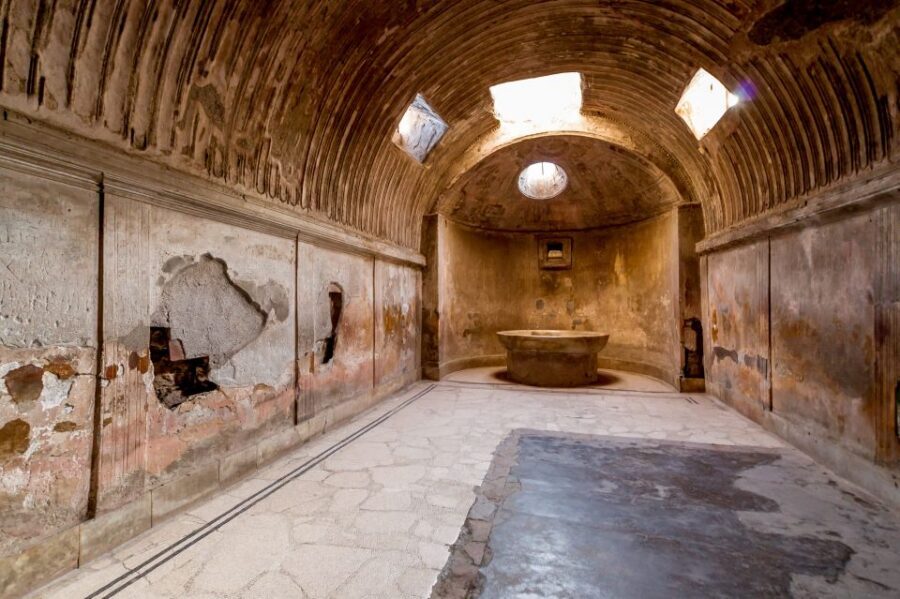
Pompeii wasn’t only politics and temples. People relaxed, socialized, and ate. That’s why the tour includes thermal bathing and everyday food-related stops, such as Sarno Baths and Forum Baths.
Baths in Roman cities were social spaces as much as hygiene spaces. Even though the tour’s time is limited, the guide can help you connect bathing culture to why it mattered. You’ll learn about the role of bathing in public life and how it fits the broader Roman pattern of gathering in shared spaces.
The tour also references places like a bakery and Termopolium Capuano (an ancient Roman refreshment spot). These stops make Pompeii feel lived-in. You get a sense of routines: where people grabbed food, how quick meals worked, and how commerce sat right next to daily movement.
Practical note: with stops that move from baths to shops to more formal spaces, you’ll want comfortable shoes. You’re walking for 3 hours, and Pompeii’s ground can be uneven depending on where you step, so don’t plan on “just my sightseeing sandals.”
The Lupanar: An Old Brothel and How to Talk About It Respectfully
One of the most talked-about places in Pompeii is the Lupanar, the old brothel. This tour includes it directly, and your guide’s explanations matter here. Sites involving sex work can feel awkward if you only look at signage or doorways. But with an archaeologist guide, you can understand it as a historical institution within the city’s economy and daily life.
This stop is valuable because it shows Pompeii’s reality. Romans weren’t only philosophers and senators. They lived in a city with complicated social systems, and the brothel was part of that structure.
If you’re sensitive to adult-content themes, you should know this is part of the plan. The tour is still educational, but it’s not pretending the past was polite.
Plaster Casts: The Moment the City Stops Being Abstract
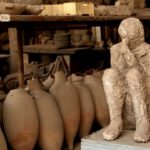
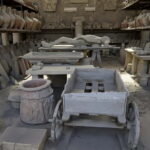
The plaster casts are one of the tour’s top reasons to book. The highlights explicitly include casts of humans and animals at the time of death, and that’s exactly what makes Pompeii stick in your mind.
When you see those forms, you’re not just learning that people died. You’re seeing bodies captured by the conditions around the eruption, made visible through the later rediscovery and casting process. A good guide helps you interpret what you’re looking at without turning it into shock value.
This is also where UNESCO’s “complete and vivid picture” idea becomes real. Pompeii isn’t only buildings; it’s evidence. It shows how catastrophe affected individuals and animals, and it adds weight to every earlier stop—forum, shops, houses, temples. Suddenly the city feels like it had breath.
If you want the tour to have an emotional center, plan to spend time listening here rather than trying to speed through photos.
Theatres, Odeion, and Amphitheater: Entertainment as City Structure
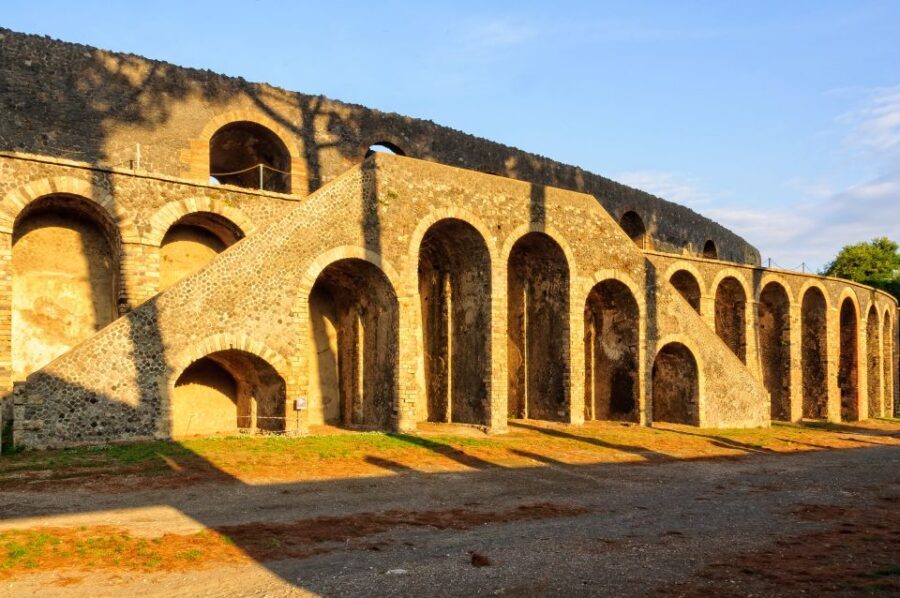
Pompeii’s entertainment spaces show another side of Roman life. This tour includes major performance and crowd spaces such as the Large Theatre and the Amphitheater of Pompeii.
You also have stops connected to smaller performance venues, including the Odeion (small theatre) and the Teatro Grande. Even if you don’t remember seating math or architectural terms, a guide can make you understand how these spaces shaped community rhythm—events, gatherings, and how people spent leisure time.
These stops are worth it because they help you see Pompeii as a social system. Public life was not only about law and worship. It was also about watching, cheering, and being part of a crowd experience.
And because this is a walking tour with multiple stops, the theatres and amphitheater also act like anchors. After walking through houses and baths, you return to larger spaces and can feel the difference in scale.
Temples of Jupiter, Venus, and Apollo: Religion in Built Form
Pompeii’s religious spaces are part of the highlights list, including the Temple of Jupiter, the Temple of Apollo, and the Temple of Venus. The tour brings these into the story of how Romans lived.
Temples weren’t only places for prayer. They were part of how the city organized meaning—where people expressed civic identity and where the city reinforced shared beliefs.
With an archaeologist guide, you can connect what you see to why it existed. Your goal isn’t to memorize names; it’s to learn how religion sat inside everyday structure—near forums, along routes people used, and woven into the way the city felt.
Finishing the Circuit: Where the Walk Lands
The tour ends back at the meeting point, so you don’t have to worry about transportation within Pompeii being part of the experience. You’ll be moving through a set loop of key areas rather than wandering and hoping the site layout makes sense.
Because it’s a guided route with many different types of stops—civic, baths, homes, theatres, temples, and the Lupanar—you’ll leave with a sense of the whole city rather than a scattered set of photos.
What You’ll Want to Bring (and What to Leave Behind)
You’ll be asked to bring passport or an ID card. On-site rules include no pets (assistance dogs are allowed) and no umbrellas or backpacks. If rain is possible, bring a small rain layer rather than relying on an umbrella.
Also plan your day around being ready to walk for the full 3 hours. There aren’t meals included, so if you’re visiting at a time when you’d normally eat, decide what you’ll do before or after.
Pricing and Value: Is $508.15 Worth It?
This is the part where you should do a quick “fit check.”
If you’re traveling solo or want a guide who can tailor the pace and answer questions, paying for a private tour can be worth it because you’re not competing with a big group’s speed. You also get admission fees included and skip the ticket line, which saves time you’d otherwise spend standing around.
If you’re comfortable touring Pompeii on your own with a guidebook, you might feel the price is high for 3 hours. But if you want the city explained—how the Roman Republic is brought to life, how public versus private life connects, and how the eruption story ties everything together—this format is a practical way to get real understanding without losing half your day to confusion.
Should You Book This Pompeii 3-Hour Private Walking Tour?
Book it if you want Pompeii explained by a real archaeologist guide, not just a route. This tour is strong for you if you care about how Romans lived across settings—forum life, baths, homes, temples, entertainment—and especially if you want the emotional clarity of the plaster casts.
Skip it if your goal is mostly photos and you’re happy building your own interpretation without expert help. Also think twice if you need food or a full-day visit; this is 3 hours, and meals and transportation aren’t included.
If you want a focused Pompeii experience with an expert in multiple languages and a pace that works for questions, this is the kind of private tour that pays off fast.
FAQ
How long is the Pompeii 3-hour walking tour?
The tour duration is 3 hours.
Is this a private tour?
Yes, it’s a private group experience.
What’s included in the price?
Private guidance and Pompeii admission fees are included.
What’s not included?
Meals and transportation are not included.
Where does the tour start?
The meeting point may vary by option, with two listed starting locations: Via Villa dei Misteri, 2 or Via Villa dei Misteri, 3.
Where does the tour end?
The tour ends back at the meeting point.
Which languages are available for the live guide?
The live guide may be available in Spanish, German, Russian, Chinese, English, Italian, Japanese, and Portuguese.
Do I need to bring anything?
Bring a passport or ID card.
What am I not allowed to bring?
Pets are not allowed (assistance dogs are allowed), and umbrellas and backpacks are not allowed.
Does the tour run in bad weather?
The tour takes place in any weather condition, and you’re recommended to bring a small umbrella and/or a raincoat if rain happens.