REVIEW · POMPEII ARCHAEOLOGICAL SITE
Pompeii: Group Tour with an Archeologist Guide
Book on GetYourGuide →Operated by Tempio Travel Pompei Tickets · Bookable on GetYourGuide
Pompeii clicks faster with a guide. This 2-hour walk through the ruins helps you understand what happened when Vesuvius buried the city in 79 AD, without wasting time at the entrance. I really like the skip-the-line tickets and the chance to hear a professional archaeologist guide explain what you’re looking at. One watch-out: this is a focused route through the western part of town, so it won’t cover every corner of Pompeii.
What makes this tour practical is the setup for groups. You get whisper headsets when the crowd is large, which matters because Pompeii is noisy in a different way: wind, footsteps, and a lot of people trying to hear the same story.
I also like the human touch of real guides who bring the site to life. Guides you may meet include Ernaldo, Alfonso, Lena, Laura, Giuseppe, and Antonio, and the common thread is clear pacing and making it easy to follow along.
In This Review
- Key highlights you’ll feel in 2 hours
- Why a Pompeii archaeologist guide beats wandering
- Meeting at Tempio Travel: start point you should find quickly
- Porta Marina to the big public buildings of Pompeii
- Frescoes, plaster casts, and the shock of 79 AD
- The route’s best balance: major monuments plus named houses
- Practical tips for comfortable feet in a 2-hour tour
- Price and value: what $50.11 buys you
- Where to go after: your guide’s suggestions near the site
- Should you book this Pompeii group tour?
- FAQ
- How long is the Pompeii group tour with an archaeologist guide?
- Where do I meet for the tour?
- Is skip-the-line entrance included?
- Are headsets provided for large groups?
- What parts of Pompeii are covered during the tour?
- Which languages are offered?
- What should I bring?
- Are luggage or large bags allowed?
- Is this tour suitable for people with mobility impairments?
- Is entrance free on the first Sunday of each month?
- Is free cancellation available?
- Can I reserve now and pay later?
Key highlights you’ll feel in 2 hours
- Skip-the-line entry so you start seeing ruins sooner
- Whisper headsets that make a big-group tour actually workable
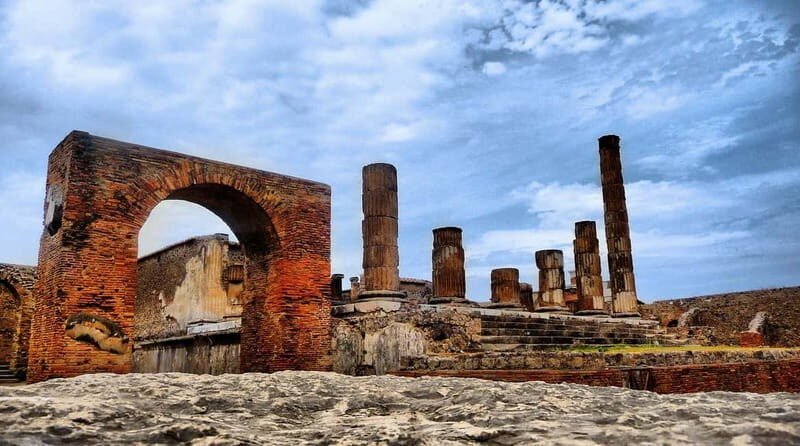
- Western Pompeii route focused on the most important buildings
- Frescoes and plaster casts that help you picture daily life and tragedy
- Named houses like the House of the Tragic Poet and House of the Golden Cupid
- A guide’s end-of-tour tips for what to do next in modern Pompeii
Why a Pompeii archaeologist guide beats wandering
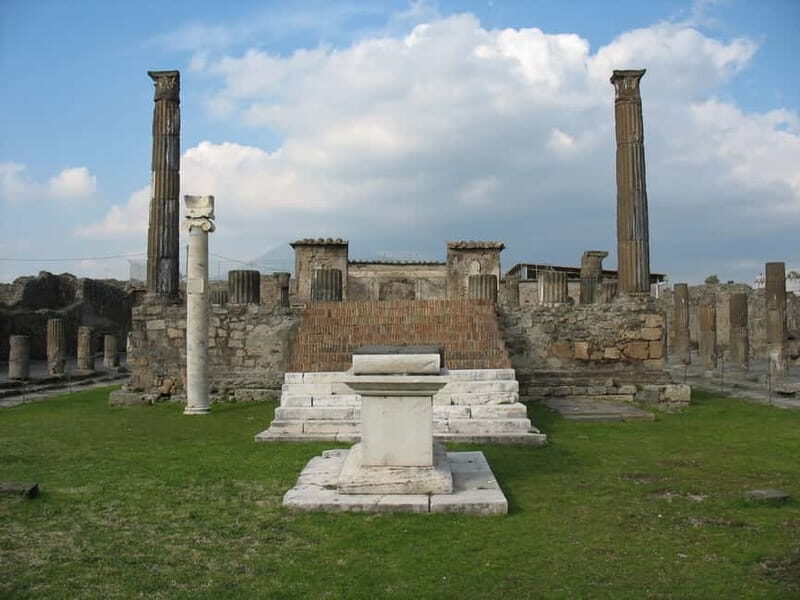
Pompeii is famous, but it’s also easy to get lost in. Walk around on your own and you’ll see stones, doorways, and wall art—but you might struggle to connect them to how people lived. With an archaeologist guide, the same streets start to make sense fast: what was public versus private, what people did each day, and why certain spots matter.
I like that this tour is built around interpretation, not just sightseeing. You’ll hear the “why” behind what you’re seeing as you move through key areas, especially in the western part of the town. That route covers the big anchors of Pompeii, so you leave with a mental map instead of a list of ruins.
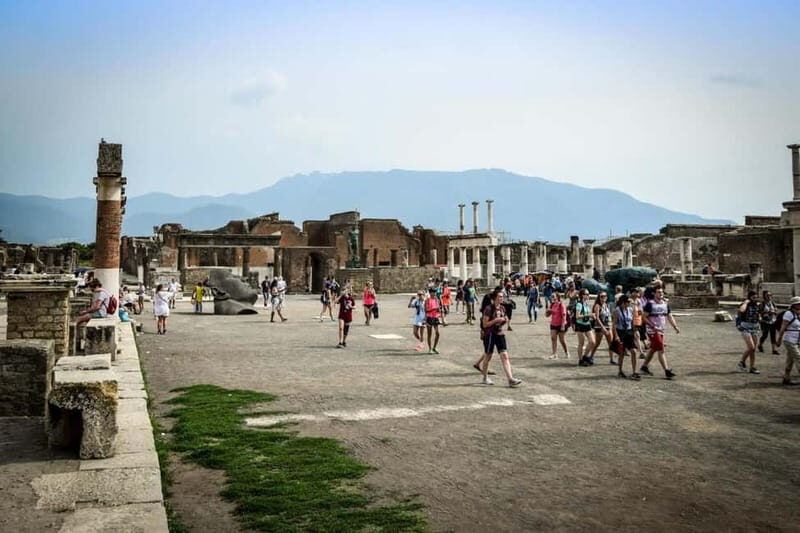
Another big plus is the sound system. For large groups, you wear whisper headsets so you can actually hear your guide. It’s a small thing until you’re standing in the Forum with wind and distractions, and then it becomes the difference between enjoying the tour and mentally guessing.
You can also read our reviews of more guided tours in Pompeii Archaeological Site

Meeting at Tempio Travel: start point you should find quickly
This tour starts at the Tempio Travel office inside the Vircumvesuviana train station area. You meet on the 1st floor at the Tempio Travel office (look for the red logo), and you’ll need to take the stairs to the second floor.
If you like a smooth start, show up a bit early. Pompeii tours can get time-crunched by the time you find the right floor and confirm your group. A few minutes of calm at the start saves a lot of stress later.
Bring your passport or ID card. Wear comfortable shoes, because Pompeii is a walking show. And if you’re thinking about bringing bags, keep it light: luggage or large bags aren’t allowed.
Porta Marina to the big public buildings of Pompeii
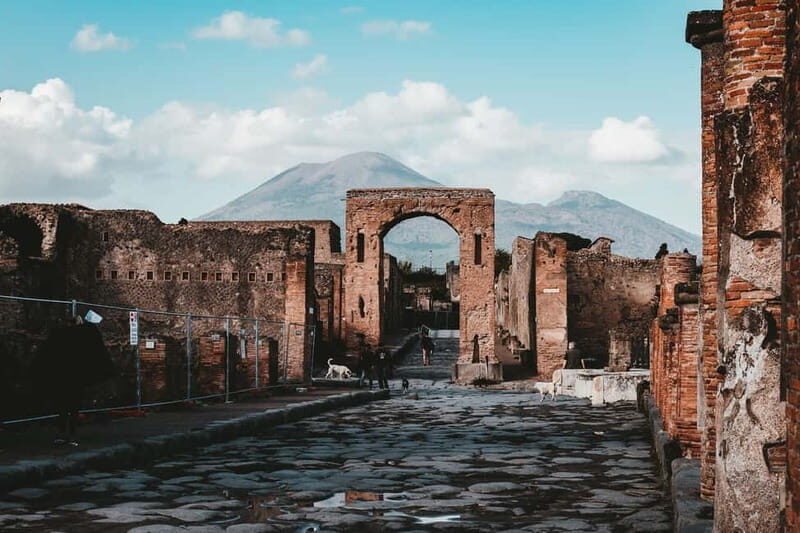
The walking tour begins at Porta Marina, and from there you’re guided through the western side of Pompeii’s most important sites. Think of this part as the city’s stage: gates, gathering spaces, major institutions, and the routes people used every day.
Right away, you get the sense of how Pompeii was planned. The tour includes major stops such as the Marina Gate, the Basilica, and the Forum. These are the places where Roman city life happened—markets, civic activity, and the daily public rhythm of the city.
Next comes stops that show different sides of “regular life” in Pompeii. The tour includes the baths, which helps you see how social and routine events mixed with leisure. Then you’ll move toward the Lupanar, a brothel known from Pompeii—an eye-opening stop that adds context for how the city worked.
From there, you’ll follow the city’s main arteries, including the main street and the theaters. Even if you’ve never studied Roman architecture, you’ll likely start noticing patterns: where crowds gathered, how the street grid connected major areas, and how entertainment fit alongside commerce and civic life.
The drawback to note: because it’s 2 hours, you’re not lingering for long. This route is intense in the best way—packed with meaningful anchors—so you’ll want to plan time to explore more on your own after the tour if you want deeper looks.
Frescoes, plaster casts, and the shock of 79 AD

One of the most moving parts of Pompeii is learning how the city looked to its residents right up until the end. This tour focuses on helping you visualize daily life, not just the disaster headline.
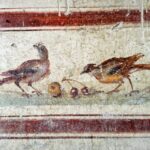
You’ll see frescoes, including examples highlighted as part of Pompeii’s most famous archaeological artwork. Even when the colors feel faded, the scenes make the city feel personal. It’s the kind of detail that makes the ruins stop being a background and start being a lived-in place.
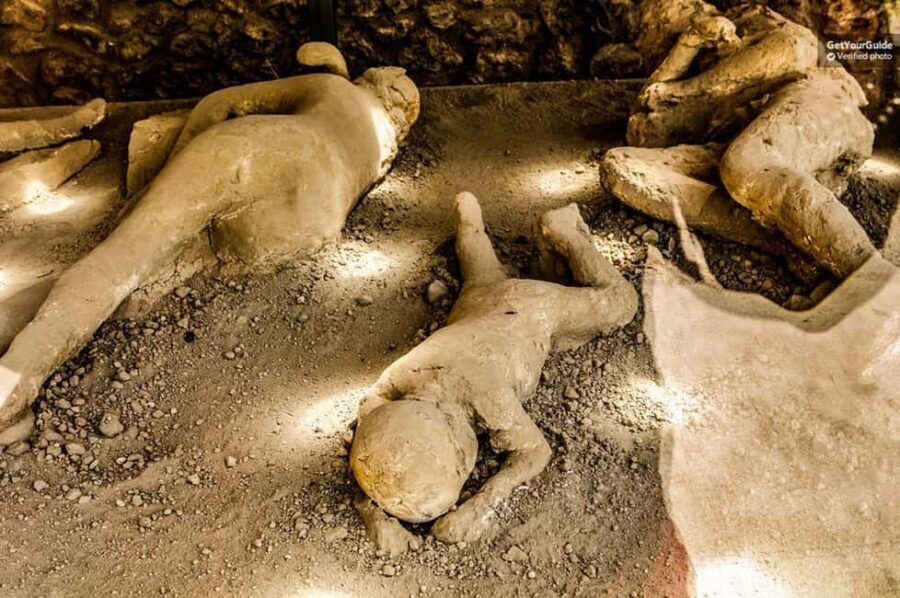
Another standout is the plaster casts of Pompeii’s tragic citizens. These casts do something that words alone can’t: they turn the event into people-shaped reality. Seeing them inside your guided route gives the story emotional weight, while your guide supplies the context so it doesn’t feel random or sensational.
You’ll also visit the Garden of the Fugitives, a site that carries its own story of escape. And as you move through the stops, the tour includes famous named houses such as the House of the Tragic Poet and the House of the Golden Cupid.
These named houses matter because they give you something more than “a building.” Your guide helps you interpret what the house tells you about status, taste, and domestic space—so you can understand why Pompeii is studied so intensely.
The route’s best balance: major monuments plus named houses
A lot of Pompeii tours either go too general or get stuck in one small zone. This one tries to balance the big, iconic monuments with the named houses that people talk about years later.
In the western route, you’ll hit the Forum and the Basilica for public life. You’ll pass by the baths and the Lupanar to round out what “social life” looked like. Then the tour shifts toward more intimate spaces through the Garden of the Fugitives and the named residential sites.
I like that this combination helps you avoid the common Pompeii problem: focusing only on big landmarks. The houses and garden stops give you a sharper sense of what the city looked like from the inside, not just as a visitor’s sightseeing map.
Even the pacing has a logic. Your guide keeps the group moving through a clear sequence, which is crucial in a site this spread out. One review-style detail that really matters in practice: guides often work to keep everyone together, especially when the group is sizable.




Practical tips for comfortable feet in a 2-hour tour
Two hours goes quickly in Pompeii. The good news is that it’s long enough to build a real understanding of the western route, and short enough that you can still do something else afterward.
Here’s what you should plan for:
- Wear comfortable shoes. Pompeii involves steady walking on uneven ground.
- Keep luggage minimal. Large bags and luggage aren’t allowed.
- Bring weather help. If it’s hot, a small shade tool can be a lifesaver. On sunny days, some people buy umbrellas just outside for sun cover.
- Expect a non-stop pace. This is an overview tour, so don’t plan on “extra” lingering at every stop.
The tour isn’t suitable for people with mobility impairments, so if that’s you or someone in your group, you’ll want to choose a different format that matches accessibility needs.
Also, the guide will use headsets for large groups. If the headset sits oddly, you’ll still benefit, but just know it can feel a bit uncomfortable for some people. It’s one of those tradeoffs for being able to hear clearly while moving.
Price and value: what $50.11 buys you
At $50.11 per person, the price can look like a simple add-on—until you factor in what’s included. You’re paying for a 2-hour guide-led route, skip-the-line entrance tickets, and whisper headsets for group comfort. You also get free parking if it’s open and available, which is a big deal if you’re driving.
So is it worth it? For most first-time visitors, yes—because Pompeii rewards explanation. Without a guide, you can walk right past important context and still end up thinking, I saw ruins, but I didn’t learn what to look for.
This tour also makes sense if you’re short on time. If you have a limited window—maybe you’re only in the area for a morning or afternoon—a guided 2-hour overview helps you get the core of Pompeii without burning hours figuring out where to start.
On the flip side, if you already know Pompeii well and you love slow, detailed wandering on your own schedule, you may want a longer self-paced visit. This tour is intentionally focused, not exhaustive.
Where to go after: your guide’s suggestions near the site
At the end of the tour, your guide will share suggestions for spending the rest of your day in the modern city of Pompeii. One specific direction they can point you toward is the Sanctuary Dedicated to Our Lady of the Holy Rosary, which is just a few steps from the archaeological area.
I like this because it solves a real problem: after the tour, your brain is full of names and questions, and you still need a plan. A guide’s local pointers can help you turn that last stretch into something useful rather than wandering with no direction.
If you want to see more after the 2 hours, you’ll be in a better position to do it. After the western route, you’ll understand what you missed and what it might be worth returning to.
Should you book this Pompeii group tour?
Book it if:
- You want a clear overview of the western highlights of Pompeii.
- You appreciate a guided explanation of what you’re seeing, especially frescoes and the plaster casts.
- You’re dealing with limited time and want to skip the ticket line.
- You like a group format where headsets help you keep up.
Skip or choose something else if:
- You need an accessibility-friendly option (this one isn’t suitable for mobility impairments).
- You’re hoping for a deep, slow tour that covers every zone of Pompeii.
- You hate headsets and prefer total quiet self-guided wandering.
If you’re on your first visit, I think this is a smart entry point. You’ll leave with a sharper mental map, key sites you can name, and enough context to explore further without feeling like you’re reading ruins upside down.
FAQ
How long is the Pompeii group tour with an archaeologist guide?
The tour lasts 2 hours.
Where do I meet for the tour?
Meet at the Tempio Travel office on the 1st floor of the Vircumvesuviana train station. The office has a red logo, and you take the stairs to the second floor.
Is skip-the-line entrance included?
Yes. The tour includes skip-the-line entrance tickets.
Are headsets provided for large groups?
Yes. Whisper headsets are included for large groups.
What parts of Pompeii are covered during the tour?
The tour focuses on the western part of Pompeii and includes major buildings such as Porta Marina, the Marina Gate, the Basilica, the Forum, the baths, the Lupanar, the main street, the theaters, plus sights like the Garden of the Fugitives and several named houses.
Which languages are offered?
The live tour guide is available in English and Italian.
What should I bring?
Bring a passport or ID card and wear comfortable shoes.
Are luggage or large bags allowed?
No. Luggage or large bags are not allowed.
Is this tour suitable for people with mobility impairments?
No. It is not suitable for people with mobility impairments.
Is entrance free on the first Sunday of each month?
Entrance is free on the first Sunday of each month, but tickets cannot be reserved ahead of time, so entry is not guaranteed.
Is free cancellation available?
Yes. You can cancel up to 24 hours in advance for a full refund.
Can I reserve now and pay later?
Yes. The option to reserve now and pay later is available.