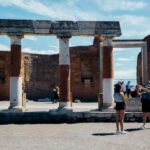
Herculaneum still looks like a city in progress. This UNESCO visit lets you see Roman streets and civic life in one of the best-preserved settings from Vesuvius’ 79 AD eruption, not just scattered ruins. I especially love the way Herculaneum’s layout stays readable as you walk from place to place.
The tour also feels smartly guided, with an archaeologist on hand to translate what you’re seeing into real daily life. I like how guides such as Luigi, Ornella, Riccardo, and Corrado bring out the differences with Pompeii while pointing to details you’d likely miss on your own. You’ll spend your time inside houses, baths, and display areas that explain how Romans lived, worked, and worshiped.
One catch: the main park entrance isn’t included. You’ll pay an extra €16 per person for admission to the Archaeological Park of Herculaneum before you start exploring.
In This Review
- Key Highlights You’ll Actually Care About
- Why Herculaneum Feels Different Than the Bigger Name
- Price and Value: What You’re Paying For (and What You Still Need)
- Getting There and How the Tour Runs on the Ground
- Entering Parco Acheologico di Ercolano: Houses and Street Life You Can Follow
- The Ancient Beach and the Sea-Facing Terrace of Marco Nonius Balbo
- Casa dei Cervi and the Deer House Details That Catch Your Eye
- The House of the Wooden Partition: How Rooms Were Organized
- Casa di Nettuno e Anfitrite: A Mosaic That Makes the Wealth Obvious
- Samnite House and the Decumanus Maximus: Where the Main Street Tells the Story
- The College of the Augustales: Worship of Emperors in a Small Sacred Space
- Casa d’Argo and the Boat Pavilion: The Two Stops You’ll Talk About Later
- Guides, Group Size, and Hearing the Story Clearly
- A Few Smart After-Tour Tips in Ercolano
- Who Should Book Secret Herculaneum
- Should You Book This Herculaneum Tour?
- FAQ
- How long is the Secret Herculaneum tour?
- Is the entrance fee included?
- What is included in the tour price?
- Is the tour offered in English?
- How many people are in a group?
- If I use a wheelchair, what do I need to do?
Key Highlights You’ll Actually Care About
- Small-group size (max 10 people) keeps the pace human and questions welcome
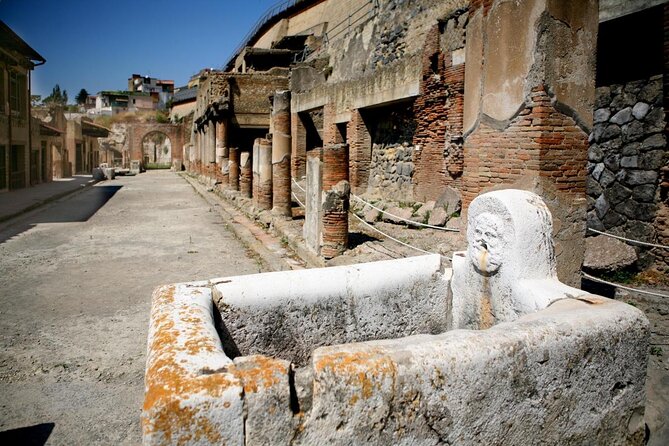
- Frescoed interiors, doors, and street-level features still visible across the town plan
- Boat Pavilion preserves a charred Roman boat found along the beach during excavations
- Iconic house stops like Casa dei Cervi and Casa di Nettuno e Anfitrite
- English tour with a certified guide plus an archaeologist for interpretation, not just narration
- Compact walking route makes a short visit feel complete, without an all-day slog
Why Herculaneum Feels Different Than the Bigger Name
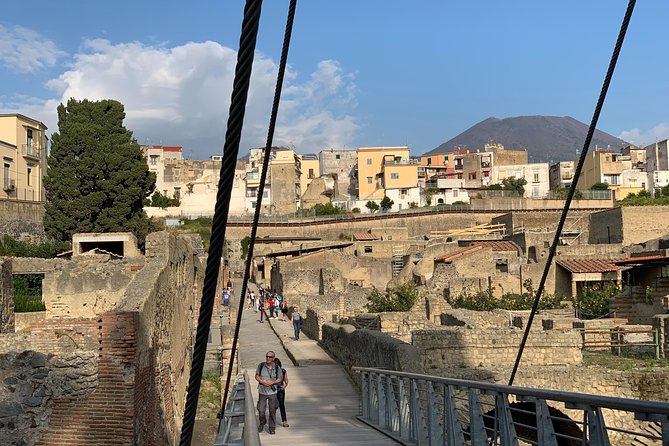
If you’re comparing ruins, Herculaneum is the calmer story. Pompeii is bigger and more famous, but Herculaneum often reads like a town you can still follow street by street. Here, you’re not just looking at columns and fragments. You’re seeing buildings and everyday spaces with a clarity that helps you build a mental map fast.
What makes it special is how the burial worked. The eruption buried the city in 79 AD, and what’s left keeps much more of the urban and civic structure intact than you might expect from a site at this scale. That means the guide can point out things like entrances, room functions, and where people gathered, in a way that clicks immediately.
You’ll also notice the “resort town” scale. Multiple people pointed out that Herculaneum is manageable compared with Pompeii, so you can see a lot without walking for hours just to feel like you did something. That matters when you have one day, limited energy, or you’re combining your ruins visit with train travel.
You can also read our reviews of more tours and experiences in Naples.

Price and Value: What You’re Paying For (and What You Still Need)
The tour price is $34.84 per person, and that’s mainly for the people power. You’re paying for a certified guide plus an archaeologist, and the structure is designed to focus your time on the most important stops. In a place like Herculaneum, interpretive help is the difference between scanning and understanding.
But do plan for the separate park admission. The Archaeological Park of Herculaneum costs €16.00 per person and is not included in the tour price. This is the one line-item that can surprise people, especially if you’re booking a short visit and thinking the tour price covers everything.
Still, I’d call it good value if you want depth without spending the whole day. The tour runs about 2 hours, and it packs in major highlights while keeping the group small. For many visitors, it ends up being the most efficient way to see the site in limited time, even if you have already seen Pompeii or other big attractions.
Getting There and How the Tour Runs on the Ground
The meeting point is the Herculaneum Ticket Office in Ercolano (80056 Ercolano, Metropolitan City of Naples, Italy). The tour ends back at the meeting point, so you don’t have to figure out a second drop-off. It’s also listed as near public transportation, which helps if you’re coming from Naples without a car.
Your ticket is mobile, and the tour is offered in English. The group is capped at 10 people, which shows up in the way guides can slow down at the best parts and answer questions without rushing you through.
One practical tip from real experience: arrive on time and do the check-in correctly. One review mentioned being kept waiting for almost 20 minutes because some people didn’t check in properly, which can throw off a short, timed visit. If you want the full 2 hours to feel smooth, give yourself buffer time at the ticket office.
If you need wheelchair access, you must report it at least 24 hours before the visit. And wear shoes with real grip. More than one person noted steps and stairs inside the site areas, so comfortable support matters.
Entering Parco Acheologico di Ercolano: Houses and Street Life You Can Follow
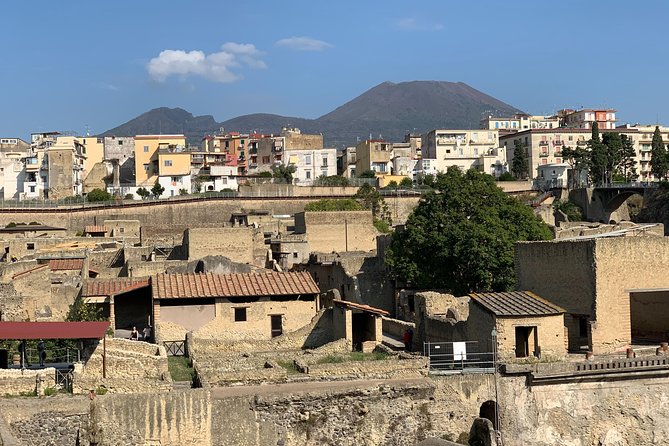
Your first main stop is Parco Acheologico di Ercolano, the UNESCO core. This is where you feel the value of a guide right away, because you’re walking among spaces with functions. Doors, walls, and rooms aren’t just scenic. They help you understand how people moved, cooked, worked, slept, and socialized.
Herculaneum is often described as one of the best-preserved ancient cities in the world, and that shows in the level of visibility. You’ll look at homes where fresco colors are still visible, along with paved streets that make the town feel navigable. The pace is built around short segments, so you get multiple “aha” moments without losing the thread.
This is also where you’ll hear about the day-to-day civic side. The tour highlights places like baths and the gymnasium, where people would gather to talk about everything from politics to business. That’s a big deal, because it shifts your thinking from ruins-as-art to ruins-as-habit.
The Ancient Beach and the Sea-Facing Terrace of Marco Nonius Balbo
Next you’ll spend time on the idea of the ancient shoreline. The itinerary includes the ancient beach area, described as the waterfront of an almost entirely preserved Roman city. Even if you don’t take long scenic breaks, this stop reframes the site. You start seeing Herculaneum as a place shaped by the sea, not only by volcanic disaster.
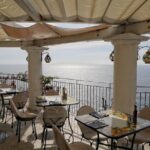
Then you’ll visit La Terrazza di M. Nonio Balbo, a terrace associated with Marcus Nonius Balbo, a prominent citizen and patron. A terrace sounds simple until you remember what it meant in Roman life: a status space, a viewing space, and a social space. With the ocean perspective in mind, the architectural features start telling a different story.
Short stop length can be a drawback here if you love photos. The tour segments are about 10 minutes per stop, so you’ll want to move quickly to capture images before the guide heads onward. If you need extra photo time, I’d plan for it after the tour, not during.


Casa dei Cervi and the Deer House Details That Catch Your Eye
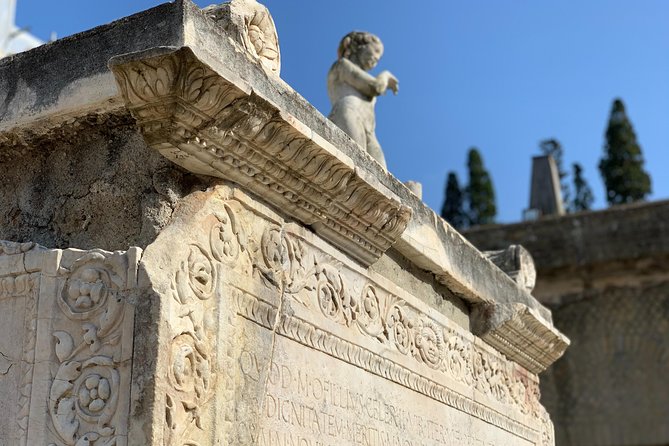
Casa dei Cervi is one of the most memorable homes on the route. It earns its name from marble groups depicting deer being attacked by dogs. That kind of artwork detail helps you understand that wealthy Roman homes weren’t only functional. They communicated taste, power, and identity.
What I like about this stop is how it teaches you to look. Instead of treating the house as a generic background, you learn to connect names, symbols, and layout. Your guide can point out how these rooms fit into daily living and why a “display” element like the deer sculpture mattered in a domestic setting.
A potential limitation is sound and pacing. One review noted a guide was a bit soft spoken, which could make it harder for one person to hear. If you’re sensitive to volume, pick a spot where you can face the guide and keep your attention forward.
The House of the Wooden Partition: How Rooms Were Organized
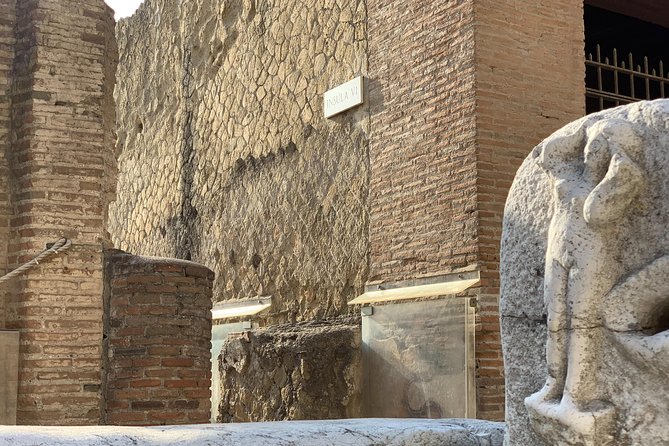
Partem Domus lignea, also called the House of the Wooden Partition, focuses on an architectural trick. The key idea is a folding wooden structure that could separate the splendid atrium from the tablinum, the homeowner’s study area.
This is a great stop for anyone who likes how Roman homes worked in real life. A partition isn’t just a building detail. It’s a clue about privacy, social flow, and how hosts controlled access to more private spaces. When your guide explains the function, the ruins stop being static. They become a system.
Even with a short time window, this stop often lands well because it’s concrete. You can visualize how the space could change for visitors, business, or family routines.
Casa di Nettuno e Anfitrite: A Mosaic That Makes the Wealth Obvious
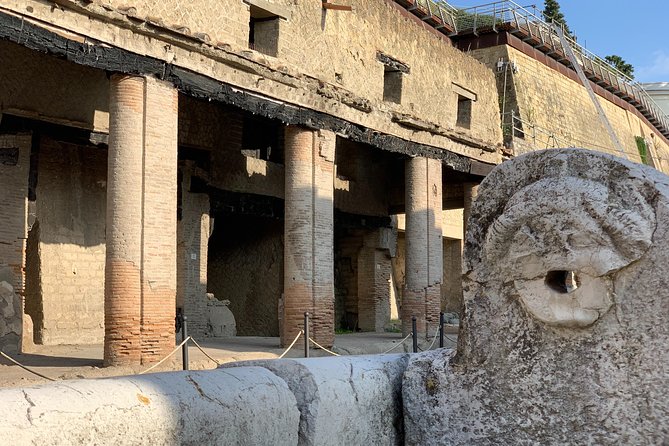
Casa di Nettuno e Anfitrite belongs to a wealthy merchant. It’s especially known for a mosaic of Neptune and Amphitrite, Neptune with his companion, which gives the stop a clear visual anchor.
A mosaic like this does two jobs at once. It proves wealth through artwork and it tells you the household’s values and connections to cultural themes. With a guide, you also learn what to pay attention to: placement, subject matter, and how art worked as a public-facing element within the home.
If you’re moving quickly, take a second to stare at it. Don’t just let it register as pretty. Let it read as a statement. That’s how this stop turns into a lasting memory.
Samnite House and the Decumanus Maximus: Where the Main Street Tells the Story
Casa Sannitica is one of the most popular archaeological remains on the site. It’s considered one of the oldest dwellings at Herculaneum, which makes it useful for understanding how early the settlement patterns ran. Seeing older structures helps you feel the layering of time across the town.
Then you’ll walk past the decumanus maximus, the main street of Roman cities. This isn’t just any road. It housed the most prestigious houses along its sides, which means the street itself becomes part of the status system.
I like this segment because it helps you stitch everything together. After seeing homes and art, the main street explains how location, wealth, and movement worked in one simple line of sight. You start seeing the city as planned, not random.
The College of the Augustales: Worship of Emperors in a Small Sacred Space
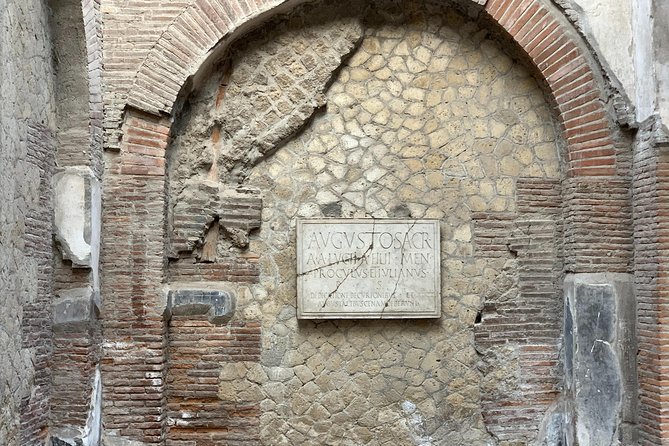
The tour includes the College of the Augustales, focusing on the Sacellum of the Augustals, a building used for rites of worship connected to emperors. These rites were tended by augus priests.
This stop adds a social and religious dimension that many people miss when they focus only on domestic rooms. It reminds you that Roman life mixed daily business with public belief, and it gives the site variety beyond homes and street scenes.
In terms of pacing, this is a quieter stop. If you enjoy architecture and symbolism, it’s worth your attention. If you’re mostly here for big visual highlights, this may feel more conceptual. A good guide helps make it tangible.
Casa d’Argo and the Boat Pavilion: The Two Stops You’ll Talk About Later
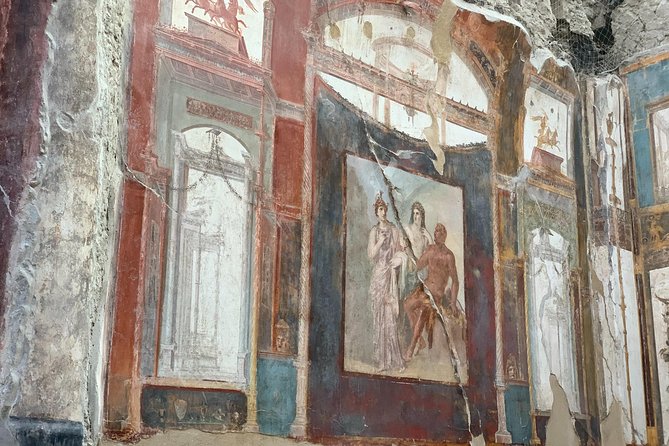
Casa d’Argo is named for a fresco that decorated the peristyle, featuring Argo Panoptes, the giant with a hundred eyes. That title alone makes you want to look closer, and it’s a classic example of how Roman art included myth, symbolism, and storytelling.
Then you get one of the standout experiences on the route: the Salone della Barca di Ercolano, also described as a boat pavilion. It preserves a charred boat that was found along the beach during excavations in 1981.
This is the kind of evidence that hits differently than artwork. A mosaic shows what people valued. A preserved boat shows what was happening when disaster struck. It connects the eruption story to real objects tied to daily coastal life and travel.
More than one review highlighted this boat pavilion as a must-see point. If you only have limited time, this is one place where you’ll really feel the value of a guided stop. The guide can point out what you’re looking at and why it matters.
Guides, Group Size, and Hearing the Story Clearly
The tour is led by a certified guide, and an archaeologist is included as part of the experience. The combination matters because it balances human storytelling with site-level interpretation.
Names you may hear include Luigi, Ornella, Riccardo, Arcangelo, Raffaele, and Corrado. Reviews consistently praise guides for making the history feel alive with humor and clear explanations. That doesn’t mean it becomes a comedy show. It means the facts come in a way you can keep.
Still, I’ll give you a realistic consideration. One review noted that a guide was a little soft spoken. If that’s a concern for you, position yourself well and try not to drift to the back of the group. If you’re listening closely, the short stop times will feel justified instead of rushed.
A Few Smart After-Tour Tips in Ercolano
Because the route is compact, you can keep your day flexible. One review recommended getting a free map at the kiosk at the park entry. If you want to wander briefly afterward, that map can help you target areas you skipped during the guided time.
There was also a suggestion for a small restaurant across from the park, on the left-hand side of the road, with a note about meatballs. I can’t promise it’s the same everywhere or that every menu matches, but it’s a practical option if you need a sit-down meal after your walk.
If you’re traveling by train from Rome for the day, people specifically mentioned using the high-speed train and then using this tour as a highlight. The key is timing: a 2-hour ruins visit works well inside a day trip plan when you keep buffers for transfers.
Who Should Book Secret Herculaneum
This tour fits best if you want to see more than just the headline sights. You’ll enjoy it if you like frescoed rooms, mosaics, and how ancient homes worked in practice. It’s also ideal if you want an efficient plan for a short visit and you don’t want to spend your energy walking without understanding what you’re seeing.
If you’re a Pompeii veteran who felt like you saw the big outline but not the texture of daily life, Herculaneum can feel like a different lens. The site scale helps too, making it a strong choice when you’re traveling with limited time.
It’s less ideal if you want lots of free time to roam slowly without a structured route. The stop segments are brief, so you’ll be moving with the group for about 2 hours rather than lingering for long stretches at every wall and mosaic.
Should You Book This Herculaneum Tour?
I think you should book it if you value interpretation and you want a clear, efficient plan in a small setting. The included archaeologist and certified guide help you connect rooms, art, street planning, and religious spaces into one story you can actually remember.
Pay attention to two things before you commit: budget for the extra €16 park admission, and plan to wear solid shoes for stairs. If those fit your day, this is a strong way to experience UNESCO Herculaneum with less guesswork and more meaning.
FAQ
How long is the Secret Herculaneum tour?
It runs for about 2 hours.
Is the entrance fee included?
No. The Archaeological Park of Herculaneum entrance fee is €16.00 per person and is not included.
What is included in the tour price?
The tour includes a certified guide and an archaeologist.
Is the tour offered in English?
Yes, it is offered in English.
How many people are in a group?
The tour has a maximum of 10 people.
If I use a wheelchair, what do I need to do?
You must report wheelchair use at least 24 hours before the visit.