REVIEW · POMPEII ARCHAEOLOGICAL SITE
Pompei: Pompeii Private Tour
Book on GetYourGuide →Operated by Tempio Travel Pompei Tickets · Bookable on GetYourGuide
Pompeii feels close with a private guide. This tour is built for real understanding, not just wandering: you get skip-the-line access and follow an archaeological guide through one of the world’s most important UNESCO sites. I also like that it’s private, so you can ask questions and move at a pace that fits your group. The one drawback is simple: 3 hours is tight for a site this big, so you’ll focus on a few standout places rather than trying to see everything.
You’ll start at the Tempio Travel meeting spot near the Pompeii circumvesuviana area and walk into a city founded in the 7th century BC, then guided toward the story of its destruction in 79 AD. Expect languages that match your group, and the chance to pick between two major experiences on-site: the amphitheatre or the Villa of the Mysteries.
In This Review
- Key Highlights Worth Paying Attention To
- Why Private Pompeii in 3 Hours Works Better Than a Long “See Everything” Day
- Meet at Tempio Travel and Get Through the Ruins Gate With Less Waiting
- From 7th-Century BC Pompeii to the 79 AD Eruption: How the Story Flows
- The Parts Most People Miss: Roman Daily Life in the Ruins
- Two Major Site Options: Amphitheatre vs. Villa of the Mysteries
- What the Tour Includes (and What It Doesn’t) So You Can Budget Smart
- Practical Matters: ID, No Large Bags, and First-Sunday Free Entry That Can Still Catch You
- Who This Pompeii Tour Fits Best
- Should You Book This Private Pompeii Tour?
- FAQ
- Where is the meeting point?
- How long is the Pompeii private tour?
- Does the tour include skip-the-line entry?
- What languages are available?
- What should I bring, and what can’t I bring?
- Is transportation or lunch included?
Key Highlights Worth Paying Attention To
- Skip-the-line entrance ticket express so you waste less time waiting at the gate
- Private 3-hour format that helps you absorb Pompeii without getting swept along
- Archaeologist-led explanations of Roman art, trades, customs, and everyday life
- Historic scale to ground you: Pompeii once covered about 66 acres
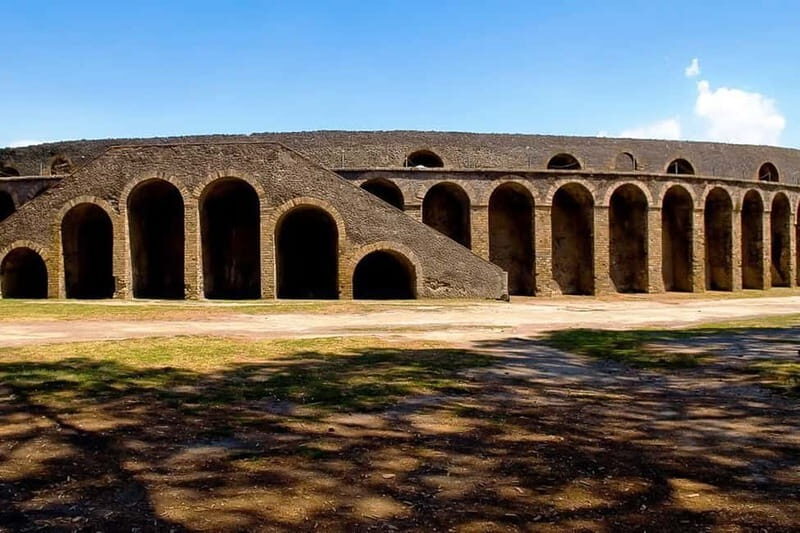
- Two big choices: you may get detailed time in either the amphitheatre or the Villa of the Mysteries
Why Private Pompeii in 3 Hours Works Better Than a Long “See Everything” Day
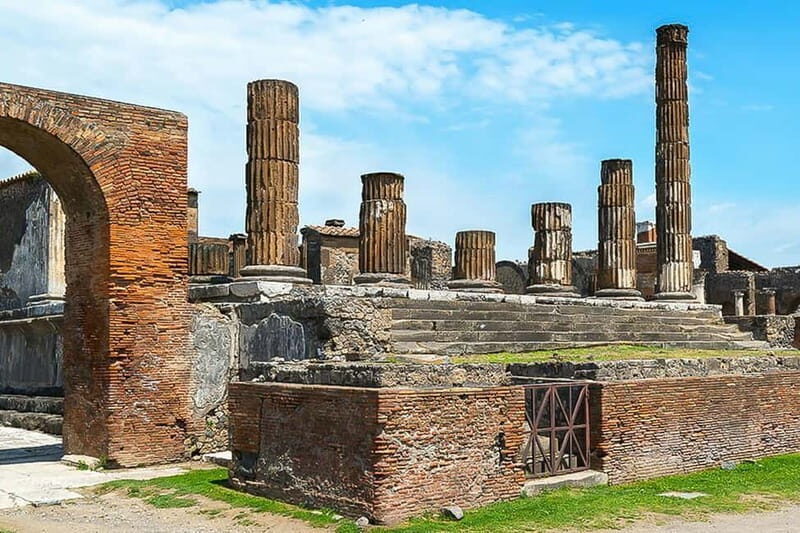
Pompeii can overwhelm you fast. The ruins sprawl, the crowd flow changes minute to minute, and you end up looking at walls without always knowing what you’re looking at. A private, timed visit solves the biggest problem: you keep momentum and you get context while you’re standing right in front of the evidence.
This tour is designed around a clean 3-hour window. That matters because the most satisfying Pompeii visits aren’t marathons; they’re focused. You’ll walk the heart of the city, learn what the buildings were for, and connect everyday details to what Roman life likely looked like before Vesuvius shut it all down.
The other thing I like is that the guide is an archaeologist, not just a “talking tour person.” You’ll get explanations about Roman art, customs, trades, and daily routines, so the site starts to feel like a living city rather than a photo backdrop. And since it’s private, you can ask follow-up questions without feeling guilty about slowing the line.
One more practical thought: with a 3-hour structure, you’ll typically choose the best matches for your interests. If you’re the type who wants a quick hit of the amphitheatre vibe, or you’re more drawn to painted rooms and symbolism, this format helps you aim.
You can also read our reviews of more private tours in Pompeii Archaeological Site

Meet at Tempio Travel and Get Through the Ruins Gate With Less Waiting
You meet at the Tempio Travel agency at the Pompeii ruins circumvesuviana train station area. That’s handy if you’re arriving by rail because it keeps the “getting started” part simple. The tour also ends back at the meeting point, so you’re not stuck negotiating your way out with sore feet and a map full of arrows.
The real time-saver is skip-the-line access with a Pompeii entrance ticket express. At Pompeii, waiting in lines can eat your best energy. Cutting that out means more walking inside the ruins while your brain is still fresh.
There’s also a parking option if you’re driving. The information provided mentions a chance for free parking at Osteria Nonna Cherubina, on Via Diomede 16, about 500 meters from the main entrance. It’s not a guarantee that you’ll find it, but it’s a useful tip if your day plan includes a car.
For languages, this tour lists Spanish, English, French, German, and Italian. In practice, the language you choose affects how quickly you can follow the story—especially for Roman details like household roles, crafts, and how spaces were used.
From 7th-Century BC Pompeii to the 79 AD Eruption: How the Story Flows
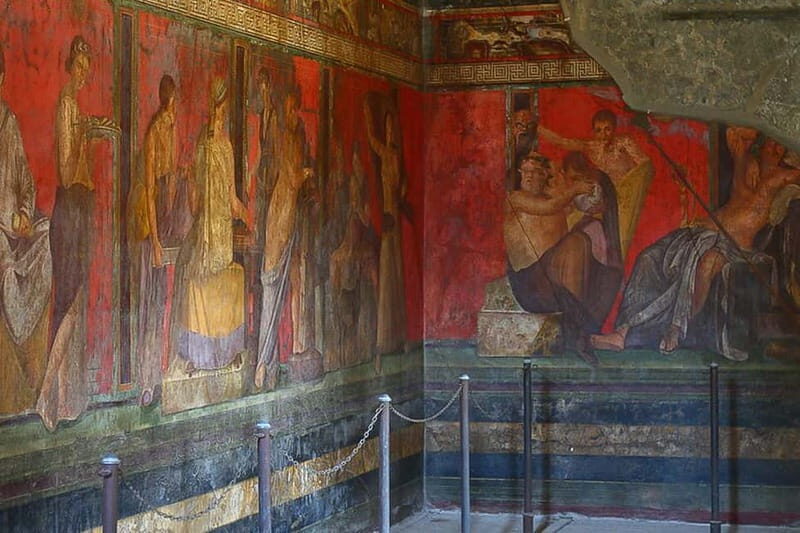
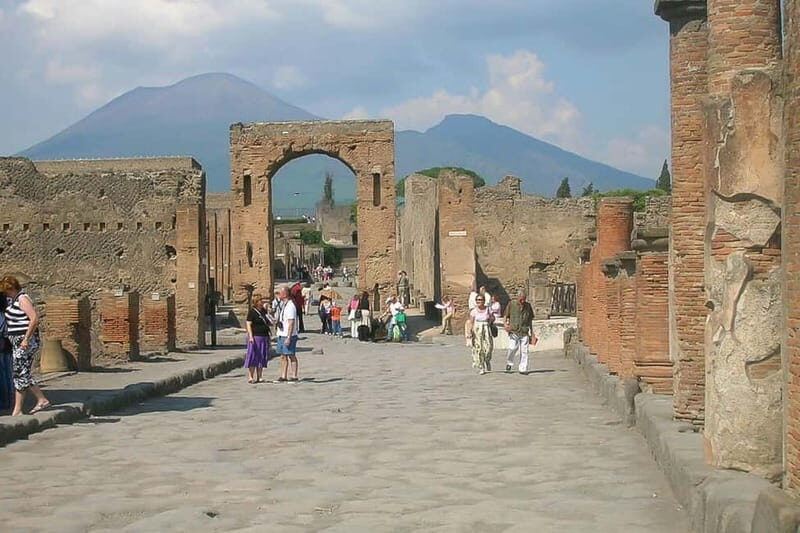
Your tour begins by grounding you in time. You’ll go back to when Pompeii was founded, then move through the city’s layout so it makes sense as a place people actually lived. The tour highlights that the city once spanned about 66 acres, which helps you understand why Pompeii can feel like a maze unless someone guides the “why” behind the street and building patterns.
From there, you’ll hear how the city was destroyed by the eruption of Mount Vesuvius in 79 AD. That’s more than a dramatic moment in a textbook. Once you understand the sequence of the disaster, the ruins start to read like a snapshot—buildings, rooms, and spaces frozen in time.
A good guide also points out that Pompeii isn’t one single attraction. It’s a collection of neighborhoods, homes, and public spaces that reflect Roman culture. You’ll get explanations tied to what you’re seeing: what people did for work, how they organized daily life, and how Roman art and customs showed up in ordinary places.
One small but meaningful benefit of this format: you’re not just hearing facts. You’re walking while you learn, so the explanation sticks. If you’re the type who likes your history “attached” to real locations, this is exactly the approach you want.
The Parts Most People Miss: Roman Daily Life in the Ruins
What makes Pompeii special is that it preserves the ordinary. You’re not only hunting for big monuments; you’re trying to understand household routines, public habits, and the textures of city life.
During the walk, your archaeologist guide focuses on how Roman art and customs appeared in the built environment. That can change how you look at details like wall paintings, layouts, and room divisions. You’ll get more than “this is a house.” You should hear why it was built that way and what it probably meant for the people inside.
The tour description also stresses that you’ll look beyond walls and ruins to understand the meaning of each building. That matters because Pompeii can trick your eyes. In many spots, the “complete picture” is broken. A guide helps you reconstruct the function based on what’s still visible.
If you want a sense of the guide styles that have worked well for groups, a few names show up in the provided feedback. Marina has been praised for connecting the lifestyle of early Pompeii residents to modern life, which is a great technique when you’re trying to reduce the distance between then and now. Giada is highlighted for helping visitors see beyond famous highlights and getting a deeper grasp of the site in the same 3-hour window. Dr Daniella and Daniela are both noted for bringing the ruins to life through engaging storytelling, and Daniella is also mentioned as being patient and helpful when a group issue delayed the start.
You don’t have to be a classics nerd to enjoy this. You just need the right frame, and this tour offers that frame while you’re walking.
Two Major Site Options: Amphitheatre vs. Villa of the Mysteries
You may have the possibility to visit in detail two of the most important places on the site: the amphitheatre or the Villa of the Mysteries. That’s a big deal because these two experiences feel different.
The amphitheatre is your “public life” anchor. Pompeii wasn’t only private homes and shops; it had large-scale entertainment spaces too. If you want the city’s social rhythm—where people gathered and what they went to watch—the amphitheatre can be a strong target in a limited schedule.
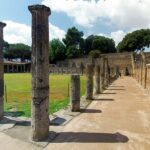
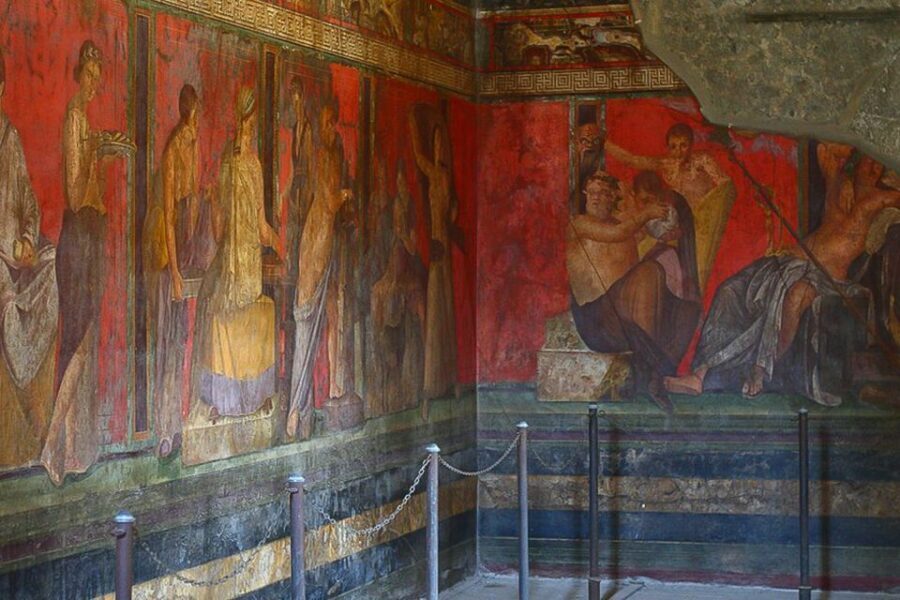
The Villa of the Mysteries is more about symbolism and art. The name itself hints at a theme, and this is the kind of place where painted elements and room purpose can take center stage. If you’re the type who likes to stare at wall surfaces and ask what something means, this is a great match.
Because the tour is time-bound, you’ll likely see these with care rather than rushing past them. That’s the value of the private format: you can spend actual minutes where it matters most to you.




What the Tour Includes (and What It Doesn’t) So You Can Budget Smart
Included:
- The tour itself
- An archaeological guide
- Pompeii entrance ticket express (skip-the-line)
Not included:
- Transportation
- Lunch
This inclusion set is what makes the price feel more reasonable for Pompeii specifically. If you’re trying to do Pompeii well, you need two things: entry management and interpretation. This tour provides both, and it’s hard to replicate that value on your own without spending extra time figuring it out.
The pricing is listed as $407.83 per group up to 1. In other words, you’re paying for a private guided experience rather than splitting cost across a large group. Whether it feels like a bargain depends on how you travel. If you’re a solo traveler who hates waiting and wants sharper context, this can be worth it. If you’re two or more people, it may or may not be ideal depending on how the operator structures the “up to 1” pricing for your specific booking.
Either way, you should think of it like this: you’re buying time saved (skip-the-line) plus a guide who helps you convert ruins into understanding. For Pompeii, that tradeoff is usually the right one.
Practical Matters: ID, No Large Bags, and First-Sunday Free Entry That Can Still Catch You
You’ll need a passport or ID card. That’s straightforward, but it’s also the kind of requirement that can derail your morning if you forget it.
The tour also states that luggage or large bags aren’t allowed. For many Pompeii visitors, that’s a key planning detail. If you’re used to traveling with bigger daypacks or suitcases, switch to a smaller carry option before you head in.
One other timing note is important. On the first Sunday of each month, entrance is free of charge. But tickets can’t be reserved ahead of time, so entry isn’t guaranteed. If you’re visiting around that window, plan extra flexibility—especially if your schedule is tight.
As for the vibe on-site, Pompeii is outdoors and walking-focused. If you’re sensitive to heat or rough ground, build in water planning and take breaks when your guide suggests it. A private tour is better for that than a high-speed group bus plan.
Who This Pompeii Tour Fits Best
This tour is a strong fit if you want a guided Pompeii visit without the stress of figuring everything out yourself. It also works well for people who want a private pace—families, multi-generational groups, and anyone who doesn’t want to fight crowd flow.
The provided feedback includes examples that hint at adaptability. One group with kids aged 12, 10, and 4 is mentioned in relation to a guide using an iPad for added context and keeping the children engaged through conversation and visuals. Another group requested a guide who could specialize in children and adjust to high-energy kids while still working for grandparents. If your group includes different ages or different interests, private guiding helps you avoid the classic problem of one person getting bored while another wants to move fast.
If you’re traveling solo and want the Pompeii experience to feel structured, this is also a good match. You get a 3-hour plan, guided interpretation, and skip-the-line entry without negotiating anything on-site.
If you’re the kind of traveler who dreams about seeing every single street corner and building in Pompeii, this likely won’t satisfy the urge for a full sweep. The value here is focus, not completeness.
Should You Book This Private Pompeii Tour?
If you care more about understanding than ticking off a list, I’d say yes. For Pompeii, the biggest win is having an archaeologist turn ruins into meaning while you’re actually there, and skip-the-line access helps protect your time. The 3-hour length is also realistic: long enough to learn, short enough to keep things from turning into a slog.
Book it if you want:
- Private guidance with a pace that fits your group
- A clearer story from Pompeii’s founding through the eruption in 79 AD
- A chance to focus in detail on major stops like the amphitheatre or the Villa of the Mysteries
Hold off if you’re chasing a do-everything day or you’re bringing large bags that may not be allowed. In that case, you’d be better served by planning a different strategy and building in extra time.
FAQ
Where is the meeting point?
You meet at the Tempio Travel agency at the Pompeii ruins circumvesuviana train station area. The tour ends back at the meeting point.
How long is the Pompeii private tour?
The duration is 3 hours (you’ll need to check availability for starting times).
Does the tour include skip-the-line entry?
Yes. It includes Pompeii entrance ticket express for skip-the-line access.
What languages are available?
The guide languages listed are Spanish, English, French, German, and Italian.
What should I bring, and what can’t I bring?
Bring a passport or ID card. Luggage or large bags aren’t allowed.
Is transportation or lunch included?
No. Transportation and lunch are not included.