REVIEW · POMPEII
Pompeii Tour with experienced guide
Book on Viator →Operated by Roberta Avilia Guida Turistica · Bookable on Viator
Two hours in Pompeii can feel like a week.
This guided walk is interesting because it gives you a story-first route through a city that was buried after Mount Vesuvius erupted in 79 A.D. I love how an authorized guide explains what you’re looking at in plain language, not just dates and facts. I like that you’re led through major landmarks in a logical flow, from the Amphitheater area to the Gym of the Gladiators and onward toward the Forum.
One key consideration: the entrance ticket isn’t included, so you’ll need to budget an extra €19 per person and plan a little time for ticket handling before you start.
In This Review
- Key Highlights to Expect
- A 2-Hour Pompeii Tour That Actually Feels Manageable
- Where You Meet and How the Walk Ends
- The Story of 79 A.D. Told While You Walk
- Stop Focus: Amphitheater and Gladiator-Era Entertainment
- Homes with Gardens: Seeing Pompeii as a Place to Live
- Shops Along the Main Street: Reading Daily Life in the Layout
- The Forum and Public Buildings: Where Civic Life Happened
- Comfort, Pace, and the Private-Group Advantage
- Price Breakdown: Paying for the Guide and Budgeting the Ticket
- Timing: When to Go and How to Plan Your Day
- Who This Tour Fits Best
- Should You Book This Pompeii Tour?
- FAQ
- What’s the duration of the Pompeii tour?
- Is the Pompeii entrance ticket included in the tour price?
- Where do I meet the guide for the tour?
- Where does the tour end?
- What language is the tour offered in?
- Is this a private tour or a shared group?
- What are the available tour hours?
- How flexible is cancellation?
Key Highlights to Expect
- Meet your guide right at the Pompeii entrance and start walking immediately
- An English-language experience with a guide who adjusts to your group’s interests
- A focused 2-hour route covering the Amphitheater, Gladiators’ Gym, street shops, and the Forum area
- Private-group feel (only your group participates), so questions don’t get lost
- You may get shown an active excavation area, if timing and routing allow
A 2-Hour Pompeii Tour That Actually Feels Manageable

Pompeii is big, uneven, and easy to get lost in. A 2-hour guided format is smart because it trades “wandering” for “seeing the points that matter.” You’ll still feel the scale, but you won’t spend half your time asking where the next main sight is.
What makes this experience work is the way the guide frames the ruins. Instead of treating the site like a set of random buildings, you’ll get help visualizing how daily life moved through spaces like public buildings, markets, and entertainment areas. That’s what turns stone and shadows into something you can picture.
Also, this tour is offered in English, which matters here. Pompeii is full of labels, but the best understanding usually comes from how a person connects them. An English-speaking guide helps you keep up without constantly checking an app.
You can also read our reviews of more guided tours in Pompeii
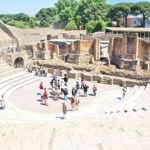

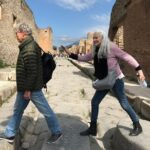
Where You Meet and How the Walk Ends
You’ll start at Piazza Immacolata, 2, 80045 Pompei NA, Italy, at the entrance to the archaeological park area. The tour ends at Piazza Esedra, 80045 Pompei NA, Italy. That end point is useful because it helps you continue your day without having to retrace every step.
The schedule is also fairly tight: it runs Monday through Saturday from 9:00 AM to 2:00 PM. If you’re the type who likes a slow start, aim for the middle of that window so you’re not fighting heat, crowds, or timing gaps.
One practical advantage: the tour meets near public transportation. So if you’re arriving from Naples, it’s easier to stitch Pompeii into a larger plan without stress.
The Story of 79 A.D. Told While You Walk
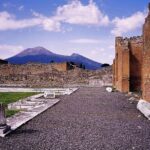
You’re visiting a place shaped by a single, life-changing event. You’ll be guided into the ancient city buried by the eruption of Mount Vesuvius in 79 A.D., and you’ll see how that story connects to the buildings around you.
This is where a real guide earns their fee. Pompeii can look like a pile of ruins unless someone helps you notice the right things. Here, you get explanations as you move—what these structures were for, why the layout makes sense, and what people likely did inside them.
It’s also why the tour’s route matters. In a short time, you want to hit the places that best represent the full picture: entertainment, civic life, and the rhythms of everyday street culture.
Stop Focus: Amphitheater and Gladiator-Era Entertainment
The tour highlights the Amphitheater area first, and that’s a smart entry point. Entertainment spaces are often the quickest way to grasp Roman public life, because you can imagine crowds, noise, and spectacle even when the building itself is quiet now.
From there, you’ll move toward the Gym of the Gladiators. Even if you don’t care about gladiators, this stop gives you a practical view of training, discipline, and the human side of spectacle. It helps you understand that these events weren’t random—there was a system behind it.
A good guide also makes it easier to read what you see. You’ll be shown what to look for and what it suggests about the way people lived and worked. For many people, this is the “click” moment in Pompeii: suddenly it feels like a city, not a museum display.
Homes with Gardens: Seeing Pompeii as a Place to Live
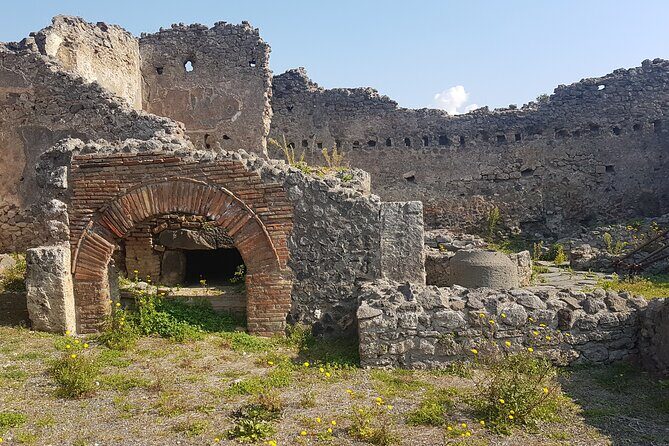
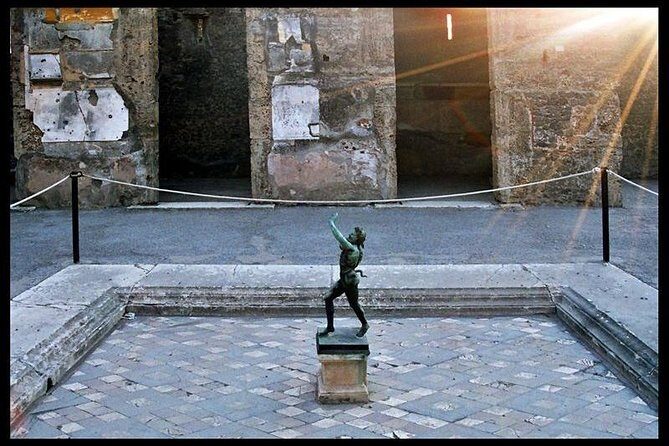
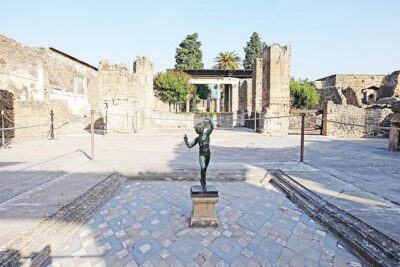
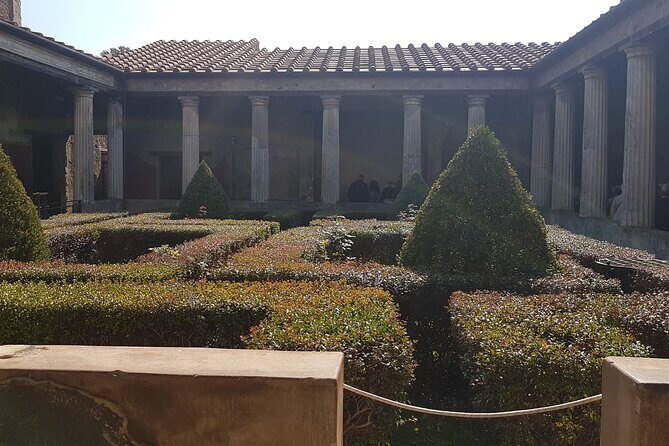
Pompeii isn’t just stone monuments. It’s also domestic life—courtyards, private spaces, and the softer textures that make a city feel real. Your tour includes houses with lush gardens, which is one of the more human parts of the site.
Garden and home areas are valuable because they balance the public spaces you’ll see elsewhere. You get a sense of status and daily habits, and you start noticing how different parts of the city served different social needs.
Even if you’re on a tight schedule, this is worth the time. Residential sections can be where your imagination runs best: you can picture meals, small routines, and the difference between a lived-in space and a public monument.




Shops Along the Main Street: Reading Daily Life in the Layout
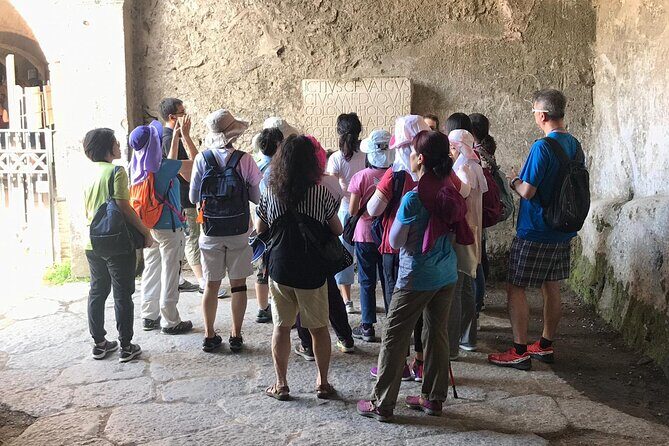
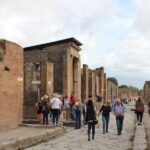
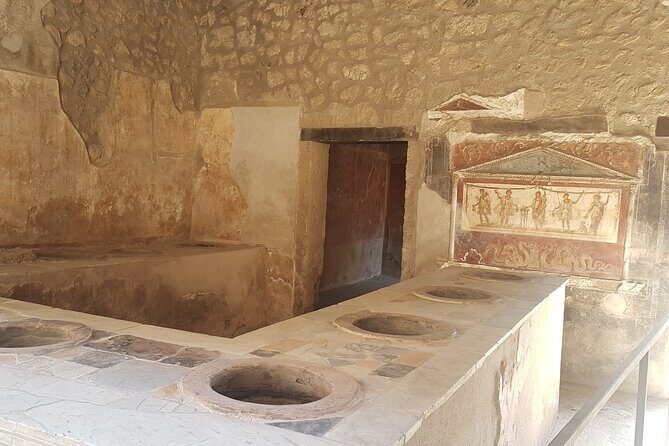
One of the most effective ways to understand Pompeii is to walk the main arteries of the city. This tour includes the shops along the main street, where everyday commerce would have happened.
Street-front shops are the kind of detail that can be easy to miss if you’re moving on your own. With a guide, you get help connecting the dots: where goods were sold, how foot traffic flowed, and why the street design mattered.
This part of the walk is also where you’ll start to feel the city’s “texture.” Pompeii becomes less about isolated sights and more about an entire system—people moving, buying, eating, working, and meeting.
The Forum and Public Buildings: Where Civic Life Happened
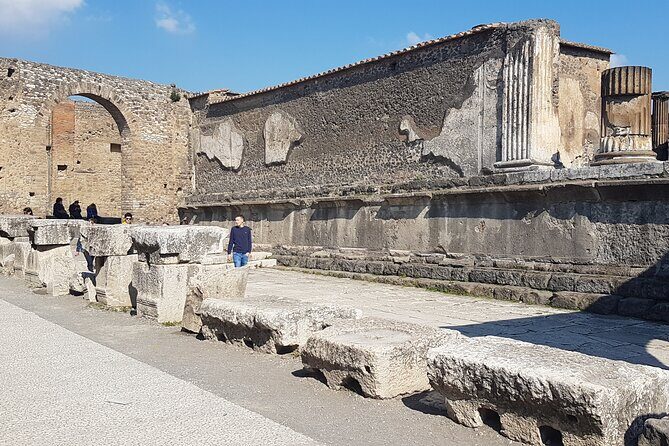
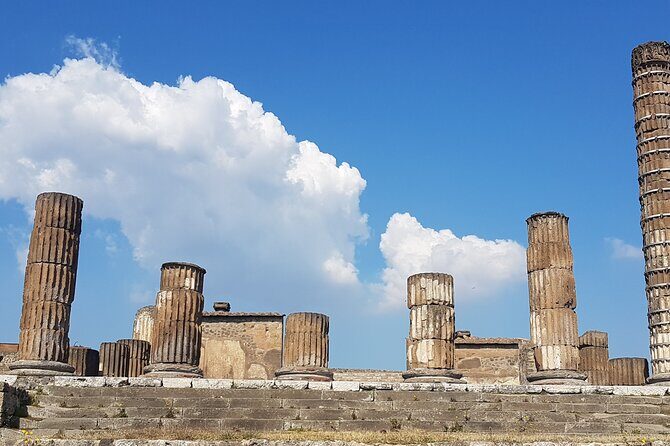
Your walk continues toward the Forum and public buildings in the city center. This is the civic heart, and it’s one of the best places to understand how Roman society organized itself.
The Forum area is where you’ll get a clearer sense of what mattered: public decision-making, community space, and official life. Even if you’re not a history superfan, it helps to see how public structures connect to how a city works.
This is also where a good guide helps you avoid information overload. In Pompeii, it’s easy to get swamped by details. A strong guide picks the right few explanations and keeps you oriented so you can enjoy what you see instead of feeling like you’re studying for a test.
Comfort, Pace, and the Private-Group Advantage
This experience is a private tour/activity, meaning only your group participates. That’s more than a label. In practice, it usually means you get better pacing, fewer “wait and shuffle” moments, and more time to ask questions.
It also helps across different ages and interests. People who aren’t “ruins people” still get something out of Pompeii when the guide talks at the right level. A guide who can tell stories without dumping facts lets everyone follow along.
One theme you’ll likely feel during the walk: the guide’s ability to adjust. Your tour can be shaped around what your group wants to focus on—whether you’re more interested in entertainment, daily street life, or the Forum and civic vibe.
Price Breakdown: Paying for the Guide and Budgeting the Ticket
This tour costs $133.01 per person for about 2 hours with an authorized guide. But the entrance fee is not included—that’s €19.00 per person—so your realistic total is closer to about $150-ish per person, depending on exchange rates.
Here’s how I’d think about the value.
- If you’re going solo, you’ll pay the ticket anyway, plus time figuring out what to see and how to understand it.
- If you want Pompeii to make sense quickly, you’re paying for someone to point, explain, and keep the route focused.
For $133.01, you’re buying a guided, English-speaking experience with private-group pacing. In a short time window inside the ruins, that’s often the difference between “pretty impressive” and “I get it.”
One more practical note: the tour includes a mobile ticket. That’s handy because it reduces last-minute fuss, as long as you have your confirmation handy.
Timing: When to Go and How to Plan Your Day
The tour runs 9:00 AM to 2:00 PM, Monday to Saturday. That helps if you’re building a day around Naples, nearby sites, or an afternoon plan after Pompeii.
If you’re trying to connect Pompeii with other stops in the region, this 2-hour slot is a useful building block. It’s long enough to feel like you covered the essentials, but short enough that you’re not trapped there all day.
If you have extra time the next day, it can help to reinforce what you saw. One useful approach (suggested by the guide style people describe) is visiting the area’s archaeological museum afterward so the artifacts match the buildings you just walked through.
Who This Tour Fits Best
This is a strong match if you want:
- A tight, high-value Pompeii visit without getting lost
- A private-group experience where you can ask questions
- An English guide who can explain Roman life in a way that works for different ages and interest levels
- A guided route that includes major sights like the Amphitheater, Gym of the Gladiators, and the Forum area
It’s also a practical choice if you know you’ll spend less time standing around. A good guide keeps movement efficient, and the route covers the parts of Pompeii that best represent the whole city.
Should You Book This Pompeii Tour?
If you want Pompeii to feel like a real place instead of a confusing maze, I’d book it. The combination of an authorized guide, English instruction, and a focused 2-hour route is exactly what you need when time is limited.
Only hesitate if:
- You’re determined to go fully independent and don’t mind spending extra time figuring out what you’re looking at.
- You’d rather control every minute yourself and you’re comfortable reading Pompeii without a guide.
- You’re not willing to add the €19 entrance ticket on top of the tour price.
If your goal is to leave Pompeii with clear images in your head—entertainment, street life, homes, and the civic center—this tour is a solid way to get there.
FAQ
What’s the duration of the Pompeii tour?
It’s listed at about 2 hours.
Is the Pompeii entrance ticket included in the tour price?
No. The entrance fee is €19.00 per person and it is not included.
Where do I meet the guide for the tour?
The meeting point is Piazza Immacolata, 2, 80045 Pompei NA, Italy.
Where does the tour end?
The tour ends at Piazza Esedra, 80045 Pompei NA, Italy.
What language is the tour offered in?
The tour is offered in English.
Is this a private tour or a shared group?
It’s described as private, with only your group participating.
What are the available tour hours?
It runs Monday to Saturday from 9:00 AM to 2:00 PM.
How flexible is cancellation?
You can cancel for free up to 24 hours in advance for a full refund. Changes made less than 24 hours before the start time aren’t accepted.