REVIEW · POMPEI CAMPANIA
From Sorrento: Pompeii with an Archaeological Guide & Ticket
Book on GetYourGuide →Operated by Amo Italy S.r.l. · Bookable on GetYourGuide
Pompeii, in a day, done right. This Sorrento outing is built around a focused archaeologist-led visit to one of Italy’s most talked-about Roman cities, with coach transport and tickets handled for you. It’s a smart match if you want big Pompeii without needing a whole day to get oriented.
I like that you get a dedicated guide and a real guided walk inside the site for about 2 hours, not just wandering with a map. I also like the practical touches: round-trip coach time is included, and if your group is over 10 people you’ll receive headsets so the English guide stays clear over the crowd.
One drawback to consider: the tour is not suitable for wheelchair users, so this is a plan for people who can handle a walking-focused day.
In This Review
- Key highlights you’ll care about
- A tight Pompeii plan that still feels meaningful
- Meeting in Sorrento: simple start, easy access
- The coach ride: where the day gets explained
- The 2-hour guided tour at Pompeii: the heart of the day
- Stops and views you’ll see along the way (and what to watch for)
- Lupanare: a quick read on daily life and sexuality in Pompeii
- Terme Stabiane and the Forum Baths: the “body care” part of the city
- Large Theatre: public entertainment, built for crowds
- Temple of Apollo: religion and public identity
- Macellum and Foro Civile di Pompei: commerce and government in one view
- Villa of the Mysteries: the art stop you’ll remember
- Hearing and group size: why headsets matter
- What to bring so your day stays comfortable
- Price and value: what you’re actually paying for
- The one “watch your timing” lesson
- Who this Pompeii tour suits best
- Should you book this Pompeii day trip from Sorrento?
- FAQ
- Where does the tour start in Sorrento?
- What time does the tour begin, and when do you return to Sorrento?
- Is the Pompeii ticket included?
- How long is the guided tour inside Pompeii?
- Is lunch included?
- Is the tour wheelchair accessible?
Key highlights you’ll care about
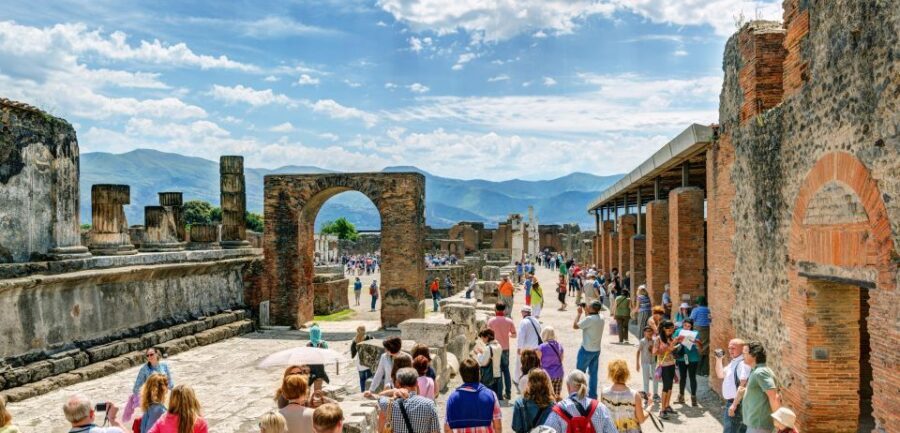
- Archaeologist guide + guided tour inside Pompeii for about 2 hours
- Round-trip coach from Sorrento (about 50 minutes each way)
- Admission ticket included with the guide during your ruins visit
- Headsets for groups larger than 10 so you don’t miss key details
- English live guide plus an English audio guide for extra context
A tight Pompeii plan that still feels meaningful
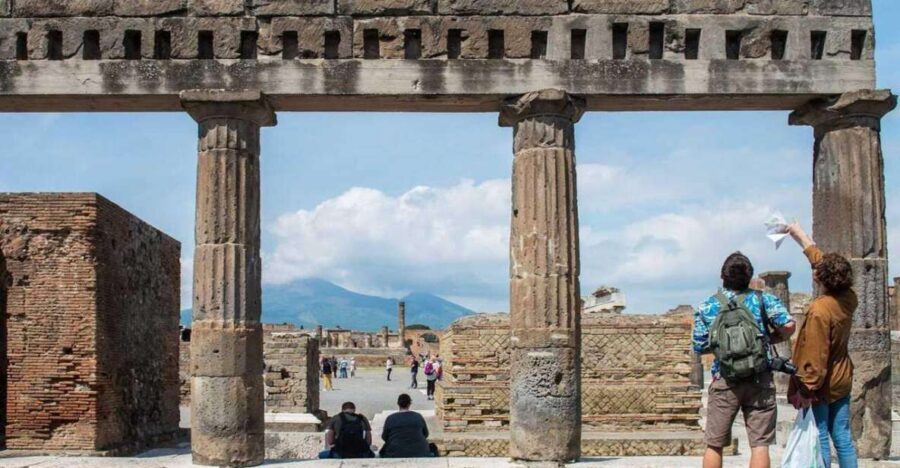
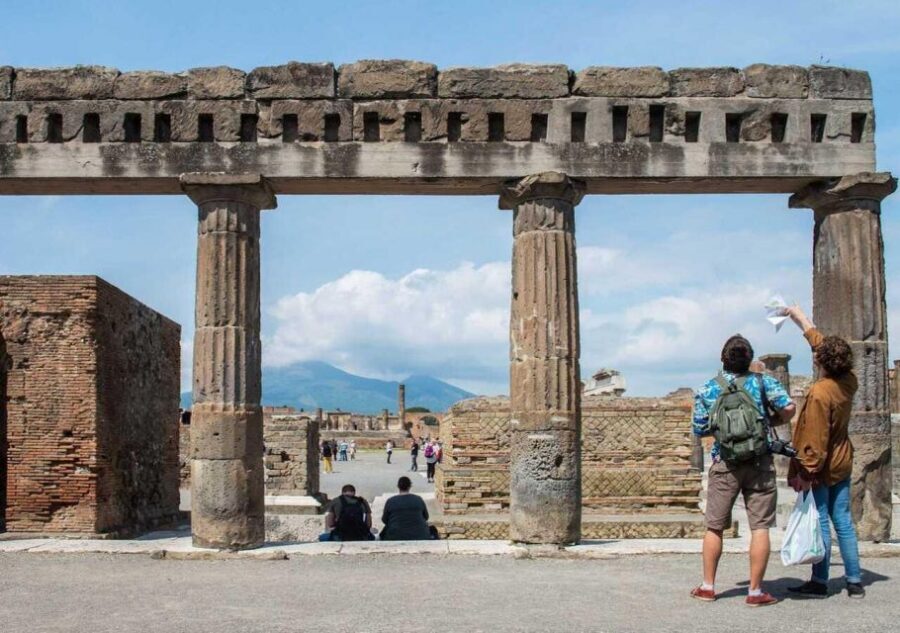
Pompeii is huge, and doing it well takes time. This tour keeps the day compact: you’re in and around the ruins for a guided stretch, then you’re back on the coach back toward Sorrento by about 2:30 p.m. That “tight but guided” approach is exactly what makes it work for a first visit.
The best part of a short day like this is that you’re guided to the places that give you the clearest picture fastest. You won’t have to decide where to start or worry that you’ll “miss the point” if you’re not a Roman-history expert. The archaeologist’s job is to connect the dots—what you’re looking at, what it was for, and why it matters.
You can also read our reviews of more tours and experiences in Pompei Campania


Meeting in Sorrento: simple start, easy access
The tour begins at 8:00 a.m. at Bar Kontatto, Corso Italia n.257, Sorrento. The meeting point is a few minutes’ walk from the train and bus area, which matters because a lot of people are in transit before they even arrive. Show up about 10 minutes early so you’re not the person who delays the group.
Then you’re off by coach. Expect about 50 minutes to reach Pompeii, with the trip broken up by time on the road and a chance to get your bearings before the walking begins. If you’re trying to fit Pompeii into a short stay in the Amalfi Coast area, this early departure is a big deal.
The coach ride: where the day gets explained
The bus/coach portion isn’t just “getting there.” You’re moving through Campania landscapes on a set schedule, and that time is usually when your guide sets expectations for what you’ll see next. One review highlights how the bus guide was helpful and informative, which lines up with how these days work best—arrive at Pompeii with a basic map in your head, not blank-canvas confusion.
Also, you’re not squeezing into tiny transport. This transfer is on a 50-seat coach, so you’re not dealing with the kind of crush that makes everyone cranky before they even get to the ruins. You’ll still want to be ready for the sun later, but at least the early portion is organized.
The 2-hour guided tour at Pompeii: the heart of the day
Your guided ruins time is about 2 hours with an archaeologist guide. That time window is short enough to keep it manageable, but long enough that you won’t feel like you’re being rushed through signboards.
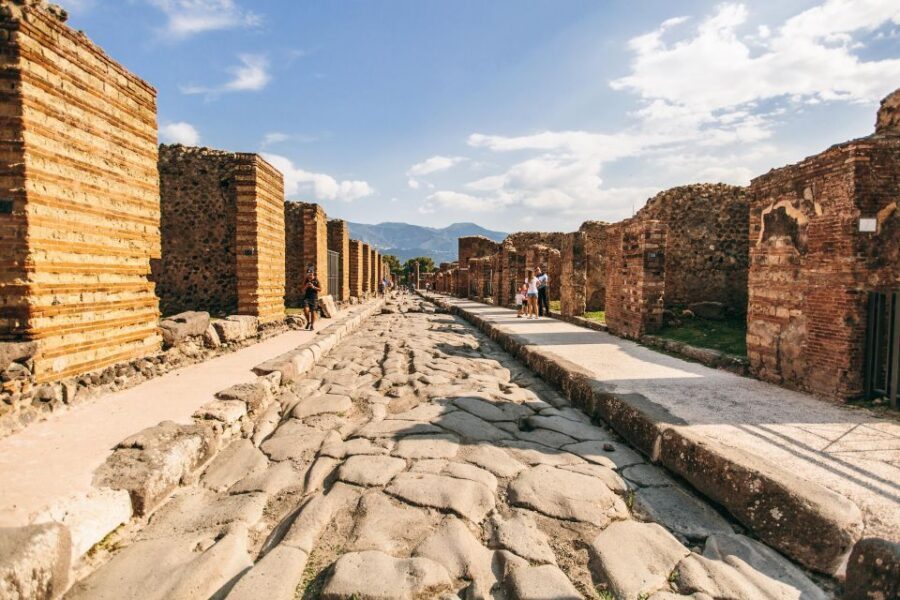
Here’s what you should look for during the guided walk: your guide will likely frame Pompeii around everyday life—how people moved through streets, where public life happened, and what different buildings were used for. That’s the difference between seeing stone walls and understanding a city layout. With an archaeologist leading the walk, you’re more likely to notice the “why” behind what you’re looking at.
If you’re concerned about hearing over the crowd, you’ll get headsets when the group is larger than 10. That’s not a small detail. Pompeii days can get noisy fast, and being able to clearly follow the guide’s explanations is what turns a busy site into a coherent visit. One review specifically praised the way the guide handled navigation among crowds, which is exactly the kind of skill that helps you see more and stress less.
Stops and views you’ll see along the way (and what to watch for)
After the main guided stretch, the day includes additional sights where you’ll get scenic views on the way as the group moves through the Pompeii area. These aren’t all the time-consuming “deep look” stops you’d do on a longer independent day, but they do give you a strong sweep of Pompeii’s major landmarks.
You can also read our reviews of more guided tours in Pompei Campania



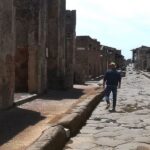
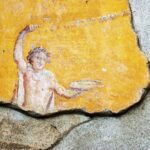

Lupanare: a quick read on daily life and sexuality in Pompeii
The Lupanare (often associated with a nightlife/red-light history) is one of those Pompeii places that people remember. Even if your stop time is brief, it’s worth paying attention to how it fits into the city’s broader street life. Pompeii is famous for showing how Roman culture worked in real neighborhoods, not just temples and palaces.
If you’re the type who likes context, this is a good moment to let your guide connect the building to the street setting around it. Otherwise, it can feel like a “shock stop” instead of a piece of city planning.
Terme Stabiane and the Forum Baths: the “body care” part of the city
You’ll also see Terme Stabiane and the Forum Baths. Bath complexes are central to Pompeii’s daily rhythms, and they’re a reminder that Roman life wasn’t only public speeches and politics. It was also routine—heating water, moving through rooms, and gathering socially.
If the group is moving quickly, you may not absorb every room label, but you’ll still get the big takeaway: these weren’t just places to wash. They were places to meet, discuss, and relax. That’s the kind of practical context that makes Pompeii click.
Large Theatre: public entertainment, built for crowds
The Large Theatre is one of the most visually dramatic pieces of Pompeii’s public space. Even from a sightseeing-view angle, it helps you understand how many people were expected to gather in one place.
Look at the theatre as a machine for community. It wasn’t just architecture; it was a system for events, storytelling, and social life. If you’ve ever been to a modern theatre, you’ll recognize the basic purpose—even if the details are Roman.
Temple of Apollo: religion and public identity
Next is the Temple of Apollo. Temples like this weren’t isolated religious buildings; they were part of civic identity. A guide-led explanation helps you understand the temple’s role in public life rather than treating it as a “pretty ruin.”
This stop is also a good moment to pause mentally and connect what you’re seeing to the idea that Pompeii functioned like a complete city. Religion, commerce, and entertainment all had physical locations.
Macellum and Foro Civile di Pompei: commerce and government in one view
You’ll also pass the Macellum and the Foro Civile di Pompei. The Macellum relates to food and market life, while the Foro Civile connects more to governance and civic activity. Together, these areas help you see Pompeii as a functioning urban system: you eat, you buy, you argue, you vote (in the Roman sense), and you gather.
Even if your time is limited, these stops are useful because they cover different “daily city roles.” That makes your overall mental picture much more complete.
Villa of the Mysteries: the art stop you’ll remember
The Villa of the Mysteries is the kind of place that tends to linger in your memory because it connects Pompeii to human imagination, symbols, and ritual themes. Even a shorter look can be powerful if your guide gives you what to notice.
This is also where your camera comes in. If the group moves in a tight rhythm, take photos that show both the building’s place in the city and any standout features you’re told to watch for. You’ll be glad you did later, when you try to remember what you saw.
Hearing and group size: why headsets matter
Two of the biggest practical upsides here are clear listening and smooth navigation. The tour includes headsets for groups over 10, which is one of those details that directly affects your enjoyment. If you can’t hear your guide, you end up reading signs instead of understanding the site.
Also, reviews mention how the guide navigated through crowd pressure effectively. That’s exactly the difference between a “we were there” trip and a “we understood what we saw” day.
Group size can influence quality too. One review suggested that a group around a dozen people is ideal for this style of tour. Even if your exact number varies, it’s a helpful clue: smaller groups typically feel easier to manage at a place as crowded as Pompeii.
What to bring so your day stays comfortable
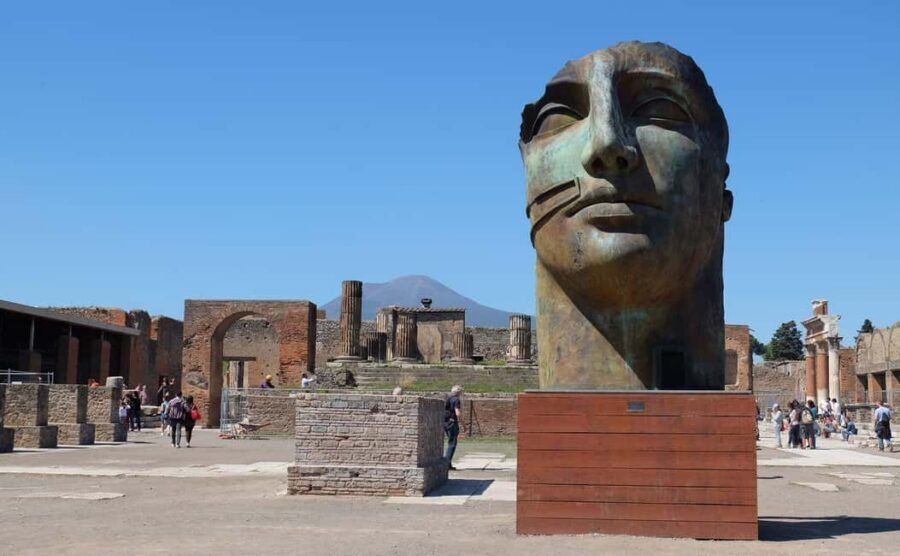
Pompeii can feel intense once you’re out in the open. You’ll want comfortable shoes—not fancy ones. Bring a sun hat, sunscreen, and water, because you’re out for hours and the walkable parts can be sunny.
For practical identity needs, bring a passport or ID card. A copy is accepted, which helps if you’re carrying light but want a backup. And yes, bring cash—not because the tour says you must, but because you may want snacks, water, or small extras outside the included plan.
Price and value: what you’re actually paying for

At $94 per person for about 4 hours, you’re paying for three big chunks: transport, a guided archaeologist experience, and your entrance ticket. If you tried to piece together the same day on your own, you’d quickly spend time and money on getting tickets, timing the entry, and figuring out how to tour effectively inside the site.
The strongest value here is the guided time inside Pompeii. You’re not just paying for access; you’re paying for the explanations that turn stone and street segments into meaning. The coach also saves you from the “first we travel, then we guess” phase.
One more value point: the tour is built to be efficient. The group typically returns to Sorrento after around 4 hours, so you aren’t losing a full day from your schedule. That’s useful when you’re moving between towns on the Amalfi Coast.
The one “watch your timing” lesson
Even well-run tours can lose minutes when people are late to the meeting point. The plan depends on an early start and a set return window, so arriving on time isn’t just polite—it protects your experience. Build in a buffer, and don’t leave your meeting point at the last second.
If you’re the type who hates feeling rushed, mentally prepare for a “highlights-first” approach. Pompeii is too big to do everything in one short day, and that’s not a flaw—it’s the tradeoff you make for the convenience.
Who this Pompeii tour suits best
This tour is a great fit if you:
- Want Pompeii in one day without stress
- Like explanations more than just photos
- Prefer a guided schedule that helps you avoid getting stuck in the wrong places
- Are comfortable walking and want a straightforward day trip from Sorrento
It may not be the right fit if you need wheelchair access, since it’s listed as not suitable for wheelchair users. If you’re traveling with someone who requires mobility support, you’ll want to look for an alternative format.
Should you book this Pompeii day trip from Sorrento?
Yes, I’d book it if your goal is a clear, guided introduction to Pompeii that respects your time. The combo of coach + admission + archaeologist-led guided time is the practical core of the value, and the headsets are a smart detail for keeping the guide’s explanations clear.
Skip this only if you can’t do walking-focused ruins visits or if you want a slower, do-everything-by-yourself style day. For most first-timers, though, this is a very workable way to experience Pompeii’s big moments without turning the trip into an endurance challenge.
FAQ
Where does the tour start in Sorrento?
The tour starts at Bar Kontatto, Corso Italia n.257, Sorrento.
What time does the tour begin, and when do you return to Sorrento?
It starts at 8:00 a.m. and you return to Sorrento after about 4 hours, around 2:30 p.m.
Is the Pompeii ticket included?
Yes. Admission to the ruins is included as part of the guided experience.
How long is the guided tour inside Pompeii?
The guided visit inside Pompeii is about 2 hours.
Is lunch included?
No. Lunch isn’t included, and extras are not included.
Is the tour wheelchair accessible?
No. The tour is not suitable for wheelchair users.