REVIEW · POMPEI CAMPANIA
Pompeii: Guided Tour and Skip-the-Line Ticket
Book on GetYourGuide →Operated by IAMME IA! - Gray Line Amalfi Coast · Bookable on GetYourGuide
Pompeii hits hardest when you have a guide. This fast-track tour gets you into one of Italy’s most unforgettable UNESCO sites quickly, then keeps you moving through the city as a local explains how everyday life worked. Two things I really like: the priority access that helps you start fast, and the licensed local guide who turns ruins into real scenes. One consideration: this is mostly outdoor walking in full sun, so plan for heat and bring sunscreen, and it’s not suitable for wheelchair users.
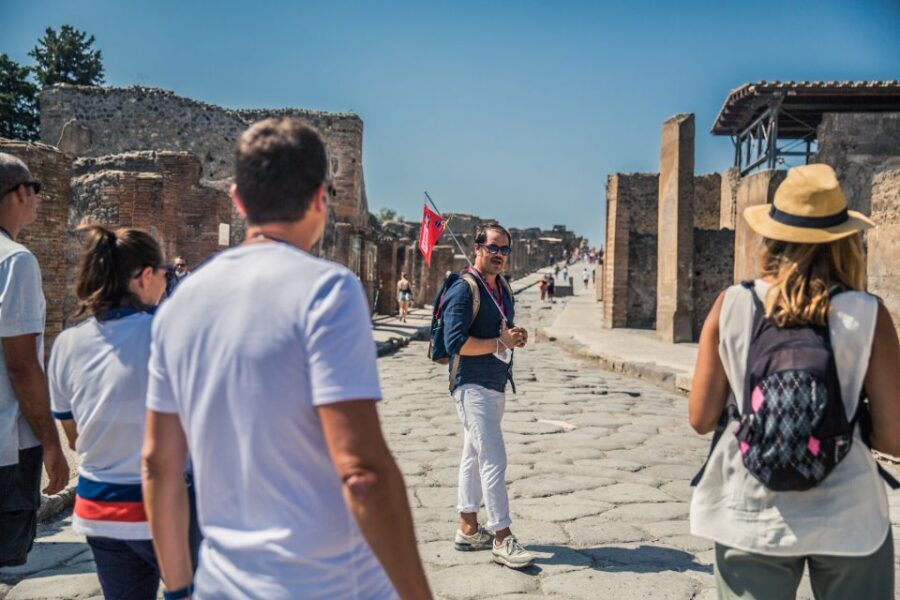
In practice, the experience tends to feel smooth because guides like Melania and Annarita are known for clear, engaging explanations, and meeting-up is often straightforward with visible signage (including cases where the guide had a sign with a guest’s name). For larger groups, the tour can use audio headsets so you don’t have to compete with the crowd.
You’re also not here all day. The 2–2.5 hour format is long enough to see the big anchors and still leave you capable of continuing the rest of Pompeii on your own if you want.
In This Review
- Key takeaways (what makes this tour work)
- Skip-the-line at Porta Marina: starting fast in Pompeii
- Civil Forum and Basilica: how politics and business worked
- Via dell’Abbondanza and the Theater District: everyday streets and public culture
- Forum Baths and Roman routines: downtime in the middle of daily life
- Thermopolium to Pistrinum: street food and quick meals on the go
- House of the Faun and the Alexander Mosaic: wealth you can see
- Lupanare and the reality check: not comfortable, but historically important
- Macellum: the food market pulse of the city
- Plaster casts of Pompeii victims: the emotional anchor
- How the 2–2.5 hour route stays manageable
- Price and value: what you’re paying for at about $43
- Who should book this Pompeii guided tour
- Quick tips so your visit feels easy
- Should you book?
- FAQ
- FAQ
- How long is the Pompeii guided tour?
- Does this tour include skip-the-line access?
- Where do we meet the guide?
- What stops are included during the guided portion?
- Are audio headsets provided?
- What languages are offered?
- Is transportation to and from Pompeii included?
- Are food and beverages included?
- Is this tour suitable for wheelchair users?
- What should I bring and what are the rules?
Key takeaways (what makes this tour work)
- Priority access helps you avoid a big chunk of the usual waiting
- Licensed local guides focus on what you’re seeing, not a generic script
- Audio headsets are used for groups of 8+ for clearer commentary
- A tight route covers major Pompeii zones without turning it into a marathon
- Human-scale stops like the plaster casts make the tragedy personal, not abstract
- Small groups or private options can mean better pacing and more questions
Skip-the-line at Porta Marina: starting fast in Pompeii
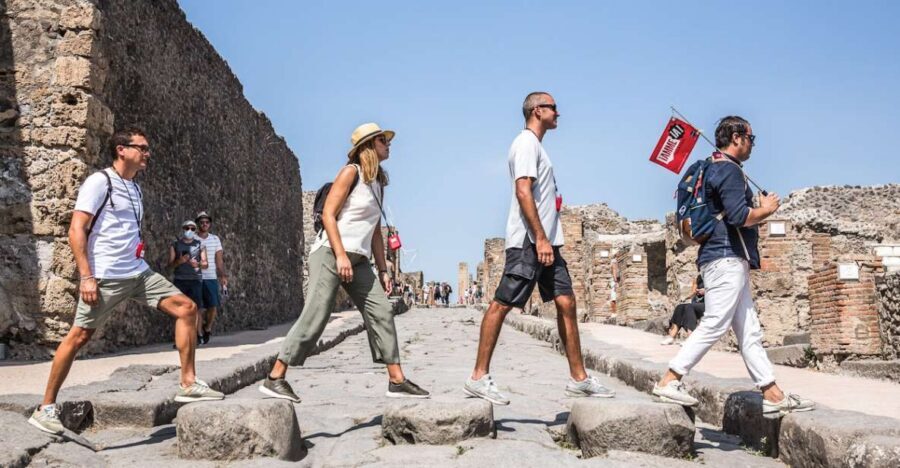
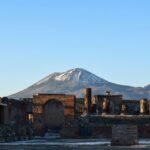
Pompeii is one of those places where time matters. The site is huge, and the crowds can be intense, especially in peak season. What I like about this tour is that it gets you in with priority access, then sets you on a sensible path right away—starting at Porta Marina, one of Pompeii’s original gates.
You meet your guide at the entrance area (the exact meeting point can vary by option), and the goal is a quick, stress-free start. In real terms, this matters because Pompeii ruins reward momentum: when you’re looking at an exposed street groove or a public building, you’ll understand it much faster if the explanation arrives while the context is still fresh.
Also, there’s a practical rhythm here. The tour is built around walking connections—streets to forums to theaters—so you’re not bouncing around the map trying to figure out what’s next.
You can also read our reviews of more tours and experiences in Pompei Campania
Civil Forum and Basilica: how politics and business worked
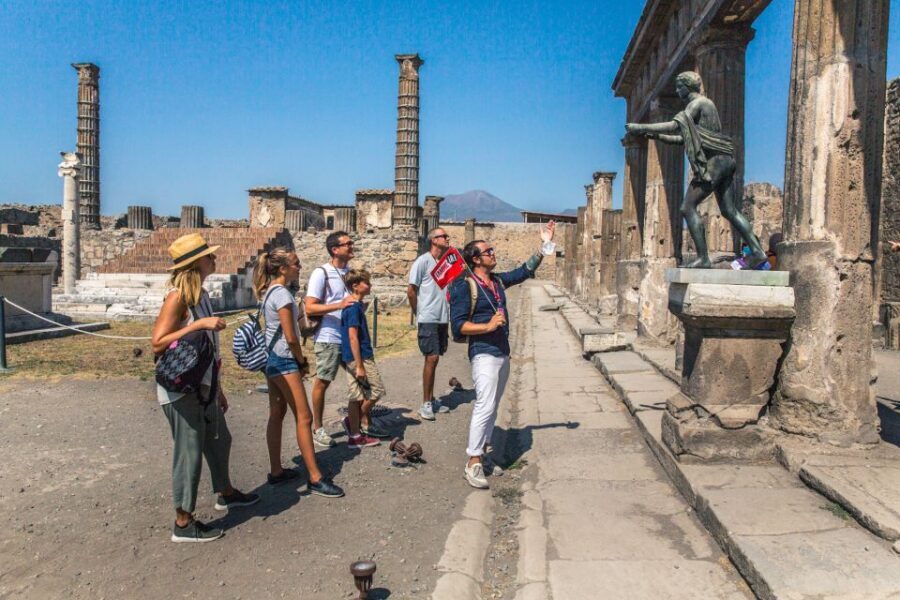
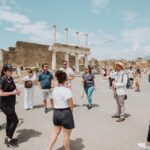
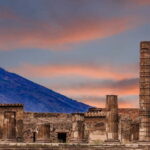
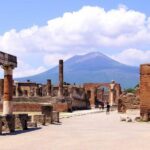
Once you’re moving, you’ll hit the Civil Forum (Foro Civile di Pompei), Pompeii’s core for political, religious, and commercial life. This is where the city stops feeling like random “old buildings” and starts feeling like a working place.
Your guide’s job is to connect the dots: what happened here, who would have been around, and why certain structures were important. The Basilica is a key stop inside that zone. It wasn’t a grand monument for decoration—it was a place for legal affairs and business dealings. Even if your own Italian is limited, the layout and purpose become clearer when you have someone pointing out what you’re actually looking at.
One reason I think this segment is so valuable is that it gives you a framework for the rest of the day. After the Forum, the smaller details—shops, baths, street food counters—make more sense as parts of one city system.
Via dell’Abbondanza and the Theater District: everyday streets and public culture
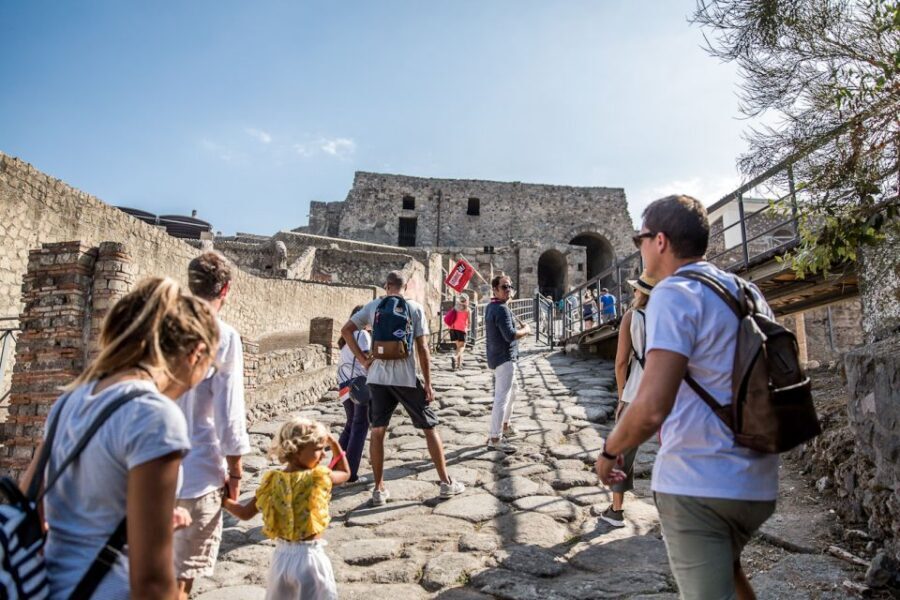
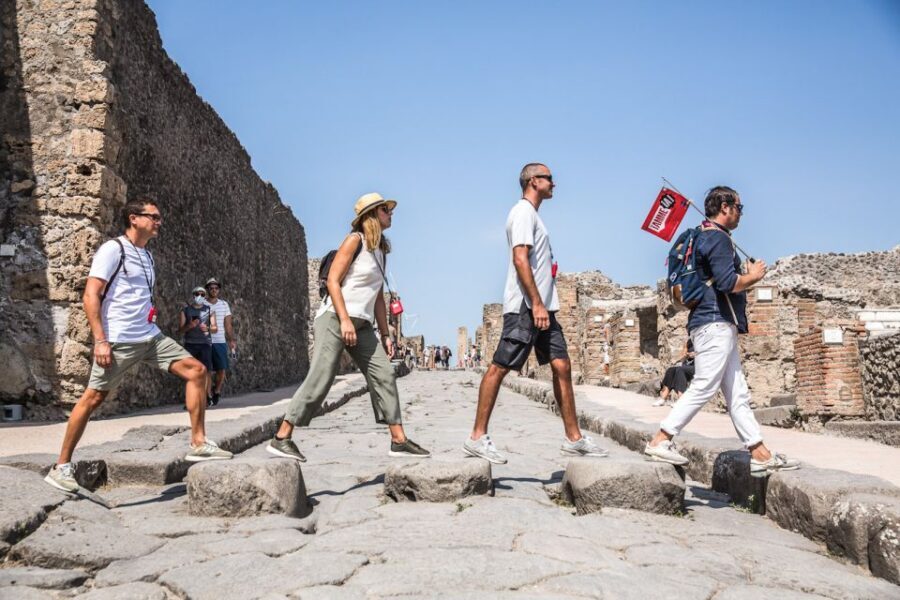
From the civic heart, the tour shifts to street-level life along Via dell’Abbondanza, Pompeii’s main street. It’s the kind of place where you can almost feel how movement shaped the city: shops and homes line the route, and the stone carries evidence of traffic patterns, including deep chariot grooves.
Then you transition into the Theater District, which gives you Pompeii’s social and cultural side. Here you’ll see the Large Theater, an open-air venue where people gathered for comedies, dramas, and musical performances. This is where the ruins become less about dates and more about people sharing entertainment—crowding, noise, and schedules—things our modern minds understand.
A small practical note: this whole area is outdoors. You’ll want comfortable shoes and you should expect exposure, especially on bright days. One review specifically flagged how hot and sun-baked some areas can be, and that tracks with what Pompeii feels like in reality—no shade to rely on.
Forum Baths and Roman routines: downtime in the middle of daily life
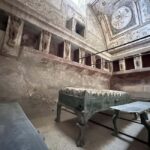
Next comes the Forum Baths (bath complex), a stop that often surprises first-timers. It’s not only about grand temples and forums; Pompeii also preserves the routine “in-between” moments.
In the baths you’ll get an intimate look at Roman wellness culture—relaxation and daily rituals—played out in stone rooms and architectural details. It’s a relief from the heavier civic blocks, and it helps balance the emotional weight you’ll feel later at the casts of victims.
If you tend to enjoy how people lived day-to-day—how they ate, worked, relaxed—this is one of the segments that keeps the tour from becoming purely instructional.
Thermopolium to Pistrinum: street food and quick meals on the go
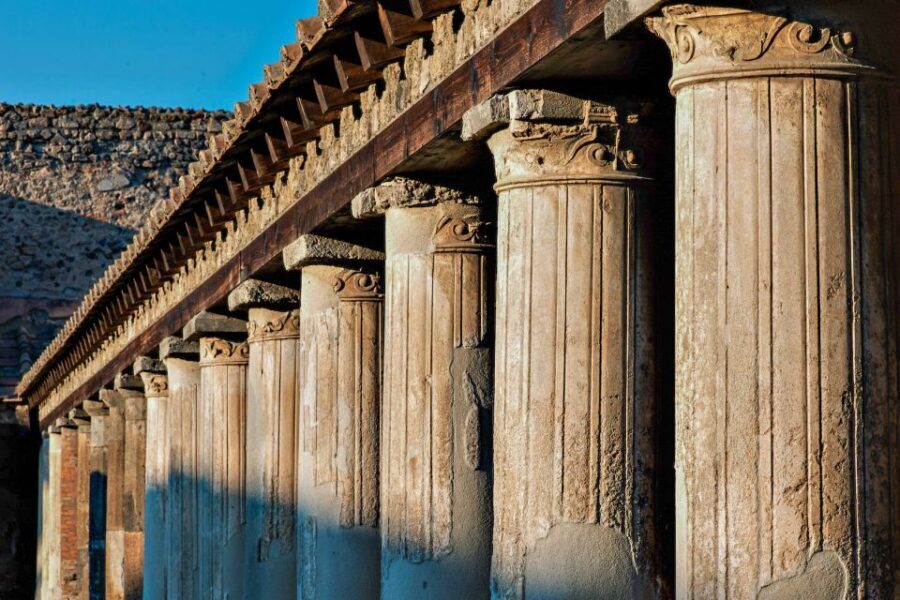
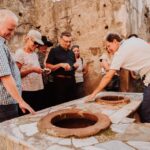
The tour moves into the city’s food world, including a Thermopolium (ancient street food shop) and a Pistrinum (bakery), where you can see millstones, ovens, and serving counters. Even if you’ve seen Roman mosaics before, this part has a different energy: it’s practical, visual, and immediate.
A thermopolium tells you something about speed and convenience—food meant to be eaten quickly rather than as a formal sit-down meal. The bakery adds texture to that idea by showing the infrastructure behind everyday eating.
This segment is also a great contrast to the Forum and theater stops. Pompeii isn’t only politics and spectacle. It’s food, errands, waiting, and small daily decisions.
You can also read our reviews of more guided tours in Pompei Campania
House of the Faun and the Alexander Mosaic: wealth you can see
Then you step into a more elite world: the House of the Faun. This is a grand Roman villa known for its mosaics, including the famous Alexander Mosaic. The mosaic becomes a storytelling moment in itself, showing how art, prestige, and identity lived right inside homes.
For me, this stop is a strong reason to take the guided version instead of treating Pompeii like a self-guided scavenger hunt. A good guide helps you read what you’re seeing—why this home matters, what the mosaic signals, and how wealthy families expressed power through spaces like these.
You’ll walk through a home rather than just a public building. That shift—public life to private space—helps you feel the city as a place where social classes weren’t a theory; they were visible in architecture and design.
Lupanare and the reality check: not comfortable, but historically important
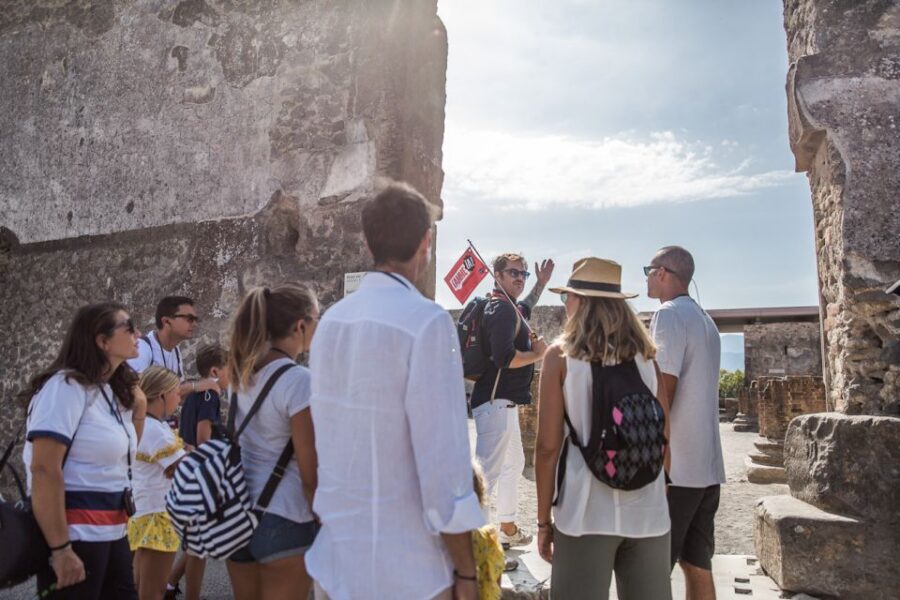
The Lupanare, Pompeii’s ancient brothel, is one of the most talked-about stops for a reason: it’s vivid, direct, and human. You’ll see compact stone rooms and frescoes that connect the site’s commercial history with the realities of desire and survival in a real city.
One thing I think you should know going in: the tour may adjust pacing at this stop. A guide might choose to avoid lengthy queues there to protect the flow of the full itinerary. That doesn’t make the stop less important—it just means you should treat the Lupanare as a “plan to see it, but don’t get hung up if time choices happen.”
If you’re sensitive to adult subject matter, this is the moment to prepare yourself mentally.
Macellum: the food market pulse of the city
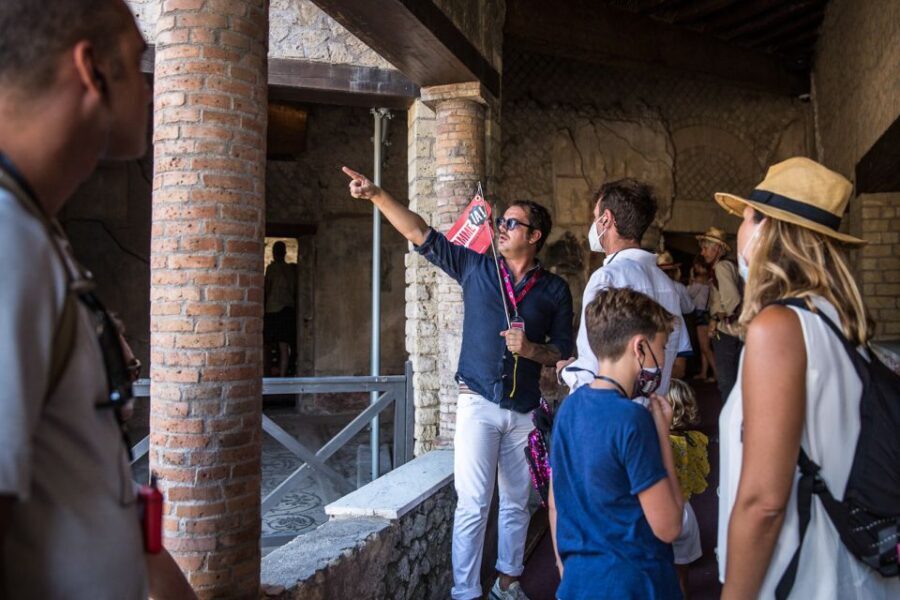
After the darker edges of the Lupanare, the tour returns to everyday life with the Macellum of Pompeii, the city’s food market. This is where the “sounds and smells” of trade are easy to imagine, because the setting is built for activity: vendors, customers, and constant movement.
The market stop is a good reset, and it also connects earlier food themes (street food shops and bakeries) to a central hub. You’re not just seeing where food was made—you’re seeing where it was gathered and sold.
Plaster casts of Pompeii victims: the emotional anchor
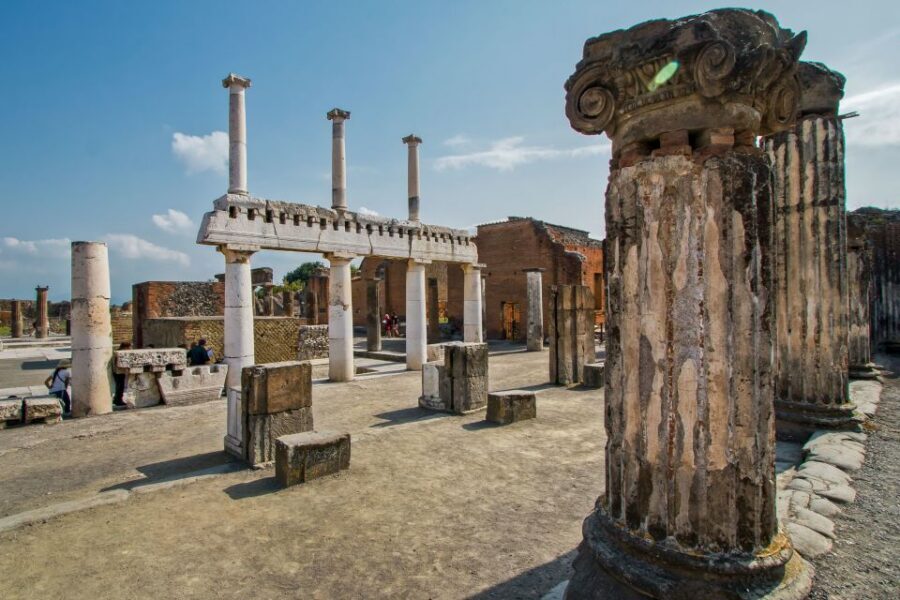
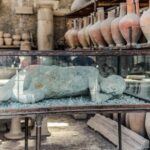
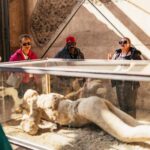
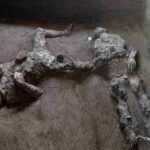
Near the end of the tour route, you’ll see the plaster casts of Pompeii’s victims—men, women, and children frozen in their final moments. This stop is heavy, and it’s also why this tour can feel more meaningful than a simple ruins walk.
The casts aren’t artifacts you can “skim.” They’re human reminders of life interrupted, and a skilled guide helps you hold the moment without rushing past it. Even if you don’t feel ready for emotion, this is one of the most important parts of Pompeii to understand.
How the 2–2.5 hour route stays manageable
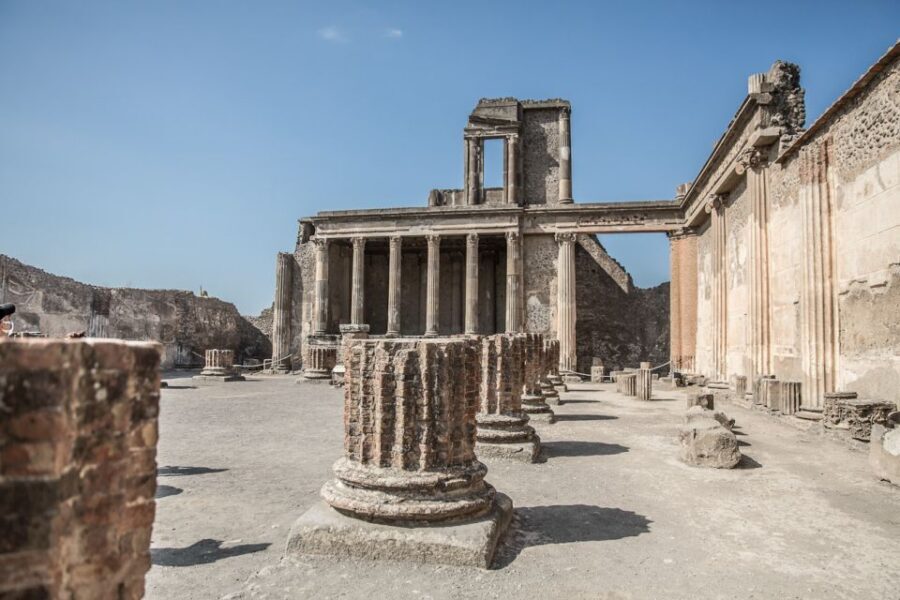
Pompeii can swallow a whole day. This tour doesn’t try to conquer it all—it targets the biggest interpretive zones and keeps you on track for about 2 to 2.5 hours.
That timing matters for two reasons:
- You get a guided backbone that helps you understand what you’re seeing.
- You still retain energy to explore more after the tour if you want.
Also, Pompeii rules can affect flow. Groups may be divided into smaller parties, each with its own licensed guide. That’s not a bad thing—it often improves pacing and keeps you from getting stranded in a huge knot of people.
Price and value: what you’re paying for at about $43
At $43 per person, you’re paying for three things that are hard to replicate on your own:
- Priority access, which can reduce waiting time when crowds are heavy
- A licensed local guide, which turns layout and ruins into real context
- A curated route, designed for a short visit rather than forcing you to design your own “best of Pompeii” plan
Is it cheaper to DIY? Sure. But if you only have a couple hours, DIY often turns into a lot of looking and not enough understanding. This tour is priced like a time-saver and a sense-maker.
One more value note: if you’re traveling as a smaller group or even private, the guide’s attention can feel more focused. Reviews describe how small groups (like parties of four) were able to see and understand more than they expected in the same overall time window.
Who should book this Pompeii guided tour
I’d book this if you:
- Want priority access and a clear plan for a limited time window
- Like learning how everyday life worked, not just famous monuments
- Prefer a guided pace that prevents you from getting lost in the size of the site
- Are traveling with kids and want the guide to keep things understandable (many families find the structure works well)
I’d think twice if you:
- Need wheelchair access (this tour isn’t suitable for wheelchair users)
- Don’t handle uncomfortable adult subject matter well (the Lupanare is part of the experience)
- Are easily exhausted by heat and long outdoor walking
Quick tips so your visit feels easy
- Wear comfortable shoes. Pompeii floors aren’t forgiving.
- Bring sunscreen and plan for exposed sun.
- If you meet at a parking-based option like Pompei Parking Zeus, arrive early enough to find the guide without stress.
- If you’re picky about language, choose an available language option (English, Spanish, French, or German).
Should you book?
Yes—if you want Pompeii to feel intelligible and personal in a short visit. Priority access helps, but the real payoff is the guide’s focus on what you’re standing in front of: the Forum’s roles, street life on Via dell’Abbondanza, daily routines in the bath complex, and the emotional weight of the plaster casts.
Skip this only if your goal is total freedom and you already know Pompeii well enough to design your own route.
FAQ
FAQ
How long is the Pompeii guided tour?
The tour runs about 2 to 2.5 hours.
Does this tour include skip-the-line access?
Yes. It includes priority access to the Pompeii Archaeological Site.
Where do we meet the guide?
The meeting point may vary depending on the option booked. One listed starting option is Pompei Parking Zeus, and the tour begins at Porta Marina at the archaeological site entrance.
What stops are included during the guided portion?
The tour includes stops such as Porta Marina, the Civil Forum, the Basilica, the Large Theater, the Forum Baths, a Thermopolium, the House of the Faun, the Macellum, and the Lupanare. It also includes the plaster casts of Pompeii’s victims.
Are audio headsets provided?
Audio headsets are included for groups of 8+ for clearer listening.
What languages are offered?
The live guide is offered in English, Spanish, French, and German.
Is transportation to and from Pompeii included?
No. Transportation to and from Pompeii is not included.
Are food and beverages included?
No. Food and beverages are not included.
Is this tour suitable for wheelchair users?
No. It is not suitable for wheelchair users.
What should I bring and what are the rules?
Wear comfortable shoes and bring sunscreen. Unaccompanied minors are not allowed.