REVIEW · POMPEII
Explore and Experience Pompeii
Book on Viator →Operated by Rosa Bombino · Bookable on Viator
Pompeii turns from ruins into people fast. I love the skip-the-line start and the way the guide helps you read daily life through streets, graffiti, symbols, and houses. You get a focused walk that answers practical questions like what people did for fun and where everyday meals and rituals fit in. The one real consideration: park entrance tickets are not included, so you’ll need to budget for them separately.
For the price, the value is the human guidance. This is a private group tour (up to 10 people), in English, running about 2 hours, and you’ll meet at Piazza Esedra, then return to the same spot at the end. You also get a mobile ticket, which makes arrival simpler.
In This Review
- Key takeaways before you go
- What You’re Really Buying in This 2-Hour Pompeii Tour
- The Meeting Point and the Arrival Flow at Piazza Esedra
- Pompeii Archaeological Park: How the Guide Turns Ruins into Daily Life
- Streets and layout: learning how people actually moved
- Graffiti and symbols: turning marks into meaning
- Houses and squares: imagining homes, gatherings, and routines
- Rituals and leisure: not just survival, but social life
- Skip-the-Line Access: Why It’s Worth More Than You Think
- The Guide Service (Rosa Bombino) and the Benefit of Clear Interpretation
- Duration and Group Size: Keeping Pompeii Comfortable
- Price: How $240.28 per Group Can Make Sense
- Who This Pompeii Walk Fits Best
- Practical Tips for Making the Most of Your Time Inside Pompeii
- Should You Book This Pompeii Tour?
- FAQ
- FAQ
- Where does the tour start?
- How long is the Pompeii tour?
- Is the tour private?
- What group size is it for?
- What language is the tour in?
- Do I get an admission ticket included?
- What does the tour include?
- Do I need an actual paper ticket?
- How does the tour end?
- What’s the cancellation policy?
Key takeaways before you go
- Skip-the-line access helps you use your time well inside Pompeii.
- Rosa Bombino guide-led focus keeps the walk from feeling random.
- Graffiti and symbols are treated like clues, not background.
- Homes, squares, and streets give you a real sense of how people moved and lived.
- Private group size (up to 10) keeps the pace manageable for most people.
- English tour makes the interpretation easy to follow.
What You’re Really Buying in This 2-Hour Pompeii Tour
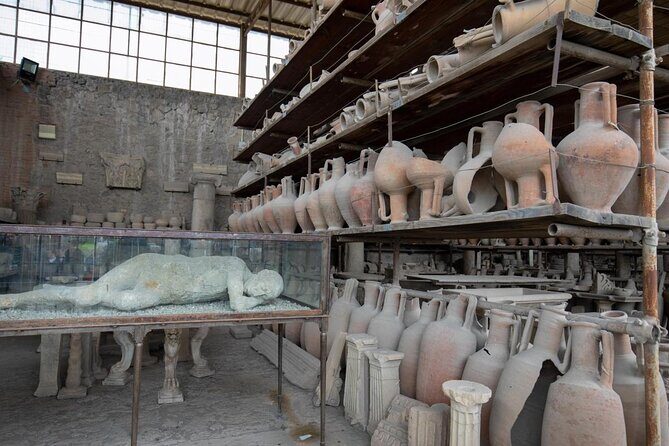
At Pompeii, the biggest risk is spending two hours staring at stones and thinking, I should understand this more. This tour is built to prevent that. Instead of treating the site like a museum display case, the guide uses the streets and buildings as a map of daily life.
You’re paying for interpretation. That matters because Pompeii is wide, and the most interesting details are often small: a symbol, a faded mark, a doorway shape, a small cluster of houses in relation to a square. With a guide, those details start to connect into a story you can carry with you after the tour.
The pace is also intentional. Two hours is short enough to feel energizing, not exhausting, but long enough to cover major “how did life work here?” topics. And because it’s private for your group, you’re less likely to lose the thread if you have questions.
You can also read our reviews of more tours and experiences in Pompeii.


The Meeting Point and the Arrival Flow at Piazza Esedra
You start at Piazza Esedra in Pompei (80045, NA, Italy). It’s the kind of meeting spot that’s easy to find without a complicated scavenger hunt. The tour notes that it’s near public transportation too, which is useful if you’re arriving by local bus or train and want to avoid extra hassle.
You end back at the meeting point, which gives you a clean plan for the rest of your day. I like tours that don’t strand you somewhere weird at the far end of a massive site. Here, you finish where you started, so you can head for lunch, a viewpoint, or another stop without backtracking through Pompeii with tired legs.
Pompeii Archaeological Park: How the Guide Turns Ruins into Daily Life
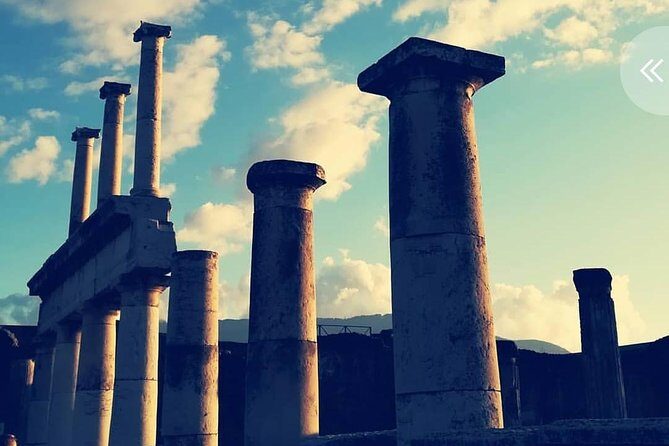
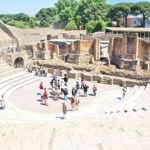
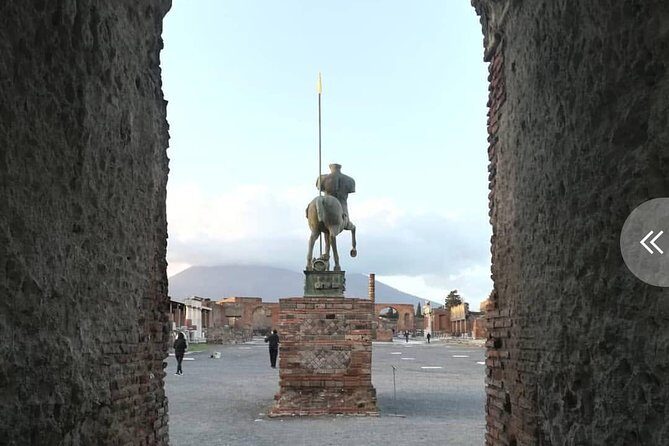
The core experience happens inside the Pompeii Archaeological Park. You’ll walk through important locations while the guide answers the kinds of questions that make Pompeii click: what people did in their spare time, what places were popular, what theatrical performances likely looked like, and where everyday routines played out.
This is where the tour earns its praise. The emphasis isn’t just on big headline sights. It’s on the practical stuff that helps you picture the city as it functioned about 2,000 years ago.
Streets and layout: learning how people actually moved
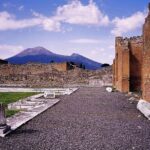
Pompeii can feel like a maze when you first enter. The guided walk helps you understand how the streets connect key areas and why certain zones mattered. Even without memorizing a map, you start to recognize patterns—what kinds of areas feel public, which corners feel like social hubs, and where daily activity might have been concentrated.
Graffiti and symbols: turning marks into meaning
One of the best ways to learn Pompeii is to pay attention to the “human fingerprints.” This tour explicitly includes reading graffiti and interpreting symbols. That approach changes what you notice. Instead of only looking for sculpted artifacts, you train your eyes on everyday messaging and signals people left behind.
If you’ve ever walked through a historic city and felt like you were missing half the story because you didn’t know what to look for, this is the cure. The guide gives you a framework so small details stop looking random.


Houses and squares: imagining homes, gatherings, and routines
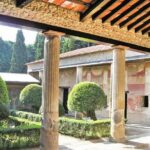
You’ll also visit houses and squares. That matters because Pompeii isn’t only about what was monumental. It’s about how ordinary life worked: how people gathered, how spaces shaped behavior, and how the city’s layout supported daily routines.
When a guide points out these relationships, it’s easier to understand what a “home” meant in Pompeii. You start to see the architecture not just as preserved walls, but as stage sets for meals, conversations, and downtime.
Rituals and leisure: not just survival, but social life
A lot of Pompeii tours focus on the disaster. This walk aims for a broader picture, including rituals and what people did for leisure. That gives you a more balanced feel for the society that lived here.
And that’s exactly what makes the tour valuable if you’re visiting for the first time. You leave with a fuller sense of the people, not just the event.
Skip-the-Line Access: Why It’s Worth More Than You Think
The tour highlights skip-the-line. That isn’t a luxury for show; it’s time insurance.
Inside Pompeii, every hour is precious because you’re walking through a large, spread-out site. If you lose time waiting at entry, you often cut the tour short and end up rushing the parts that matter most. Skip-the-line helps you avoid that squeeze, especially in busier seasons.
Also, this tour includes the guide service, but it does not include entrance tickets to the archaeological park. So the “skip” part is most useful if you already have your park ticket arranged for your arrival plan. If you show up without that sorted, you’ll still be slowed down by the missing ticket step.
The Guide Service (Rosa Bombino) and the Benefit of Clear Interpretation
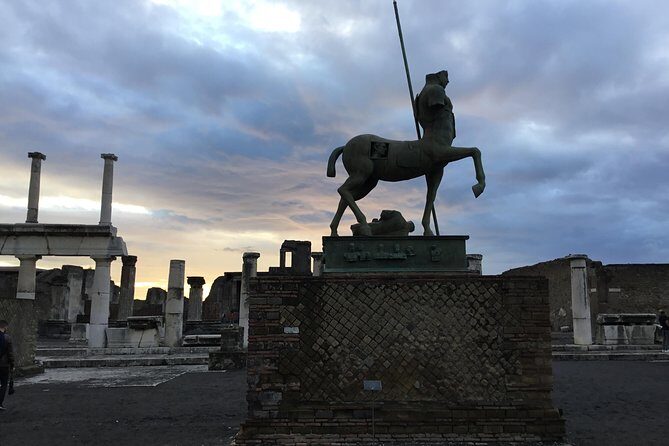
This experience is led by Rosa Bombino. The key point is not just that you’ll have a guide, but that the guide is actively shaping what you notice.
The tour is designed around curiosity: what people did for fun, what places were popular, what theatrical performances looked like, and where everyday life happened. That means you aren’t just moving from one photo spot to another. You’re learning how to see.
The tour’s standout theme in the available feedback is clarity. People rate it very highly and recommend it fully, especially for the way the guided explanation helps you explore afterward with a better understanding of what you’re looking at. In practical terms, that means you’re not “done” when the walk ends—you’ve been given enough context to keep making sense of the site on your own.
Duration and Group Size: Keeping Pompeii Comfortable
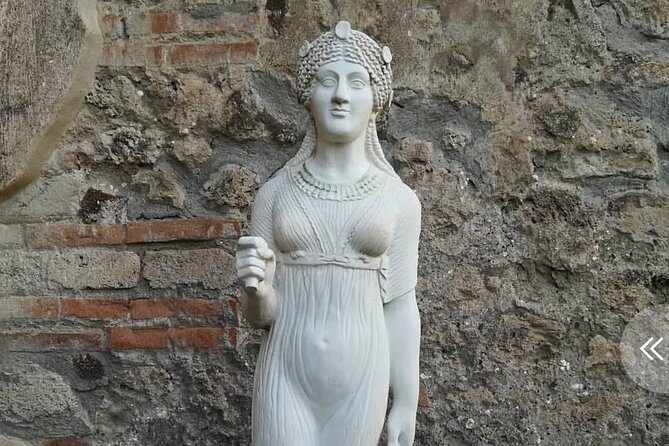
This tour runs for about 2 hours. That duration is a sweet spot for many first-timers. Long tours can turn tiring, and short ones can feel like a checklist. Here, you get a meaningful narrative arc without feeling like your legs are filing a complaint.
Your group is kept small: up to 10 people, and it’s private for your group only. Smaller groups usually mean a steadier pace and fewer distractions. For you, that translates into better listening time, especially when the guide is pointing out details like graffiti, symbols, and the relationships between streets, squares, and houses.
English is supported, so you’re not doing interpretive guesswork. If you prefer to understand what you’re seeing in plain language, this is an advantage.
Price: How $240.28 per Group Can Make Sense
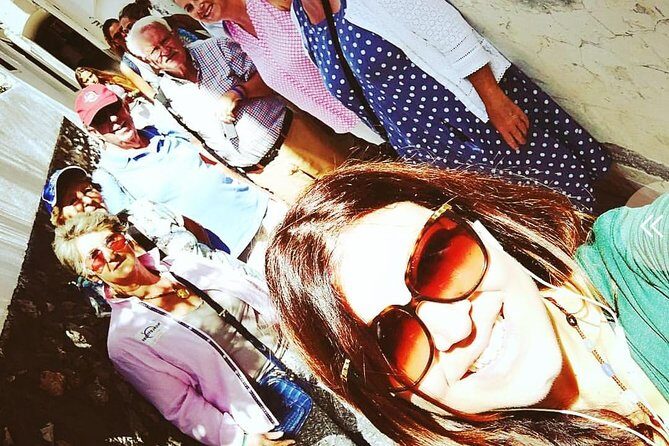
The price listed is $240.28 per group, for up to 10 people. That means your per-person cost depends on group size.
To judge value fairly, look at what’s included: guide service, plus the structure of a guided walk that targets how to interpret Pompeii. Entrance tickets to the archaeological park are not included, so you should expect an extra expense on top of the tour price.
If you come as a small group, you’ll feel the cost more directly. If you have a party of several people, it can feel like good value because you’re splitting the guide cost across multiple tickets and reducing the chance of wasting time in confusion.
The best way to think about it: you’re paying to transform time inside the park into understanding. For many visitors, that’s the difference between a pretty walk and a visit that actually sticks.
Who This Pompeii Walk Fits Best
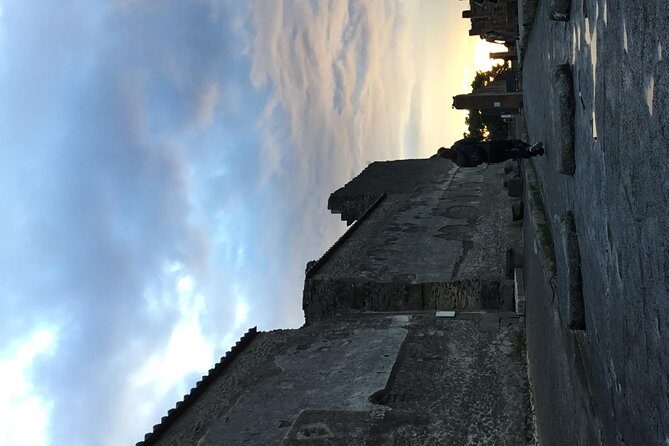
This tour is a good match if you want Pompeii to feel like a lived-in city, not just a list of sights. It’s also ideal if you enjoy clues—graffiti, symbols, and the small visual language of the city.
It’s noted that most travelers can participate, which suggests the tour is not built for extreme mobility challenges. The key limitation isn’t stated as an accessibility issue, but since this is a walk inside a major archaeological park, you should still plan for walking and standing time.
You’ll likely enjoy it most if:
- You’re visiting Pompeii for the first time and want a clear way to look at what you see.
- You like guided interpretation more than audio-only touring.
- You want a time-efficient plan that still leaves room to explore afterward.
Practical Tips for Making the Most of Your Time Inside Pompeii

Because the tour is about interpretation, your best strategy is to let the guide set your focus. When the guide mentions graffiti, symbols, or how leisure and rituals might have worked, try to slow down your camera reflex. Those small details are easy to miss if you’re only hunting for big views.
Also, since entrance tickets are not included, make sure you’re ready with your park ticket before the walk begins. With skip-the-line access, you don’t want the “waiting” part to come from missing the ticket step.
Bring comfortable walking shoes. Even with a guide, Pompeii involves continuous foot travel. Two hours is short, but it’s still on uneven surfaces and within a large outdoor site.
If you want to keep the value going after the tour, take advantage of the context you’ve been given. The big win here is leaving with a better understanding, so you can keep connecting what you see to what you heard during the walk.
Should You Book This Pompeii Tour?
If you want a guided Pompeii visit that helps you understand daily life—graffiti, symbols, houses, squares, leisure, and rituals—this is an easy yes. The strong 5-star rating and full recommendation rate point to a guide-led experience that people feel genuinely improves their visit.
I’d skip it or reconsider if you’re determined to do Pompeii entirely on your own, with no help interpreting details, or if you don’t want the extra step of arranging entrance tickets separately. Also, if your group is extremely large or you’re trying to squeeze in a very rushed schedule, you may want to check that the timing fits your day.
For most visitors, though, this is a smart way to spend two hours: you get focused guidance, you start with less waiting, and you finish knowing how to look at Pompeii like a place where real people lived.
FAQ
FAQ
Where does the tour start?
The tour starts at Piazza Esedra, 80045 Pompei NA, Italy.
How long is the Pompeii tour?
The duration is approximately 2 hours.
Is the tour private?
Yes. It’s a private tour/activity, and only your group will participate.
What group size is it for?
The tour is priced per group for up to 10 people.
What language is the tour in?
The tour is offered in English.
Do I get an admission ticket included?
No. Entrance tickets to the Archaeological Park are not included.
What does the tour include?
It includes guide service.
Do I need an actual paper ticket?
You’ll receive a mobile ticket.
How does the tour end?
The activity ends back at the meeting point (Piazza Esedra).
What’s the cancellation policy?
Free cancellation is available up to 24 hours in advance for a full refund.