REVIEW · POMPEI CAMPANIA
Pompeii Skip the Line Ticket + Guide Book with itineraries
Book on GetYourGuide →Operated by VISITING CAMPANIA S.R.L. · Bookable on GetYourGuide
Pompeii is easier with a plan. This skip-the-line ticket helps you enter the archaeological park from 9:00 to 17:00, and it comes with a guide book and updated map. I like that the visit is truly self-paced, but plan on a possible wait at security for bag scanning.
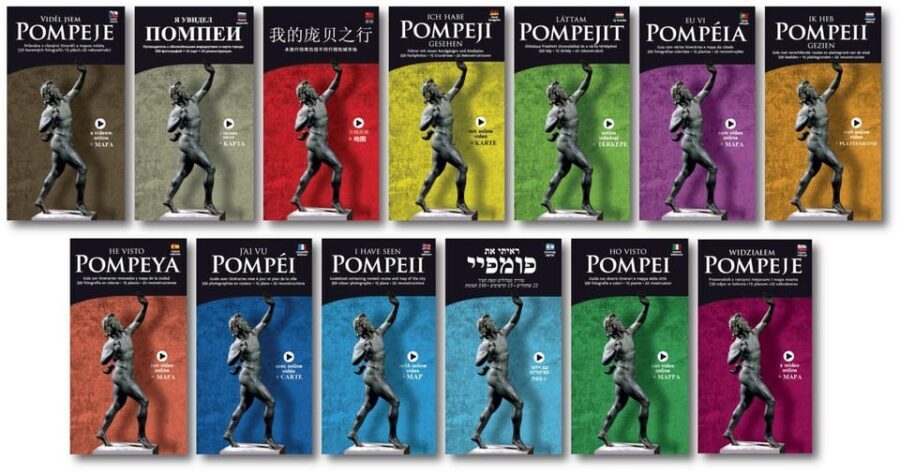
You’ll like the fact that you can shape your day: read about the city’s ruins, then walk at your own speed along the streets. The guide book stays with you after your visit as a souvenir, and it’s translated into 13 languages. One catch to keep in mind: the site is huge, so without a route plan, you can burn time fast.
Timing is where this experience shines. If you can, aim to be on-site later in the day, because the park tends to feel quieter after 4:30 pm. Still, wear comfortable shoes and carry water, because Pompeii is a long walk even when you’re well organized.
In This Review
- Key Things You’ll Notice Right Away
- Getting Into Pompeii: Piazza Anfiteatro and the Via Roma Check-In
- The Skip-the-Line Reality: What It Helps With (and What It Might Not)
- Your Guide Book and Updated Map: How to Actually Use Them
- 2, 4, or 6 Hours: Matching Your Time to Pompeii’s Scale
- The 2-Hour Route Plan: Quick Hits Without Chaos
- The 4-Hour Route Plan: The Sweet Spot for First-Timers
- The 6-Hour Route Plan: More Looking, More Understanding
- What You’ll See Inside Pompeii: The Highlights That Matter
- Frescoed Houses and Street-Level Life
- Spas, Temples, and the Everyday Rhythm
- Thermopolis: The Ancient Fast-Food Stop
- Theaters, Brothels, and Entertainment Spaces
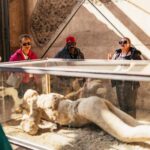
- Casts of the Victims and the Roman Amphitheater
- Timing Tips: How to Avoid the Biggest Comfort Problem
- What to Bring: Small Stuff That Changes Your Day
- Price and Value: Is $41 a Good Deal for You?
- Should You Book This Pompeii Skip-the-Line Ticket With Guide Book?
- FAQ
- What is included with the Pompeii skip-the-line ticket + guide book?
- How long can I spend in Pompeii?
- Where do I meet staff before entering?
- Does this include a tour guide?
- Are food and drinks included?
- What languages are available for the instructor and materials?
Key Things You’ll Notice Right Away
- Skip-the-line ticket for faster entry after you reach the park flow
- Take-home guide book with route plans for 2, 4, or 6 hours
- Updated map to help you navigate a very spread-out site
- Pompeii highlights covered: houses, spas, temples, shops, theaters, brothels, casts
- Start at Piazza Anfiteatro, right by the entrance area
Getting Into Pompeii: Piazza Anfiteatro and the Via Roma Check-In
Your day starts at the entrance to the archaeological park called Piazza Anfiteatro. You’ll meet staff at the information point located at VIA ROMA 123, POMPEI. Once you arrive, show your voucher to the staff so they can direct you to access the Pompeii Archaeological Park.
This matters because Pompeii can be confusing on your first visit. When you’re looking at an ancient site that sprawls for blocks, small misunderstandings become big time losses. Having a clear “go here first” anchor helps you start walking sooner instead of wandering around the entrance area.
Also, you’re not tied to a fixed group schedule. That’s the real advantage of choosing a ticket + guide book format: you can arrive, get oriented, then follow the route plan that matches your energy level.
You can also read our reviews of more tours and experiences in Pompei Campania


The Skip-the-Line Reality: What It Helps With (and What It Might Not)
The ticket is advertised as skip the line, and in practice it can still involve a short wait depending on what lines are active that day. A common bottleneck is security—especially bag scanning—before you reach the entry turnstiles.
Once you’re through security, the entry scanning can move quickly. The difference you’re usually trying to buy is time spent waiting to be processed, rather than time spent staring at ancient stone. If you’re visiting around the afternoon, that quicker entry can be a real benefit.
Here’s the practical takeaway: don’t assume you’ll walk straight through. If you want the most benefit, show up with your ID ready, keep your bag scan quick (zippered, easy to check), and commit to using the guide book right away so you don’t lose momentum.
Your Guide Book and Updated Map: How to Actually Use Them
This experience includes a guide book plus an updated map. The guide book is designed for independent walking, and it includes route plans of 2, 4, or 6 hours. It also covers the history of the city and the ruins, not just a list of spots.
There’s a small but important detail: one guide book is provided for every two reservations. If you’re traveling as a pair, that’s fine. If you’re traveling solo, consider how you’ll share or read—because the map and pacing plan are the heart of making Pompeii feel manageable.
How I’d use it on the ground:
- Open to the route plan that matches your time budget before you enter.
- Scan the map quickly to understand the general flow, then pick the next “must-see” stop.
- Don’t try to read every word while standing in a crowd. Read while walking slower areas, then spend peak time at the big visual points.
The guide is translated into 13 languages, which is handy if you’re with someone who wants details in their own language. Even if you don’t read every section, the map support reduces the chances you’ll miss major sights because you turned the wrong direction.
2, 4, or 6 Hours: Matching Your Time to Pompeii’s Scale
Pompeii isn’t “a quick stop.” It’s a full ancient town with layers of ruins spread across a large footprint. That’s why the time options matter.
The 2-Hour Route Plan: Quick Hits Without Chaos
A 2-hour route plan is best if you:
- have limited time,
- want a first look,
- and don’t need every major cluster.
With this shorter window, you’ll want to focus on the most recognizable and visually powerful areas. Think of it as a highlights sprint: houses with frescoes, key civic and daily-life spaces, and the most famous monumental features.
Expect a lot of walking, but less time to slow down and absorb details. If you’re prone to stopping for photos every few minutes, 2 hours can disappear fast.
You can also read our reviews of more guided tours in Pompei Campania



The 4-Hour Route Plan: The Sweet Spot for First-Timers
If it’s your first time at Pompeii, a 4-hour route plan is often the best balance. You’ll get enough time to cover more of the major districts and still have room to pause and look closely.
This length works well if you enjoy the story behind the sights: everyday life (shops and spaces for food), entertainment (theaters), and the shock-value historical evidence (the casts of victims of the eruption). You’ll also be more likely to enjoy the “millenary streets” without feeling rushed through them.
The 6-Hour Route Plan: More Looking, More Understanding
The 6-hour option is for people who:
- like to read while walking,
- want to linger at frescoed house interiors,
- and care about seeing the full range of what survives.
With more time, you can slow down and connect themes: domestic spaces (frescoed houses), public life (temples), bathing and relaxation (spas), and commerce (shops and the Thermopolis, the era’s fast-food style counter).
This is also the route plan for people who want to hit the major entertainment anchor and still have energy left for a second round through areas you found especially interesting.
What You’ll See Inside Pompeii: The Highlights That Matter
The guide book and map are designed to take you through Pompeii’s key sights, and the experience is built around a mix of big-ticket ruins and smaller daily-life details. Here are the highlights you should actively look for as you walk:
Frescoed Houses and Street-Level Life
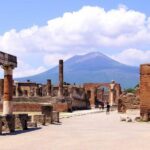
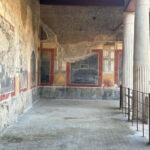
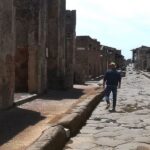
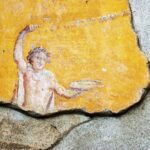
You’ll walk along the city’s long, stone streets—exactly the kind of space that makes ruins feel real instead of like an exhibit. Frescoed houses are a major draw because you’re not just looking at walls; you’re seeing decoration that once belonged to people’s rooms.
The practical benefit of a self-paced route is that you can spend extra time where you’re visually interested. Some people want houses first. Others save them. You choose.
Spas, Temples, and the Everyday Rhythm
Pompeii isn’t all one “type” of monument. You’ll see spaces tied to routine: spas for bathing and social life, temples connected to religion, and shops that point to daily commerce. These stops are valuable because they show a functioning town, not just a dramatic disaster site.
If you’re tired after a long walk, prioritize these areas on your route plan—they give you context fast.
Thermopolis: The Ancient Fast-Food Stop
One standout category is the Thermopolis, described as the era’s coffee-fast food equivalent. It’s the kind of place that makes the past feel less distant because the idea is familiar: quick meals and counters where people passed through.
Look for it on your route plan and don’t skip it just because it sounds small. It’s exactly the type of detail that makes Pompeii stick in your memory.
Theaters, Brothels, and Entertainment Spaces
You’ll also encounter theaters and brothels. These are part of what makes Pompeii so complete. The ruins show not only the “respectable” side of Roman life, but the full range of entertainment and social behavior.
If you’re sensitive to adult themes, you’ll still be able to navigate at your own speed. The key is that the experience doesn’t avoid the topic; it places it among the rest of the city.
Casts of the Victims and the Roman Amphitheater
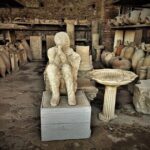
The casts of the victims of the eruption are emotionally heavy and historically important. Don’t treat them like a quick photo stop. Give yourself a few minutes—your route plan should include time for this, because rushing it makes the experience feel shallow.
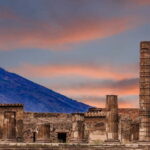
Then there’s the one of the best-preserved Roman amphitheaters. Even if you know nothing about Roman architecture, you’ll likely feel the scale quickly. It’s a strong anchor for your visit—one of those places where everything around it suddenly makes sense.
Timing Tips: How to Avoid the Biggest Comfort Problem
Pompeii’s biggest discomfort isn’t just crowds—it’s walking in direct sun and moving from spot to spot without shaded breaks. That’s why timing matters.
A useful pattern is that Pompeii tends to feel quieter after 4:30 pm. If your schedule allows, plan to be inside the park later in the day. You’ll still be walking, but the vibe can feel easier, which makes your attention last longer.
If you’re arriving earlier, build your day around your energy:
- Start with the most important stops first.
- Use the map to reduce wandering.
- Save longer reading moments for when you’re between crowded areas.
What to Bring: Small Stuff That Changes Your Day
Pompeii is not the place for fancy shoes or a half-empty water bottle.
Bring:
- Passport or ID card
- Comfortable shoes
- Sun hat
- Water
- Comfortable clothes
If you can, pack lightly. Security includes bag scanning, and the simpler your bag is, the smoother it tends to go. Also, wear footwear that handles uneven stone. The street surfaces are part of the authenticity, but they’re also part of the discomfort if your shoes aren’t ready.
And because Pompeii is huge, consider how you’ll keep track of where you are. The updated map helps, but you still want a calm method: check the map every so often, not every few minutes.
Price and Value: Is $41 a Good Deal for You?
At $41 per person for a 1-day visit, you’re paying for three things:
- Skip-the-line ticket access
- A guide book (kept as a souvenir) with route plans
- An updated map that supports independent navigation
For value, the big question is whether you’ll actually use the guide book. If you’re the type who likes structure—even light structure—this is a strong deal. Pompeii can feel endless if you’re wandering without a plan, and the time options (2, 4, or 6 hours) help you prevent that.
If you’re arriving with someone and sharing the book, remember it’s one guide book per two reservations. So for a couple, it’s straightforward. For solo travelers, it might still work well, but plan how you’ll read the map.
Also keep expectations realistic about the “skip.” Security may still create a bottleneck. Still, when you’re using the access time well—starting quickly and following a route plan—the saved minutes can translate into more meaningful time inside the ruins.
Food and drinks aren’t included, so budget for breaks. Transfer isn’t included either, so build your timing around how you’ll reach the park entrance area.
Should You Book This Pompeii Skip-the-Line Ticket With Guide Book?
I’d book this if you want control. You get the freedom to move at your pace, and the guide book gives you a usable framework instead of leaving you to guess where to go next. The fact that the guide is translated into 13 languages and stays with you after the visit is a nice extra.
I’d also lean toward booking it if you’re trying to make Pompeii fit your schedule. The 2/4/6-hour route plans are a practical way to match your walking stamina to what you want to see: from frescoed houses and spas to theaters, brothels, casts, and the amphitheater.
Skip booking it if you’re hoping for a frictionless walk-through with absolutely no waiting. Security can still slow things down, and the park is still massive once you’re inside. You’ll still need to manage your own pace, water, and orientation.
In short: this works best for independent walkers who want a plan and a souvenir guide, not for people chasing a fully managed tour.
FAQ
What is included with the Pompeii skip-the-line ticket + guide book?
The ticket includes Pompeii entrance access, a guide book (one book for every two reservations), an updated map, and route plans for 2, 4, or 6 hours.
How long can I spend in Pompeii?
Your ticket is valid for one day, and you can enter the archaeological park from 9:00 am until 5:00 pm.
Where do I meet staff before entering?
Meet staff at VIA ROMA 123, POMPEI. After that, you’ll access the archaeological park entrance at Piazza Anfiteatro.
Does this include a tour guide?
No. The experience includes the guide book and map, but it does not include a live guide.
Are food and drinks included?
No. Food and drinks are not included.
What languages are available for the instructor and materials?
The instructor is listed for English, Italian, Spanish, and French, and the guide book is translated into 13 languages.