REVIEW · POMPEII
2 Hours Private Tour in Pompeii with Archaeologist
Book on Viator →Operated by Napoli e dintorni - Archaeological tour guide · Bookable on Viator
Pompeii can feel like too much at once. This private, 2-hour tour is built to make it manageable, with a licensed guide plus an archaeologist guiding you through specific highlights. I like the focus on real-world details—how spaces worked—and the way Francesco, the archaeologist/guide, keeps the story grounded in what’s still visible in the ruins. Two things I really like: you get specialist context for the big sights, and your private format helps a large group stay together instead of getting lost.
One possible drawback: the time is tight. If you’re delayed, the guided tour may be shortened, and since entrance tickets are not included, you’ll want to have entry sorted so the clock doesn’t chew up your highlights.
In This Review
- Key points before you go
- Pompeii in Two Hours: what this private plan prioritizes
- Meet at Via Roma and expect a clockwork 2-hour experience
- Palestra Grande: the largest gymnasium and what it tells you
- Anfiteatro Romano: understanding the Roman amphitheater fast
- Praedia di Giulia Felice, then the villas: frescoes you’ll remember
- Orto dei Fuggiaschi: the eruption story grounded in real evidence
- Necropoli di Porta Nocera: stepping outside and seeing the edge of town
- Price and value for a private Pompeii archaeologist tour
- Who should book this tour
- Should you book this Pompeii archaeologist tour?
- FAQ
- How long is the private Pompeii tour with an archaeologist?
- How many people can be in the group?
- What’s included in the tour price?
- Are entrance tickets to the archaeological park included?
- Where does the tour start and end?
- What stops are included during the 2-hour experience?
- What happens if I’m late for the tour?
- Is the tour ticket mobile?
- Does the tour run in poor weather?
- Can I cancel for a full refund?
Key points before you go
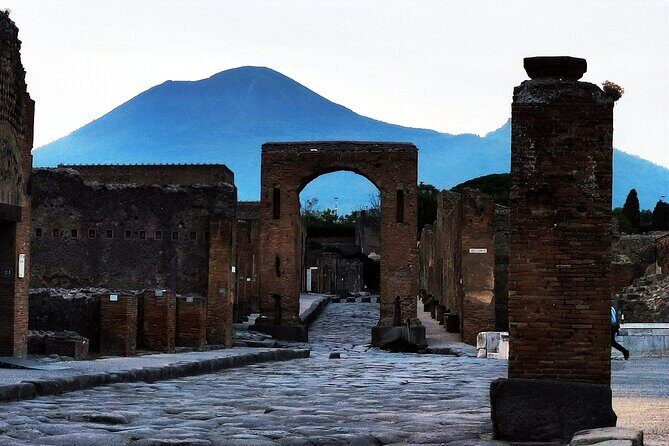
- Private tour (only your group) so you can move at a human pace instead of a crowd pace
- Archaeologist-led explanations that connect buildings to daily life and the eruption story
- Seven Pompeii stops in about 2 hours, including the necropolis outside the city walls
- Francesco’s ticket and question help, including stepping in when not everyone has pre-purchased entry
- Works well for families and groups, with active Q&A and group management
Pompeii in Two Hours: what this private plan prioritizes
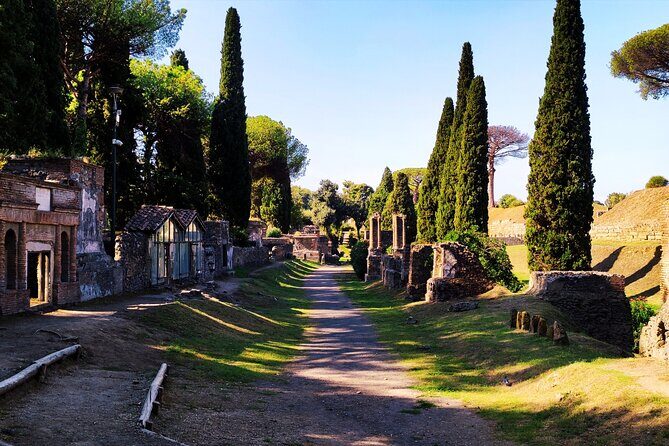
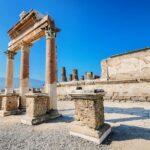
If it’s your first time in Pompeii, you’ll quickly learn the place is huge. Without help, you can stand in front of a wall and wonder what you’re actually looking at. This tour is designed to prevent that. You focus on a tight set of spaces that show off different sides of the city—sports, public spectacle, rich homes, and the darker edges near the eruption.
The big value for me is that you’re not just collecting names. You’re learning what each space was for, and what clues the ruins still give you. That’s why an archaeologist guide matters here: the explanations tend to connect architecture and artifacts to real behavior.
Also, the tour is private up to 15 people. That matters when you have kids, mixed interests, or a group that needs steady pacing. You’re not trying to keep track of strangers while your attention is split across ten directions.
You can also read our reviews of more private tours in Pompeii


Meet at Via Roma and expect a clockwork 2-hour experience
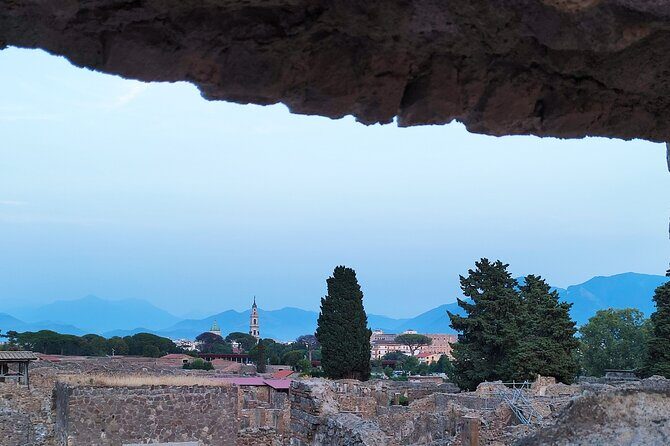
The meeting point is Via Roma, 101, 80045 Pompei NA, Italy. The tour ends back at the same place, so you’re not stranded across town wondering how to regroup.
The duration is about 2 hours, and the route is structured so you get quick, focused stops rather than long museum-style time. Each stop is roughly 15 minutes, with a longer stretch at the necropolis. That’s a smart approach for Pompeii, where you can burn a lot of time just navigating and deciding what’s worth your attention.
Here’s the practical part you should plan for: entrance fees are not included. In a perfect world, you arrive with tickets ready and walk in with minimal friction. In real life, ticket timing varies by group. Francesco has helped in situations where some people already had entry and others did not, including standing in line for the remaining tickets. That kind of problem-solving can save your tour from wasting minutes.
One more timing note: if you’re late, the guided tour may be reduced in duration. So try to build a little cushion into your arrival rather than treating Pompeii like it runs on perfect punctuality.
Palestra Grande: the largest gymnasium and what it tells you
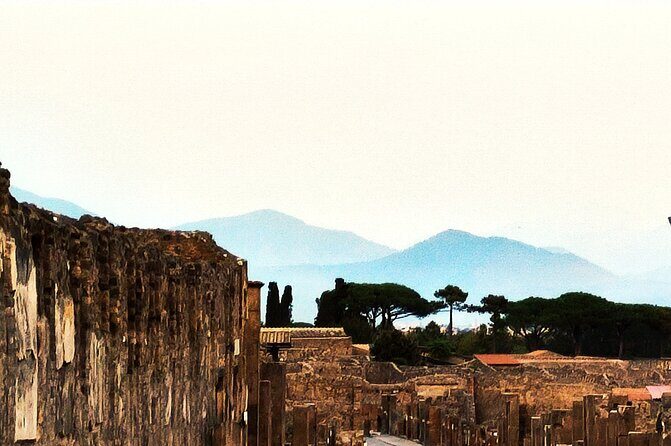
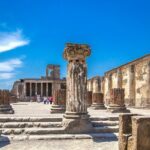
Stop one is Palestra Grande, the largest gymnasium in Pompeii. In Roman cities, these gymnasiums weren’t just for workouts. They were social spaces—places tied to status, training, and everyday routines that show up in how buildings were laid out.
In practical terms, this is a great opener because it gives you a baseline for how Romans used public space. You’ll likely notice that the ruins can look confusing until someone points out the purpose of the rooms and circulation. That’s where a specialist guide really helps: you start to read the plan instead of just looking at stones.
One drawback to keep in mind: this is still a quick stop. You won’t get a slow, fully immersive session. Think of it as a strong first chapter that sets up the rest of the walk.
Anfiteatro Romano: understanding the Roman amphitheater fast
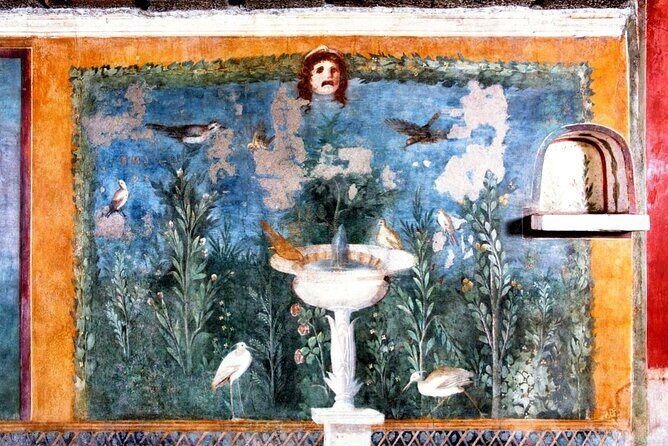
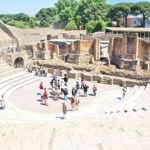
Next up is the Roman Amphitheater, one of the best-preserved buildings of its kind and also among the oldest. This stop is about perspective. When you stand in or near an arena, you can feel the scale, but it helps to understand how crowds moved, where you would sit, and why the building mattered beyond entertainment.
A good archaeologist guide makes the amphitheater feel less like a photo-op and more like a machine built for viewing. You’re not just hearing about gladiators. You’re getting the logic of spectacle in stone—how the space shaped behavior.
Because the stop is about 15 minutes, you’ll want to be ready with questions. If you tend to think, Wait, how did they… then this is your moment to ask. The tour format is short, so your curiosity is rewarded.
Praedia di Giulia Felice, then the villas: frescoes you’ll remember
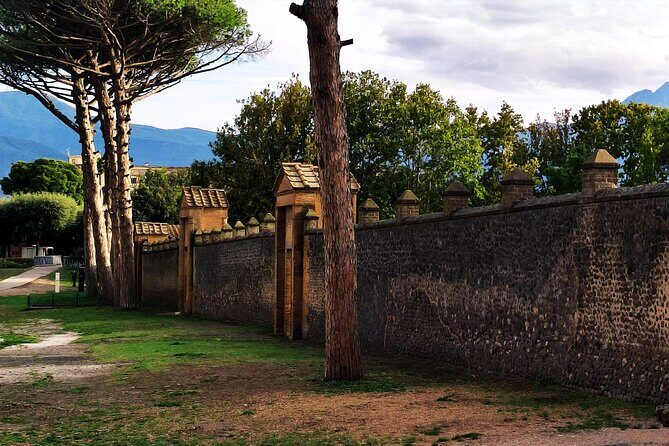
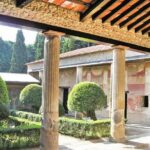
After the public spaces, you shift into private life. Stop three is Praedia di Giulia Felice, described as one of the largest private houses in Pompeii. Stop four is the House of Venus in the Shell, known here specifically for frescoes. Stop five is Casa di Ottavio Quartione, where you can admire magnificent frescoes and a splendid outdoor biclinium.
This cluster of stops is where the tour becomes memorable for a lot of people. Frescoes can be hard to appreciate on your own because Pompeii’s rooms vary in light and layout, and it’s not always obvious what you’re supposed to notice first. With a guide, you’re not guessing. You get a viewing order—what to look at and why it mattered to the people who lived there.
The villas also shift the emotional tone. The amphitheater is big and loud in your imagination. The houses are personal. You start thinking about taste, wealth, leisure, and how art filled everyday spaces.
A small consideration: because these stops are quick, you may not see every corner of the spaces you pass. The goal is highlights and clarity, not exhaustive coverage. If you want to linger over every fresco detail, you might leave wanting more time in the houses. That’s not a failure of the tour; it’s the nature of a 2-hour plan.
You can also read our reviews of more tours and experiences in Pompeii

Orto dei Fuggiaschi: the eruption story grounded in real evidence
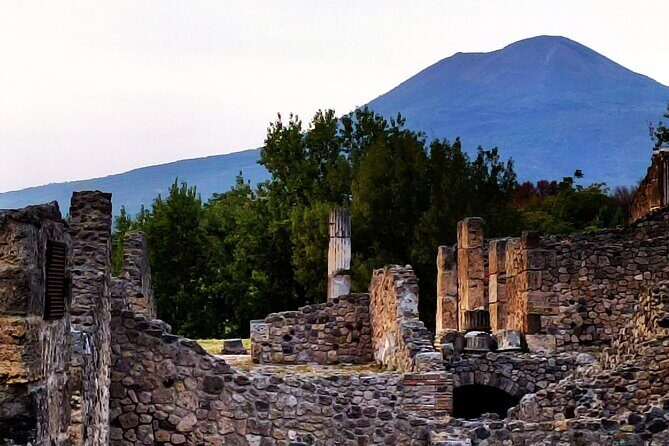
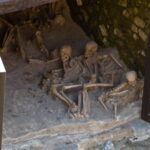
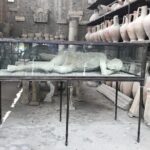
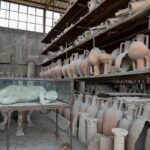
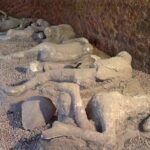
Stop six is Orto dei Fuggiaschi, linked to 13 victims found at the time of excavations. This is the stop that turns your understanding from architecture to people. Even with only about 15 minutes, it hits because the site is tied to a specific discovery—something recovered during excavation that lets archaeologists interpret what happened in the final moments.
This stop is valuable because it refuses to keep the story abstract. Pompeii is often framed as a ruined city you can tour. Here, you’re reminded it was lived in—then abruptly ended.
If you’re touring with kids, this can be intense. The good news is that a guide who actively answers questions can help you keep things age-appropriate while still telling the truth. If you prefer gentler pacing, you might ask beforehand if Francesco can steer the conversation more slowly during the darker stops.
Necropoli di Porta Nocera: stepping outside and seeing the edge of town
The last stop is Necropoli di Porta Nocera, the necropolis outside the city walls. It’s described as one of the largest cemetery areas of Roman Pompeii.
This is a smart final chapter because it changes your mental map of the city. Inside Pompeii, you focus on daily life and wealth and public entertainment. At the necropolis, you start thinking about beliefs and how people handled death in a world that expected it.
Also, the tour gives this stop about 30 minutes, longer than most others. That extra time matters here. Cemetery areas can feel like open-ended walking unless someone helps you connect the layout to what it represents.
Price and value for a private Pompeii archaeologist tour
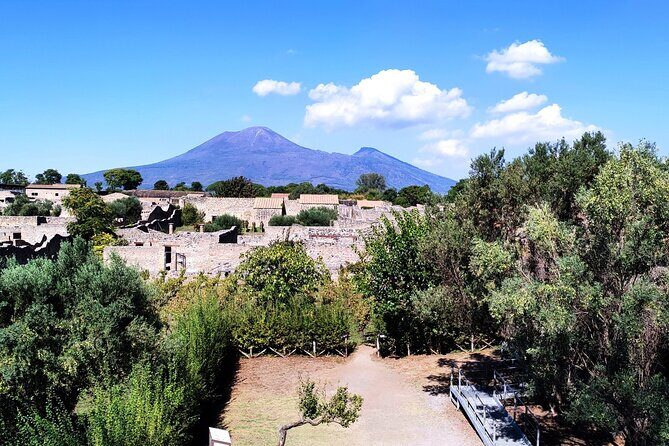
The price is $267.46 per group, up to 15 people. That’s where the value math gets interesting. If you’re traveling as a small group, a private tour like this can cost more per person than a group tour. But if you’re splitting it among 8, 10, or 15 people, it turns into a cost that’s easier to justify.
What you’re paying for is not just a guide holding a microphone. You’re paying for an archaeologist-style lens on interpretation and a private structure that keeps everyone moving as one group. The reviews highlight that Francesco answers lots of questions and can handle logistics that normally slow groups down, including situations where not everyone has entry tickets ready.
So the practical question is: do you want Pompeii to be a self-guided walk, or do you want it to feel explained and directed? If you want the second option, this format is a strong value—especially for families, multi-generational groups, and anyone who doesn’t want to spend half the trip figuring out what matters.
Who should book this tour
This experience is a great fit if:
- you want Pompeii explained with a specialist archaeologist perspective
- your group is big enough that self-guided logistics get annoying
- you have kids or mixed interests and need active question time
- you’d rather spend 2 hours seeing the right things than spending 4 hours wandering
It may be less ideal if:
- you want to spend long, quiet hours in one house or one fresco room
- you hate managing entry tickets yourself
- you prefer flexible pacing over a structured highlight route
Should you book this Pompeii archaeologist tour?
I think you should book it if you’re trying to get the most meaning out of a short visit. Pompeii is overwhelming in size, and a focused private plan prevents the classic problem: seeing a lot without really understanding what you saw.
If you do book, set yourself up for success by having entry tickets sorted ahead of time. Since admission isn’t included, that’s the one practical snag that can reduce your enjoyment. And because the tour may shrink if you’re delayed, aim to arrive early enough to breathe.
Bottom line: for a 2-hour window, this is one of the more efficient ways to see Pompeii while still feeling like someone translated the ruins into human stories.
FAQ
How long is the private Pompeii tour with an archaeologist?
It lasts about 2 hours.
How many people can be in the group?
This private tour is priced per group and can include up to 15 people.
What’s included in the tour price?
You get a licensed tour guide and assistance for the full duration, a private tour, main attractions of Pompeii, and a specialized archaeological guide.
Are entrance tickets to the archaeological park included?
No. Entrance fee to the archaeological park is not included.
Where does the tour start and end?
It starts at Via Roma, 101, 80045 Pompei NA, Italy, and ends back at the meeting point.
What stops are included during the 2-hour experience?
Stops include Palestra Grande, the Roman Amphitheater, Praedia di Giulia Felice, the House of Venus in the Shell, Casa di Ottavio Quartione, Orto dei Fuggiaschi, and Necropoli di Porta Nocera.
What happens if I’m late for the tour?
If the customer is delayed, the guided tour may be reduced in duration.
Is the tour ticket mobile?
Yes, it includes a mobile ticket.
Does the tour run in poor weather?
It requires good weather. If it’s canceled due to poor weather, you’ll be offered a different date or a full refund.
Can I cancel for a full refund?
Yes. Free cancellation is available up to 24 hours in advance for a full refund.