REVIEW · POMPEII
2 Hours Pompeii Group Tour with Archaeologist Guide and Skip the Line
Book on Viator →Operated by ELIANA SANDRETTI · Bookable on Viator
Two hours is short, but Pompeii fits. This tour is built to get you past the ticket chaos and into the main sights fast, guided by an archaeologist-style storyteller who connects what you see to how Romans moved through daily life. You’ll walk a tight route with a small group (max 15) and a focus on the big recognizable stops.
I especially like the way the timing works. You get quick hits at multiple signature locations—gladiators’ training spaces, theatres, luxury homes, and the baths—without feeling like you’re wandering. I also like that the guide’s approach is practical: each site comes with enough context that you don’t just photograph stones, you understand what you’re looking at.
The one possible drawback is simple: two hours means a quick pace. Some areas you’ll want to linger on, but the tour is designed to cover many stops, so a few spots feel more like a look-in than a deep visit.
In This Review
- Key takeaways
- Skip-the-line at Pompeii: what it changes in real life
- Gladiators and laundry: Vicolo di Gladiatori and Fullonica di Stephanus
- The Forum’s temples and justice: Jupiter, Venus, the Basilica, and Apollo
- Odeon and Teatro Grande: theatres where music and drama mattered
- Casa del Menandro and the Lupanar: luxury and temptation in the same walk
- Streets, shops, and the city market: how Pompeii moved people around
- Stabian Baths and Pompeii 3D: hygiene, casts, and human scale
- Price and value check: what you pay versus what you get
- Timing, walking pace, and staying comfortable for 2 hours
- Should you book the 2-hour Pompeii group tour?
- FAQ
- Is the Pompeii entrance ticket included?
- Does this tour include skip the line?
- How long is the tour?
- Where do we meet for the tour?
- Is the tour offered in English?
- What size is the group?
- What’s included in the tour price?
- Are food and drinks included?
- What if the weather is bad?
- Is free cancellation available?
Key takeaways
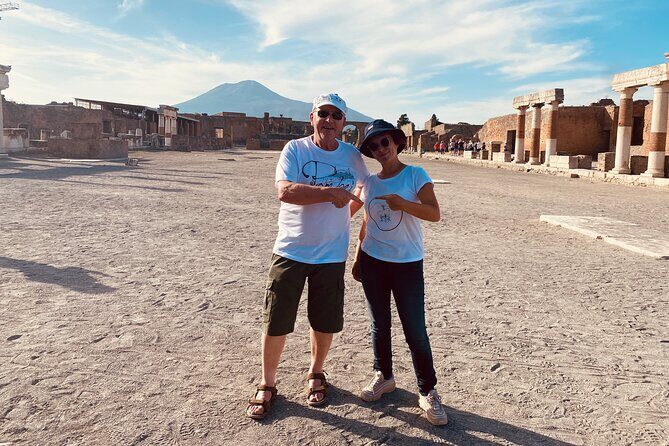
- Skip-the-line ticket help gets you moving while other people wait at the office
- Small group (max 15) makes it easier to ask questions and keep everyone together
- Forum, theatres, homes, brothel, baths in one tight 2-hour sweep
- English-speaking archaeologist guide plus main attractions focus
- Mobile ticket format for smoother entry
Skip-the-line at Pompeii: what it changes in real life
Pompeii’s entrance bottleneck can eat your morning. This tour includes skip the line to purchase tickets on site, so you spend less time standing and more time inside the ruins where the story is.
You also start at a clear meeting point: Ristorante Suisse in Piazza Esedra (10/13). Once you’re lined up with the group, the guide keeps you on a schedule that actually matches the two-hour window. That matters because Pompeii isn’t small, and if you lose time at the start you feel it later.
The other helpful detail: each stop is built around the major attractions the site is known for—so even if you’re not planning to “do everything,” you still leave with the key Pompeii scenes checked off.
You can also read our reviews of more guided tours in Pompeii
Gladiators and laundry: Vicolo di Gladiatori and Fullonica di Stephanus
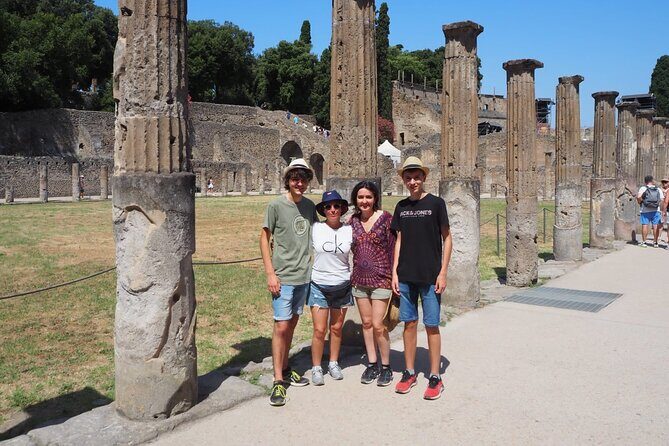
Vicolo di Gladiatori (Gladiators’ Barracks) is the kind of place where you can almost hear the routine. The tour gives you about 10 minutes here, and the focus is on the training and fighting world—where gladiators trained and staged their contests. This is one of the most evocative stops because it’s tied to action, not just architecture.
Then you head to Fullonica di Stephanus, one of the most famous laundry sites in Pompeii. Expect about 10 minutes. The guide explains how Romans washed clothes and the materials they used—so the ruin becomes a window into everyday work. Even if you’re not a “laundry person,” this stop is a reality check that ancient life included the unglamorous tasks too.
A practical note: these early stops set your mental picture. If you go in thinking Pompeii is only temples and columns, this pair corrects that fast.
The Forum’s temples and justice: Jupiter, Venus, the Basilica, and Apollo
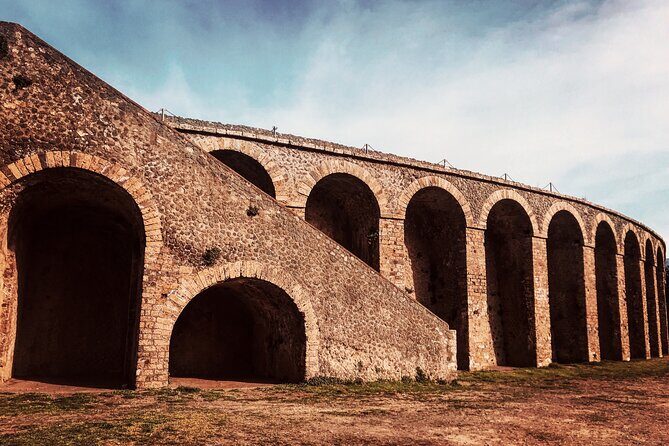
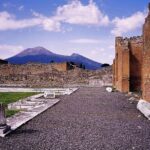
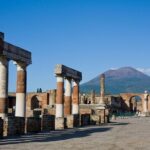
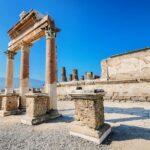
Pompeii’s forum-area sites are where the city’s public life shows up in layers. You’ll spend time at Tempio di Giove Capitolino (Temple of Jupiter), located in the larger forum area. The tour allows about 5 minutes. The key idea is the same one you’ll hear across Roman public spaces: this was where cult and mercantile activity overlapped, including what happened in the morning.
Next comes the Temple of Venus, noted as partly destroyed during the Second World War. This detail matters because it helps you read the ruins with more honesty. You’re not just seeing time frozen; you’re seeing time plus later impact—so the site has both ancient and modern scars.
You’ll also visit Pompei La Basilica, where justice was administered. You get about 15 minutes, and the location near the main square is what makes it feel central. If you’ve ever wondered how a city organized public decision-making, this is one of the tangible answers Pompeii offers.
The route also includes a city market near the large forum and stops tied to popular cult spaces, including the Temple of the Apollo deities. Add the tour’s street segments—like the main street lined with shops—and the forum area starts to feel like a full system rather than a set of random monuments.
Drawback to keep in mind: because these sites sit in the same general zone, some stops can feel similar if you try to rush your brain through them. The trick is to switch your focus each time: cult at the temples, decisions at the basilica, trade at the market, goods at the shop street.
Odeon and Teatro Grande: theatres where music and drama mattered
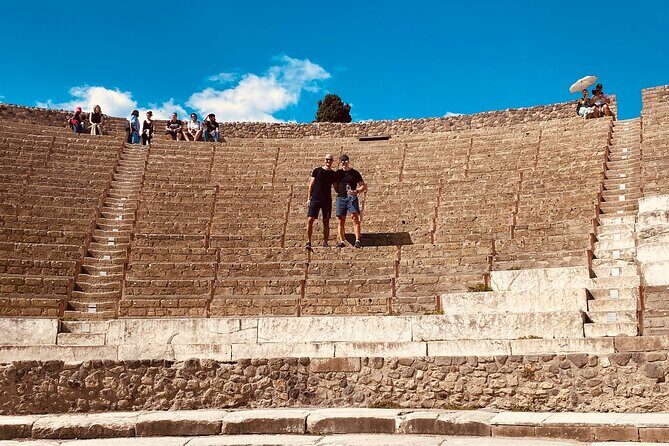
If you like anything performance-related—music, drama, even props—this is the section you’ll remember. Odeon – Teatro Piccolo is a smaller theatre for musical events, and you’ll have about 15 minutes. The tour notes that musical instruments were found here, currently located in the Antiquarium. That connection is useful: it encourages you to treat the theatre as part of a bigger collection story, not just a static shell.
Then you move to Teatro Grande, the largest theatre in Pompeii, with about 10 minutes allocated. This is the big stage stop. The guide points out it hosted dramas and theatrical comedies. The theatre was also renovated thanks to grants from the Gens Holconia, which gives you a sense that this place wasn’t only preserved by time—it was supported and rebuilt by people with power.
The challenge here is soundless learning. There’s no performance to watch now, so the guide’s narration is what brings it alive. If you ask questions while you’re there, you’ll get a better payoff than if you just speed through for photos.
Casa del Menandro and the Lupanar: luxury and temptation in the same walk
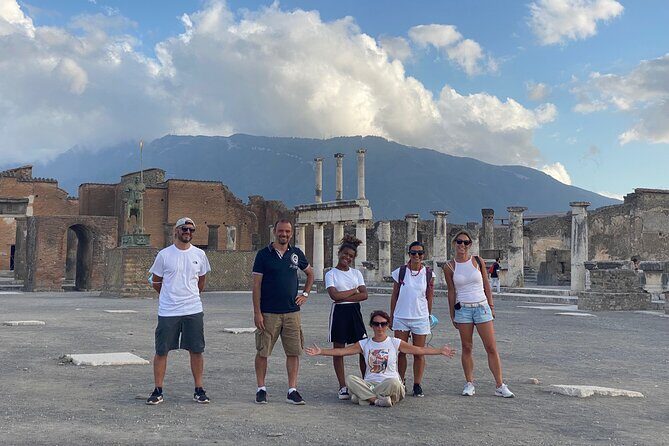
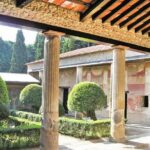
Pompeii’s homes can look like museum pieces, but the Casa del Menandro is more personal than that. You’ll get about 15 minutes in this luxury house, known for frescoes, decorations, and sculptures. The value of this stop isn’t just that it looks pretty—it helps you understand how wealth expressed itself at street level and behind doorways.
Then the tour takes a turn to Lupanar, one of Pompeii’s best-known brothels. You’ll have about 15 minutes here, too, and the focus is on the original frescoes with scenes from the kamasutra. This is the “adult life” stop in the route, and it can feel intense, mostly because Pompeii is so direct about what it preserved.
My balanced take: I’d treat this as a cultural snapshot, not a shock stop. The more you let it be information about daily life, the more it clicks. If you’re uncomfortable with sexual imagery in historic contexts, you might want to mentally prep for this portion so the visit still feels educational rather than stressful.
You can also read our reviews of more tours and experiences in Pompeii


Streets, shops, and the city market: how Pompeii moved people around
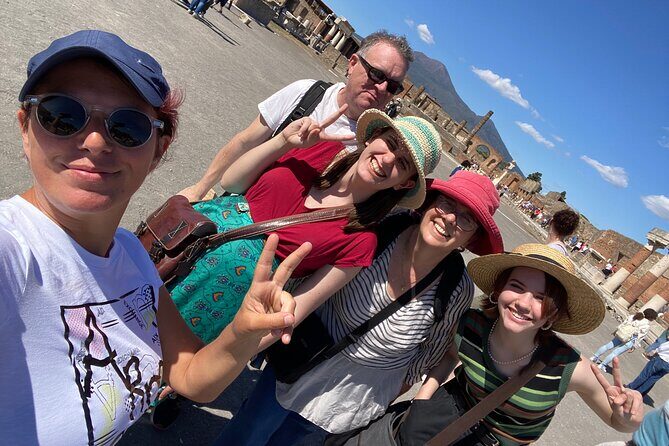
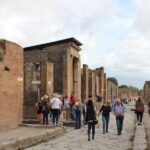
Between the major monuments, the tour includes streets full of shops and other street segments. Even though exact minutes aren’t listed for every street walk, this is a key part of the experience because it changes your perspective from “buildings” to “a working city.”
The tour also passes the city market near the large forum, described as where large purchases of goods happened so items could be resold in shops. That detail matters because it explains why the market wasn’t just for casual browsing. It was part of the supply chain.
One good way to use your time here: look at the shop-street layout as a route. Imagine where people would go first for essentials, where they’d stop next, and how they’d circle back toward the forum area. Even without numbers or signs, Pompeii’s structure gives you enough clues to picture movement.
If you’re prone to over-photographing, slow down for these bits. A quick street scene photo is fine, but the real value is in understanding how everyday commerce threaded through the ruins.
Stabian Baths and Pompeii 3D: hygiene, casts, and human scale
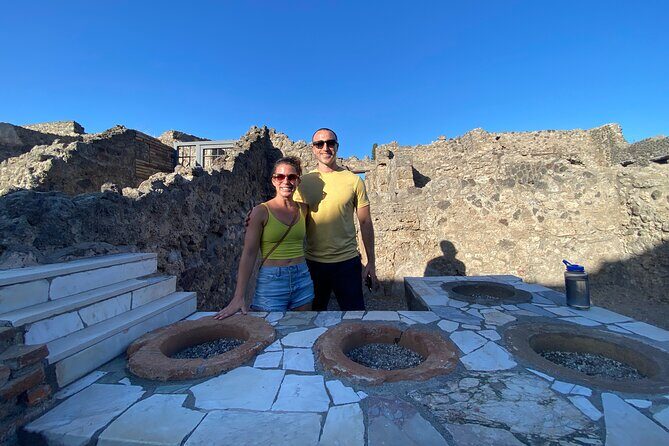
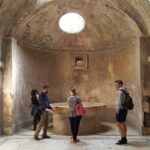
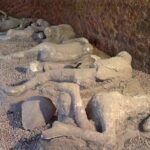
This is a strong ending sequence because it shifts from public life to bodily life—how people washed, relaxed, and cared for themselves. Stabian Baths (Terme Stabiane) are the first baths built in Pompeii, and you get about 15 minutes. The tour notes casts and frescoes are still present, which is a big deal: it’s not just a floor plan. It’s physical evidence that helps you picture how the bath experience looked and functioned.
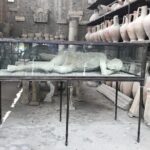
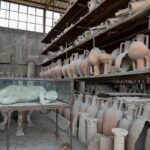
Then there’s Pompei 3D (Bodies of Pompeii) for about 5 minutes. This short stop gives you a visual way to think about what people were like, using a 3D approach tied to the theme of bodies. With only five minutes, don’t expect a long presentation, but do expect it to affect how you interpret the ruins you’ve just walked through.
This combo—real bath spaces plus a quick 3D human-scale supplement—is a smart way to finish a short tour. You leave with more than monuments; you leave with a sense of routines and bodies.
Price and value check: what you pay versus what you get
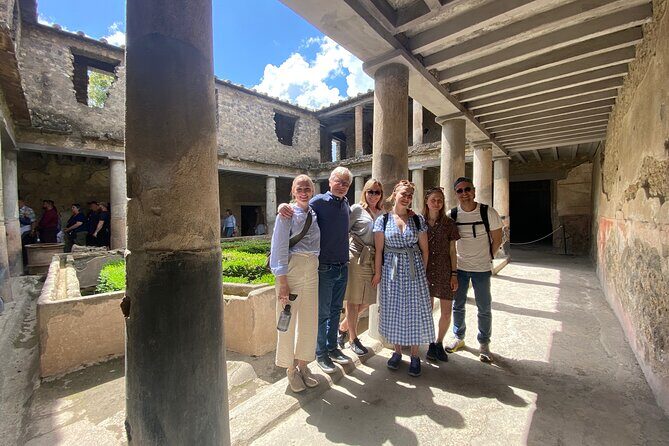
The tour price is $132.03 per person for about 2 hours, in English, with a maximum group size of 15. The entrance ticket is not included: adults pay €18 (minors are free with an identity card).
So is it worth it? For a short visit, it can be a good value because you’re buying two things that cost real time on your trip: (1) help skipping the ticket-office line and (2) a specialized guide to connect the stops. Without a guide, Pompeii can feel like a stack of famous rooms. With a guide, those rooms turn into a route with meaning.
A small detail that adds value: the tour uses a mobile ticket, which helps you manage entry without digging through paper. Also, the included stop list hits a range—gladiators, laundry, forum religion/justice, theatres, a luxury house, a brothel, baths, plus the 3D component—so you’re not paying to walk past only one narrow theme.
Budgeting tip: plan on the entrance ticket cost on top of the tour price. If you’re traveling with minors, the tour data is clear that minors have free entrance, but they’ll need an identity card.
Timing, walking pace, and staying comfortable for 2 hours
This tour is designed to cover many “headline” points in a tight window. That means you’ll be walking and stopping with short transitions, especially in the early and forum sections.
Here’s what helps you enjoy the pace instead of fighting it:
- Wear shoes you trust for uneven ground and lots of stepping.
- Bring water and something to block sun if your day is hot; the tour doesn’t mention included food or drinks.
- If you want extra time on a stop, ask the guide how to prioritize your last minute. The route is structured, but a good guide can help you decide what’s most worth your attention.
Also remember the tour requires good weather. If conditions are poor, you may be offered a different date or a full refund. That’s good to know because Pompeii is an outdoor site, and cancellation due to weather is realistic.
Should you book the 2-hour Pompeii group tour?
Book it if you want a solid Pompeii overview without spending half a day planning your own route. This one is built around main attractions, a small group (max 15), and an archaeologist-style guide who can explain what you’re seeing quickly and clearly.
Consider skipping it if you prefer a slower, more detailed visit where you can linger for long stretches in just one neighborhood. With only about two hours, you’ll have to accept the trade-off: many stops, shorter looks.
If you do book, I’d choose this tour for your first Pompeii day (or your only Pompeii day). It gives you the big mental map—gladiators, theatres, homes, justice, markets, baths—so later you can return and zoom in on what grabs you.
FAQ
Is the Pompeii entrance ticket included?
No. The entrance ticket costs €18 per person for adults, and it’s free for minors. Minors must bring an identity card.
Does this tour include skip the line?
Yes. It includes skip the line help to purchase tickets on site, so you avoid the long queue at the ticket office.
How long is the tour?
It lasts about 2 hours.
Where do we meet for the tour?
The meeting point is the main entrance of Ristorante Suisse in Piazza Esedra (10/13, Pompei).
Is the tour offered in English?
Yes, it’s offered in English.
What size is the group?
The group tour has a maximum of 15 people.
What’s included in the tour price?
It includes the skip-the-line ticket purchase help, an authorized tourist guide with assistance for the whole duration, and a group tour covering the main attractions.
Are food and drinks included?
No, food and beverages are not included.
What if the weather is bad?
This experience requires good weather. If it’s canceled due to poor weather, you’ll be offered a different date or a full refund.
Is free cancellation available?
Yes. You can cancel for a full refund up to 24 hours in advance. If you cancel less than 24 hours before the start time, the amount paid is not refunded.